分类: society

  • Citizen ‘Frog Patrol’ helps amphibians survive a dangerous road journey in Poland

    Citizen ‘Frog Patrol’ helps amphibians survive a dangerous road journey in Poland

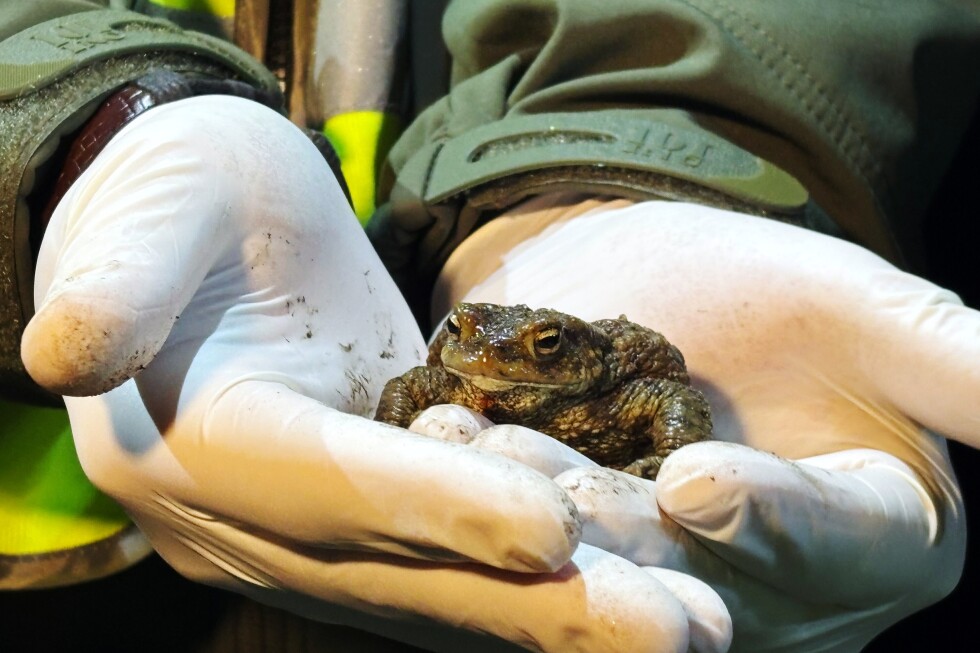
    Each wet, rainy spring night in a quiet forest 30 kilometers west of Warsaw, Poland, an extraordinary grassroots volunteer initiative swings into action: the citizen “Frog Patrol,” a group of local nature lovers dedicated to guiding thousands of migrating amphibians safely across a deadly highway that cuts through their ancient mating route.

    When rising spring temperatures thaw Mlochowski Forest, thousands of toads and frogs emerge from months of winter hibernation to begin their arduous annual journey to the shallow marshes where they have reproduced for millennia. The trek is an unequal one: far smaller male toads cling tightly to the backs of their larger female partners, clinging on to avoid being displaced by rival males once the group reaches the spawning waters. For generations, this migration proceeded uninterrupted — but a new highway carved across the path just over a decade ago turned the seasonal journey into a massacre. At the start of each mating season, thousands of migrating amphibians were crushed under vehicle tires, leaving roadsides lined with decomposing bodies that shocked local nature enthusiasts.

    Four years ago, those shocking scenes pushed local resident Łukasz Franczuk and a group of friends to action. Three years ago, they formally organized the Frog Patrol, mobilizing hundreds of local volunteers to intervene during migration season. Because amphibians breathe through their skin, which requires constant moisture, they only migrate during rainy nights — which is when patrol members spring into action. Wearing reflective yellow vests marked with the group’s name, equipped with headlamps and buckets, volunteers fan out along the narrow forest road each rainy evening, collecting amphibians from the roadside and carrying them safely to the marshside on the other side of the highway. Even local residents out during the day, including children, now carry gloves to rescue any migrating frogs they find in harm’s way.

    For participants, the work is as much about connection as it is about conservation. “It’s really impressive to see whole families with kids walking in the rain, with buckets, in these lovely jackets to make them visible because it’s pretty unsafe, this road is narrow, and they carry the frogs from one side of the road to the other,” said Katarzyna Jacniacka, a long-time patrol participant. “When the frogs are migrating, there are a lot of people here.” Fellow volunteer Aleksandra Tkaczyk added that the patrol offers “the kind of connection with nature about which some of us care deeply.” Since the initiative launched three years ago, local volunteers estimate they have saved more than 18,000 amphibians from being killed on the road.

    Biologists confirm the volunteer effort is critical to protecting this local amphibian population. Krzysztof Klimaszewski, a biologist at Warsaw University of Life Sciences who has joined multiple patrols, noted that the work “actually allows this local population of amphibians to survive” in an ecosystem increasingly fragmented by human infrastructure.

    Poland’s Frog Patrol is far from unique: similar citizen-led conservation efforts to protect migrating amphibians have popped up across the globe. In the U.S. state of New Hampshire, volunteers with the Harris Center for Conservation Education rescue a wide range of amphibian species, including salamanders, from busy roads. In Bavaria, Germany, conservation group BUND Naturschutz reports rescuing up to 700,000 frogs, toads, newts and salamanders from traffic every year. Even in France, where frog legs are a traditional culinary delicacy, local volunteer groups protect wild migrating populations; in the southern Provence-Alpes-Côte d’Azur region, volunteers have installed roadside nets to collect amphibians before they reach busy roadways. In Tallinn, the capital of Estonia, city authorities recently broke ground on new amphibian fencing along a busy migration route, designed to guide frogs and other wildlife to safe underground crossing tunnels and cut down on traffic-related deaths.

  • ‘Love triangle’: Man allegedly killed ex-lover’s husband before dumping body

    ‘Love triangle’: Man allegedly killed ex-lover’s husband before dumping body

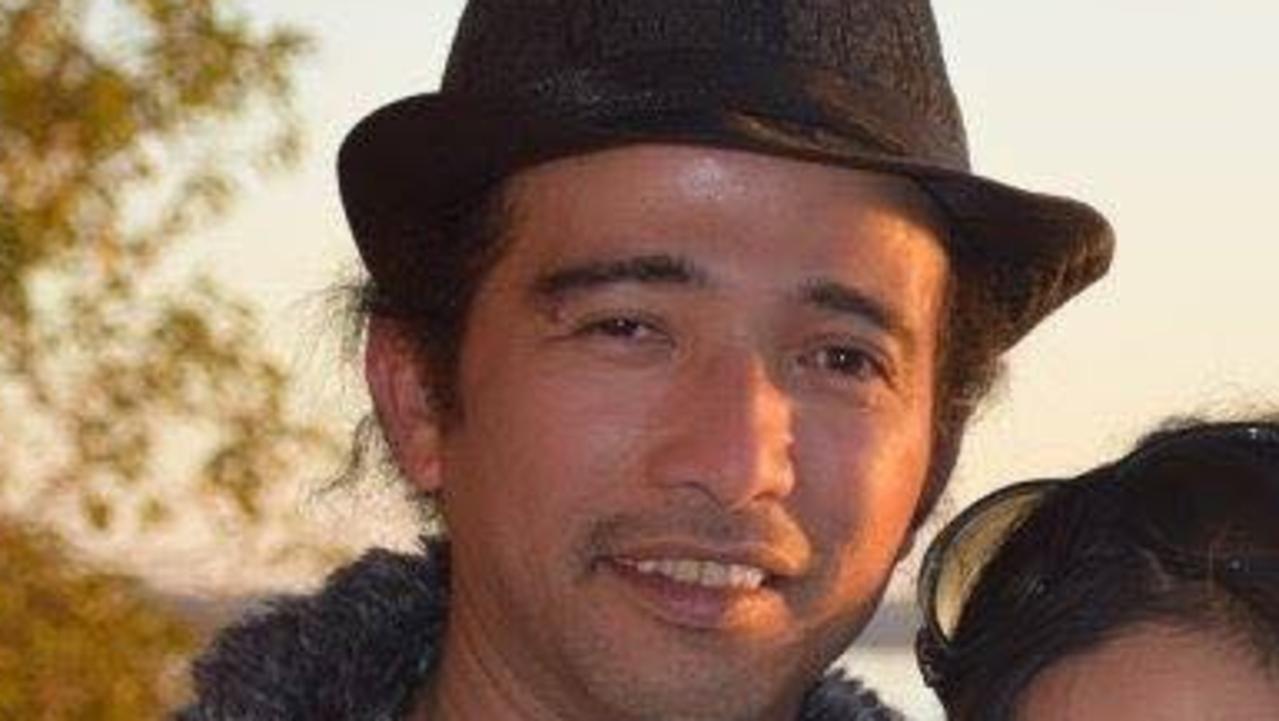
    More than two decades after a 34-year-old man was found dead in a New South Wales river, his alleged killer has gone on trial in the NSW Supreme Court, with prosecutors laying out a dramatic case rooted in romantic jealousy, tangled forensic evidence, and a long-unresolved love triangle.

    Gofal Baziad, 54, a resident of western Sydney, has pleaded not guilty to a single charge of murder for the death of Jason Palmer, who disappeared in early February 2004 and whose body was recovered three weeks later from the Nepean River at Menangle. Opening the Crown’s case before a jury on Friday, lead prosecutor Brett Hatfield SC outlined the alleged motive: Baziad, who had been romantically involved with Palmer’s wife Renny during a separation between the couple, killed Palmer to rekindle his relationship with her after she chose to reconcile with her husband in late 2003.

    Court documents and prosecution arguments detail that at the time of Palmer’s death, he and his wife had an on-again, off-again marriage. The pair separated in 2002, during which time Renny Palmer began a relationship with Baziad, before reconciling in 2003. When Palmer asked his wife to make a final choice between the two men, she selected Palmer, a decision Baziad outwardly accepted, according to Hatfield.

    The prosecution alleges Baziad carried out the killing in the late hours of February 6, 2004, or early the next morning at Palmer’s rented unit on Barremma Road, Lakemba. According to the allegation, Baziad first struck Palmer over the head with a heavy glass object, before stabbing him multiple times in the back, hip, and chest. He then wrapped Palmer’s body in a blue-green sleeping bag, weighed it down with two large boulders secured with a thin yellow rope, and transported the corpse to the Nepean River to dump it, Hatfield told the court.

    Palmer was last seen leaving his wife’s Belfield home on February 6, and Renny Palmer reported him missing several days later after repeated failed attempts to contact him. Kayakers discovered his wrapped body in the Menangle section of the Nepean three weeks after his disappearance. Crucially, prosecutors say forensic evidence links Baziad directly to the killing. The yellow rope used to tie the boulders to Palmer’s body matches fragments of identical yellow rope recovered from a garden shed at Renny Palmer’s Belfield home – a shed that Baziad accessed the day before the killing, when he borrowed Palmer’s wife’s red Ford station wagon, claiming he needed to move items out of his own unit. The sleeping bag used to wrap the body also came from the same camping gear stored in that shed, the court heard.

    Forensic testing of the borrowed station wagon turned up another damning piece of evidence: trace blood stains on the rear passenger seat, footwell carpet, and the car’s boot. A DNA swab taken from the boot’s blood stain matched Jason Palmer’s genetic profile, Hatfield told the jury, leading the Crown to argue Baziad used the vehicle to transport Palmer’s body from his Lakemba unit to the river for disposal.

    Beyond physical evidence, the prosecution laid out a pattern of behavior it says supports the allegation against Baziad. Hatfield told the jury Baziad has a well-documented history of violent jealousy toward any man that became romantically involved with Renny Palmer. After the pair began a relationship following Palmer’s death – a relationship that lasted until 2018, during which the couple lived together in Indonesia before returning to Australia – Baziad attacked another man Renny Palmer was dating outside a Gold Coast hardware store in 2018, shortly after his own relationship with her ended. “The Crown case alleges that evidence supports that the accused had these two tendencies: firstly, to be jealous about Renny Palmer and any male that she might be romantically involved with,” Hatfield said. “And the second tendency is to act violently, when he believed Renny Palmer is romantically involved with a person other than himself.”

    Prosecutors also noted that Baziad left Australia for Singapore just six weeks after Palmer’s disappearance, on March 28, 2004, and did not return to the country until 2009. At the time of his departure, he told investigators he was leaving to close a business deal and would return to assist with the probe, but his departure still came immediately after Palmer’s killing. Notably, Renny Palmer faces no accusations of any wrongdoing in connection with Palmer’s death, and is scheduled to take the witness stand to give evidence next week, the court confirmed. Baziad himself was only arrested and charged with murder earlier this year, 20 years after the killing, closing a long-running cold case for NSW Police.

    In her opening address to the jury on Friday, Baziad’s defense barrister Madeleine Avenell SC pushed back against the Crown’s case, arguing that the evidence presented is too weak to secure a conviction beyond reasonable doubt. Avenell noted that there are substantial points of disagreement between the prosecution and the defense over both the admissibility of evidence and how it can be interpreted, and urged jurors to keep the burden of proof in mind throughout the trial. “My submission to you is going to be this – you won’t be able to be positively satisfied of the ultimate question that is put to you in this trial. Which is: has the prosecution proved beyond reasonable doubt that it was Mr Baziad who is the person responsible for Mr Palmer’s death?” Avenell told the court. “Ultimately, that is the thing you should have at the forefront of your mind.”

    The trial against Baziad is ongoing at the NSW Supreme Court.

  • High Court hears sentence appeal for teen who killed Queensland mum Emma Lovell

    High Court hears sentence appeal for teen who killed Queensland mum Emma Lovell

    A fight for justice for a murdered British woman has reached Australia’s highest court, as her grieving husband and the Queensland government push to reverse a controversial sentence reduction that has sparked public and legal debate.

    On Boxing Day 2022, Emma Lovell, a 40-something British expat, was fatally stabbed in the chest during a violent home invasion at her property in North Lakes, a suburb north of Brisbane. Her husband Lee, who was also attacked and injured in the break-in, has spent years fighting to ensure the perpetrator serves the full penalty handed down by the original sentencing judge.

    At the time of the attack, the killer was 17 years and 8 months old, too young to be tried as an adult under Queensland’s pre-existing laws. He pleaded guilty to charges of armed burglary and murder in 2024, and was handed a 14-year prison sentence. Under the state’s Youth Justice Act at the time, juvenile offenders are required to be released after serving 70% of their total sentence, a requirement that was upheld by the original sentencing judge Justice Tom Sullivan. Sullivan ruled the brutal killing qualified as a “particularly heinous” offense, rejecting arguments for special leniency despite the killer’s age, early guilty plea, difficult childhood, and claims of remorse.

    That ruling was overturned months later when the Queensland Court of Appeal accepted the defense’s argument that the original 14-year sentence was “manifestly excessive”, cutting the non-parole portion of the sentence from 70% to just 60%. That decision triggered an unprecedented push for appeal, with Queensland’s new Liberal National Party government joining Lee Lovell to challenge the ruling in an extraordinary hearing before the High Court of Australia in Canberra.

    Outside the courtroom on Friday, Lovell told reporters he aims not just to reverse the sentence cut, but to establish a lasting legal precedent for future cases. “I hope to get my wife’s killer’s sentence back to 70 per cent at least,” he said. Beyond that, he added, the case could set a precedent holding appeal judges accountable when they depart from original sentencing rulings. Lovell also criticized what he called the inherently one-sided nature of the current justice system: while the perpetrator was permitted to appeal his sentence, the victim’s family has no equivalent right to appeal a lenient ruling. He added he will continue his fight for as long as it takes to secure justice for Emma, leaving behind two young daughters who will grow up without their mother.

    Queensland Attorney-General Deb Frecklington, who appeared alongside Lovell at the High Court, noted the case is an extraordinary legal step. “This is a trip we wish we never had to do,” she said. “However, here we are today at the High Court of Australia to try to preserve some sort of justice that Lee and his family have been dished out up in Queensland.” Frecklington emphasized that the tragedy has resonated across the entire state, not just with Lovell’s grieving family. She added that it is extremely rare for the High Court to grant an Attorney-General leave to appeal a criminal sentencing decision. Pointing to policy change spurred by Lovell’s death, Frecklington noted that the newly elected Liberal National Party government introduced “adult crime, adult time” laws shortly after taking office, which would see the offender sentenced to life imprisonment if the crime were committed today.

    The High Court appeal hinges on technical legal questions about how lower courts can intervene in original sentencing rulings. Lawyers for the Queensland government argued the Court of Appeal overstepped its authority and misapplied key legal tests when it reduced the non-parole period. Gim Del Villar KC, the state’s lead counsel, told the court that the Court of Appeal’s finding that the original judge “ought” to have found special circumstances to justify a reduced sentence was inconsistent with existing legal standards that limit appellate interference in sentencing decisions. Del Villar noted that the core disagreement between the original ruling and the appeal court was just a 10% difference in the non-parole period, making the appellate court’s intervention even harder to justify.

    Counsel for the young killer rejected the state’s arguments, arguing the Court of Appeal acted well within its authorized bounds. Andrew Hoare KC acknowledged that the wording of the appellate court’s ruling was not perfect, but said the conclusion that the original sentence was unjust fell well within the powers intermediate appellate courts exercise on a regular basis. He added there was no clear legal error on the face of the appellate court’s ruling to justify the High Court overturning the decision. At the time of publication, the High Court has reserved its decision, with no timeline announced for a ruling.

  • New Jersey city spurns data center as defiance spreads

    New Jersey city spurns data center as defiance spreads

    Just 65 kilometers outside the bright skyline of New York City, an overgrown vacant lot dotted with construction rubble sits quietly between a working railway line and a cluster of residential homes in New Brunswick, New Jersey. What was once slated to become a sprawling multi-building data center complex for Florida-based Amzak Capital Management, built on the grounds of a shuttered automotive plant, now stands as an unlikely symbol of grassroots people power — and a rallying cry for community resistance spreading across the United States.

  • For Chinese visa-seekers in the US, the path to good fortune lies in … Chick-fil-A?

    For Chinese visa-seekers in the US, the path to good fortune lies in … Chick-fil-A?

    In a packed northern Virginia venue hosting a Chinese-language comedy show on a recent weekend afternoon, a host threw a casual question out to the crowd: “What food do you all love the most?” The loudest, most unanimous answer that bounced off the hall walls was not a traditional Chinese dish — it was Chick-fil-A. Grinning, the host shot back with a joke that landed perfectly with the audience: “You all still haven’t won the H-1B lottery, huh?”

    That quick quip resonates deeply across Chinese student and immigrant communities across the United States, where a growing number of visa applicants have turned to an unexpected good luck charm: the popular American fast-food chicken chain. The trend has nothing to do with the taste of Chick-fil-A’s signature sandwiches, and everything to do with a clever phonetic pun. The brand name “Chick-fil-A” sounds strikingly similar to the Mandarin phrase meaning “check files” — a connection that, for applicants navigating the complicated, often arbitrary U.S. visa application process, has transformed the chain into a symbol of good fortune. It doesn’t hurt that Chick-fil-A has no locations in mainland China, making the little ritual feel like an inside tradition unique to Chinese immigrants in the U.S.

    For many applicants, the ritual goes far beyond just grabbing a meal. Zhou Yilu, a 38-year-old AI software engineer based in Wilmington, Delaware who has navigated four different visa categories over his 14 years in the U.S., says eating at Chick-fil-A makes him feel one step closer to securing permanent residency. After years of last-minute approvals and endless rounds of extra paperwork, he turned to the chicken chain superstition when his stress over visa status hit its peak.

    The trend has been circulating in Chinese immigrant circles for years, gaining particular traction around the annual H-1B work visa lottery — a random selection process that has grown increasingly competitive as caps remain fixed while demand surges. To channel good luck, some creative applicants 3D-print Chick-fil-A logos on custom coasters, others embroider the brand mark into small cross-stitch keychains, and many swap their social media profile pictures to the chain’s iconic red logo — often turning the graphic green, a nod to the ultimate goal of a U.S. green card. Chick-fil-A has not responded to multiple requests for comment on the grassroots trend.

    This fondness for pun-based good luck rituals is nothing new in Chinese culture. The tradition of eating apples on Christmas Eve grew from the phonetic link between “pingguo” (apple in Mandarin) and “ping’an” (peace), while brides often carry bouquets of lettuce at weddings because “shengcai” (lettuce) sounds identical to the phrase for “gaining wealth.” Conversely, the number four is widely avoided because its pronunciation matches the word for death. What makes the Chick-fil-A trend different is what it reveals about the extraordinary stress and uncertainty facing skilled Chinese immigrants navigating the U.S. immigration system.

    In 2024 alone, more than 46,000 Chinese students and workers received H-1B visa approvals, accounting for 11.7% of all approved visas — making China the second-largest country of origin for the program, behind only India at 70%. Even with high-level education and in-demand professional careers, applicants face arbitrary odds and growing barriers. Fan Wu, a data scientist based in Indianapolis, did everything right: he changed his social media profile to the Chick-fil-A logo and even traveled to a Japanese Taoist temple in Hawaii to pray for a winning lottery slot. He still didn’t get picked. “The lottery is pure chance, it all depends on luck,” he explained. “We need another bit of luck-based ritual to match that.”

    The demand for good fortune around visa lotteries has even spawned a new cross-border service industry. On the Chinese social platform Xiaohongshu, 24-year-old Beijing-based Meng Yanqing receives requests from visa seekers in the U.S. to pray on their behalf at Beijing’s popular Lama Temple. For each client, he lines up for entry, holds a paper with the applicant’s personal details — including passport number and birth date — for “precise positioning” of the prayer request, and often arranges to ship consecrated temple bracelets back to clients across the Pacific. “I respect what they believe, they have a real need, and I provide the service,” Meng said. “I truly hope they get the results they want.”

    Anxiety around U.S. visa status has only grown in recent months. Earlier this year, the Trump administration’s abrupt announcement of a new $100,000 fee for H-1B visas sent waves of panic through Chinese immigrant communities, before officials clarified the rule only applies to new applicant categories. The whiplash added to an already stressful environment that already includes language barriers, cultural adjustment challenges, and a tight competitive job market.

    Experts note that the H-1B program has long been a pipeline for the U.S. to attract top global talent, benefiting both the American economy and innovation ecosystem. “This is a real talent pipeline,” said Juliet Gelatt, associate director of the U.S. Program at the Washington-based Migration Policy Institute. “As a country and an economy, we have really benefited from bringing in smart, young people from all over the world, including from China.”

    But growing suspicion of Chinese immigrants, particularly those working in high-tech sectors, has added extra layers of difficulty, and experts warn this trend is eroding the U.S.’s ability to attract the world’s best talent. One 28-year-old manager at a U.S. new energy company, who only agreed to speak on condition of anonymity using just his surname Yang over fears of jeopardizing his visa, finally changed his social media profile to the Chick-fil-A logo after months of waiting. “It feels like living under someone else’s roof,” he said of his uncertain immigration status.

    Current U.S. rules limit access to the H-1B lottery. F-1 student visa holders can only work for a limited time through the Optional Practical Training (OPT) program — three years for STEM majors, just one year for all other fields — before they need to secure an H-1B visa to stay and work in the country legally. With odds stacked against them, many turn to any small ritual that might tip the scale in their favor.

    For Harriet Peng, a data analyst based in northern Virginia, eating Chick-fil-A sandwiches and keeping a Chick-fil-A T-shirt draped over her office chair wasn’t enough. After losing the H-1B lottery multiple years in a row, she traveled to a temple in upstate New York to pray in person, joking that she was “making efforts using scientific materialist methods in metaphysics.” The temple houses deities dedicated to nearly every aspect of life, from fortune to childbirth — but there is no god of visas. Still, Peng knelt at nearly every altar just in case. “I prayed to all of them, you never know — they all know each other, right?”

  • Shenzhen hospital fined after ambulance took patient to wrong hospital

    Shenzhen hospital fined after ambulance took patient to wrong hospital

    A fatal medical emergency mistake in south China’s Shenzhen has resulted in heavy penalties for a private healthcare facility, following an official investigation that confirmed misrouting of an ambulance directly contributed to a deadly delay in care. Local health authorities announced the disciplinary actions on Wednesday, one year after the incident that sparked widespread public outcry.

    On August 5 last year, 54-year-old Zhang, a local resident, contacted the city’s 120 emergency hotline after experiencing sudden, severe abdominal pain. Following standard protocol, the central dispatch center ordered the responding ambulance to transport Zhang directly to Longhua District People’s Hospital, the designated facility for her emergency case. Instead of complying with the dispatch order, the ambulance crew redirected the patient to Shenzhen Jian’an Hospital – the private institution that owns the ambulance.

    By the time Zhang was finally transferred from the incorrect private facility to the originally assigned Longhua District People’s Hospital, she had already fallen into unconsciousness. Medical teams at the public hospital conducted emergency surgery and deployed all available rescue measures, but Zhang succumbed to an aneurysm the same afternoon.

    Once details of the incident emerged online, the story spread rapidly across Chinese social media platforms, drawing intense public scrutiny and sparking broad discussion about accountability within pre-hospital emergency care systems. In response to public concern, Shenzhen’s municipal health commission and Longhua District’s health department launched a full, thorough investigation into the circumstances of the case. The probe confirmed that Shenzhen Jian’an Hospital had violated Shenzhen’s formal medical emergency management regulations by deliberately diverting the patient to its own facility instead of following the official dispatch order.

    Per the official investigation conclusions, the Longhua District Health Bureau imposed a fine of 76,000 yuan (equivalent to approximately $11,115) on the private hospital. Separately, the municipal health commission ordered Shenzhen Jian’an Hospital to suspend all pre-hospital emergency medical services for a six-month period, a penalty that went into effect on March 18 this year.

    In the wake of the tragedy, Zhang’s family has launched a civil lawsuit against the hospital, alleging wrongful death stemming from delayed rescue and improper transfer of the patient. Local judiciary authorities confirmed that the court has already commissioned an independent judicial appraisal of the medical injury, and will proceed with further legal proceedings once the appraisal results are finalized.

    To prevent similar fatal mistakes from occurring across the city, Shenzhen’s health commission has launched a city-wide comprehensive inspection of all institutions that operate as part of the local pre-hospital emergency medical network. Any violations or non-compliance issues uncovered during the inspection will result in targeted penalties, ranging from mandatory rectification orders to temporary suspensions or permanent revocation of pre-hospital emergency service qualifications, depending on the severity of the infraction.

    Concurrent with the facility inspection, the Shenzhen Emergency Center is conducting a full review of its existing emergency dispatch protocols and management systems, with plans to implement targeted updates to strengthen operational oversight and prevent future non-compliance by ambulance crews and affiliated healthcare institutions.

  • China launches cloud-seeding campaign to support spring farming

    China launches cloud-seeding campaign to support spring farming

    China has rolled out a large-scale national cloud-seeding initiative across its northern regions, designed to boost natural rainfall and snowfall, shore up water supplies for critical spring agricultural activities, and strengthen regional ecological restoration, according to official announcements from the China Meteorological Administration (CMA).

    Dubbed the “Spring Moistening” action, the targeted campaign kicked off in mid-March 2026 with three core priorities: easing persistent drought conditions across arid northern zones, ensuring adequate water access for spring plowing and crop planting, and accelerating recovery of fragile local ecosystems.

    To maximize operational efficiency, both national and provincial-level meteorological agencies have coordinated closely to run regular cross-regional weather modification operations spanning Northwest China and North China, two major grain-producing regions that frequently face spring water shortages. The campaign’s deployment plan allocates 19 specialized aircraft for aerial cloud-seeding work, alongside a vast network of ground-based cloud-seeding equipment. This integrated air-ground framework allows teams to launch multiple coordinated rounds of operations tailored to real-time drought severity and evolving weather patterns.

    As of early April 2026, the initiative has already completed three large-scale joint operations, covering a total affected area of approximately 979,300 square kilometers. CMA data estimates these operations have generated an additional 129 million metric tons of precipitation across the campaign’s working regions.

    The extra rainfall and snowfall have already delivered tangible, positive outcomes: they have supported the resumption of crop growth following winter dormancy, markedly improved soil moisture levels for planting, and significantly reduced the risk of destructive forest fires in drought-prone northern forest zones.

    The Spring Moistening campaign will remain active through April 30, and it forms a core component of a new year-round four-season weather modification program launched by the CMA in 2026 to upgrade China’s national weather modification infrastructure and service capacity. The full annual program is divided into four seasonal operations: Spring Moistening, Summer Safety, Autumn Harvest, and Winter Clearing, structured to deliver continuous, targeted weather modification support across the year for national priorities including disaster risk reduction, national food security, sustainable water resource management, and long-term ecological protection.

    Later in 2026, the CMA will roll out additional seasonal weather modification operations to other parts of the country, including Southwest China, Central China, and East China. These upcoming operations will address local needs such as mitigating severe weather damage, increasing water storage in key reservoirs, and clearing fog at busy coastal port areas to maintain smooth maritime traffic.

  • 15th China International Garden Expo to open on April 15

    15th China International Garden Expo to open on April 15

    China’s 15th iteration of the International Garden Expo will welcome its first visitors on April 15 in the coastal city of Wenzhou, located in eastern China’s Zhejiang province, marking the first time the event has been hosted in this region. The official announcement of the opening timeline and event details was made during a press conference held this Wednesday, which also confirmed that general admission to the expo will be completely free for all visitors.

    Among the standout exhibition spaces at this year’s expo is the Maritime Silk Road Cooperation Garden, one of dozens of international-focused garden displays that highlight cross-border cultural and ecological collaboration. Officials emphasized that the event has been developed in direct response to growing public demand for improved green public spaces and a higher quality of urban life.

    Hu Zijian, director of the urban construction department under China’s Ministry of Housing and Urban-Rural Development, explained that the expo brings accessible green landscapes and park amenities directly to local communities. By expanding access to well-designed public green space close to residential areas, the event serves as a tangible implementation of China’s ‘people-centered city’ development philosophy, which prioritizes the well-being and daily needs of urban residents.

  • Irish government to consider Creeslough explosion inquest

    Irish government to consider Creeslough explosion inquest

    Nearly two years after a devastating explosion ripped through a small rural service station in Creeslough, County Donegal, claiming 10 lives, families of the victims are still fighting for clear answers and official accountability — and Irish officials have now signaled a potential path forward. On Thursday, 10 family representatives of those killed traveled to Dublin’s Department of Justice to meet with Justice Minister Jim O’Callaghan for a 90-minute discussion about their long-held demand for a public inquest into the disaster.

    The October 7, 2022 blast killed 10 local residents from Creeslough and its surrounding communities, cutting short lives across generations: 5-year-old Shauna Flanagan-Garwe, her 50-year-old father Robert Garwe, 14-year-old Leona Harper, 13-year-old James Monaghan, his mother Catherine O’Donnell, Jessica Gallagher, Martin McGill, James O’Flaherty, Martina Martin, and Hugh Kelly. To date, investigators have not released any official public explanation for what caused the explosion. While multiple arrests have been made in connection with the ongoing investigation, no one has faced criminal charges.

    Following the closed-door meeting, O’Callaghan confirmed that he would review the request for a formal inquest, echoing a longstanding government concern that launching an inquest too early could jeopardize the active criminal probe. But legal representatives for the families have pushed back, arguing that preliminary inquest work can proceed in parallel with the criminal investigation without disruption, pointing to the 1981 Stardust fire disaster inquest as a successful model that paired independent judicial review with ongoing criminal processes.

    “Two years ago, these families asked for an independent investigation. We are still waiting for a decision,” Darragh Mackin, a solicitor with Phoenix Law representing several families, told reporters outside the department. He added that there is “absolutely no prohibition” on starting preparatory work for the inquest immediately, saying “the ball is now in the minister’s court.”

    For the families left behind, the delay has meant being frozen in grief, unable to move forward without clarity about what caused the tragedy that took their loved ones. Donna Harper, whose 14-year-old daughter Leona died in the blast, pointed to the unmarked milestones her daughter will never get to experience — “She should have been 18 in January, she should have been making her prom” — and expressed frustration that almost four years will pass from the date of the explosion by the time any decision may come.

    Harper also noted that the disaster, one of the deadliest in modern Irish history, has yet to even receive an official public memorial. “We’re going down there every year, we’re just laying flowers at the side of the road. We’re stuck on the 7th of October 2022. How do you begin to move on when you have all this in front of you? We just need some answers,” she said.

    Damien Tierney, another legal representative for the families, said O’Callaghan’s primary concern is that any sworn public inquiry launched before the criminal investigation concludes could lead to injunctions filed by parties connected to the case. Tierney pushed for a timeline, asking “At what point will the government say, enough time has passed? Something now needs to be done.”

    Currently, multiple Irish state bodies are conducting overlapping investigations into the explosion. Aine Flanagan, who lost her partner Robert Garwe and daughter Shauna in the blast, confirmed that a completed health and safety investigation file will be sent to the Director of Public Prosecutions (DPP) this coming July. By standard process, the DPP typically takes between three and six months to make a decision on whether to pursue criminal prosecution after receiving case files.

    Anne Marie Boyle, who lost her sister Catherine O’Donnell and 13-year-old nephew James Monaghan in the disaster, said even launching preliminary inquest work now would help bring families closer to closure. “If preliminary work can get under way on the inquest it would speed things up,” she said. After two years of waiting, families remain firm in their demand for transparency, saying nothing less than a full independent inquiry will allow them to begin healing.

  • Hawaii doctor found guilty of trying to kill wife on hike

    Hawaii doctor found guilty of trying to kill wife on hike

    On Wednesday, a Hawaii jury delivered a guilty verdict for a Maui physician in a high-profile domestic violence case that unfolded on a popular hiking trail one year prior. Following more than eight hours of closed-door deliberation, the 12-member panel found 47-year-old anesthesiologist Gerhardt Konig guilty of attempted manslaughter, rejecting the more severe charge of attempted murder that prosecutors had pushed for throughout the trial.

    The violent incident dates back to March 2025, when Konig and his wife Arielle traveled from Maui to Oahu to celebrate Arielle’s birthday. The couple had been navigating ongoing marital strain after Konig discovered flirtatious text messages exchanged between Arielle and a male coworker, a detail that became central to the case’s narrative.
    According to Arielle Konig’s testimony, the confrontation escalated suddenly on the Pali Puka Trail, a rugged hiking route known for its steep cliffside overlooks. She told the court her husband first shoved her toward the edge of a cliff, then attempted to stab her with a syringe, before bludgeoning her in the head with a large rock. Arielle testified she believed Konig intended to knock her unconscious to complete the fatal push over the cliff, leaving her body to be discovered days later as an accidental hiking death. She ultimately suffered what medical records describe as “severe complex scalp lacerations” from the attack.
    Two passing hikers who stumbled on the mid-confrontation corroborated key parts of Arielle’s account during the trial, telling jurors they clearly saw Konig striking Arielle with the rock while her face was covered in blood. Prosecutors also introduced damning testimony from Konig’s 20-year-old son, who told the court his father admitted to him during a post-incident FaceTime call that “my stepmom had been cheating on him, and that he tried to kill her,” according to CBS News, the U.S. partner to the BBC.
    When law enforcement officers arrived at the scene, Konig fled into the surrounding rugged terrain, triggering a multi-hour manhunt before he was taken into police custody.
    Throughout the trial, Konig maintained his innocence, arguing that Arielle had attacked him first and that all his actions were in self-defense. But the jury ultimately sided with the prosecution’s narrative, opting for the lesser conviction of attempted manslaughter rather than attempted murder.
    Speaking to NBC News after the verdict was issued, the jury foreperson explained the panel’s decision: jurors agreed Konig had acted out of extreme mental and emotional disturbance sparked by the revelation of his wife’s affair, and “we didn’t feel the evidence would uphold the fact that he intended on murdering her.”
    As the court clerk read the guilty verdict, reporters observed Konig closing his eyes, bowing his head, and eventually covering his face with his hand. Konig now faces a maximum sentence of 20 years in state prison, with his formal sentencing scheduled for August 13. His defense team has already confirmed they plan to appeal the jury’s verdict to a higher court.