分类: society

  • French man charged with locking son in van for more than a year

    French man charged with locking son in van for more than a year

    A shocking case of child neglect has emerged in eastern France, where a 43-year-old man has been formally charged after holding his nine-year-old son captive in a parked van for more than 12 months. The disturbing discovery was made on Monday in the residential town of Hagenbach, located in the Alsace region, after attentive neighbors alerted authorities to suspicious sounds of a young child coming from the vehicle, which was parked in a shared communal space of a local apartment block.

    Local state prosecutors have released harrowing details of the boy’s condition when first responders entered the van. The child was found lying naked beneath a thin blanket, resting on a heap of garbage piled beside human waste. He was severely malnourished, and long-term confinement to a fixed position left him unable to walk upon discovery.

    Under official questioning, the father—who has not been publicly identified to protect the identity of the minor victim—claimed he locked his son in the vehicle starting in November 2024. He told investigators he took this extreme step to block his 37-year-old partner, who he said intended to place the boy in psychiatric care. The father also maintains that his partner was unaware the child was being held in the van.

    At the time of the discovery, the couple resided in the apartment block alongside the boy’s two siblings: a 12-year-old full sister and a 10-year-old half-sister. All three children have since been moved into temporary protective care, where they will remain while a children’s court judge deliberates on long-term placement arrangements.

    French newspaper Le Parisien has published the child’s firsthand account of his year-long confinement. According to the boy, his father brought him food two times each day and left bottles of water for him to drink. With no access to bathroom facilities, he was forced to urinate into empty plastic bottles and defecate in plastic bin bags. The child also told investigators he had not taken a shower since the end of 2024.

    Neighbors told law enforcement that the nine-year-old had seemingly vanished from the community abruptly around the end of 2024. When residents asked about his absence, the couple told neighbors the child had been placed in formal foster care. Some residents reported hearing faint, irregular noises coming from the parked van over the months that followed, but when they raised questions, the pair told them the sounds were coming from a stray cat, discouraging further investigation.

    Following the investigation, the father faces multiple serious charges including sequestration and arbitrary detention of a minor, as well as deliberate deprivation of adequate nutrition and necessary medical care. He has been ordered to remain in pre-trial custody. His partner has also been charged on two counts: failure to provide assistance to an endangered minor, and failure to report known child mistreatment to authorities. She has been released from custody on conditional bail as the case moves through the French judicial system.


  • South Korea deploys thermal imaging cameras in search for escaped zoo wolf

    South Korea deploys thermal imaging cameras in search for escaped zoo wolf

    A large-scale multi-agency search is entering its fourth day in central South Korea, after a young gray wolf escaped a city zoo by burrowing under an enclosure fence last week, sparking public safety alerts and unexpected viral attention online.

    Two-year-old male wolf Neukgu broke out of Daejeon O-World, a combined zoo and theme park located in the central South Korean city of Daejeon, on Wednesday, April 8, according to local zoo officials. After completing mandatory daily pre-opening enclosure inspections, staff noticed the wolf was absent from its habitat. A review of closed-circuit security footage confirmed Neukgu had damaged the base of the enclosure’s fence and dug through the underlying soil to escape, a zoo representative told local outlet *The Korea Times*.

    Since the escape, authorities have mobilized over 300 personnel to track the animal, including trained firefighters, local police officers, and military troops. Search teams initially deployed thermal imaging cameras and drones to cover the wooded hillsides surrounding the zoo; thermal footage captured by the Korea Wildlife Protection Association on Wednesday did confirm Neukgu was moving through forested terrain within a few kilometers of the zoo. However, search efforts were hampered early Thursday when sudden heavy rain forced operators to ground all drones, an official told AFP.

    As a precautionary public safety measure, a nearby elementary school suspended in-person classes on Thursday, and local government officials have issued repeated warnings to area residents to stay vigilant when outdoors, avoid isolated wooded areas, and immediately report any potential sightings of the wolf to search command.

    South Korean President Lee Jae Myung publicly addressed the incident in a post on the social platform X Thursday, saying, “I hope no human casualties occur and I pray that Neukgu also returns home safely.”

    What makes this search particularly notable is Neukgu’s role in a critical conservation initiative: the wolf, born in captivity in 2024, is part of a long-running program working to restore the Korean wolf, a subspecies that is officially classified as extinct in the wild across the Korean peninsula. A successful recapture would help protect the progress of this ongoing conservation work.

    The high-profile escape has already captured the public’s imagination, drawing comparisons to a viral 2023 incident where a zebra named Sero escaped from a Seoul zoo and remained at large for several days. In an unexpected twist, the runaway wolf has already inspired a new meme cryptocurrency named after Neukgu, which launched on decentralized crypto exchanges within 24 hours of the escape being reported, local media confirmed.

  • China enhances medical insurance policies to strengthen primary healthcare

    China enhances medical insurance policies to strengthen primary healthcare

    China is rolling out a series of targeted updates to its national medical insurance framework, designed to shore up the development of under-resourced primary healthcare systems across the country, a senior official from the National Healthcare Security Administration (NHSA) announced during a Friday press briefing.

    Xu Na, deputy director of the NHSA’s Department of Medical Service Management, explained that the new policy direction comes from a joint guideline published one month prior by three top national regulators: the NHSA, the National Development and Reform Commission, and the National Health Commission. The document outlines a full slate of coordinated support measures aimed at strengthening grassroots medical institutions and expanding access to high-quality, easily accessible care for the general public.

    Among the key adjustments laid out in the guideline are provisions to gradually increase the share of national medical insurance fund spending directed to primary-level care facilities, revise outpatient reimbursement formulas to favor grassroots providers, roll out customized payment system reforms aligned with the unique needs of primary care, resolve persistent gaps in pharmaceutical access, and integrate smart digital tools to streamline patient experiences.

    A concrete and significant requirement in the new framework mandates that the basic medical insurance reimbursement rate for outpatient services delivered at primary medical institutions must meet or exceed 50 percent, a threshold designed to incentivize patients to seek routine care at local grassroots facilities rather than overcrowded large urban hospitals.

    To address widespread shortages of essential medications at the community and township level, authorities will leverage the national centralized drug procurement program to guarantee a stable supply of common medications and chronic disease treatments at primary care sites. Additionally, the policy supports grassroots institutions in rolling out biometric technology, including facial recognition devices, to cut down wait times for payment and insurance claim processing.

    To refine the rollout and identify effective implementation strategies, the NHSA will select approximately 15 regional pilot sites to test the new policy package. Data and best practices gathered from these pilots will be used to develop replicable models that can be scaled out across all regions of China in the coming years.

  • Charges filed after fire destroys Kimberly-Clark toilet paper warehouse

    Charges filed after fire destroys Kimberly-Clark toilet paper warehouse

    A devastating fire has swept through a large Kimberly-Clark warehouse dedicated to storing toilet paper and paper towels, leaving the facility and its inventory completely destroyed in the wake of the blaze. Emergency response teams quickly rushed to the scene to contain the spread of the fire, and in a stroke of good fortune, no individuals suffered injuries during the incident, according to official updates.

    In the aftermath of the destructive event, legal authorities have formally filed charges against parties connected to the fire, though specific details about the identity of the accused or the exact nature of the charges have not yet been fully released to the public. Investigations are still ongoing to determine the root cause of the ignition, whether it was accidental, negligent, or the result of intentional action.

    The warehouse played a key role in regional supply chains for Kimberly-Clark’s popular paper products, and while the destruction has raised temporary concerns about inventory distribution, the company has not yet announced major disruptions to consumer availability. Local officials continue to urge patience as the probe into the fire moves forward, with the legal process already underway to address any wrongdoing linked to the incident.

  • Advection fog cloaks towering Ferris wheel in Chongqing

    Advection fog cloaks towering Ferris wheel in Chongqing

    One recent early morning in southwest China’s Chongqing, a thick blanket of advection fog settled across the rolling hills of Fuling District, turning a well-known local landmark into a surreal, sky-floating spectacle that has captured public attention. The region’s signature 110-meter tall Ferris wheel, perched atop a nearly 700-meter-high mountain in Fuling’s popular Meixin Wine Town scenic area, emerged half-hidden through the swirling mist. Only its upper rim and structural beams pierced the dense fog, giving the towering structure the uncanny appearance of an otherworldly machine drifting against the pale sky.

    Advection fog, the natural phenomenon behind this magical landscape, forms when warm, moisture-saturated air travels across cooler land or water surfaces, causing the air temperature to drop and water vapor to condense into a thick, low-hanging mist. For Chongqing, a city defined by its rugged landscape of crisscrossing mountains and winding rivers, this type of fog is a recurring seasonal event, especially during transitional spring weather.

    As the tallest manmade structure in the area, the Ferris wheel is already a major draw for visitors to Meixin Wine Town. On clear days, riders stepping into its gondolas are rewarded with unobstructed, sweeping views of the surrounding rolling ranges, blanketed in dense, vibrant green forest. On this foggy morning, however, the landmark took on an entirely new character. The mist erased the lower slopes of the mountain from view, separating the Ferris wheel from its terrestrial base and creating a dreamlike, ethereal scene that local photographers and residents were quick to capture and share across social media.

    The rare visual effect has drawn widespread admiration online, with many commenters noting that the fog transformed a familiar local landmark into something magical that highlights Chongqing’s unique natural and manmade landscape.

  • Man accused of coercing wife into sex with 120 men goes on trial in Sweden

    Man accused of coercing wife into sex with 120 men goes on trial in Sweden

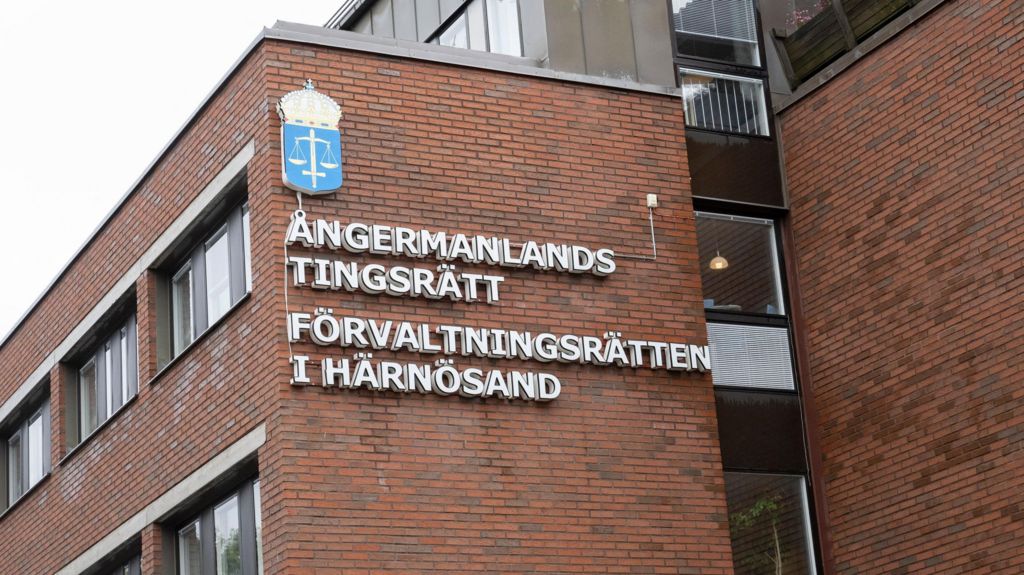
    A high-profile criminal trial got underway on Friday at a district court in Härnösand, a quiet coastal town in eastern Sweden, where a 61-year-old local man faces severe charges including multiple counts of rape, assault, and coercion for allegedly forcing his ex-wife to provide paid sexual services to more than 120 men over three years.

    Prosecutors lay out a disturbing account of systematic abuse that exploited the isolation of the couple’s remote farm near Kramfors, in northern Sweden, to maintain control over the victim. According to official charging documents, the abuse began in 2022, when the defendant first coerced his then-wife into engaging in sexual encounters with men he sourced and communicated with online, who traveled to the couple’s property from across Sweden to pay for the services. The violence and coercion only ended in October 2025, when the victim gathered the courage to file an official report with police. She has since divorced her abuser, and both she and the defendant have had their full identities withheld from public records to protect the victim’s privacy.

    Prosecutors allege the defendant used multiple tools to break his wife’s resistance and maintain his control: he plied her with drugs to lower her ability to resist, installed surveillance cameras throughout the family home to monitor her every move (including recording the non-consensual sexual encounters, footage that will be entered as evidence in the trial), and exploited her limited social network to cut her off from outside support. He also carried out repeated violent threats against her, including threats to kill her, burn her with petrol, and sever her fingers, according to the indictment cited by Swedish public broadcaster SVT.

    Lead prosecutor Ida Annerstedt told Swedish national daily Expressen ahead of the opening of the trial that the defendant intentionally “exploited her particularly vulnerable situation” and her deep-seated fear of him to gradually normalize his pattern of coercive abuse.

    The defendant has pleaded not guilty to all charges against him. He claims all sexual encounters were consensual, and argues he only acted as an organizer to facilitate arrangements between his ex-wife and the men who contacted her. His defense lawyer, Martina Michaelsdotter Olsson, confirmed to SVT on the first day of the trial that her client rejects the entire narrative presented by prosecutors, saying he does not recognize the version of events outlined in the indictment.

    Swedish law enforcement has to date identified 120 men who are alleged to have participated in the encounters at the farm. However, only 28 of these men have so far been formally charged in connection with the case. Most of the co-accused have denied the allegations against them, claiming either they never engaged in sexual activity with the victim or that no payment was exchanged. Prosecutors plan to corroborate their case with a range of evidence including online chat logs between the defendant and the accused men, financial transaction records of payments, and calendar entries the defendant kept to schedule encounters.

    The case has drawn widespread international attention, with many observers drawing comparisons to the high-profile 2024 Pelicot trial in France, where Dominique Pelicot was convicted of drugging his own wife and allowing dozens of men to rape her over a nine-year period. To protect the victim’s privacy, the Swedish trial moved into a closed session immediately after the charges were read in court. The entire proceeding is scheduled to run for 14 days, with a verdict expected at the conclusion of proceedings.

  • ‘Sky Ladder’ via ferrata in Zhangjiajie draws global thrill-seekers

    ‘Sky Ladder’ via ferrata in Zhangjiajie draws global thrill-seekers

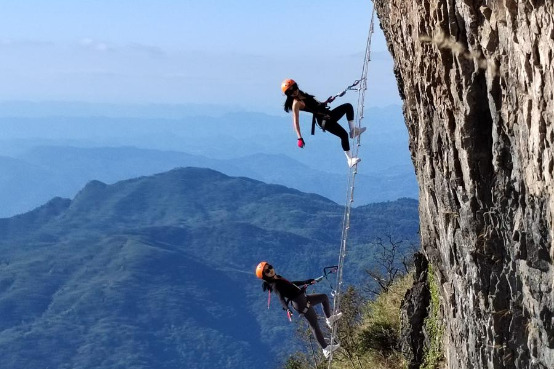
    Nestled among the dramatic karst landscapes of Zhangjiajie, Central China’s Hunan province, a heart-pounding new adventure attraction has quickly become a global sensation, drawing daredevils and outdoor lovers from every corner of the world. The 168-meter fixed-climbing route, carved into the side of a near-vertical sheer cliff, has earned the nickname ‘Sky Ladder’ — and the reputation as China’s highest via ferrata.

    In recent weeks, first-person perspective clips of climbers navigating the narrow, exposed route have spread rapidly across social media platforms, sparking widespread interest among global thrill-seeking communities. What makes this attraction particularly striking is its combination of extreme adventure and unmatched natural scenery.

    The Sky Ladder route is situated on Qixing Mountain, a karst tableland formation roughly 13 kilometers from Zhangjiajie’s city center. Standing at an average elevation of 1,328 meters, the mountain is defined by plunging sheer cliffs, deep winding gorges, rolling seas of mist and cloud, and thundering cascading waterfalls. For decades, this region has drawn hikers and outdoor explorers for its otherworldly landscapes, and the new via ferrata adds a high-adrenaline dimension to the area’s already robust tourism offerings.

    Unlike traditional rock climbing that requires advanced technical skill and heavy gear, via ferrata — a system that uses permanently anchored iron rungs, cables and safety rails along the route — allows even casual adventure lovers to experience the thrill of scaling a massive cliff with proper safety equipment. This accessibility has helped the Sky Ladder attract a wide range of visitors, from experienced mountaineers looking for a new challenge to first-time cliff climbers eager to check a once-in-a-lifetime experience off their bucket lists.

    As visitor numbers continue to climb, the Sky Ladder has solidified Zhangjiajie’s position as a top global destination for both natural scenery and outdoor adventure tourism.

  • Tourist boat capsizes in northern India, killing at least 10

    Tourist boat capsizes in northern India, killing at least 10

    On a Friday afternoon in northern India, a preventable boating disaster unfolded on the waters of the Yamuna River, claiming the lives of at least 10 people near the sacred Hindu pilgrimage destination of Vrindavan, according to local government officials. Vrindavan, a temple-centric town in Uttar Pradesh, draws millions of religious pilgrims and recreational tourists every year, with river boat tours being one of the most popular activities for visitors.

    Preliminary investigations into the incident have painted a clear picture of negligence that led to the tragedy. The private tour vessel, which was only certified to carry a maximum of 15 passengers, was carrying nearly 25 people when it began to overturn in the middle of the river. Investigators confirmed that strong river currents whipped up by sudden gusts of wind caused the overloaded boat to rock violently before it collided with a fixed pontoon bridge, the impact that ultimately sent it capsizing.

    Senior local administrative official Chandraprakash Singh confirmed that rescue teams pulled 15 survivors from the river, but four of those rescued remain in critical condition, receiving urgent care at local hospitals. All 10 deceased were Indian citizens, and six of the victims were women, per official casualty records.

    Multiple official sources also highlighted widespread safety failures that contributed to the death toll. The vast majority of passengers on board were not provided with or required to wear life jackets, and inspectors noted that the aging vessel showed clear signs of poor ongoing maintenance. Shockingly, the boat operator abandoned the scene immediately after the accident and remains at large as of the latest updates.

    All the passengers killed and rescued were part of a larger organized tour group of 150 people that had traveled to the Vrindavan area for a multi-day religious visit. This latest incident has once again drawn attention to the long-standing pattern of unsafe recreational boating across India, where lax safety regulation, unlicensed operators, and disregard for passenger capacity rules have made fatal boat accidents a disturbingly common occurrence. Just last year, a similar capsizing incident in southern India killed 22 tourists, highlighting a national crisis that has yet to be effectively addressed by regulators.

  • Invisible power protects Dunhuang’s iconic desert oasis

    Invisible power protects Dunhuang’s iconic desert oasis

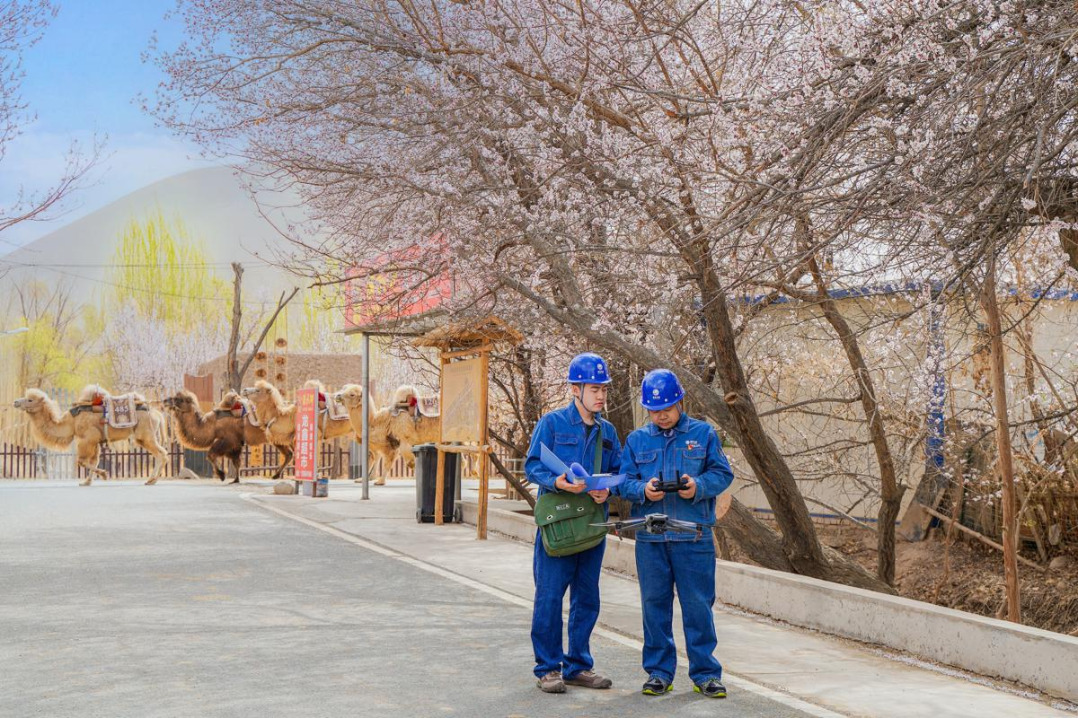
    As spring unfolds across northwest China’s Gansu province, the legendary desert oasis of Dunhuang is coming alive with color. Some 1,500 hectares of fragrant Li Guang apricot blossoms are blanketing the slopes below Mingsha Mountain (the Singing Sand Dunes) in soft layers of blush pink and creamy white, drawing growing crowds of domestic and international travelers to the region’s popular Mingsha Mountain and Crescent Spring Scenic Area for the start of the peak tourism season. What many visitors never notice, however, is the quiet, unobtrusive system keeping the destination running smoothly: an innovative ‘invisible power protection’ model that balances reliable energy access with preservation of Dunhuang’s one-of-a-kind natural and cultural landscape. Developed and implemented by State Grid Jiuquan Power Supply Company, this approach prioritizes minimizing visual disruption to the desert oasis environment. At the core of the strategy is the full underground burial of all low-voltage power cables, moving all critical energy infrastructure entirely out of sight to eliminate the visual clutter that above-ground utility poles and lines would create in the scenic area. To maintain safe, consistent power delivery without disturbing the natural scenery or disrupting visitors’ experiences, the company has also implemented a routine maintenance regime that includes regular insulation testing and round-the-clock remote monitoring. This proactive system allows technicians to identify and resolve potential equipment risks long before they cause outages, all without requiring obtrusive above-ground construction work that would alter the desert landscape. For a destination that draws millions of visitors annually to experience its dramatic desert dunes, historic cultural sites, and rare oasis ecosystem, the invisible power model delivers a dual win: it ensures a reliable, uninterrupted power supply to support tourism operations and local livelihoods, while keeping Dunhuang’s iconic natural vista unspoiled for generations of future visitors.

  • Dutch police urge victims of ‘international sextortion campaign’ to come forward

    Dutch police urge victims of ‘international sextortion campaign’ to come forward

    Dutch law enforcement has taken to social media to urge unreported victims of a brutal, transnational sextortion ring to come forward, after a 22-year-old local man went on trial this week for orchestrating a campaign that left dozens of women and girls coerced into committing degrading, violent sexual acts on camera.

    The suspect, identified only as Damian A. in line with Dutch privacy regulations, crafted a deceptive online persona posing as a teenage girl to lure targets on widely used social and messaging platforms. His MO followed a chilling pattern: he first convinced victims to share explicit personal photos, then leveraged that material as blackmail. Under threat to distribute the private images to the victims’ friends, family members, and classmates, he forced them to create increasingly graphic, sadistic content—including forced self-directed sexual abuse and orders to lick public toilet seats. Some victims were even coerced into writing or holding signs reading “Owned by Turpien”, the suspect’s reported online alias, effectively branding themselves in the imagery that would later be exploited for profit.

    Damian A. was first taken into custody in January 2025, and his trial opened this week in the Dutch city of Dordrecht. Court documents confirm the suspect has confessed to the charges, which include counts of online sexual assault and online rape. Prosecutors have formally requested a nine-year prison sentence alongside court-mandated psychological treatment. In remarks reported by local Dutch media, Damian A. told the court, “I didn’t think about the consequences. That you can hurt people.” A final verdict from the court is expected within the coming weeks.

    The international scale of the abuse only came to light after a group of young women in the United States reported their exploitation to authorities, sparking a cross-border investigation that led investigators to Damian A. One high-profile case in the Netherlands involved a schoolgirl who was ordered to skip class and send a nude photo to the suspect within 10 minutes, or face having her existing explicit images sent to all her classmates. Rotterdam Police’s Sexual Crimes Team has described the harm inflicted as catastrophic, with the suspect turning his victims’ daily lives into “a living hell.”

    Beyond blackmail, Damian A. is alleged to have sold the abusive, explicit content on third-party platforms, extending the harm far beyond the initial coercion, and even shared the victims’ private personal data with other bad actors. To date, investigators have positively identified more than 50 victims across six countries: the Netherlands, the United Kingdom, the United States, Canada, Germany, and Montenegro. But law enforcement stressed that this number is almost certainly a fraction of the true total, as many victims remain too afraid or ashamed to come forward.

    Milou van der Kolk, a member of the Rotterdam Police Sexual Crimes Team, emphasized the urgency of the public appeal. “We are very worried because what these girls have had to endure is so extreme and so intense, and we know that there are more girls but we don’t know who they are,” she said.

    The ongoing social media campaign by Dutch police serves three core goals: to identify additional unreported victims, to reassure existing survivors that the suspect is in custody and cannot contact them, and to encourage caregivers and parents to have open conversations with young people about the dangers of sharing intimate imagery online. All police posts include direct links and contact information for free, confidential victim support services.

    Authorities explained that many victims of this type of online abuse grapple with overwhelming isolation, chronic stress, and feelings of hopelessness. Because the shame, fear, and despair caused by sextortion can be so debilitating, professional support is not just helpful—it can be life-saving. The case also highlights a growing, underrecognized threat: how a single offender with just a smartphone can exert total, terrifying control over young victims in the privacy of their own homes, turning everyday social media platforms into tools of intimidation, abuse, and exploitation while the adults in their lives remain completely unaware of the harm taking place.

    Police have also issued a separate warning to any individual who purchased or shared the abusive content: all such material must be deleted immediately, as investigators have confirmed that a permanent digital trail exists to trace activity. The suspect’s actions are part of a sharply rising global trend of sextortion: in the Netherlands alone, police recorded roughly 3,000 sextortion cases in 2025, marking a 46% jump from the previous year.

    Any individuals who have experienced online sexual abuse can access confidential support resources through the BBC Action Line.