分类: society

  • Louvre workers vote to extend a strike at the world’s most visited museum

    Louvre workers vote to extend a strike at the world’s most visited museum

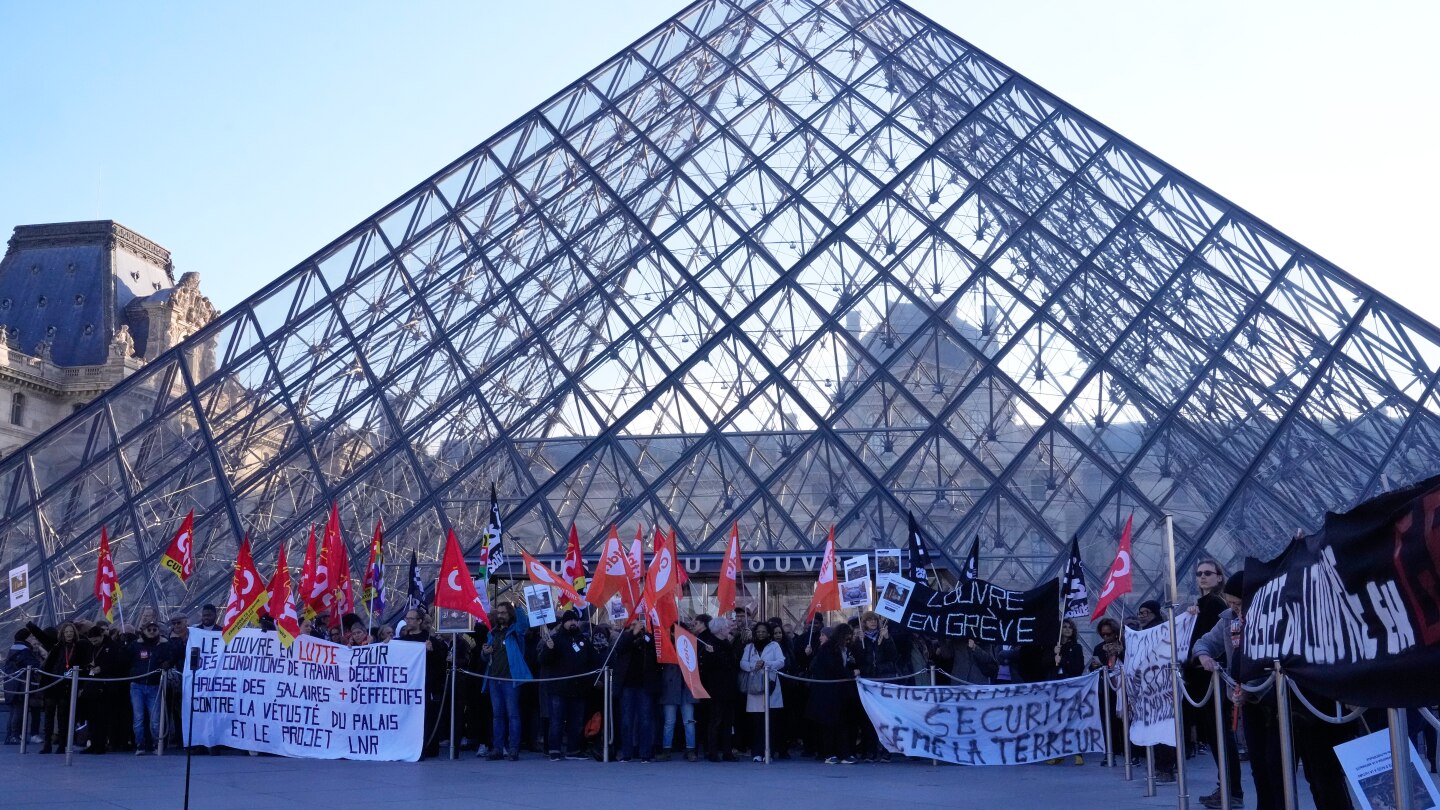
    PARIS — Louvre Museum employees have voted to prolong their strike action, intensifying labor disputes at the world’s most frequented cultural institution. The work stoppage, initially implemented earlier this week, reflects deepening tensions between staff and management over systemic operational challenges.

    Union representatives cite persistent understaffing, deteriorating infrastructure, and controversial administrative decisions as primary grievances. These concerns gained renewed urgency following October’s audacious crown jewels theft, which revealed critical security vulnerabilities within the historic museum complex.

    The Wednesday morning general assembly resulted in unanimous support for continuing the industrial action, creating uncertainty about daily operations. Ticket-holding visitors formed queues outside the museum while administration officials assessed whether sufficient staff would be available to maintain safe gallery access.

    In response to the crisis, Culture Ministry officials proposed several mitigation measures during emergency talks with unions on Monday. These included canceling planned €6.2 million funding cuts scheduled for 2026, initiating new recruitment drives for security and visitor service positions, and enhancing staff compensation packages. Union leadership dismissed these proposals as insufficient to address fundamental problems.

    Louvre President Laurence des Cars faced additional scrutiny during her scheduled appearance before the Senate’s culture committee Wednesday. Lawmakers continue investigating security failures after des Cars acknowledged only learning about a damning 2019 security audit following the October robbery. Both France’s Court of Auditors and an independent administrative inquiry have criticized delayed implementation of promised security upgrades.

    The Culture Ministry recently implemented emergency anti-intrusion protocols and appointed Philippe Jost—who supervised Notre Dame’s restoration—to assist in reorganizing the museum’s security apparatus, signaling growing governmental concern over leadership effectiveness.
  • Old, polluted mining site thrives in a green avatar

    Old, polluted mining site thrives in a green avatar

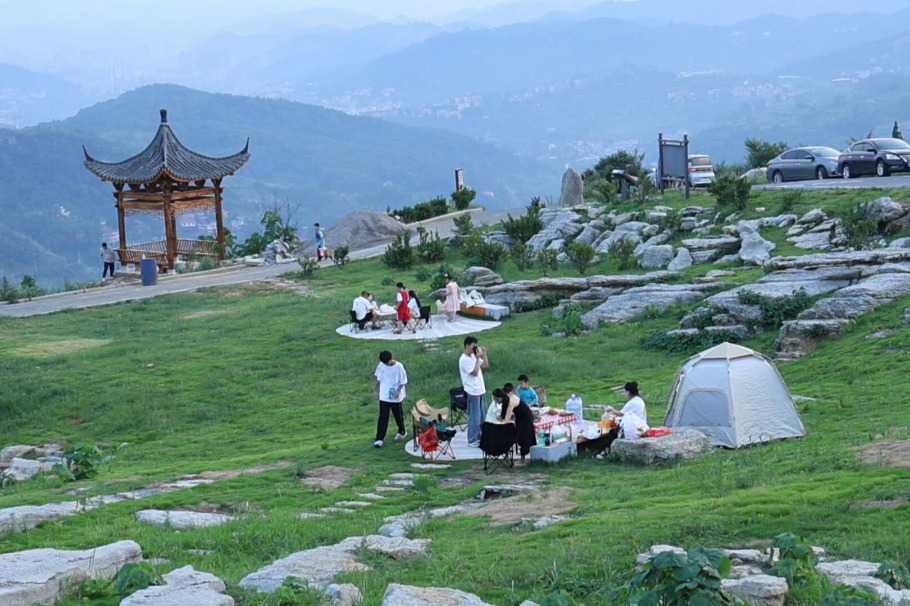
    The Xikuangshan mining region in China’s Hunan province has undergone a remarkable ecological transformation, turning from a severely polluted industrial wasteland into a thriving green landscape that now attracts international visitors and academic researchers alike.

    For generations, this area in Lengshuijiang county was known as the ‘World Antimony Capital,’ having produced approximately one-third of China’s total antimony output and a quarter of global production over the past century. The industrial legacy came at tremendous environmental cost, with decades of intensive underground mining causing severe vegetation deterioration, air and water pollution, and ground subsidence that forced many residents to relocate.

    Eighty-three-year-old Xie Guoxiu, whose family has lived in the core mining area for generations, recalls the toxic conditions that once dominated the landscape. ‘We couldn’t grow vegetables in the yard and had to buy produce from distant urban areas,’ she remembered. ‘The pollution drove many neighbors away.’

    The turnaround began in 2006 when the Lengshuijiang city government launched a comprehensive environmental campaign. Early efforts focused on relocating residents from subsidence-affected areas, dredging polluted rivers, and building alternative water supply systems. The project gained significant momentum in 2013 when it was included in Hunan province’s ‘No. 1 Project’—a key initiative for comprehensive pollution treatment along the Xiangjiang River.

    Between 2018 and 2021, authorities invested over 300 million yuan ($42.6 million) in ecosystem restoration, successfully reviving 187 hectares of forest and 160 hectares of farmland. Today, abandoned mining sites have been replaced by photovoltaic power stations and wind farms, while once-denuded hills now feature lush forests, grasslands, and productive farmland.

    The area’s dramatic transformation has earned international recognition, including being showcased at the UN Convention on Biological Diversity (COP15) in 2021 as one of China’s typical ecological restoration cases. Earlier this year, Xikuangshan was selected as one of 20 exemplary cases under the UN Decade on Ecosystem Restoration, a global initiative jointly led by the UN Environment Programme and the Food and Agriculture Organization.

    The restored area now serves as a geological fieldwork base for students and researchers from numerous higher education institutions. According to Yi Shengxing, chief engineer at the Lengshuijiang Natural Resources Bureau, the project has evolved beyond pollution treatment to create a sustainable development model combining ecology, culture, and tourism.

    The success in Xikuangshan reflects broader progress across Hunan province, where officials have restored 9,298 hectares of historical mining sites—far exceeding the 14th Five-Year Plan target of 6,000 hectares. The region’s revival demonstrates how former industrial centers can successfully transition toward environmentally sustainable and economically viable futures.

  • Chinese family bonds withstand test of time

    Chinese family bonds withstand test of time

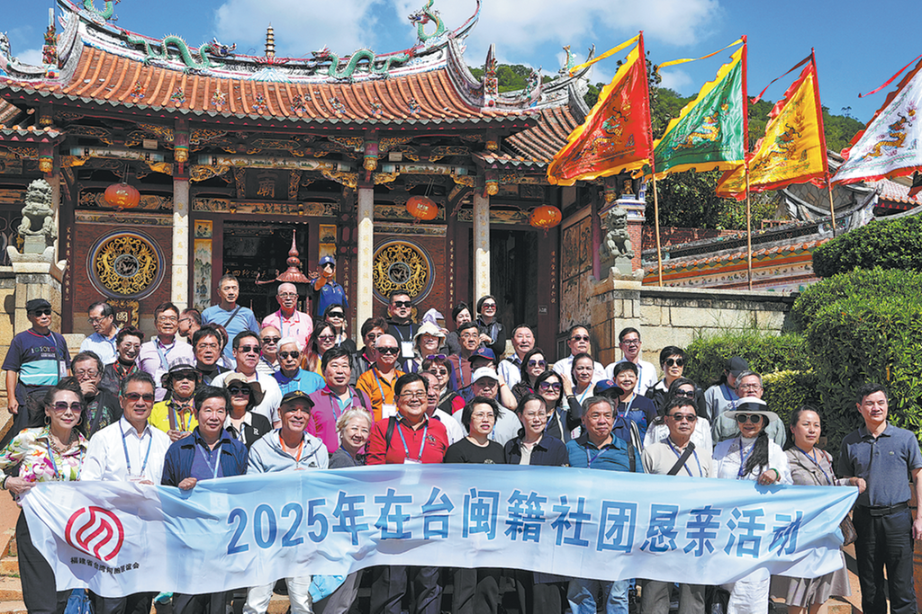
    The enduring strength of ancestral ties continues to bridge the Taiwan Strait, as generations of mainland descendants maintain profound connections to their familial origins. This cultural phenomenon demonstrates how blood relationships and shared heritage transcend political divisions and historical circumstances.

    Chen Chien-hsing, a 68-year-old Taiwan resident, embodies this timeless connection. As the son of a Kuomintang soldier who relocated to Taiwan in 1949, Chen has made multiple pilgrimages to his father’s hometown in Fuzhou, Fujian province. What began as a quest to understand his lineage has evolved into a profound personal identification with mainland China. “Chinese people inherently value family heritage and lineage,” Chen reflects. “This emotional bond naturally persists across generations.”

    Chen’s experience mirrors that of countless Taiwan residents, approximately 80% of whom trace their ancestry to Fujian province. The journey between Jinmen and Xiamen regularly carries passengers seeking to reconnect with their roots or visit relatives. Despite periods of separation, these cross-Strait connections remain fortified by shared dialects, culinary traditions, and folk beliefs, including the worship of maritime deities.

    The emotional weight of these connections becomes particularly poignant among aging veterans. Chen recounts the story of 97-year-old Huang Wei, who lost contact with his Guizhou family for nearly eight decades. Despite extensive efforts to facilitate a reunion, Huang’s deteriorating health prevented his final journey home—a fate shared by many elderly veterans who clung to hopes of returning to their birthplace.

    Genealogical records have proven instrumental in preserving these familial bonds. Lin Ming-cong, president of an association for relatives of Taiwan compatriots who resisted Japanese occupation, represents the prestigious Wufeng Lin family that migrated from Fujian during the Qing Dynasty. His ancestral home in Pinghe county, now a cultural heritage site, maintains meticulously preserved genealogical documents that have enabled family reunifications despite decades of separation.

    “Although the Strait temporarily divided families, clan exchanges continued and records were meticulously maintained,” Lin notes. His first meeting with mainland relatives felt instantly familiar: “We became deeply connected within minutes, despite never having met before.”

    These cultural and familial connections continue to shape identity across generations. Chen, now in his sixties, remains committed to fulfilling his father’s final wish to have his ashes returned to their ancestral home—a testament to the unbroken bloodline that continues to define cross-Strait relationships.

  • Manhunt continues days after deadly shooting at Brown University

    Manhunt continues days after deadly shooting at Brown University

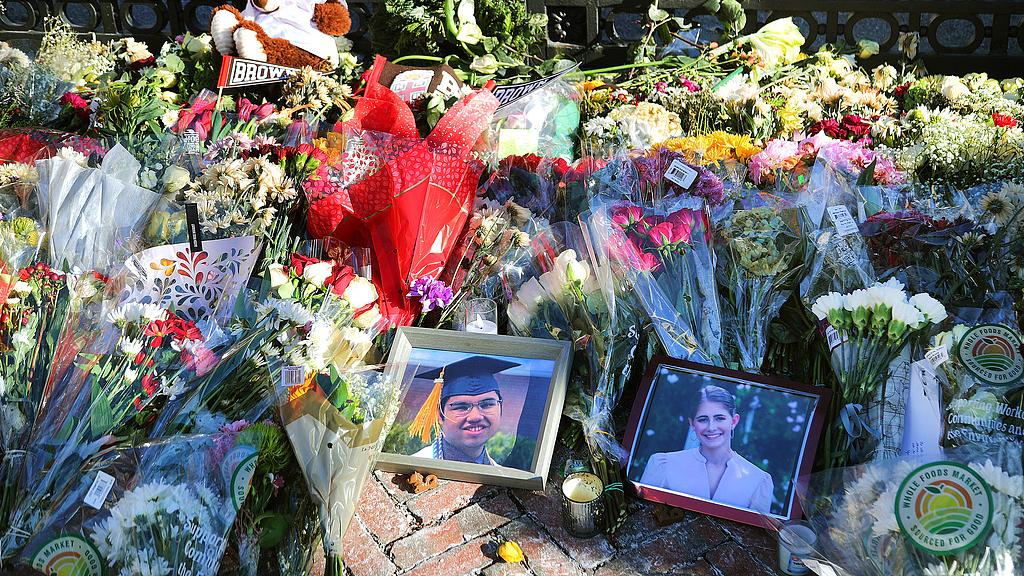
    PROVIDENCE, R.I. – Law enforcement authorities continue their intensive search for a gunman responsible for a deadly campus shooting at Brown University that resulted in two fatalities and nine injuries, now entering its fourth day without a confirmed suspect in custody.

    The tragic incident occurred during final examination period at the Barus and Holley engineering building, which was densely populated with students preparing for exams and the approaching Christmas break. According to eyewitness accounts, the shooting triggered an immediate campus-wide lockdown protocol, with students and faculty sheltering in place for several hours while police secured the area.

    University administration confirmed the identities of the deceased as Mukhammad Aziz Umurzokov, an incoming freshman from Uzbekistan, and Ella Cook, an Alabama native and sophomore who served as vice-president of the university’s Republican club. A memorial vigil was held on campus to honor the victims, even as the institution canceled remaining in-person classes and examinations for the semester.

    Despite initial detention of a person of interest on Sunday, Providence Police Department subsequently released the individual without charges, acknowledging that investigative leads remain limited. This development has compounded frustrations within the campus community, where many expected quicker resolution given Rhode Island’s status as one of America’s states with lowest violent crime rates, according to FBI Crime Data Explorer statistics.

    The Gun Violence Archive has documented this incident as the 393rd mass shooting nationwide in 2025, placing renewed attention on firearm violence in educational environments. While university officials have stated there is no ongoing threat to campus safety, many students report persistent unease and concerns about security measures.

    Graduate student Zico, who was present in the engineering building during the shooting, described sheltering beneath a desk while awaiting police assistance. “Beyond the immediate fear, what lingers is profound frustration,” he noted. “The perpetrator remains at large days later, with apparently minimal investigative progress.”

    Another student, Bella Wang, recounted barricading herself in a third-floor classroom for nearly six hours after realizing the shooting was occurring in adjacent facilities. “The surreal nature of violence invading our academic environment remains difficult to process,” Wang stated. “Educational institutions should represent safety, but that fundamental trust has been profoundly shaken.”

    As the campus partially reopens ahead of holiday break, university administrators face mounting pressure to enhance security protocols while addressing broader concerns about gun violence prevention in academic settings.

  • Shock as popular South African DJ shot dead in Johannesburg

    Shock as popular South African DJ shot dead in Johannesburg

    South Africa’s entertainment industry and broader society are reeling from the brazen daylight assassination of renowned media personality Warrick ‘DJ Warras’ Stock. The 40-year-old radio presenter, television host, and podcaster was executed in central Johannesburg on Tuesday afternoon, a brutal incident that has intensified national conversations about the country’s severe crime epidemic.

    According to official statements from the South African Police Service (SAPS), the attack occurred as Stock was departing from Zambesi House near the Carlton Centre precinct. Three unidentified assailants approached the media figure after he had parked his vehicle. CCTV footage obtained by investigators depicts one suspect—described as wearing dreadlocks and what appeared to be a security uniform—opening fire on Stock before all three fled the scene on foot.

    Police Chief Fred Kekana provided disturbing details of the final moments, noting that the victim attempted to escape after being shot but collapsed across the street. Notably, investigators confirmed Stock was carrying an unused firearm at the time of the attack, and no items were stolen from his person, complicating initial assumptions about robbery as a potential motive. Forensic teams have collected key evidence including spent cartridges from the crime scene.

    Beyond his celebrity status as host of the popular reality show ‘Ngicel’ iVisa’ on Mzansi Magic, Stock maintained a diverse professional portfolio that included private security services, VIP protection operations, property management, and assistance with building evictions—a dimension that authorities are examining as they develop investigative leads.

    The murder has triggered an extraordinary outpouring of grief and condemnation across South Africa’s social and political landscape. Sports, Arts and Culture Minister Gayton McKenzie praised Stock’s fearless commentary, noting he ‘spoke his truth without fear or favour.’ Opposition leader Mmusi Maimane of the Build One party characterized the killing as ‘a shock for all South Africans,’ reflecting the profound impact of this violence.

    This tragedy occurs against a grim statistical backdrop: South Africa maintains one of the world’s highest homicide rates, with approximately 63 lives lost to violent crime each day according to recent police data. The brazen nature of Stock’s murder in a public space has amplified calls for urgent action to address the country’s entrenched security challenges.

  • Childhood friends find  ‘$55,000 diamond’ in India

    Childhood friends find ‘$55,000 diamond’ in India

    In an extraordinary turn of fortune, two young entrepreneurs from India’s impoverished Panna district have discovered a remarkable 15.34-carat gem-quality diamond that promises to transform their families’ destinies. Satish Khatik, 24, who operates a meat shop, and Sajid Mohammed, 23, a fruit vendor, stumbled upon the glittering stone while excavating a small plot they had leased from the government just weeks earlier.

    The discovery represents not just geological rarity but social significance in one of India’s most economically challenged regions. Panna, located in Madhya Pradesh state, suffers from chronic poverty, water scarcity, and limited employment opportunities despite hosting the majority of India’s diamond reserves. For generations, local residents have supplemented their incomes by leasing government plots at nominal rates, hoping to uncover the precious stones that could reverse their financial circumstances.

    Official diamond evaluator Anupam Singh confirmed the stone’s exceptional quality and market value, estimating it could fetch between 5-6 million rupees ($55,000-$66,000) at upcoming government auctions. These quarterly events attract buyers from across India and internationally, with pricing benchmarks set according to the Rapaport Report—the diamond industry’s leading independent market analysis authority.

    The two friends, who come from families with decades of unsuccessful diamond hunting experience, described their emotional reaction to the find. “We can now get our sisters married,” they expressed, highlighting the immediate social impact the discovery will have on their families. Mohammed’s father, Nafees, who had searched for diamonds his entire life without significant success, attributed the discovery to divine reward for their perseverance.

    District Mining Officer Ravi Patel emphasized the exceptional nature of their luck: “They had leased out a plot on November 19. It’s their fortune that they found a diamond of gem quality within a few weeks.” Most local diamond seekers spend years sifting through soil and rock manually, using traditional methods of digging pits, washing sediment through sieves, and examining thousands of tiny stones without ever finding a substantial gem.

    While the financial windfall awaits formal auction, both men remain focused on immediate family obligations rather than long-term investments, demonstrating the profound social significance of such discoveries in economically disadvantaged communities.

  • ‘They look hideous’ – Battle over the Irish flag on Dublin streets

    ‘They look hideous’ – Battle over the Irish flag on Dublin streets

    Dublin has become the stage for a complex cultural confrontation as the Irish tricolour flag transforms into a symbol of division rather than unity. Across the capital’s northern districts, particularly in East Wall, numerous flags have appeared on street lamps without official authorization, sparking intense community debate about national identity and inclusion.

    The phenomenon has drawn sharp criticism from political figures and anti-racism advocates who characterize these displays as territorial marking and intimidation tactics. Conversely, far-right groups and certain community members maintaining the installations reject accusations of racism, insisting they simply express national pride.

    Dublin City Council has adopted a cautious stance, declining to remove the flags despite their unauthorized status. Officials deem removal ‘counterproductive,’ instead proposing educational initiatives about the flag’s historical significance and meaning.

    In response to the perceived co-opting of national symbolism, the #OurFlag movement has emerged seeking to reclaim the tricolour as an inclusive emblem. Organizer Dil Wickremasinghe, a prominent broadcaster and psychotherapist, described the campaign as resistance against those weaponizing the flag to create atmospheres of exclusion. She shared her personal experience of her six-year-old son expressing fears about safety following the 2023 Dublin riots, highlighting the very real human impact of such symbolic conflicts.

    Independent Councillor Malachy Steenson represents the opposing viewpoint, vigorously supporting the flag displays as legitimate expressions of national identity while rejecting any immigration-related motivations. He argues for the tricolour’s exclusive presence on public infrastructure, opposing other flags including European or Pride banners.

    Meanwhile, Social Democrat Councillor Cat O’Driscoll reports significant community concern about the anti-immigration messaging potentially associated with the flags. This concern has manifested physically through a new mural proclaiming ‘North Wall welcomes all’ along North Strand Road, creating a visual counter-narrative to the flag campaign.

    Academic analysis from Professor Dominic Bryan of Queen’s University Belfast contextualizes Dublin’s situation within broader UK and Irish patterns, noting how national flags can simultaneously express patriotism and function as instruments of coercive control. This duality creates particular challenges for authorities reluctant to remove national symbols.

    The council’s current strategy emphasizes community engagement and education over enforcement, aiming to foster deeper understanding of the flag’s intended meaning while addressing safety concerns only when installations create tangible hazards.

  • A homeless man’s death caught the pope’s attention. Now his likeness is on display at the Vatican

    A homeless man’s death caught the pope’s attention. Now his likeness is on display at the Vatican

    In an extraordinary convergence of art, faith, and human tragedy, the portrait of a homeless German man has found its spiritual home at the Vatican, completing a profound narrative that began with a chance encounter on Roman streets.

    German artist Michael Triegel first met Burkhard Scheffler in 2018 outside a Roman church, immediately recognizing the homeless man’s striking features as ideal for depicting Saint Peter. Unbeknownst to Triegel, this artistic decision would later intertwine with Scheffler’s tragic death from exposure in St. Peter’s Square in November 2022—an event that captured Pope Francis’s personal attention.

    The artistic journey continued in Germany where Triegel, a Catholic convert, had won a prestigious commission from Naumburg’s Protestant cathedral to create a new central altar panel complementing surviving Renaissance works by Lucas Cranach the Elder. His painting incorporated Scheffler as Saint Peter among other contemporary figures—a rabbi as Saint Paul, the artist’s daughter as Mary, and anti-Nazi theologian Dietrich Bonhoeffer.

    Following UNESCO-related disputes about the altar’s placement in Germany, the artwork was loaned to the Vatican’s Teutonic College chapel. There, in a remarkable moment of recognition, Vatican art experts identified the painted Saint Peter as the deceased Scheffler, whose grave lies mere steps away in the Teutonic cemetery—a burial place arranged by Pope Francis himself.

    The altar now resides temporarily near Scheffler’s resting place, creating what Monsignor Peter Klasvogt calls ‘a wonderful outcome’ that honors the man’s memory through art and prayer. For Triegel, the coincidental reunion validates his artistic mission: creating religious figures that feel authentically connected to contemporary humanity rather than idealized archetypes.

  • ‘An unspeakable loss’: Funeral takes place for rabbi killed in Bondi shooting

    ‘An unspeakable loss’: Funeral takes place for rabbi killed in Bondi shooting

    Sydney witnessed profound grief as thousands gathered to honor Rabbi Eli Schlanger, the first victim of the Bondi Beach shooting to be laid to rest. The 41-year-old British-born community leader, affectionately known as the ‘Bondi Rabbi,’ was among 15 fatalities when two assailants allegedly inspired by Islamic State ideology opened fire during a Hanukkah celebration.

    Rabbi Levi Wolff characterized Schlanger’s death as an ‘unspeakable loss’ for both the local community and the global Jewish nation during the emotionally charged service. Schlanger’s father-in-law, Rabbi Yehoram Ulman, remembered him as ‘my son, my friend, my confidant,’ expressing regret for not more frequently vocalizing his love and appreciation. Schlanger leaves behind a wife who recently gave birth to their fifth child just two months ago.

    In a powerful demonstration of resilience, Ulman announced that the Jewish community would maintain a 31-year tradition by lighting the final Hanukkah candle on Bondi Beach despite the tragedy. ‘We will gather under the banner of our Chabad house of Bondi, to which Eli dedicated his life,’ he declared, urging community members not to retreat from public life.

    The funeral proceedings continue with services scheduled for Rabbi Yaakov Levitan on Wednesday afternoon and 10-year-old Matilda, the youngest victim, on Thursday. Matilda’s father publicly thanked lifesavers, bystanders, and police officers who assisted during the attack, specifically acknowledging an unidentified woman who protected his younger daughter Summer throughout the ten-minute shooting.

    The memorial service attracted prominent figures including Opposition leader Sussan Ley, New South Wales Premier Chris Minns, former prime minister Scott Morrison, and Israeli Ambassador Amir Maimon. Prime Minister Anthony Albanese’s absence drew attention, with him explaining on ABC NewsRadio that he attends events by invitation only. This comes amid criticism from the Jewish community regarding his administration’s handling of antisemitism.

    In response, Albanese detailed measures including appointing Australia’s first antisemitism envoy, strengthening hate speech legislation, and increasing funding for social cohesion initiatives and Jewish institutions.

    Regarding the investigation, authorities indicated that one suspect, Naveed Akram, would face charges pending assessment of his medical condition after awakening from a coma. Akram and his father, 50-year-old Sajid Akram who was fatally shot by police, allegedly traveled to the Philippines in November, with investigations ongoing into potential connections with Islamic extremists.

    The human cost extended to two police officers critically injured during the incident. Twenty-two-year-old Constable Jack Hibbert, with merely four months of service, lost vision in one eye yet demonstrated ‘courage, instinct, and selflessness’ throughout the attack. His colleague Constable Scott Dyson remained in critical but stable condition following additional surgery.

  • BBC outside Rabbi Schlanger’s funeral as mourners pay tribute

    BBC outside Rabbi Schlanger’s funeral as mourners pay tribute

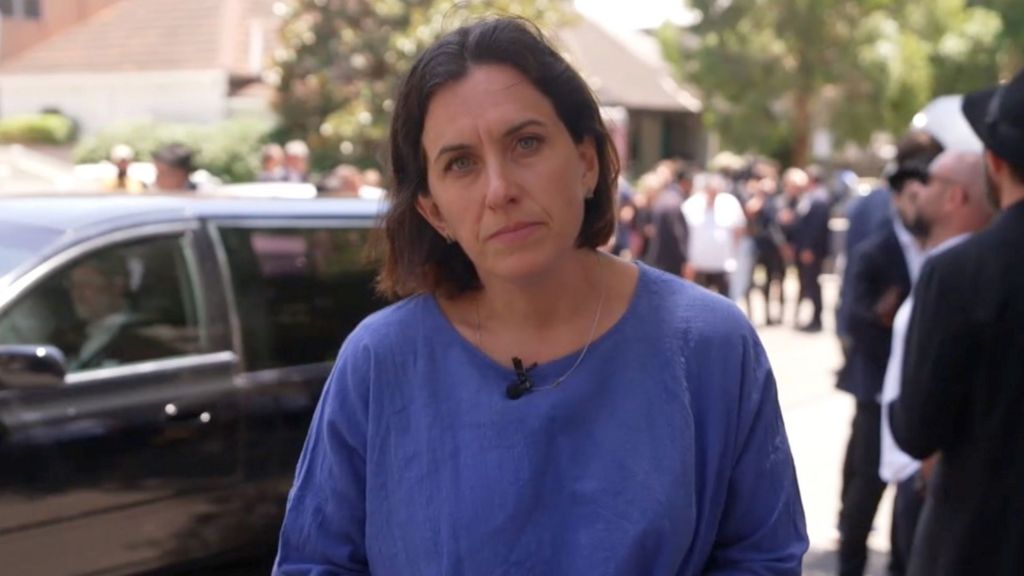
    The global Jewish community gathered in solemn tribute today as hundreds of mourners filled Chabad of Bondi for the funeral service of Rabbi Schlanger, whose passing has created what attendees described as an irreplaceable void in religious leadership. The emotional service, attended by both local congregants and international representatives from Jewish communities worldwide, highlighted the rabbi’s decades of spiritual guidance and community building efforts. Eulogies delivered by prominent religious figures emphasized his extraordinary dedication to interfaith dialogue and educational initiatives that transcended traditional synagogue activities. The BBC’s external broadcast coverage captured poignant moments as mourners shared personal testimonies of how Rabbi Schlanger’s mentorship transformed their spiritual lives. Community leaders acknowledged the particular significance of his work in strengthening Australian Jewish identity while maintaining strong connections with Israeli religious institutions. The funeral procession demonstrated the rare unity across different Jewish movements, with Orthodox, Conservative, and Reform representatives all participating in the memorial ceremonies. Many speakers noted the rabbi’s instrumental role in establishing Bondi as a significant center for Jewish learning in the Southern Hemisphere.