分类: society

  • Hong Kong mourns firefighter killed in city’s deadliest fire in decades

    Hong Kong mourns firefighter killed in city’s deadliest fire in decades

    Hong Kong observed a somber day of mourning as citizens gathered outside Universal Funeral Parlour on Friday to honor firefighter Ho Wai-ho, among the 160 victims of the city’s most devastating fire in recent decades. The 37-year-old perished while combating an inferno that consumed seven buildings at Wang Fuk Court housing complex on November 26, subsequently receiving posthumous recognition as senior fireman for his ultimate sacrifice.

    The funeral procession witnessed profound displays of collective grief and respect. Mourners dressed in black offered floral tributes and bowed solemnly before the funeral home, where thank-you cards from grateful residents adorned the walls. Hong Kong’s leadership, including Chief Executive John Lee, joined uniformed personnel and civilians in paying final respects.

    Ceremonial honors unfolded as pallbearers carried Ho’s flag-draped coffin past dozens of saluting firefighters. The hearse, bearing the fallen hero’s portrait, proceeded to the fire’s origin site at Wang Fuk Court for additional memorial rites before continuing to his former station. There, colleagues formed an honor guard flanking the vehicle in a final procession toward Gallant Garden, the designated resting place for civil servants who die in service.

    Personal testimonials highlighted Ho’s character and unmet potential. Retiree Tse Pak-yin noted the firefighter’s unmarried status as particularly tragic, while resident Andy Fong expressed how the tragedy ‘saddened every Hong Konger’ despite personal unfamiliarity. Ho is survived by parents, two brothers, and a fiancée.

    The fire department formally remembered Ho as ‘industrious, polite and dedicated’ in an official statement, emphasizing his respected standing among peers. Meanwhile, the November blaze—the territory’s deadliest since 1948—has prompted serious safety evaluations after investigations revealed substandard plastic netting and foam window boards accelerated flame propagation across renovation scaffolding.

    With thousands displaced into temporary accommodations, the catastrophe has ignited public scrutiny over building maintenance oversight. Authorities have established a judge-led investigative committee tasked with determining causation within nine months, concurrently implementing enhanced netting standards checks to prevent future tragedies.
  • Surfers and swimmers pay tribute to victims of Bondi shooting

    Surfers and swimmers pay tribute to victims of Bondi shooting

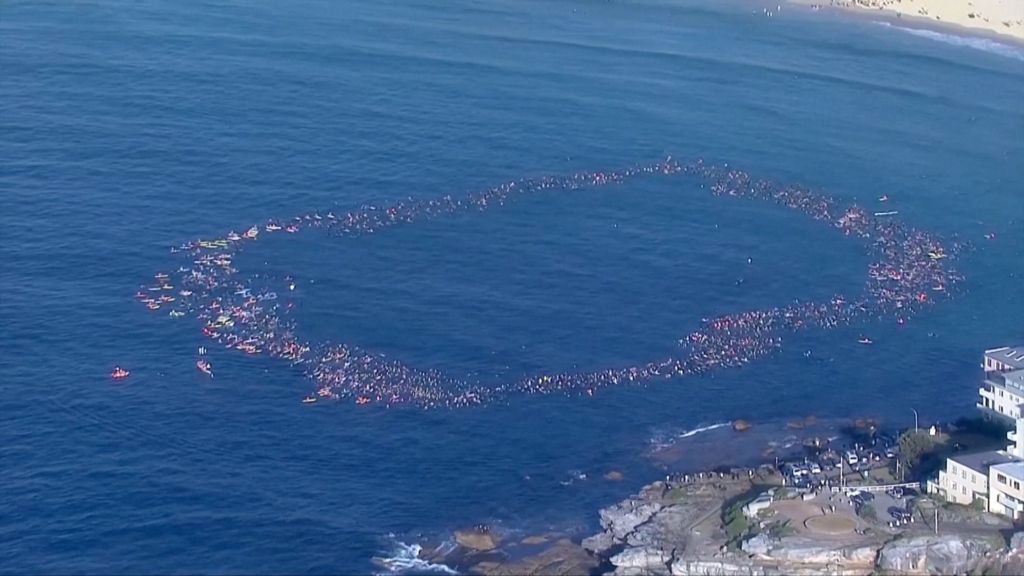
    In a powerful display of community solidarity, hundreds of surfers and swimmers gathered at Sydney’s iconic Bondi Beach to honor the memory of those lost in Sunday’s tragic shooting incident. The emotional tribute, known as a ‘paddle out,’ saw participants forming a vast circular formation in the waters—a traditional aquatic memorial ceremony within surf culture.

    The gathering represented a cross-section of Australian society, united in grief and resilience. Local residents joined first responders and visitors in this spontaneous act of collective mourning, transforming the site of recent tragedy into a space of healing and remembrance. The ceremony proceeded in respectful silence, punctuated only by the sound of waves and occasional shared words of comfort among participants.

    This community-organized event demonstrates how public spaces can serve as venues for processing collective trauma. Beachgoers who typically visit for recreation instead came together in solemn contemplation, creating temporary memorials along the shoreline where floral tributes continue to accumulate. The Bondi community’s response highlights the enduring human capacity to find unity and support mechanisms following unexpected violence that disrupts everyday life in public spaces.

  • UAE launches first electronic system to settle blood money claims

    UAE launches first electronic system to settle blood money claims

    The United Arab Emirates has entered a new era of judicial efficiency with the groundbreaking launch of an electronic system dedicated to processing blood money claims. This innovative platform represents a collaborative effort between the Central Bank of the UAE (CBUAE) and Dubai Public Prosecution (DPP), marking a significant milestone in the nation’s digital transformation journey.

    The newly implemented system establishes automated procedures and electronic integration between DPP and licensed insurance companies through CBUAE’s digital infrastructure. This technological advancement directly supports the government’s ‘Zero Bureaucracy’ initiative by streamlining previously complex administrative processes.

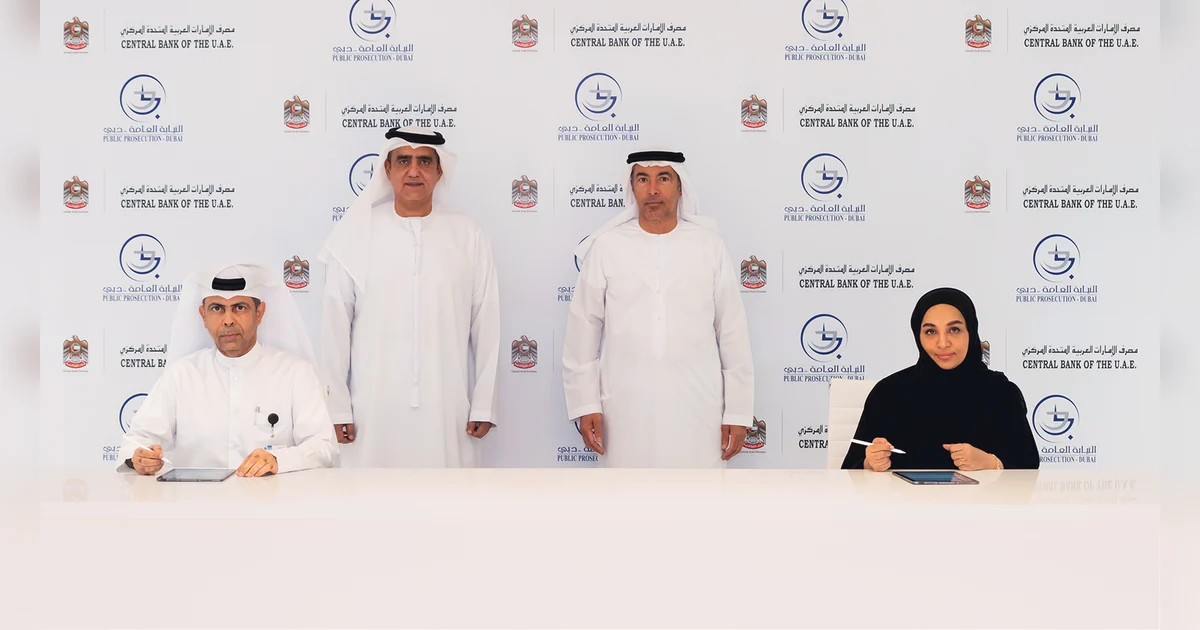
    During a formal ceremony attended by Khaled Mohamed Balama, Governor of CBUAE, and Essam Issa Alhumaidan, Attorney-General of Dubai, both institutions solidified their cooperation through a Memorandum of Understanding. The agreement was officially signed by Fatma Abdullah Aljabri, Assistant Governor for Financial Crime, Market Conduct and Consumer Protection, and Counselor Salah Boufrousha Alfalasi, Senior Advocate General and Head of Traffic Prosecution in Dubai.

    Officials emphasized that this pioneering project enhances service quality, improves customer experience, and strengthens consumer protection mechanisms. The system ensures seamless settlement of blood money claims while promoting stronger coordination between financial regulators, insurance providers, and judicial authorities.

    Ms. Aljabri stated that this initiative demonstrates CBUAE’s unwavering commitment to financial service development and digital transformation, aligning with broader objectives to eliminate bureaucratic barriers within the financial sector. Meanwhile, Counselor Alfalasi highlighted the project as a successful model of inter-agency cooperation that establishes robust foundations for accelerating procedures through advanced digital solutions.

  • Why Gen-Z believes financial literacy goes beyond budgeting, credit rating

    Why Gen-Z believes financial literacy goes beyond budgeting, credit rating

    A profound generational shift in financial understanding is emerging as Generation Z challenges conventional notions of economic literacy. Moving beyond traditional concepts of budgeting and credit management, this digitally-native cohort embraces a more holistic perspective that acknowledges both technological opportunities and systemic constraints within global wealth structures.

    The contemporary financial landscape presents unprecedented accessibility through digital investment platforms and mobile trading applications. While previous generations faced significant barriers to market participation, Gen Z navigates an ecosystem where cryptocurrency tokens, stablecoins, and micro-investing opportunities are merely a smartphone download away. This technological democratization, however, exists within an unequal global framework where true financial empowerment remains constrained by geographic and socioeconomic factors.

    Digital platforms provide psychological gratification through immediate visual feedback on investment performance, creating dopamine-driven engagement patterns. Yet this accessibility simultaneously fosters disconnection from interpersonal financial relationships and community-based economic systems. The generation’s financial consciousness has been shaped by witnessing market volatilities portrayed as high-stakes entertainment rather than substantive economic activities.

    Gen Z’s financial philosophy recognizes the inherent limitations of current economic structures modeled on imperialistic wealth pyramids. Their perspective acknowledges that traditional success metrics—six-figure salaries, credit ratings, and digital wealth representations—exist alongside global crises including climate-induced famines and humanitarian emergencies. This generation consequently emphasizes understanding one’s position within broader economic systems rather than merely pursuing individual wealth accumulation.

    The redefined financial literacy incorporates awareness of material conditions affecting society’s most vulnerable segments. It values entrepreneurial ideation and innovation while recognizing that sustainable economic progress requires addressing foundational inequalities. This approach maintains that professional achievements and financial metrics, while necessary for navigation within existing systems, should not constitute life’s ultimate purpose.

    Ultimately, Gen Z’s financial paradigm emphasizes human connections, community support, and personal relationships as authentic measures of prosperity. This perspective maintains that while economic participation remains necessary, true wealth encompasses life’s fundamental experiences: love, companionship during illness, and shared human moments that transcend monetary valuations.

  • UAE: Meet Syrian software engineer using digital art to promote inclusive design

    UAE: Meet Syrian software engineer using digital art to promote inclusive design

    In the United Arab Emirates, Syrian graphic designer and software engineer Radi Charafli is revolutionizing the concept of inclusive design through digital art. Born with a motor disability, the 28-year-old creative professional has transformed his physical limitations into a powerful catalyst for reimagining accessibility in artistic and technological spaces.

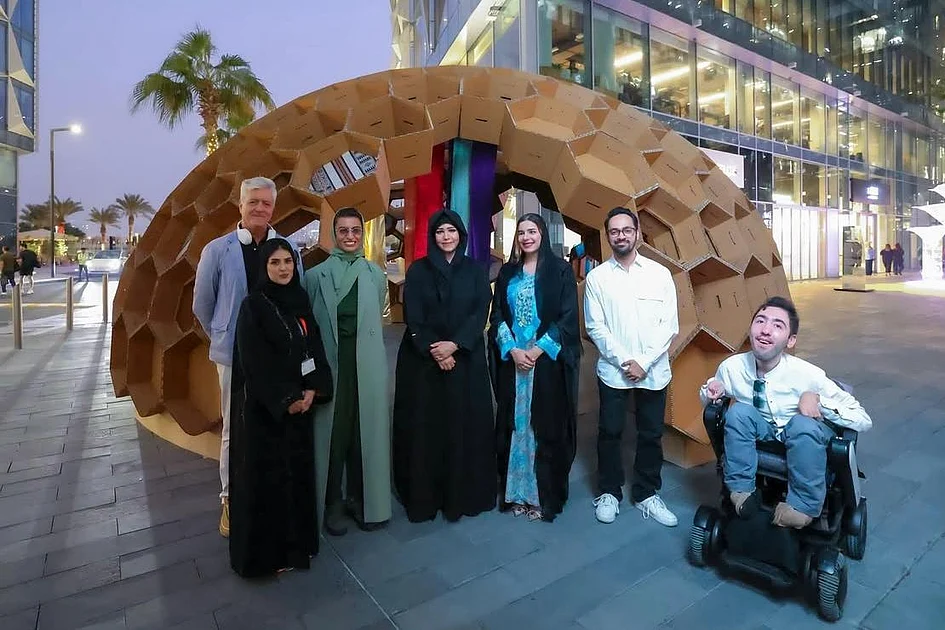
    Charafli recently served as both curator and featured artist for the groundbreaking ‘Dome of Inclusion’ initiative—an innovative architectural installation designed to challenge public perceptions of disability through multisensory engagement. The sustainable structure, composed of interlocking hexagons and pentagons, symbolized six core principles (collaboration, creativity, inclusion, empowerment, innovation, and unity) and five key disability areas spanning sensory to neurodiversity.

    The artist’s journey into digital creation began at age 14 when diminishing manual dexterity forced a transition from traditional drawing to digital tools. ‘Digital design allowed me to create with precision that my hands alone could no longer achieve,’ Charafli explains. Now with over seven years of professional experience across Middle Eastern and European markets, he describes his work as ‘visual storytelling’ that inherently prioritizes accessibility.

    Collaborating with fellow artists of determination Aldana Alhashmi and Ashar Hussain, Charafli transformed the dome’s empty structure into an immersive experience. His digital vectors were enhanced with 3D-printed elements specifically to accommodate visitors with visual impairments. ‘The main challenge was translating digital designs into physical tactile experiences,’ he notes, emphasizing that inclusive design must be foundational rather than supplemental.

    As both software engineer and designer, Charafli practices what he preaches, utilizing AI and voice commands to navigate his digital world. ‘I don’t use my phone with my hands. These tools are essential, and designers need to think about them from the beginning of any project,’ he states, positioning the UAE as a global leader in this accessibility paradigm shift.

    Beyond technical compliance, Charafli’s mission focuses on human dignity and changing perceptions. Through his artwork, he demonstrates that movement and strength transcend physicality, residing equally in mental and emotional realms. ‘Art can communicate messages that words sometimes cannot,’ he concludes, proving that creative expression knows no physical boundaries.

  • Dubai alerts residents to avoid stepping out unless ‘necessary’ till Friday noon

    Dubai alerts residents to avoid stepping out unless ‘necessary’ till Friday noon

    Dubai authorities have escalated emergency preparedness measures as meteorological forecasts indicate deteriorating weather conditions across the United Arab Emirates. The Dubai Police Department has issued an official directive strongly advising residents to refrain from non-essential outdoor activities until Friday at noon due to anticipated severe weather patterns.

    Meteorological authorities project rapid weather deterioration within hours, with the National Centre of Meteorology (NCM) activating a yellow alert status effective until 4:00 PM Friday. The warning specifically identifies western and coastal regions, including Fujairah, as high-risk zones for intense precipitation and electrical storms. Concurrently, powerful winds are forecast to generate substantial dust and sand dispersion, significantly compromising horizontal visibility across affected areas.

    Temperature metrics are expected to drop considerably, with Abu Dhabi anticipating ranges between 17°C and 22°C, while Dubai and Sharjah may experience temperatures of 16-23°C and 15-21°C respectively. This thermal decrease accompanies the predicted precipitation events, creating potentially hazardous conditions for transportation and outdoor activities.

    The advisory emerges within a broader context of regional emergency preparedness initiatives, including recent cancellations of public gatherings such as the Simbang Gabi event originally scheduled for Thursday. These precautionary measures reflect enhanced coordination between meteorological services and civil protection agencies aiming to minimize weather-related risks to public safety and infrastructure.

    Authorities continue to monitor atmospheric developments closely, with digital communication channels remaining active for real-time updates. The coordinated response demonstrates the UAE’s evolving emergency management protocols designed to address increasingly volatile weather patterns in the region.

  • Stigma of Ukraine’s forgotten soldiers who ‘died the wrong way’

    Stigma of Ukraine’s forgotten soldiers who ‘died the wrong way’

    Beneath Ukraine’s official death toll of over 45,000 soldiers since Russia’s 2022 invasion lies a silent epidemic of military suicides that remains undocumented in state statistics. While officials describe these cases as isolated incidents, human rights advocates and grieving families estimate the numbers reach into the hundreds, creating a secondary tragedy shrouded in stigma and institutional neglect.

    Kateryna (name changed) embodies this hidden crisis. Her son Orest, a bookish 25-year-old with academic aspirations, was deemed unfit for service initially due to poor eyesight. In 2023, a recruitment patrol re-evaluated and deployed him as a communications specialist. Shortly after arriving near Chasiv Yar in Donetsk, he died from what the army classified as a ‘self-inflicted wound’—a designation his mother finds implausible.

    The classification carries severe consequences: families receive no compensation, military honors, or public recognition. ‘In Ukraine, it’s as if we’ve been divided,’ Kateryna explains. ‘Some died the right way, and others died the wrong way.’ She continues writing daily letters to her deceased son, now exceeding 650, her grief compounded by the official stigma.

    Mariyana from Kyiv shares a parallel tragedy. Her husband Anatoliy volunteered repeatedly until accepted despite lacking military experience. Deployed as a machine-gunner in the brutal Bakhmut sector, he returned from missions psychologically transformed. After losing part of his arm and hospitalized, he took his own life following a phone call with his wife. Denied a military burial, Anatoliy joined the growing ranks of unacknowledged casualties. ‘The war broke him,’ Mariyana states. ‘He couldn’t live with what he’d seen.’

    An online support community now connects approximately 200 families bereaved by military suicides. Oksana Borkun, who runs the network, notes widespread discrimination: ‘If it’s suicide, then he’s not a hero—that’s what people think. Some churches refuse to hold funerals. Some towns won’t put up their photos on memorial walls.’ Many families report inconsistencies in death investigations, with some mothers discovering unexplained bruises on bodies.

    Military chaplain Father Borys Kutovyi has witnessed at least three suicides within his command, emphasizing that ‘every suicide means we failed somewhere.’ He notes that recruited soldiers, unlike career servicemen, often lack psychological preparedness for combat trauma.

    Ukraine’s Commissioner for Veterans’ Rights Olha Reshetylova receives reports of three to four military suicides monthly, acknowledging systemic failures: ‘They’ve seen hell. Even the strongest minds can break.’ She confirms some investigations may conceal murders under the guise of suicide and advocates for comprehensive reform of military psychological services, though acknowledges this requires years to implement.

    As these families fight for truth and recognition, Reshetylova offers a forward-looking perspective: ‘These people were your neighbors, your colleagues. They’ve walked through hell. The warmer we welcome them, there will be fewer tragedies.’

  • Visa-free measures spur surge in visitors

    Visa-free measures spur surge in visitors

    China’s tourism landscape has undergone a remarkable transformation following the implementation of its expanded visa-free transit policy, with official statistics revealing unprecedented growth in foreign arrivals. According to the National Immigration Administration, China welcomed approximately 40.6 million foreign nationals through its ports in the past year, representing a substantial 27.2% year-on-year increase.

    The cornerstone of this tourism boom is the optimized 240-hour visa-free transit policy, officially launched on December 17, 2024. This comprehensive policy unified and extended previous 72-hour and 144-hour transit options, now permitting citizens from 55 eligible countries to stay for up to 10 days without a visa. The program encompasses 65 open ports across 24 provincial regions, with Indonesia joining the list of eligible countries on June 12, 2025, and five additional ports incorporated on November 5.

    Major metropolitan centers have witnessed extraordinary uptake of the policy. Beijing recorded over 3.4 million foreign arrivals, with 55% utilizing visa-free transit. Shanghai saw nearly 5.35 million inbound foreign visitors, 56% benefiting from the policy, while Guangzhou Baiyun International Airport processed more than 3.2 million foreign entries, with over 57% opting for visa-free transit.

    Infrastructure enhancements have been crucial to managing the increased traffic. Transportation hubs have implemented “one-stop processing” and online declaration services, with Beijing reducing average waiting times by 15 minutes per traveler. Multilingual service teams now provide guidance and consultation services throughout major ports.

    The policy’s impact extends beyond tourism, significantly improving China’s business environment by allowing sufficient time for commercial inspections, negotiations, and conferences. Arjun Dev Grover, an American traveler, shared his experience: “This is perfect—it’s too good to be true. Since my stay in China was under 10 days, I didn’t have to pay anything for the application process.” He particularly noted China’s modern infrastructure, friendly locals, and safe, clean environment.

    Data from Qunar.com reveals that bookings by foreign passport holders increased by 20% year-on-year in 2025, covering 175 destination cities. Smaller municipalities like Datong in Shanxi province and Yichun in Jiangxi province experienced over 300% growth in foreign visitors. Japan, South Korea, Vietnam, Malaysia, Singapore, and the United States emerged as top source countries.

    Veteran tour guide Zeng Liangliang, with 20 years of experience in Xiamen, confirmed that foreign tourist numbers have “surged multiple times” in major cities, with increasing numbers arriving for family visits and conferences, signaling a broad-based positive impact on China’s tourism and business sectors.

  • ‘We are not from Bangladesh, we are Indian. Why did they do this to us?’

    ‘We are not from Bangladesh, we are Indian. Why did they do this to us?’

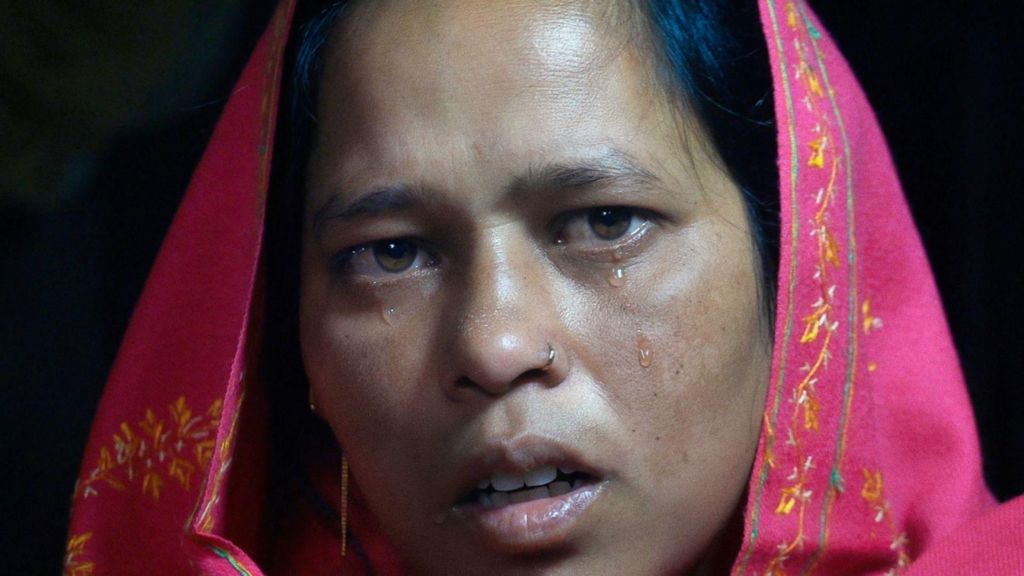
    A pregnant Indian woman’s ordeal has exposed alarming practices in India’s immigration enforcement, raising serious questions about due process and human rights protections. Sunali Khatun, 25, returned to India earlier this month after being forcibly deported to Bangladesh with her family in June, despite claiming Indian citizenship throughout the process.

    The domestic worker from West Bengal was detained in Delhi alongside her husband, Danish Sheikh, and their eight-year-old son. Authorities accused them of being illegal immigrants from Bangladesh and proceeded with deportation without verifying their claims with their home state—a violation of standard protocol according to West Bengal Migrant Workers Welfare Board chairman Samirul Islam.

    Khatun’s case represents hundreds of similar incidents occurring in recent months. While Delhi hasn’t released official deportation statistics, Bangladeshi government sources indicated over 1,200 people were ‘illegally pushed in’ during May alone, coinciding with an All India Radio report documenting approximately 700 deportations from Delhi that same month.

    The family endured more than 100 days in a Bangladeshi prison under harsh conditions. Khatun describes inadequate food for her pregnancy and cells without proper sanitation facilities. ‘I was scared because it was just my son and me. All we did was cry,’ she recounts.

    India’s Supreme Court eventually intervened on humanitarian grounds, permitting Khatun and her son to return while her citizenship undergoes investigation. Her husband remains in Bangladesh, released on bail but separated from his family. Their seven-year-old daughter was left behind in India during the initial detention, creating additional trauma.

    Khatun alleges disturbing details about their forced removal: after detention by Delhi police, they were flown to the India-Bangladesh border and ‘pushed’ across by Border Security Force personnel into dense forest terrain. When they attempted to re-enter India using routes suggested by locals, BSF guards allegedly beat members of their group and returned them to the forest.

    The case has sparked significant political controversy, with the West Bengal government accusing the federal Bharatiya Janata Party-led administration of conducting deportations without cause. Rights activists note a concerning pattern suggesting these actions disproportionately target Bengali-speaking Muslims, despite the cultural and linguistic similarities between West Bengal and Bangladesh that have historically facilitated migration across their porous 4,096-kilometer border.

    Khatun now lives with her parents in West Bengal, anxious about her husband’s situation and uncertain how she will support her two children and impending newborn. ‘We may not make enough money to eat three square meals if we live here,’ she acknowledges, ‘but I will never go back to Delhi.’

    The Supreme Court continues to hear her case as questions mount about India’s deportation practices and their compliance with human rights standards.

  • UAE authority urges remote work for private sector workers as weather worsens

    UAE authority urges remote work for private sector workers as weather worsens

    The United Arab Emirates has activated emergency workplace protocols as a severe weather system descends upon the nation, with the Ministry of Human Resources and Emiratisation (MoHRE) issuing formal guidance for private sector employers. Effective Friday, December 19th, companies operating in regions most severely impacted by the deteriorating conditions are strongly urged to implement remote working arrangements for all roles capable of functioning outside conventional office environments.

    This preemptive measure follows comprehensive meteorological assessments indicating sustained heavy rainfall, electrical storms, and powerful winds across multiple emirates. The National Centre of Meteorology (NCM) has elevated its warning system to a yellow alert status, specifically forecasting hazardous conditions including torrential downpours, hail, and frequent lightning strikes throughout Friday.

    The ministry’s directive emphasizes that while remote work implementation is strongly advised for eligible positions, strict adherence to all localized emergency instructions from respective emirate authorities remains legally mandatory for all businesses. Private enterprises nationwide have additionally been instructed to activate their occupational health and safety protocols, prioritizing employee welfare above all operational considerations.

    Precedent for such measures was established during the catastrophic 2024 flooding events, which prompted a fundamental reevaluation of corporate flexibility policies throughout the UAE. Many organizations subsequently integrated formal remote work provisions into their operational frameworks specifically for weather-related emergencies. Concurrent with the workplace adjustments, municipal authorities have ordered the immediate closure of public parks, recreational beaches, and other outdoor facilities through the weather event’s duration to minimize public risk.

    The current unstable conditions have already manifested significantly, with Thursday’s severe weather causing localized flooding, structural damage, and widespread disruption. Numerous residents opted for early departure from workplaces or transitioned to remote operations proactively as conditions deteriorated throughout the day.