分类: society

  • China has broken disability-poverty link, Rome seminar hears

    China has broken disability-poverty link, Rome seminar hears

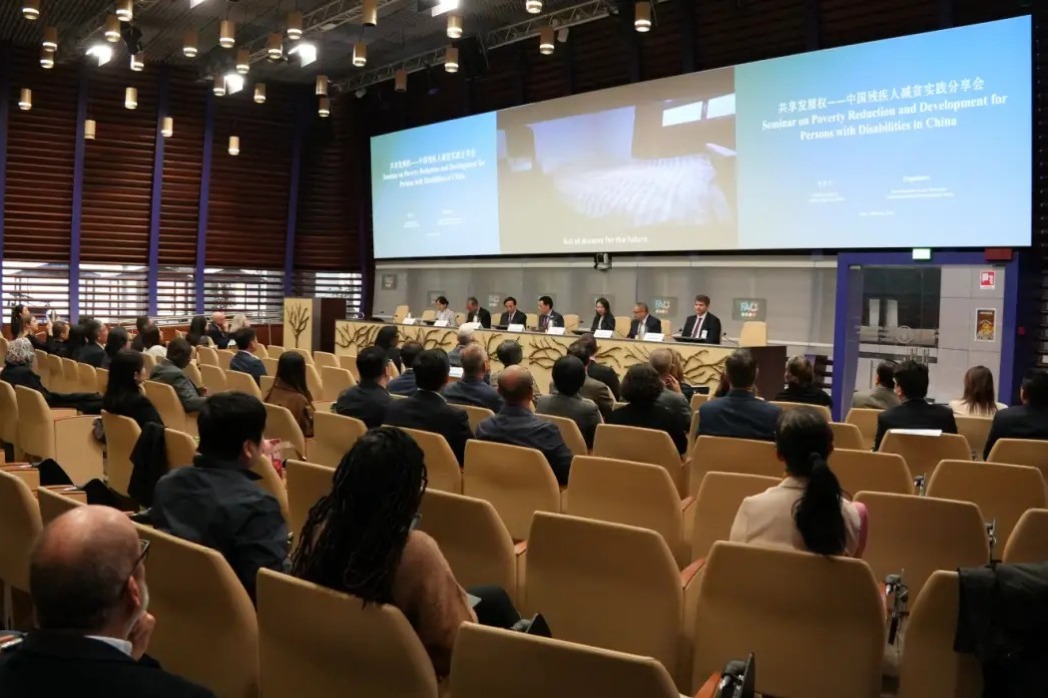
    ROME – In a landmark address at an international seminar in Rome, China has unveiled its transformative success in eradicating poverty among disabled populations, marking a historic decoupling of disability from economic hardship. Cheng Kai, Chairman of the China Disabled Persons’ Federation, detailed the nation’s achievement in lifting 7.1 million rural residents with disabilities out of poverty during the event titled ‘Sharing Development Rights: China’s Practices in Poverty Reduction for Disabled Persons’.

    The seminar, co-hosted by the China Disabled Persons’ Federation, the China International Communications Group, and China’s Permanent Mission to the UN Food and Agriculture Organization (FAO), showcased China’s innovative integration of disability inclusion into its national development framework. Cheng emphasized that addressing disability poverty has been central to China’s broader anti-poverty campaign and ongoing consolidation efforts.

    ‘By achieving this milestone, China has fundamentally disrupted the persistent correlation between disability and poverty through context-specific approaches tailored to our national circumstances,’ Cheng stated. The comprehensive strategy combines targeted poverty alleviation measures with preventive mechanisms against disability-induced economic hardship.

    Notably, China’s model aligns with the FAO’s principle of ‘leaving no one behind,’ offering valuable insights for global poverty reduction efforts, particularly in developing nations. Cheng expressed China’s commitment to enhancing multilateral cooperation through deepened dialogue with FAO member states across various sectors.

    FAO Director-General Qu Dongyu acknowledged the global significance of China’s accomplishment, noting that approximately 15% of the world’s population lives with disabilities who frequently face barriers to resources, services, and employment, especially in rural areas. ‘China’s practices and achievements provide not only a crucial reference for international agencies and developing countries but also substantially strengthen global confidence in pursuing inclusive development and disability poverty reduction,’ Qu affirmed.

    The seminar represents a significant moment in global social development discourse, demonstrating how national strategies can effectively address complex socioeconomic challenges while contributing to international knowledge sharing and cooperative development initiatives.

  • Another 3 members of Iran’s women’s soccer team decide against staying in Australia as refugees

    Another 3 members of Iran’s women’s soccer team decide against staying in Australia as refugees

    MELBOURNE, Australia — In a significant reversal, three additional members of Iran’s national women’s soccer team have opted to return to their homeland after initially accepting refugee status in Australia, according to an official government announcement on Sunday.

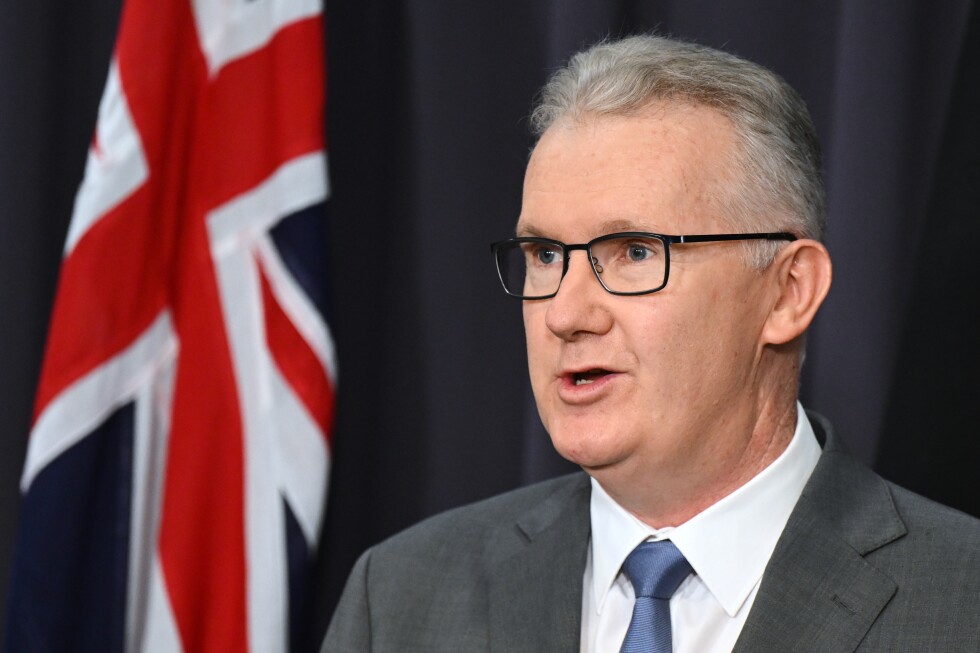
    Australian Home Affairs Minister Tony Burke confirmed the development, stating that the athletes made the conscious decision to rejoin their teammates for the journey back to Iran. “After informing Australian officials of their choice, the players were provided multiple opportunities to discuss alternative options,” Minister Burke emphasized in his formal statement.

    The team originally arrived in Australia to compete in the Women’s Asian Cup tournament last month, prior to the escalation of Middle East conflicts that began on February 28. Of the 26-member delegation, seven individuals—including six players and one support staff member—initially sought humanitarian protection visas following the competition.

    The recent departures mean only three of the original seven asylum seekers remain in Australia. One additional member had previously reversed her decision and left the country earlier. The remaining Iranian contingent had already departed from Sydney to Malaysia on March 9, leaving behind those who initially pursued refugee status.

  • Miss Jasmine on the Pleatau

    Miss Jasmine on the Pleatau

    In the high-altitude classrooms of Lhasa, a transformative educational initiative is taking root through the dedication of 20 volunteer teachers from Jiangsu province. Among them, Xu Xiaoqin has earned the affectionate nickname ‘Miss Jasmine’ from her students at Lhasa-Jiangsu Experimental School, symbolizing the fragrant impact of cross-regional educational cooperation.

    This teaching corps represents a significant interprovincial support program designed to bridge educational disparities between China’s developed coastal regions and plateau areas. The Jiangsu educators bring innovative teaching methodologies, advanced curricular resources, and fresh pedagogical perspectives to Tibetan classrooms, creating an enriching learning environment that combines eastern educational expertise with local cultural context.

    The program extends beyond conventional knowledge transfer, focusing on sustainable educational development through teacher training programs, digital learning resources, and shared educational infrastructure. These efforts aim to create lasting educational improvements rather than temporary interventions, with teachers spending extended periods embedded within the local educational ecosystem.

    Students at the experimental school have demonstrated remarkable engagement with the new teaching approaches, showing particular enthusiasm for interactive learning methods and multimedia educational tools introduced by the Jiangsu team. The initiative has also fostered cultural exchange, with teachers incorporating elements of Tibetan culture into their lesson plans while sharing perspectives from Jiangsu’s advanced educational system.

    This educational assistance program forms part of broader regional development strategies that emphasize knowledge transfer and capacity building as key components of regional development. The ‘Miss Jasmine’ phenomenon illustrates how personalized connections between educators and students can become powerful symbols of interregional cooperation and educational innovation.

  • German philosopher and social critic Jürgen Habermas dies at 96

    German philosopher and social critic Jürgen Habermas dies at 96

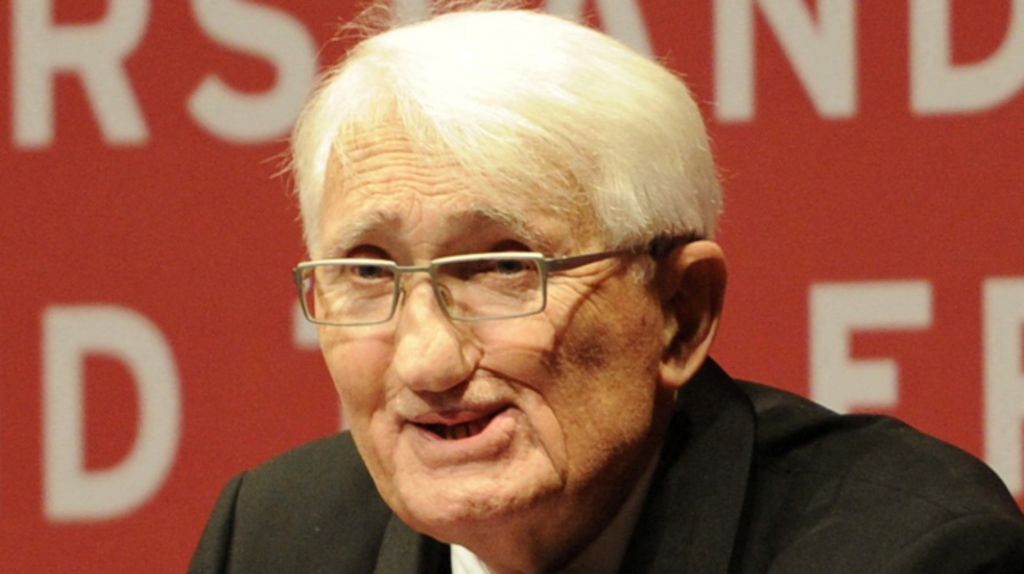
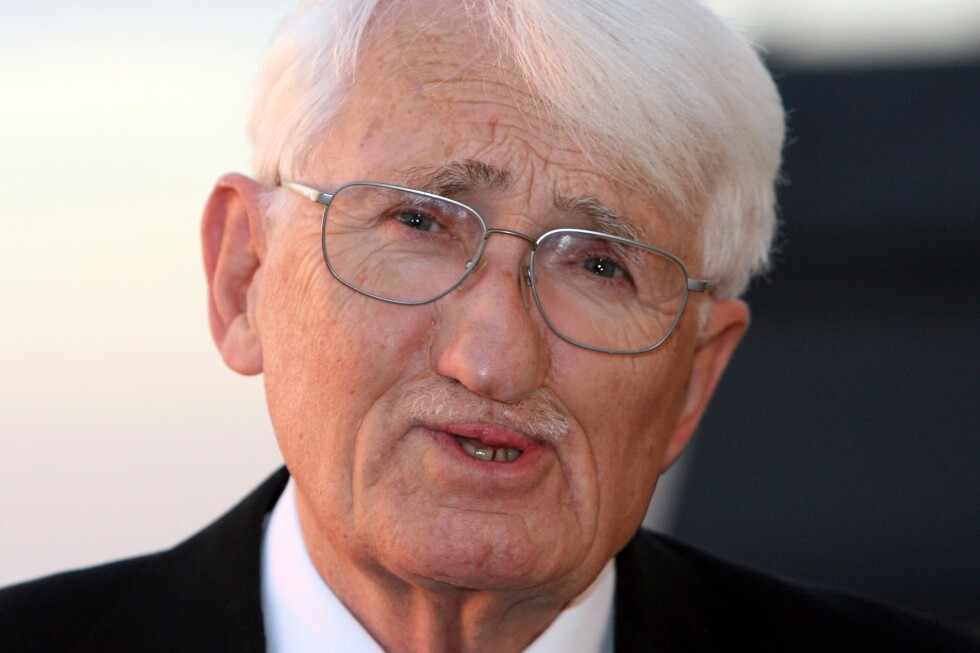
    Jürgen Habermas, the preeminent German philosopher and towering intellectual figure whose critical theories shaped post-war European thought, has died at age 96. His publisher Suhrkamp announced his passing on Saturday, marking the end of an era for contemporary philosophy and social criticism.

    Born in Düsseldorf in June 1929, Habermas’s early life unfolded under the shadow of Nazi Germany. His father, a local chamber of commerce leader, joined the Nazi Party in 1933, and the young Habermas was enrolled in the Hitler Youth organization, though he remained too young for combat deployment during World War II.

    After the war, Habermas embarked on an academic journey that would establish him as a leading voice of the Frankfurt School. He earned his doctorate from Marburg University before joining the University of Frankfurt’s Institute of Social Research, where he worked alongside Max Horkheimer and Theodor Adorno in developing critical theory—a framework challenging capitalist society’s transformation of active citizens into passive consumers.

    Throughout the 1960s, Habermas supported student movements at West German universities while developing his distinctive critique of mass media commodification. He argued that industrialized culture systematically undermined meaningful public discourse, a concern that informed his seminal 1981 work, The Theory of Communicative Action, which proposed that human societies are sustained through rational dialogue rather than political or economic power.

    Habermas’s intellectual courage extended to historical controversies. During the 1980s Historians’ Debate, he confronted conservative scholars who questioned the Holocaust’s uniqueness as a German phenomenon. Later, during German reunification, he criticized the rapid absorption of East Germany, warning against nationalist resurgence and advocating for European unity as a safeguard against historical rivalries.

    His personal experience with a cleft palate, requiring multiple childhood operations, profoundly influenced his theories about language and communication. This physical challenge informed his understanding of dialogic rationality and the fundamental human capacity for communicative action that defined his philosophical legacy.

  • Treasure hunter freed from jail after refusing to turn over shipwreck gold

    Treasure hunter freed from jail after refusing to turn over shipwreck gold

    After a decade behind bars, deep-sea treasure hunter Tommy Thompson has been released from prison, leaving the whereabouts of 500 missing gold coins from a historic shipwreck shrouded in mystery. The 73-year-old explorer, who located the legendary SS Central America wreck in 1988, spent years as a fugitive before his eventual capture and imprisonment.

    The SS Central America, famously known as the ‘Ship of Gold,’ met its tragic fate in 1857 during a hurricane off the coast of South Carolina. The vessel was transporting approximately 30,000 pounds of freshly minted San Francisco gold intended to establish banking reserves on the East Coast. The catastrophic sinking at a depth of 7,000 feet claimed 425 lives and significantly contributed to the financial panic of 1857.

    Thompson’s remarkable discovery of the wreckage yielded thousands of gold bars and coins, with subsequent sales generating approximately $50 million in 2000. However, 161 investors who had contributed $12.7 million to fund the recovery operation filed lawsuits in 2005, alleging they had been defrauded of their promised returns. Later estimates suggested the recovered treasure might have been worth up to $400 million.

    The treasure hunter’s legal troubles escalated when he vanished in 2012 to avoid court appearances. After three years as a fugitive, living under assumed names in Florida hotels while using cash payments and public transportation to evade detection, Thompson was finally apprehended in 2015.

    His imprisonment stemmed from criminal contempt charges for refusing to disclose the location of the missing coins. While civil contempt sentences typically continue indefinitely until compliance with court orders, the presiding judge recently determined that Thompson would never reveal the coins’ whereabouts, leading to his release and concluding one of the most extraordinary treasure hunting sagas in American history.

  • Jürgen Habermas, influential German philosopher, dies at 96

    Jürgen Habermas, influential German philosopher, dies at 96

    BERLIN — Jürgen Habermas, the preeminent German philosopher whose groundbreaking theories on communication and rationality reshaped modern sociological thought, has passed away at age 96. His publisher, Suhrkamp Verlag, confirmed his death on Saturday in Starnberg, a tranquil town near Munich.

    Habermas emerged as one of the most consequential intellectual figures of the postwar era, developing comprehensive frameworks that bridged philosophy, sociology, and political theory. His seminal two-volume masterpiece, “Theory of Communicative Action,” established revolutionary concepts about how human interaction and discourse form the foundation of modern society.

    The philosopher’s intellectual journey was profoundly shaped by Germany’s historical reckoning with Nazism. Born in 1929 in Duesseldorf, Habermas was 15 when the Nazi regime collapsed—an experience he described as catalytic to his philosophical awakening. He later reflected on the profound shock of recognizing the “politically criminal system” in which he had been raised, a realization that propelled his examination of societal structures.

    Throughout his career, Habermas maintained vigorous engagement with political discourse while navigating complex relationships with various movements. During the left-wing student protests of the late 1960s, he adopted a characteristically nuanced position—engaging with activists while cautioning against what he termed “left-wing fascism,” a phrase he later acknowledged might have been “slightly out of place.” Despite initial tensions, he ultimately recognized the movement’s role in driving Germany’s “fundamental liberalization.”

    In the 1980s, Habermas became a central figure in the Historians’ Dispute (Historikerstreit), vigorously challenging conservative historians like Ernst Nolte who sought to contextualize Nazi atrocities through comparative analysis with Soviet crimes. Habermas argued persuasively that such comparisons risked diminishing the unique horror of the Holocaust and undermining Germany’s ethical reckoning.

    The philosopher remained politically active throughout his life, supporting Chancellor Gerhard Schröder’s center-left government in 1998 while offering pointed criticism of Angela Merkel’s leadership. He characterized her administration as “technocratic” and lamented its “paralyzing effects on public opinion,” describing her policies as creating a “foam blanket” that sent citizens into political slumber.

    A passionate advocate for European integration, Habermas frequently criticized German leaders for their “limited interest” in building “a politically effective Europe.” He enthusiastically endorsed French President Emmanuel Macron’s reform vision in 2017, praising his distinctive approach to European discourse.

    Habermas’s personal experiences profoundly informed his philosophical work. Born with a cleft palate that required multiple childhood surgeries, he developed unique insights into language’s essential role in human connection. He described spoken language as “a layer of commonality without which we as individuals cannot exist,” while simultaneously recognizing “the superiority of the written word” in concealing oral imperfections.

    Habermas is survived by two of his three children, Tilmann and Judith, following the passing of his wife Ute Habermas-Wesselhoeft last year and daughter Rebekka in 2023. His intellectual legacy endures as a towering contribution to contemporary thought, having fundamentally transformed our understanding of communication, democracy, and modern society.

  • 9.41 billion cross-regional trips made during 2026 Spring Festival travel rush

    9.41 billion cross-regional trips made during 2026 Spring Festival travel rush

    China’s transportation networks witnessed unprecedented activity during the 2026 Spring Festival travel period, with official data revealing a staggering 9.41 billion cross-regional journeys completed nationwide. This remarkable figure establishes a new benchmark in the history of China’s seasonal migration patterns, demonstrating both the massive scale of domestic mobility and the recovery of travel enthusiasm following recent global challenges.

    The Spring Festival travel rush, known locally as ‘Chunyun,’ represents the world’s largest annual human migration event. The 2026 iteration saw hundreds of millions of Chinese citizens traversing the country to reunite with families for the Lunar New Year celebrations. Transportation hubs across China operated at maximum capacity, with railways, highways, airways, and waterways all experiencing substantial passenger volume increases compared to previous years.

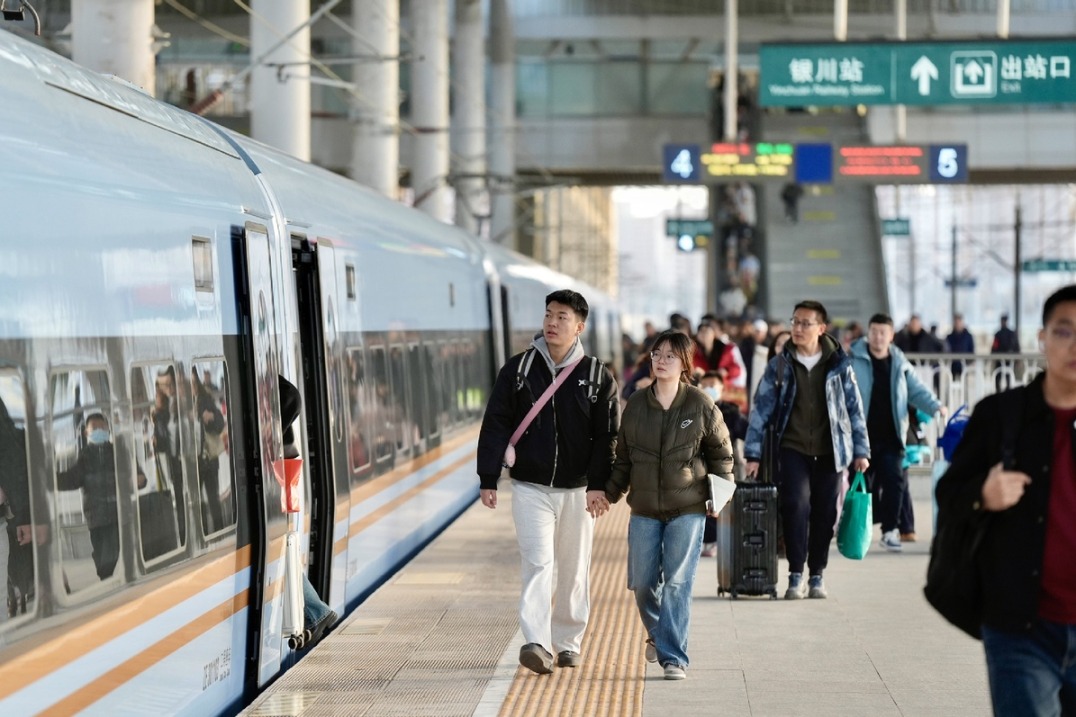
    Photographic evidence from Yinchuan Railway Station in Northwest China’s Ningxia Hui autonomous region captured the immense crowds on February 23, 2026, as travelers hurried to board trains. The scene represented a microcosm of the nationwide phenomenon, with similar congestion observed at major transportation centers throughout China.

    The record-breaking travel numbers reflect several underlying developments: significant infrastructure investments in China’s transportation networks, growing economic prosperity enabling more citizens to travel long distances, and the cultural importance of family reunification during traditional holidays. Authorities implemented comprehensive crowd management strategies and deployed additional transportation resources to accommodate the massive surge in passenger movement.

    This transportation milestone occurred alongside other significant spring developments across China, including early blooming kapok flowers in Guangzhou, the premature return of migratory birds to Xingkai Lake, and the inauguration of Beijing E-Town’s pioneering smart elderly care robotics station.

  • Rapeseed festival boosts rural vitalization in Sichuan

    Rapeseed festival boosts rural vitalization in Sichuan

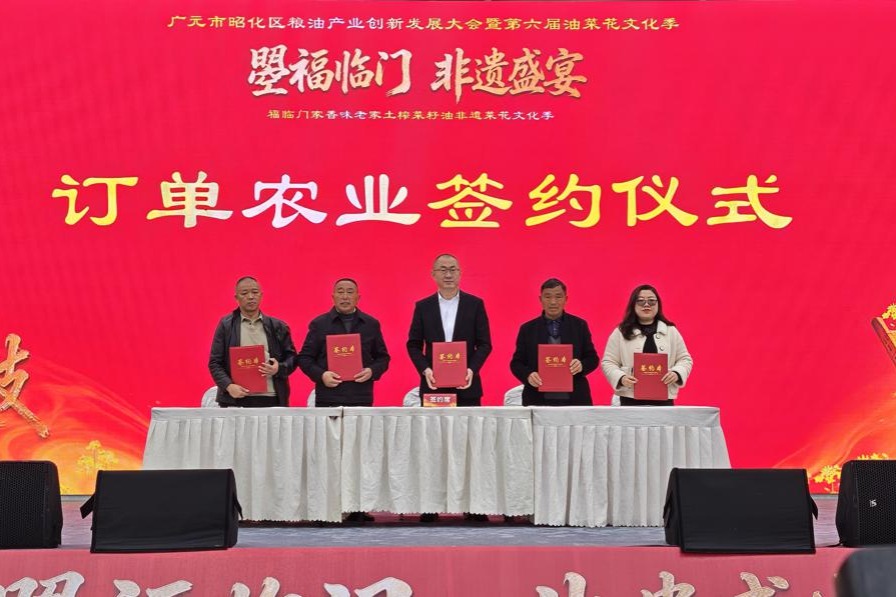
    The sixth annual Rapeseed Flower Cultural Festival commenced on Friday in Zhaohua district, Guangyuan, Sichuan province, marking a significant development in China’s rural revitalization strategy. This innovative event transcends traditional agricultural exhibitions by creating an integrated platform that combines contract farming agreements, cultural heritage presentations, immersive field experiences, and digital commerce initiatives.

    During the opening ceremony, COFCO Oils & Oilseeds (Guangyuan) Co Ltd solidified procurement partnerships with multiple regional suppliers, establishing a strengthened framework for local rapeseed production and distribution. Unlike conventional tourism-focused festivals, the Zhaohua event strategically leverages the region’s agricultural resources to build a comprehensive industrial chain around rapeseed cultivation and processing.

    The festival’s multidimensional approach demonstrates how rural communities can effectively merge cultural preservation with economic development. By incorporating livestream e-commerce capabilities alongside traditional farming practices, organizers have created a sustainable model that benefits local farmers while promoting regional specialty products to broader markets. This initiative represents a sophisticated evolution in how agricultural regions can harness their natural and cultural assets to drive meaningful economic transformation.

  • Indigenous women tour Ecuador oil field as warning against Amazon drilling expansion

    Indigenous women tour Ecuador oil field as warning against Amazon drilling expansion

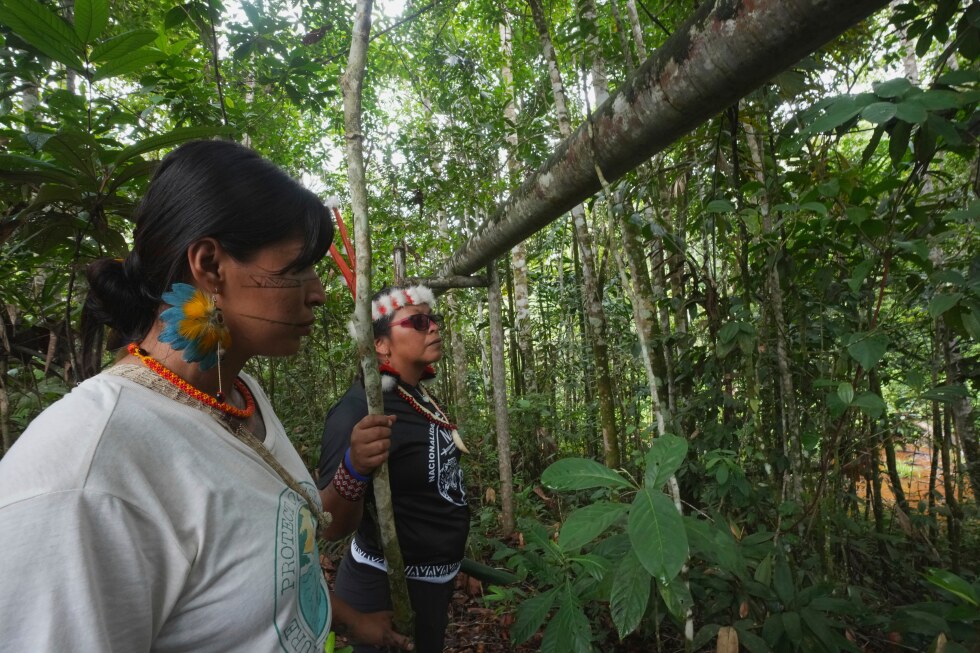
    In Ecuador’s northern Amazon region, a delegation of approximately 30 Indigenous women embarked on an educational journey dubbed a ‘toxitour’ to witness the environmental consequences of decades of hydrocarbon extraction. The women, representing seven distinct Indigenous communities from across Ecuador’s Amazon basin, gathered in Nueva Loja (historically known as Lago Agrio) from March 6-8, 2026, to share experiences and document the ecological damage.

    Julia Catalina Chumbi, a 76-year-old Shuar leader from Pastaza province, expressed profound dismay upon encountering oil-contaminated streams and gas flares burning above the rainforest canopy. ‘Everything is contaminated, even the air,’ she observed quietly, noting that local communities can no longer safely drink from rivers and must purchase bottled water due to pollution concerns.

    The tour included visits to operational oil fields, including the Libertador field operated by state-owned Petroecuador, where participants observed polluted waterways, compromised vegetation, and absent wildlife. Salome Aranda, a 43-year-old Kichwa woman from Morete Cocha, noted that while access restrictions prevent such observations in her own territory, the tour confirmed her concerns about disappearing animals and failing crops near extraction sites.

    This initiative occurred against the backdrop of Ecuador’s proposed ‘hydrocarbon road map,’ a $47 billion expansion plan that would open new Amazon regions to oil and gas development. Many proposed concessions overlap with Indigenous territories in Pastaza and Napo provinces, raising concerns about further environmental degradation and violations of Indigenous rights to free, prior, and informed consent.

    Following the tour, participants developed strategies to resist potential new oil concessions in their territories. Dayuma Nango, vice president of the Association of Waorani Women, affirmed her commitment to protecting Waorani lands, stating: ‘Our forest is our mother. That’s why we protect it.’ The experience culminated in International Women’s Day demonstrations in Puyo, where participants highlighted environmental rights violations and declared their determination to resist oil expansion ‘even if it costs us our lives.’

  • Cocaine worth €5.25m seized and two arrested

    Cocaine worth €5.25m seized and two arrested

    Irish law enforcement authorities have made a major breakthrough in combating organized crime with the interception of cocaine valued at approximately €5.25 million (£4.56 million). The significant narcotics seizure occurred in County Monaghan on Friday following a coordinated multi-agency operation.

    An Garda Síochána executed simultaneous search warrants targeting multiple vehicles and a commercial establishment believed to be connected to drug trafficking activities. The operation resulted in the apprehension of two suspects: a male in his fifties and a female in her forties, both currently detained under drug trafficking legislation.

    The confiscated substances have been transferred to Forensic Science Ireland (FSI) for comprehensive chemical analysis to determine purity, composition, and potential origin. This procedural step is critical for building evidence for subsequent prosecution cases.

    This intelligence-driven intervention was conducted under Operation Tara, a strategic initiative launched in July 2021 specifically designed to dismantle sophisticated drug trafficking networks operating across Ireland. The operation involved specialized units including the National Drugs and Organised Crime Bureau, with tactical support provided by the Dublin Crime Response Team.

    International cooperation played a vital role in the operation’s success, with assistance provided by the Customs Revenue Service and notably, the Belgian Federal Maritime Police, indicating the transnational nature of the investigation. Local Monaghan Garda units also contributed essential regional expertise to the operation.

    Operation Tara represents Ireland’s concentrated nationwide strategy against drug distribution networks, focusing on disrupting every aspect of illegal drug operations from importation and cultivation to street-level distribution and financial proceeds.