分类: society

  • Ancient Zhengding draws spring tourists with blooming peaches

    Ancient Zhengding draws spring tourists with blooming peaches

    The ancient county of Zhengding in Shijiazhuang, Hebei province, has transformed into a spectacular springtime destination, drawing visitors from across the Beijing-Tianjin-Hebei region with its breathtaking floral displays. As seasonal warmth envelops northern China, the historic locale has become a magnet for tourism with its vibrant peach blossoms reaching peak bloom.

    South Gate Square, one of Zhengding’s most frequented sites, presented a particularly picturesque tableau this week. The square’s landscape featured magnificent pink and white flowering peach trees in full splendor, creating a stunning visual harmony with the area’s traditional architecture. Visitors and local residents alike immersed themselves in the seasonal spectacle, capturing the vibrant blooms through camera lenses and smartphone screens.

    The botanical celebration extends beyond the square to Zhengding’s other cultural landmarks. Longxing Temple, an active Buddhist monastery with centuries of history, and Rongguo Mansion, a preserved historical residence, both attracted photography enthusiasts with their magnificent magnolia displays and serene spring atmospheres. These complementary floral exhibitions have enhanced the county’s appeal as a comprehensive spring experience.

    The convergence of natural beauty and cultural heritage has positioned Zhengding as an ideal day-trip destination for urban residents seeking seasonal rejuvenation. The simultaneous blooming of multiple flower varieties throughout the county’s historical sites creates a multidimensional experience that blends natural appreciation with cultural exploration, offering visitors both visual delight and historical enrichment.

  • Indian singer’s drowning was accidental – Singapore coroner

    Indian singer’s drowning was accidental – Singapore coroner

    A Singaporean coroner has officially concluded that the tragic drowning of renowned Indian singer-composer Zubeen Garg was accidental, finding no evidence of criminal involvement. The 52-year-old cultural icon from Assam died on September 19th last year while swimming during a yacht excursion off Singapore’s coast, where he had traveled to perform at a cultural festival.

    The coroner’s investigation revealed that Garg was significantly intoxicated at the time of the incident, with forensic reports indicating his blood alcohol levels exceeded four times the legal drink-driving limit. According to the official report, this impairment likely affected his judgment, leading him to remove his life jacket during his initial swim and not wearing it when he re-entered the water.

    During his second swim, Garg lost consciousness and his face became submerged. Other yacht occupants immediately noticed his distress and provided assistance, lifting his head above water. The coroner found no delays in administering first aid or transporting him to medical facilities.

    The singer’s death had sparked widespread mourning and controversy in his home state of Assam, where he was celebrated for his powerful voice and diverse repertoire spanning 40 languages across his 33-year career. Assam’s Chief Minister Himanta Biswa Sarma had previously called the death ‘plain and simple murder,’ though no evidence supporting this claim has been presented. Despite the coroner’s findings, seven individuals arrested in connection with the case remain in custody, with four facing murder charges.

  • Visitors explore the Yellow River culture on Henan tour

    Visitors explore the Yellow River culture on Henan tour

    The Zhengzhou Yellow River Cultural Park, celebrated for its extraordinary cultural legacy and breathtaking natural scenery, continues to draw global attention as a premier destination for understanding China’s ancient roots. This iconic site offers visitors a profound connection to the origins of Chinese civilization through its harmonious integration of ecological splendor and historical depth.

    As part of the “Following Edgar Snow’s Footsteps – Henan Tour” initiative launched on March 22, international guests recently experienced immersive explorations at the park’s renowned monuments. The program, running through March 25, serves as a featured component of the 2026 China Internet Media Forum, bringing participants to significant cultural locations across Zhengzhou and Luoyang.

    The tour’s highlight included visits to the monumental statues of Yan Di and Huang Di, legendary emperors regarded as ancestral figures in Chinese mythology. These towering sculptures provide a dramatic backdrop for visitors seeking to comprehend the Yellow River’s role as the historical cradle of Chinese civilization, often called “Mother River” in cultural contexts.

    Beyond the archaeological significance, the park demonstrates successful cultural tourism development by preserving natural landscapes while making historical narratives accessible to modern audiences. The four-day program combines expert-guided historical interpretation with hands-on experiences that bridge ancient traditions with contemporary cultural appreciation.

  • China steps up efforts to strengthen rural water supply

    China steps up efforts to strengthen rural water supply

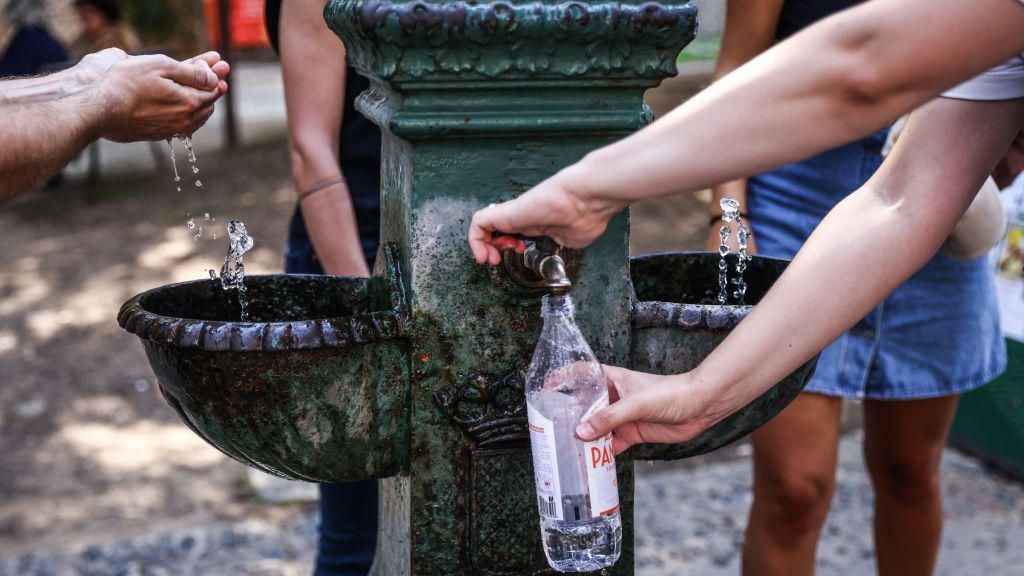
    The Chinese government has unveiled a comprehensive national strategy to enhance the operational sustainability and maintenance protocols of rural water supply networks. This initiative, jointly promulgated by the Ministry of Water Resources alongside five additional governmental bodies, establishes a systematic framework designed to standardize management practices across the entire water supply continuum—from source extraction to end-user faucets.

    Key operational priorities outlined in the directive include guaranteeing adequate water volume, maintaining stringent quality standards, and fortifying emergency response capabilities for water provision. Particular emphasis is placed on addressing infrastructure vulnerabilities in underdeveloped regions and strengthening system reliability where service gaps persist.

    The policy further advocates for measured implementation of pricing mechanism reforms while simultaneously ensuring the protection of public welfare and household affordability. A significant component involves diversifying funding mechanisms for operation and maintenance through public-private partnerships, encouraging private capital investment via integrated construction-management models while maintaining governmental oversight.

    This development builds upon substantial progress in rural water accessibility, with national tap water coverage reaching 96% by the conclusion of 2025, reflecting China’s ongoing commitment to urban-rural infrastructure parity.

  • Dozens of bodies, mostly infants, discovered in Kenya mass grave

    Dozens of bodies, mostly infants, discovered in Kenya mass grave

    Authorities in Kenya have launched a comprehensive investigation following the horrific discovery of 32 bodies, predominantly infants and fetuses, exhumed from a mass grave on property belonging to the National Council of Churches of Kenya (NCCK) in the western town of Kericho.

    The grim operation, conducted under a court order initially seeking 14 bodies, revealed what government pathologist Richard Njoroge described as ‘quite unusual’ circumstances. The remains were found stacked in gunny bags, with the exhumation process hampered by heavy rains. Preliminary examination identified seven adults and 25 children, including numerous body parts.

    Dr. Njoroge noted concerning forensic evidence suggesting the victims died at different times, with adult remains showing advanced decomposition while children’s bodies were less deteriorated. He indicated that some remains appeared to originate from hospitals and mortuaries, though definitive conclusions await complete autopsies scheduled to begin Wednesday.

    The Directorate of Criminal Investigations (DCI) revealed initial findings indicating 13 unclaimed bodies had been officially released from a hospital in neighboring Nyamira county and transported to Kericho for burial last Friday. However, the discovery of additional bodies and the clandestine nature of the burial has raised serious questions.

    NCCK officials have denied any authorization or knowledge of the burial occurring on their property, expressing shock at the discovery. Law enforcement has reportedly arrested two suspects—a public health officer from Nyamira and a cemetery caretaker—with others being questioned for potential criminal activity beyond burial irregularities.

    Human rights organization Vocal Africa condemned the discovery as a ‘staggering and horrific escalation,’ citing reports of mutilation and dismemberment among the remains that suggest unprecedented violence requiring immediate transparent investigation.

    The shocking find echoes Kenya’s recent tragedy where 429 bodies were exhumed from mass graves in the remote Shakahola forest in 2023, linked to cult leader Paul Mackenzie who allegedly instructed followers to starve themselves to death.

  • Graffiti conviction for Australian woman who stuck googly eyes on sculpture

    Graffiti conviction for Australian woman who stuck googly eyes on sculpture

    A Mount Gambier court has sentenced 20-year-old Amelia Vanderhorst for vandalizing a prominent public artwork while under the influence of drugs and alcohol. The incident occurred in September when Vanderhorst adhered plastic googly eyes to the recently installed sculpture known as ‘Cast in Blue,’ locally referred to as the Blue Blob.

    Appearing before magistrates on Tuesday, Vanderhorst pleaded guilty to a graffiti charge that was reduced from initial property damage allegations through prosecutorial negotiations. Magistrate Court officials ordered her to compensate A$2,000 (US$1,394) to the City of Mount Gambier and perform 60 hours of community service.

    Defense attorney Michael Hill explained that his client had consumed three liters of vodka and MDMA before committing the act of vandalism. In a statement to media, Hill noted Vanderhorst has since taken substantial steps toward rehabilitation, including reducing substance use and stabilizing her personal circumstances. The defendant reportedly abandoned a crowdfunding effort for legal fees and returned all contributions, demonstrating accountability for her actions.

    The controversial sculpture, costing taxpayers A$136,000, was unveiled in July as a representation of a mythical megafauna inspired by ancient marsupial ant-eaters found in local caves. Mayor Lynette Martin condemned the vandalism as “willful damage to a valued public artwork,” noting that removal of the adhesive eyes would require expensive restoration due to potential surface damage.

    The sculpture’s installation initially sparked community debate regarding its abstract design and substantial cost, with residents expressing polarized opinions about the artistic value of the blue, amorphous structure.

  • A trendy twist on tea: Herbal infusions are all the rage

    A trendy twist on tea: Herbal infusions are all the rage

    Across Beijing’s historic Dongsi Street, a significant shift in beverage consumption patterns is underway as young professionals increasingly abandon their conventional coffee rituals in favor of traditional Chinese herbal infusions. This movement represents more than mere trend-hopping—it signifies a profound cultural renaissance blending ancient wellness principles with contemporary urban lifestyles.

    Specialized establishments like Tea of Seasons (Shunshieryin), an offshoot of the esteemed Chinese medicine brand Chang Chun Tang, have emerged as epicenters of this transformation. Unlike standard milk tea chains, these venues emanate distinctive aromas of simmering medicinal ingredients including ginseng, astragalus root, red dates, and dendrobium. The concoctions are meticulously crafted according to traditional Chinese medicine (TCM) principles, particularly the concept of “food and medicine sharing the same origin.”

    He Jing, manager and TCM graduate at Tea of Seasons, explains their philosophy: “Our beverages deliver the familiar satisfaction of milk tea while incorporating genuine health benefits. Each formulation is seasonally tailored and nutritionally balanced by professional experts.” The ginseng and astragalus milk tea, for instance, leaves a characteristic herbal aftertaste that consumers have come to appreciate.

    Nearby, Zhima Health coffee bar—established by another TCM giant, Tong Ren Tang—offers innovative herbal-coffee hybrids including goji berry lattes and dried tangerine peel lattes. Their signature “goodnight water” cold brew, containing poria mushrooms and spine date seeds, has gained popularity among sleep-deprived urbanites, while their “stay-up water” infusion with American ginseng and monk fruit targets energy replenishment.

    This trend reflects broader demographic changes: health consciousness has transcended generational boundaries, with young Chinese consumers actively seeking non-caffeinated, low-calorie alternatives that offer functional benefits. The phenomenon has even reached global dimensions through social media platforms like TikTok, where “Chinamaxxing” enthusiasts share recipes for ginger tea and apple water to aid digestion and boost qi (vital energy).

    Sherry Zhu, a Chinese-American TikTok creator, has amassed millions of engagements by demystifying TCM wellness practices for international audiences. Meanwhile, beverage companies are capitalizing on this demand by introducing ready-to-drink bottled herbal infusions featuring ingredients like barley and red bean.

    The movement has also inspired innovative product extensions, including portable herbal sachets aligned with China’s 24 solar terms. During the Spring Equinox period, for example, Tea of Seasons recommends chrysanthemum and bamboo leaf infusions to help “clear liver heat”—demonstrating how ancient seasonal wisdom is finding new relevance in modern consumer culture.

  • Indian man whose life support was removed after court go-ahead dies

    Indian man whose life support was removed after court go-ahead dies

    In a landmark judicial decision with profound ethical implications, 31-year-old Harish Rana has died following the withdrawal of life support in India’s first court-sanctioned passive euthanasia case. Rana passed away Tuesday at Delhi’s All India Institute of Medical Sciences (AIIMS) palliative care unit, concluding a twelve-year medical ordeal that began in 2013 when the engineering student suffered catastrophic head injuries from a fourth-floor balcony fall.

    The legal journey began when Rana’s parents petitioned courts to withdraw life-sustaining treatment for their son, who had remained in a persistent comatose state without prospect of recovery. The case presented unique legal challenges as Rana had never executed a ‘living will’—a legal document established by India’s 2018 Supreme Court ruling that permits adults to specify medical treatment preferences in terminal circumstances.

    After initial rejections from both Delhi High Court and Supreme Court in 2024, the parents successfully renewed their petition in 2025 based on their son’s deteriorated condition and dependence on artificial life support. The Supreme Court mandated two separate medical boards to evaluate Rana’s prognosis, both concluding he had irreversible brain damage, negligible recovery potential, and required complete external support for basic bodily functions.

    The medical assessments detailed extensive bed sores and permanent neurological impairment, with clinicians confirming Rana showed no responsiveness to treatment. On March 11, the Supreme Court authorized medical professionals to exercise clinical judgment, leading to the transfer to palliative care and subsequent removal of life support.

    The case establishes significant precedent for end-of-life decisions in India’s legal landscape, particularly regarding patients without advance directives. The family’s attorney confirmed this would influence future cases involving permanently incapacitated individuals across the country.

    Financial exhaustion and concerns about their son’s future care after their own deaths motivated the parents’ petition, highlighting systemic challenges in long-term critical care management within India’s healthcare framework.

  • ‘He liked the fear in our eyes’, Epstein survivors tell BBC

    ‘He liked the fear in our eyes’, Epstein survivors tell BBC

    A groundbreaking BBC Newsnight special has united five survivors of Jeffrey Epstein’s abuse for their first joint interview, revealing profound psychological trauma and systemic failures in protecting victims’ identities. The conversation, facilitated by Victoria Derbyshire, followed the unintended public disclosure of victim names in millions of documents released by the US Department of Justice.

    Joanna Harrison, whose anonymity was compromised in the document release, described her decision to speak publicly as an act of survival. “It gets to a point where you’re being suffocated and you need to breathe,” Harrison stated, recounting how Epstein’s assault began with what seemed like a normal massage appointment when she was 18. “When he began to masturbate, I completely froze. I don’t think I said two words in the car in the ride home.” She later detailed being raped by Epstein on his birthday.

    Chauntae Davies shared previously unseen photographs from what she described as a “once-in-a-lifetime trip” to Africa on Epstein’s private plane, featuring Ghislaine Maxwell, Kevin Spacey, and former President Bill Clinton. The humanitarian mission focused on AIDS prevention, yet Davies noted the experience was “tainted by what was happening behind closed doors.” She recalled giving Clinton a massage during a refueling stop in Portugal, describing him as “humble, kind and charismatic” in her journal at the time.

    The survivors expressed unanimous skepticism about Epstein’s official cause of death. “We knew him, we knew the kind of person he was,” stated Lisa Phillips, echoing the group’s disbelief in the suicide ruling. Phillips also revealed disturbing accounts of Epstein’s connections to British royalty, recounting how a friend was allegedly instructed to have sex with Andrew Mountbatten-Windsor at Epstein’s New York apartment in 2003.

    Davies and Phillips provided chilling descriptions of Epstein’s properties, particularly his Zorro Ranch in New Mexico. “That’s where the majority of the assaults happened. I have my darkest memories from Zorro Ranch,” Davies revealed. “It had a cold, dark, eerie feeling in there.” Phillips concurred: “I remember being like ‘this place is really creepy.’”

    The emotional climax occurred when survivors viewed photographs of themselves at the age they first encountered Epstein. Harrison observed, “I don’t smile the same way anymore,” while Phillips recognized Epstein’s island in the background of her photograph. “I was enjoying my life, and I had no idea what was about to happen to me,” she reflected. “This is not what I looked like when I left the island.”

  • Cancer nurse turned archbishop celebrates election as first woman to lead Church of England

    Cancer nurse turned archbishop celebrates election as first woman to lead Church of England

    In a landmark ceremony at Canterbury Cathedral on Wednesday, Sarah Mullally was formally installed as the 113th Archbishop of Canterbury, becoming the first woman to lead the Church of England in its 1,400-year history. The 63-year-old former cancer nurse turned priest marks a transformative moment for the global Anglican Communion, which encompasses over 100 million members across 42 churches worldwide.

    The installation service, attended by Prince William, Princess Catherine, Prime Minister Keir Starmer, and international religious representatives including delegates from the Vatican and Orthodox churches, coincided symbolically with the Feast of the Annunciation—a day celebrating biblical women responding to divine callings.

    Mullally’s journey to this historic position is itself remarkable. After serving as England’s youngest-ever Chief Nursing Officer at 37, she answered her spiritual calling, training for ministry while still working in healthcare. Ordained in 1994 when the Church first permitted female priests, she ascended through ecclesiastical ranks to become Bishop of London in 2018—one of the church’s most prominent positions.

    In her inaugural address, Mullally emphasized her intent to be ‘a shepherd who enables everyone’s ministry and vocation to flourish.’ She acknowledged the pioneering women who paved her path, stating: ‘Today I give thanks for all the women and men who have paved the way for this moment.’

    The ceremony celebrated both tradition and progress, with Mullally securing her ceremonial cloak using a clasp fashioned from her nursing belt buckle—a poignant nod to her previous vocation. The global nature of the Anglican Communion was highlighted through multilingual prayers offered in Bemba, Spanish, and Urdu.

    However, Mullally assumes leadership during a challenging period for the church. She must navigate deep divisions within the Anglican Communion regarding women’s roles and LGBTQ+ inclusion, address ongoing sexual abuse scandals that plagued her predecessor’s tenure, and confront declining congregation numbers. Her appointment potentially widens rifts with more conservative branches of the global communion.

    Theological expert George Gross of King’s College London noted the significance: ‘The stained glass ceiling is smashed. In the world we’re in, when we talk of equality, it’s hard to have that if you have unattainable positions.’

    The Church of England, which broke from Roman Catholicism under Henry VIII in the 1530s, ordained its first female bishops only in 2015. Mullally’s installation represents both a symbolic breakthrough and a practical test of the church’s ability to evolve while maintaining unity.