WARSAW, Poland — A revolutionary emergency care system for wild birds has taken flight in Poland’s capital, transforming avian rescue operations. The innovative facility, operational since February, features automated metal containers functioning as a round-the-clock drop-off center for injured and sick birds at the entrance of the Warsaw Zoo.
The concept materialized when Marcin Jarzębski discovered a male bullfinch with a suspected broken wing after it collided with his apartment window. Following overnight care, Jarzębski transported the distinctive black-headed, gray-backed bird with reddish chest feathers in a shoebox to become one of the pioneering patients at this novel facility.
Designed collaboratively by zoo ornithologists and veterinary staff, the container system operates similarly to automated parcel rooms while maintaining optimal thermal conditions for avian patients. Each deposited bird triggers an immediate alert to the adjacent bird hospital, enabling veterinarians to promptly collect and initiate treatment.
Zoo Director Andrzej Kruszewicz, an accomplished ornithologist who conceptualized the project, emphasizes humanity’s responsibility toward creatures affected by urban development. “This bullfinch represents forest wildlife disoriented by human structures during migration,” Kruszewicz noted. “Automobile collisions, window impacts, electrocutions, and entanglement hazards are predominantly human-caused tragedies that warrant our intervention.”
The hospital, operational since 1998 and currently treating approximately 9,000 patients annually, has significantly enhanced its efficiency through this innovation. Common admissions include tits, sparrows, thrushes, starlings, and pigeons, though Warsaw’s verdant urban landscape with the Vistula River running through it occasionally brings rarer species.
Hospital Manager Andżelika Gackowska identifies climate change impacts as an emerging challenge, noting that previously migratory species like cranes and herons now overwinter in Poland due to warmer temperatures. “Birds that abandoned migration patterns due to mild winters were unprepared for this year’s severe conditions,” Gackowska explained. “Many developed anemia from nutritional deficiencies during cold months, increasing disease susceptibility.
Financed partially through Warsaw’s participatory budgeting program, which allocates funds based on citizen voting preferences, the facility reflects growing public awareness about wildlife conservation. Zoo officials simultaneously caution against excessive intervention, particularly during spring when well-intentioned citizens might mistake fledgling birds for orphans.
“We annually campaign against avian ‘kidnapping’,” Gackowska clarified. “Avian parenting differs significantly from human care—a lone chick on grass is typically learning flight skills, not abandoned.”
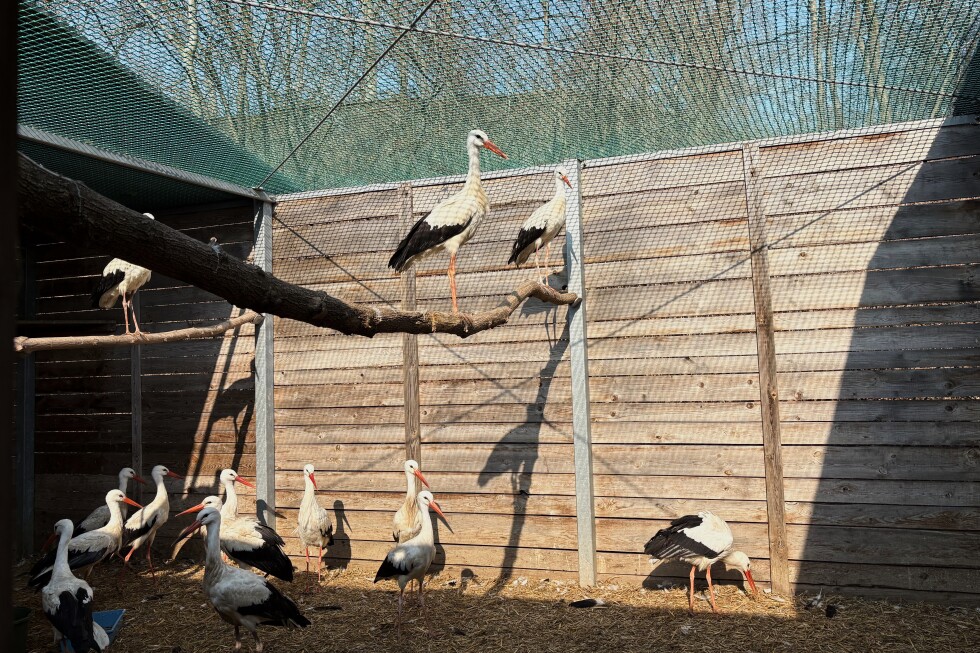
Inside the hospital, veterinary assistants continuously administer food and medication across species-segregated rooms. Recovering birds graduate to outdoor enclosures for environmental reacclimatization before ultimate release—a moment veterinarian Ewelina Chudziak describes as “fighting for freedom,” embodying the institution’s fundamental mission.