分类: society

  • Night of Swiss ski bar fire ‘apocalyptic’, woman tells Crans-Montana memorial

    Night of Swiss ski bar fire ‘apocalyptic’, woman tells Crans-Montana memorial

    Switzerland observed a solemn day of national mourning on Friday as church bells resonated across the nation, commemorating the 40 young lives tragically lost in the New Year’s Eve inferno at Le Constellation bar in Crans-Montana. The emotional commemorations were immediately overshadowed by significant judicial developments, with authorities detaining bar co-owner Jacques Moretti following a reassessment of his flight risk.

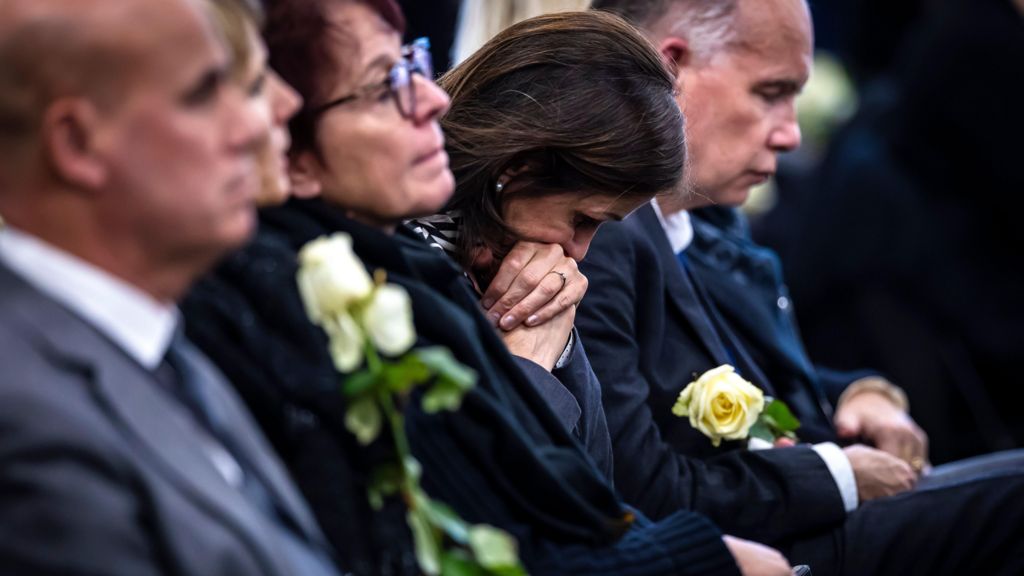
    The memorial ceremony in Martigny witnessed heartbreaking scenes as grieving families, survivors—some still hospitalized—and international dignitaries including the presidents of France and Italy gathered in solidarity. Attendees clasped white roses and held hands for comfort during the service, where firsthand accounts revealed the horror of the catastrophic blaze.

    Marie, a witness who assisted victims from the adjacent bar, delivered a chilling testimony: “We faced unbearable images—a scene worse than nightmare. Screams piercing the icy cold, the smell of burning. It was apocalyptic.” Her words echoed through the ceremony attended by representatives from nations whose citizens perished in the tragedy.

    Judicial authorities have launched a negligence investigation against both bar owners, Jacques and Jessica Moretti, for allegedly causing death and injury through negligence. Jessica Moretti broke her silence after questioning, stating: “I constantly think of the victims. It happened in our establishment, and I would like to apologize for this unimaginable tragedy.”

    Emerging evidence paints a disturbing picture of preventable failures. Mobile footage indicates the fire originated from a sparkler contacting soundproofing foam that had never undergone safety testing. Additional footage from six years prior reveals staff warnings about the flammable ceiling material, raising questions about long-standing negligence.

    Local authorities admitted to not conducting mandatory safety inspections for five years, compounding the systemic failures. Italy’s Ambassador to Switzerland, Gian Lorenzo Cornado, emphasized the demand for justice: “It was a hell inside that bar with over 1,000 degrees temperature. There was no way to escape.”

    Medical personnel at Sion regional hospital faced extraordinary challenges, with doctors fearing their own children might be among the victims. Hospital director Eric Bonvin described the identification process for severely burned victims and the long recovery ahead as a “rebirth” process for those facing life-altering injuries.

    The tragedy continues to resonate through the community where makeshift memorials grow daily, protected from the elements by canvas, as Switzerland seeks answers and accountability for one of its deadliest modern disasters.


  • ‘An attack on women’s dignity’: Walls whitewashed after silhouettes defaced in Indian city

    ‘An attack on women’s dignity’: Walls whitewashed after silhouettes defaced in Indian city

    A disturbing incident of public art vandalism in Gwalior, central India, has ignited nationwide conversations about gender-based harassment and women’s safety in public spaces. The controversy began when a school student’s Instagram video revealed deliberately defaced female yoga silhouettes on a city beautification mural, with explicit markings targeting the genital areas of the figures.

    The teenage activist expressed profound disappointment in her viral post, stating that witnessing the sexualized defacement of artistic representations filled her with ‘anger and disgust.’ Her documentation triggered substantial social media backlash, with numerous commentators noting that women remain vulnerable ‘even in graffiti.’ National media outlets characterized the incident as both shameful and symptomatic of deeper societal issues.

    In response to mounting public pressure, local authorities initiated whitewashing of the affected walls. Municipal spokesman Umesh Gupta attributed the vandalism to unidentified ‘miscreants’ and acknowledged surveillance limitations in the area. The corporation subsequently announced a street art competition focusing on civic themes, though notably excluding yoga motifs from the proposed subjects.

    Social activist Kalpana Viswanath of Safetipin contextualized the event within India’s broader challenges regarding women’s access to public spaces. She emphasized that such acts constitute a form of sexual harassment regardless of whether directed at women or their artistic representations. While acknowledging the psychological impact of such incidents on women’s freedom of movement, Viswanath found encouragement in young women’s increasing willingness to challenge patriarchal norms, particularly those from smaller urban centers.

    The incident reflects global patterns of gendered interactions with public art, paralleling phenomena like the discolored breasts of bronze statues worldwide due to inappropriate touching. This case underscores the complex intersection of public art, gender politics, and urban space management in contemporary India.

  • Romance and parenthood feel remote in Ukraine: ‘I haven’t had a date since before the war’

    Romance and parenthood feel remote in Ukraine: ‘I haven’t had a date since before the war’

    In the dim ambiance of a Kyiv wine bar on a Saturday evening, 34-year-old Daria scrolls through a dating app before dismissing it with palpable resignation. Having emerged from long-term relationships prior to the conflict, her romantic prospects have evaporated amid Ukraine’s protracted war. ‘I haven’t had a proper date since before the war,’ she confesses, encapsulating a nationwide phenomenon where personal connections have become collateral damage in the struggle for national survival.

    Four years of relentless conflict have compelled Ukrainian society to reconfigure fundamental aspects of human existence, with relationships and reproductive choices now standing at the forefront of demographic concerns. With millions of women establishing new lives abroad since the 2022 invasion and hundreds of thousands of men either deployed or living overseas, those remaining face profoundly constrained options.

    Khrystyna, a 28-year-old Lviv resident, observes the conspicuous absence of eligible men with mounting frustration. ‘Many, I would say most [men] are afraid to go out now,’ she notes, referencing conscription squads patrolling urban centers. The psychological toll on military personnel further complicates romantic prospects, as she explains: ‘Many are traumatized now because most of them – if they have returned – were in places where they experienced a lot.’

    Daria conceptualizes the dating pool through three unsatisfactory categories: conscription-avoiders confined to their homes (‘not a person you want to build a relationship with’), soldiers engaged in sporadic long-distance relationships (‘you build a connection, then he leaves’), and men under conscription age who retain emigration options. None present viable foundations for meaningful partnerships.

    Frontline perspectives reinforce this romantic impasse. Ruslan, serving in the Kharkiv region, questions what tangible offerings he can provide beyond ‘visits once or twice a year, flower deliveries and the odd phone call.’ Denys, a 31-year-old drone operator in eastern Ukraine, articulates the moral dilemma through a voice message: ‘Promising a wife or fiancée any long-term plans is difficult. Every day there is a risk of being killed or injured, and then all plans will, so to speak, go nowhere.’

    The demographic consequences are both severe and quantifiable. Marriage rates have plummeted from 223,000 in 2022 to 150,000 in 2024, while fertility rates have reached a historic low of 0.9 children per woman—dramatically below the 2.1 replacement level and substantially beneath the EU average of 1.38. Combined with mass emigration (over six million departed since 2022) and elevated mortality, Ukraine faces what demographer Oleksandr Hladun of the National Academy of Sciences terms the ‘social catastrophe of war.’

    Projections indicate a potential population collapse to 25.2 million by 2051—less than half the 1992 figure—with war-induced stress creating fertility complications that may persist for generations. Dr. Liubov Mykhailyshyn, a gynecologist in Lviv, expresses concern about ‘years of chronic stress and sleepless nights’ affecting reproductive health, creating ripple effects that will impact birth rates for years to come.

    Even determined couples confront overwhelming obstacles. Olena, a 33-year-old policewoman and military instructor, undergoes fertility treatments while acknowledging the precarious timing: ‘taking into account my work and the situation in the country.’ She reflects on the transformational impact of the invasion: ‘During the first year of the war, it felt as if everything had stopped. Everything we were striving for – building a home, planning children – nothing mattered anymore.’

    Government initiatives addressing childcare and housing affordability have achieved limited traction due to decentralized implementation. Hladun concedes that policy solutions remain ineffective while ‘would-be mothers and children remain exposed to the dangers of war.’ Demographic recovery would require the return of a substantial proportion of the 6.5 million Ukrainians abroad, yet repatriation remains uncertain even after hostilities cease.

    The demographic crisis transcends social concerns to become a national security issue. Hladun frames the population decline within strategic parameters: ‘Russia is simply demographically much larger. And in this sense, it has more resources for war.’ This perspective transforms family planning into geopolitical calculus, where personal choices accumulate into national consequences.

    For ordinary Ukrainians, the psychological adaptation proves as challenging as the practical circumstances. Daria summarizes the collective resignation: ‘Planning a future feels fragile, almost naive. This uncertainty is painful, but it becomes a part of everyday life. I’ve come to accept that I might stay alone not because I want to, but because war reshapes what feels possible. Learning to live with that is, in itself, a form of survival.’

  • Two-week trip reshapes views of China

    Two-week trip reshapes views of China

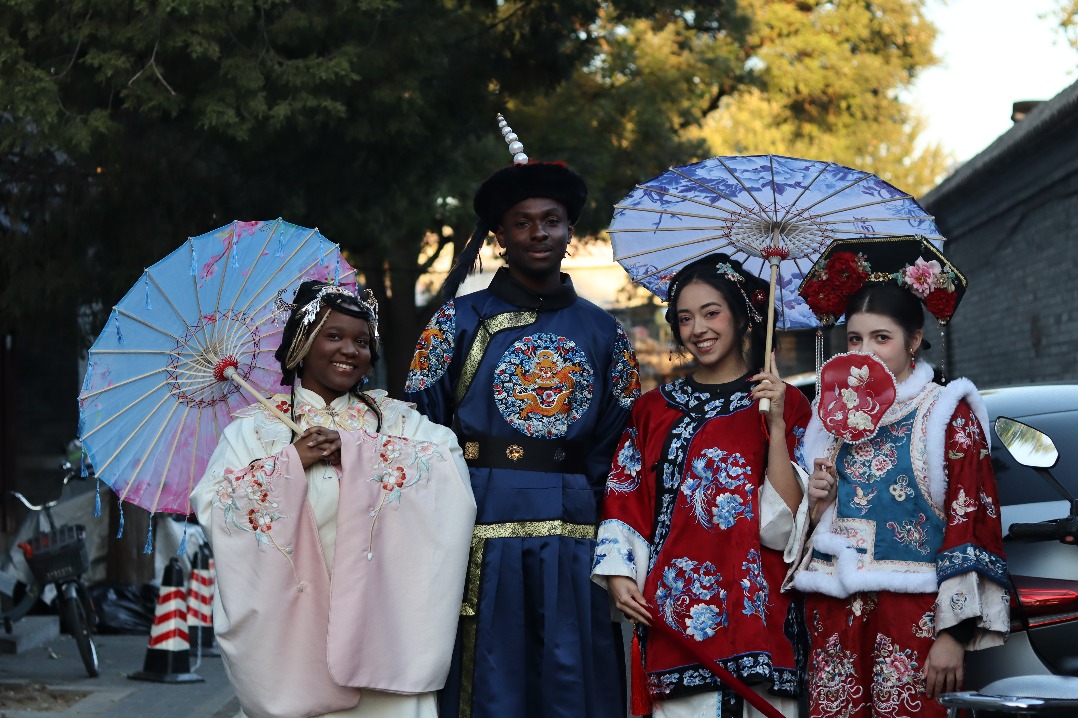
    A group of Canadian university students returned from a transformative two-week cultural immersion program in Beijing with perspectives dramatically altered from their pre-trip expectations shaped by Western media. The program, hosted by Beijing Normal University last fall, provided firsthand experience that participants described as fundamentally reshaping their understanding of modern Chinese society.

    Daniel William Ho, a University of Waterloo student, noted the profound disparity between media portrayals and reality. “Beijing felt safe, secure and the cleanest I’ve ever seen,” Ho reported, describing the public transit system as “on another world” and characterizing the experience as “the most freeing and transformative two weeks in my university career.”

    For political science major Conner Sherman Tye, the visit prompted a reevaluation of political discourse surrounding China. “Western media outlets nearly always portray China in a negative light, citing its problems as an indictment of the whole society,” Tye observed. After direct engagement with Beijing residents, he concluded that Chinese citizens demonstrate greater political awareness than the average American or Canadian.

    Participants particularly noted China’s unique integration of rapid modernization with historical preservation. Gia-Thanh Yvonne Ly described an architectural landscape reflecting “a long and rich history as well as a strong sense of modern ambition,” from ancient temples to innovative skyscrapers. She emphasized the efficiency of daily systems, noting that “delivery services, transportation systems and digital payment methods were efficient, fast and widely integrated into routines” creating a more streamlined daily life than what she experiences in Canada.

    The program also challenged preconceptions about safety and social atmosphere. Natalie Hermila Garcia Munoz, who has traveled to 24 countries, found Beijing distinctive for its advanced subway system and sense of security even during late hours. Mudupeola Aladetokunbo Caxton-Martins appreciated the city’s smooth operation and vibrant community life, feeling comfortable going out at 3 am.

    Notably, students of color who had been warned about potential discrimination reported overwhelmingly positive experiences. Aliyah Novia-Georgia Alexander-Tinker, who had been cautioned as a Black traveler, stated: “Fortunately, I had no reason to worry. I felt welcomed during my entire stay.” Caxton-Martins described locals initiating conversations, requesting photos, and shop owners offering free food—an experience “nothing like I had ever expected.”

  • California winemaker honors Chinese roots

    California winemaker honors Chinese roots

    In the prestigious vineyards of California’s wine country, a significant transformation is underway as Han Han ascends to the role of Director of Winemaking at Bear Creek Winery in Lodi. His appointment marks both a personal achievement and a historical correction in an industry that has largely overlooked the foundational contributions of Chinese laborers.

    More than a century ago, Chinese workers performed the backbreaking labor that established California’s premier wine regions—terracing hillsides, digging irrigation channels, and tending vines under discriminatory conditions. Despite their instrumental role, their stories were systematically erased from the industry’s narrative that primarily celebrated European vintners and American entrepreneurs.

    ‘It embodies the spirit of ‘chiku’—those Chinese laborers who endured immense hardship to build this industry,’ Han explained, referencing the Chinese concept of ‘eating bitterness’ to achieve future rewards. ‘Their legacy has been largely forgotten, yet they made contemporary California wine country possible.’

    Han’s journey to leadership represents a challenge to the industry’s Eurocentric traditions. Born in Harbin, China, he immigrated with his parents to South Dakota in the 1990s, where he witnessed firsthand his parents’ embodiment of perseverance—working at a Chinese restaurant while pursuing engineering degrees with limited English proficiency.

    ‘Observing my parents overcome such obstacles taught me that determination can conquer any difficulty,’ reflected Han, now a father of two.

    After initially pursuing biochemistry at UC Davis, Han discovered winemaking through a friend in the viticulture program. Despite sending 20 applications post-graduation, he received only one response—from Chateau St Jean Winery in Sonoma County. This single opportunity launched his career, beginning in 2012 as a lab technician at Bear Creek Winery where he rapidly advanced from enologist to his current directorship in just over a decade.

    Han acknowledges the industry’s relational nature presented significant barriers: ‘Without established connections or family history in wine, building networks from scratch proved intimidating. The field heavily emphasizes who you know.’

    His bicultural background has evolved into a professional advantage. Bear Creek now exports its Ironstone label to China, with Han creating Chinese-language promotional materials and leveraging his language skills—a capability he credits to his parents’ insistence on maintaining cultural ties.

    Facing contemporary industry challenges including climate change and shifting consumer preferences, Han applies the long-term perspective inherited from his heritage: ‘During uncertain times, we focus not merely on immediate concerns but on five or ten years ahead. This industry requires patience and perseverance—the essence of ‘chiku’.’

    Standing among the barrels at Bear Creek, Han embodies both the realization of immigrant dreams and the belated recognition of those Chinese workers whose contributions built an industry that once excluded them.

  • Hunan students craft opera headpieces from recycled materials

    Hunan students craft opera headpieces from recycled materials

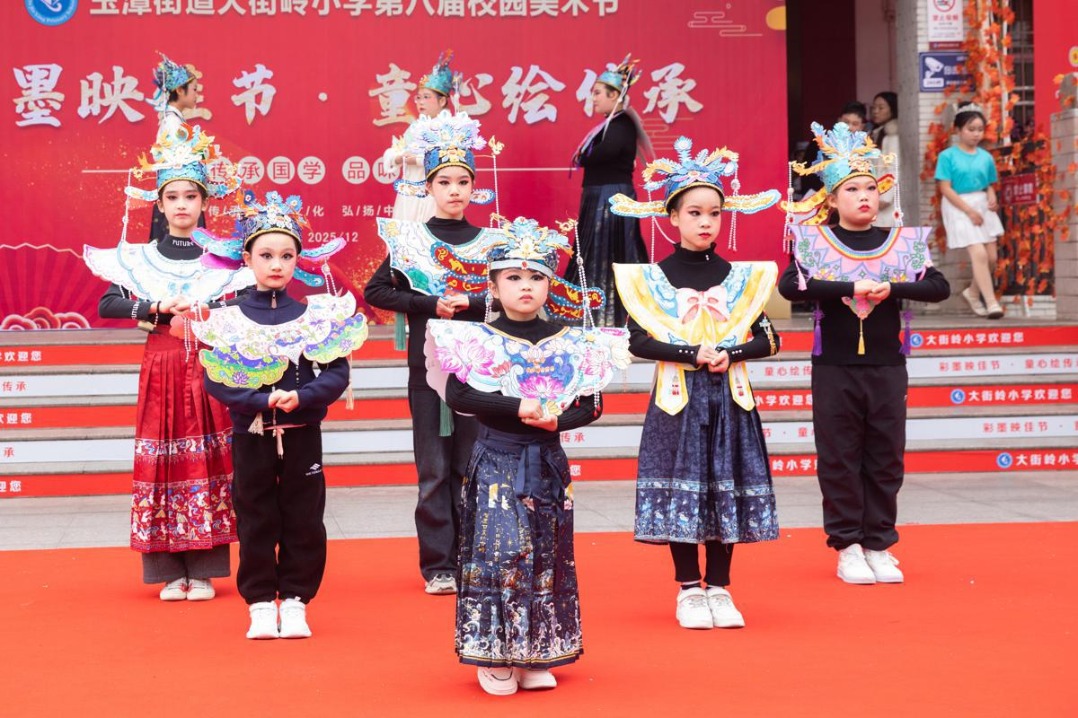
    In an innovative fusion of cultural preservation and environmental awareness, young students from Ningxiang’s Dajieling Primary School have demonstrated extraordinary creativity by crafting traditional Chinese opera headpieces entirely from recycled materials. The project, showcased during the school’s recent Art Week, featured 38 distinctively designed headdresses created from fabric scraps, discarded buttons, colorful strings, and various repurposed household items.

    The initiative represents a significant educational approach that simultaneously addresses multiple objectives: preserving intangible cultural heritage, promoting environmental sustainability, and fostering artistic expression among youth. Each headpiece displayed remarkable attention to detail and understanding of traditional opera aesthetics while incorporating modern eco-conscious values.

    School administrators emphasized that this hands-on project provided students with practical experience in both artistic creation and environmental responsibility. The activity allowed children to connect with traditional Chinese performing arts while developing skills in creative problem-solving and resourceful material usage. The project has received widespread recognition from educational experts who praise its integration of cultural education with contemporary environmental concerns.

    This innovative educational model demonstrates how traditional art forms can be adapted to modern contexts while maintaining their cultural significance. The success of the project has inspired discussions about implementing similar programs in other schools throughout Hunan province and beyond, potentially creating a new framework for cultural and environmental education.

  • Watch: Police rescue cows from burning barn

    Watch: Police rescue cows from burning barn

    In a dramatic display of emergency response, law enforcement personnel executed a successful large-animal rescue operation from a fully engulfed agricultural structure. Responding to reports of a rapidly spreading barn fire, officers arrived on scene to find the building consumed by flames with multiple bovines trapped inside.

    Demonstrating exceptional crisis management and animal handling skills, the responding team coordinated efforts to safely guide the disoriented livestock away from the immediate danger zone. The operation required careful navigation through compromised structural elements and intense heat conditions to reach the animals.

    Following established emergency protocols for livestock incidents, personnel worked systematically to create evacuation pathways while containing the fire’s advance. The successful intervention resulted in the complete preservation of all animal lives present at the location.

    Authorities confirmed that the comprehensive rescue operation concluded without a single casualty among either the responding emergency personnel or the agricultural assets. The incident highlights the expanding role of law enforcement in agricultural emergency response and specialized animal rescue techniques that have become essential in rural communities.

    Fire investigation units have initiated standard procedures to determine the origin and cause of the blaze, while animal welfare officials have verified the satisfactory condition of all evacuated livestock.

  • Beijing issues first sandstorm alert of the year

    Beijing issues first sandstorm alert of the year

    Beijing initiated its inaugural sandstorm alert of the year on Friday, issuing a blue-level warning as meteorological authorities anticipated deteriorating air quality and visibility across the capital. The alert coincided with a comprehensive weather advisory for multiple northern provinces, where a potent cold front is triggering widespread atmospheric disturbances.

    According to the Beijing Meteorological Service, the sandy conditions developed from dust origins in Inner Mongolia, where intense winds lifted particulate matter into the upper atmosphere before transporting it southeastward. China Weather Network analyst Xin Xin documented via social media that several Inner Mongolian cities had already reached severe pollution indexes, creating concerns about particulate concentration spikes in downstream regions.

    The national meteorological authority simultaneously issued dual blue warnings for both sandstorms and high-intensity winds across northern territories, attributing the phenomenon to an aggressive cold air mass. Forecast models indicate sustained northerly winds through Saturday, with temperatures expected to drop significantly while carrying residual dust particles across the region.

    Beijing residents experienced cloudy skies transitioning to partial clarity overnight, with localized blowing sand and persistently strong winds. Meteorological officials project continuing windy conditions throughout Saturday alongside noticeable temperature declines, advising vulnerable populations to minimize outdoor exposure and utilize protective measures against airborne particulates.

  • Owner of Swiss ski bar held in custody after deadly New Year’s Eve fire

    Owner of Swiss ski bar held in custody after deadly New Year’s Eve fire

    Swiss authorities have taken Jacques Moretti, French co-owner of Le Constellation bar in Crans-Montana, into custody following a devastating New Year’s Eve fire that claimed 40 lives and injured 116 others. Prosecutors cited flight risk concerns as they pursue charges of manslaughter by negligence, bodily harm by negligence, and arson by negligence against both Jacques and his wife Jessica Moretti.

    The tragedy, which primarily affected victims under 20 years old, is believed to have originated from New Year’s celebrations where champagne bottles equipped with sparklers were raised too close to the ceiling, igniting sound-insulating foam. The incident has revealed alarming safety oversight, as the popular ski resort establishment had not undergone mandatory safety inspections for five years despite requirements for annual checks.

    During Friday questioning with prosecutors in Sion, Valais canton, Jessica Moretti expressed profound remorse to victims and their families, describing the event as “an unthinkable tragedy.” The couple had previously pledged full cooperation with the investigation while expressing their devastated state.

    The nation observed a day of mourning on Friday with minute-long silences, halted transportation systems, and extended church bell ringing. Local commemorations in Crans-Montana featured standing ovations for firefighters who responded to the catastrophic blaze.

    Growing scrutiny now extends to municipal authorities, with victim representatives highlighting “staggering number of breaches and shortcomings in the inspections.” Crans-Montana Mayor Nicolas Feraud acknowledged regulatory failures and announced plans to ban sparklers in local venues while accepting responsibility for the oversight.

    Medical facilities across Switzerland and neighboring European countries continue to treat numerous victims suffering severe burns. Funeral services for deceased victims are ongoing as the community grapples with one of Switzerland’s deadliest nightlife disasters in recent history.

  • Almost 13,000 Irish passports to be re-issued

    Almost 13,000 Irish passports to be re-issued

    The Irish Department of Foreign Affairs has initiated a significant recall of approximately 12,904 passports issued between December 23, 2025, and January 6, 2026. This unprecedented action stems from a technical deficiency discovered in recently issued travel documents, rendering them non-compliant with international travel standards.

    The complication originated from a software update implemented by the Irish Passport Service during the busy holiday period. While specific technical details remain undisclosed, the flaw potentially creates complications for travelers utilizing automated eGates and undergoing standard border control inspections globally.

    In an official statement, the Passport Service expressed profound regret for the administrative error and extended sincere apologies for the resultant inconvenience to affected citizens. The department has proactively notified border authorities worldwide to mitigate potential travel disruptions for holders of the flawed documents.

    Affected individuals are not required to submit new applications. Instead, they must return their current passports via post to the Irish Passport Service headquarters in Dublin. The service has committed to an expedited processing timeframe, pledging to issue fully compliant replacement passports within ten working days of receipt.

    For passport holders with imminent international travel plans or those residing overseas, the Department of Foreign Affairs has established dedicated support channels through its Customer Service Team, available via telephone and email for urgent assistance and guidance.