分类: science

  • Sharjah launches Dh2 million Faya Research Grant; eligibility, funding explained

    Sharjah launches Dh2 million Faya Research Grant; eligibility, funding explained

    Sharjah has inaugurated a major scientific initiative with the launch of the Faya Research Grant, a Dh2 million ($545,000) program designed to advance archaeological and environmental research at the UNESCO World Heritage site Faya Palaeolandscape. The announcement was made by Sheikha Bodour bint Sultan Al Qasimi, Ambassador of the Faya World Heritage Property, during ceremonies commemorating the site’s recent inclusion on UNESCO’s prestigious World Heritage List.

    The three-year program (2026-2028), administered by the Sharjah Archaeology Authority in coordination with the Faya World Heritage Property Scientific Committee, represents a strategic investment in transforming Sharjah into an international center for heritage science and prehistoric research. The grant program specifically targets high-impact, independent research that will strengthen the scientific understanding of Faya’s Outstanding Universal Value while fostering global collaboration.

    Eligibility requirements mandate that applicants hold doctoral degrees, demonstrate strong publication records, and possess expertise in prehistoric archaeology or palaeoenvironmental research. International researchers and institutions are encouraged to apply, though priority will be given to proposals involving local researchers and institutions, reflecting Sharjah’s commitment to inclusive scientific partnership.

    The funding structure encompasses three distinct support mechanisms: a long-term three-year research grant for comprehensive environmental and settlement studies; six short-term specialized grants for focused work in archaeology, palaeoenvironment, digital heritage, and conservation; and a mentoring fellowship program for Emirati youth in partnership with Germany’s University of Tübingen to develop local expertise through training and field experience.

    Applications must be submitted through the Jebel Faya Research Grant portal by March 1, 2026, with successful projects commencing later that year. This initiative effectively transforms the Faya Palaeolandscape into an active laboratory for training future generations of archaeologists while ensuring the site’s continuing contribution to global knowledge about early human migration and adaptation patterns.

  • Cow astonishes scientists with rare use of tools

    Cow astonishes scientists with rare use of tools

    In an extraordinary challenge to conventional understanding of bovine cognition, an Austrian cow named Veronika has demonstrated sophisticated tool-using capabilities previously undocumented in cattle. This remarkable discovery, documented by researchers from the University of Veterinary Medicine Vienna, emerged from the mountainous Austrian countryside where Veronika perfected her scratching techniques over several years.

    The Swiss brown cow exhibited exceptional discrimination in her tool selection, utilizing both ends of implements for different purposes. When addressing tougher areas like her back, Veronika consistently chose the bristled end of brooms for effective scratching. For more sensitive regions such as her underbelly, she deliberately selected the smooth handle end, demonstrating contextual awareness and adaptive problem-solving skills.

    Dr. Antonio Osuna-Mascaró, lead researcher on the study published in Current Biology, expressed profound surprise at the findings: ‘We encountered two unexpected dimensions—first that cattle could utilize tools at all, and second that an individual cow would employ tools with multipurpose functionality. Until this documentation, such sophisticated tool use had only been consistently observed in chimpanzees.’

    This discovery gains additional significance when considering the evolutionary context. While chimpanzees—humanity’s closest genetic relatives—demonstrate varied tool use including stick manipulation for insect gathering and stone usage for nut cracking, cattle have coexisted with humans for approximately 10,000 years without previously documented tool application.

    Veronika’s owner, organic farmer Witgar Wiegele, sees broader implications beyond scientific interest. He emphasizes that her unexpected cognitive abilities should inspire greater appreciation for nature’s complexity: ‘Preserving nature ultimately means protecting ourselves. Biological diversity represents the fundamental key to planetary survival.’

    The research team suggests that given appropriate environmental conditions and opportunities, other cattle might develop comparable skills, potentially revolutionizing how we perceive and interact with these domesticated animals.

  • Penguins bring forward breeding season as Antarctica warms: study

    Penguins bring forward breeding season as Antarctica warms: study

    A groundbreaking ecological study reveals that Antarctic penguin species are dramatically accelerating their breeding schedules in response to the continent’s accelerated warming trends. Published in the Journal of Animal Ecology, the research documents the most rapid breeding season shift ever recorded in avian species, with some colonies advancing their reproductive cycles by nearly one month.

    The international scientific team, utilizing time-lapse photography across multiple Antarctic locations from 2012 to 2022, observed three penguin species exhibiting significant behavioral changes. Gentoo penguins demonstrated the most pronounced adaptation, advancing their breeding season by 13 days on average—with some colonies shifting up to 24 days earlier. Adélie and Chinstrap penguins followed similar patterns, moving their breeding schedules forward by approximately 10 days.

    According to lead researcher Ignacio Juarez Martinez of Oxford University, the scale of temporal adjustment exceeded scientific expectations. “The magnitude of change is so substantial that penguins across most regions are now breeding earlier than any historical records indicate,” Martinez noted in statements to AFP.

    The behavioral shifts appear directly correlated with Antarctica’s warming climate, which the EU’s Copernicus climate monitoring service confirms as one of Earth’s most rapidly warming regions. Reduced sea ice has created extended periods of accessible hunting grounds and snow-free nesting areas, fundamentally altering the penguins’ reproductive calculus.

    However, the adaptation creates ecological winners and losers. Gentoo penguins, versatile foragers suited to temperate conditions, are expanding their populations and claiming nesting sites previously occupied by other species. Conversely, Adélie and Chinstrap penguins—which depend heavily on specific ice conditions and krill availability—face population declines amid increased competition for resources.

    Co-author Fiona Jones emphasized the broader implications: “As indicator species for climate change, these behavioral shifts signal potential impacts across global ecosystems.” The research team continues to monitor whether these accelerated breeding cycles ultimately produce successful chick-rearing outcomes or represent desperate adaptations to environmental stress.

  • Researchers find Antarctic penguin breeding is heating up sooner, and that’s a problem

    Researchers find Antarctic penguin breeding is heating up sooner, and that’s a problem

    A groundbreaking ecological study reveals that Antarctic penguins are undergoing the most rapid breeding shift ever documented in vertebrate species, with profound implications for their survival in a warming world. Published in the Journal of Animal Ecology, the research demonstrates that three brush-tailed penguin species have advanced their reproductive cycles by approximately two weeks within a single decade—a pace of adaptation that far exceeds previously observed changes in other bird species.

    The research team from Oxford University, utilizing remote-controlled cameras across multiple colonies from 2011 to 2021, documented how rising temperatures in the western Antarctic—the second fastest-warming region on Earth—are fundamentally altering penguin reproductive behavior. With breeding grounds experiencing a 5.4°F (3°C) temperature increase between 2012 and 2022, the Adelie, chinstrap, and gentoo penguins are now breeding significantly earlier than previous decades.

    Lead biologist Ignacio Juarez Martinez emphasized the unprecedented nature of this shift: ‘Penguins are modifying their breeding timing at record velocity, surpassing any other vertebrate species. This synchronization with environmental resources is critical for chick survival, as breeding must coincide with peak food availability.’

    The study reveals a troubling divergence in species adaptation. While gentoo penguins, with their more varied diet and aggressive foraging behavior, have accelerated their breeding cycle most dramatically, the specialist krill-feeders—Adelie and chinstrap penguins—face severe challenges. The overlapping breeding seasons now create intense competition for resources, with gentoos frequently displacing other species from traditional nesting areas.

    Co-author Fiona Suttle reported observable ecosystem changes: ‘I’ve returned to previous Adelie colonies only to find them entirely replaced by gentoos. The data confirms what we’re witnessing visually in these rapidly transforming environments.’

    Climate-induced changes have reduced sea ice, triggering earlier phytoplankton blooms that disrupt the entire Antarctic food web. This ecological transformation, combined with increased commercial fishing activity in the region, creates compounded pressure on krill populations—the primary food source for vulnerable penguin species.

    Martinez projected dire consequences: ‘Chinstrap populations are declining globally, with models suggesting potential extinction before century’s end. Adelies are faring poorly in the Antarctic Peninsula and face similar extinction risks in this region.’

    The research benefited from unprecedented public engagement through the Penguin Watch citizen science platform, where over 9 million images were annotated by volunteers captivated by these charismatic species. This massive dataset provided crucial evidence of behavioral changes occurring at an alarming rate across the Antarctic ecosystem.

  • Shanghai Jiao Tong University launches Center for Studies of Global South Sustainable Development

    Shanghai Jiao Tong University launches Center for Studies of Global South Sustainable Development

    Shanghai Jiao Tong University has inaugurated a pioneering research institution dedicated to sustainable development challenges facing Global South nations. The Center for Studies of Global South Sustainable Development, launched on January 16, represents a significant academic commitment to addressing pressing global issues through interdisciplinary collaboration.

    The newly established center will concentrate on six transformative technological domains: future manufacturing, information systems, advanced materials, sustainable energy, space exploration, and health innovations. These research priorities align with the university’s existing strategic focus on marine science, health technologies, information systems, materials engineering, and energy solutions.

    Director Peng Qinglong outlined the center’s ambitious mission to conduct groundbreaking interdisciplinary research that produces both theoretical advancements and practical applications. “Our objective is to generate outcomes that are intellectually pioneering, technologically supportive, socially beneficial, and internationally influential,” Peng stated during the inauguration ceremony.

    The institution will prioritize critical global challenges including climate change mitigation, public health initiatives, and international technological cooperation. Deputy Director Cheng Lingzhi emphasized the center’s additional focus on comprehensive assessments and policy evaluations across next-generation information technology, renewable energy systems, aerospace applications, agricultural innovation, biomedical research, and advanced manufacturing.

    Beyond research, the center will serve as an international talent incubator, fostering collaborative networks and project mechanisms specifically designed for Global South development. Experts associated with the facility indicate that its research will examine sustainable modernization pathways, with particular attention to China’s development experience, while contributing to the establishment of a more equitable multipolar international order.

  • Chinese scientists achieve breakthrough in precise protein degradation

    Chinese scientists achieve breakthrough in precise protein degradation

    Researchers from the Chinese Academy of Sciences have achieved a groundbreaking advancement in biomedical science with the development of SupTACs (supramolecular targeting chimeras), a novel technology enabling unprecedented precision in targeting and eliminating disease-causing proteins within living organisms. This breakthrough, detailed in the prestigious journal Cell, represents a significant leap forward in targeted protein degradation therapeutics.

    The innovative approach addresses critical limitations in conventional treatment methodologies by leveraging the body’s natural ubiquitin-proteasome system. Unlike traditional small-molecule drugs that merely inhibit protein function, SupTACs actively facilitate the complete degradation of specific pathological proteins through precise molecular recruitment mechanisms. This technology demonstrates remarkable spatial and temporal control, effectively minimizing off-target effects that have hampered previous therapeutic attempts.

    Professor Wang Ming, lead investigator at the Institute of Chemistry, emphasized the transformative potential of this development: ‘Our SupTACs platform provides researchers with unprecedented control over protein degradation processes, offering new therapeutic avenues for conditions previously considered undruggable. The technology has shown consistent efficacy across multiple animal models, including non-human primates, indicating strong potential for clinical translation.’

    This advancement holds particular significance for treating complex disorders including various cancer types and neurodegenerative conditions where traditional therapeutic approaches have proven inadequate. The research team’s successful demonstration of controlled protein degradation in vivo marks a critical milestone toward practical clinical applications that could revolutionize treatment paradigms for numerous challenging diseases.

  • Return capsule of Shenzhou XX spaceship safely returns to Earth

    Return capsule of Shenzhou XX spaceship safely returns to Earth

    China’s ambitious space program marked another significant achievement on January 19, 2026, as the return capsule of the Shenzhou XX spacecraft completed its journey back to Earth, touching down safely at the Dongfeng landing site in Inner Mongolia Autonomous Region. The successful recovery operation, documented by photographer Wang Jiangbo, demonstrates China’s growing capabilities in space exploration and spacecraft retrieval technology.

    The landing represents the culmination of a meticulously planned mission that underscores China’s advancing position in the global space community. The return capsule’s descent through Earth’s atmosphere and subsequent parachute-assisted landing required precise engineering and coordination between ground control teams and the autonomous systems aboard the spacecraft.

    Located in North China, the Dongfeng landing site has previously served as the recovery zone for multiple Chinese space missions, with infrastructure specifically designed to support these complex operations. The site’s remote characteristics provide ideal conditions for spacecraft recovery while minimizing potential risks to populated areas.

    The Shenzhou program, which began in the 1990s, has evolved into a cornerstone of China’s space ambitions, encompassing both crewed and uncrewed missions. This latest successful return further validates the program’s technical maturity and operational reliability as China continues to expand its activities in space, including the development of its Tiangong space station and planned lunar exploration missions.

  • Failed flights: Firms probe launch errors

    Failed flights: Firms probe launch errors

    China’s aerospace sector experienced an unusual day of setbacks on Saturday when both state and private space ventures encountered launch failures within hours of each other, highlighting the inherent risks of space exploration.

    The first incident occurred at 12:55 AM when a Long March 3B carrier rocket launched from the Xichang Satellite Launch Center in Sichuan Province. The mission, intended to deploy the Shijian 32 multirole satellite into orbit, was compromised by a third-stage booster malfunction during flight. China Aerospace Science and Technology Corporation confirmed the anomaly resulted in the satellite failing to reach its designated orbit. An investigation has been initiated to determine the precise cause of the failure.

    This malfunction marked the end of an impressive five-year, nine-month success streak for the Long March rocket family, which had completed 296 consecutive successful launches since its last failure in April 2020. The Long March 3B, developed by the China Academy of Launch Vehicle Technology, represents one of China’s most reliable workhorse rockets with 115 missions since its 1996 debut. Capable of delivering payloads up to 5.5 metric tons to geostationary transfer orbit, the rocket has also supported medium-Earth orbit and lunar transfer missions.

    In a separate incident at 12:08 PM, Galactic Energy’s Ceres 2 rocket suffered a catastrophic failure during its maiden flight from the Jiuquan Satellite Launch Center in Inner Mongolia. The solid-propellant rocket, designed to deploy six commercial satellites, experienced an anomaly shortly after liftoff and crashed according to spectator footage. The Beijing-based private company has launched its own investigation into the cause.

    The Ceres 2 represents China’s growing commercial space sector, featuring three solid-propellant core stages with a liquid-fueled upper stage. Weighing 100 tons, the rocket was designed to deliver up to 1.6 tons to low-Earth orbit at 500 kilometers altitude, with capabilities for both land and sea-based launches emphasizing high carrying efficiency.

    Industry experts emphasized that such setbacks, while disappointing, provide valuable learning opportunities. Wang Yanan, Chief Editor of Aerospace Knowledge magazine, noted that established rocket manufacturers must avoid complacency despite past success rates, while commercial ventures must acknowledge the high-risk, high-reward nature of space programs. The true competitive advantage, he suggested, lies in systems engineering capabilities that ensure reliability during high-frequency operations.

    Beijing-based industry observer Wu Peixin added that space exploration has never followed a linear progression, with failures serving as unavoidable steps toward progress. China’s space industry sustainability depends on iterative learning through trial and error, with technical data accumulation and industrial chain maturation gradually reducing risks and improving efficiency over time.

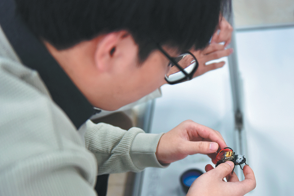
  • Scientists develop eco-friendly pigments

    Scientists develop eco-friendly pigments

    A scientific breakthrough from Northeast China promises to eliminate toxic heavy metals from consumer products through innovative rare earth-based pigments. Researchers at Dalian Minzu University have developed a new generation of eco-friendly coloring agents that offer superior safety, durability, and cost-effectiveness compared to conventional alternatives.

    The research team, led by Professor Dong Bin, has successfully harnessed China’s abundant rare earth resources—often termed ‘industrial vitamins’—to create pigments that avoid the health hazards associated with traditional inorganic colorants. For decades, manufacturers have relied on pigments containing lead, mercury, and cadmium, which pose significant health risks including nervous system damage, kidney impairment, and blood production disorders, particularly when these metals leach out under extreme conditions or accidental ingestion.

    The scientific challenge involved overcoming the inherent instability of rare-earth ions, which naturally produce weak, shifting colors. The research team discovered that these ions absorb and reflect light similarly to high-performance pigments but required stabilization within a suitable host material. After extensive experimentation with over 1,000 targeted tests, they identified silicoaluminate as the ideal crystalline structure to house the rare-earth ions.

    Researcher Luo Xixian explained the complexity of predicting where rare-earth ions would settle within the silicoaluminate structure. Through careful adjustment of the chemical environment, the team enabled the ions to move efficiently between energy levels, producing deep, saturated hues that remain consistent under different lighting conditions.

    The resulting pigments demonstrate remarkable heat resistance and aging stability, maintaining their color integrity during prolonged sunlight exposure and high-temperature industrial processing. Economically, the innovation offers substantial advantages, with production costs estimated at approximately 60% lower than comparable high-end eco-friendly alternatives, achieved through the use of abundant minerals and currently underutilized rare earth elements.

    The team has already developed high-saturation pigments across four major color systems: green, yellow, orange, and red. The research represents a significant step toward applying advanced materials technology to everyday consumer goods, including toys, food packaging, and household items.

    Commercialization efforts are underway with a preliminary agreement to establish a 500-metric-ton pilot production line in Liaoning province’s Jinpu New Area. Researchers continue to expand the color range with the ultimate goal of making non-toxic materials the default choice for consumer products worldwide.

  • Watch: Timelapse shows Nasa rocket’s 12-hour journey to launch pad

    Watch: Timelapse shows Nasa rocket’s 12-hour journey to launch pad

    In a meticulously choreographed ballet of engineering, NASA’s colossal Space Launch System (SLS) rocket has completed its monumental journey to Launch Complex 39B at Kennedy Space Center. Captured in a mesmerizing timelapse, the 12-hour transit unveiled the sheer scale of pre-launch operations for the Artemis I mission.

    The 322-foot-tall (98-meter) deep-space rocket, mounted atop NASA’s robust Crawler-Transporter 2, embarked on a 4.2-mile (6.8-kilometer) voyage from the Vehicle Assembly Building. Progressing at a deliberate maximum speed of just 0.82 miles per hour (1.3 km/h), the procession emphasized the careful precision required to move the 3.5-million-pound structure without compromising its delicate systems.

    This journey, known as the ‘rollout,’ represents a critical milestone in NASA’s preparations for returning humans to the lunar surface. The SLS rocket—the most powerful ever built by the agency—will serve as the cornerstone for the Artemis program, which aims to establish sustainable lunar exploration while paving the way for future Mars missions.

    The timelapse footage compresses hours of painstaking progress into minutes, showcasing how engineering marvels overcome terrestrial challenges before ever reaching the stars. With the rocket now positioned at the launch pad, teams will conduct final tests and rehearsals leading to the historic uncrewed flight around the Moon.