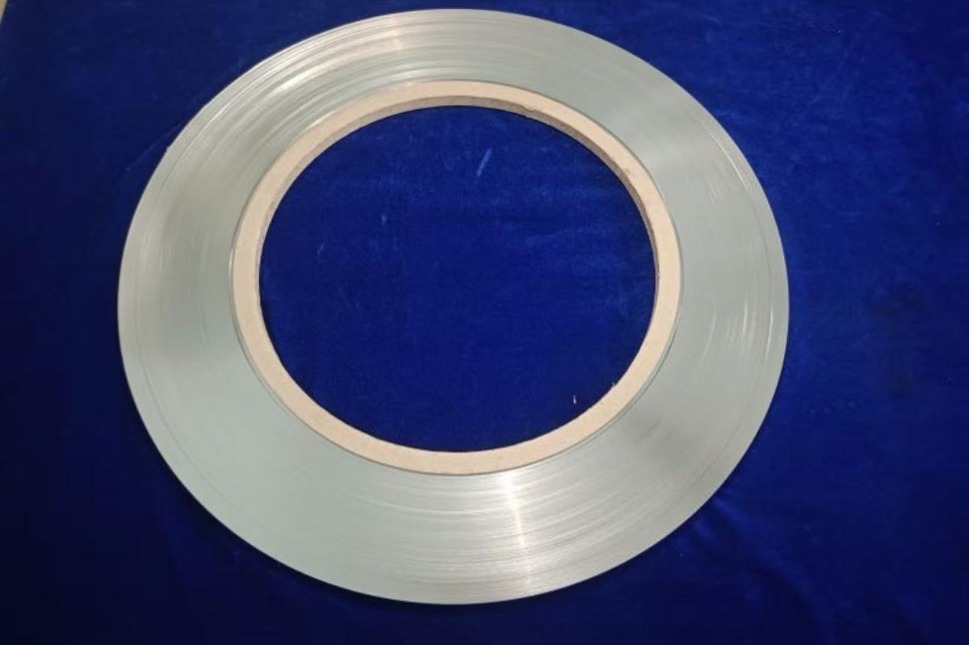
In a significant scientific milestone, China has successfully produced high-purity C276 metal strips domestically for the first time. This achievement was spearheaded by a research team led by Rong Lijian from the Institute of Metal Research, Chinese Academy of Sciences. C276 is a critical material used in the production of second-generation high-temperature superconducting tapes, which are essential components in controllable nuclear fusion devices, often referred to as ‘artificial suns.’ The newly developed metal strips exhibit exceptional mechanical strength and deformation capabilities, marking a crucial step forward in the advancement of superconducting technology. This breakthrough not only reduces China’s reliance on imported materials but also strengthens its position in the global scientific community. The successful production of these metal strips is expected to accelerate progress in nuclear fusion research and related high-tech industries, paving the way for future innovations in energy and materials science.
分类: science
-
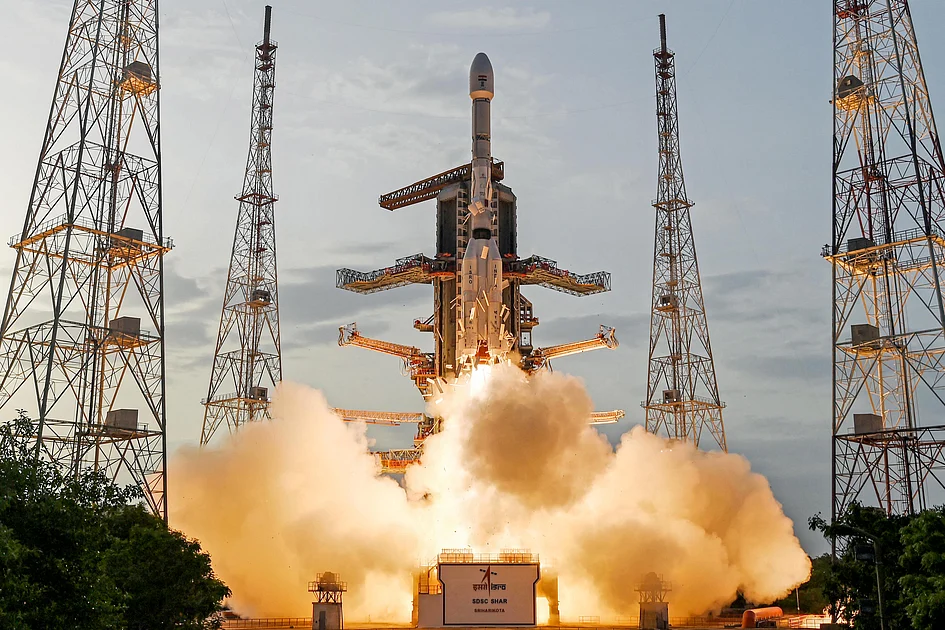
India space agency launches its heaviest satellite
India has taken a significant leap in its space exploration endeavors with the successful launch of its heaviest communication satellite, CMS-03, on Sunday. The satellite, weighing an impressive 4,410 kilograms (9,722 pounds), was propelled into orbit from the Sriharikota spaceport in Andhra Pradesh at 5:26 pm (1156 GMT). This event marks a pivotal moment in India’s rapidly expanding space program, which has gained substantial momentum over the past decade. The CMS-03 satellite was launched using the advanced LVM3-M5 rocket, an upgraded version of the vehicle that facilitated India’s historic unmanned lunar landing in August 2023. Prime Minister Narendra Modi lauded the achievement, stating, ‘Our space sector continues to make us proud!’ He also reiterated India’s ambitious goal of sending an Indian astronaut to the Moon by 2040. The satellite is expected to enhance secure communication links for the Indian Navy, connecting ships, aircraft, and submarines. This launch underscores India’s growing capabilities in space technology, positioning it alongside global leaders such as Russia, the United States, and China, which have previously achieved controlled lunar landings. The nation’s space ambitions were further highlighted earlier this year when Shubhanshu Shukla, an Indian Air Force test pilot, became the second Indian to travel to space and the first to reach the International Space Station, paving the way for India’s planned crewed mission in 2027.
-
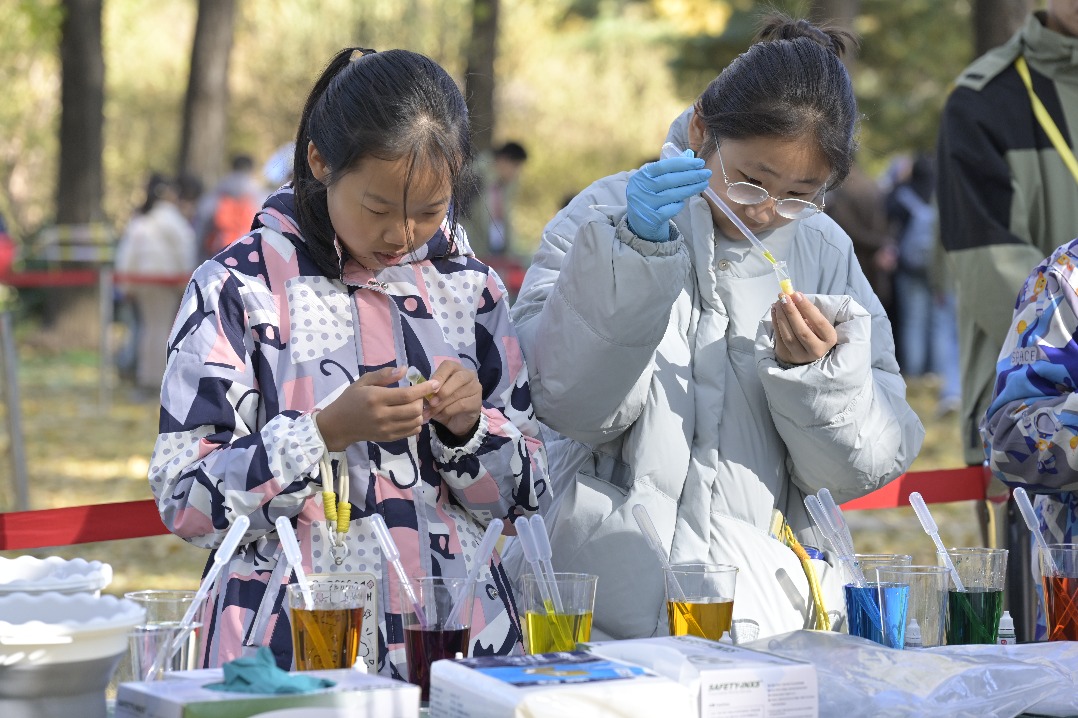
Science festival ignites public curiosity nationwide
The annual National Science Festival, themed ‘Hi, Science! — Bridge Curiosity with Discovery, Connect Science with Ingenuity,’ commenced on Saturday, November 1, 2025, with the main venue activities held at the Chinese Academy of Sciences’ Institute of Botany in Beijing. The event, hosted by the Chinese Academy of Sciences, coincided with the academy’s 76th anniversary and the 70th anniversary of its Academic Divisions. Over the weekend, the festival featured more than 180 exhibits, programs, and hands-on activities across six major sections, designed to ignite public curiosity, particularly among young people, and encourage exploration of the unknown. Visitors had the opportunity to engage with academicians and experts, watch science-themed dramas, experiment and magic shows, and learn about significant scientific achievements such as the Jiangmen Underground Neutrino Observatory and superconducting quantum computers. The festival also highlighted China’s four major series of scientific research ships and deep-sea equipment systems, and offered interactive experiments involving brain-computer interfaces, space science, and underwater communication. National key laboratories opened their doors for public tours, providing a rare glimpse into daily scientific research. A highlight of the first day was the evening event ‘Creative Blind Box Show,’ which showcased major achievements of the academy. Beyond the on-site activities, gymnastics world champion Mo Huilan, along with scientific researchers and science popularization bloggers, led a livestreamed cloud tour of the festival, allowing online audiences to experience the highlights of the main venue and feel the appeal of science and technology. Institutions across the country also launched a range of science popularization activities based on their areas of expertise. The Ganjiang Innovation Academy explained the applications of rare earth elements; the National Time Service Center organized lectures and tours to help the public explore the concept of time; the Shanghai Advanced Research Institute opened the National Facility for Protein Science in Shanghai for public tours; and the Lanzhou Institute of Chemical Physics hosted lectures and hands-on activities in rural areas. Special sessions of the science festival will also be held at the Wuhan Botanical Garden and the Kunming Institute of Zoology.
-
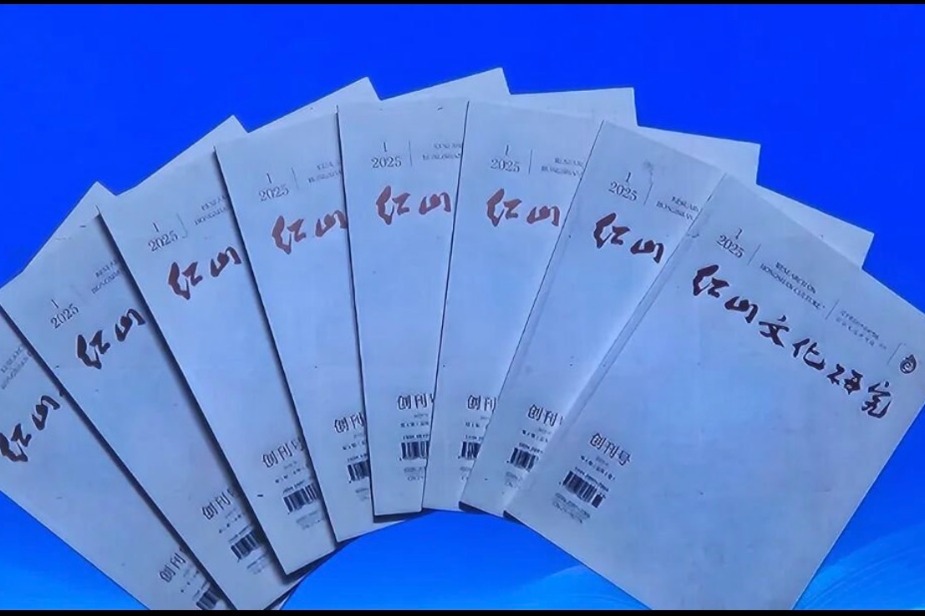
Academic journal on Hongshan culture launched in Liaoning
Shenyang, Liaoning Province witnessed the official launch of the academic journal *Research on Hongshan Culture* on Sunday, November 2, 2025. This quarterly publication marks a significant milestone in the systematic and long-term study of Hongshan culture, a pivotal component of Chinese civilization dating back to the late Neolithic period. The journal aims to foster academic exchange and collaboration, featuring diverse research areas such as new archaeological discoveries, material culture studies, social and cultural theses, comparative civilization research, scholarship history, and international perspectives. Gu Yucai, President of the Chinese Society of Cultural Relics, chairs the journal, while Bai Baoyu, Director of the Liaoning Provincial Institute of Cultural Relics and Archaeology, serves as the editor-in-chief. The editorial board includes esteemed scholars from China and abroad, such as Jia Xiaobing, Pauline Sebillaud from France, and Christian E. Peterson from Canada. Hongshan culture is renowned for its exquisite jade artifacts, large-scale stone tombs, and goddess temples, which highlight the advanced civilization of the era and provide critical evidence for understanding the origins and development of Chinese civilization. Gu Yucai emphasized the journal’s mission to inherit the roots of Hongshan civilization, solve its mysteries through innovation, and promote international exchange. Chu Tianyun, Vice-Governor of Liaoning Province, pledged full support for the journal, envisioning it as a platform for cross-regional and interdisciplinary research to revitalize Hongshan culture in the modern era.
-
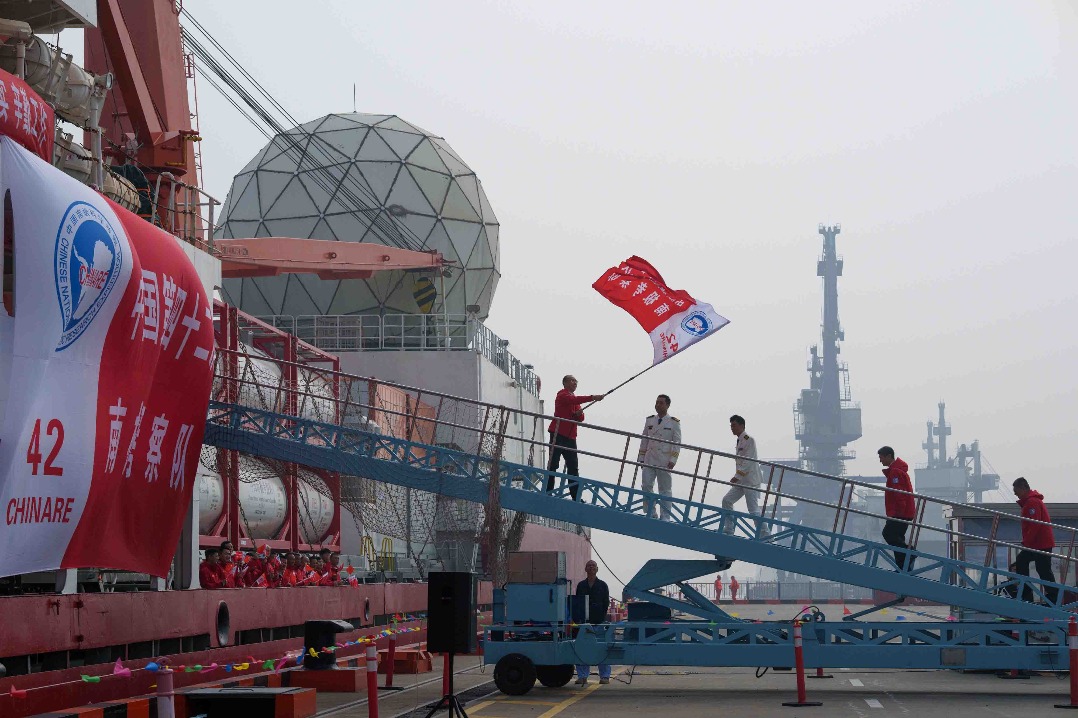
Chinese expedition team sets sail on seven-month journey to Antarctica
China’s 42nd Antarctic expedition team embarked on a monumental seven-month journey from Shanghai on Saturday, marking a significant milestone in polar exploration. The team, comprising over 500 members and researchers from more than 10 countries and regions, set sail aboard the nation’s two state-of-the-art polar icebreakers, Xuelong and Xuelong 2 (Snow Dragon and Snow Dragon 2). This ambitious mission aims to conduct comprehensive scientific investigations in Antarctica, focusing on enhancing global understanding, protection, and sustainable utilization of the region. Long Wei, deputy head of the Chinese Arctic and Antarctic Administration, emphasized the expedition’s critical role in advancing polar research and fostering international cooperation. The voyage underscores China’s growing commitment to scientific exploration and environmental stewardship in one of the world’s most remote and fragile ecosystems.
-
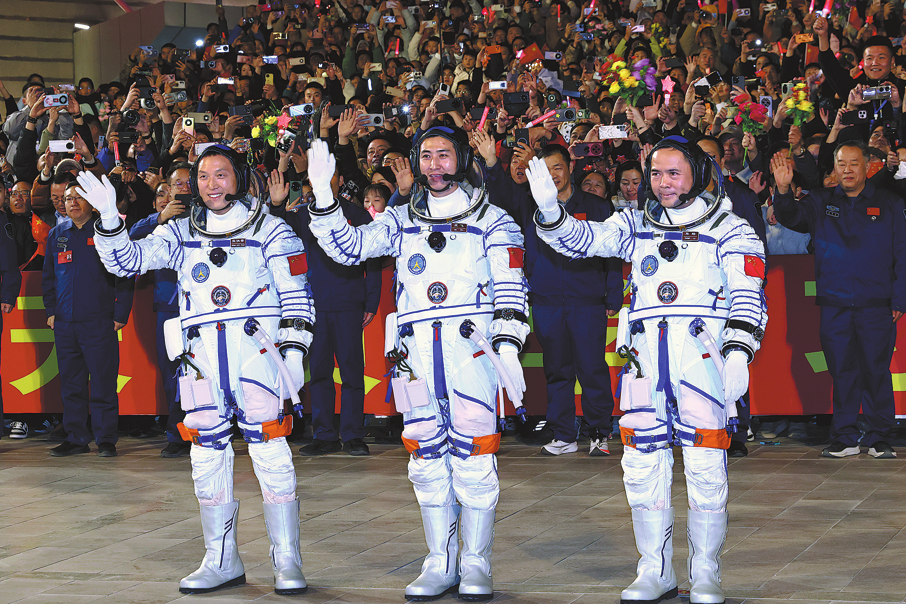
Shenzhou XXI crew begins space mission
The Shenzhou XXI mission has officially commenced, marking a significant milestone in China’s space exploration endeavors. The three-member crew, consisting of Senior Colonel Zhang Lu, Major Wu Fei, and payload specialist Zhang Hongzhang, launched from the Jiuquan Satellite Launch Center in the Gobi Desert at 11:44 PM on Friday. Their journey began aboard a Long March 2F rocket, which propelled them into orbit, setting the stage for a six-month stay at the Tiangong space station. The spacecraft successfully docked with the Tianhe core module early Saturday morning, following a rapid autonomous rendezvous process. Upon arrival, the crew will transition from their pressure suits to intravehicular workwear, preparing to join the outgoing Shenzhou XX team for a brief overlap period. During their mission, the Shenzhou XXI astronauts will undertake 27 scientific projects, spanning fields such as space life sciences, biotechnology, space medicine, and microgravity physics. Additionally, they will conduct spacewalks to install equipment and retrieve external devices, further enhancing the station’s capabilities. This mission represents China’s 16th manned spaceflight and underscores the nation’s growing expertise in independent space station operations.
-
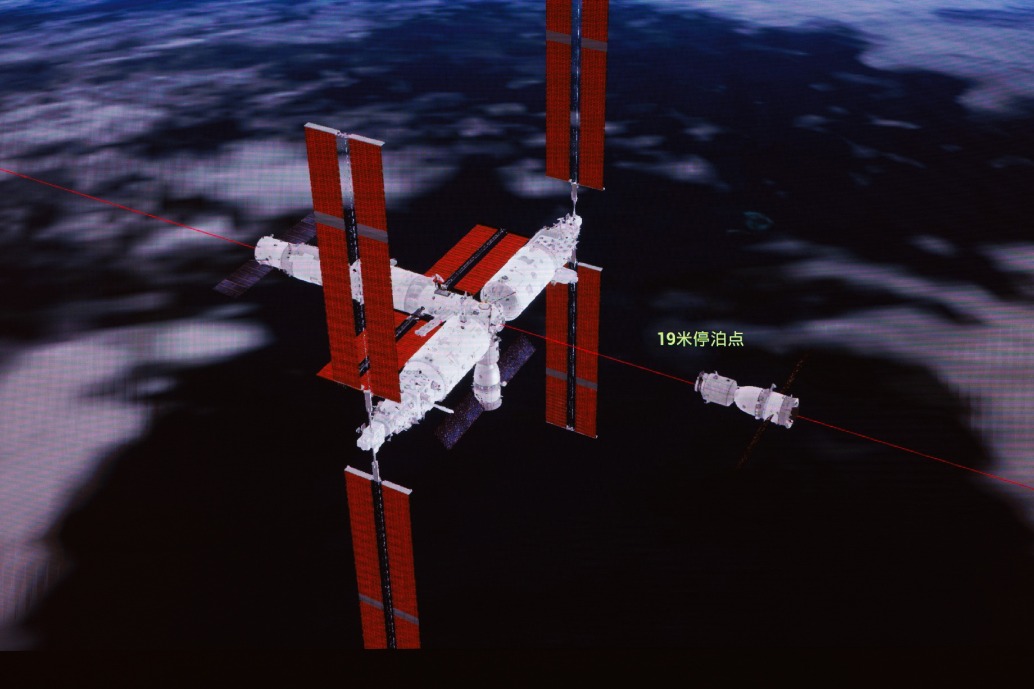
China’s Shenzhou XXI crewed spaceship docks with space station combination
In a significant achievement for China’s space program, the Shenzhou XXI crewed spaceship successfully docked with the country’s space station combination in the early hours of Saturday morning. The China Manned Space Agency confirmed the successful maneuver, which underscores China’s growing capabilities in space exploration. This mission is part of China’s broader strategy to establish a permanent presence in space and conduct advanced scientific research. The docking marks a critical step in the ongoing development of the space station, which is expected to play a pivotal role in future space missions. The Shenzhou XXI astronauts are set to embark on a series of tasks, including scientific experiments and maintenance activities, further solidifying China’s position as a major player in the global space race.
-
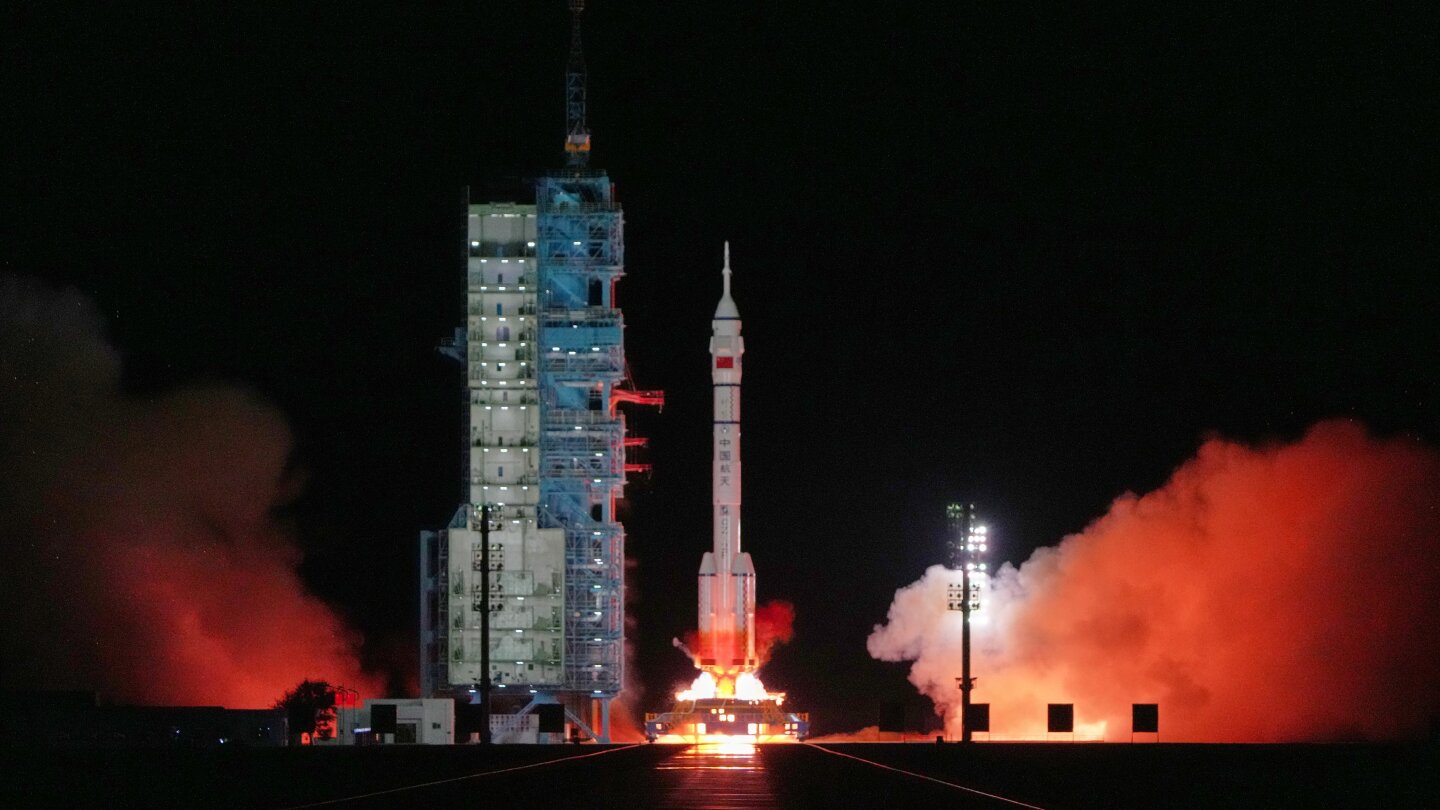
China sends astronauts — and mice — on its latest space station mission
China has successfully launched the Shenzhou-21 spacecraft, marking another milestone in its ambitious space program. The mission, which took off at 11:44 p.m. local time on Friday from the Jiuquan launch center in northwestern China, is sending three astronauts and four mice to the Tiangong space station. The crew includes mission commander Zhang Lu, a veteran of the Shenzhou-15 mission, alongside first-time astronauts Wu Fei, a 32-year-old engineer, and Zhang Hongzhang, a payload specialist with a background in new energy and materials research. The astronauts are expected to stay aboard the station for approximately six months, conducting 27 scientific experiments in fields such as biotechnology, aerospace medicine, and materials science. Notably, this mission includes the first-ever mice sent to China’s space station, with the aim of studying the effects of weightlessness and confinement on their behavior. The mice, selected from 300 candidates after rigorous training, will remain in space for five to seven days before returning to Earth. China’s space program, a source of national pride, continues to advance, with plans to land astronauts on the moon by 2030. The Tiangong space station, entirely Chinese-built, underscores China’s growing role in space exploration, particularly after being excluded from the International Space Station due to U.S. security concerns. Additionally, China is collaborating with Pakistan to train two Pakistani astronauts, one of whom may visit the Tiangong station in the future.
-
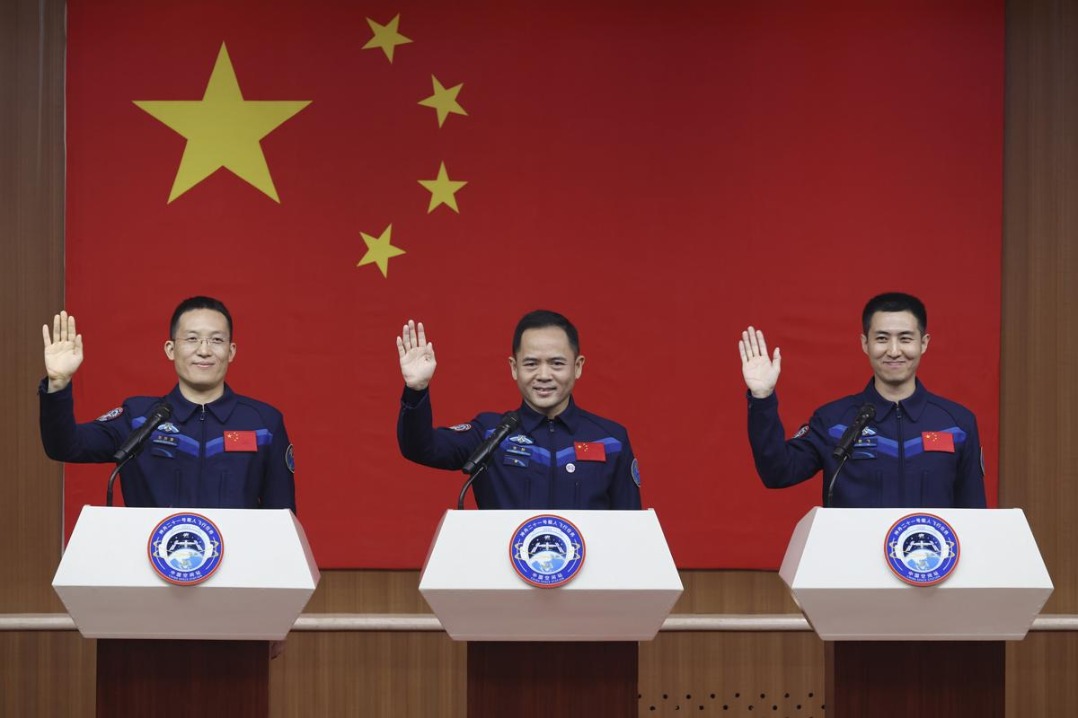
Crew members ready for Shenzhou XXI mission
China is poised to launch the Shenzhou XXI mission, marking another significant milestone in its space exploration endeavors. The mission, scheduled for Friday night, will send three astronauts to the Tiangong space station for a six-month stay. The crew, led by mission commander Senior Colonel Zhang Lu, includes spaceflight engineer Major Wu Fei and payload specialist Zhang Hongzhang. Their primary objectives include conducting 27 scientific projects, performing spacewalks, and undertaking China’s first in-orbit experimentation on rodents. The launch will take place at the Jiuquan Satellite Launch Center in northwestern China, with the Long March 2F rocket propelling the Shenzhou XXI spacecraft into low-Earth orbit. The mission will also involve a crew shift, replacing the Shenzhou XX astronauts who have been aboard the space station for over six months. The Tiangong space station, completed in late 2022, remains the only independently operated space station in orbit. The Shenzhou XXI astronauts will focus on research in space life sciences, biotechnology, space medicine, and new spacecraft technologies. Additionally, the mission will observe the behavioral and physiological impacts of space on four mice, which will return to Earth for further analysis. This mission underscores China’s growing capabilities in space exploration and scientific innovation.
-
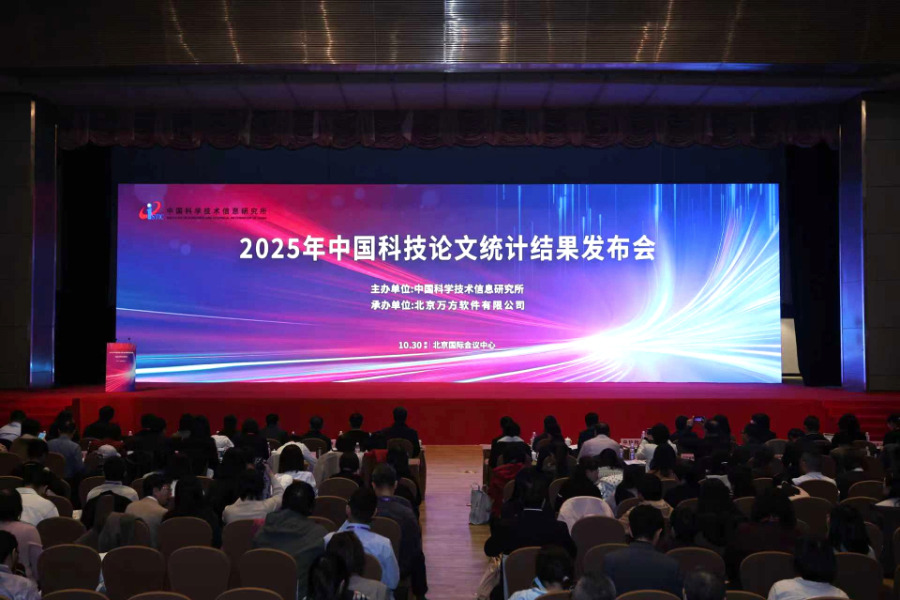
Report: China retains crown in global scientific papers published
China has once again solidified its position as the global leader in scientific research publications, according to the latest annual report titled ‘Statistical Data of Chinese Science and Technology Papers.’ The report, published by the Institute of Scientific and Technical Information of China, reveals that the country accounted for 35.2% of the world’s top-tier scientific papers in 2024, maintaining its dominance for the second consecutive year. This achievement underscores China’s growing influence in the global scientific community and its commitment to advancing research across diverse disciplines. In 2024, China published over 15,000 papers in 163 high-impact journals spanning 178 disciplines, further cementing its status as a powerhouse in scientific innovation. Additionally, China led in both the number of publications and citation counts in 377 top international scientific journals, with 154,900 papers and over 1 million citations. The report highlights China’s decade-long leadership in citation counts across nine key scientific fields, including materials science, chemistry, and computer science. Notably, the average citation count of Chinese international papers reached 17.24, surpassing the global average for the second year in a row. Zhang Mingming, a researcher at the Chinese Academy of Sciences, attributed this success to China’s investment in advanced research facilities, efficient experimental methods, and the dedication of its researchers. As of August 2024, China also accounted for more than half of the world’s ‘hot papers’—recently published studies with high citation rates—with 2,342 papers, a 4.6% increase from the previous year. The United States followed with 1,511 hot papers. This remarkable progress reflects China’s strategic focus on fundamental research and its ambition to shape the future of global science and technology.