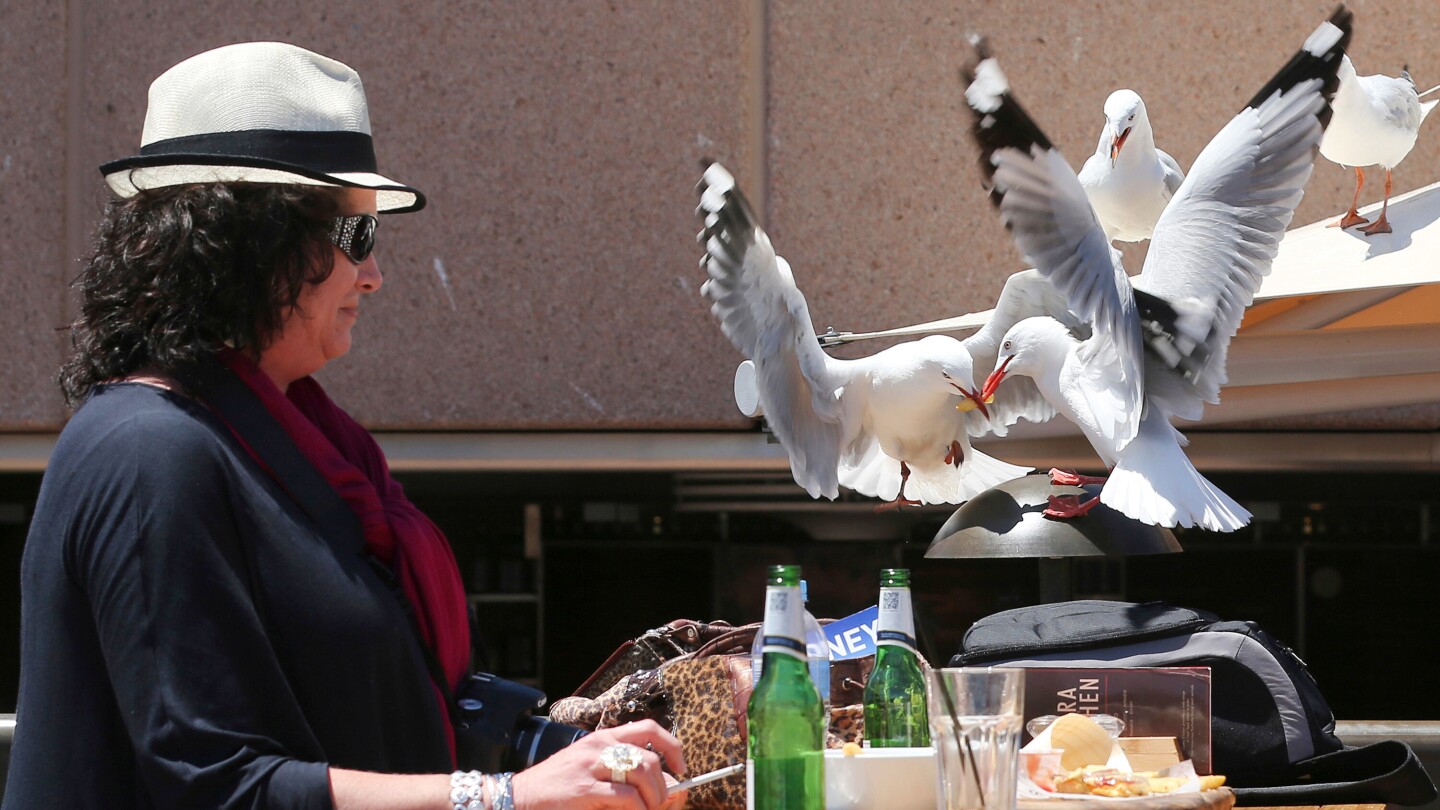
A recent study conducted by researchers at the University of Exeter’s Center for Ecology and Conservation has uncovered an effective strategy to deter seagulls from stealing food: shouting. The research, published in the peer-reviewed journal Biology Letters, explored whether a human voice could discourage European herring gulls from snatching snacks in seaside towns. The findings revealed that while speaking can momentarily halt the birds, shouting is far more effective in making them flee. The study involved placing fries in a Tupperware box across southwest England and testing the reactions of 61 gulls to recordings of a robin’s song, a male voice speaking calmly, and a male voice shouting. The results showed that the gulls were more vigilant and less likely to approach the food when exposed to human voices, particularly when the tone was urgent. The birds tended to walk away from a speaking voice but flew away from shouting, indicating their ability to differentiate between vocalizations. Neeltje Boogert, a researcher involved in the study, noted that the gulls seemed to pay attention to the manner of speech, a behavior not previously observed in wild species. The study also highlighted that the experiment was designed to demonstrate non-aggressive methods of deterring gulls, a species of conservation concern in the U.K. Further research could explore whether gulls react differently to female voices.
分类: science
-

Astronauts’ return mission proceeds smoothly
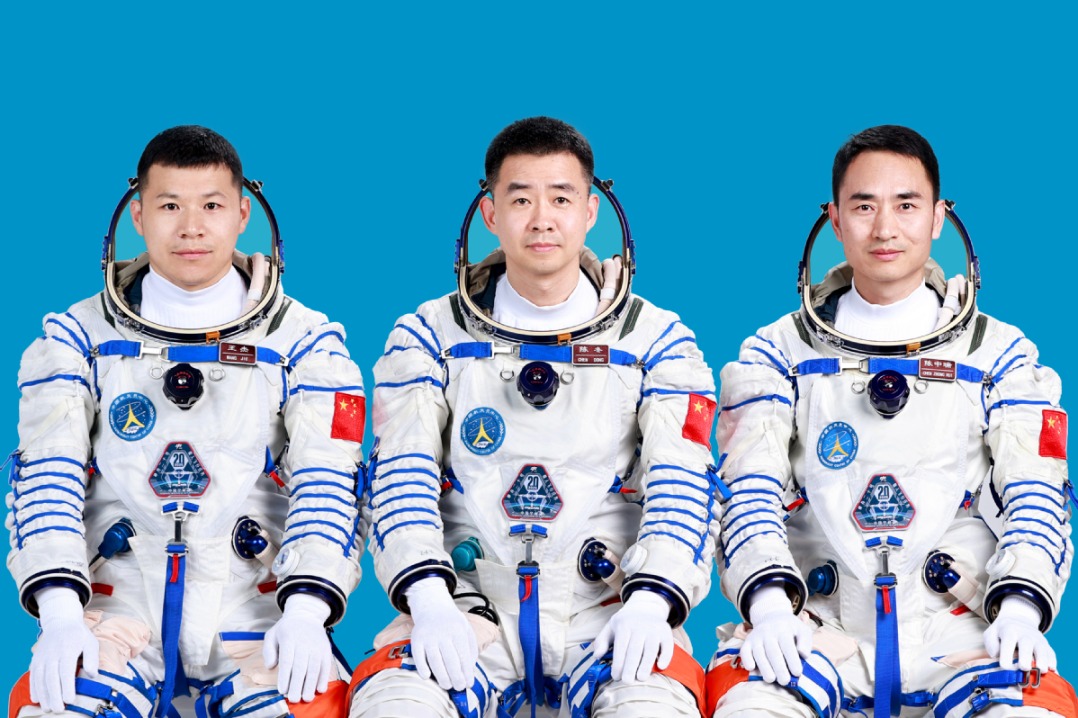
The return mission of the Shenzhou XX astronauts, initially delayed due to safety concerns over space debris, is now proceeding smoothly, according to the China Manned Space Agency. The agency announced on Tuesday that mission planners and engineers have implemented emergency response measures, prioritizing the safety of the astronauts. Comprehensive simulation analyses, tests, and safety assessments are being conducted to ensure the Shenzhou XX spaceship is in optimal condition and all potential risks are mitigated. Detailed steps are being formulated to facilitate the crew’s safe return to Earth. Ground personnel at the Dongfeng landing site in northern China are conducting intensive drills to prepare for the astronauts’ arrival. Currently, the Tiangong space station is in good condition and can accommodate two mission crews. The Shenzhou XX astronauts, who have been aboard the space station for six months, are living normally and collaborating with the Shenzhou XXI crew on scientific tasks. The Shenzhou XX team, led by mission commander Senior Colonel Chen Dong and including crew members Colonel Chen Zhongrui and Colonel Wang Jie, was originally scheduled to return on November 5. Their return was postponed after it was discovered that the Shenzhou XX spaceship might have been struck by small pieces of space debris. Space debris, which includes spent rocket stages, old satellites, and fragments from disintegration, erosion, and collisions, poses significant risks to operational spacecraft and manned spaceflights.
-

Nobel laureate urges China to deepen space collaboration
Renowned astrophysicist Reinhard Genzel, recipient of the 2020 Nobel Prize in Physics, has emphasized the necessity for China to embed long-term scientific endurance into its national strategy to secure a leading role in space exploration. Speaking at the Hong Kong Laureate Forum, Genzel highlighted that while China has made significant investments in space projects over the past decade, it must now transform this technological momentum into institutional permanence to avoid falling behind in the global race for space supremacy. Genzel, who also serves as co-director of the Max Planck Institute for Extraterrestrial Physics and professor at Ludwig Maximilian University of Munich and the University of California, Berkeley, stressed the importance of building structures that can sustain scientific efforts beyond political cycles. He noted that the era of US dominance in space science, driven by Cold War investments, has evolved into a more distributed landscape with China and Europe making substantial strides. Genzel pointed to China’s FAST telescope as a remarkable achievement but cautioned that future large-scale projects will require international collaboration due to their complexity and cost. He cited the James Webb Space Telescope and the Extremely Large Telescope in Chile as examples of projects that have pushed the limits of national capabilities and budgets. Genzel concluded that the next generation of scientific endeavors will necessitate multinational cooperation to achieve groundbreaking discoveries.
-
Evidence of ancient tree-climbing ‘drop crocs’ found in Australia
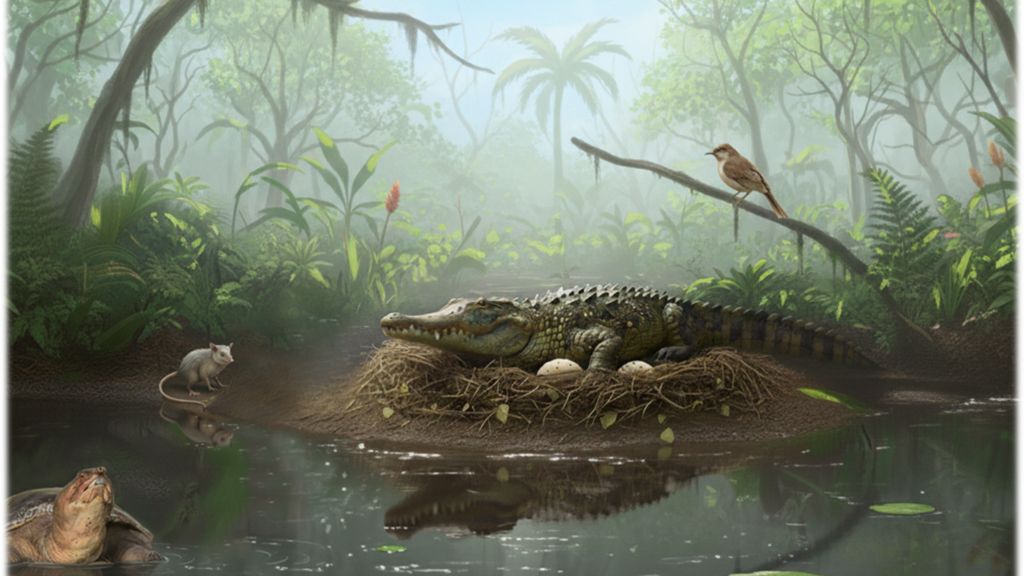
In a groundbreaking discovery, scientists have uncovered Australia’s oldest known crocodile eggshells, believed to belong to the enigmatic ‘drop crocs’—tree-climbing crocodiles that once roamed the continent. The 55-million-year-old eggshells were found in a sheep farmer’s backyard in Queensland, with the findings published in the Journal of Vertebrate Paleontology. These eggshells are linked to the mekosuchines, an extinct group of crocodiles that thrived in inland waters when Australia was still connected to Antarctica and South America. Co-author Prof. Michael Archer, a palaeontologist at the University of New South Wales, described these creatures as ‘bizarre,’ suggesting they may have hunted like leopards, dropping from trees onto unsuspecting prey. The mekosuchines, which could grow up to five meters in length, were abundant long before their modern counterparts arrived in Australia around 3.8 million years ago. The eggshells were discovered decades ago but were only recently analyzed with the assistance of Spanish scientists. This discovery complements earlier findings of younger mekosuchine fossils in 25-million-year-old deposits elsewhere in Queensland. Prof. Archer has been part of a team excavating a clay pit in Murgon since the early 1980s, a site renowned as one of Australia’s oldest fossil locations. The area, once a lush forest, was home to the world’s oldest-known songbirds, Australia’s earliest frogs and snakes, and a variety of small mammals with South American connections. Prof. Archer recounted how he and a colleague first approached the farmer in 1983, leading to the excavation of this prehistoric treasure trove. He expressed optimism that further digging will reveal even more surprises from this ancient ecosystem.
-

Scientists predict new ultrastable 2D materials for fast-charging, long-lasting batteries
A groundbreaking study led by researchers at Tianjin University has unveiled a new family of two-dimensional (2D) topological telluride materials that could significantly enhance the performance and durability of lithium-ion and sodium-ion batteries. Published in the prestigious journal Advanced Science, the research utilized first-principle calculations to identify materials such as HfTiTe4, ZrTiTe4, and HfZrTe4. These ultrathin layers exhibit remarkable properties, including fast-charging capabilities, structural stability, and thermal endurance up to 227 degrees Celsius. Dr. Ji Kemeng, a key researcher, emphasized that these materials could pave the way for next-generation batteries with higher specific capacity and longer lifespans. The study, a collaborative effort involving institutions like Shanghai Jiao Tong University, Zhejiang University, and the University of California, Irvine, highlights the potential of theoretical computation in designing advanced energy-storage solutions. The findings are particularly promising for applications in electric vehicles, industrial-scale storage, and portable electronics, where high performance under demanding conditions is crucial.
-
‘This animal spared my life’: Biologist bitten in head by shark hopes to meet it again
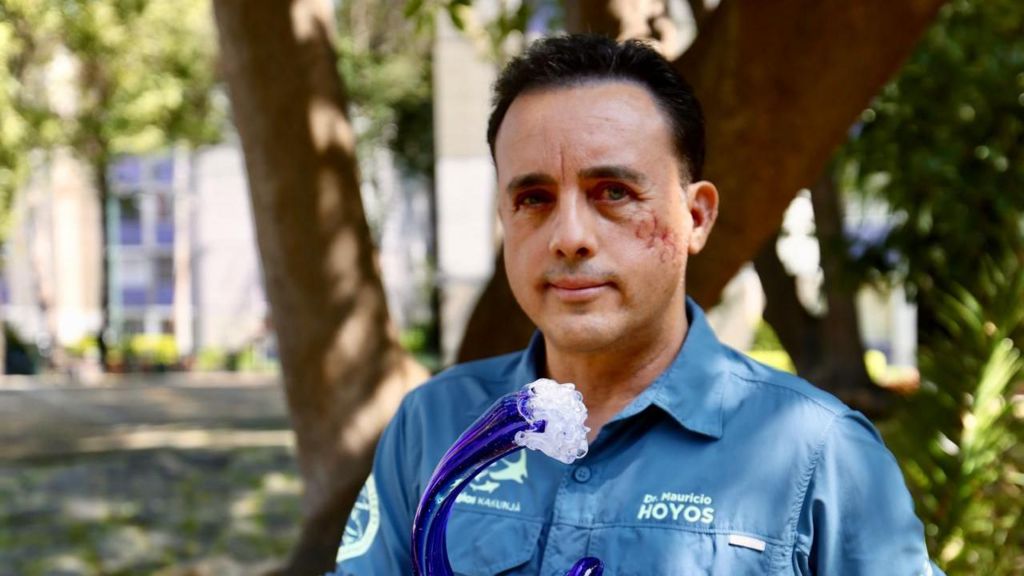
Marine biologist Mauricio Hoyos, a seasoned shark researcher with over three decades of experience, recently survived a harrowing encounter with a 3-meter-long female Galapagos shark off the coast of Cocos Island, Costa Rica. The incident occurred during a research trip in September, where Hoyos was tagging sharks to study their mating and spawning behaviors. Despite the attack, Hoyos describes his recovery as ‘incredible’ and remains undeterred in his mission to advocate for shark conservation.
-
China’s stranded astronauts ‘in good condition’ after space debris delays planned return
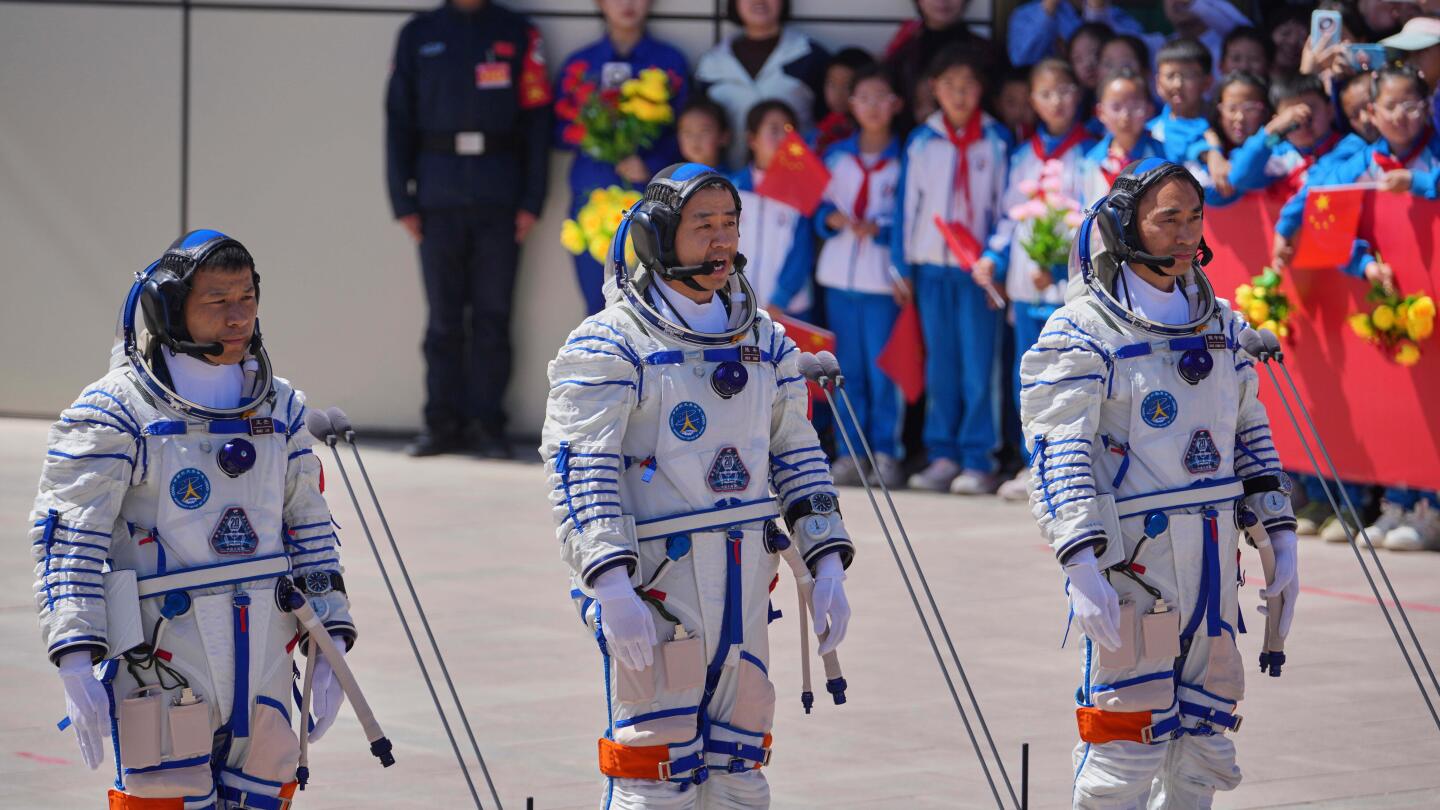
The crew of China’s Shenzhou-20 mission is reported to be in excellent health and continuing their daily activities despite an unexpected delay in their return to Earth. The astronauts, Chen Dong, Chen Zhongrui, and Wang Jie, were originally scheduled to return on November 5, but their plans were disrupted after their spacecraft was suspected to have been hit by a small piece of space debris. The exact date for their return remains unspecified, but the mission team is actively conducting tests and drills to ensure a safe journey back. The China Manned Space Engineering Office confirmed that the crew is ‘in good condition, working and living normally.’ The trio had been stationed at the Tiangong space station since April, completing a six-month rotation. Meanwhile, the Shenzhou-21 mission successfully docked with the space station on November 1, marking a milestone by transporting mice for the first time for scientific experiments. China’s space program has seen significant advancements since its inception in 2003, including the construction of its own space station and ambitious plans to land a human on the moon by 2030.
-

Report: China’s scientific journal capacity needs enhancement
China’s scientific journals have made significant strides in recent years, with a notable increase in both the number of journals and the volume of published papers. However, a recent report highlights that there is still considerable room for improvement in terms of scale and global influence. The blue book on China’s scientific journal development, published by the Service Center for Societies of the China Association for Science and Technology, reveals that 247 Chinese international journals were included in the Science Citation Index (SCI) last year, accounting for 1.7 percent of the 40,000 total SCI papers published in 2024. The report also notes that the academic quality and global recognition of these journals have steadily improved. The citation impact of papers published in these journals reached 5.11 last year, surpassing the 3.51 for all international papers authored by Chinese scholars and the global average of 2.77. Additionally, 63.2 percent of the journals were positioned in the top quarter of Journal Citation Reports (JCR), and 68.7 percent of the papers published in China’s journals were in the top quarter of the JCR, up from 50 percent in 2022. Despite these improvements, the scale of publishing in China’s journals still falls short compared to the over 830,000 international papers published by Chinese scholars. This underscores the need to enhance the overall carrying capacity of China’s domestic journal platforms. Furthermore, 88 percent of the papers published in China’s journals last year were authored by Chinese scholars, but this represented only 4.2 percent of the total international papers published by Chinese scholars. This indicates that more than 95 percent of their work is still being published in overseas journals, highlighting the need for further development of world-class international journals in China.
-
Return mission of Shenzhou XX crew progressing in an orderly manner
The return mission of the Shenzhou XX crew is advancing smoothly, marking a significant milestone in China’s space exploration endeavors. As of November 11, 2025, the mission is progressing in an orderly manner, reflecting the meticulous planning and execution by the China National Space Administration (CNSA). This mission is part of China’s broader strategy to enhance its capabilities in manned spaceflight and to contribute to global space research. The successful return of the Shenzhou XX crew will not only demonstrate China’s technological prowess but also pave the way for future missions, including potential lunar and Mars explorations. The CNSA has been closely monitoring the mission, ensuring all systems are functioning optimally to guarantee the safety and success of the crew’s return.
-
New variety of tree-like pepper grown in Hunan
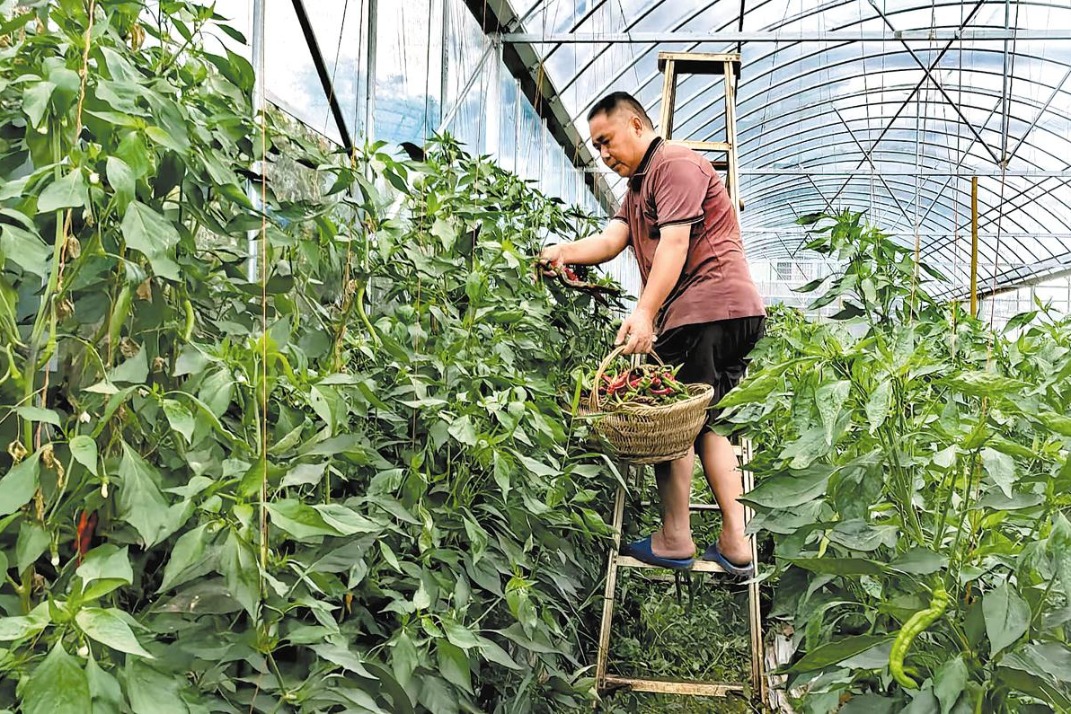
A revolutionary new variety of tree-form pepper has been successfully cultivated in Shaodong, Hunan province, marking a significant advancement in agricultural innovation. This breakthrough, developed over 25 years by a team led by researcher Li Pei from the Hunan Academy of Agricultural Sciences, promises to transform traditional pepper farming into a more efficient and sustainable practice. The tree-form pepper, which grows vertically and densely, maximizes space and yield while reducing labor costs, making it a game-changer for farmers. The project began with skepticism, as few believed peppers could grow like trees, but through persistent research, the team developed a robust and flavorful variety suitable for various regions, including Beijing, Shanghai, and Guangzhou. The innovation lies in its vertical growth, which allows for higher yields and easier harvesting compared to traditional methods. At the technology-driven farming demonstration base in Qingshan village, local farmer Zhang Feihua has become a local sensation by successfully cultivating these peppers in his greenhouse. Under Li’s guidance, Zhang started trial-planting in April, and within two months, the plants grew over two meters tall, laden with green fruit. Unlike traditional peppers, which require bending and stooping to harvest, these can be picked while standing or using ladders. The greenhouse environment also protects the plants from adverse weather conditions. By August, Zhang’s greenhouse was already profitable, with each tree-form pepper plant yielding 15 kilograms annually—over four times more than ordinary peppers. The first harvest yielded a net income of over 10,000 yuan from just one mu of land, with high demand and rising prices offering potential for lucrative off-season sales. Zhang envisions these peppers thriving on urban balconies, contributing to a ‘balcony economy’ with plans for a comprehensive supply chain. News of Zhang’s success has attracted farmers like Zhou Dong and his wife from Ningxiang, who are eager to try growing the innovative peppers. Meanwhile, Li’s team is promoting the tree-form pepper in seven cities, including Loudi and Changsha, through online tutorials and on-site training. Despite the slow promotion due to the yearlong maturation period and the need for greenhouse cultivation, Li plans to expand this exceptional variety to spice-loving regions such as Yunnan and Guizhou provinces.