On the evening of November 12, 2025, the night sky over Changshuihe Farm in Heilongjiang province was transformed into a canvas of natural wonder as the aurora borealis made a rare and mesmerizing appearance. The phenomenon, characterized by vibrant red and purple hues, captivated both local residents and professional photographers alike. Located in Heihe city, the farm is a subsidiary of the State-owned Beian Company under the Beidahuang Group, making the event even more extraordinary given its geographical setting. The aurora’s ethereal glow provided a once-in-a-lifetime opportunity for stunning photography, leaving onlookers in awe of nature’s grandeur. This rare occurrence in Northeast China has sparked widespread interest and admiration, highlighting the region’s unique potential for witnessing such celestial displays.
分类: science
-

Shenzhou XX mission crew returns after debris delays landing
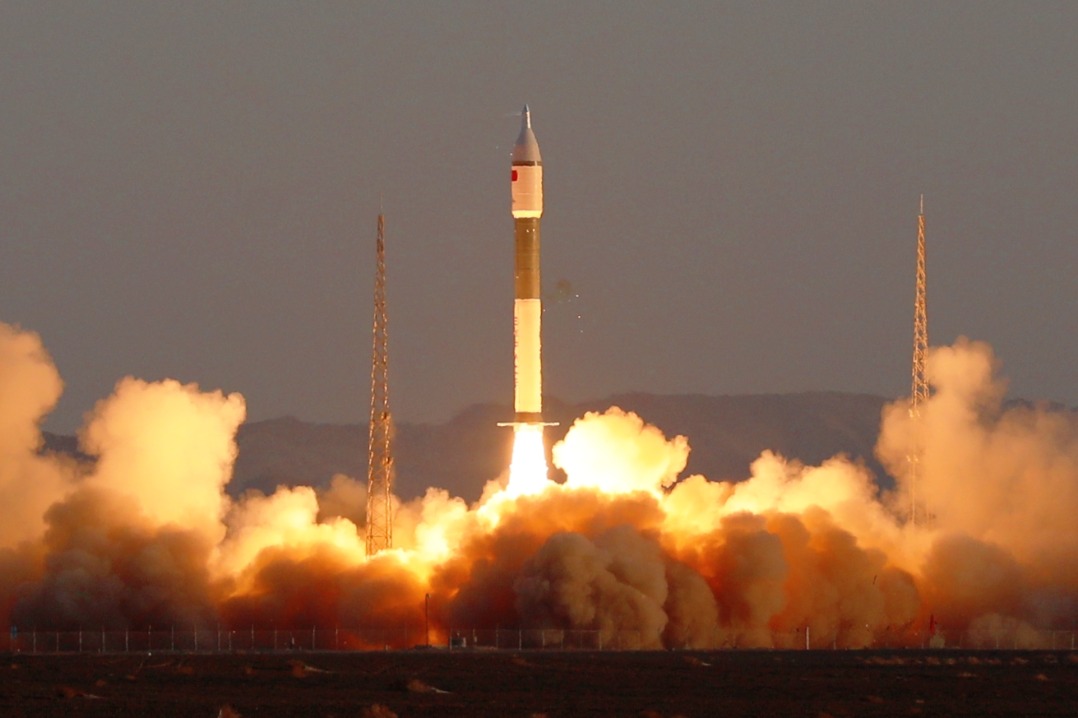
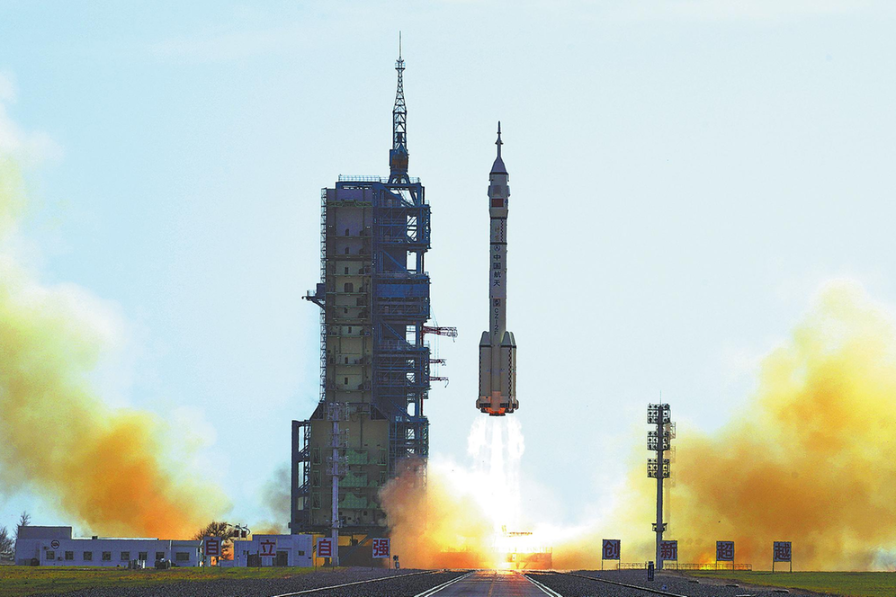
The Shenzhou XX mission crew successfully returned to Earth on Friday afternoon, marking the end of an extended stay aboard the Tiangong space station. The landing, initially scheduled for November 5, was delayed by nine days due to a suspected space debris impact that caused a cracked window on their spacecraft. The re-entry capsule, carrying mission commander Senior Colonel Chen Dong and crew members Colonel Chen Zhongrui and Colonel Wang Jie, touched down at the Dongfeng Landing Site in Inner Mongolia at 4:40 pm. The astronauts had to use the Shenzhou XXI mission’s re-entry capsule after their own vessel was deemed unsafe. Ground recovery personnel from the Jiuquan Satellite Launch Center conducted initial safety checks and assessed the crew’s health. The Shenzhou XXI mission crew had already taken over the space station on November 4, ensuring a smooth transition. This incident highlights the challenges of space exploration and the importance of contingency planning.
-

Arachnid super-web reveals the surprising ‘constant party’ life of cohabiting spiders
In a groundbreaking discovery, researchers have uncovered what is believed to be the world’s largest spider web, spanning an astonishing 1,140 square feet, within a sulfur-rich cave on the Albanian-Greek border. This colossal web, described as “carpet-thick,” houses an estimated 110,000 spiders from two distinct species—Tegenaria domestica (common house spider) and Prinerigone vagans—living harmoniously in a rare display of interspecies cohabitation. The findings, published in the journal Subterranean Biology, have captivated the scientific community and the public alike due to the unprecedented nature of this discovery. Evolutionary biologist Lena Grinsted, a senior lecturer at the University of Portsmouth, likened the phenomenon to humans sharing an apartment block, emphasizing the rarity of such group living among spiders. The cave’s unique environment, characterized by permanent darkness and an abundance of midge flies, is believed to facilitate this peaceful coexistence. Researchers speculate that the spiders’ reliance on vibratory cues for prey detection, rather than vision, may have contributed to their non-aggressive behavior. The study also revealed that the cave’s ecosystem supports large bat colonies, creating a thriving, interconnected habitat. While the discovery raises intriguing questions about evolutionary biology, it also underscores the importance of preserving such unique environments for future scientific exploration.
-

China’s Shenzhou XX spacecraft found unfit for crewed return
China’s Shenzhou XX spacecraft has been declared unfit for the safe return of astronauts due to structural issues, the China Manned Space Agency (CMSA) announced on Friday, November 14, 2025. The decision comes after the discovery of tiny cracks in the return capsule’s viewport window, likely caused by an external impact from space debris. As a result, the spacecraft will remain in orbit to continue conducting scientific experiments. This development highlights the challenges of maintaining spacecraft integrity in the harsh environment of space, where collisions with debris pose significant risks. The CMSA emphasized that the safety of astronauts remains its top priority and assured that alternative plans are being developed to ensure their secure return. This incident underscores the importance of ongoing advancements in space technology and debris mitigation strategies to safeguard future missions.
-

China’s Shenzhou XXI spaceship undocks from space station combination
In a significant milestone for China’s space exploration program, the Shenzhou XXI crewed spaceship successfully undocked from the space station combination on Friday, November 14, 2025. The operation marks the beginning of the return mission to bring the Shenzhou XX astronauts safely back to Earth. The China Manned Space Agency confirmed the successful undocking, highlighting the precision and coordination involved in the maneuver. This event underscores China’s growing capabilities in space technology and its commitment to advancing human spaceflight. The Shenzhou XXI mission is part of China’s broader strategy to establish a permanent presence in space, with the space station serving as a hub for scientific research and international collaboration. The return of the astronauts is expected to provide valuable data and insights for future missions, further solidifying China’s position as a key player in the global space race.
-

Researchers reveal how global dust regulates carbon cycle, climate change
A groundbreaking study has revealed the pivotal role of global dust in regulating the Earth’s carbon cycle and influencing climate change. Conducted by a collaborative team from the Institute of Tibetan Plateau Research under the Chinese Academy of Sciences (CAS), alongside British and Swedish researchers, the findings were published in the journal Nature Reviews Earth & Environment. The research analyzed 22 global dust records from sediment cores, uncovering that dust deposition in major ocean basins has increased significantly since the Cenozoic era, particularly during periods of Northern Hemisphere ice sheet expansion and aridification in regions like Asia, North America, and Africa. Each year, over 4 billion tonnes of dust are released from global land surfaces, carrying essential nutrients such as iron and phosphorus into the oceans through atmospheric circulation. This process fertilizes marine phytoplankton, enhancing ocean productivity and strengthening the ‘biological pump,’ which transfers substantial amounts of carbon dioxide from the atmosphere into the deep ocean. The study also highlighted varying fertilization effects based on dust origin, with Asian glacial dust showing a stronger impact in the North Pacific compared to North African dust. The research underscores the need for future studies to focus on the nutrient composition of global dust sources and integrate these insights into Earth system models to improve projections of global climate change.
-

Shenzhou XX crew set to return after space debris delay
The Shenzhou XX mission crew, whose return to Earth was delayed due to safety concerns over space debris, is now set to make their journey back today. According to the China Manned Space Agency, the three astronauts—mission commander Senior Colonel Chen Dong, Colonel Chen Zhongrui, and Colonel Wang Jie—will board the Shenzhou XXI spaceship to re-enter the atmosphere and land at the Dongfeng Landing Site in Inner Mongolia. The agency confirmed that the astronauts are in excellent health, and ground teams are finalizing preparations for their safe landing. The Shenzhou XXII spaceship is also scheduled for launch soon to dock with the Tiangong space station, currently occupied by the Shenzhou XXI crew. Originally planned for November 5, the return was postponed after potential impacts from space debris were detected. This mission marks China’s 15th manned spaceflight and the ninth crew to reside on the Tiangong space station.
-

China’s Shenzhou XX astronauts to return to Earth
The China Manned Space Agency (CMSA) has announced that the Shenzhou XX crew, consisting of astronauts Chen Dong, Chen Zhongrui, and Wang Jie, is scheduled to return to Earth on Friday aboard the Shenzhou XXI spacecraft. The landing is set to take place at the Dongfeng site in Inner Mongolia Autonomous Region, with all systems and personnel prepared for a safe touchdown. The astronauts are reported to be in excellent health despite the challenges faced during their mission. Originally planned for November 5, the return was delayed due to a suspected collision with minuscule space debris, which necessitated additional safety checks and adjustments. The CMSA also revealed plans for the future launch of the Shenzhou XXII spacecraft, though the exact timing remains unspecified. This mission underscores China’s growing capabilities in space exploration and its commitment to advancing human spaceflight endeavors.
-

Watch: Mud volcano erupts in southern Taiwan
A rare geological event unfolded in southern Taiwan as the Wandan mud volcano erupted, drawing attention from both locals and experts. Described by a specialist speaking to the BBC as a particularly unusual example of this natural phenomenon, the eruption showcased the dynamic and unpredictable nature of Earth’s geological processes. Mud volcanoes, which differ from traditional magma-based volcanoes, are formed by the eruption of water, gas, and sediment from beneath the Earth’s surface. The Wandan mud volcano, located in Pingtung County, is one of the few active mud volcanoes in Taiwan, making this event a significant occurrence for both scientific study and public interest. While mud volcanoes are generally less hazardous than their magma counterparts, they remain a fascinating subject for geologists and environmental scientists. This eruption serves as a reminder of the planet’s ever-changing landscape and the importance of monitoring such natural phenomena.
-

China’s stranded astronauts to return from space station on spacecraft that brought new crew
A trio of Chinese astronauts, who were unexpectedly stranded at the Tiangong space station following a suspected collision with space debris, are set to return to Earth on Friday using the spacecraft that transported their replacement crew, according to state media reports. The astronauts—Chen Dong, Chen Zhongrui, and Wang Jie—had been stationed at the space station since April as part of a six-month mission. Their scheduled return was abruptly halted when their Shenzhou-20 spacecraft was believed to have been struck by a fragment of space debris. Instead, they will now utilize the Shenzhou-21 craft, which arrived at the station on November 1 with a new crew. The China Manned Space Engineering Office confirmed on Tuesday that the astronauts remain in good health and are continuing their work and daily routines without disruption. This incident underscores the challenges posed by space debris, even as China advances its ambitious space program. Since its first manned mission in 2003, China has made significant strides, including the construction of its own space station and plans to land a human on the moon by 2030. Notably, the Shenzhou-21 mission also carried mice for scientific experiments, marking a first for China’s space exploration efforts.