分类: science

  • A ‘ring of fire’ solar eclipse will dazzle people and penguins in Antarctica

    A ‘ring of fire’ solar eclipse will dazzle people and penguins in Antarctica

    A rare annular solar eclipse is set to cast its otherworldly glow over Antarctica this Tuesday, creating an exclusive astronomical event visible only to the continent’s resident researchers and wildlife populations. This celestial phenomenon, popularly known as a “ring of fire” eclipse, occurs when the moon positions itself directly between Earth and the sun while at its farthest orbital distance from our planet, leaving a brilliant ring of sunlight visible around the moon’s silhouette.

    Astronomer Joe Llama of Lowell Observatory noted that Antarctic penguins will be among the privileged viewers of this cosmic display, provided weather conditions remain favorable. While the full annular eclipse will only be visible from Earth’s southernmost continent, partial phases will be observable from the southern tips of Chile and Argentina, along with limited viewing opportunities in southeastern African nations including Madagascar, Lesotho, and South Africa.

    Astrophysicist Emily Rice from the City University of New York explained the remarkable celestial mechanics behind solar eclipses: “It’s this beautiful coincidence between the size and the distance of the moon and the sun that creates these perfect alignments.”

    Safety remains paramount for eclipse viewing. Experts emphasize that specialized eclipse glasses meeting ISO 12312-2 standards are essential for direct observation, as conventional sunglasses and binoculars provide insufficient protection against the sun’s harmful radiation. Alternative viewing methods include pinhole projectors created from household materials or using kitchen utensils like colanders to project eclipse images onto surfaces.

    The astronomical calendar continues with another significant event scheduled for August—a total solar eclipse that will traverse Greenland, Iceland, Spain, Russia, and portions of Portugal, with partial visibility across extensive regions of Europe, Africa, and North America.

  • Thailand uses a birth control vaccine to curb its elephant population near expanding farms

    Thailand uses a birth control vaccine to curb its elephant population near expanding farms

    Thai wildlife authorities have initiated a pioneering conservation strategy by administering contraceptive vaccines to wild elephants in response to escalating human-elephant conflicts. This scientific intervention addresses the critical situation where expanding agricultural activities increasingly encroach upon natural elephant habitats, forcing the animals into human settlements in search of sustenance.

    According to official statistics from Thailand’s Wildlife Conservation Office, wild elephants were responsible for 30 human fatalities and 29 injuries last year, alongside more than 2,000 documented incidents of crop destruction. Sukhee Boonsang, Director of the Wildlife Conservation Office, emphasized that population management has become essential as elephant numbers in proximity to residential areas continue to rise dramatically.

    The vaccination program utilizes an American-developed immunocontraceptive that effectively prevents pregnancy for seven years without suppressing ovulation. Instead, the vaccine works by blocking egg fertilization. Following a successful two-year trial involving seven domesticated elephants that consumed seven vaccine doses, authorities administered the treatment to three wild elephants in Trat province in late January. With 15 remaining doses available, conservationists are currently identifying subsequent priority areas for implementation.

    While the program specifically targets regions experiencing the most severe human-elephant conflicts—where wild elephant birth rates reach 8.2% annually compared to the national average of 3.5%—it has faced criticism from conservation advocates concerned about potential impacts on elephant preservation efforts. Approximately 800 of Thailand’s estimated 4,400 wild elephants inhabit these high-conflict zones.

    Sukhee defended the initiative, stating that without intervention, the situation would become unmanageable for affected communities. The contraception program operates alongside complementary measures including creating additional forest water and food sources, installing protective barriers, and deploying rangers to redirect stray elephants.

    The urgency of these interventions was highlighted recently when a court-ordered relocation operation in Khon Kaen province resulted in the tragic death of an elephant from anesthesia-induced choking. Department of National Parks Director General Athapol Charoenshunsa expressed regret while maintaining that established protocols were followed, with an investigation underway to prevent future incidents.

  • Spotted seals seen giving birth on land for the first time in China

    Spotted seals seen giving birth on land for the first time in China

    In an unprecedented ecological development, Chinese marine researchers have documented spotted seals (Phoca largha) delivering their young on terrestrial terrain for the first time in recorded history. The landmark observation occurred in February within Liaodong Bay, where conservation authorities captured definitive evidence of this behavioral adaptation.

    During coordinated surveillance operations, the Dalian Coast Guard collaborated with the National Spotted Seal Reserve and the National Marine Environmental Monitoring Center to conduct specialized patrols. Utilizing advanced drone technology, the team recorded three newborn seal pups on a sandy bank in the southeastern sector of Liaodong Bay in early February.

    The aerial footage reveals vulnerable newborns nestled against their mothers and engaging in characteristic clumsy movements across the sandy surface. Critically, the complete absence of surrounding sea ice confirmed these births occurred on solid ground rather than the traditional floating ice platforms—a direct consequence of diminishing sea ice coverage in the region.

    Professor Zhang Yue, a leading marine ecologist at the National Marine Environmental Monitoring Center, explained the significance: ‘Spotted seals have evolutionarily depended on winter ice formations for reproductive purposes. The reduction of stable ice cover due to climatic shifts has forced this remarkable behavioral adaptation.’

    The spotted seal represents China’s sole native pinniped species that breeds within its territorial waters and holds Class I protected status under national wildlife conservation laws. The Liaodong Bay population possesses distinct genetic characteristics that contribute significantly to marine biodiversity studies.

    This terrestrial breeding event indicates both environmental challenges and ecological resilience. While highlighting concerning climate-induced habitat changes, it simultaneously demonstrates the species’ capacity to adapt when sufficient food resources and protected environments remain available.

    In response to these developments, conservation agencies have amplified protective measures during critical breeding periods. Enhanced monitoring protocols now include expanded aerial surveillance, water quality testing in core habitats, and community engagement initiatives to raise awareness about protecting this vulnerable species.

  • China launches megascience project to decode genetic blueprint of land plants

    China launches megascience project to decode genetic blueprint of land plants

    Chinese scientists have initiated a groundbreaking international megascience endeavor to sequence the genetic architecture of Earth’s major land plant lineages. The ambitious PLANeT project, formally inaugurated in Beijing this week, represents a collaborative effort between China’s Agricultural Genomics Institute in Shenzhen (AGIS), the Botanical Society of China, Peking University, and over 40 research institutions spanning 15 nations and territories.

    This unprecedented botanical genomics initiative seeks to address a critical scientific gap: currently, over 99% of the estimated 450,000 land plant species lack high-quality reference genomes. Researchers will employ advanced phylogenomic methodologies to resolve evolutionary relationships and divergence timelines among all major plant groups, ultimately constructing a comprehensive ‘tree of life’ for global flora.

    Dr. Wang Li, a principal investigator from AGIS, compared the project’s potential impact to the landmark Human Genome Project of the 1990s. ‘PLANeT shares a similar visionary approach to transforming our understanding of biological systems,’ Wang stated. The project will leverage artificial intelligence algorithms to process massive genomic datasets, enabling machines to identify conserved patterns and decipher what scientists describe as plants’ ‘common language’—the organizational logic of DNA sequences, regulatory elements, and functional modules.

    Beyond fundamental scientific discovery, PLANeT promises substantial practical applications. By identifying genetic markers of vulnerability, the project will enhance conservation efforts for endangered species. Additionally, researchers will mine genomic data for genes associated with disease resistance, drought tolerance, and salt tolerance, accelerating the development of climate-resilient crops to address global food security challenges.

    The initiative embodies open international scientific cooperation, aiming to reshape paradigms in life science research while delivering tangible solutions for ecological sustainability and human welfare.

  • China’s Tianguan satellite likely captures black hole devouring white dwarf: study

    China’s Tianguan satellite likely captures black hole devouring white dwarf: study

    China’s astronomical research has achieved a groundbreaking milestone with the Tianguan satellite, internationally known as the Einstein Probe, potentially recording the first-ever observation of an intermediate-mass black hole violently consuming a white dwarf star. The National Astronomical Observatories of the Chinese Academy of Sciences (NAOC) announced this extraordinary discovery, marking a significant advancement in cosmic phenomenon documentation.

    The pivotal detection occurred on July 2, 2025, when the satellite’s Wide-field X-ray Telescope (WXT) identified an exceptionally luminous and rapidly evolving X-ray source during standard sky surveillance. Designated EP250702a, this event prompted immediate international collaboration among astronomers worldwide, triggering multi-wavelength observations across the global scientific community.

    Research published in Science Bulletin’s cover article presents compelling evidence that the observed phenomenon represents a tidal disruption event of unprecedented nature. The scientific team notes that the burst’s distinctive characteristics—including its brightness evolution, radiation pattern, and spectral features—differ markedly from any previously documented cosmic explosion.

    Associate Researcher Zhang Wenda of NAOC explained that the event closely resembles theoretical predictions of jetted tidal disruption occurrences, where celestial bodies are torn apart by immense gravitational forces. White dwarfs, the ultra-dense remnants of deceased stars, possess densities approximately one million times greater than our Sun. Theoretical models indicate that only intermediate-mass black holes—ranging from hundreds to hundreds of thousands of solar masses—generate sufficient tidal forces to dismantle such compact objects rather than consuming them intact.

    Researcher Jin Chichuan emphasized that the observed ultra-short timescale, extreme peak luminosity, and subsequent emergence of a soft X-ray ‘afterglow’ provide strong evidence supporting the white dwarf disruption scenario. This process theoretically produces brief, intense energy bursts typically accompanied by luminous, high-velocity jets consistent with EP250702a’s observed properties.

    Principal Investigator Yuan Weimin highlighted that this discovery demonstrates Tianguan satellite’s unique capability to capture unpredictable transient cosmic events. The mission’s sophisticated monitoring technology has not only enabled the first documentation of this extreme astrophysical phenomenon but also signifies China’s substantial contribution to international astronomical exploration and understanding of the universe’s most violent processes.

  • New crystal advances vacuum UV laser

    New crystal advances vacuum UV laser

    Chinese scientists have achieved a groundbreaking advancement in laser technology with the development of a novel crystal capable of producing vacuum ultraviolet lasers at unprecedented wavelengths. The research team, led by Director Pan Shilie from the Xinjiang Technical Institute of Physics and Chemistry, has successfully created ammonium fluorooxoborate (ABF) crystals that generate lasers at a record-breaking 158.9 nanometers, pushing the boundaries of precision technology.

    This scientific milestone, detailed in a recent publication in Nature, represents the culmination of over a decade of dedicated research to overcome significant material science challenges. The team’s persistence has yielded centimeter-sized ABF crystals that demonstrate exceptional durability, stability, and performance characteristics essential for industrial applications.

    The technological implications extend across multiple high-precision industries. In semiconductor manufacturing, these advanced lasers will enable the creation of finer circuit patterns critical for next-generation computing chips. The aerospace sector stands to benefit from ultra-precise surface treatments for satellite components, while medical device manufacturers can achieve new levels of precision in surgical implant production.

    Beyond industrial applications, the breakthrough holds promise for fundamental scientific research. The vacuum ultraviolet lasers produced by ABF crystals may provide researchers with new tools to investigate quantum phenomena and superconductivity mechanisms that have previously remained elusive.

    China’s achievement in developing ABF crystals reinforces the nation’s strategic position in advanced materials science. The Xinjiang institute is now progressing toward large-scale production capabilities, with future efforts focused on integrating these superior crystals into compact, cost-effective laser systems for global industrial deployment.

  • China comes a step closer to crewed moon mission

    China comes a step closer to crewed moon mission

    China has successfully executed a groundbreaking flight test that marks a significant advancement in its ambitious lunar exploration program. On February 11, 2026, at the Wenchang Spacecraft Launch Site in Hainan province, Chinese aerospace engineers conducted simultaneous tests of both the Long March 10 carrier rocket and the next-generation Mengzhou crewed spaceship system.

    The comprehensive demonstration involved a low-altitude verification flight for the heavy-lift rocket alongside a maximum dynamic pressure (Max Q) abort test for the Mengzhou spacecraft. This dual-purpose mission represented multiple firsts in China’s space exploration history: the inaugural flight test of the Long March 10 prototype, the country’s first Max Q escape operation for a spacecraft, the maiden sea splashdown of both a crew capsule and rocket booster, and the initial operational use of Wenchang’s newly constructed heavy rocket launch infrastructure.

    The meticulously orchestrated sequence began with the Long March 10 prototype booster launching from the coastal spaceport, carrying the Mengzhou spacecraft prototype. At the critical Max Q phase—where aerodynamic forces peak during ascent—the spacecraft’s return capsule successfully separated using its rocket-powered escape tower. After achieving predetermined altitude, the capsule deployed parachutes and was successfully recovered from the South China Sea.

    Concurrently, the rocket booster continued its trajectory, crossing the Kármán line into space before executing a controlled return. Through sophisticated maneuvers involving grid fin deployment, reaction control system activation, and precisely timed engine reignitions, the massive vehicle achieved a stable hover before making a controlled splashdown—marking China’s first successful recovery of a rocket booster and demonstrating reusable rocket capabilities previously mastered only by the United States.

    Technical experts highlighted the extraordinary challenges overcome during the test. Zhu Pingping, chief engineer at China Aerospace Science and Technology Corporation, emphasized that the booster endured unprecedented thermal fluxes and aerodynamic loads during reentry, pushing the limits of structural integrity, thermal protection, and altitude control systems.

    The Mengzhou program’s deputy project manager, Deng Kaiwen, explained that the Max Q escape test validated the spacecraft’s ability to safeguard astronauts during the most aerodynamically demanding ascent phase, requiring exceptional reliability from the escape tower and computer systems.

    Both the Long March 10 rocket and Mengzhou spacecraft, currently in final development phases, represent critical components of China’s strategy to land astronauts on the moon before 2030. The rocket’s configuration includes a 92.5-meter tall moon mission variant capable of delivering 27-ton payloads to lunar transfer orbit, plus a shorter version for space station missions. The Mengzhou spacecraft, measuring 9 meters long with 4.5-meter diameter, will eventually replace the veteran Shenzhou capsules that have served China’s crewed space program for nearly three decades.

  • New study paves way to eco-friendly refrigeration

    New study paves way to eco-friendly refrigeration

    A groundbreaking study led by researchers from the Chinese Academy of Sciences has revolutionized refrigeration technology by developing a novel cooling method that simultaneously achieves zero emissions, high cooling capacity, and exceptional heat transfer efficiency. Published in the prestigious journal Nature, this research addresses critical environmental and energy challenges posed by conventional cooling systems.

    The research team, under the leadership of Professor Li Bing from the Institute of Metal Research, discovered an innovative approach that integrates solid cooling effects with liquid flow dynamics. Their investigation focused on ammonium thiocyanate, a non-toxic industrial salt that demonstrates remarkable thermal properties when dissolved in water. The team observed that the salt’s dissolution absorbs substantial heat, while applying pressure reverses the process, causing precipitation and heat release. This reversible cycle creates a continuous cooling mechanism ideal for refrigeration applications.

    Unlike traditional vapor-compression systems that account for approximately 20% of China’s electricity consumption and 7.8% of carbon emissions, this new technology eliminates the need for environmentally harmful fluorocarbon refrigerants. Professor Li explained that their method transcends conventional limitations by combining refrigerant and heat-transfer medium into a single fluid, effectively solving what scientists previously termed the ‘impossible triangle’ of caloric materials.

    Laboratory results demonstrated exceptional performance, with temperature drops of nearly 30°C achieved within 20 seconds at room temperature and cooling spans reaching 54°C at elevated temperatures. The prototype system showed a cooling capacity of 67 joules per gram with efficiency approaching 77%, while in-situ spectroscopic experiments confirmed the process’s stability, reversibility, and instantaneous response to pressure changes.

    The technology’s superior high-temperature performance positions it as an ideal solution for thermal management in next-generation artificial intelligence computing centers, where heat dissipation presents significant challenges. While the research shows tremendous promise for industrial and domestic refrigeration applications, the team acknowledges that further engineering breakthroughs are needed to optimize rapid and reversible pressure-tuned phase transitions for commercial implementation.

  • Expanding limits of quantum information

    Expanding limits of quantum information

    In the exacting realm of quantum information science, where meticulous precision is paramount, 29-year-old doctoral candidate Wang Haigang has redefined the meaning of perseverance. At Taiyuan University of Technology, Wang conducts groundbreaking research not with his hands, but through an extraordinary adaptation—operating complex simulations and drafting sophisticated English research papers using his feet to control both keyboard and mouse.

    Wang’s recent receipt of the university’s prestigious President’s Scholarship stands as testament to his exceptional academic achievements. His research trajectory includes first-author publication in the respected journal Communications Physics in December, along with four additional Science Citation Index papers demonstrating remarkable scholarly contribution to quantum information studies.

    The journey to academic excellence began with profound adversity. At age eight, Wang lost both arms in a high-voltage electrical accident. Rather than succumbing to limitation, he embarked on a path of radical self-reliance, mastering the art of writing with his toes by the end of that first challenging summer with family support.

    His academic path led him to Shandong University of Science and Technology in 2015 before pursuing combined master’s and doctoral studies at Taiyuan University of Technology’s School of Mathematics in 2020. That same year, national recognition came with his designation as a ‘star of self-reliant Chinese college students.’

    Under Professor He Kan’s mentorship, Wang developed specialized expertise in quantum information. The university provided tailored accommodations including a private dormitory with bathroom facilities to support his unique needs. When research obstacles emerged, collaboration with Professor Meng Xiangyi from Rensselaer Polytechnic Institute proved instrumental. Their transcontinental partnership, initiated through scholarly correspondence, evolved into meaningful academic dialogue that broke through research impasses.

    Beyond laboratory confines, Wang demonstrates multifaceted abilities—mastering soccer, skiing, skateboarding, and computer gaming while maintaining an active social media presence documenting his adaptive daily routines. While acknowledging the ‘armless doctor’ label creates mixed feelings, Wang recognizes its power to challenge perceptions about disability and intellectual capability.

    University President Sun Hongbin praised Wang’s resilience as ‘a precious quality in the face of adversity’ that inspires young students nationwide. With quantum technology identified among China’s six key industries in the national 15th Five-Year Plan (2026-30), Wang’s research carries significant national importance. ‘I want to contribute to this field,’ Wang stated, embodying a spirit that transforms physical limitation into scientific advancement.

  • Yunnan researchers reveal Cambrian vertebrates may have had ‘four eyes’

    Yunnan researchers reveal Cambrian vertebrates may have had ‘four eyes’

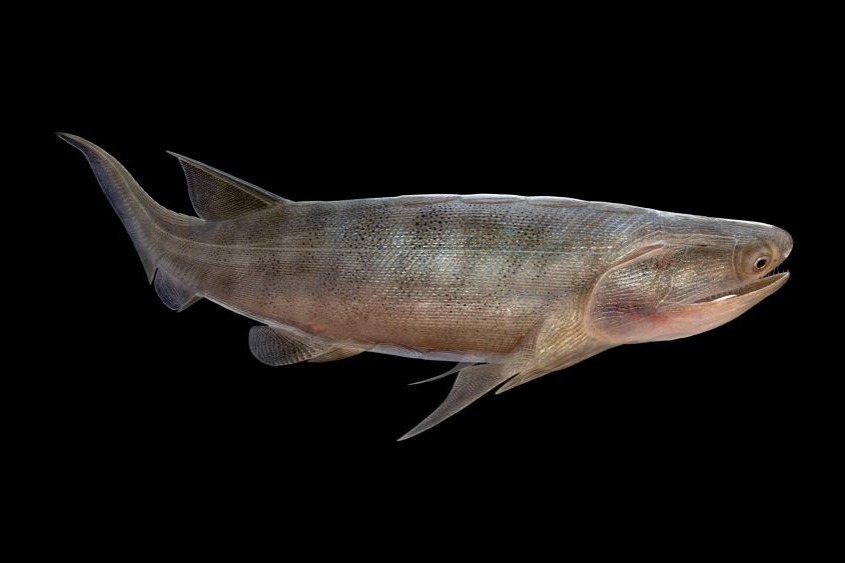
    Paleontologists from Yunnan University have made a groundbreaking discovery that challenges conventional understanding of early vertebrate evolution. Their research indicates that the earliest known vertebrates from the Cambrian Period, approximately 518 million years ago, may have possessed not two but four camera-type eyes.

    The study, published in the prestigious journal Nature, examines jawless vertebrates known as myllokunmingids that inhabited Earth’s oceans during a critical evolutionary period. Led by Academician Xu Xing from the School of Life Sciences and Researcher Cong Peiyun from the Institute of Paleontology, the team analyzed exceptionally preserved fossil specimens from the Chengjiang biota in Yunnan province.

    These fossils reveal a remarkable anatomical feature: a smaller pair of round, dark structures positioned between the conventional lateral eyes. Through meticulous analysis, researchers determined these structures were preserved as organic carbon films containing melanin-bearing melanosomes—characteristics that closely match the retinal pigment epithelium found in modern vertebrates.

    The most significant finding emerged when researchers identified traces of lenses within these additional ocular structures. The precise positioning and proportional size of these lenses relative to the retinal tissues mirror the anatomical relationship observed in functional camera-type eyes, strongly suggesting these organs possessed image-forming capabilities.

    This extraordinary dorsal pineal complex, located atop the animals’ heads, represents a previously unknown visual system configuration in early vertebrates. The discovery provides unprecedented insights into how these ancient creatures perceived their environment and enhances our understanding of sensory evolution during the Cambrian explosion—a period of rapid biological diversification.

    The research not only expands scientific knowledge of vertebrate visual system origins but also offers fresh perspectives on the survival strategies employed by animals during one of Earth’s most biologically creative eras.