分类: science

  • Ultra-strong magnet sets world record

    Ultra-strong magnet sets world record

    Chinese scientists have achieved a monumental breakthrough in magnetic field technology by creating the world’s most powerful all-superconducting user magnet, registering an unprecedented central magnetic field strength of 35.6 tesla. This extraordinary achievement, accomplished at the Synergetic Extreme Condition User Facility in Beijing’s Huairou district, represents a magnetic force exceeding 700,000 times that of Earth’s natural magnetic field.

    The newly developed magnet stands as the globe’s sole superconducting apparatus capable of generating ultra-strong magnetic fields beyond 30 tesla specifically designed for scientific experimentation. This technological marvel distinguishes itself through its open-access architecture, enabling both domestic and international research teams to conduct cutting-edge material investigations under extreme experimental conditions.

    Superconducting magnet technology offers revolutionary advantages including zero electrical resistance, exceptional operational stability, and significantly reduced energy consumption when maintained at cryogenic temperatures. These characteristics make such instruments vital for advanced scientific infrastructure, medical imaging applications, and national defense technologies.

    The record-breaking performance was realized while maintaining a substantial 35-millimeter bore diameter, achieved through groundbreaking innovations in core technologies. The Institute of Electrical Engineering at the Chinese Academy of Sciences spearheaded revolutionary advances in magnet design and construction methodologies, while their counterparts at the CAS Institute of Physics conquered challenges related to precision measurement and system integration under extreme environmental conditions.

    According to CAS academician Wang Qiuliang, the current bore dimensions adequately accommodate most experimental requirements including nuclear magnetic resonance studies, specific heat measurements, and electrical resistance assessments. Research initiatives are already underway to expand the magnet’s bore diameter to support an even broader spectrum of measurement techniques.

    Professor Luo Jianlin from the Institute of Physics emphasized the significant operational cost advantages of all-superconducting magnets compared to conventional resistive magnets, noting that superconductors eliminate energy loss through their zero resistance properties. Future development plans target surpassing 40 tesla magnetic field strength while enhancing the refrigeration capacity of liquid helium systems to reduce long-term maintenance costs for ultra-low temperature environments.

  • Australian astronomers discover potentially habitable ‘Earth-like’ planet 150 light years away

    Australian astronomers discover potentially habitable ‘Earth-like’ planet 150 light years away

    An international research team spearheaded by Australian astronomers has announced the identification of a promising Earth-sized exoplanet candidate located approximately 150 light-years from our solar system. The discovery, detailed in a recent publication in The Astrophysical Journal Letters, marks a significant milestone in the ongoing search for habitable worlds beyond our own.

    Designated as candidate HD 137010 b, this celestial body exhibits remarkable similarities to Earth in both physical dimensions and orbital characteristics. It completes a revolution around its host star, which closely resembles our Sun, every 355 days—just 10 days shy of an Earth year. Despite occupying an orbital distance comparable to Earth’s position relative to the Sun, the exoplanet receives approximately 70% less stellar radiation, resulting in considerably cooler surface conditions.

    The research collaboration, led by Dr. Alexander Venner from the University of Southern Queensland, utilized observational data from NASA’s extended Kepler K2 mission conducted in 2017. While initial findings position HD 137010 b near the outer boundary of its star’s habitable zone—where liquid water could theoretically exist—preliminary temperature estimates suggest surface conditions may plummet to approximately -70°C in certain regions, creating a climate more analogous to Mars than Earth.

    Dr. Chelsea Huang, a co-researcher from the University of Southern Queensland, characterized the discovery as ‘genuinely thrilling’ in statements to the ABC, emphasizing that while this isn’t Earth’s identical twin, it represents meaningful progress toward that ultimate astronomical goal. The scientific team currently estimates a 50% probability that the candidate planet might support habitable conditions.

    As the celestial body has only been observed transiting its star on a single occasion, researchers have classified it as a ‘planet candidate’ pending verification through subsequent observational campaigns. The relative brightness of the host star enables comprehensive follow-up studies that could confirm the planet’s status and further elucidate its atmospheric properties and potential for hosting life.

  • Google unveils AI tool probing mysteries of human genome

    Google unveils AI tool probing mysteries of human genome

    Google DeepMind has launched AlphaGenome, a groundbreaking artificial intelligence system designed to interpret the complex regulatory language of the human genome. This deep learning model represents a significant advancement in genomic research, potentially accelerating the discovery of treatments for genetic disorders.

    According to Pushmeet Kohli, Vice President of Research at Google DeepMind, while the 2003 mapping of the human genome provided ‘the book of life,’ interpreting its contents remained profoundly challenging. ‘We have the text—a sequence of three billion nucleotide pairs—but understanding the grammar of this genome represents the next critical frontier,’ Kohli explained during the announcement.

    The technology specifically targets non-coding DNA, which constitutes approximately 98% of the human genome. Once dismissed as ‘junk DNA,’ this genetic material is now understood to function as a regulatory conductor, directing how genetic information operates within cellular structures. These sequences contain numerous variants associated with diseases that have previously eluded comprehensive analysis.

    AlphaGenome distinguishes itself through its ability to process exceptionally long DNA sequences—up to one million nucleotides—while maintaining high resolution predictions. The model analyzes how each nucleotide pair influences biological processes, including gene activation and RNA production. This capability allows researchers to compare mutated and non-mutated sequences, providing unprecedented insight into genetic disease mechanisms.

    Trained on public datasets measuring non-coding DNA across hundreds of human and mouse cell types, AlphaGenome builds upon Google’s established scientific AI work, which includes the Nobel Prize-winning AlphaFold protein structure prediction system. The tool is already being utilized by 3,000 researchers across 160 countries and remains openly accessible for non-commercial scientific investigation.

    Independent researchers have acknowledged the model’s transformative potential while noting limitations. Ben Lehner of Cambridge University confirmed the system ‘performs very well’ but emphasized that AI models remain constrained by training data quality. Robert Goldstone of the Francis Crick Institute noted that while environmental factors influencing gene expression fall outside the model’s scope, AlphaGenome nevertheless represents a ‘breakthrough’ for simulating genetic disease foundations.

  • Global experts gather in Macao for talks in space, planetary sciences

    Global experts gather in Macao for talks in space, planetary sciences

    Macao has positioned itself at the forefront of space exploration dialogue by hosting the 2026 Macao International Forum on Space and Planetary Sciences, which commenced on Tuesday. The prestigious gathering attracted over 300 distinguished scholars specializing in space and planetary sciences from more than 10 countries and regions worldwide.

    The landmark event, organized through a collaboration between Macau University of Science and Technology (MUST), Shandong University, and the Association for Promotion of Science and Technology of Macao, features an extensive program of academic presentations and specialized thematic discussions. Forum organizers designed the conference to establish an open international platform that fosters dialogue among researchers from diverse backgrounds and promotes coordinated development in future space research initiatives.

    MUST President Zhu Jian-Kang emphasized the forum’s strategic significance during his opening ceremony address. “This initiative aims to leverage Macao’s evolving role as a critical hub for China’s aerospace and deep-space research endeavors,” he stated. “By strengthening academic exchanges and cooperation between Chinese and international planetary science communities, we hope to inspire a new generation of young scholars to engage in space science research.”

    The Macao Science and Technology Development Fund (FDCT) provided additional support for the event, with committee member Cheang Kun Wai highlighting the organization’s long-term commitment to advancing scientific innovation. “The FDCT has consistently promoted interdisciplinary collaboration and local scientific advancement,” Cheang noted. “Our support facilitates Macao’s active participation in global scientific development trends, particularly within the rapidly evolving field of space science.”

    The forum represents a significant milestone in Macao’s growing influence within the international scientific community, demonstrating the special administrative region’s capacity to host major academic gatherings that bridge Chinese and global space research initiatives.

  • Scientists find clues to hiking chip storage

    Scientists find clues to hiking chip storage

    Chinese researchers have made a groundbreaking discovery in materials science that could fundamentally transform data storage technology. A team from the Chinese Academy of Sciences’ Institute of Physics has identified previously unknown one-dimensional boundaries within three-dimensional ferroelectric crystals that measure merely one hundred-thousandth the diameter of a human hair.

    The study, published in the prestigious journal Science, reveals that these atomic-scale linear structures—previously thought to be unstable—can be stabilized through crystal imperfections. Specifically, missing or additional oxygen atoms function as atomic-level adhesive, preventing these charged lines from disappearing due to electrical forces.

    This finding challenges long-standing physics theories about material interfaces. Where scientists previously believed data-storing boundaries within crystals were two-dimensional planes, the research demonstrates they can contract into stable one-dimensional lines approximately the width of a single atom.

    The technological implications are staggering. Current storage technology operates at scales of tens of nanometers, while these newly discovered structures are hundreds of times smaller. According to Dr. Zhong Hai, the study’s lead author and associate professor at Ludong University, this discovery could enable storage densities approximately 600 times greater than current capabilities.

    Practical applications could include postage stamp-sized chips capable of storing 20 terabytes of data—equivalent to approximately 10,000 high-definition movies. The technology also promises artificial intelligence chips hundreds of times more powerful and energy-efficient than contemporary models.

    While the researchers successfully manipulated these atomic lines using advanced electron microscopes and localized electric fields, significant engineering challenges remain before commercial application. The team emphasizes this represents fundamental research that opens new pathways in materials science rather than immediately market-ready technology.

  • School launched for interstellar travel

    School launched for interstellar travel

    In a landmark advancement for space education, the University of Chinese Academy of Sciences (UCAS) officially inaugurated its School of Space Exploration on Tuesday in Beijing. The ceremony took place at the prestigious Chinese Academy of Sciences memorial hall honoring the “Two Bombs, One Satellite” project pioneers, symbolically connecting China’s historic aerospace achievements with its ambitious interstellar future.

    UCAS President Zhou Qi declared the establishment responds to humanity’s new era of space exploration. “We have already stepped beyond Earth—building a space stations, exploring the far side of the moon, and launching missions to Mars,” Zhou stated. “It is now time to think strategically about building the interstellar travel enterprise of the future.”

    The school, approved in November 2025, will develop an extensive curriculum spanning 14 first-level disciplines and specialties. Building upon 97 existing courses, it will introduce 22 innovative core subjects including interstellar dynamics and propulsion principles, space environment perception and utilization, planetary dynamics and habitability, and the groundbreaking field of interstellar sociology and governance.

    Academician Zhu Junqiang, director of the CAS Bureau of Strategic High-tech Development, was appointed as the school’s inaugural dean. He emphasized that interstellar navigation represents a complex, systematic engineering challenge that cannot be solved through isolated disciplinary breakthroughs. The school will integrate aerospace engineering, physics, chemistry, biology, and materials science around the grand objective of interstellar travel.

    President Zhou acknowledged the overwhelming public interest following the school’s initial announcement, explaining that the deliberate pace of implementation reflected a commitment to substantial long-term planning rather than “the glamour of the moment.” He paid tribute to the pioneering spirit of the “Two Bombs, One Satellite” generation whose work under challenging conditions laid the foundation for contemporary space achievements.

    The institution is designed to be inherently interdisciplinary and collaborative, with over 100 CAS research institutes connected to its mission. Zhou highlighted that interstellar travel will present multifaceted scientific and practical challenges—from navigation and space weather to spacecraft engineering, space agriculture, and even interstellar diplomacy—requiring unprecedented institutional cooperation.

    A central focus will be talent development, with Zhou emphasizing that “the heart of a school is nurturing people.” He called on all participating institutes and experts to prioritize student growth and provide platforms for them to “see farther and go farther.” The school is positioned to serve as both an innovation source and training base for China’s long-term interstellar navigation development, while simultaneously building a scientific system that addresses humanity’s common future needs in space exploration.

  • China achieves major breakthrough in all-superconducting magnet

    China achieves major breakthrough in all-superconducting magnet

    Chinese scientists have established a new global benchmark in superconducting technology by successfully developing a 35.6 tesla all-superconducting magnet, the Chinese Academy of Sciences announced Tuesday. This groundbreaking achievement represents a significant milestone in extreme magnetic field generation capabilities.

    The record-setting magnet, featuring a 35-millimeter usable aperture, was engineered and tested at the Synergetic Extreme Condition User Facility. Designed specifically for research applications, this advanced instrument will provide both domestic and international scientific teams with unprecedented experimental conditions for cutting-edge investigations.

    This magnetic field intensity dramatically surpasses conventional benchmarks, measuring approximately 12-24 times stronger than medical MRI systems and exceeding Earth’s natural magnetic field by over 700,000 times. Such extreme conditions enable previously impossible scientific exploration at microscopic levels.

    The technological breakthrough resulted from collaborative efforts between the Institute of Electrical Engineering and the Institute of Physics under CAS. Researchers overcame substantial engineering challenges including sophisticated health monitoring systems and precision measurement techniques for high-temperature superconducting components.

    This advancement establishes critical infrastructure for pioneering research across multiple disciplines including materials science, quantum physics, and life sciences. The magnet’s exceptional properties – characterized by extreme field strength, remarkable uniformity, and exceptional stability with minimal energy consumption – position it as a transformative tool for scientific discovery.

    Beyond fundamental research, this superconducting technology holds substantial practical implications for national scientific infrastructure, advanced instrumentation, medical imaging technology, and next-generation applications in energy and transportation systems. The achievement demonstrates China’s growing capabilities in high-tech research infrastructure development with potential global scientific impact.

  • University of Chinese Academy of Sciences unveils the School of Space Exploration

    University of Chinese Academy of Sciences unveils the School of Space Exploration

    In a significant advancement for China’s space education infrastructure, the University of Chinese Academy of Sciences officially inaugurated its groundbreaking School of Space Exploration in Beijing on Tuesday. This specialized institution represents a strategic initiative to develop elite talent for the nation’s rapidly expanding space program.

    The newly established school will function as an interdisciplinary hub integrating aerospace engineering, astrophysics, planetary science, and space technology development. Its curriculum is designed to address the complex challenges of contemporary space exploration, including satellite technology, deep space missions, and sustainable space infrastructure.

    This educational initiative aligns with China’s ambitious space agenda, which has recently achieved remarkable milestones including lunar sample return missions, the construction of the Tiangong space station, and planned crewed missions to the Moon. The school will leverage the extensive research capabilities of the Chinese Academy of Sciences, providing students with access to cutting-edge facilities and mentorship from leading space scientists.

    The establishment of this specialized institution responds to growing demand for highly skilled professionals in the global space sector, which has expanded beyond government programs to include commercial space ventures and international collaborative projects. Educational analysts note that this represents China’s commitment to developing domestic expertise rather than relying on foreign-trained specialists.

    The school’s inaugural class will include graduate and doctoral students selected through competitive admission processes, with programs emphasizing both theoretical knowledge and practical application through research partnerships with China’s space industry leaders.

  • Senior Chinese official urges steady, sustained sci-tech progress

    Senior Chinese official urges steady, sustained sci-tech progress

    In a significant national address, China’s top science official Ding Xuexiang has outlined an ambitious roadmap for the country’s technological future, emphasizing the critical need for sustained progress and self-reliance in scientific capabilities. Speaking at Monday’s National Conference on Science and Technology in Beijing, the senior official who directs China’s Central Science and Technology Commission called for comprehensive strengthening of the nation’s innovation ecosystem.

    Ding, who also serves on the Standing Committee of the Political Bureau of the Communist Party Central Committee, highlighted the remarkable achievements during China’s 14th Five-Year Plan period (2021-2025), noting that scientific innovation has become a strategic pillar supporting the country’s modernization drive while comprehensively enabling high-quality development.

    The official emphasized several key priorities including bolstering fundamental research capabilities, enhancing China’s autonomous innovation capacity, and improving basic conditions for scientific research. Ding specifically called for leveraging strategic scientific and technological strengths while simultaneously deepening international collaboration in science and technology.

    A central focus of the address was the integration of technological innovation with industrial advancement. Ding urged strengthening the leading role of enterprises in innovation, accelerating the establishment of a science and technology financial system, and improving guidance for developing new quality productive forces.

    The human capital dimension featured prominently in the speech, with Ding stressing the importance of expanding China’s science and engineering talent pool and advancing the construction of international sci-tech innovation centers. This comprehensive approach signals China’s commitment to building a robust, self-reliant scientific ecosystem that can compete globally while maintaining international cooperation.

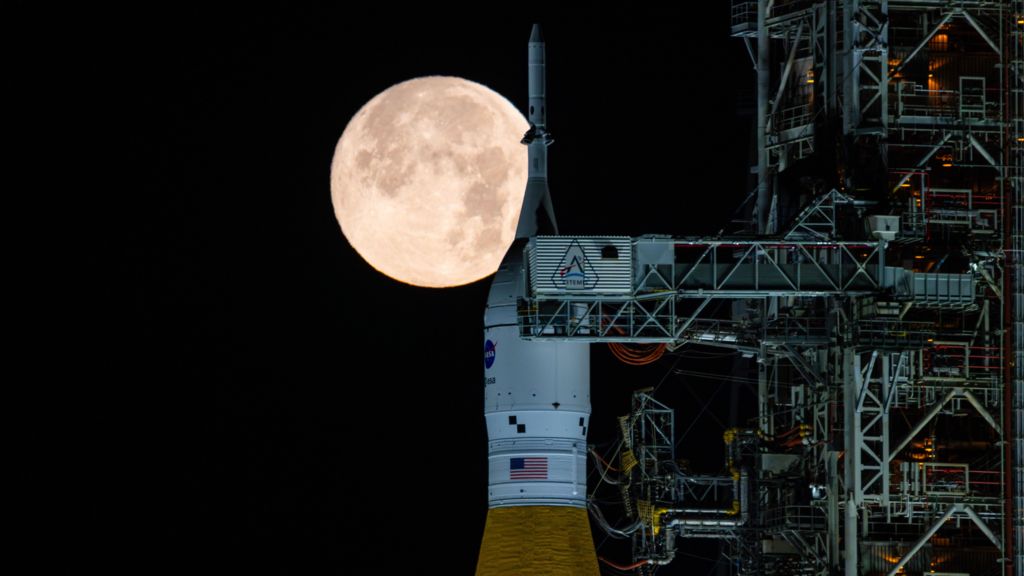
  • Moon offers unique view of Earth’s radiation signature: study

    Moon offers unique view of Earth’s radiation signature: study

    A groundbreaking study published in the Journal of Geophysical Research: Atmospheres has demonstrated that lunar-based observation platforms offer a revolutionary perspective on Earth’s radiation dynamics, effectively capturing the planet’s complete energy signature without atmospheric interference.

    The research, conducted by scientists from the Chinese Academy of Sciences, reveals that the moon’s unique vantage point provides a permanent, full-disk view of Earth that surpasses the limitations of conventional satellite monitoring systems. Unlike low-Earth orbit satellites that capture fragmented regional data or geostationary satellites limited to hemispheric observation, the lunar perspective enables continuous monitoring of the entire planet’s radiation budget.

    Dr. Ye Hanlin, lead researcher from the Institute of Atmospheric Physics at CAS, explained the significance of this discovery: “The lunar observation platform allows us to distinguish planetary-scale climate patterns from localized weather noise. Approximately 90% of Earth’s radiation variations can be mapped using spherical harmonics—mathematical patterns that essentially form Earth’s unique radiation fingerprint.”

    The study further identified distinct rhythmic cycles in radiation data corresponding to lunar phases, orbital mechanics, and Earth’s rotation. These patterns provide scientists with unprecedented clarity in analyzing climate-relevant radiation features that were previously obscured by atmospheric interference.

    Academician Guo Huadong, corresponding author of the study, emphasized the transformative potential of this approach: “This holistic perspective from the moon represents a paradigm shift in climate monitoring. It provides the consistent, comprehensive data required to advance our understanding of global climate change mechanisms and improve the accuracy of climate models.”

    The findings establish lunar-based Earth observation as a critical tool for future climate research, offering a stable platform for long-term monitoring of planetary energy balance and contributing to more precise climate change predictions.