In a significant move highlighting China’s commitment to global scientific collaboration, the Chinese Academy of Sciences (CAS) and the Chinese Academy of Engineering (CAE) have elected a total of 51 foreign academicians in 2025. Among these, 27 were elected to the CAS, while 24 joined the CAE. This election underscores China’s growing influence in the global scientific community and its efforts to foster international partnerships in research and innovation. The newly elected academicians represent a diverse range of expertise and nationalities, reflecting China’s strategy to integrate global talent into its scientific endeavors. This development also aligns with China’s broader goals of advancing technological innovation and addressing global challenges through collaborative research. The election process, known for its rigor and selectivity, ensures that only the most distinguished scholars and engineers are chosen. This initiative not only strengthens China’s academic institutions but also enhances its reputation as a hub for cutting-edge research and development.
分类: science
-

Ten photos from across China: Nov 14 – 20
The Shenzhou XXI mission marked another milestone in China’s space exploration efforts as its return capsule safely touched down at the Dongfeng landing site in Inner Mongolia on November 14, 2025. The capsule carried astronauts Wang Jie, Chen Dong, and Chen Zhongrui, who had completed their mission in space. This event was captured in a series of ten photographs showcasing significant moments from across China during the week of November 14 to 20. The successful landing underscores China’s growing capabilities in space technology and its commitment to advancing human spaceflight. The images, released by Xinhua, highlight not only the return of the astronauts but also other notable events and scenes from various regions of the country, reflecting the nation’s progress and diversity.
-

Scientists design new coating for rare earth materials to glow when powered by electricity
A groundbreaking study has unveiled a novel coating that allows rare earth materials to emit light when powered by electricity. This innovation, spearheaded by a collaborative team from Heilongjiang University, Tsinghua University, and the National University of Singapore, was recently published in the prestigious journal Nature. Rare earth nanocrystals, known for their vibrant and stable light emission, have traditionally been limited in electric-driven applications like LEDs and OLEDs due to their insulating properties. ‘It’s akin to running in a heavy winter coat,’ explained Han Sanyang, an associate professor at Tsinghua University, highlighting the challenge of electricity reaching these materials. The team’s solution involves a specialized molecular coating that acts as an ‘energy-conversion layer,’ efficiently transferring electrical energy to the nanocrystals, which then produce adjustable, high-purity light. This breakthrough paves the way for applications in human health monitoring, non-invasive testing, and agricultural lighting. The researchers are now refining the technology, particularly for healthcare and infrared uses.
-

Resilience and recovery
In a remarkable display of resilience and scientific ingenuity, rare red-flowered black mangroves (Lumnitzera littorea) in Hainan province, China, are on the path to recovery following the devastating impact of Typhoon Kajiki. The storm, which struck on August 24, unleashed winds of up to 200 kilometers per hour, severely damaging the coastal regions of Hainan. Among the casualties were six of the only 14 known mother trees of this rare mangrove species in China.
-

Scientific study drives law to protect ecology of Qinghai-Tibet Plateau
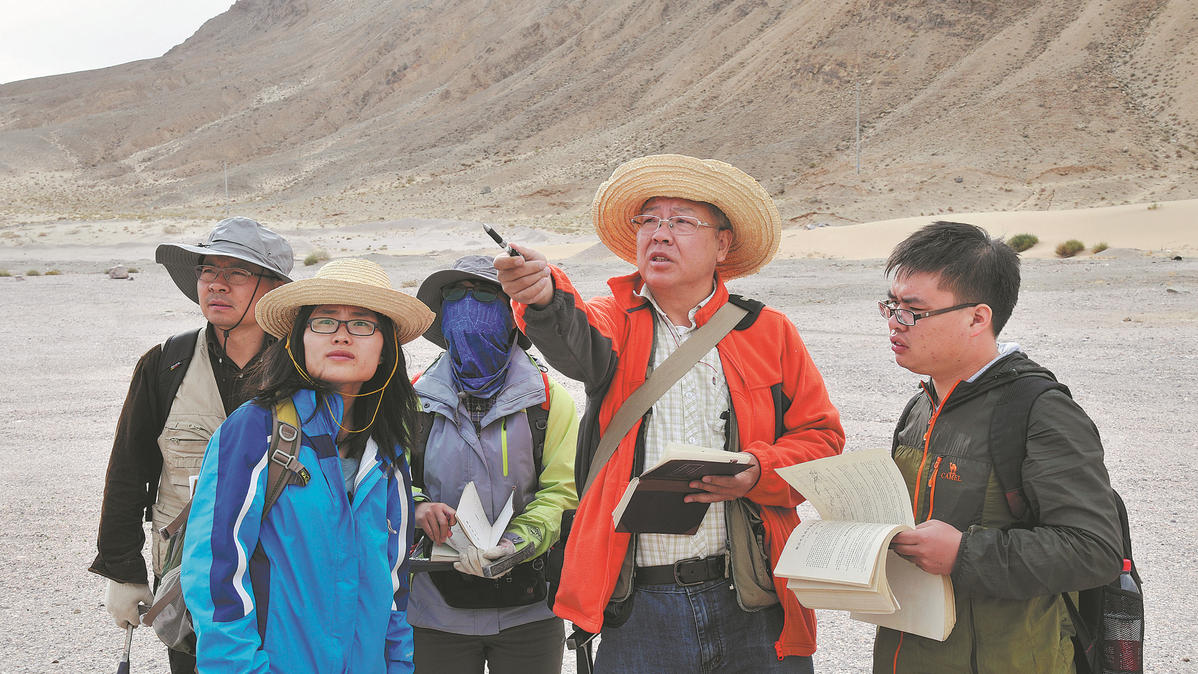
The second Qinghai-Tibet scientific expedition has significantly influenced the formulation of ecological protection legislation for the Qinghai-Tibet Plateau, as highlighted by academicians during a recent news conference in Lhasa, the capital of the Xizang autonomous region. The expedition’s top 10 application achievements, unveiled at the event, span ecological conservation, disaster prevention, resource exploration, carbon accounting, traffic safety, and border area development. Yao Tandong, an academician with the Chinese Academy of Sciences, emphasized that the expedition’s core legislative recommendations—such as enhancing glacier change monitoring, protecting ecological barriers, and promoting integrated environmental management—were integrated into the new legislation. This led to the adoption of the ‘Measures for the Implementation of the Qinghai-Tibet Plateau Ecological Protection Law’ by the 15th meeting of the Standing Committee of the 12th People’s Congress of Xizang in March, which took effect on August 1. Beyond legislative impact, the expedition has deepened scientific understanding of the plateau’s unique ecological challenges, particularly concerning the Asian Water Tower, a vital water source for over 2 billion people. Research indicates a significant increase in water supply capacity, with runoff from major basins projected to rise by 49% by the century’s end. However, the region faces growing threats from cryosphere disasters, such as glacier avalanches and glacial lake outburst floods, which have increased in frequency and severity. To address these challenges, the expedition team has established a comprehensive Earth system multisphere observation platform and developed an intelligent monitoring and early warning system for cryosphere-related disasters. These innovations aim to provide precise solutions for disaster prevention and mitigation, safeguarding major projects and local communities.
-

JUNO yields first results, searches for ‘new physics’
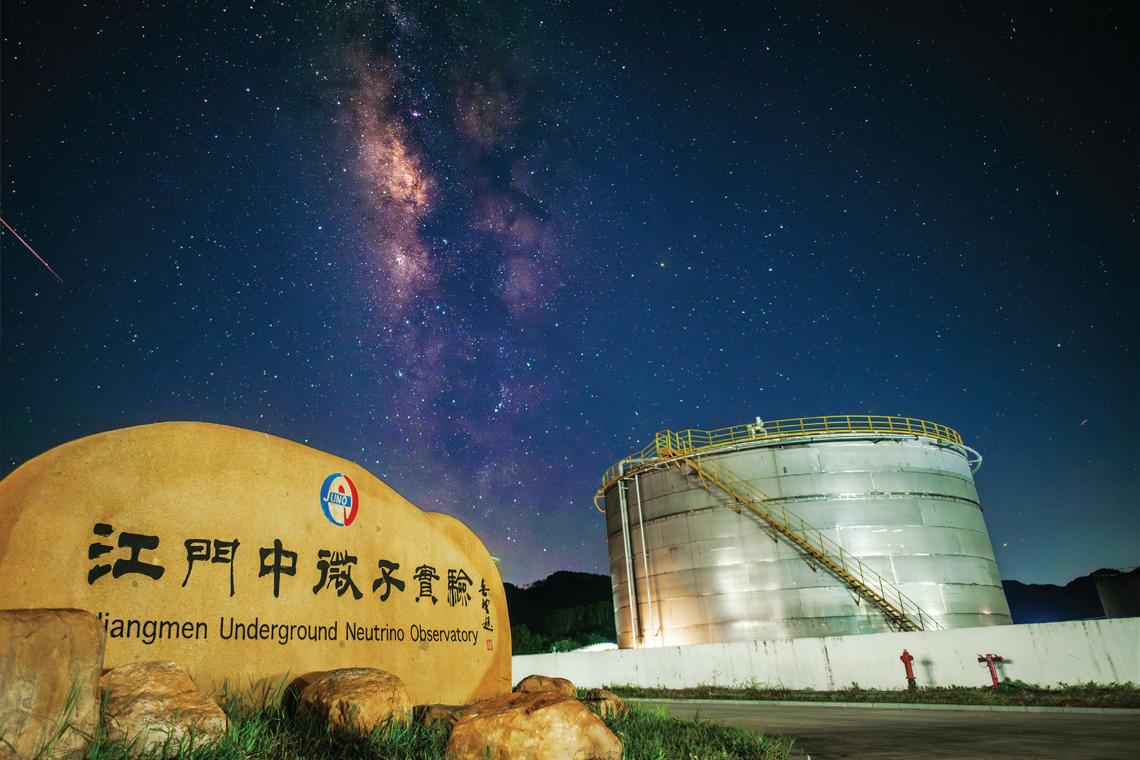
The Jiangmen Underground Neutrino Observatory (JUNO), the world’s largest liquid scintillator neutrino detector, has unveiled its first set of experimental results, marking a significant milestone in particle physics. Located 700 meters underground in Guangdong, China, this state-of-the-art facility has achieved unprecedented precision in measuring neutrino properties, offering new insights into the fundamental nature of these elusive particles.
-

Paris court blocks auction of earliest-known calculator
A Paris court has temporarily blocked the auction of La Pascaline, one of the world’s first mechanical calculators, developed by French mathematician Blaise Pascal in 1642. The device, valued at €2 to 3 million (£1.77m to £2.65m), was set to be sold by Christie’s as part of the library collection of the late Catalonia collector Léon Parcé. However, scientists and researchers petitioned for heritage protections, arguing that La Pascaline should be classified as a ‘national treasure’ due to its historical and scientific significance. The court’s provisional decision cited ‘serious doubts’ over the legality of an export certificate previously issued by France’s culture minister. Christie’s has suspended the sale pending a final judgment. La Pascaline, of which only nine examples remain, is celebrated as the first attempt to mechanize human thought, marking a pivotal moment in scientific history. The device had been exhibited at Christie’s venues in New York and Hong Kong this year. The French heritage group Association Sites & Monuments welcomed the court’s decision, emphasizing the calculator’s importance to France’s cultural and scientific legacy.
-

Watch: Nasa releases new images of interstellar comet 3I/ATLAS
NASA has recently unveiled a series of breathtaking new images of the interstellar comet 3I/ATLAS, marking a significant milestone in astronomical research. First discovered in July 2025, this celestial body is only the third confirmed object to traverse our solar system from interstellar space. The images, captured using advanced telescopic technology, provide unprecedented insights into the comet’s composition, structure, and trajectory. Scientists are particularly intrigued by the comet’s unique characteristics, which could offer clues about the origins of celestial bodies beyond our solar system. The release of these images has sparked widespread excitement among the scientific community and space enthusiasts alike, as they continue to unravel the mysteries of the cosmos. This discovery underscores the importance of ongoing space exploration and the potential for future interstellar missions to expand our understanding of the universe.
-

Chinese ‘lunar soil bricks’ return from space, paving way for construction on moon
China has achieved a significant milestone in its lunar exploration program with the successful return of experimental ‘lunar soil bricks’ from space. These bricks, exposed to the extreme conditions of space for a year, arrived on Earth aboard the Shenzhou XXI spacecraft last week. Initial inspections confirmed their structural integrity, marking a crucial step toward China’s goal of constructing infrastructure on the moon by 2035. The experiment, led by Ding Lieyun of Huazhong University of Science and Technology, began in November 2024 when the Tianzhou 8 cargo ship transported simulated lunar soil samples to China’s space station. A total of 74 bricks were mounted on the station’s exterior exposure platform for a three-year study. The bricks, crafted from volcanic ash from Changbai Mountain in Jilin Province, mimic the composition of lunar regolith. They exhibit triple the compressive strength of conventional bricks and remain stable under the moon’s extreme temperature fluctuations and cosmic radiation. The team employed traditional Chinese masonry techniques and developed a robotic system for assembly, akin to LEGO blocks, with 3D printing used for structural reinforcement. Future analysis of the bricks will provide insights into their long-term durability in the lunar environment, laying the groundwork for extraterrestrial construction.
-

China releases latest findings from second Qinghai-Tibet Plateau scientific expedition
China has officially released the top 10 application achievements from its second Qinghai-Tibet Plateau scientific expedition, marking a significant milestone in ecological, disaster prevention, and resource exploration research. The findings were announced on Wednesday in Lhasa, the capital of the Xizang Autonomous Region, under the leadership of Yao Tandong, a distinguished academician of the Chinese Academy of Sciences. The expedition, which began in August 2017, has involved over 3,000 research teams and 30,000 personnel, conducting extensive surveys across the plateau. Key achievements include scientific support for ecological protection legislation, the creation of an Earth observation and early warning platform, and innovative technologies for disaster prevention in permafrost regions, which are crucial for major infrastructure projects like the Sichuan-Xizang Railway and expressways. The plateau is experiencing a warming, wetting, and ‘greening’ trend, amplifying both regional and global climate impacts. Additionally, the ‘Asian Water Tower’ has shown a significant increase in water supply capacity, with runoff projections indicating a potential 49 percent rise by the end of the century, ensuring water security for billions.