分类: science

  • NASA hit by fuel leaks during test countdown

    NASA hit by fuel leaks during test countdown

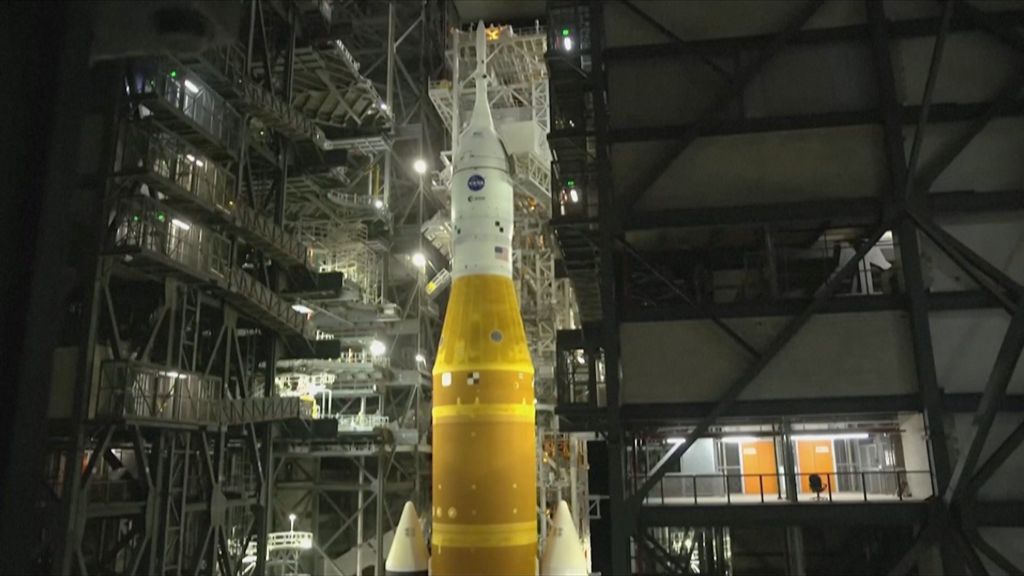
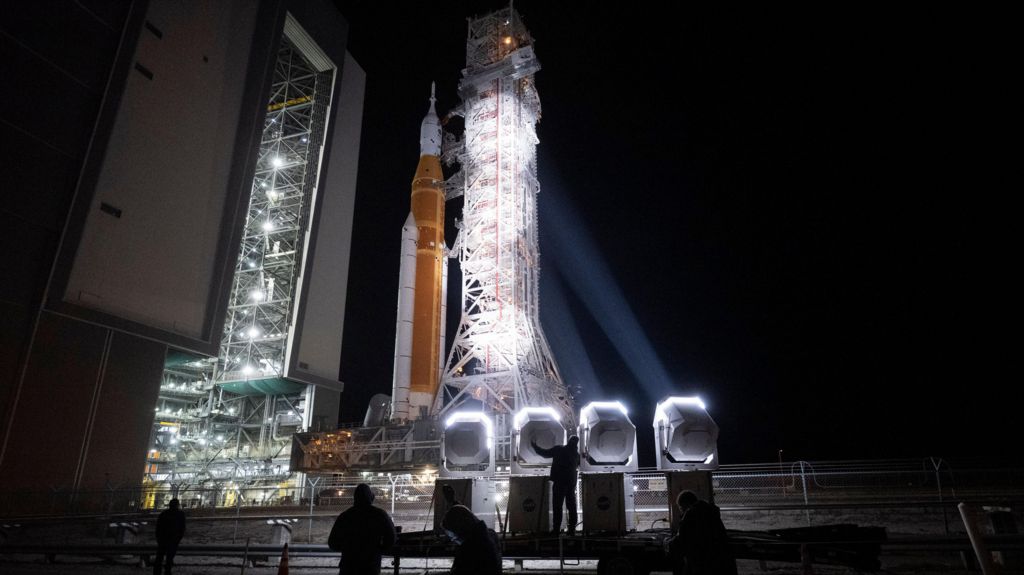
    NASA’s ambitious lunar program encountered significant technical challenges during a crucial pre-launch test of its Space Launch System (SLS) rocket on Monday, raising concerns about the timeline for the upcoming crewed mission around the moon. The incident occurred at Kennedy Space Center in Florida during a daylong fueling operation designed to simulate final countdown procedures.

    The problematic hydrogen leaks emerged just hours into the complex fueling process, where launch controllers were loading the 98-meter rocket with more than 2.6 million liters of super-chilled hydrogen and oxygen. Excessive hydrogen accumulation near the rocket’s base forced multiple suspensions of the hydrogen loading operation as engineers implemented contingency measures developed during previous SLS testing in 2022.

    The four astronauts assigned to the mission—three Americans and one Canadian—monitored the critical rehearsal from Johnson Space Center in Houston, approximately 1,600 kilometers away. The crew has been in quarantine for over a week awaiting the outcome of this essential practice countdown, which will determine when they can embark on humanity’s first lunar voyage in more than fifty years.

    NASA now faces a compressed launch window, with the earliest possible launch date pushed to Sunday and a hard deadline of February 11 before the mission must be postponed until March. The agency’s scheduling constraints are further complicated by seasonal cold conditions that have already reduced February’s launch window by two days.

    The planned mission involves a nearly 10-day journey that will take astronauts past the moon, around its far side, and directly back to Earth—testing the Orion capsule’s life support systems without entering lunar orbit or attempting a landing. This testing milestone represents a critical step toward NASA’s Artemis program goals of establishing sustainable lunar exploration.

  • Scientists uncover core stabilizing driver of grassland productivity

    Scientists uncover core stabilizing driver of grassland productivity

    A groundbreaking international study led by Lanzhou University has revealed that species diversity within local grassland communities serves as the fundamental stabilizing mechanism for maintaining productivity in China’s natural grassland ecosystems. Published in Nature Communications, this research provides crucial insights into ecosystem resilience amid global climate change challenges.

    The collaborative investigation between Chinese, Dutch, and Spanish researchers conducted extensive field studies across 235 sampling sites in China’s ecologically significant regions, including the Qinghai-Tibet Plateau and Inner Mongolia Plateau. The research methodology integrated systematic field measurements of plant species composition, functional traits, and soil properties with decade-long remote sensing data to track vegetation productivity dynamics.

    Professor Liu Xiang from Lanzhou University’s College of Ecology explained that while ecological theory has long suggested that biodiversity promotes ecosystem stability, this study provides empirical evidence at unprecedented spatial scales. The research demonstrates that species richness consistently stabilizes productivity, whereas functional diversity surprisingly contributes to destabilization at local scales.

    The study uncovered regional variations in stabilizing factors. On water-limited Inner Mongolia Plateau, mean annual precipitation emerged as the primary stabilizing factor, while on temperature-constrained Qinghai-Tibet Plateau, local species richness proved most critical. Contrary to previous assumptions, the research found no evidence that differences in species composition or functional traits among communities enhance stability through asynchronous productivity fluctuations at larger spatial scales.

    These findings challenge existing ecological models and provide a new scientific foundation for sustainable grassland management, particularly in arid and cold regions vulnerable to climate change impacts. The integration of large-scale field investigation with long-term remote observation represents a methodological advancement in ecological research, offering more accurate predictive capabilities for ecosystem responses to environmental changes.

  • Pujiang Innovation Forum hosts salon to foster growth of young scientists

    Pujiang Innovation Forum hosts salon to foster growth of young scientists

    Shanghai’s scientific community witnessed a significant gathering of emerging talent as the Pujiang Innovation Forum’s CCB Lab convened its latest “Youth Voice” academic symposium on Friday. The event, specifically dedicated to plant science advancements, established a dynamic platform combining rigorous academic discourse with collaborative networking opportunities for promising researchers.

    Distinguished experts including Cui Xiaofeng, Executive Editor of prestigious journals Molecular Plant and Plant Communications, and Du Wenxian, Associate Researcher at Shanghai Sixth People’s Hospital Affiliated with Shanghai Jiao Tong University School of Medicine, delivered cutting-edge presentations. Their insights traced China’s remarkable evolution in plant science from its early days of following international trends to its current position as a global innovator in the field.

    The symposium introduced the ambitious “Plant Science 2035” vision, outlining how technological breakthroughs are revolutionizing research methodologies across scales—from molecular investigations to comprehensive ecosystem analyses. This forward-looking framework emphasizes interdisciplinary approaches that will define the next decade of botanical research.

    Leveraging digital connectivity, the event achieved substantial reach through multi-platform livestreaming, accumulating over 10,000 views and facilitating active participation from young scholars both virtually and in-person. The collaborative effort between Shanghai Pujiang Innovation Forum Center and Shanghai Association of Young Talents in Science and Technology demonstrated a committed institutional approach to nurturing scientific talent through themed academic gatherings that address future challenges and opportunities.

  • Scientists pioneer first-ever genealogy for volcanoes beneath Antarctic ice

    Scientists pioneer first-ever genealogy for volcanoes beneath Antarctic ice

    In a groundbreaking polar research achievement, an international scientific consortium has developed the first comprehensive genealogical archive of subglacial volcanoes concealed beneath Antarctica’s massive ice sheets. Designated as ANT-SGV-25, this pioneering catalogue documents 207 known volcanic formations, providing an unprecedented systematic reference for understanding these hidden geological features.

    The research initiative was spearheaded by China’s Polar Research Institute (PRIC) in collaboration with Zhejiang University, Fudan University, and the United Kingdom’s University of Exeter. The team synthesized existing scientific data to address longstanding observational challenges and resolution limitations that have historically hampered systematic study of these subsurface structures.

    According to lead researcher Cui Xiangbin of PRIC’s Center for Polar Ice & Snow and Climate Change Research, the volcanic inventory reveals significant morphological diversity. The documented volcanoes range dramatically in scale, with elevations spanning from 100 to 4,181 meters and volumes varying from 1 to 2,800 cubic kilometers. Their basal widths extend from 0.3 to 58 kilometers, with median slopes averaging approximately 8.1 degrees.

    The distribution pattern shows pronounced concentration within the West Antarctic Rift System, where crustal stretching and elevated geothermal activity create favorable conditions for volcanic formation. By contrast, only three volcanic structures have been identified in East Antarctica to date.

    This research breakthrough holds substantial implications for understanding ice sheet dynamics. Subglacial volcanoes significantly influence basal topography, promote ice melting through geothermal heat, regulate subglacial hydrological systems, and ultimately affect ice flow patterns and stability. The comprehensive parameter system established through computer vision technology and data integration enables detailed classification, origin analysis, and impact assessment of these geological features.

    The findings, published in the prestigious journal Earth-Science Reviews, represent a crucial public data resource for the global scientific community studying polar environments and climate change impacts.

  • Chinese space experiment sees butterfly emerge in orbit

    Chinese space experiment sees butterfly emerge in orbit

    In a pioneering achievement for space biology, Chinese researchers have documented the first successful emergence of a butterfly from its chrysalis in Earth’s orbit. The breakthrough experiment, conducted aboard a miniature sealed ecosystem, provides unprecedented insights into biological adaptation to microgravity conditions.

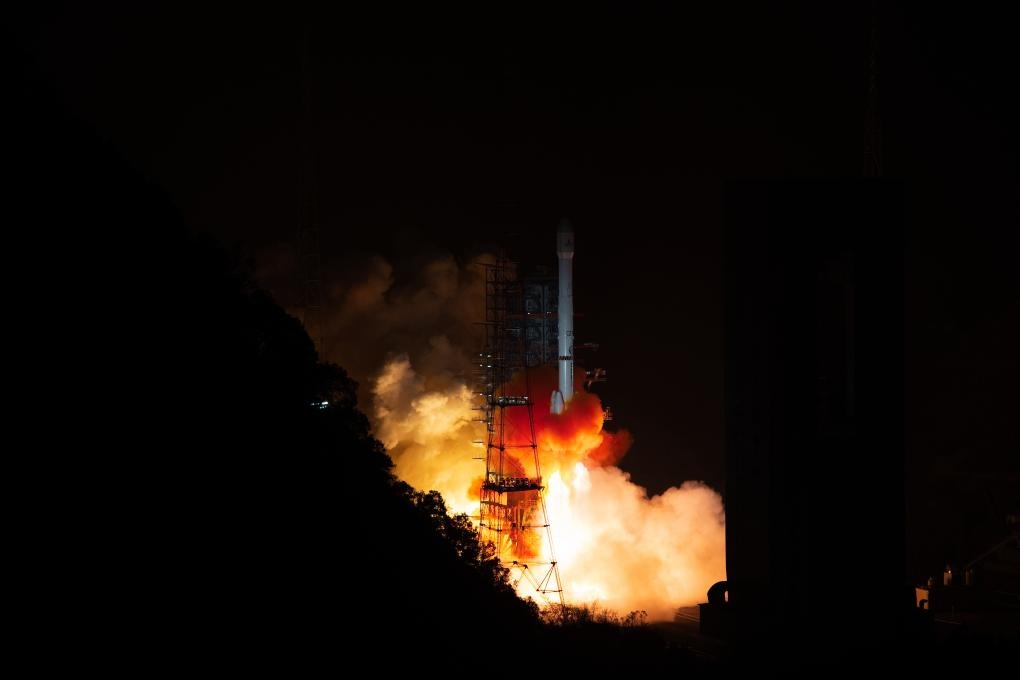
    Chongqing University’s research team developed the specialized 8.3-kilogram payload that housed the butterfly chrysalis alongside pepper plants and microorganisms. Launched December 13, 2025, aboard the Kuaizhou-11 Y8 carrier rocket, the self-contained ecosystem maintained Earth-like conditions through carefully calibrated environmental controls.

    Chief designer Xie Gengxin explained the engineering innovations that made the experiment possible. ‘We overcame significant technical challenges, particularly magnesium alloy oxidation in high-humidity environments, to create a robust protective structure for this biological habitat,’ he stated.

    The spacecraft’s monitoring systems captured photographic evidence showing the butterfly adapting remarkably to weightlessness—moving within the capsule, resting on leaves, and fluttering its wings despite the absence of normal gravity. Telemetry data confirmed stable pressure, temperature, and humidity levels throughout the emergence process.

    This achievement represents more than insect development in space; it validates the viability of complex closed-loop life support systems for long-duration missions. The experiment successfully simulated Earth’s ecological cycles, with plants generating oxygen and potential food sources while microorganisms processed waste to maintain atmospheric stability.

    Researchers now turn their attention to evaluating the structure’s orbital endurance, component adaptability, and long-term sealing capabilities—critical factors for future deep-space exploration and potential extraterrestrial colonization efforts.

  • First amphibian footprints from Jurassic of Asia discovered in Beijing

    First amphibian footprints from Jurassic of Asia discovered in Beijing

    In a landmark paleontological breakthrough, researchers have confirmed the discovery of the first-ever Jurassic-period amphibian footprints found in Asia, located within Beijing’s Mentougou District. The extraordinary find, recently published in the esteemed journal Ichnos, was spearheaded by a team of Chinese scientists and originated from a chance discovery by a local elementary school student.

    The fossil evidence consists of a meticulously preserved pair of impressions—a forefoot and a hindfoot—etched onto a single stone slab estimated to be approximately 160 million years old. The tracks were identified on a roadside slope in Longquan town. According to Professor Xing Lida, a renowned dinosaur specialist from the China University of Geosciences in Beijing, the alignment, size, and spacing of the 1.5-centimeter-long prints indicate they were made by a single, small animal in motion.

    One impression is exceptionally well-defined, presenting a distinct fan-shaped morphology with four slender, pointed toes. To extract maximal detail from these diminutive traces, the scientific team employed advanced photogrammetric 3D modeling. This digital technique generated a high-fidelity three-dimensional model that unveiled subtle surface features imperceptible to the naked eye, providing a robust foundation for conclusive analysis.

    Through rigorous morphological comparison and quantitative skeletal-track correlation, the research team attributed the footprints to a salamander-like amphibian from the Middle Jurassic era. This discovery shatters previous records for the region, which were dominated by dinosaur and turtle tracks, effectively filling a critical void in the Asian vertebrate ichnological record.

    The implications extend far beyond a new species identification. These ancient tracks serve as a direct portal into the paleoecology of northern China, painting a picture of a lush, complex ecosystem where small, land-adapted amphibians thrived alongside ferns, ginkgos, and cycads in a lake-swamp environment.

    A particularly inspiring aspect of this scientific achievement is its origin. The crucial fossil was first spotted in early 2025 by Ni Jingchen, a young fossil enthusiast and elementary school student, during a exploratory outing. Professor Xing hailed this as a quintessential example of public participation in science, demonstrating that profound historical discoveries can sometimes lie in the most unassuming places, awaiting a curious and observant mind.

  • Nanocrystal analysis system bolsters sci-tech self-reliance

    Nanocrystal analysis system bolsters sci-tech self-reliance

    Chinese scientists have achieved a major technological milestone with the development of the nation’s first fully domestic micro-nanocrystal analysis system. The breakthrough instrument, named RaSAS (Rapid Analysis System), was unveiled by researchers at the Guangzhou Institute of Geochemistry after five years of intensive development.

    The advanced system represents a significant step toward China’s technological self-reliance, ending decades of dependence on expensive imported equipment for high-precision crystal analysis. With this achievement, China becomes only the third nation worldwide—after Japan and Switzerland—capable of producing such sophisticated analytical instrumentation.

    RaSAS operates at scales beyond the reach of traditional X-ray diffraction technology, enabling researchers to examine crystal structures at submicron to nanometer levels. The system features proprietary 3D electron diffraction technology with complete hardware and software autonomy, addressing previous limitations where foreign instruments lacked customization capabilities for specialized research applications.

    According to Dr. Zhu Jianxi, deputy director of GIG, the technology holds transformative potential across multiple scientific disciplines. “RaSAS opens new frontiers in Earth and planetary sciences, materials development, and biomedical research,” he stated.

    The research team, co-led by Dr. Xian Haiyang, emphasized the system’s practical applications have already yielded significant discoveries. Scientists using RaSAS have identified and named two new minerals—Wangyanite and Oxyplumbopyrochlore—both officially recognized by the International Mineralogical Association. The technology also contributed to groundbreaking research published in Science journal, confirming that early deep-Earth water can be stored within Bridgmanite crystal structures, fundamentally altering understanding of planetary evolution.

    Economically, the domestic system offers substantial advantages, with expected pricing approximately 40% lower than comparable Japanese instruments that typically cost around 12 million yuan ($1.71 million) per unit. The development involved overcoming complex engineering challenges, including localization of critical components like field-emission electron guns and high-voltage power supplies.

    Mass production is anticipated within three to six months following technology transfer, a development eagerly awaited by the scientific community. Professor Qin Liping from the University of Science and Technology of China noted that widespread adoption of this equipment will be crucial for China’s advancement in high-end manufacturing and strategic research domains.

  • UAE eyes long-term space missions as it builds next-gen astronauts

    UAE eyes long-term space missions as it builds next-gen astronauts

    The United Arab Emirates is strategically transitioning from short-term space missions to establishing a sustainable, long-term presence beyond Earth’s orbit. This ambitious shift was articulated by Major Hazzaa Al Mansouri, the nation’s pioneering astronaut, during his address at the Young Arab Leaders Forum.

    Addressing the session titled ‘The Space Silk Route: Mapping Arab Ambition,’ Al Mansouri revealed that this new phase of space exploration necessitates a fundamental transformation in astronaut training methodologies, international cooperation frameworks, and the integration of cutting-edge technologies. The vision is firmly anchored in the UAE’s 15-year commitment to NASA’s Lunar Gateway program and aligns with the broader Mars 2117 strategy.

    “We are moving beyond the concept of temporary space visits toward establishing permanent settlements in space,” Al Mansouri emphasized. He highlighted the critical challenges posed by the immense distance to the lunar station—approximately 450,000 kilometers from Earth compared to the International Space Station’s 400-kilometer orbit. This vast distance demands unprecedented astronaut autonomy and decision-making capabilities without constant reliance on ground control.

    The next generation of Emirati astronauts will require advanced proficiency in artificial intelligence systems, particularly for missions where real-time communication with Earth becomes impractical. Al Mansouri noted that current ISS operations already incorporate AI-supported models to enhance crew decision-making processes.

    Complementing the UAE’s scientific ambitions, Oman is developing the Arab world’s first commercial spaceport through ETLAQ, its national launch company. Founder Sayyid Azzan bin Qais Al Said detailed the strategic advantages of the near-equatorial Etlaq spaceport, which aims to provide satellite companies with accelerated access to orbit amid growing launch backlogs globally.

    The comprehensive project extends beyond launch capabilities to include a “Space Valley” in Duqm—an integrated zone designed to support downstream businesses ranging from data processing and logistics to space-grade fuel production. This infrastructure initiative seeks to democratize space access for entrepreneurs without specialized rocket engineering backgrounds.

    Together, these parallel developments create a complete value chain positioning the Gulf region as a significant contributor to the trillion-dollar global space economy. The collaborative approach emphasizes sovereign capability development while fostering regional partnerships that inspire future generations to pursue leadership roles in the space sector.

  • China’s Shenzhou XXI astronauts in good health, science goals on track after 3 months in space

    China’s Shenzhou XXI astronauts in good health, science goals on track after 3 months in space

    China’s Tiangong Space Station continues to demonstrate exceptional operational performance as the Shenzhou XXI astronaut crew completes their first three months in orbit with all mission parameters exceeding expectations. The three-person team, commanded by veteran astronaut Zhang Lu alongside specialists Wu Fei and Zhang Hongzhang, has executed a comprehensive scientific program while maintaining optimal physiological condition.

    The crew’s biomedical research has yielded particularly significant breakthroughs, especially in understanding human adaptation to microgravity environments. Using advanced bionic adhesive footwear technology, the astronauts have conducted systematic lower limb muscle stimulation tests, generating valuable datasets about muscular response in weightless conditions. These investigations aim to develop more effective countermeasures against space-induced muscle atrophy.

    Pharmaceutical research has advanced substantially through the pharmacokinetics project, which examines how the human body processes medications differently in space. The collection and preservation of saliva samples for subsequent Earth-based analysis represents a critical step toward establishing safe medication protocols for extended space missions.

    Psychological research has received equal emphasis, with the crew participating in sophisticated assessments measuring human-computer interaction dynamics, emotional regulation during extended isolation, and decision-making capabilities under emergency scenarios. These studies contribute to developing better support systems for future deep space exploration.

    In the realm of materials science, the astronauts have maintained sophisticated experimental apparatus including a containerless experiment cabinet that uses levitation technology to study material properties without container interference. This has involved meticulous sample management and equipment maintenance procedures.

    The crew’s health maintenance protocol incorporates rigorous exercise regimens and comprehensive medical monitoring, including dynamic electrocardiograms, blood pressure surveillance, ultrasound examinations, and bone density measurements. All indicators confirm the astronauts remain in excellent health as they approach the mission’s midpoint.

    Launched on October 31, 2025, from Jiuquan Satellite Launch Center, the Shenzhou XXI mission marked another milestone in China’s manned space program with the successful completion of extravehicular activities on December 9. The mission continues to demonstrate China’s growing capabilities in sustained space operations and scientific research.

  • Shanghai Science and Technology Museum to reopen soon

    Shanghai Science and Technology Museum to reopen soon

    After a comprehensive three-year transformation costing 820 million yuan ($114 million), Shanghai Science and Technology Museum prepares for its grand reopening during the upcoming Year of the Horse Spring Festival celebrations. The extensively renovated institution now boasts what is recognized as the world’s largest 120Hz CLED giant screen theater, representing a significant technological advancement in immersive educational experiences.

    The revitalized museum features ten permanent exhibition areas designed to engage visitors with cutting-edge scientific displays and interactive installations. In a notable cultural collaboration, the institution has partnered with Beijing’s Palace Museum to present a special Year of the Horse exhibition, strategically timed to coincide with the Spring Festival period. This partnership bridges scientific exploration with traditional Chinese cultural elements, offering a unique multidimensional experience.

    The substantial investment in the museum’s renovation underscores Shanghai’s commitment to enhancing its scientific education infrastructure and promoting public engagement with technology. The timing of the reopening during China’s most important traditional festival period is expected to attract significant visitor numbers, both domestic and international, contributing to cultural tourism during the holiday season.

    The technological centerpiece, the 120Hz CLED theater, represents the forefront of display technology, providing unprecedented visual clarity and immersive capabilities for educational content. This enhancement positions the museum as a global leader in scientific exhibition technology and experiential learning environments.