分类: politics

  • US sanctions two ICC judges for rejecting Israel’s appeal against Gaza investigation

    US sanctions two ICC judges for rejecting Israel’s appeal against Gaza investigation

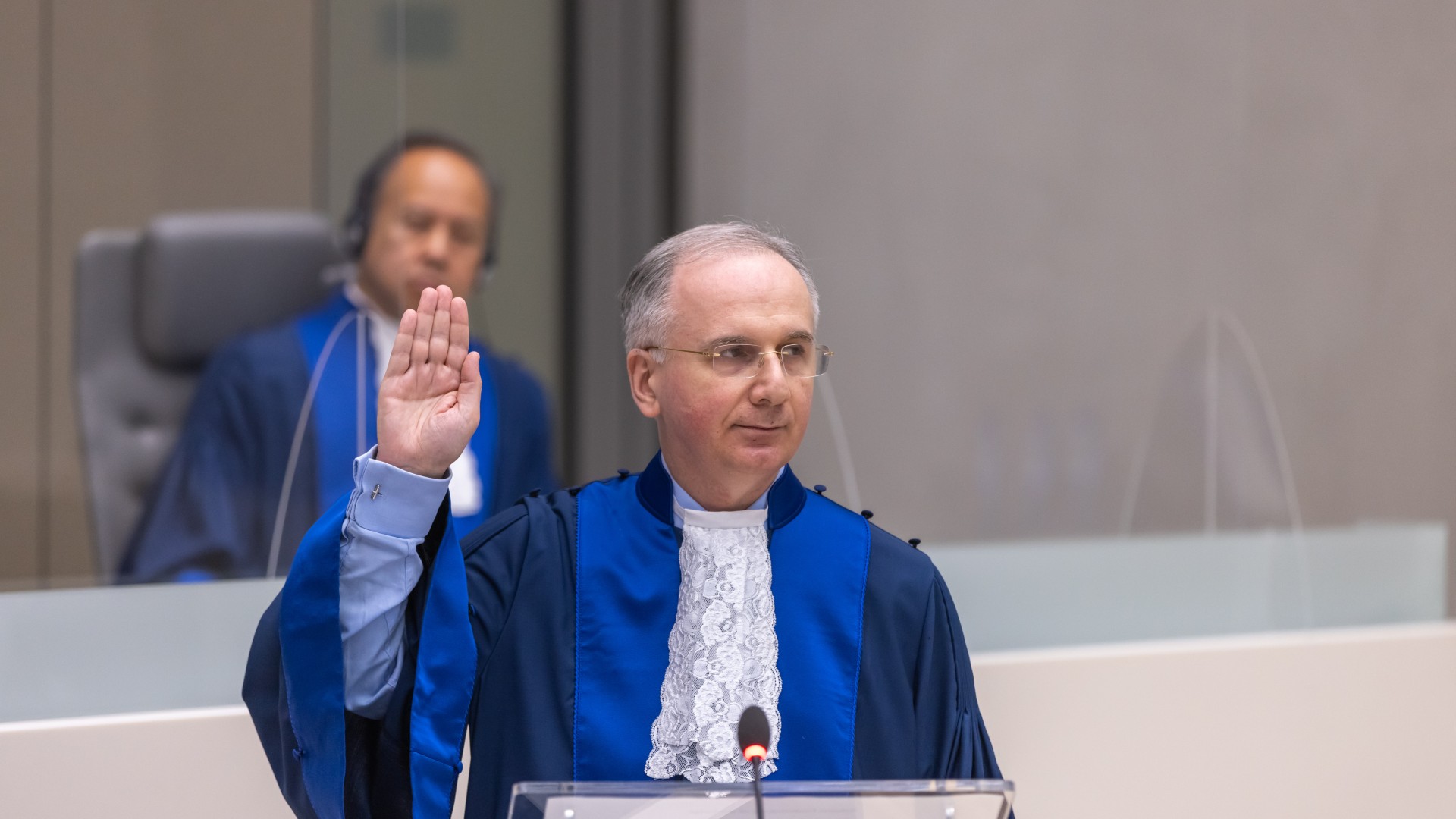
    The United States has intensified its confrontation with the International Criminal Court by imposing sanctions on two additional judges involved in the Gaza war crimes investigation. Judges Gocha Lordkipanidze of Georgia and Erdenebalsuren Damdin of Mongolia, both members of the ICC’s appeals chamber, were targeted following their recent decision to reject Israel’s appeal against the investigation into alleged crimes in Gaza post-October 2023.

    This development marks a significant escalation in the ongoing standoff between the Trump administration and the international judicial body. The sanctioned judges were part of the majority that dismissed Israel’s arguments challenging the validity of the investigation that previously resulted in arrest warrants for Israeli Prime Minister Benjamin Netanyahu and former Defence Minister Yoav Gallant in November 2024.

    US Secretary of State Marco Rubio issued a statement condemning what he characterized as “politicized actions targeting Israel” that “set a dangerous precedent for all nations.” The statement emphasized Washington’s rejection of the court’s jurisdiction over US and Israeli nationals and promised “significant and tangible consequences” for what it termed ICC “lawfare and overreach.”

    The sanctions have created substantial practical difficulties for affected officials, including frozen assets, travel bans, and exclusion from global financial systems. Peruvian judge Luz del Carmen Ibanez Carranza, previously sanctioned for her role in the Afghanistan investigation, revealed the personal impact including inability to use credit cards, banking systems utilizing US dollars, or money transfer services like Western Union.

    Despite these measures, ICC officials remain resolute. Judge Carranza stated that the sanctions have actually strengthened judicial solidarity, noting that “we are more united than ever” in maintaining their independence and continuing their duties.

    The legal foundation of the investigation traces back to Palestine’s 2018 referral, with the ICC initiating formal proceedings in 2021. Since November 2023, seven additional nations—South Africa, Bangladesh, Comoros, Bolivia, Djibouti, Chile, and Mexico—have filed separate referrals supporting the investigation.

    Israel’s appeal centered on procedural arguments, claiming the prosecutor should have issued fresh notifications after the new referrals pursuant to Article 18(1) of the Rome Statute. The appeals chamber unanimously determined that the original 2021 notification adequately covered subsequent developments, including post-October 2023 events, making additional notifications unnecessary.

    The ICC has implemented confidential countermeasures to protect its operations from sanction impacts, though specific details remain undisclosed to preserve their effectiveness. With these latest sanctions, all but one member of the appeals chamber (Judge Tomoko Akane of Japan) now face US restrictions, creating unprecedented challenges for international justice mechanisms.

  • UAE was secret buyer of billion dollar Israeli defence deal: Report

    UAE was secret buyer of billion dollar Israeli defence deal: Report

    France-based Intelligence Online has identified the United Arab Emirates as the previously undisclosed customer in a monumental $2.3 billion defense agreement with Israel’s Elbit Systems, originally announced in November. The eight-year contract represents one of the most significant arms deals between the two nations since normalizing relations through the Abraham Accords.

    The procurement centers on Elbit’s advanced J-Music aircraft protection system, which employs cutting-edge laser technology to neutralize surface-to-air missile sensors targeting both civil and military aircraft. This sophisticated electronic defense capability substantially enhances the UAE’s aerial security infrastructure.

    Despite Israel’s ongoing military operations in Gaza—actions characterized by numerous Arab leaders and UN experts as genocidal—the UAE has maintained its defense cooperation with Israeli firms. This stance distinguishes Abu Dhabi from neighboring Gulf states, with analysts noting the Emirates’ willingness to disrupt regional consensus regarding Israel.

    The partnership extends beyond Elbit Systems to include collaborations with Emirati state-owned defense conglomerate Edge, which has actively pursued Israeli technology partnerships even during the Gaza conflict. In November 2021, Edge partnered with Israel Aerospace Industries to develop unmanned vessels for anti-submarine warfare, and recently acquired a 30% stake in Israeli drone detection specialist Thirdeye Systems.

    This deepening military relationship has drawn attention in Washington, where officials express concern over the UAE’s simultaneous strengthening of defense ties with China. The Gulf nation recently conducted its third joint air force drill with China, while US intelligence assessments indicate continued Chinese military presence at Abu Dhabi facilities potentially serving dual purposes.

    The convergence of Israeli technology transfer and Emirati-Chinese military cooperation creates complex geopolitical considerations for US policymakers, particularly regarding the potential diversion of advanced defense systems to strategic competitors.

  • Trump’s blockade of sanctioned Venezuelan oil raises new questions about legality

    Trump’s blockade of sanctioned Venezuelan oil raises new questions about legality

    The Trump administration’s naval interdiction campaign targeting sanctioned oil tankers near Venezuela is generating intense debate over its legal foundations and potential to escalate into armed conflict. While officially characterized as a narrowly tailored operation against vessels violating U.S. sanctions, legal experts and congressional Democrats express alarm that these maritime operations may violate international law and deliberately provoke Venezuelan forces.

    University of Pennsylvania national security law professor Claire Finkelstein warns the administration appears to be “bootstrapping our way into armed conflict” by implementing aggressive tactics without congressional authorization. This perspective finds support among military veterans in Congress, including Representative Jason Crow (D-CO), who fears the situation could spiral into unintended warfare due to insufficient consultation with legislative bodies.

    Republican leadership maintains support for the operations, comparing the Venezuelan oil interdiction to previous actions against Iranian tankers. Representative Michael McCaul (R-TX) asserts that targeting sanction-evading vessels represents legitimate enforcement action rather than acts of war.

    The semantic distinction between “blockade” and “quarantine” has emerged as a crucial legal differentiation. Pentagon officials prefer the latter term, which under international law constitutes a selective security measure rather than an act of war requiring formal declaration. This terminology echoes historical precedents, most notably President Kennedy’s “quarantine” during the Cuban Missile Crisis.

    Venezuela’s response has emphasized the economic threat posed by these operations, given the country’s dependence on oil revenues despite possessing the world’s largest proven reserves. Nicolás Maduro Guerra, the president’s son and a legislator, acknowledged the serious challenge presented by U.S. military pressure while affirming Venezuela’s commitment to peaceful resolution.

    Legal scholars remain divided on the operation’s legitimacy. Emory University’s Mark Nevitt questions the legal foundation, describing the policy as “a junior varsity blockade” that improperly applies wartime tools without formal conflict declaration. Conversely, Texas Tech’s Geoffrey Corn suggests the operations may represent intensified pressure tactics rather than deliberate provocation toward open warfare.

    The ongoing maritime campaign continues without congressional war authorization, despite Democratic efforts to require legislative approval for further military escalation in the region.

  • Violence breaks out in Bangladesh after death of youth protest leader

    Violence breaks out in Bangladesh after death of youth protest leader

    Bangladesh has been plunged into political turmoil following the targeted assassination of Sharif Osman Hadi, a prominent youth movement leader whose death has triggered widespread protests and violent demonstrations across the capital. The 32-year-old senior figure of the student protest group Inqilab Mancha was fatally shot by masked assailants while departing from a mosque in Dhaka last week, succumbing to his injuries on Thursday during medical treatment in Singapore.

    The timing of Hadi’s assassination carries profound political significance, occurring merely one day after Bangladeshi authorities announced the schedule for the nation’s first elections since the 2024 uprising that ousted former Prime Minister Sheikh Hasina. Hadi had been preparing to contest the elections as an independent candidate, positioning himself as a vocal critic of neighboring India where Hasina remains in self-imposed exile.

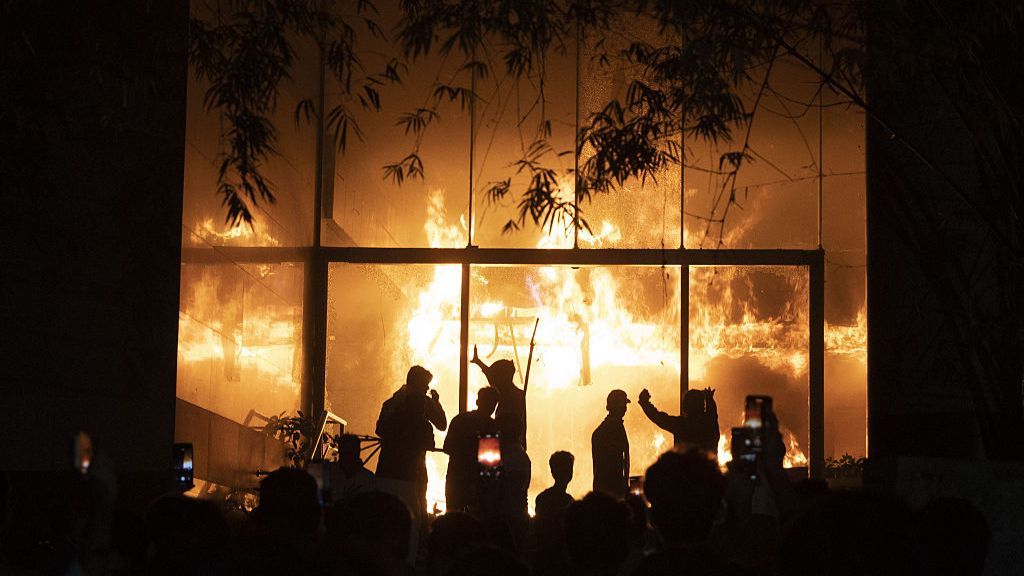
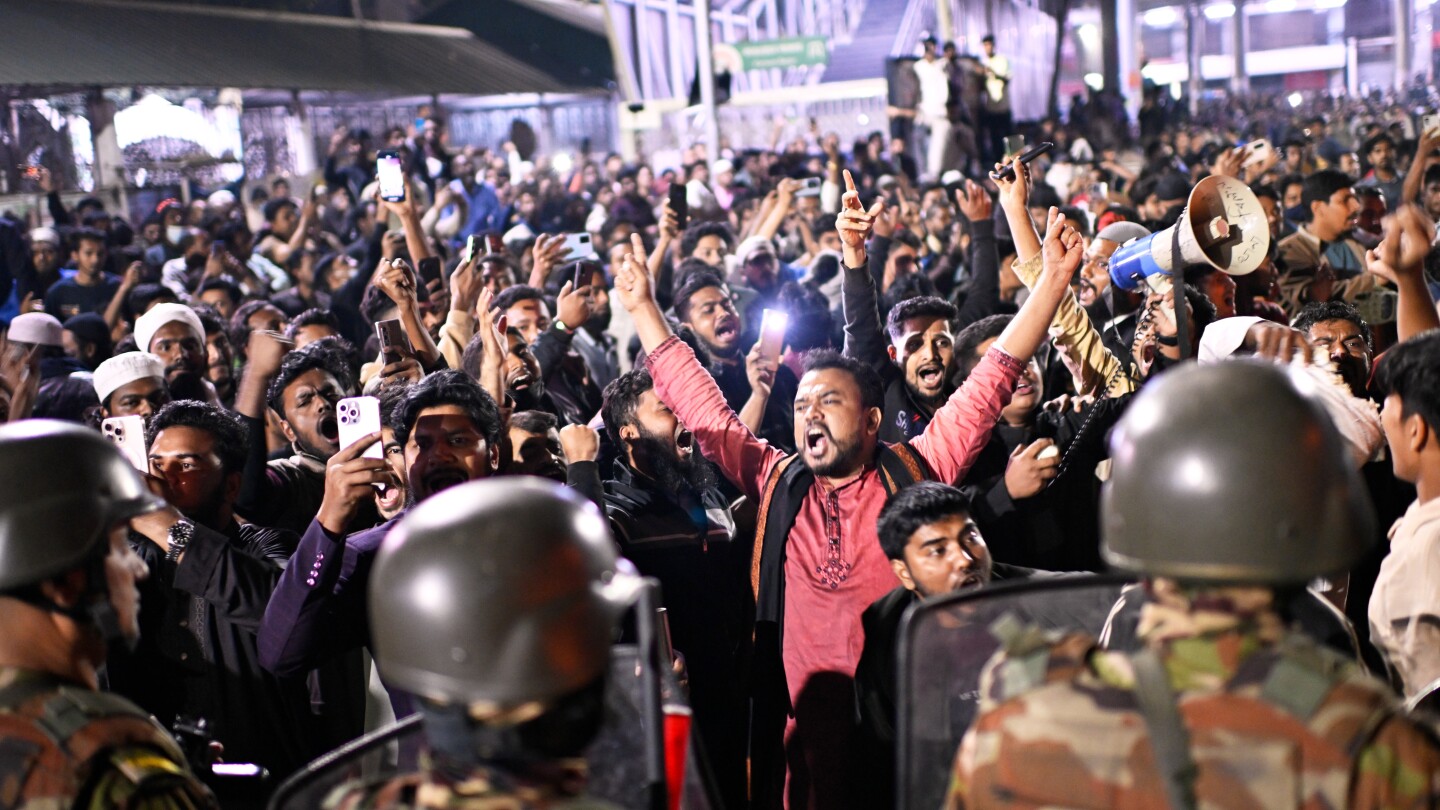
    As news of Hadi’s death circulated on Thursday, hundreds of supporters converged upon a central square in Dhaka, transforming their grief into angry demonstrations. The protests rapidly escalated into violence as enraged crowds vandalized the offices of leading Bangladeshi newspapers The Daily Star and Prothom Alo, with one building set ablaze. A police officer confirmed to BBC Bangla that ‘hundreds of people have gathered here and carried out the attack,’ prompting the deployment of military troops to restore order. Firefighters conducted rescue operations to evacuate journalists trapped within the besieged buildings.

    Nobel laureate Muhammad Yunus, who heads the interim caretaker government, declared Hadi’s death ‘an irreparable loss for the nation’ in a televised address. ‘The country’s march toward democracy cannot be halted through fear, terror, or bloodshed,’ Yunus asserted, while the government declared Saturday a day of national mourning. Yunus had previously characterized the shooting as a premeditated attack, stating shortly after the incident that ‘the objective of the conspirators is to derail the election’ and warning that ‘no form of violence intended to disrupt the election will be tolerated.’

    The assassination represents a critical juncture for Bangladesh’s fragile political transition. Hasina fled to India on August 5th last year following weeks of student-led protests that ended her 15-year increasingly authoritarian rule. In a significant development last November, she was sentenced to death for crimes against humanity after being convicted of permitting lethal force against protesters, resulting in approximately 1,400 deaths during the unrest.

    Investigations into Hadi’s assassination are ongoing, with authorities confirming several detentions in connection with the shooting. The incident has drawn condemnation from across Bangladesh’s political spectrum, with parties collectively urging the interim government to bring the perpetrators to justice and ensure the electoral process proceeds without further violence.

  • Rights group seeks US sanctions on Bahrain minister for torture of detainees

    Rights group seeks US sanctions on Bahrain minister for torture of detainees

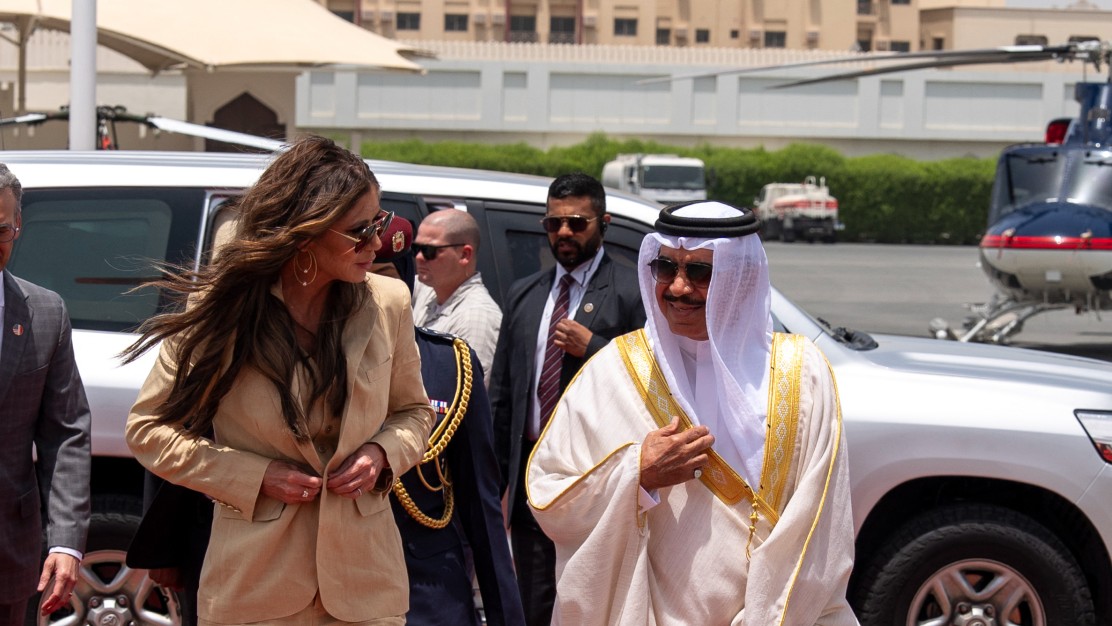
    Human Rights First (HRF), a prominent US-based advocacy organization, has formally submitted a comprehensive dossier to the Trump administration calling for targeted sanctions against Bahrain’s Interior Minister Sheikh Rashid bin Abdullah Al Khalifa. The submission, delivered on Thursday, presents evidence alleging the minister’s direct oversight of systematic torture practices within Bahrain’s detention facilities since 2011.

    The documentation accuses Minister Al Khalifa, who has led Bahrain’s interior ministry since 2004, of supervising torture and cruel treatment of political prisoners despite Bahrain’s status as a signatory to the UN Convention Against Torture. According to HRF’s statement obtained by Middle East Eye, prisoners have faced severe beatings to extract confessions and been systematically denied essential medical care, resulting in multiple fatalities.

    HRF President and CEO Uzra Zeya emphasized that “torture and cruel treatment in Bahrain’s prisons have continued well past the crackdown on the country’s 2011 uprising.” The organization contends that US law mandates visa bans and financial sanctions against foreign officials implicated in gross human rights violations.

    The recommendation builds upon longstanding concerns expressed by senior US lawmakers, including previous communications from figures such as Senator Marco Rubio and Senator Ron Wyden. In 2021 correspondence with the State Department, these legislators expressed alarm about Bahrain’s violent repression and warned that systemic abuses could undermine both domestic stability and US strategic interests, particularly regarding the US Navy’s Fifth Fleet stationed in Bahrain.

    HRF’s submission argues that Minister Al Khalifa meets the legal threshold for sanctions under both the Global Magnitsky Act and Section 7031(c) of US law, which authorizes visa restrictions against foreign officials involved in significant human rights violations. The organization advocates for a policy shift away from what it describes as an “illusion of stability sustained by impunity” toward measures that prioritize accountability and behavioral change.

    This development follows the UN Committee Against Torture’s recent observations expressing deep concern about “consistent reports indicating that persons in custody are subjected to torture or ill-treatment” in Bahrain and the “reported lack of accountability, which contributes to a climate of impunity.” Middle East Eye has contacted both the Bahraini government and US State Department for comment regarding these allegations.

  • Protesters storm offices of leading Bangladesh dailies after a 2024 uprising activist dies

    Protesters storm offices of leading Bangladesh dailies after a 2024 uprising activist dies

    Bangladesh descended into political turmoil Thursday night as enraged protesters stormed the offices of the country’s two leading newspapers following the death of prominent opposition activist Sharif Osman Hadi in Singapore. The violent demonstrations included arson attacks that trapped journalists inside burning buildings.

    Hadi, a spokesperson for the Inqilab Moncho cultural group and vocal critic of both India and former Prime Minister Sheikh Hasina, succumbed to injuries sustained in a targeted assassination attempt one week earlier. The activist was shot while riding a rickshaw in Dhaka by motorcycle-borne assailants who remain at large.

    The assassination has triggered significant diplomatic tensions between Bangladesh and India. Bangladeshi authorities claim the shooter likely fled to India, prompting reciprocal diplomatic summonses between the neighboring nations. India subsequently summoned Bangladesh’s envoy to express condemnation, while Dhaka demanded clarifications from New Delhi.

    Hadi had planned to run as an independent candidate in February’s national elections—the first since the 2024 uprising that ousted Hasina’s 15-year administration. The Inqilab Moncho group has actively promoted anti-Indian sentiment in the Muslim-majority nation since Hasina’s removal, with the former leader now residing in self-imposed exile in India.

    Thursday’s protests began with hundreds gathering at Dhaka’s Shahbagh Square, chanting religious and political slogans. The demonstrations rapidly escalated as separate groups attacked the headquarters of Prothom Alo (Bangladesh’s leading Bengali-language daily) and The Daily Star (the premier English-language publication). Security forces deployed around the buildings but refrained from intervening as fires trapped staff inside, with one journalist reporting severe smoke inhalation via social media.

    Nobel Peace laureate Muhammad Yunus, Bangladesh’s interim leader who assumed power after Hasina’s August 2024 ouster, addressed the nation promising justice for Hadi’s killers. Yunus declared a national day of mourning for Saturday while urging calm. Critics however blame Yunus’s administration for rising Islamist influence in a country with a troubled history of political violence.

    The interim government has banned all activities of Hasina’s Awami League party, including participation in February’s elections. Last month, a Bangladeshi court sentenced the former prime minister to death for crimes against humanity related to the 2024 uprising. Recent days have seen additional anti-India protests targeting diplomatic facilities, prompting India to suspend tourist visas for Bangladeshis citing security concerns.

  • Democrats release latest batch of Epstein photos as justice department deadline looms

    Democrats release latest batch of Epstein photos as justice department deadline looms

    The U.S. House Oversight Committee has unveiled approximately 70 additional photographs from the estate of convicted sex offender Jeffrey Epstein, marking the third such disclosure from a collection exceeding 95,000 images obtained by congressional investigators. This release coincides with the December 19th deadline mandating the Department of Justice to publicize all documents pertaining to its Epstein investigation under the recently enacted Epstein Files Transparency Act.

    The latest batch contains particularly disturbing imagery, including photographs of passages from Vladimir Nabokov’s controversial novel ‘Lolita’ inscribed across various parts of a woman’s body. The collection also features heavily redacted images of international passports belonging to women from Lithuania, Russia, Czech Republic, and Ukraine, which the committee identifies as individuals associated with Epstein and his accomplices.

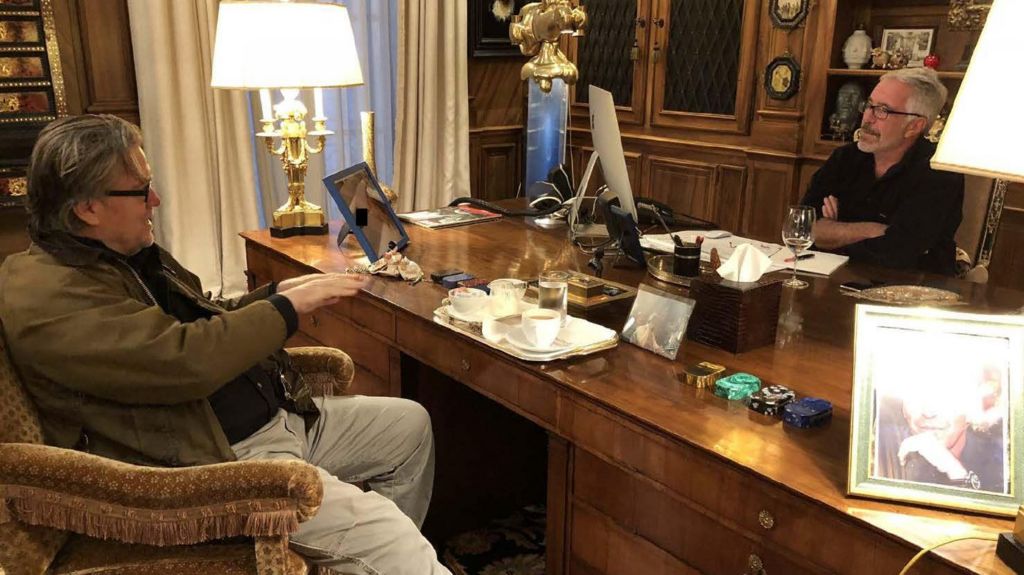
    Among the more notable images are photographs depicting Epstein interacting with numerous high-profile figures. These include linguist and activist Noam Chomsky aboard a private aircraft, Microsoft co-founder Bill Gates standing beside an anonymized woman, former White House strategist Steve Bannon seated across from Epstein, and former Alphabet president Sergey Brin at a dinner event. The committee emphasized that appearance in these photographs does not constitute evidence of wrongdoing, and many individuals previously visible in released photos—including former Presidents Donald Trump and Bill Clinton—have denied involvement in Epstein’s criminal activities.

    Additional concerning materials include a screenshot of text messages discussing financial transactions for “some girls” at $1,000 per individual, and images showing Epstein surrounded by three women whose identities have been concealed, with one visibly placing her hand beneath his shirt.

    Committee Democrats stated the selection aims to provide public transparency regarding Epstein’s network and his “extremely disturbing activities,” while noting the estate provided no contextual information or timestamps for the photographs. The Department of Justice faces increasing scrutiny as Representative Robert Garcia, the committee’s ranking member, noted these images “raise more questions about what exactly the Department of Justice has in its possession.”

  • What the US wants from Canada on trade

    What the US wants from Canada on trade

    In the most explicit articulation of American negotiating positions to date, United States Trade Representative Jamieson Greer presented a comprehensive set of demands to a Congressional committee on Wednesday. This testimony forms a critical part of the ongoing review process for the United States-Mexico-Canada Agreement (USMCA), the North American free trade pact whose future hangs in the balance. While both Canada and Mexico advocate for its extension, former President Donald Trump has previously suggested a potential US withdrawal, adding urgency to the proceedings.

    Greer characterized the USMCA as only “successful to a certain degree,” asserting that specific changes are prerequisites for its continuation. The American demands center on three primary areas of longstanding contention.

    Foremost is Canada’s protected dairy sector, governed by a supply-management system that imposes production quotas and strict import controls to bolster domestic farmers. The U.S. contends this framework creates an unfair market, citing Canadian tariffs on American dairy that can soar as high as 400%. Although a limited volume of U.S. dairy enters Canada tariff-free, the designated quota has never been fully utilized. Despite Canada being a top importer of U.S. dairy, purchasing over $1.1 billion in 2024, American officials are pushing for significantly expanded market access. A further grievance involves accusations that Canada is “dumping” specific dairy products, like nonfat milk solids, into international markets at artificially low prices.

    A second major point of friction is Canada’s Online Streaming Act, legislation enacted in 2023 under the previous Trudeau administration. This law mandates that foreign streaming giants, including Netflix and Spotify, financially contribute to and promote Canadian content on their platforms, with a regulator empowered to levy penalties for non-compliance. The U.S. Trade Representative’s office has decried the act as discriminatory against American technology and media corporations, demanding its revision. Greer also cited the separate Online News Act, which prompted Meta to block news content for Canadian users on Facebook and Instagram, as another policy requiring resolution.

    The third key demand addresses the retaliatory bans on American liquor sales enacted by most Canadian provinces earlier this year. These boycotts were a direct response to the sweeping 35% tariffs imposed on Canadian goods by the Trump administration. The move has significantly impacted American producers, and the U.S. is now insisting these products be returned to provincial shelves as a condition for the trade pact’s future.

    Additional, though briefly mentioned, irritants include alleged “discriminatory procurement measures” in Ontario, Quebec, and British Columbia, cumbersome customs procedures for U.S. exports, and a dispute over market access for Montana-based power providers into Alberta’s electrical grid, which the Alberta government firmly denies.

  • Germany approves $3.1bn Israel arms deal despite Gaza genocide

    Germany approves $3.1bn Israel arms deal despite Gaza genocide

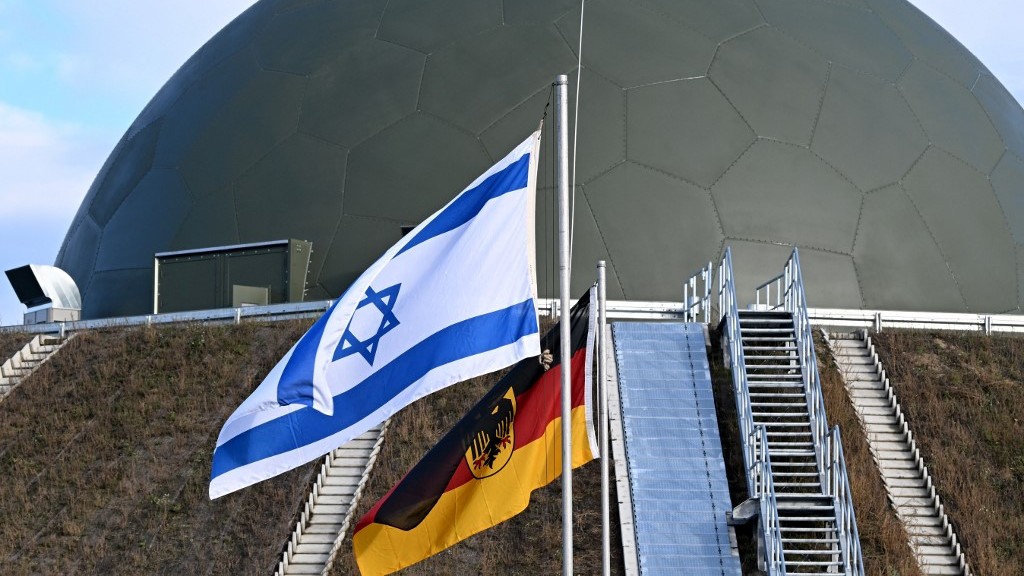
    Germany has authorized a contentious $3.1 billion weapons agreement with Israel, approving the acquisition of Arrow 3 missile defense systems despite ongoing international legal proceedings against Israel for alleged genocide in Gaza. The Israeli defense ministry confirmed the transaction on Thursday, marking one of Israel’s largest-ever arms exports.

    This latest deal follows a previous $3.5 billion agreement signed between the two nations in 2023, bringing their total defense cooperation to over $6.6 billion. The arrangement provides significant financial reinforcement to Israel’s defense industry while the country faces International Criminal Court arrest warrants for Prime Minister Benjamin Netanyahu and former Defense Minister Yoav Gallant over alleged war crimes in Gaza.

    The approval comes despite Germany’s temporary arms embargo imposed in summer 2024 in response to Israel’s planned full occupation of Gaza, which was reversed by November. Germany remains Israel’s second-largest weapons supplier after the United States, providing approximately 30% of Israel’s defense imports.

    Israeli Defense Minister Israel Katz characterized the approval as “a clear expression of the deep trust that Germany places in the State of Israel.” Defense Ministry Director-General Major General Amir Baram noted the deal would accelerate Arrow production and channel billions into strengthening Israel’s defense industries.

    The transaction occurs against the backdrop of South Africa’s genocide case against Israel at the International Court of Justice, which in January 2024 recognized a plausible risk of genocide in Gaza. This recognition created legal obligations for states to avoid aiding Israel’s actions against Palestinians.

    Security expert Andreas Krieg of King’s College London warned that “the scale of reported harm [in Gaza], the legal warnings and the live ICJ case raise the risk level to a point where continued transfers and major deals become hard to square with Germany’s own stated standards.”

    Palestinian journalist Hebh Jamal, based in Germany, criticized Berlin’s reliance on the concept of “Staatsrason”—the doctrine that Israel’s security constitutes Germany’s “reasons of state”—arguing that “the protection of a foreign state is more important for the German political establishment than their responsibility to the public and the ICC.”

    The agreement reflects Germany’s most substantial rearmament initiative since World War Two, with Chancellor Friedrich Merz approving nearly $60 billion in military spending this week. Independent analyst Ori Golberg observed that “Germany, under [Merz], is building a war machine and Israel stands ready to supply the war machines,” characterizing the arrangement as “a smart business deal” for both parties despite the controversial timing.

  • ‘Dark turn of events’: Met Police under fire for intifada chant arrests

    ‘Dark turn of events’: Met Police under fire for intifada chant arrests

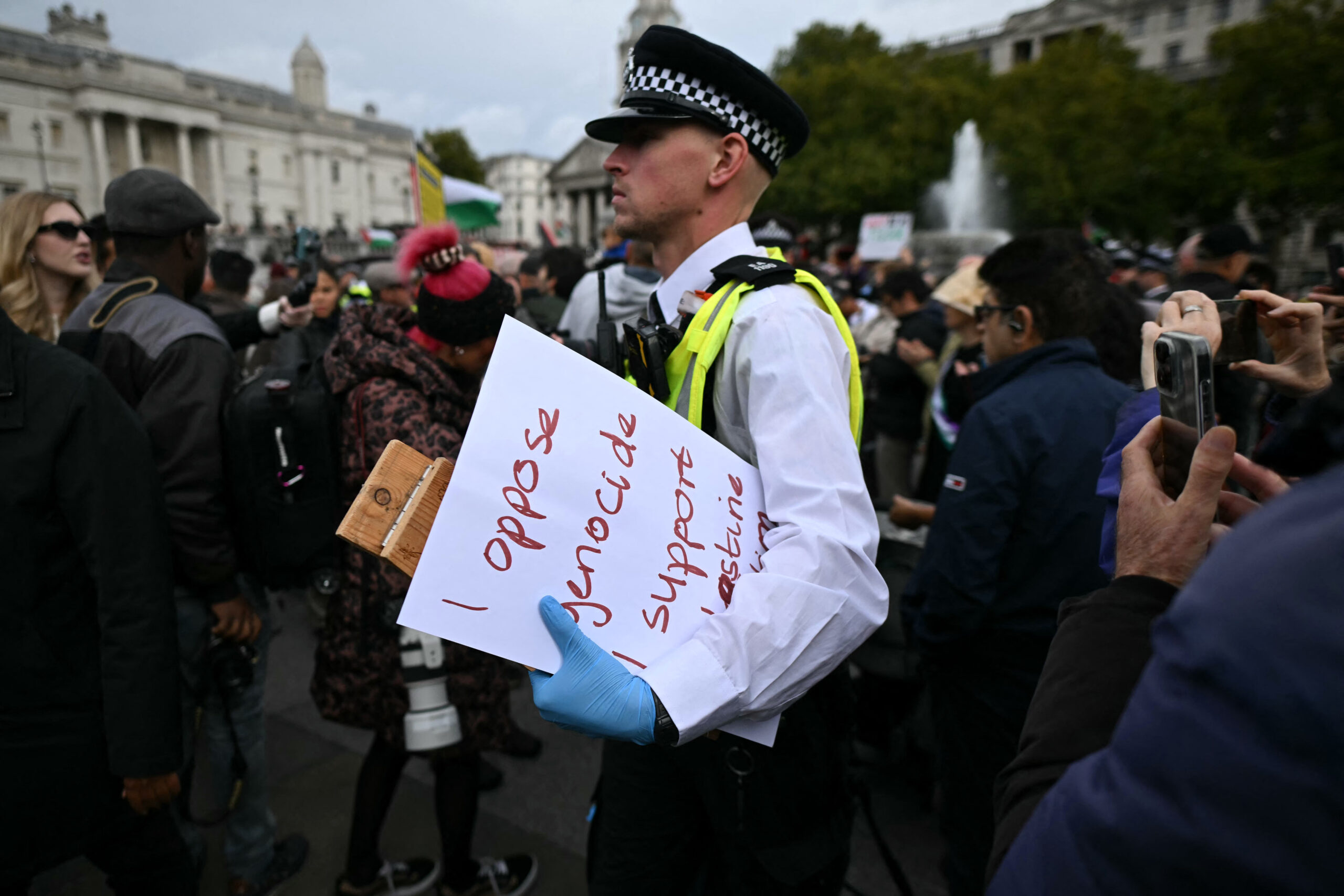
    British law enforcement agencies are confronting significant criticism following their controversial decision to criminalize the use of the Arabic term ‘intifada’ during protests. The Metropolitan Police and Greater Manchester Police announced they would arrest individuals chanting ‘globalise the intifada’ or displaying the phrase on placards, claiming the phrase could incite violence following recent international events.

    The policy implementation occurred during a Wednesday protest outside the Ministry of Justice, where four individuals were detained for racially aggravated public order offenses related to their use of the term. Police authorities justified their position stating, ‘Violent acts have taken place, the context has changed – words have meaning and consequence. We will act decisively and make arrests.’

    This enforcement approach emerged shortly after the Bondi Beach shooting in Sydney, where attackers targeted a Hanukkah celebration, resulting in 15 fatalities. Several public figures, including British Chief Rabbi Ephraim Mirvis, attempted to connect the tragedy to Palestinian activism, specifically referencing the controversial chant. Rabbi Mirvis declared the phrase ‘unlawful’ and suggested Australians had ‘discovered what is meant by those words’ after the attacks.

    However, Palestinian rights advocates and civil society organizations have vigorously challenged the characterization of ‘intifada’ as inherently antisemitic or violent. They emphasize the word’s linguistic meaning as ‘uprising’ or ‘shaking off’ in Arabic and note its historical usage across various peaceful and resistance movements in the Arab world.

    Journalist Asa Winstanley condemned the policy as ‘pure anti-Palestinian racism,’ while foreign policy analyst Jasmine el-Gamal described it as ‘a dark, dark turn of events.’ Social media users and free speech advocates have raised concerns about the implications for democratic rights, questioning whether Arabic terms are being disproportionately targeted and whether English equivalents like ‘globalise the revolution’ would face similar restrictions.

    Critics argue that the policy represents concerning government overreach, noting that no official reports have linked the Sydney attacks to Palestinian activism. The debate has expanded beyond immediate concerns about Palestinian expression to broader anxieties about increasing infringement on protest rights and freedom of speech in the United Kingdom.