分类: politics

  • New Zealand official says Pacific nations threatened by great power contest over deep sea minerals

    New Zealand official says Pacific nations threatened by great power contest over deep sea minerals

    New Zealand’s Defense Minister Judith Collins has raised concerns over the increasing pressure faced by small South Pacific nations due to great power competition for their rare minerals and fisheries wealth. In an interview with The Associated Press, Collins emphasized the need for regional neighbors to take more action to protect the sovereignty of these island nations. Collins, who also oversees New Zealand’s intelligence and space sectors, made these remarks ahead of her visit to Washington D.C., where she is set to meet with Trump administration officials, including Secretary of War Pete Hegseth and Secretary of Homeland Security Kristi Noem.

  • Australia’s highest court rejects Candace Owens’ visa challenge

    Australia’s highest court rejects Candace Owens’ visa challenge

    In a landmark decision, Australia’s High Court has upheld the government’s refusal to grant a visa to U.S. conservative commentator Candace Owens, citing concerns over her potential to incite discord within the country. The unanimous ruling by three judges on Wednesday dismissed Owens’ legal challenge against Home Affairs Minister Tony Burke’s decision last year to deny her entry on character grounds. Owens, known for her controversial and conspiratorial views, had planned a speaking tour in Australia and New Zealand in November 2023. Burke invoked the Migration Act in October 2023, determining that Owens failed the ‘character test’ due to her history of making extremist and inflammatory remarks targeting Muslim, Black, Jewish, and LGBTQIA+ communities. The court documents revealed Burke’s assessment that her presence could pose a risk to national interests by fostering division. Owens’ legal team argued that the Migration Act infringed upon Australia’s implied freedom of political communication, a claim the judges rejected. The court also ordered Owens to cover the government’s legal costs. While Owens’ spokesperson indicated she would address the decision on social media, her plans to visit New Zealand remain unclear. Notably, New Zealand initially denied her visa in November 2023, citing Australia’s rejection, but later reversed the decision in December, emphasizing the value of free speech. This case underscores Australia’s stringent visa policies, which have also been applied to other high-profile figures, such as rapper Ye (formerly Kanye West), whose visa was revoked earlier this year.

  • China, US clash in global shipping after chip and tariff wars

    China, US clash in global shipping after chip and tariff wars

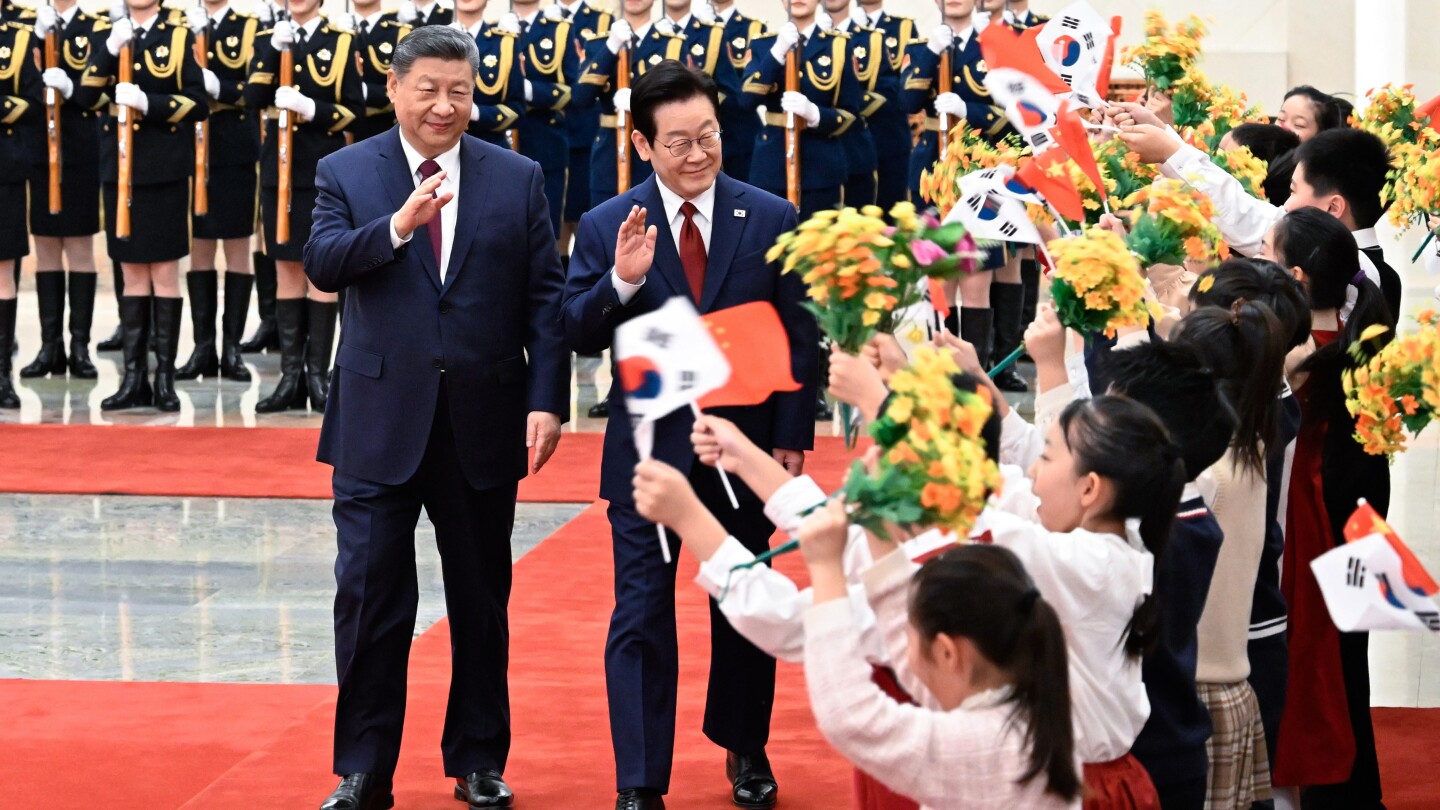
    In a significant escalation of trade tensions, China has announced retaliatory measures against the United States’ newly imposed port fees. The Chinese Commerce Ministry revealed on Tuesday that it would levy a special port-entry charge of 400 yuan ($56) per net ton on US-linked container ships. This rate is set to increase annually, reaching 1,120 yuan by April 17, 2028. Additionally, China has sanctioned five US-related subsidiaries of South Korea’s Hanwha Ocean, accusing them of aiding US investigations into China’s maritime and shipbuilding sectors, which Beijing claims undermines its sovereignty and development interests. The sanctions prohibit Chinese entities from engaging in transactions or cooperation with the listed firms. A spokesperson for the Chinese Commerce Ministry emphasized that while China is open to dialogue, it is prepared to defend its interests if necessary. The spokesperson also criticized the US for its approach, stating that negotiations should not be conducted under threats or intimidation. This development comes ahead of a potential meeting between Chinese President Xi Jinping and US President Donald Trump at the APEC Summit in Seoul later this month. The US had previously imposed fees on Chinese ships entering its ports, citing unfair trade practices. China’s new measures are seen as a direct response to these actions, further straining bilateral relations. The situation underscores the growing rivalry between the two nations in the global trade and maritime sectors, with both sides taking increasingly assertive stances to protect their economic interests.

  • China seizes 60,000 maps for ‘mislabelling’ Taiwan

    China seizes 60,000 maps for ‘mislabelling’ Taiwan

    Chinese customs authorities in Shandong province have intercepted a significant shipment of 60,000 maps destined for export, citing serious concerns over national sovereignty and territorial integrity. The maps were deemed ‘problematic’ due to their mislabelling of Taiwan, which China claims as an integral part of its territory, and the omission of key islands in the South China Sea. Beijing’s claims in the South China Sea overlap with those of neighboring countries, including the Philippines and Vietnam, making cartographic accuracy a highly sensitive issue. The seized maps also failed to include the controversial nine-dash line, which demarcates China’s expansive claims over nearly the entire South China Sea, as well as the maritime boundary between China and Japan. Authorities emphasized that such maps ‘endanger national unity, sovereignty, and territorial integrity,’ rendering them unfit for sale. This incident underscores the heightened tensions in the region, particularly following recent confrontations between Chinese and Philippine vessels in the South China Sea. The Philippines accused a Chinese ship of ramming and firing a water cannon at a Philippine government vessel, while Beijing claimed the incident occurred after repeated warnings were ignored. The confiscation of ‘problematic maps’ is not unprecedented, but the scale of this seizure is notable. Earlier this year, customs officers in Qingdao and Hebei provinces also intercepted similar shipments containing errors in national borders and territorial depictions. The sensitivity surrounding maps in the region was further highlighted by the 2023 Barbie movie, which faced bans and censorship in Vietnam and the Philippines for depicting the nine-dash line. China Customs did not disclose the intended destination of the seized maps, but the incident reflects Beijing’s unwavering stance on territorial issues and its commitment to enforcing strict standards on cartographic representations.

  • Exclusive: Hamas says Israel’s ‘indiscriminate’ destruction of Gaza behind delay in locating captives’ bodies

    Exclusive: Hamas says Israel’s ‘indiscriminate’ destruction of Gaza behind delay in locating captives’ bodies

    A senior Hamas official has accused Israel of being responsible for delays in locating and returning the bodies of captives still missing in Gaza. This statement comes in response to Israeli officials’ claims that Hamas is withholding the bodies as part of a US-brokered peace deal that ended a two-year conflict. The Hamas source, speaking to Middle East Eye, emphasized that the ongoing presence of Israeli forces and their indiscriminate attacks have significantly complicated efforts to retrieve the bodies, requiring more time and resources. The source highlighted that this was explicitly acknowledged during negotiations, with a specific clause in the agreement addressing the establishment of an information-sharing mechanism to facilitate the process. Hamas recently released 20 living captives and the bodies of four deceased individuals, with plans to hand over 28 more bodies as part of the deal. However, the source criticized Israel’s continued closure of the Rafah border crossing, calling it a violation of the agreement and a hindrance to rescue and aid efforts. The official also condemned Israel’s military actions, which have resulted in the deaths of captives and the loss of contact with units responsible for their remains. Hamas remains committed to fulfilling its obligations under the agreement but urges international mediators to intervene to address the ongoing challenges posed by Israel’s actions.

  • California governor vetoes bill dubbed ‘Israel tax’ by critics

    California governor vetoes bill dubbed ‘Israel tax’ by critics

    California Governor Gavin Newsom, a prominent figure in the Democratic Party and a potential 2028 presidential candidate, vetoed Senate Bill 771 (SB 771) on Monday. The proposed legislation aimed to impose fines on social media companies whose algorithms promoted content deemed violent or discriminatory, particularly targeting antisemitism. The bill emerged in response to perceived lax online regulations following the presidency of Donald Trump, who criticized media companies for alleged bias against conservative voices. However, Newsom expressed concerns that the bill was premature, arguing that existing civil rights laws should first be evaluated for their adequacy in addressing algorithmic violations. He emphasized the need to avoid overreach and ensure that any new measures are constitutionally sound. The veto has been welcomed by civil rights organizations, including the Council on American-Islamic Relations (CAIR-CA) and the American-Arab Anti-Discrimination Committee (ADC), who argued that the bill risked suppressing free speech, particularly among Muslim, Arab, and Palestinian communities. Critics of SB 771 highlighted its reliance on the International Holocaust Remembrance Alliance (IHRA) definition of antisemitism, which they claimed could be used to target lawful discourse on Israel and Palestine. The bill’s opponents also raised concerns about the difficulty of proving intent to cause harm through algorithms, as well as the potential for costly lawsuits and taxpayer burdens. Newsom’s decision underscores the ongoing tension between combating online hate speech and preserving constitutional freedoms.

  • Steve Witkoff stepping back from Trump administration after Gaza deal, sources say

    Steve Witkoff stepping back from Trump administration after Gaza deal, sources say

    Steve Witkoff, a key negotiator in securing the Gaza ceasefire, is reportedly stepping back from the Trump administration to refocus on his business ventures, according to two anonymous sources familiar with the matter. Witkoff’s departure could cast uncertainty over the implementation of President Donald Trump’s 20-point Gaza peace plan, which includes ambitious goals such as Hamas’s disarmament, Gaza’s reconstruction, and the establishment of a Palestinian technocratic government. Despite Trump’s announcement of a ‘board of peace’ to oversee Gaza, questions linger about the administration’s commitment, particularly in holding Israel accountable to the ceasefire terms following the high-profile peace summit in Sharm el-Sheikh, Egypt. During the summit, Witkoff hinted at his involvement in Gaza’s reconstruction, emphasizing collaboration with Jared Kushner, Trump’s son-in-law and advisor. However, the White House has denied reports of Witkoff’s departure, stating he has no plans to step down. Witkoff, a billionaire real estate developer with no prior diplomatic experience, was appointed by Trump to mediate conflicts in Gaza and Ukraine. His business acumen and ties to Trump enabled him to navigate complex negotiations, earning praise from Arab officials who preferred his approach over traditional diplomats. Witkoff’s personal connection to the region, including his empathy for the loss of a Hamas official’s son, has been a driving force in his diplomatic efforts. Yet, his family’s business ties to the Gulf have raised concerns about potential conflicts of interest. As Witkoff’s role in the administration remains under scrutiny, the future of Trump’s peace initiatives hangs in the balance.

  • Spain’s radically different approach to African migration

    Spain’s radically different approach to African migration

    In a striking departure from the prevailing political climate in Western nations, Spain is charting a unique course in its approach to migration and its engagement with the African continent. While countries like the US, the UK, France, and Germany are scaling back development aid, Spain is doubling down on its commitment to fostering deeper ties with Africa. This week, Madrid hosted the African Union-backed ‘World Conference on People of African Descent,’ focusing on restorative justice and the establishment of a new development fund. This event underscores Spain’s socialist-led government’s efforts to diversify and strengthen its relationship with its southern neighbor, just a few kilometers across the Straits of Gibraltar. In July, Foreign Minister José Manuel Albares launched a new advisory council, predominantly composed of African intellectuals, diplomats, and cultural figures, to oversee the implementation of the Spain-Africa strategy unveiled last year. Plans include opening new embassies south of the Sahara and forging partnerships in business and education. Spain’s approach contrasts sharply with the tone and mindset of other Western nations, particularly in its handling of migration. While Prime Minister Pedro Sanchez faces electoral challenges from the radical right, driven by anti-immigration sentiment, his government is pursuing innovative solutions to manage migration. These include training schemes for unemployed youth in countries like Senegal and a ‘circular migration’ program offering short-term visas for seasonal agricultural work. Spain’s strategy is rooted in the belief that Europe and Africa share a common geopolitical space, and it emphasizes economic sectors like infrastructure, digitalization, and energy transition, as well as education and youth employment. The cultural dimension includes promoting the Spanish language and supporting academic mobility. Spain’s commitment to democratic ideals, the African Union, and regional organizations like Ecowas further distinguishes its approach. In a world increasingly marked by xenophobia and hostility toward migrants, Spain’s progressive stance offers a refreshing alternative.

  • Saudi and Emirati rulers’ Sharm el-Sheikh no-show reveals tensions with Egypt over Gaza

    Saudi and Emirati rulers’ Sharm el-Sheikh no-show reveals tensions with Egypt over Gaza

    The recent summit in Sharm el-Sheikh, Egypt, co-chaired by US President Donald Trump and Egyptian President Abdel-Fattah el-Sisi, aimed to solidify and celebrate the Gaza ceasefire agreement. However, the conspicuous absence of Saudi Crown Prince Mohammed bin Salman and UAE President Mohammed bin Zayed sent a strong message: the Gulf Arab heavyweights were unwilling to let Egypt take center stage. According to sources from Saudi Arabia, the UAE, and Egypt, their no-show was a deliberate move to prevent Cairo from claiming undue credit for the deal. Egypt has historically played a pivotal role in Middle Eastern diplomacy, particularly in mediating conflicts involving Israel and Gaza. Yet, its recent actions—or inactions—during Israel’s blockade of Gaza’s Rafah crossing, which exacerbated a humanitarian crisis, have drawn criticism. At home, Egypt has also suppressed expressions of solidarity with Palestinians, further complicating its stance. Meanwhile, Saudi Arabia and the UAE, as the region’s wealthiest nations, are expected to shoulder much of Gaza’s reconstruction costs. Both countries argue that their financial contributions warrant a greater role in shaping Gaza’s future. The tension reflects deeper ideological divides, with both Gulf nations viewing Hamas as a threat to their own political stability. Saudi Arabia’s Crown Prince, in particular, sees Hamas’s religious and populist appeal as a challenge to his liberalizing reforms. The UAE, long opposed to political Islam, fears Hamas’s survival could embolden similar movements. The absence of Gulf leaders at the summit underscores the growing fragmentation within the Arab world, as nations grapple with balancing public anger over Gaza, skepticism of US-led initiatives, and the need to maintain Western alliances. The summit, intended to showcase Egypt’s leadership, instead revealed unresolved rivalries and a lack of unified Arab support.

  • Yemen’s southern secessionists face backlash over talk of ties with Israel

    Yemen’s southern secessionists face backlash over talk of ties with Israel

    For two years, Amer Ali, a resident of Aden in southern Yemen, actively participated in protests against Israel’s military campaign in Gaza, which has resulted in over 68,000 casualties. Ali viewed these demonstrations as a moral obligation to oppose what the United Nations and genocide scholars have labeled as genocide. However, his commitment to the cause has been shaken by recent signals from the Southern Transitional Council (STC), Yemen’s primary separatist movement, indicating a willingness to normalize relations with Israel. Ali, a long-time supporter of southern secession, now finds himself at odds with the STC’s controversial stance. The STC, which has gained significant military and political influence since 2016 with support from the United Arab Emirates (UAE), controls much of southern Yemen. STC leader Aidarus al-Zoubaidi recently suggested that an independent southern state could pave the way for normalization with Israel, a move that has sparked widespread outrage across Yemen. Critics argue that such a decision would betray the Palestinian cause, which holds deep significance for Yemenis. Despite the STC’s claims that normalization could bring international recognition and stability, many Yemenis, including Ali, reject the idea outright. ‘Building ties with Israel to advance our cause is a grave misstep,’ Ali stated. ‘History will remember the STC as the first entity in Yemen to declare readiness to normalize relations with Israel.’ The STC’s alignment with the UAE, a signatory of the 2020 Abraham Accords with Israel, has further fueled suspicions that the council is prioritizing foreign interests over local sentiment. Political commentators like Sadam al-Huraibi argue that the STC’s pursuit of normalization is a strategic move to gain global legitimacy, but it risks alienating its base and undermining its long-term goals. As tensions rise, the STC’s controversial stance on Israel threatens to deepen divisions within Yemen’s already fractured political landscape.