分类: politics

  • US allies, foes alarmed by toppling of Venezuela’s Maduro

    US allies, foes alarmed by toppling of Venezuela’s Maduro

    A dramatic U.S. military operation culminating in the capture of Venezuelan President Nicolás Maduro has triggered widespread international condemnation, drawing sharp criticism from both American allies and adversaries alike. The pre-dawn assault on Caracas, which involved airstrikes and special forces, resulted in Maduro and his wife being transported to New York to face serious drug-trafficking and weapons charges.

    President Donald Trump’s declaration that the United States would ‘run’ Venezuela and access its substantial oil reserves, accompanied by an image of a blindfolded and handcuffed Maduro on a U.S. naval vessel, has intensified global scrutiny. The operation has sparked a complex diplomatic firestorm, revealing deep divisions in the international community’s response to unilateral military action.

    Nations with longstanding ties to Caracas, including China, Russia, and Iran, issued swift condemnations. China’s Foreign Affairs Ministry denounced the operation as a ‘clear violation of international law,’ while Russia demanded the immediate release of ‘the legally elected president of a sovereign country.’ Iran similarly condemned what it termed a ‘flagrant violation of national sovereignty.’

    Remarkably, Washington’s traditional European allies expressed significant reservations. France emphasized that no solution to Venezuela’s crisis could be externally imposed, with President Emmanuel Macron advocating for political transition under opposition figure Edmundo Gonzalez Urrutia. Spain warned the intervention ‘pushes the region toward a horizon of uncertainty and militarism,’ while Germany acknowledged the legal complexity of the operation despite recognizing Maduro’s disastrous leadership.

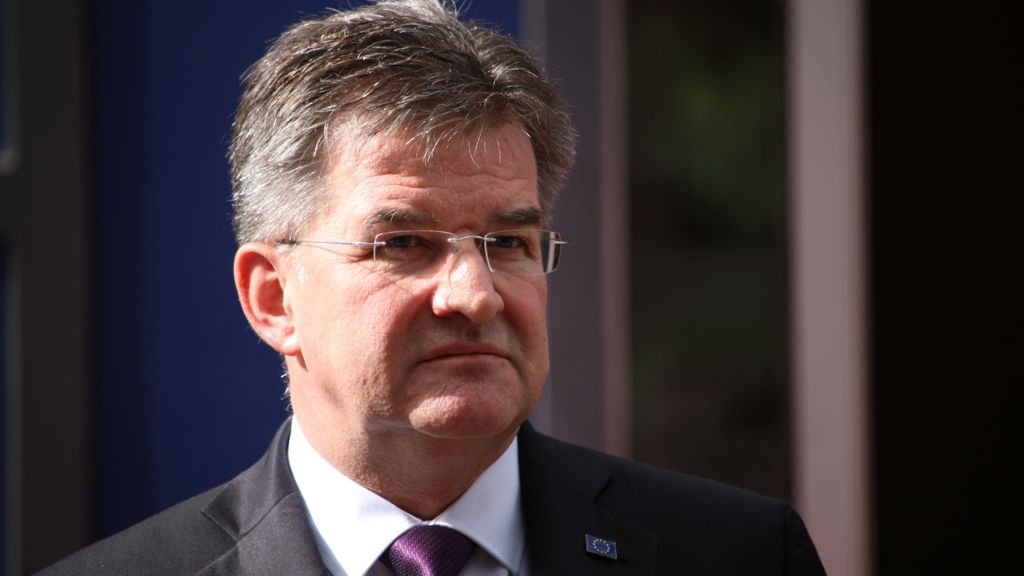
    The European Union collectively urged respect for international law while noting Maduro’s lack of legitimacy, though candidate country North Macedonia and Balkan allies Albania and Kosovo broke ranks to support Washington. Britain adopted a nuanced stance, with Prime Minister Keir Starmer stating the UK would ‘shed no tears’ over Maduro’s demise while planning discussions with U.S. counterparts about the evolving situation.

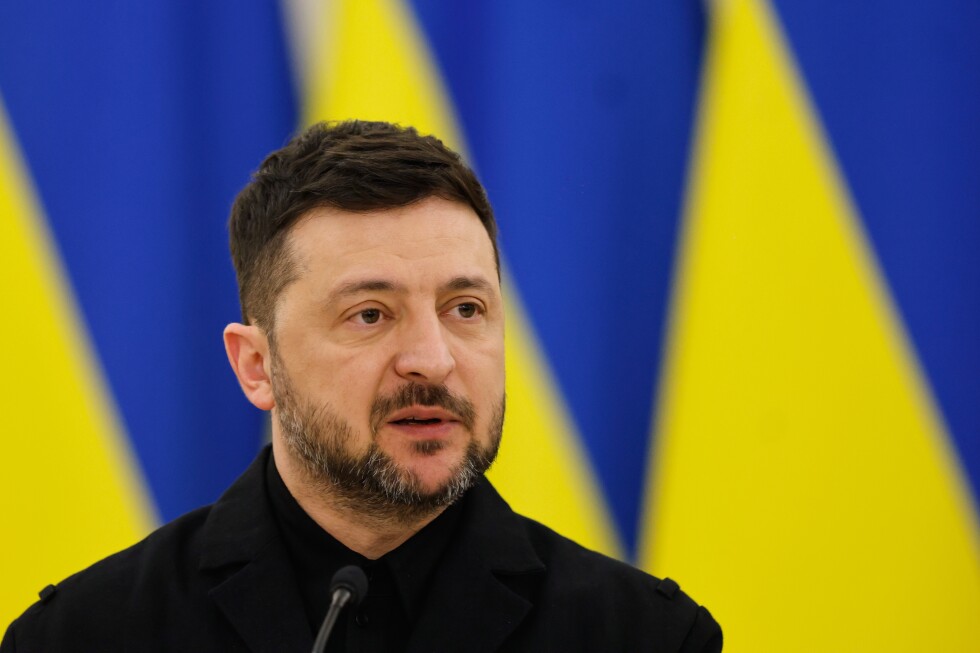
    Italy’s far-right Prime Minister Giorgia Meloni provided rare European support, characterizing the operation as ‘legitimate and defensive.’ Israel hailed American action as leadership of ‘the free world,’ while Ukraine focused criticism on Maduro’s repressive governance rather than addressing the military operation’s legality.

    Beyond official government reactions, United Nations Secretary-General Antonio Guterres expressed deep alarm, warning the operation could ‘constitute a dangerous precedent’ in international relations. The broader implications for regional stability were emphasized by Mexico and Colombia, with the latter predicting a humanitarian crisis resulting from what it termed an ‘assault on the sovereignty of Latin America.’

  • Maduro is ‘the only president’ of Venezuela, says Venezuelan vice president

    Maduro is ‘the only president’ of Venezuela, says Venezuelan vice president

    In a dramatic escalation of international tensions, Venezuelan Vice President Delcy Rodríguez delivered a defiant national address on Saturday, emphatically declaring Nicolás Maduro as “the only president” of the Bolivarian Republic. The statement came hours after U.S. forces launched an unprecedented military operation against the South American nation, resulting in the capture and extraction of President Maduro and his wife.

    Speaking through state-run television channels with key cabinet members including the Ministers of Interior and Foreign Affairs, Rodríguez issued a stern demand for the immediate release of the detained Venezuelan leaders. She characterized the pre-dawn operation as a violation of international law and national sovereignty, urging citizens to maintain composure while rallying behind the constitutional government.

    ‘The Venezuelan people must remain steadfast in defending our nation’s independence,’ Rodríguez asserted during her nationally televised appearance. ‘We will never transform into any nation’s colonial possession or become subservient to imperial powers.’

    The vice president framed the incident as a regional security concern, warning that similar interventions could potentially target other sovereign states in Latin America. She emphasized Venezuela’s preparedness to protect its substantial natural resources from foreign exploitation.

    Meanwhile, U.S. President Donald Trump conducted a press conference confirming the military action, controversially claiming that Rodríguez had already assumed presidential powers and engaged in discussions with Secretary of State Marco Rubio. ‘She has demonstrated willingness to implement necessary measures to restore Venezuela’s greatness,’ Trump told White House reporters.

    The international community has responded with widespread condemnation, with multiple nations and organizations expressing profound alarm over the unilateral use of military force against a sovereign government. Diplomatic channels are actively seeking resolution to the escalating crisis that threatens to destabilize regional geopolitics.

  • America’s chip export controls are working

    America’s chip export controls are working

    In a significant policy shift with profound geopolitical implications, the Trump administration has authorized the export of Nvidia’s advanced H200 AI chips to China, reversing previous export controls implemented during the Biden presidency. This decision represents a dramatic departure from established national security protocols designed to maintain America’s technological advantage in artificial intelligence and semiconductor technology.

    The H200 chips, approximately six times more powerful than the previously restricted H20 model, provide Chinese AI laboratories with computational capabilities rivaling top US supercomputers. According to analysis from the Institute for Progress, this move substantially erodes America’s projected AI compute advantage over China—from a potential 21-49x superiority down to as little as 1.2-6.7x by 2026, depending on measurement methodologies and Chinese adoption rates.

    National security experts express grave concerns that this technology transfer could accelerate China’s military modernization efforts, given that advanced semiconductors form the foundation of modern weaponry including missiles, drones, satellites, and AI-powered combat systems. The decision comes despite China’s documented efforts to develop domestic alternatives through Huawei’s Ascend chips, with Chinese companies strategically purchasing both domestic and American semiconductors to maximize their technological capabilities.

    Proponents of the policy shift argue that maintaining chip exports creates dependency on American technology, potentially slowing China’s indigenous development efforts. However, critics point to China’s explicit technological self-sufficiency mandates under Xi Jinping and the nation’s systematic investment in alternative supply chains regardless of import availability.

    The timing of this decision coincides with reports of China’s purported breakthrough in extreme ultraviolet lithography (EUV) technology, though experts note these claims remain unverified and likely represent another ‘Potemkin breakthrough’ similar to previous announcements that failed to materialize into practical manufacturing capabilities.

    This policy reversal raises fundamental questions about America’s strategic approach to technological competition with China, particularly regarding how maintaining AI superiority serves as a crucial deterrent against potential military conflict in the Taiwan Strait and broader Pacific region. The decision reflects ongoing tensions between commercial interests and national security priorities in managing the delicate balance of power between the world’s two largest economies.

  • Maduro and wife arrive in New York to face US charges

    Maduro and wife arrive in New York to face US charges

    Venezuelan President Nicolas Maduro and First Lady Cilia Flores have been transported to United States territory following a dramatic military operation conducted by American forces on Venezuelan soil. The controversial capture operation, which Venezuelan officials have denounced as a flagrant violation of national sovereignty, culminated in the couple’s arrival at Stewart Air National Guard Base in Newburgh, New York aboard a US government aircraft on Saturday.

    US Attorney General Pam Bondi has confirmed that the Venezuelan leader and his spouse will face multiple federal charges including narco-terrorism, conspiracy to import cocaine into the United States, and international drug trafficking offenses. The case represents an unprecedented escalation in the long-standing tensions between Washington and Caracas.

    Venezuelan Vice-President Delcy Rodriguez issued an urgent demand for ‘proof of life’ documentation, stating that the government had lost contact with the presidential couple following the cross-border military intervention. The operation marks one of the most significant applications of US judicial authority against a sitting head of state in recent history.

    The defendants are expected to be held at the Metropolitan Detention Center in Brooklyn pending their initial court appearance, which judicial sources indicate could occur as early as Monday. Legal experts anticipate this case will raise complex questions regarding international law, diplomatic immunity, and extraterritorial jurisdiction.

  • Maduro now in New York jail as Trump says US to ‘run’ Venezuela

    Maduro now in New York jail as Trump says US to ‘run’ Venezuela

    Venezuela has been plunged into a profound constitutional crisis following an unprecedented US military operation that resulted in the capture and extradition of President Nicolás Maduro to face criminal charges in New York. The dramatic pre-dawn raid, executed by American special forces in Caracas, represents one of the most significant interventions in Latin America by the United States in decades.

    According to military officials, approximately 150 aircraft participated in the coordinated operation that targeted multiple strategic locations throughout the Venezuelan capital. General Dan Caine confirmed that intelligence operatives had spent months meticulously tracking Maduro’s routines and personal habits prior to the capture. The Venezuelan leader and his wife were apprehended without resistance and transported via US government aircraft to a military facility before being transferred to New York City.

    The White House released footage showing Maduro handcuffed and wearing sandals while being escorted through a Drug Enforcement Administration facility. The 63-year-old leader was heard remarking ‘Good night, happy new year’ in English during the processing.

    President Trump announced that cabinet members would be designated to assume administrative control of Venezuela while indicating possible extended military deployment. ‘We’re not afraid of boots on the ground,’ Trump stated, adding that US forces would remain until ‘the proper transition can take place.’ Surprisingly, Trump expressed willingness to collaborate with Maduro’s vice president, Delcy Rodriguez, rather than US-backed opposition leader Maria Corina Machado, whom he dismissed as lacking sufficient support.

    The operation has triggered international condemnation, with China denouncing the action as a ‘clear violation of international law’ and demanding Maduro’s immediate release. United Nations Secretary-General Antonio Guterres expressed deep concern that ‘the rules of international law have not been respected,’ while France warned that solutions cannot be ‘imposed from outside.’ The UN Security Council has scheduled an emergency meeting to address the escalating crisis.

    Venezuela’s Supreme Court has subsequently ordered Rodriguez to assume presidential powers in an acting capacity, creating competing claims to legitimate governance. The political vacuum has left the country’s future uncertain despite Trump’s promises that major US oil companies would invest billions to rehabilitate Venezuela’s energy infrastructure.

  • Maduro arrives in US after stunning capture in operation that Trump says will let US ‘run’ Venezuela

    Maduro arrives in US after stunning capture in operation that Trump says will let US ‘run’ Venezuela

    In an unprecedented military operation conducted under darkness, former Venezuelan President Nicolás Maduro has been apprehended by U.S. forces and transported to New York to confront narco-terrorism conspiracy charges. The dramatic extraction from his Caracas military compound residence occurred early Saturday, marking the most assertive American action toward regime change since the 2003 Iraq invasion.

    President Donald Trump characterized the mission as “extremely successful” during a Mar-a-Lago press conference, outlining intentions for the U.S. to temporarily administer Venezuela while facilitating a “safe, proper and judicious transition.” Trump revealed plans to revitalize Venezuela’s crippled oil infrastructure and export substantial petroleum volumes to international markets.

    The operation triggered immediate political upheaval within Venezuela. The nation’s high court designated Vice President Delcy Rodríguez as interim leader, though she emphatically refused to acknowledge this transition, asserting “There is only one president in Venezuela, and his name is Nicolás Maduro Moros.” Venezuelan state media condemned the extraction as an “imperialist attack,” prompting both pro-Maduro demonstrations and celebratory gatherings among opposing factions.

    Legal authorities internationally have raised profound concerns regarding the operation’s legitimacy. Questions emerged about potential violations of international law, particularly since Congress never authorized military force against Venezuela. The UN Security Council scheduled an emergency session to address the escalating situation following Colombia’s formal request.

    Casualties were reported on both sides during the operation, with Venezuelan officials confirming civilian and military fatalities, while U.S. forces sustained injuries without fatalities. The operation culminated years of escalating tension between the nations, including recent CIA drone strikes targeting alleged Venezuelan drug trafficking operations.

    The capture represents a critical juncture in Venezuela’s political trajectory, which has been dominated by Maduro’s party since Hugo Chávez’s 1999 election. Maduro’s controversial 2018 reelection was widely disputed by international observers and opposition groups who documented substantial evidence of electoral manipulation.

  • Captured Maduro, wife arrive in New York by plane

    Captured Maduro, wife arrive in New York by plane

    Venezuelan President Nicolás Maduro and First Lady Cilia Flores have arrived at a military installation in New York following their apprehension during a significant military operation conducted by United States forces in Venezuela. The controversial capture occurred in the early hours of Saturday morning, marking a dramatic escalation in the ongoing political tensions between Washington and Caracas.

    According to verified reports from multiple media outlets, the presidential aircraft touched down at Stewart Air National Guard Base in Newburgh, New York, on January 3, 2026. The arrival precedes their scheduled appearance at the Manhattan federal court system, though specific charges remain undisclosed at this time.

    The Venezuelan government has responded with vehement opposition to the extraordinary military action. Vice-President Delcy Rodríguez, speaking during an emergency session of the National Defense Council broadcast nationally on state television, formally demanded the “immediate release” of both President Maduro and the First Lady. The broadcast emphasized the administration’s position that the capture represents a violation of international law and Venezuelan sovereignty.

    This development occurs against the backdrop of increasingly strained diplomatic relations between the United States and Venezuela, which have deteriorated significantly over recent years due to political differences, sanctions, and allegations of authoritarian governance. The military intervention to apprehend a sitting head of state establishes an unprecedented chapter in Western Hemisphere relations, with potential implications for international diplomacy norms.

    Security analysts suggest the operation likely required extensive planning and intelligence coordination, though official details regarding the execution remain classified. International observers are monitoring reactions from global powers and regional partners throughout Latin America, with many anticipating strong responses from nations traditionally aligned with Venezuela’s government.

  • ‘Deeply shocked’: World leaders react to US attack on Venezuela

    ‘Deeply shocked’: World leaders react to US attack on Venezuela

    International reactions have sharply diverged following the unprecedented U.S. military operation that resulted in the capture of Venezuelan President Nicolás Maduro and his wife on Saturday. The detained leader, now facing drug trafficking charges in New York, has become the focal point of a geopolitical storm that pits Western powers against traditional allies of Venezuela.

    President Donald Trump’s administration has asserted its intention to temporarily govern the South American nation, stating the U.S. will “run Venezuela until we can do a safe, proper and judicious transition.” This declaration has ignited fierce debate about sovereignty and international law.

    Traditional Western allies exhibited measured support for the operation. UK Prime Minister Keir Starmer notably declined to condemn the military action, stating his government would “shed no tears” for Maduro’s regime while emphasizing the need to establish all facts. The European Union, through top diplomat Kaja Kallas, reiterated its position that Maduro lacks legitimacy while calling for peaceful transition and respect for international law.

    Conversely, a coalition of nations including Russia, China, Iran, and numerous Latin American countries issued strong condemnations. Chinese officials expressed being “deeply shocked” by the use of force against a sovereign nation, while Russia characterized the operation as “an act of armed aggression.” Regional leaders including Brazil’s President Lula da Silva, Colombian President Gustavo Petro, and Chilean President Gabriel Boric uniformly denounced the intervention as a violation of international law that threatens regional stability.

    The United Nations expressed profound concern, with Secretary-General Antonio Guterres warning through a spokesperson that the operation sets a “dangerous precedent” by disregarding established international rules. Domestically, Senate Minority Leader Chuck Schumer criticized the action as reckless despite acknowledging Maduro’s illegitimate status.

    Amid the diplomatic turmoil, Venezuela’s Interior Minister Diosdado Cabello has urged citizens to remain calm and trust the country’s leadership and military, while opposition figures and some international leaders have begun discussing transition possibilities.

  • UN Security Council to hold emergency meeting on Venezuela on Monday

    UN Security Council to hold emergency meeting on Venezuela on Monday

    The United Nations Security Council has scheduled an urgent meeting for Monday morning to address the rapidly developing situation in Venezuela following a military operation conducted by the United States. According to an official statement from the council’s presidency, the emergency session will commence at 10:00 AM Eastern Time (1500 GMT) at UN headquarters in New York.

    Khadija Ahmed, spokesperson for the Somali Permanent Mission to the United Nations, confirmed the meeting arrangements. Somalia currently holds the rotating presidency of the Security Council for January 2026, placing the East African nation at the center of diplomatic efforts regarding this international crisis.

    The emergency session was prompted by Saturday’s dramatic developments in Caracas, where US forces successfully captured Venezuelan President Nicolás Maduro and his wife. This operation represents a significant escalation in the long-standing political confrontation between Washington and the Maduro administration, which the United States and several other nations have consistently refused to recognize as Venezuela’s legitimate government.

    The upcoming Security Council meeting is expected to feature heated debates among the fifteen member states, particularly between the United States and its allies and those nations that have maintained diplomatic relations with Maduro’s government. The discussion will likely focus on the legality of the military intervention, its implications for international norms regarding sovereignty, and the potential consequences for regional stability in Latin America.

    This extraordinary session marks one of the first major international diplomatic responses to the operation and could set the tone for how the global community addresses similar situations in the future. The outcome of Monday’s meeting may influence subsequent actions by regional organizations including the Organization of American States and could determine the political trajectory of Venezuela’s leadership crisis.

  • How cocaine and corruption led to the indictment of Maduro

    How cocaine and corruption led to the indictment of Maduro

    In a dramatic escalation of international legal pressure, Venezuelan President Nicolás Maduro and his wife Cilia Flores were apprehended during a surprise military operation in Venezuela early Saturday. The capture sets the stage for a landmark judicial proceeding in Manhattan federal court against the leader of the oil-rich South American nation.

    The U.S. Justice Department has unsealed a comprehensive indictment portraying Maduro’s government as a “corrupt, illegitimate regime” sustained by an elaborate drug-trafficking network that allegedly flooded American cities with thousands of tons of cocaine. The document charges Maduro with four serious offenses: narco-terrorism conspiracy, cocaine importation conspiracy, possession of machine guns and destructive devices, and conspiracy to possess such weapons.

    According to the indictment, Maduro systematically collaborated with “some of the most violent and prolific drug traffickers and narco-terrorists in the world,” including Mexico’s Sinaloa Cartel and the Tren de Aragua criminal organization. The Venezuelan government allegedly provided law enforcement protection and logistical support to cartels moving drugs throughout the region, resulting in approximately 250 tons of cocaine trafficked through Venezuela annually by 2020.

    The court documents further accuse Maduro and his wife of ordering kidnappings, beatings, and murders against those who interfered with their drug operations or owed them money. Flores faces additional allegations of accepting hundreds of thousands of dollars in bribes to facilitate meetings between drug traffickers and Venezuelan anti-drug officials.

    The operation to capture Maduro was characterized by U.S. officials as a “law enforcement function” conducted at the request of the Justice Department. Attorney General Pam Bondi declared that Maduro and his wife “will soon face the full wrath of American justice on American soil in American courts.” Maduro is currently being held at a federal detention facility in Brooklyn awaiting trial, with video evidence showing him smiling while escorted by DEA agents in New York.

    This prosecution builds upon earlier charges brought against Maduro in 2020 during the Trump administration, with the new indictment adding charges against his wife. The case represents one of the most significant attempts to prosecute a sitting head of state on U.S. soil for international drug trafficking offenses.