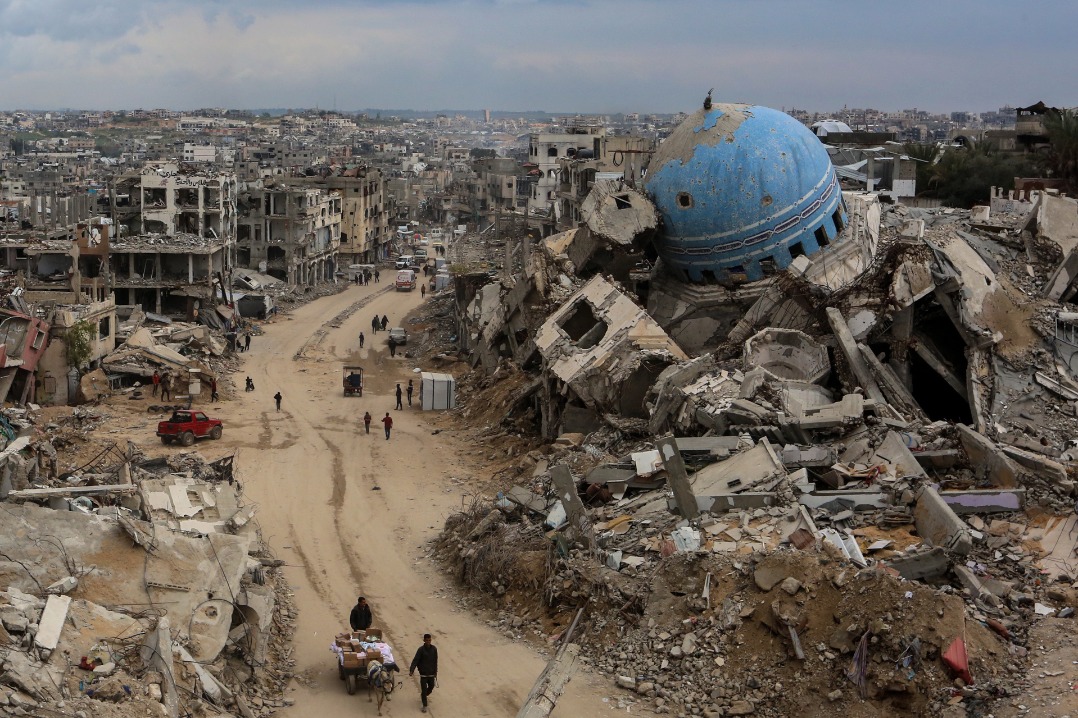
The second day of indirect ceasefire negotiations between Hamas and Israel, mediated by Egypt and Qatar, commenced on Tuesday in Sharm el-Sheikh, Egypt. According to an Egyptian source, the discussions focused on critical issues such as a hostage-prisoner exchange, humanitarian aid access to Gaza, and the future governance of the Gaza Strip. Hamas reiterated its demand for US and Israeli guarantees of a permanent cessation of hostilities, which remains the primary obstacle in the talks. The negotiations are based on the 20-point peace plan proposed by US President Donald Trump, which Hamas has conditionally accepted. The first phase of the plan includes an immediate ceasefire and the release of all Israeli hostages, both living and deceased. Israel estimates that 48 hostages remain in Gaza, with 20 still alive. Hamas stated that it would only begin collecting hostages once Israel’s military operations cease, citing safety concerns for its operatives. Additionally, Hamas insisted on the release of prominent Palestinian leader Marwan Barghouti as part of the prisoner exchange. Regarding Gaza’s future governance, Hamas rejected the deployment of foreign forces but expressed openness to Arab forces coordinating with the Palestinian Authority. The group also opposed the appointment of former British Prime Minister Tony Blair to lead post-war governance. The conflict, which began on October 7, 2023, following a Hamas attack on southern Israel, has resulted in significant casualties and a severe humanitarian crisis in Gaza, with over 67,000 Palestinian deaths reported.
分类: politics
-
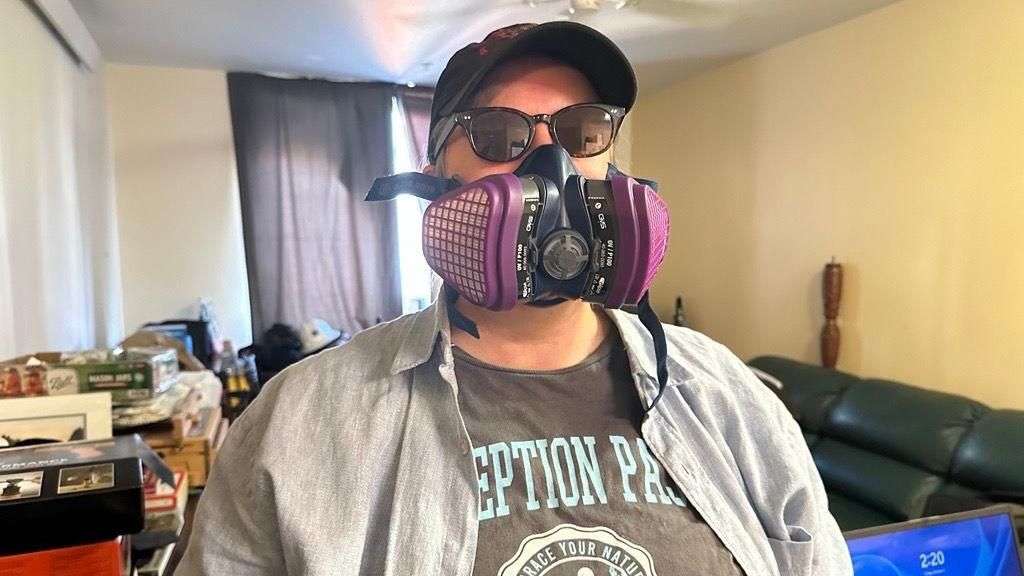
‘I sleep with a gas mask on’ – Life next to Portland protest angering Trump
The South Waterfront neighborhood of Portland has become a battleground, with nightly clashes between federal agents and protesters opposing immigration arrests. Brennah Hammar, a 57-year-old resident of Gray’s Landing, describes her street as a ‘war zone,’ where tear gas infiltrates her apartment complex, located across from an Immigration and Customs Enforcement (ICE) building. The unrest, centered on a single city block, has drawn national attention, with President Donald Trump proposing to deploy the National Guard to protect federal officers and buildings. However, a federal judge has temporarily halted this plan, citing concerns over constitutional overreach. Trump’s hyperbolic claims that ‘Portland is burning to the ground’ have been widely mocked by the city’s residents. Meanwhile, the community remains divided, with some blaming Antifa for the violence and others pointing fingers at federal agents. The Cottonwood School, adjacent to the ICE building, relocated in August after munitions were repeatedly found in its playground. Amidst the chaos, residents like Cindy Colgrove carry weapons for self-defense, while others, like Mai Tai Boyd, question the necessity of deploying combat-trained troops. Despite the turmoil, life continues in other parts of Portland, with events like the Portland Marathon proceeding without incident. Most residents blame Trump for the unrest, recalling his controversial decision to send National Guard troops during 2020 protests. As industrial air scrubbers work to cleanse the air of tear gas, Hammar, a Portland native, finds herself reluctantly supporting Trump’s plan to send in the National Guard, feeling abandoned by the city and determined to protect her rights.
-
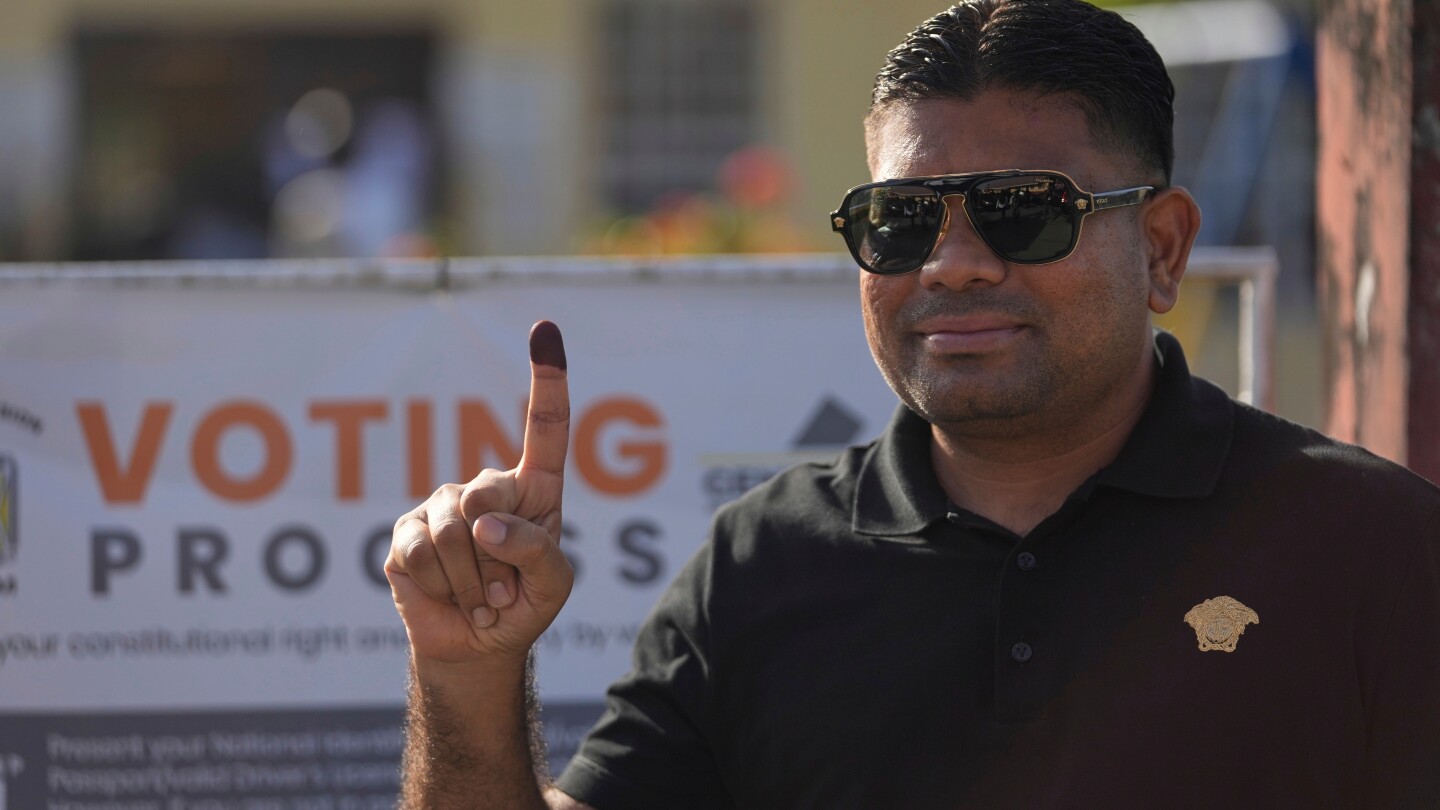
US corruption indictment of billionaire politician won’t block him from Guyana’s parliament
GEORGETOWN, Guyana — Despite facing a U.S. indictment on multiple corruption charges, billionaire businessman Azruddin Mohamed is set to assume his role as Guyana’s legislative opposition leader, legal experts confirm. The 38-year-old, part of a prominent family dynasty with vast interests in gold trading, foreign currency, and oil, secured significant political influence after his newly-formed party, We Invest in Nationhood (WIN), won 16 of 65 parliamentary seats in September’s elections. However, a grand jury in Florida’s Southern District recently unsealed documents accusing Mohamed and his father, Nazar Mohamed, of money laundering, bribery, tax evasion, and wire and mail fraud, among other charges. The case highlights the pervasive corruption in Guyana’s oil-rich government. Despite the allegations, Sherlock Isaacs, Clerk of the Guyanese parliament, stated that Mohamed can legally serve in Parliament unless convicted. Mark Kirton, former Director of the Institute of International Relations at the University of the West Indies, noted that the legal process could be lengthy, allowing Mohamed to retain his position until the case concludes. In his first public remarks since the indictment, Mohamed dismissed the charges as politically motivated. The U.S. Treasury Department previously sanctioned Mohamed and his family for allegedly smuggling gold and evading taxes, citing bribery schemes involving Guyanese officials. The indictment also accuses the Mohameds of reusing official revenue-sealed boxes to ship gold fraudulently. While extradition to the U.S. remains a possibility, Mohamed’s political trajectory appears undeterred for now.
-
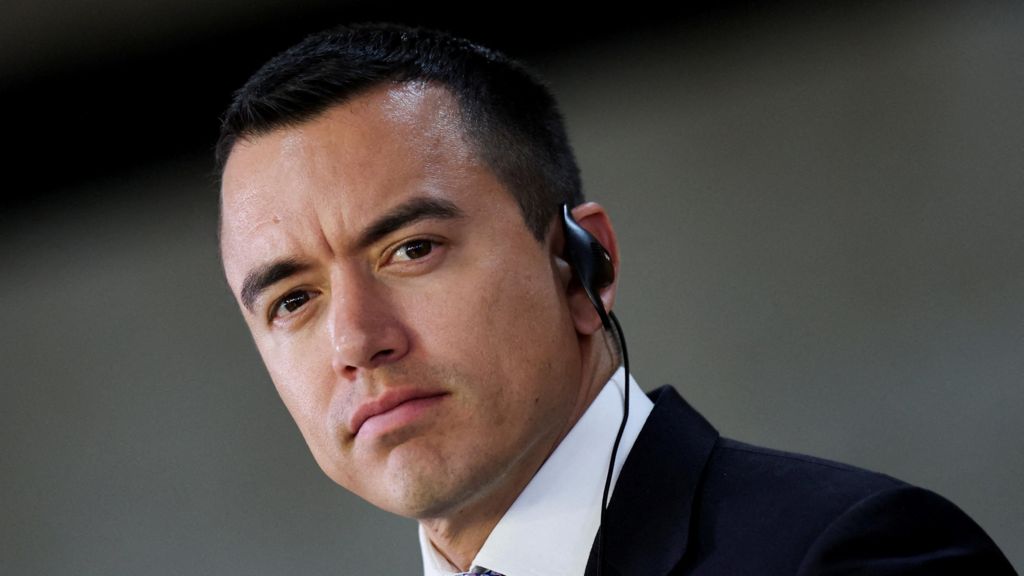
Ecuador arrests five for alleged presidential assassination attempt
Ecuador’s President Daniel Noboa narrowly escaped an alleged assassination attempt as his vehicle was targeted by protesters, leaving visible damage. The incident occurred amidst escalating tensions fueled by nationwide strikes and violent clashes. According to the country’s Energy and Environment Minister, approximately 500 individuals hurled rocks at the president’s car, with signs of bullet damage observed. Noboa, however, remained unharmed. A video shared by the president’s office, though unverified by the BBC, captured protesters attacking the vehicle and three small holes in one of its windows. The government has detained five individuals, accusing them of terrorism and attempted assassination. These arrests have sparked controversy, with Conaie, Ecuador’s largest indigenous organization, claiming the detentions were arbitrary. The unrest stems from the government’s decision to eliminate diesel subsidies, a move defended as a cost-saving measure to reallocate $1.1 billion annually to small-scale farmers and the transport sector. Conaie, which led the national strike, has organized marches and roadblocks, intensifying the crisis. Last week, Noboa’s convoy was ambushed while delivering aid during the strike, resulting in smashed vehicles and injuries among armed forces personnel. Conaie has accused the government of violent crackdowns, while the administration labels the group’s actions as criminal. This turmoil echoes Conaie’s historical role in toppling three presidents between 1997 and 2005, underscoring the deep-seated tensions in Ecuador.
-
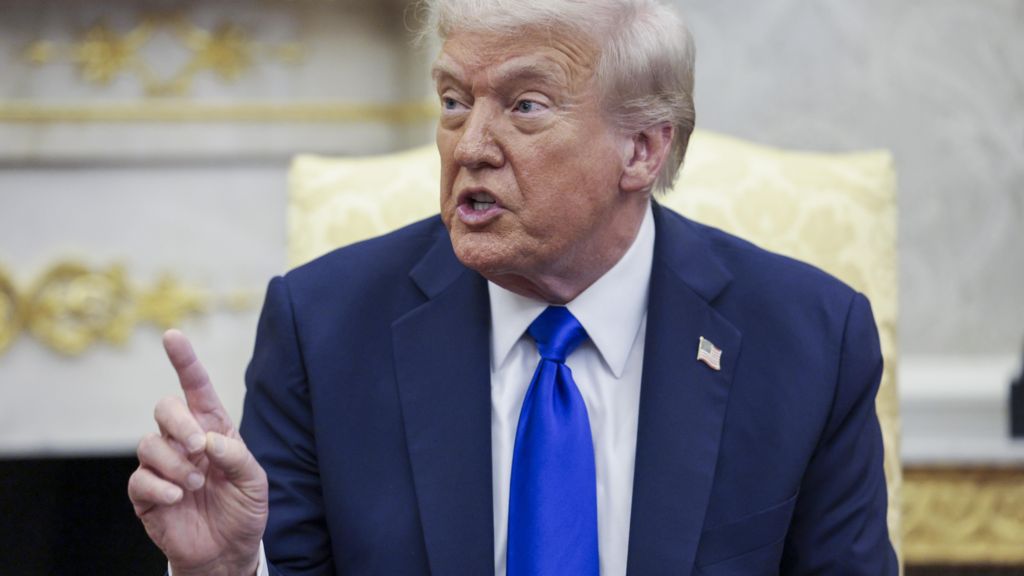
White House suggests some federal workers may not get back pay after shutdown
The Trump administration has ignited a heated debate by suggesting that some federal workers furloughed during the ongoing government shutdown may not receive back pay once the funding impasse is resolved. This stance, outlined in a memo from the Office of Management and Budget (OMB), contradicts a 2019 law signed by President Trump that guarantees retroactive pay for employees affected by shutdowns. The memo argues that the law does not apply to workers temporarily asked not to report to work. Trump reinforced this position on Tuesday, stating that back pay ‘depends on who we’re talking about’ and implying that some employees ‘don’t deserve to be taken care of.’ Approximately 750,000 federal workers are currently without pay as the shutdown enters its first week. Democratic leaders, including House Representative Hakeem Jeffries, have vehemently opposed Trump’s interpretation, asserting that the law clearly entitles all furloughed employees to back pay. The OMB memo, prepared last week but reported on Tuesday, has drawn sharp criticism from both sides of the aisle. Senator Mark Warner of Virginia called it ‘totally illegal,’ while some Republicans, including Senator Thom Tillis of North Carolina, labeled the approach a ‘strategic mistake.’ The shutdown, which began on October 1, stems from a deadlock between Senate Republicans and Democrats over resolutions to reopen the government, with Democrats pushing for healthcare provisions and Republicans advocating for a ‘clean’ budget bill. The controversy over back pay adds another layer of complexity to the already tense political standoff.
-
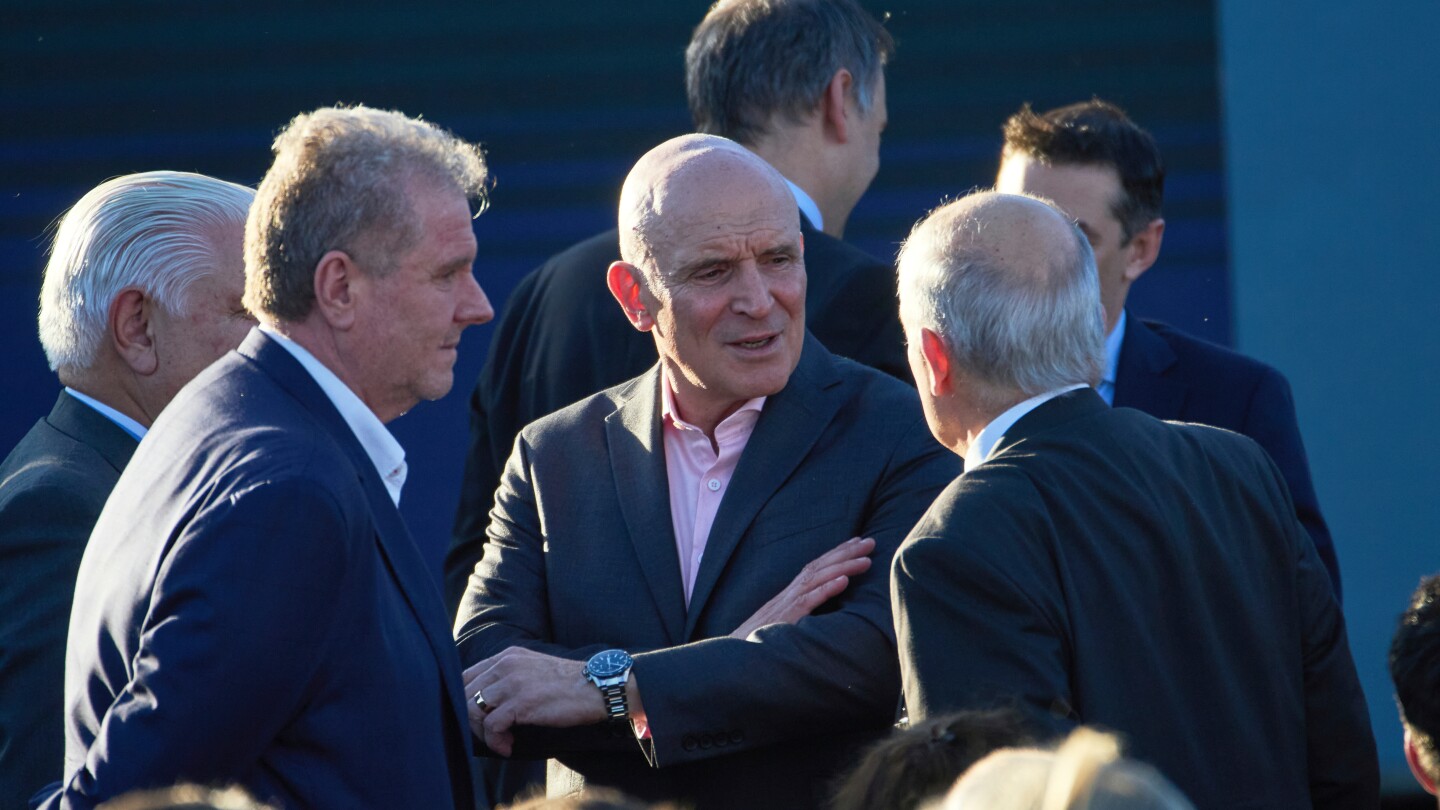
Argentina to extradite to US a suspected drug trafficker with ties to President Milei’s ally
The administration of Argentina’s President Javier Milei announced on Tuesday its decision to extradite Argentine businessman Fred Machado to the United States, where he faces charges of drug trafficking, money laundering, and wire fraud. This development marks a significant moment in a politically charged case that has implicated a key ally of the libertarian president. Machado, who was apprehended in Argentina in 2021 after fleeing charges in Texas, is accused of orchestrating a conspiracy to traffic narcotics by allegedly using shell companies to register planes, exporting them to criminal organizations in Latin America, and facilitating multi-ton cocaine shipments into the U.S. Machado has denied all allegations. The case gained national attention last week when documents revealed that José Luis Espert, a prominent member of Milei’s Libertad Avanza party, received a $200,000 payment from Machado in 2020. Espert admitted to accepting the funds, claiming it was for consulting work, but withdrew his candidacy for the upcoming midterm elections, asserting his innocence. The scandal has intensified political pressure on Milei, who has faced recent setbacks, including a significant loss in a provincial election, a bribery scandal involving his sister, and congressional votes that overturned his vetoes and increased social spending. Since assuming office in late 2023, Milei has implemented stringent austerity measures, successfully eliminating Argentina’s fiscal deficit but failing to deliver the promised economic recovery. With midterm elections approaching, Milei aims to expand his congressional minority to advance his economic reforms and stabilize investor confidence, which was shaken by his party’s defeat in the Buenos Aires provincial election, leading to a peso sell-off and bond market volatility. Milei’s government is seeking support from U.S. President Donald Trump, with Treasury Secretary Scott Bessent pledging financial assistance, though details remain unclear. Milei is scheduled to meet Trump at the White House on October 14 to discuss further collaboration.
-
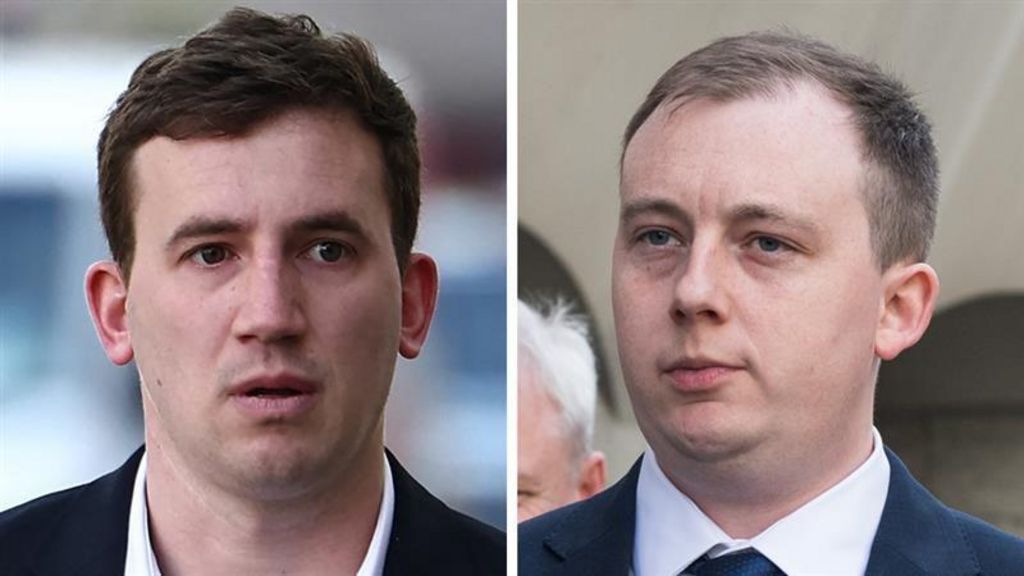
Threat assessment of China led to spy case collapse, says CPS
A high-profile espionage case in the UK involving two men accused of spying for China has been dropped due to insufficient evidence, according to the country’s top prosecutor. Christopher Cash, 30, and Christopher Berry, 33, both denied allegations of gathering and providing information prejudicial to the UK’s safety and interests between December 2021 and February 2023. The charges were dismissed in September 2024, sparking criticism from ministers and MPs. Sir Keir Starmer, the UK Prime Minister, stated that the government could only rely on the previous Conservative administration’s assessment of China, which labeled the country as an ‘epoch-defining challenge’ rather than a direct national security threat. Stephen Parkinson, the Director of Public Prosecutions, explained that while there was initially sufficient evidence to prosecute under the Official Secrets Act, a precedent set by another espionage case raised the threshold for conviction. Parkinson revealed that the Crown Prosecution Service had spent months attempting to obtain further evidence from the government, but the witness statements provided failed to meet the required standard. He emphasized that the evidence would have needed to portray China as a ‘threat to national security’ at the time of the alleged offenses. The government maintained that its description of China could not be retrospectively altered and had to align with the previous administration’s stance. The collapse of the trial has fueled frustration within the government, with Parkinson’s intervention following weeks of speculation. The case has also highlighted the Labour government’s efforts to recalibrate UK-China relations, including a cross-Whitehall audit of bilateral ties. In October 2024, Foreign Secretary David Lammy visited China, advocating for ‘pragmatic solutions to complex challenges.’ Additionally, Jonathan Powell, the UK’s National Security Adviser, met with Chinese officials in July 2024, signaling Britain’s willingness to enhance dialogue with Beijing. The case underscores the complexities of prosecuting espionage under the Official Secrets Act, which requires proof that the information shared was useful to an enemy nation.
-
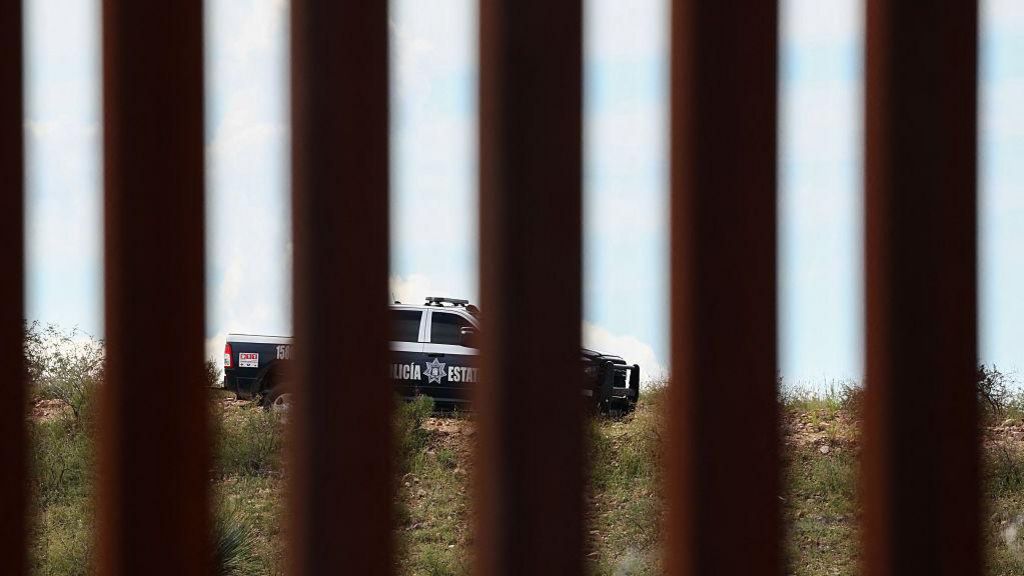
Illegal US-Mexico border crossings hit lowest level in over 50 years
In a significant development for US border security, illegal crossings at the US-Mexico border have plummeted to their lowest levels in over half a century, according to federal data obtained by CBS News. During the 2025 fiscal year, which included four months under former President Joe Biden’s administration, US Border Patrol agents apprehended 238,000 migrants attempting to cross the southern border illegally. This marks the lowest number of apprehensions since 1970, when 202,000 unlawful crossings were recorded. Jennie Murray, president of the National Immigration Forum, hailed the figures as evidence of progress in border security, urging bipartisan efforts to pass comprehensive immigration legislation. Preliminary data indicates that over half of these apprehensions occurred in the first three months of the fiscal year, spanning October 2024 to September 2025. The figures reflect the number of times border officials intercepted and processed migrants attempting illegal entry, including repeat offenders. During Biden’s four-year presidency, US Customs and Border Patrol recorded approximately 11 million border encounters. White House spokeswoman Abigail Jackson attributed the decline to President Trump’s policies, stating that his administration has successfully curbed unchecked illegal immigration and drug trafficking. Trump’s executive orders, including deploying additional troops to the border, ending asylum requests, and expanding ICE’s enforcement capabilities, have been pivotal in achieving these results. The president has also intensified immigration enforcement through raids in major cities like Los Angeles and Chicago and has vowed to deport millions of undocumented immigrants during his tenure.
-
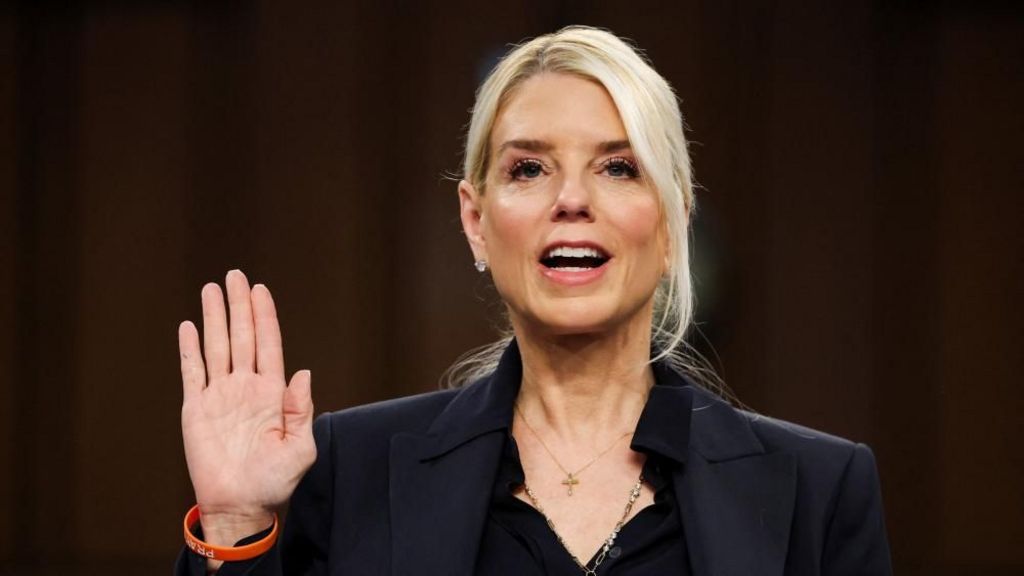
Five takeaways from Pam Bondi’s tense, partisan Senate hearing
Pam Bondi’s appearance before the Senate Judiciary Committee on Tuesday was a fiery and contentious affair, marked by sharp partisan exchanges and a focus on the Justice Department’s handling of high-profile cases, including the indictment of former FBI Director James Comey and the ongoing Epstein investigation. This was Bondi’s first congressional oversight hearing as Attorney General, and it came at a politically charged moment. Just two weeks prior, her department indicted Comey, sparking outrage among Democrats. A day before the hearing, a group of former Justice Department employees accused Bondi of undermining the department’s mission to uphold the rule of law. Bondi entered the hearing ready for battle, employing a strategy of aggressive counterattacks against senators from both parties. She deflected questions about the Comey case, Epstein’s client list, and her communications with the White House, often pivoting to emphasize the Trump administration’s crime-fighting achievements. Democrats, led by Senators Dick Durbin and Sheldon Whitehouse, pressed Bondi on Epstein’s ties to powerful figures, including Trump, but she refused to provide details. Republicans, meanwhile, used the hearing to air grievances about the Biden administration and past Democratic actions. The five-hour session ended with both sides accusing the other of politicizing the Justice Department, leaving little room for bipartisan agreement.
-
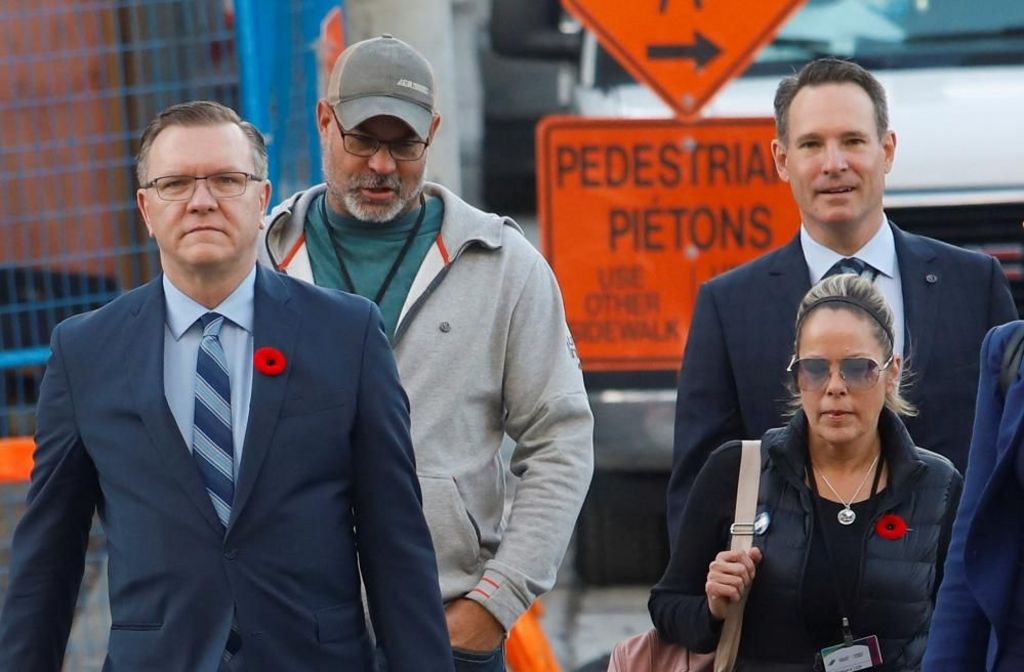
Canada Freedom Convoy leaders spared more jail time at sentencing
Tamara Lich and Chris Barber, key figures in the 2022 ‘Freedom Convoy’ protests that paralyzed Ottawa, have been handed conditional sentences, avoiding further incarceration. The duo was convicted of mischief in April after a protracted trial but were acquitted of most other charges. The protests, which saw hundreds of trucks and vehicles blockading the capital for three weeks, were a response to COVID-19 mandates and the policies of then-Prime Minister Justin Trudeau’s government. The Crown had initially sought seven and eight-year prison terms for Lich and Barber, respectively, but the court opted for 18-month conditional sentences. This includes 12 months of home confinement with limited outings, followed by six months under curfew, plus 100 hours of community service. Additionally, the Crown is pursuing the seizure of Barber’s ‘Big Red’ truck, a prominent symbol of the protest, with a hearing scheduled for November. In a separate legal development, the Crown is appealing the lenient sentence given to Pat King, another protest organizer, who received three months of house arrest despite prosecutors pushing for a decade-long sentence. The protests, which began in February 2022, were triggered by a federal vaccine mandate for cross-border truckers and were eventually quelled when Trudeau invoked the Emergencies Act, marking its first use in Canadian history. The act empowered law enforcement to dismantle the blockades and imposed restrictions on public gatherings.