分类: politics

  • Trans-Atlantic tensions in focus as annual Munich security gathering opens

    Trans-Atlantic tensions in focus as annual Munich security gathering opens

    MUNICH — The prestigious Munich Security Conference commenced Friday amid heightened tensions in trans-Atlantic relations, assembling an impressive roster of global security leaders including U.S. Secretary of State Marco Rubio, numerous European Union officials, and international representatives from Ukraine and China.

    German Chancellor Friedrich Merz inaugurated the three-day event with an opening address, joined by fifteen EU heads of state or government. The conference anticipates participation from Ukrainian President Volodymyr Zelenskyy, Chinese Foreign Minister Wang Yi, and a substantial congressional delegation from the United States.

    Conference chairman Wolfgang Ischinger highlighted the gathering’s critical timing, noting that trans-Atlantic relations—the foundational element since the conference’s establishment in 1963—currently face “a significant crisis of confidence and credibility.” Ischinger expressed particular appreciation for the strong American engagement despite these challenges.

    The backdrop for this year’s meeting includes lingering tensions from last year’s conference, where then-Vice President JD Vance delivered unexpectedly critical remarks to European leaders regarding democratic standards on the continent. Subsequent months witnessed several controversial actions by the Trump administration targeting allies, including a recently retracted threat to impose tariffs on multiple European nations in pursuit of U.S. control over Greenland—a semi-autonomous territory of NATO ally Denmark.

    While Secretary Rubio’s delegation brings hopes for a less confrontational approach focused on conventional security issues, analysts question whether philosophical alignment with previous administration policies will enable meaningful reconciliation. Claudia Major, senior vice president at the German Marshall Fund in Berlin, emphasized that “Greenland has been a fundamental change for Europeans. That one NATO ally threatens another NATO ally has deeply affected European trust in the trans-Atlantic relationship.”

  • Who is Tarique Rahman, set to become Bangladesh’s next PM?

    Who is Tarique Rahman, set to become Bangladesh’s next PM?

    Tarique Rahman stands on the brink of assuming Bangladesh’s premiership after his Bangladesh Nationalist Party (BNP) clinched a decisive parliamentary majority in the recent general election. The 60-year-old scion of Bangladesh’s influential Zia political dynasty now prepares to lead the nation following a victory that marks a significant shift in the country’s political landscape.

    Rahman’s ascent to power culminates a complex political journey characterized by familial legacy, controversy, and personal tribulation. His elevation to BNP chairman occurred mere weeks before the national polls, succeeding his mother Khaleda Zia—the nation’s first female prime minister—following her recent passing. The Zia family has remained a dominant force in Bangladeshi politics for decades, with both parents having previously governed the country.

    Rahman’s political initiation commenced in 2001 during his mother’s second premiership, though his rapid promotion within party ranks drew immediate accusations of nepotism from opposition forces. His tenure has been shadowed by persistent allegations of corruption and authoritarian leadership styles, with critics labeling him a party ‘hatchet man’ responsible for enforcing discipline.

    The new leader’s path included significant personal challenges: his 2007 arrest under a military-backed caretaker government, allegations of torture during detention, and subsequent 17-year exile in London. During this period, Rahman faced multiple in absentia convictions including charges related to a deadly 2004 grenade attack on a political rally—all of which were eventually overturned.

    Despite physical absence, Rahman maintained substantial influence over BNP strategy and operations, assuming de facto leadership after his mother’s 2018 imprisonment. His December 2025 return to Bangladesh preceded his formal election as party chairman in January, a transition some analysts deemed inevitable given the family’s entrenched political position.

    While some dismiss dynasty politics as irrelevant to effective governance, observers note that Rahman’s true test will be transitioning from party leadership to national statesmanship. Having experienced both the brutal realities of Bangladeshi politics and extended political exile, his capacity to transform personal experience into effective national leadership remains the critical question facing the nation.

  • Trump will announce ‘multi-billion’ Gaza reconstruction and stabilisation force on 19 February: Report

    Trump will announce ‘multi-billion’ Gaza reconstruction and stabilisation force on 19 February: Report

    President Donald Trump is preparing to present a comprehensive multi-billion-dollar reconstruction initiative for Gaza alongside details of a United Nations-mandated stabilization force during the inaugural ‘Board of Peace’ summit on February 19th in Washington, DC. The meeting will convene approximately 20 nations, including multiple heads of state, marking a significant diplomatic effort to address the Gaza crisis.

    The Board of Peace, initially announced by Trump at last month’s Davos Economic Forum, incorporates nearly all major Middle Eastern powers including Qatar, UAE, Saudi Arabia, and Turkey, with additional participation from Pakistan, Armenia, Azerbaijan, and Indonesia. Reuters reports that Trump will announce commitments from several nations to contribute thousands of troops to the proposed stabilization force.

    Indonesia has emerged as a potential major contributor, with Army Chief of Staff Maruli Simanjuntak and President Prabowo Subianto confirming preparations to deploy up to 8,000 soldiers should an agreement be finalized. ‘We are just preparing ourselves in case an agreement is reached and we have to send peacekeeping forces,’ Prabowo stated to journalists.

    The financial architecture of the reconstruction plan envisions wealthier Gulf states including Saudi Arabia, Qatar, and the UAE funding Gaza’s rebuilding. However, these nations have expressed reservations. Saudi Crown Prince Mohammed bin Salman previously demurred when asked about financial contributions, while Qatari Prime Minister Mohammed bin Abdulrahman al-Thani explicitly stated in December that Qatar would not ‘write the check to rebuild what others destroyed,’ referencing Israel’s destructive operations.

    The proposal faces significant geopolitical challenges. Arab and Muslim states remain hesitant to deploy troops, concerned about being positioned between an armed Hamas and Israeli soldiers who continue to occupy approximately 53% of the enclave. Many fear their forces could be perceived as enabling Israel’s occupation and ceasefire violations.

    Despite these obstacles, the Trump administration has made some progress, including backing a committee of Palestinian technocrats reporting to Nickolay Mladenov, the high representative for Gaza. The UAE, currently at odds with Saudi Arabia, has drafted plans to construct compounds for Palestinians in the Israeli-occupied portion of Gaza.

    The situation remains volatile with ongoing ceasefire violations and Israeli strikes continuing to claim Palestinian lives. Hamas refuses to disarm until Israel completely withdraws from Gaza, which remains divided by a ‘yellow line’ and subject to a comprehensive Israeli blockade via the Mediterranean Sea.

  • Trump heads to Fort Bragg to cheer special forces members who ousted Venezuela’s Maduro

    Trump heads to Fort Bragg to cheer special forces members who ousted Venezuela’s Maduro

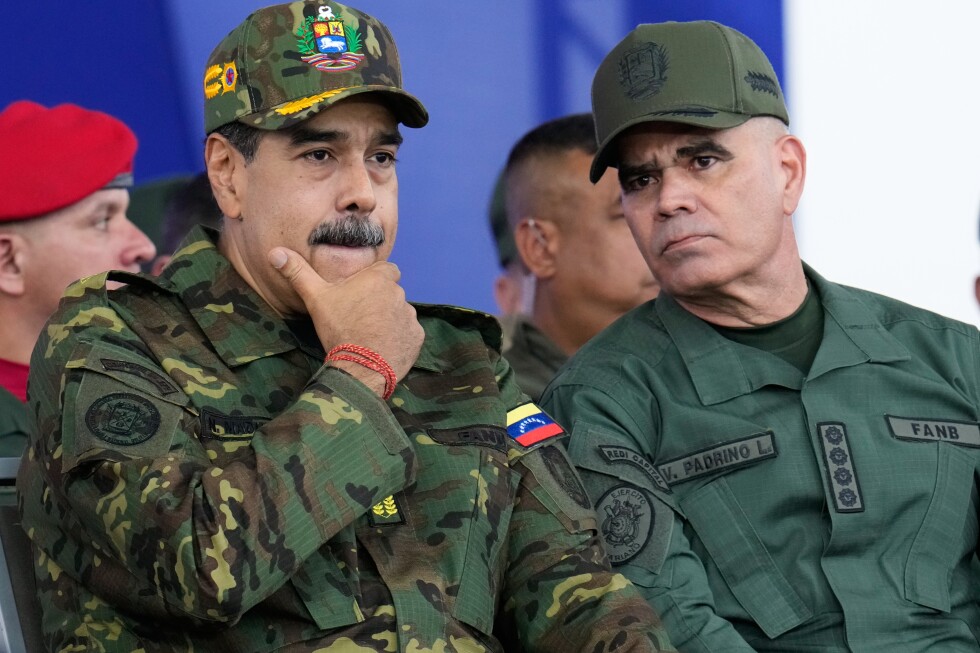
    President Donald Trump traveled to Fort Bragg, North Carolina on Friday to commend special operations forces involved in the dramatic extraction of Venezuelan leader Nicolás Maduro during a New Year’s operation. The mission resulted in Maduro facing U.S. smuggling charges, marking a significant escalation in American intervention in South American affairs.

    Accompanied by First Lady Melania Trump, the presidential visit to one of the world’s largest military installations by population served dual purposes: recognizing military achievements while engaging with service families. The trip occurs amid increased presidential travel to electorally significant states ahead of November’s midterm congressional elections.

    The administration has subsequently advocated for extensive oversight of Venezuela’s oil industry following Maduro’s removal. In continuation of this foreign policy approach, Trump plans to host Latin American leaders in Florida next month, focusing on countering Chinese influence throughout the region.

    This strategic gathering on March 7 will provide a platform to advance what the president has termed the “Donroe Doctrine”—an assertive foreign policy framework invoking the Monroe Doctrine’s principle of American hemispheric dominance while incorporating Trump’s distinctive approach to international relations.

    The visit marks Trump’s second appearance at Fort Bragg within a year, following a June event commemorating the U.S. Army’s 250th anniversary that was overshadowed by controversial partisan remarks. The administration has recently deployed National Guard units to multiple domestic locations including Washington and Memphis as part of broader immigration enforcement initiatives.

  • Bangladesh’s BNP wins parliamentary election

    Bangladesh’s BNP wins parliamentary election

    In a decisive political development, the Bangladesh Nationalist Party (BNP) has achieved a parliamentary majority in the nation’s pivotal general election, according to projections from local broadcaster Ekattor TV. The results, tallied as vote counting progressed through Friday, indicate the BNP secured 151 seats in the 300-member parliament, surpassing the crucial halfway mark required to form a government.

    This electoral outcome represents a significant political shift for the South Asian nation, which has experienced considerable political turbulence in recent years. The election was widely viewed as a critical test for Bangladesh’s democratic processes, with international observers closely monitoring the proceedings.

    The BNP’s return to power marks a substantial reversal of political fortunes after years in opposition. Political analysts suggest this victory could herald a new chapter of governance characterized by different policy priorities and international alignments. The election’s conduct and results are being interpreted as a potential stabilizing force for the country’s political landscape, though the transition period will be closely watched for signs of continuity or change in Bangladesh’s domestic and foreign policy directions.

    The substantial majority provides the incoming government with a strong mandate to implement its legislative agenda, though the precise composition of the final parliament remains subject to official confirmation from electoral authorities. The transition of power is expected to proceed following the formal certification of results.

  • Sussan Ley and the glass cliff: Does Australian politics still have a problem with women?

    Sussan Ley and the glass cliff: Does Australian politics still have a problem with women?

    Australia’s political landscape has been rocked by the dramatic ousting of Sussan Ley as Liberal Party leader after just nine months in the role, sparking intense debate about gender dynamics in conservative politics. Ley, who made history as the first woman to lead the Liberal Party, was replaced by Angus Taylor in a leadership ballot that saw Taylor prevail 34 votes to 17, with Senator Jane Hume elected as deputy leader.

    The leadership change comes amid what political analysts describe as a perfect storm of challenges for the opposition party. Following the most devastating election defeat in the modern Liberal Party’s history last May, the new leader faced the monumental task of unifying fractured party factions, managing a deteriorating coalition with the National Party, overhauling rejected policies, and repairing the party’s reputation with female voters who had abandoned them en masse.

    Ley’s brief tenure has reignited discussions about the ‘glass cliff’ phenomenon—where women and minorities are promoted to leadership positions during times of crisis, setting them up for higher failure risk. Professor Michelle Ryan, Director of the Global Institute for Women’s Leadership and coiner of the term, identified Ley’s situation as a textbook case: ‘There was just crisis on every front… it’s classic glass cliff.’

    Yet perspectives on Ley’s downfall diverge sharply. Her supporters argue gender played a significant role in her premature departure, claiming she was never given a fair chance to succeed. Her opponents, including veteran political commentator Niki Savva, counter that performance, not gender, determined her fate. Savva noted Ley’s approval rating had plummeted to negative 39—the worst performance for an opposition leader in 23 years—and criticized her lack of conviction on key issues.

    The leadership saga highlights broader questions about diversity in Australian politics. While the Labor Party has achieved gender parity in its caucus (57% women) through ambitious quotas implemented over three decades, the Coalition remains approximately one-third female and has resisted quota systems. This reluctance has contributed to the rise of independent female ‘Teal’ candidates who now dominate the crossbench.

    As Taylor assumes leadership, the Liberal Party faces mounting pressure to address internal disunity and better reflect modern Australia’s diversity. The rapid leadership change represents another chapter in the party’s ongoing struggle to adapt to contemporary political realities while maintaining its traditional base.

  • US troops handover al-Tanf military base to Syria

    US troops handover al-Tanf military base to Syria

    In a significant strategic shift in the Middle East, United States forces have formally withdrawn from the strategic al-Tanf military base in southern Syria, transferring control to Syrian government troops. The move, confirmed by both US Central Command and Syria’s defense ministry on Thursday, represents a deliberate reorientation of American military presence in the region.

    The al-Tanf base, situated at the critical tri-border junction of Syria, Jordan, and Iraq, served as a key operational hub since its establishment following the 2014 intervention against Islamic State. US Central Command characterized the departure as an ‘orderly withdrawal’ executed as part of a ‘conditions-based transition’ to consolidate American positions throughout Syria.

    This withdrawal forms part of a broader American strategic pivot away from the Kurdish-led Syrian Democratic Forces (SDF) toward supporting President Ahmed al-Sharaa’s government. The Trump administration appears to be facilitating Damascus’s ability to fill security vacuums created by the US drawdown, while reportedly relying on regional allies including Turkey, Qatar, and Saudi Arabia to bolster the Syrian government.

    Concurrently, the United States has overseen the transfer of thousands of Islamic State group prisoners from northeastern Syria—previously guarded by SDF forces—to detention facilities in Iraq.

    The base’s strategic significance extended beyond counterterrorism operations, having evolved into a crucial node for disrupting Iranian supply lines to the Assad government and Hezbollah following ISIS’s territorial defeat in 2019. The installation previously came under attack from Iran-aligned militias in 2024 amid escalating tensions between Israel and Iran.

    This realignment follows earlier administration support for offensive operations by Sharaa’s forces against the SDF, which resulted in the Kurdish-led group ceding substantial territories to Damascus. A subsequent US-brokered agreement will integrate SDF fighters into the Syrian army while permitting Kurdish forces to maintain security oversight in Kurdish-majority areas.

    The al-Tanf garrison previously housed US troops alongside a contingent of US-trained Arab rebel fighters. Reports indicate withdrawing personnel will redeploy to Jordan, where America maintains an established network of desert bases along the border region.

  • Bangladesh Nationalist Party claims victory in country’s first election since 2024 uprising

    Bangladesh Nationalist Party claims victory in country’s first election since 2024 uprising

    DHAKA, Bangladesh — The Bangladesh Nationalist Party (BNP) has declared an electoral triumph in the nation’s first parliamentary contest since the 2024 uprising, potentially heralding a dramatic shift in the country’s political trajectory after years of contentious governance and disputed elections.\n\nThe party’s media division announced via social media platform X on Friday that it had captured sufficient parliamentary seats to establish a standalone government. While the Election Commission has yet to release official results, multiple domestic news organizations have corroborated the BNP’s victory claim.\n\nThis electoral process unfolded under heightened security measures amid widespread apprehensions regarding democratic erosion, escalating political violence, and deteriorating rule of law. The election represents a pivotal milestone following the July 2024 student-led revolution that precipitated the downfall of former Prime Minister Sheikh Hasina, who subsequently sought exile in India.\n\nBNP’s leadership is helmed by Tarique Rahman, the party’s prime ministerial nominee who ended his 17-year self-imposed exile in London last December. The 60-year-old politician, son of late former Prime Minister Khaleda Zia, has positioned himself as a champion of democratic values in a political landscape historically marred by partisan entrenchment, military involvement, and accusations of electoral misconduct.\n\nSenior BNP official Ruhul Kabir Rizvi extended gratitude to the Bangladeshi populace for their electoral support, while Rahman’s press secretary urged supporters to observe special prayers instead of organizing victory processions.\n\nThe United States Embassy in Dhaka formally congratulated Rahman and his party, characterizing the outcome as a \”historic victory.\” U.S. Ambassador Brent T Christensen expressed anticipation for collaborative efforts toward mutual prosperity and security objectives.\n\nThis election was widely perceived as a critical examination of Bangladesh’s capacity to rehabilitate democratic institutions and translate public dissent into substantive political transformation. The BNP had previously boycotted multiple elections during Hasina’s 15-year tenure, alleging systematic vote manipulation and political suppression.\n\nRahman’s return became feasible after corruption and criminal cases against him—which he maintains were politically motivated—were discontinued following the collapse of Hasina’s administration.

  • Trump administration to end immigration enforcement surge in Minneapolis

    Trump administration to end immigration enforcement surge in Minneapolis

    The Trump administration announced on Thursday the termination of a heightened immigration enforcement operation in Minneapolis, Minnesota, following two months of widespread protests, school closures, and the tragic deaths of two American citizens. The operation, which had drawn significant national criticism, will see a substantial drawdown of federal agents.

    At a Minneapolis press conference, Border Czar Tom Homan stated that the de-escalation was already in progress. ‘I have proposed, and President Trump has concurred, that this surge operation conclude,’ Homan declared. ‘A significant drawdown has already been underway this week and will continue into the next.’ He attributed the decision to improved collaboration between local law enforcement and federal immigration authorities, establishing a new protocol where U.S. Immigration and Customs Enforcement (ICE) will take custody of immigrants arrested locally for criminal acts prior to deportation proceedings.

    The operation had been marred by controversy since its inception. Viral videos depicted ICE agents, alongside personnel from Homeland Security Investigations and Enforcement and Removal Operations, employing aggressive tactics. These included apprehending individuals suspected of immigration violations in front of their children at schools and from construction sites. Notably, some of those detained were later confirmed to be U.S. citizens, a direct violation of federal law which prohibits immigration agents from holding Americans.

    The fatalities of U.S. citizens Renee Nicole Good and Alex Pretti, who were legally observing and documenting ICE activities, became a focal point of national outrage. Acting ICE Director Todd Lyons acknowledged the deaths at a Senate hearing but declined further comment pending internal investigations. ‘In regards to every law enforcement operation, of course, we go back, we look at lessons learned… the ownership of that is mine,’ Lyons testified.

    Minnesota officials responded with a mixture of relief and defiance. Democratic Governor Tim Walz, who had previously run for vice president alongside Kamala Harris, stated on social media, ‘The long road to recovery starts now.’ He later revealed that a phone call with President Trump and the subsequent deployment of Homan to Minneapolis had initiated negotiations to end the operation, though he criticized the administration’s delay, suggesting it was ‘in very Trumpian fashion, they needed to save face.’

    Minneapolis Mayor Jacob Frey, known for his explicit demands for ICE to leave the city, celebrated the community’s resilience, writing that federal agents ‘thought they could break us, but a love for our neighbors and a resolve to endure can outlast an occupation.’

    The political fallout for the administration has been significant, with approval ratings suffering due to widespread circulation of videos showing violent arrests. Critics of the operation pointed to internal Department of Homeland Security (DHS) documents revealing that only 14% of arrested immigrants had a record of violent crime, arguing that the majority were detained for civil infractions like visa overstays. Furthermore, tactics such as frequently transferring detainees to remote facilities in Texas and Louisiana—regions with conservative judiciaries aligned with administration policies—were condemned for isolating individuals from legal support and families, effectively coercing them into accepting deportation rather than pursuing their legal rights.

    Since taking office 13 months ago, the DHS reports having detained or deported half a million people. The conclusion of the Minneapolis surge marks a significant retreat from one of the administration’s most aggressive domestic enforcement campaigns.

  • Sister of North Korea’s leader says South Korea’s drone regret was sensible but insufficient

    Sister of North Korea’s leader says South Korea’s drone regret was sensible but insufficient

    In a significant development on the Korean Peninsula, Kim Yo Jong, the influential sister of North Korean leader Kim Jong Un, delivered a carefully calibrated response Friday to South Korea’s expression of regret over alleged civilian drone flights. While acknowledging South Korean Unification Minister Chung Dong-young’s “deep regret” as “sensible behavior,” she issued a stark warning that any recurrence would trigger “terrible response” measures.

    The diplomatic exchange marks the latest escalation in tensions between the two technically warring nations. North Korea had previously threatened retaliation last month after accusing South Korea of launching surveillance drone flights in September and January—claims that Seoul has consistently denied. South Korean authorities confirm they are investigating three civilians suspected of operating drones in border areas, though officials maintain no government-operated drones were deployed during the specified periods.

    Kim Yo Jong’s statement, while acknowledging the conciliatory gesture, demanded stronger preventive measures from Seoul. “Various counterattack plans are on the table,” she declared, emphasizing that any response would “go beyond proportionality” if violations of North Korea’s sovereignty recur. The warning was delivered using North Korea’s formal name, the Democratic People’s Republic of Korea (DPRK).

    Analysts suggest North Korea’s drone accusations may be strategically timed to heighten anti-South Korean sentiments ahead of the ruling Workers’ Party congress in late February—the first such gathering in five years. There is speculation that the congress could formalize leader Kim Jong Un’s declaration of a hostile “two-state” system on the Korean Peninsula in the party constitution.

    The development significantly dampens prospects for Seoul’s efforts to revive long-stalled diplomatic talks amid an increasingly tense nuclear standoff. The two Koreas have maintained no public dialogue since 2019, with drone allegations adding to existing sources of animosity between the divided nations.