分类: politics

  • Controversial church leader denies bribing ex-South Korea first lady

    Controversial church leader denies bribing ex-South Korea first lady

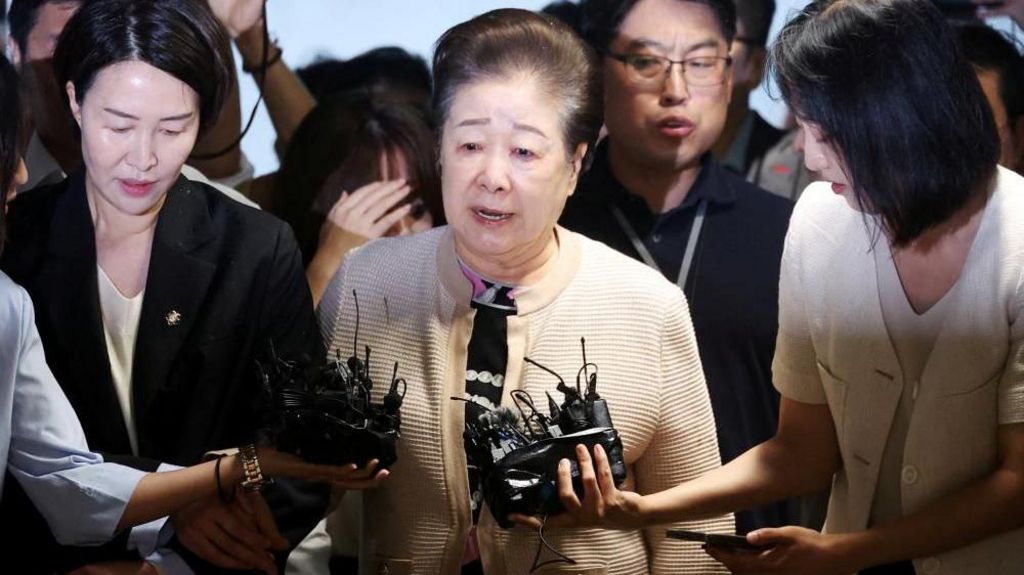
    Han Hak-ja, the 82-year-old leader of the controversial Unification Church, has vehemently denied allegations that her organization bribed South Korea’s former first lady, Kim Keon Hee, with luxury gifts in exchange for business favors. The accusations surfaced as Han emerged from a grueling nine-hour interrogation at the prosecutor’s office, where she was questioned about the alleged bribery. Supported by assistants due to her frail health, Han dismissed the claims, stating, ‘No… Why would I do that?’

    The former first lady, wife of ousted President Yoon Suk Yeol, is accused of accepting two Chanel bags and a diamond necklace, collectively valued at 80 million won ($57,900), from the church. Kim, who was indicted last month on charges including bribery and stock manipulation, denies all allegations. Her arrest marks a historic moment in South Korea, as it is the first time both a former president and first lady have been jailed.

    Yoon, detained in January, faces trial over a failed martial law bid last year that plunged the nation into chaos. Meanwhile, Han shifted blame to a former church official, claiming he acted independently in offering the gifts. The official has since been arrested. Han’s appearance followed her refusal to comply with three prior summonses, citing post-heart surgery pain. An ambulance was reportedly on standby during her interrogation.

    In a related development, conservative lawmaker Kweon Seong-dong was arrested on Wednesday for allegedly receiving 100 million won in bribes from the church. Kweon, once a close ally of Yoon, denies the charges.

    The Unification Church, formally known as The Family Federation for World Peace and Unification, was founded in the 1950s by Moon Sun-myung, who declared himself the messiah. The church is infamous for its mass weddings, often involving thousands of couples matched by the organization. Critics have labeled it as ‘cult-like,’ with accusations of coercing members, known as ‘Moonies,’ into donating substantial sums.

    The church gained international attention following the assassination of Japan’s former Prime Minister Shinzo Abe. The alleged assassin blamed the group for his family’s financial ruin and held a grudge against Abe for allegedly promoting the church. The organization is banned in several countries, including Singapore and, more recently, Japan.
  • What was on the menu and who was on guest list at state banquet?

    What was on the menu and who was on guest list at state banquet?

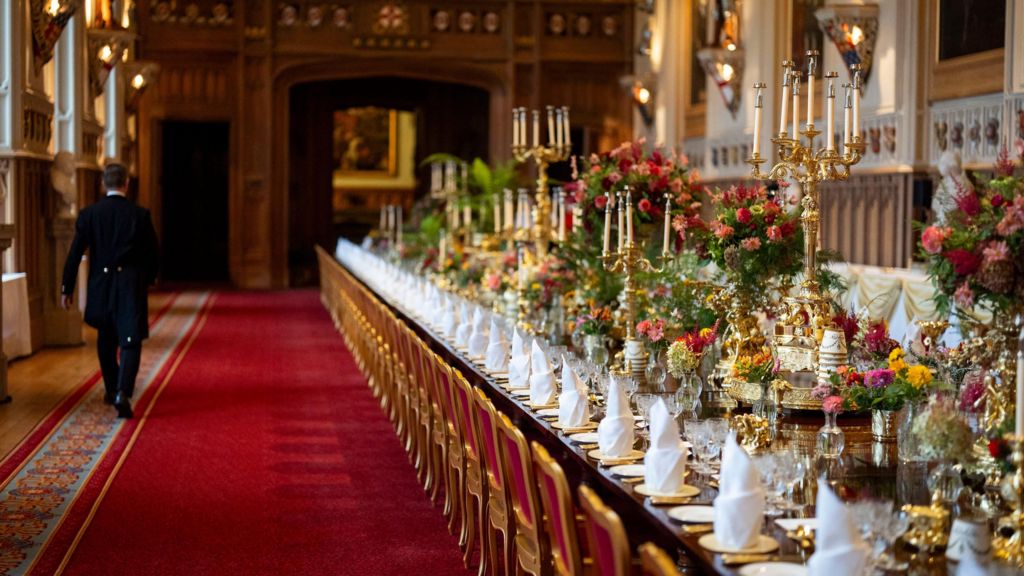
    President Donald Trump’s state visit to Windsor Castle was a spectacle of grandeur, blending royal tradition with diplomatic nuance. The state banquet, held in the opulent St George’s Hall, was a meticulously orchestrated affair, designed to impress and honor the visiting leader. The setting, reminiscent of a medieval feast with a touch of cinematic flair, featured elaborately uniformed staff, immaculate table settings, and a menu crafted to perfection. Each course, from the Hampshire Watercress Panna Cotta to the Vanilla Ice Cream Bombe, was paired with a curated selection of fine wines, including a symbolic 1945 vintage port to commemorate Trump’s presidency. Despite the absence of Hollywood celebrities, the guest list was a who’s who of political and tech elites, including Apple CEO Tim Cook, press magnate Rupert Murdoch, and OpenAI’s Sam Altman. The seating arrangement sparked intrigue, with Trump placed between King Charles III and the Princess of Wales, while other notable figures like Prime Minister Sir Keir Starmer and US Secretary of State Marco Rubio mingled with royalty and business leaders. The event, a mix of tradition and modernity, underscored the enduring significance of royal diplomacy in global politics.

  • Nigeria’s Tinubu lifts emergency rule in oil-rich Rivers State

    Nigeria’s Tinubu lifts emergency rule in oil-rich Rivers State

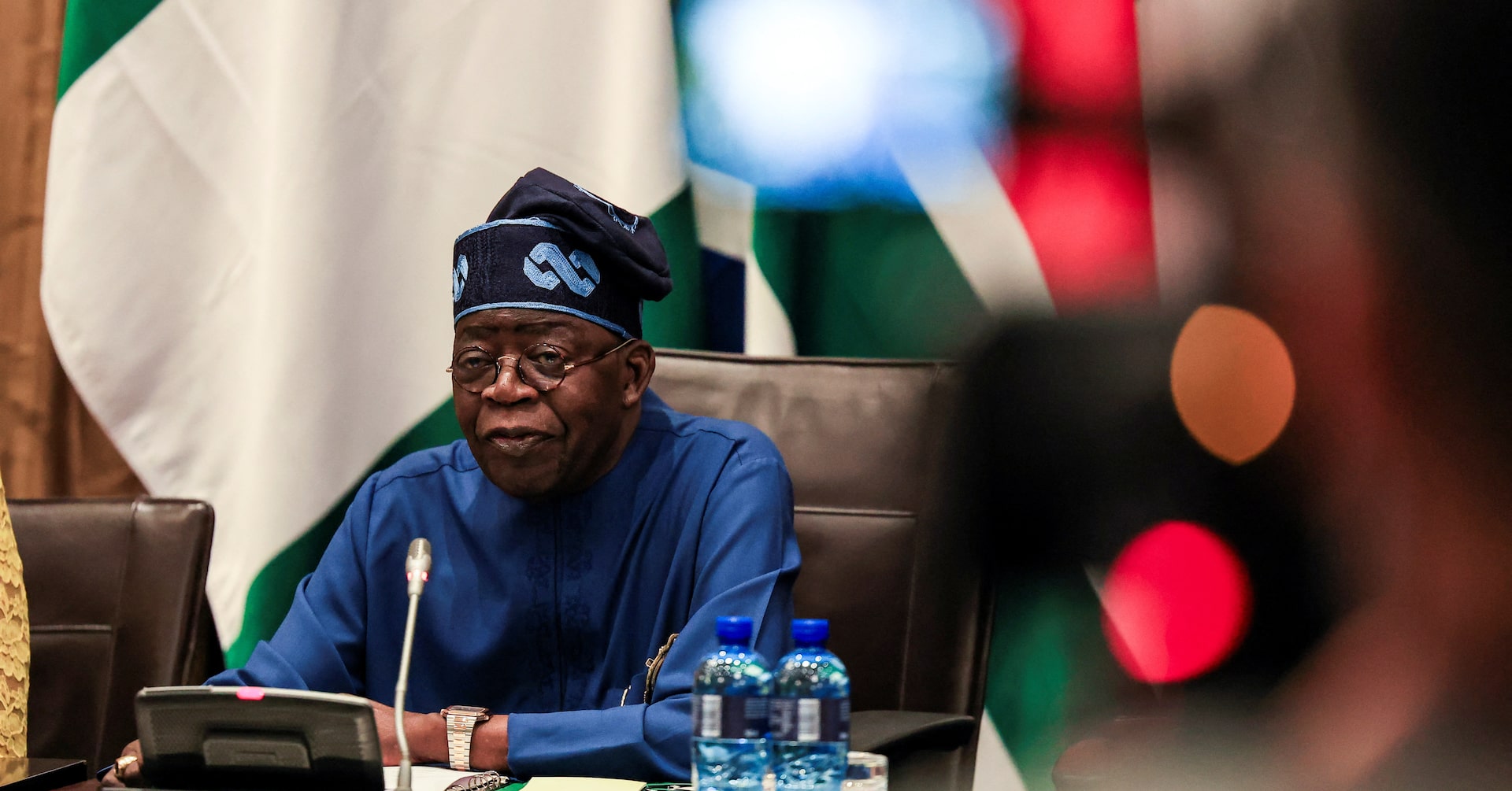
    In a significant move to restore democratic governance, Nigerian President Bola Tinubu has officially ended the six-month emergency rule in Rivers State. The decision, announced on Wednesday, reinstates Governor Siminalayi Fubara and other state officials, marking the resolution of a constitutional crisis that had brought governance to a standstill. The emergency rule was initially imposed on March 18 following a political standoff between Governor Fubara and the state legislature, which had disrupted budget approvals and left the government in a state of paralysis. President Tinubu emphasized that the measure was crucial to prevent anarchy and restore order. Rivers State, a key hub in Nigeria’s oil-rich Niger Delta, plays a vital role in the country’s crude exports. The region has previously faced security challenges, including pipeline attacks by militants, which have impacted oil output and revenue. Tinubu cited intelligence reports indicating a newfound spirit of cooperation among political stakeholders, which facilitated the return to normal governance. Governor Fubara, his deputy, and the 31-member House of Assembly are set to resume their duties on September 18. The emergency declaration had sparked over 40 legal challenges across courts in Abuja, Port Harcourt, and Yenagoa. Tinubu defended the use of emergency powers as a constitutional mechanism to restore stability, while acknowledging that dissent remains an integral part of democratic processes.

  • Guinea to vote on constitution that would let coup leader run for office

    Guinea to vote on constitution that would let coup leader run for office

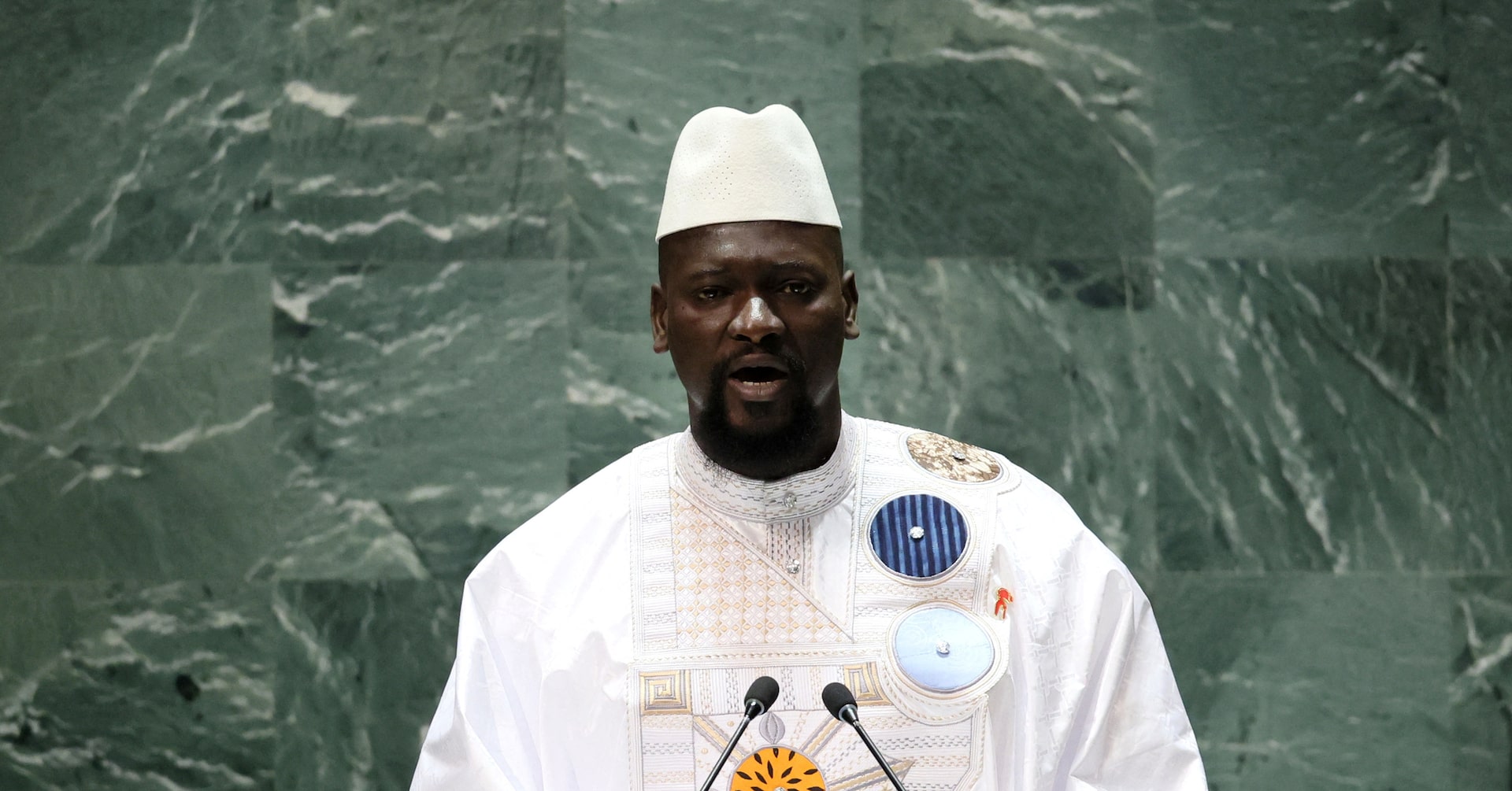
    Guinea is poised to hold a pivotal referendum on Sunday, September 17, 2023, which could reshape its political future. The proposed new constitution, if approved, would allow junta leader Mamady Doumbouya to run for president—a move that contradicts his earlier pledge to abstain from seeking office after seizing power in 2021. This referendum marks another chapter in the turbulent political transitions across West and Central Africa, a region that has witnessed eight coups between 2020 and 2023. The transition charter adopted post-coup initially barred junta members from participating in elections, but the new constitution omits this restriction, raising concerns about a potential power consolidation. Opposition leader Cellou Dalein Diallo, currently in exile, has labeled the referendum a ‘masquerade’ and urged citizens to boycott it. His party, the Union of Democratic Forces, along with ousted President Alpha Conde’s Rally of the Guinean People, remains suspended for failing to meet administrative and financial disclosure requirements imposed by the junta. Human Rights Watch has accused Doumbouya’s government of targeting political opponents and suppressing media outlets, allegations the government denies. The new constitution proposes extending the presidential term from five to seven years, renewable once, and establishing a Senate, with one-third of senators directly appointed by the president. Over 6.7 million voters are registered, and the constitution will be adopted if more than 50% approve. While some, like civil servant Ibrahima Camara, support the referendum as a step toward normalization, others, such as Abdoulaye Diallo, view it as non-transparent and fear it will exacerbate tensions. The referendum’s outcome could significantly impact Guinea’s path to civilian rule, with the presidential election expected in December 2024.

  • Lithuania charges 15 over alleged Russian-backed parcel bombs

    Lithuania charges 15 over alleged Russian-backed parcel bombs

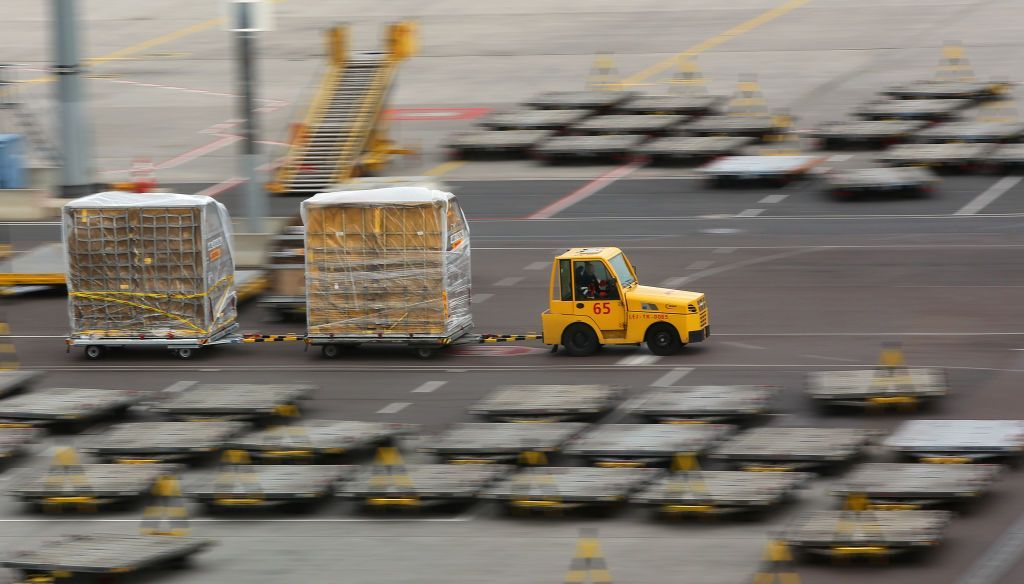
    Lithuanian prosecutors have charged 15 individuals with terrorism offences in connection with an alleged Russian-backed plot involving explosive parcels sent to Germany, Poland, and the UK. The suspects are accused of using delivery services DHL and DPD to send four packages containing explosives concealed within cosmetics containers from Vilnius, Lithuania. Three of the parcels ignited in July last year, causing fires in Leipzig, Germany; near Warsaw, Poland; and in Minworth, UK. The fourth parcel failed to detonate due to a technical malfunction. Lithuanian investigators claim the operation was orchestrated by individuals linked to Russian military intelligence, with the aim of sabotaging flights to the US and Canada. Russia has consistently denied involvement in such activities, despite repeated allegations from NATO countries. The explosive devices were reportedly triggered by electronic timers hidden in vibrating massage pillows. Among the 15 charged are citizens of Russia, Lithuania, Latvia, Estonia, and Ukraine, though it remains unclear how many are currently in custody. The suspects are also accused of orchestrating an arson attack on an Ikea store in Vilnius last year. Western security officials have previously suggested that the incidents were part of a coordinated campaign by Russia’s GRU military intelligence agency.

  • EU eyes deeper India alliance despite concern over Moscow ties

    EU eyes deeper India alliance despite concern over Moscow ties

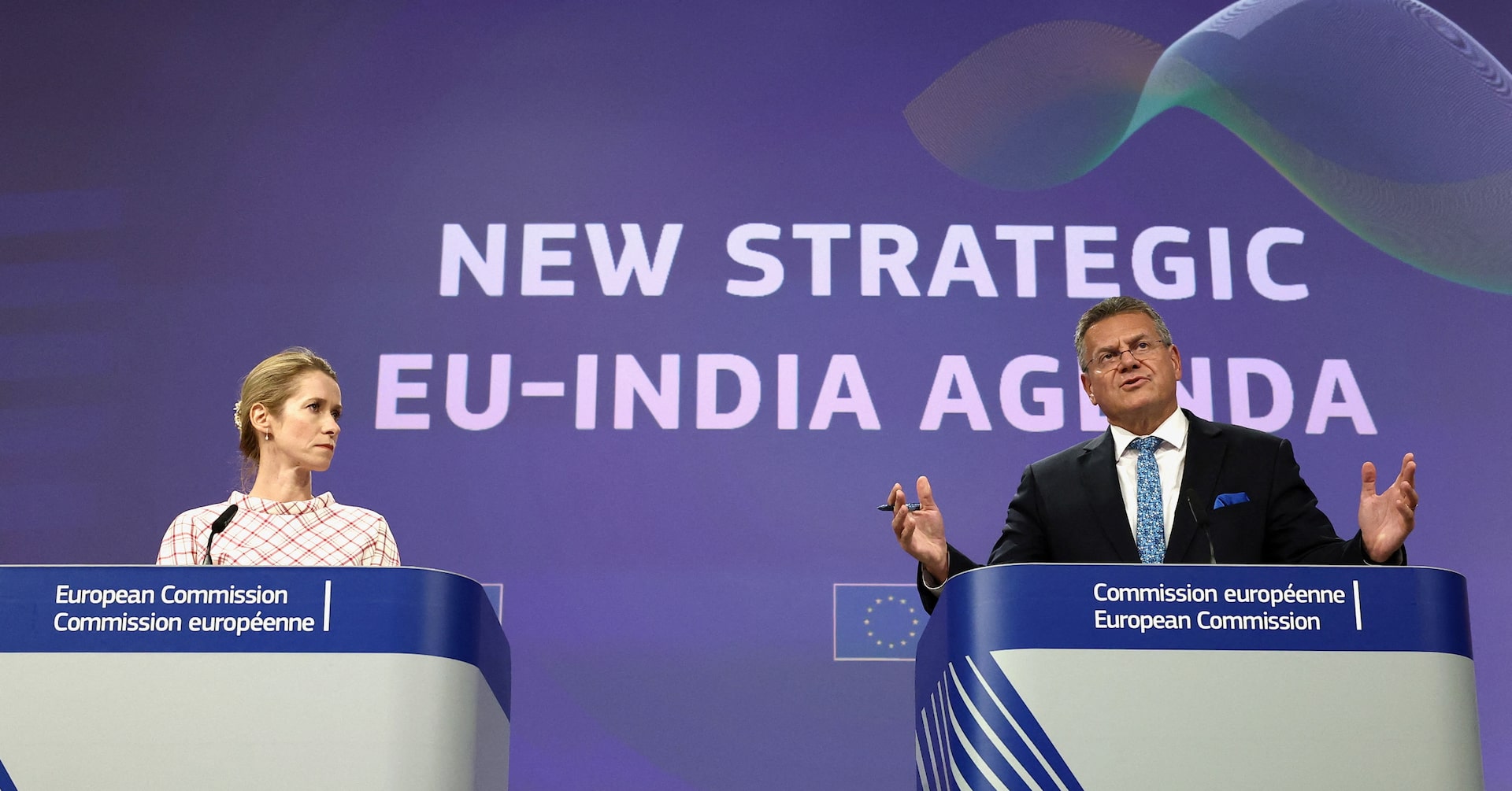
    In a significant move to strengthen bilateral ties, the European Commission has outlined ambitious plans to deepen cooperation with India across multiple sectors, including defense, technology, and trade. This initiative comes despite ongoing tensions over India’s close relationship with Russia, particularly in light of increased Russian oil purchases by New Delhi following the 2022 invasion of Ukraine. The European Union and India are now in the final stages of negotiating a free trade agreement, with both parties aiming to conclude the deal by the end of 2025. The negotiations, which were relaunched in 2022, have gained momentum following the re-election of U.S. President Donald Trump, whose tariff policies have prompted both the EU and India to seek new alliances. EU Foreign Policy Chief Kaja Kallas acknowledged the existence of ‘clear areas of disagreement’ but emphasized the bloc’s commitment to avoiding pushing India further into Russia’s sphere of influence. The EU’s vision document released on September 17 highlights plans for collaboration on investment protection, air transport, supply chain security, green hydrogen, decarbonization of heavy industry, and research and innovation. Additionally, the EU envisions a defense and security partnership with India, similar to those already established with Japan and South Korea, and joint projects in third countries, particularly in Africa and South Asia. Despite geopolitical complexities, the EU views India as a key partner in upholding the rules-based multilateral order and anticipates benefiting from India’s projected rise to become the world’s third-largest economy by 2030.

  • I have no relationship with Trump, Brazil’s President Lula tells BBC

    I have no relationship with Trump, Brazil’s President Lula tells BBC

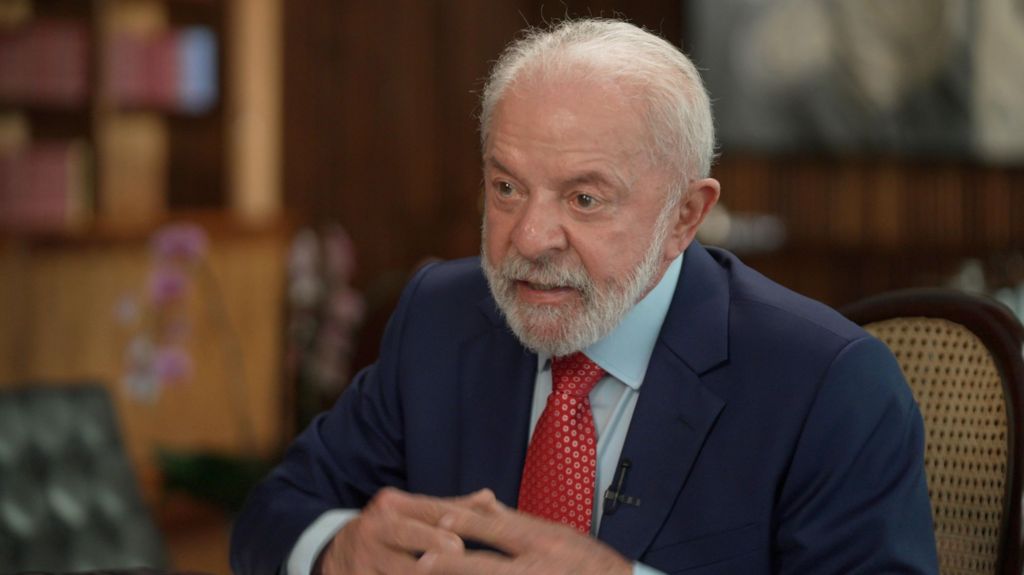
    In a candid interview with the BBC, Brazilian President Luiz Inácio Lula da Silva expressed his strained relationship with former US President Donald Trump, emphasizing that there is ‘no relationship’ between them. Lula criticized Trump’s imposition of 50% tariffs on Brazilian goods in July, describing the move as ’eminently political’ and warning that US consumers would bear the brunt of higher prices for Brazilian exports like coffee and beef. The tariffs, which Lula learned about through Brazilian newspapers, have significantly impacted Brazil’s trade with the US. Lula accused Trump of failing to communicate in a civilized manner, noting that the tariffs were announced via social media rather than through diplomatic channels. Despite his frosty ties with Trump, Lula highlighted his strong relationships with other global leaders, including former US presidents, UK prime ministers, and leaders from the EU, China, Ukraine, and Venezuela. He also defended his continued engagement with Russian President Vladimir Putin, whom he described as a longstanding ally. Lula called for reform of the United Nations, criticizing the veto power of the five permanent members of the Security Council and arguing that it undermines global democracy. He also addressed Brazil’s controversial oil exploration plans near the Amazon River, insisting that the country is adhering to strict environmental laws. Lula concluded by reflecting on his political legacy, including reducing hunger and unemployment, and left open the possibility of running for re-election in 2026.

  • Donald Trump’s second UK state visit: Here’s what we know

    Donald Trump’s second UK state visit: Here’s what we know

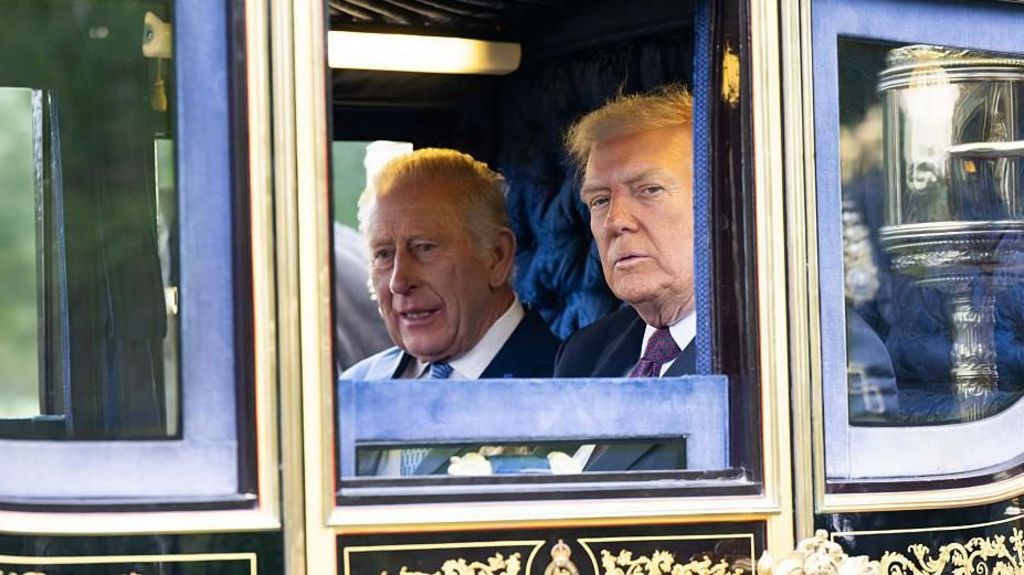
    US President Donald Trump embarked on an unprecedented second state visit to the UK, hosted by King Charles III and Queen Camilla at Windsor Castle. The visit, which began on Tuesday and concluded on Thursday night, was marked by grand ceremonies, royal engagements, and significant political discussions. Trump and First Lady Melania Trump were greeted with royal salutes, carriage processions, and a state banquet attended by prominent figures such as media mogul Rupert Murdoch and Apple CEO Tim Cook. The visit also included a private lunch with the Royal Family and a wreath-laying ceremony at St George’s Chapel in honor of the late Queen Elizabeth II. Despite the pageantry, the visit was not without controversy. Anti-Trump protests erupted in Windsor and London, with demonstrators accusing the president of climate denial and human rights violations. The protests included the reappearance of the infamous Trump baby blimp and the projection of images linking Trump to the late financier Jeffrey Epstein. Prime Minister Sir Keir Starmer, who extended the invitation for the state visit, met with Trump at Chequers to discuss UK-US trade relations. The visit highlighted the complexities of international diplomacy, blending tradition with modern political tensions.

  • In pictures: Trump and Melania meet royals at Windsor

    In pictures: Trump and Melania meet royals at Windsor

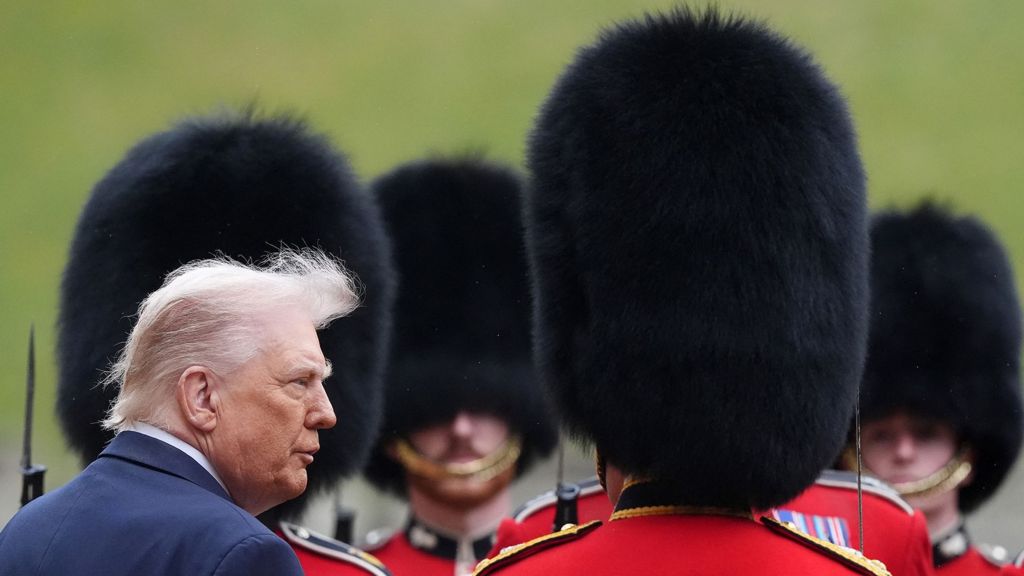
    President Donald Trump embarked on his second state visit to the United Kingdom, where he was warmly received by King Charles III, Queen Camilla, and other senior members of the British royal family at Windsor Castle. The visit, marked by traditional British pageantry, began with a ceremonial greeting and an inspection of the guard of honour. Accompanied by First Lady Melania Trump, the President arrived at the castle via Marine One, the presidential helicopter, and was met by the Prince and Princess of Wales. The Trumps were then escorted to the Green Drawing Room, where a special exhibition celebrating the historic ties between the UK and the US was on display. Among the artifacts was John Smith’s ‘Generall Historie of Virginia, New England and the Summer Isles,’ published in 1624. The day continued with a visit to St. George’s Chapel, where the couple laid a wreath at the tomb of Queen Elizabeth II and toured the chapel, including Henry VIII’s vault. The evening concluded with a grand state banquet attended by prominent figures, including Apple CEO Tim Cook, Nvidia CEO Jensen Huang, and media mogul Rupert Murdoch. King Charles delivered a speech honouring President Trump, who expressed his gratitude for the hospitality. However, the visit was not without controversy, as large-scale protests erupted in central London, with demonstrators gathering near BBC headquarters and Parliament Square under the banner ‘Trump Not Welcome.’ Despite the mixed reception, the visit underscored the enduring diplomatic relationship between the two nations.

  • Hong Kong leader pledges to boost economy, livelihoods

    Hong Kong leader pledges to boost economy, livelihoods

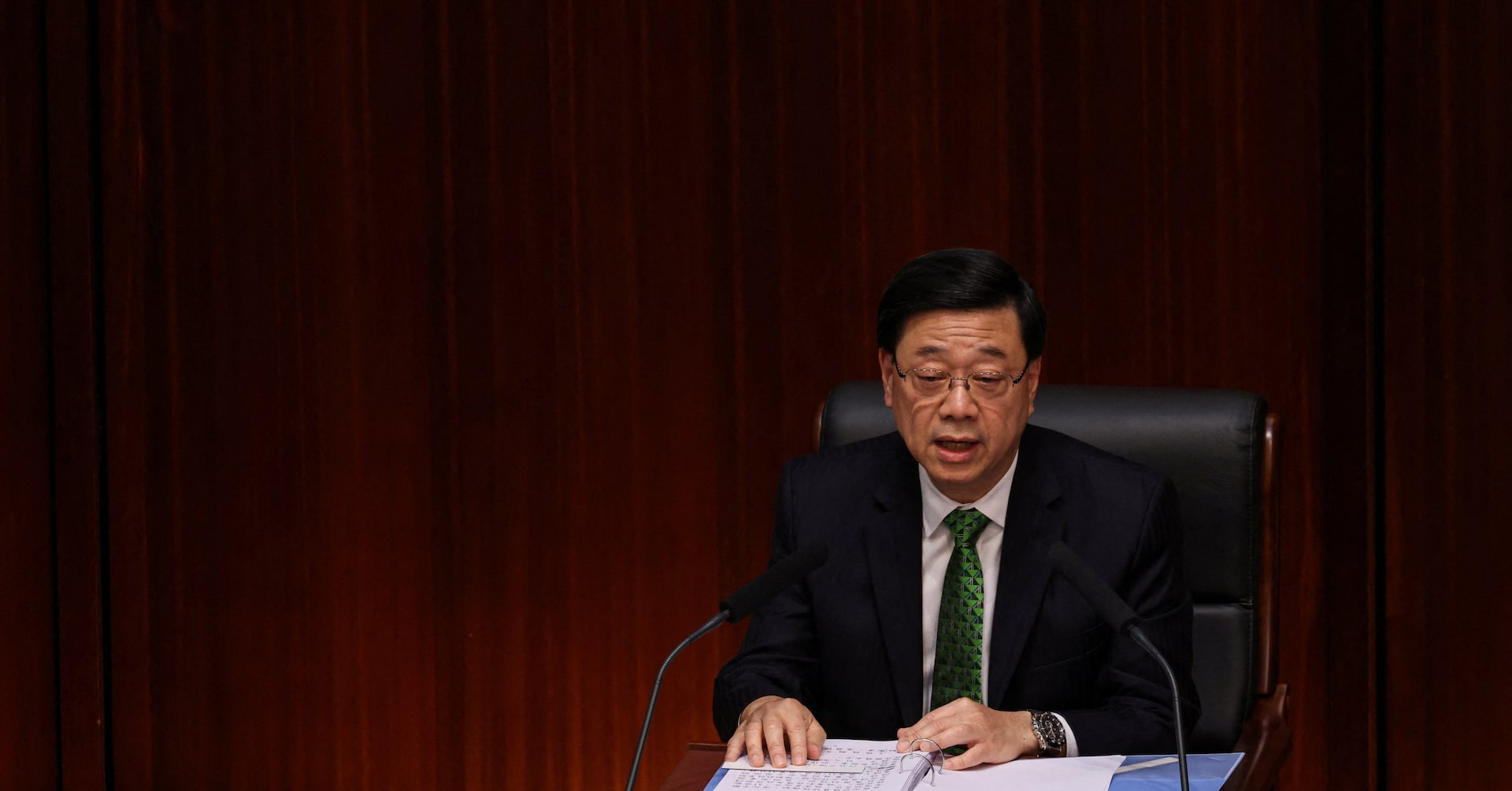
    In a comprehensive policy address delivered on September 17, 2025, Hong Kong Chief Executive John Lee outlined a series of measures aimed at revitalizing the city’s economy, enhancing public welfare, and reinforcing its status as a global hub. Speaking at the Legislative Council, Lee emphasized the government’s commitment to accelerating the development of the Northern Metropolis, a strategic area adjacent to Shenzhen, which is poised to become a new business and residential district accommodating approximately 2.5 million people. This initiative aligns with the broader Greater Bay Area project, which seeks to integrate Hong Kong, Macau, and nine Guangdong cities into a cohesive economic powerhouse. Lee also highlighted plans to establish an international gold trading market, expand the fintech sector, and promote green and sustainable finance. Additionally, the government aims to bolster the aviation industry by developing a sustainable fuel supply chain and attracting pharmaceutical companies to conduct clinical trials and advanced medical treatments in Hong Kong. On the social front, Lee pledged to improve housing conditions, increase worker incomes, enhance elderly care, and provide greater opportunities for young people. He also introduced measures to support pet-friendly businesses and incentivize childbirth through tax allowances. Despite the challenges posed by China’s economic slowdown and ongoing trade tensions with the U.S., Lee reaffirmed Hong Kong’s economic growth forecast of 2% to 3% for 2025, underscoring the city’s resilience and potential as a gateway for mainland enterprises seeking global expansion.