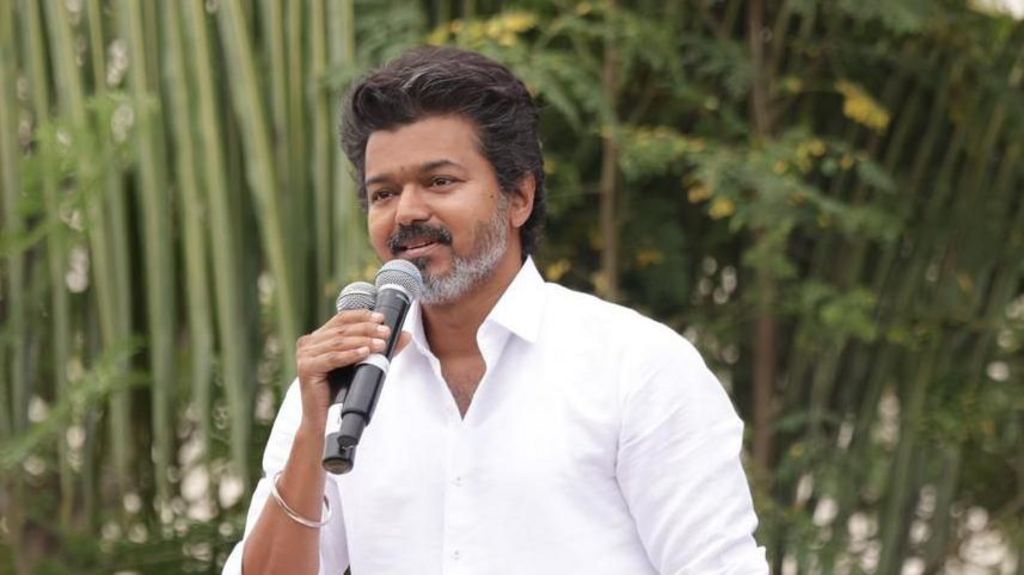
A tragic incident at a political rally organized by Tamil cinema superstar-turned-politician Vijay has left 40 people dead and sparked a heated blame game in Tamil Nadu, India. The event, held in Karur district on Saturday, drew tens of thousands of supporters. Chaos erupted during Vijay’s speech when the crowd surged unexpectedly, leading to a fatal crush. Opposition parties have accused government officials of inadequate police deployment, while police claim the organizers underestimated the crowd size and failed to implement sufficient safety measures. Vijay, 51, is one of Tamil Nadu’s most beloved actors, with a career spanning decades and numerous box-office hits. Last year, he launched his political party, Tamilaga Vettri Kazhagam (TVK), marking a surprising shift from cinema to politics. His decision to quit acting after his upcoming film, Jana Nayagan, has further fueled public interest in his political ambitions. The tragedy has raised questions about his political inexperience and the viability of celebrity-led parties in India. Vijay has expressed his devastation over the incident and announced financial compensation for the victims’ families. A one-member commission has been established to investigate the cause of the crush, with the state government promising action within two months. Meanwhile, TVK has sought a federal investigation through the Madras High Court. The incident has cast a shadow over Vijay’s political aspirations, with critics questioning his leadership and the safety protocols at his rallies. Despite the backlash, his immense popularity may shield him from significant political fallout.
分类: politics
-
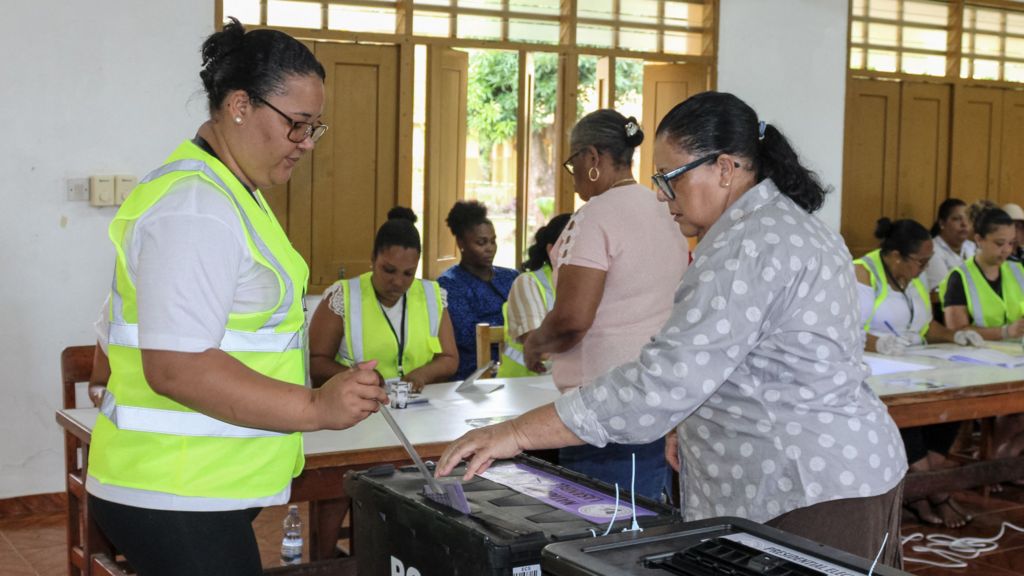
Seychelles to hold presidential run-off after vote fails to produce clear winner
Seychelles, Africa’s smallest nation, is gearing up for a crucial presidential run-off election scheduled for 9-11 October, following an inconclusive first round. Opposition leader Patrick Herminie secured 48.8% of the vote, narrowly edging out incumbent President Wavel Ramkalawan, who garnered 46.4%. According to Seychelles’ electoral rules, a candidate must achieve over 50% of the vote to claim victory, necessitating a second round of voting. The archipelago, comprising 115 islands in the Indian Ocean with a population of just over 120,000, witnessed a competitive election with eight presidential candidates vying for the top office. Ramkalawan, seeking a second term under his Linyon Demokratik Seselwa (LDS) party, has campaigned on platforms of economic recovery, social development, and environmental sustainability. His primary rival, Herminie, represents the United Seychelles party, which dominated the nation’s politics from 1977 until 2020, when it lost its majority to Ramkalawan’s LDS. However, United Seychelles has recently regained control of the National Assembly, winning 19 out of 35 seats in the parliamentary elections held concurrently with the presidential vote. In a televised address, Herminie expressed readiness for the run-off, stating, ‘We are ready for a second round. We start campaigning tomorrow.’ A key issue influencing the election is the recent leasing of Assumption Island, one of Seychelles’ most ecologically sensitive territories, to a foreign hotel developer. This decision has sparked public concern over sovereignty and environmental stewardship, potentially swaying voters and garnering support from the six trailing candidates and their supporters. Seychelles, renowned for its luxury and environmental tourism, is Africa’s wealthiest country in terms of per capita income, according to the World Bank. The outcome of this election will not only determine the nation’s leadership but also shape its approach to critical environmental and economic challenges.
-
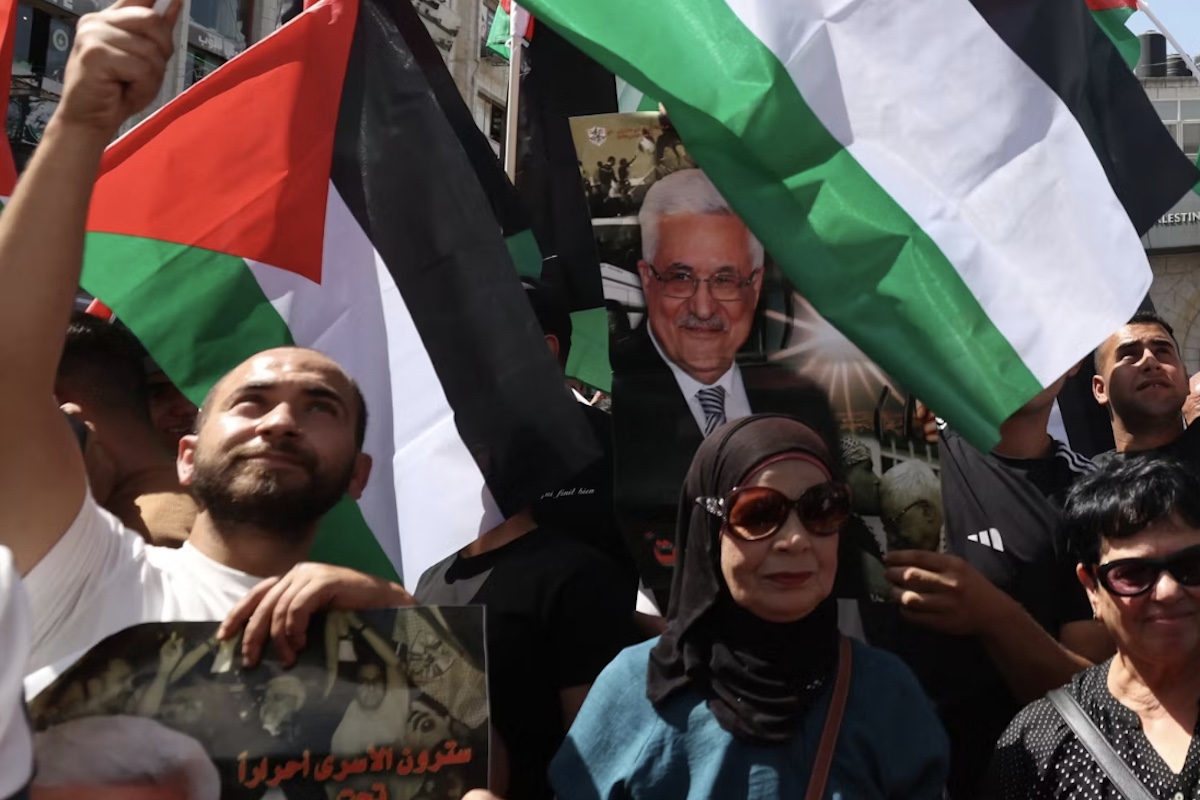
Recognizing Palestine doesn’t make it real
The recent wave of international recognition of Palestine as a sovereign state marks a significant diplomatic milestone. However, the territorial boundaries of this nascent state remain a contentious issue, with disputes spanning from the West Bank to Gaza. To understand the complexities of this situation, it is essential to delve into the historical evolution of Palestine’s borders, which have been shaped by decades of conflict and political upheaval. The 1947 UN partition plan envisioned two semi-contiguous territories for Jewish and Arab states, with Jerusalem as an international city. However, this vision was shattered by the 1948 war, leading to the establishment of Israel and the confinement of Palestinians to the West Bank and Gaza Strip, separated by the ‘green line’ and placed under Jordanian and Egyptian control. The 1967 Six-Day War further altered the landscape, with Israel occupying the West Bank, Gaza Strip, and East Jerusalem, effectively tripling its territory. Israeli settlements, illegal under international law, have since fragmented the West Bank, creating a patchwork of Palestinian governance areas under the Oslo Accords. The construction of a separation barrier during the second intifada (2000-05) further divided the region, leaving the West Bank resembling a fragmented archipelago rather than a cohesive state. Recent studies using satellite imagery reveal the extent of settlement expansion, with the average settlement growing by two-thirds in size over the past decade, now occupying 151 sq km of built-up area. This expansion, coupled with extensive Israeli military presence and infrastructure, has severely restricted Palestinian movement and economic activity. The E1 development project, if constructed, threatens to bisect the West Bank, further complicating the prospects of a viable Palestinian state. The presence of settlements has also fueled political violence, with research indicating that proximity to settlements nearly doubles the likelihood of engagement in high-risk and violent actions. Despite these challenges, the recognition of Palestine by various nations is reshaping international engagement with Palestinian representatives and applying pressure on Israeli leaders. However, without addressing the issue of settlement expansion and creating genuine conditions for statehood, recognition risks becoming an empty gesture. The future of Palestinian statehood and Israeli security hinges on the commitment to build a viable state that upholds the interests of all parties involved.
-

Singapore denies entry to exiled HK pro-democracy activist
Nathan Law, a prominent Hong Kong pro-democracy activist living in exile in the UK, was denied entry to Singapore upon arrival on Saturday, despite having a valid visa. Law, 32, was detained at the border for four hours before being placed on a flight back to San Francisco, his initial departure point. He had traveled to Singapore to attend a private, invitation-only conference but was not provided with a reason for the denial. Law speculated that the decision may have been politically motivated, raising concerns about potential external influences, including the People’s Republic of China (PRC). Singapore’s immigration and home affairs offices have yet to comment on the incident. Law, who fled Hong Kong in 2020 following the imposition of China’s national security law, was granted asylum in the UK in 2021. Hong Kong authorities have offered a HK$1 million reward for information leading to his arrest. This incident is not the first time Singapore has taken action against Hong Kong activists; in 2019, a Singaporean activist was fined for hosting an online forum featuring Joshua Wong. Singapore maintains an extradition treaty with Hong Kong, adding complexity to the situation.
-
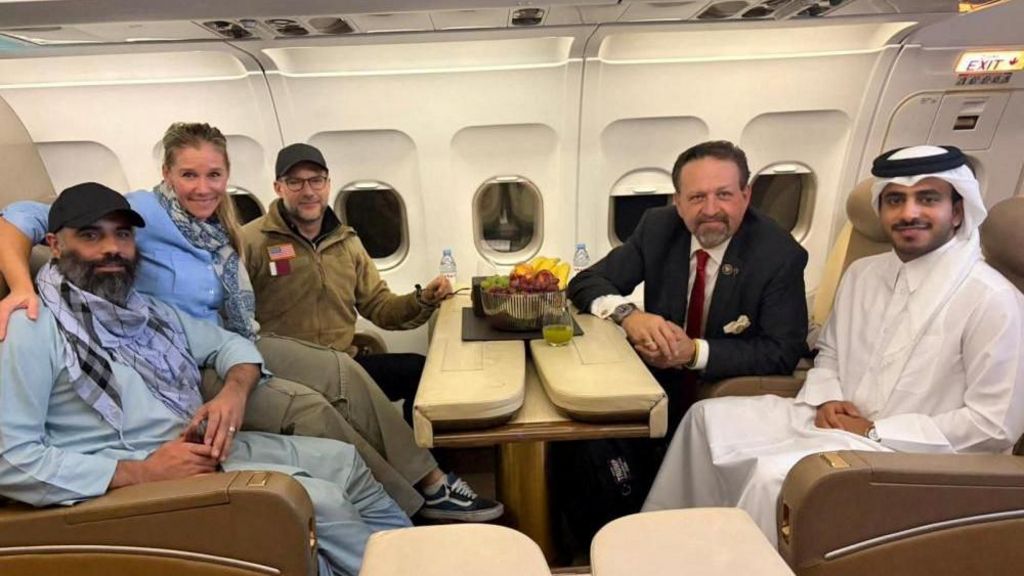
US citizen released by Taliban after nine-month detention
A US citizen detained by the Taliban in Afghanistan for nine months has been released, thanks to diplomatic negotiations facilitated by Qatar. The individual, identified as Amir Amiry, is the fifth American to be freed from captivity in Afghanistan this year. He is currently en route to the United States, as confirmed by officials on Sunday. US Secretary of State Marco Rubio expressed gratitude to Qatar for its ‘tireless diplomatic efforts,’ emphasizing their pivotal role in securing Mr. Amiry’s release. The circumstances surrounding his detention remain unclear, though Rubio described it as a case of ‘wrongful detention.’ The Secretary of State also highlighted that additional US citizens remain ‘unjustly detained’ in Afghanistan, with the Trump administration actively working to secure their freedom. Qatar’s foreign ministry confirmed its role in facilitating Mr. Amiry’s release, stating that he was first transported to Doha before continuing his journey to the US. Sources revealed to CBS News, the BBC’s US partner, that Qatar initiated negotiations in March, arranging a critical meeting between Mr. Amiry and US hostage envoy Adam Boehler. A breakthrough in talks was achieved this weekend, culminating in Mr. Amiry’s release. This development follows the release of two American citizens in January through a prisoner swap with the Taliban, which involved the release of Khan Mohammad, a Taliban figure imprisoned in California on drug trafficking and terrorism charges. Two other Americans were freed in March, including George Glezmann, who was detained during a tourist visit in 2022. Earlier this month, a British couple, Peter and Barbie Reynolds, were also released through Qatari mediation after nearly two decades of living in Afghanistan.
-
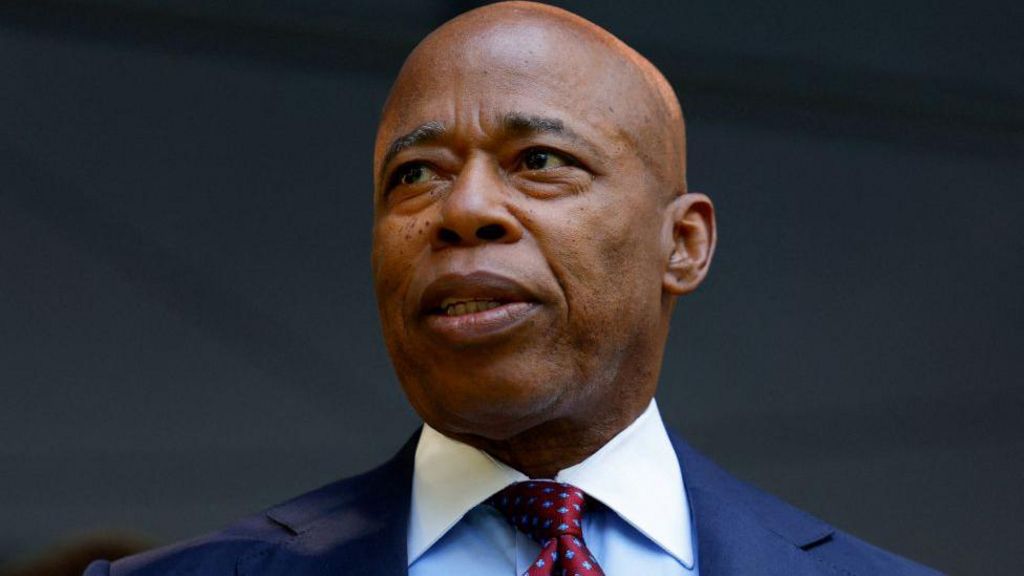
Eric Adams ends re-election bid for New York City mayor
In a surprising turn of events, New York City Mayor Eric Adams has announced the termination of his re-election campaign, merely five weeks before the upcoming election. Adams cited relentless media speculation and the city campaign finance board’s refusal to grant him public matching funds as the primary reasons for his decision. This withdrawal leaves the race to Democrat Zohran Mamdani, former governor Andrew Cuomo, and Republican Curtis Sliwa. Adams, initially elected as a Democrat in 2022, had chosen to run as an independent following his indictment for alleged bribery and fraud, which was later dismissed under the Trump administration’s directive. In a heartfelt video shared on social media, Adams expressed his inability to continue the campaign due to the financial and reputational challenges posed by the media and the finance board’s decisions. He refrained from endorsing any of his rivals but subtly criticized Mamdani, the Democratic front-runner, warning against the dangers of radical change. Adams’ political journey has been marred by corruption allegations, disputes over immigration policies, and public discontent with the city’s escalating living costs. Despite the dismissal of charges against him earlier this year, the shadow of controversy lingered, affecting his re-election prospects. Adams will complete his term, which concludes on January 1, and his name will remain on the ballot as the deadline for changes has passed.
-
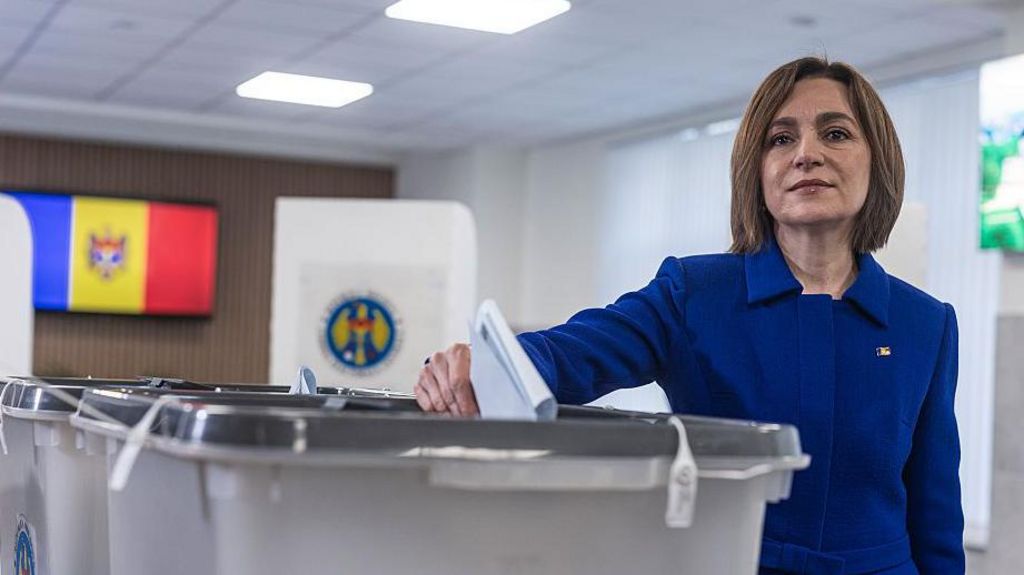
Moldovans await pivotal election result as leader warns of Russian interference
Moldova’s parliamentary elections, held amidst allegations of significant Russian interference, have been described as a pivotal moment for the nation’s democratic future and its aspirations to join the European Union. President Maia Sandu, a staunch advocate for European integration, emphasized the fragility of Moldova’s democracy and the threats posed by external influences, particularly from Russia. Speaking outside a polling station in Chisinau, Sandu urged citizens to safeguard their votes, warning that the nation’s future hangs in the balance.
-
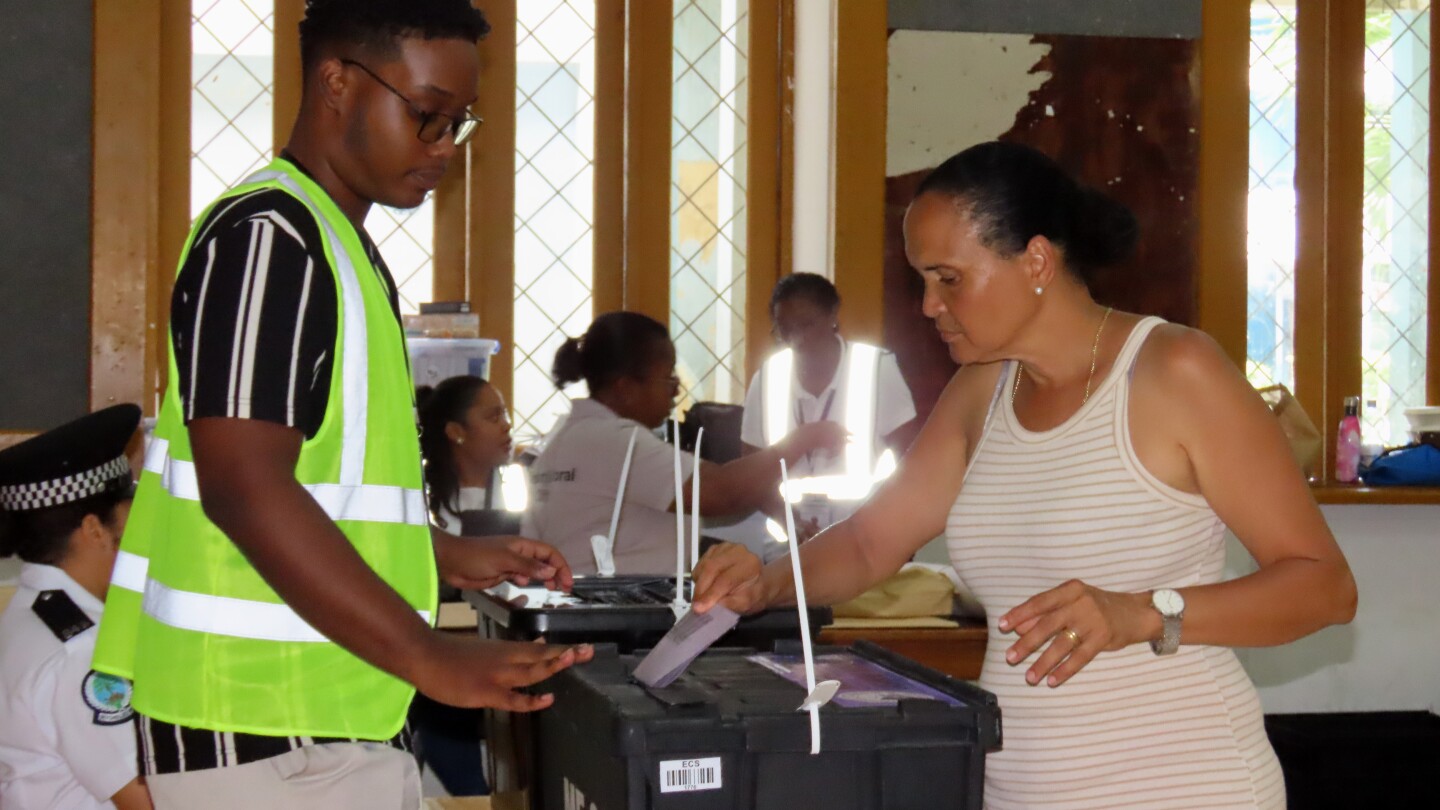
Seychelles to hold rerun presidential election after no outright winner
The Seychelles presidential election has entered a critical phase as no candidate secured a decisive majority in the initial vote, prompting a runoff between the two leading contenders. Official results revealed that opposition leader Patrick Herminie garnered 48.8% of the vote, while incumbent President Wavel Ramkalawan secured 46.4%. To claim victory, a candidate must achieve over 50% of the vote. The runoff is scheduled for October 9-11, as announced by the electoral authority. Ramkalawan, seeking a second term, has called for a public debate with Herminie to assist voters in making an informed decision. He emphasized that the presidency belongs to the people, not to any individual. Herminie, representing the United Seychelles party, expressed confidence in winning the runoff, citing widespread dissatisfaction with the current administration. The United Seychelles party, which governed the country from 1977 to 2020, is attempting to regain power after losing it five years ago. Ramkalawan’s Linyon Demokratik Seselwa party has campaigned on promises of economic recovery, social development, and environmental sustainability. The election unfolds against a backdrop of growing opposition to the government, including a constitutional challenge against a controversial lease of Assomption Island to a Qatari company for luxury hotel development. Critics argue that the deal prioritizes foreign interests over national sovereignty. Additionally, Seychelles faces significant challenges, including vulnerability to climate change and a worsening heroin addiction crisis. With a population of 120,000, an estimated 6,000 people are heroin users, and addiction rates are alarmingly high. The election outcome will shape the future of this Indian Ocean archipelago, known for its luxury tourism and environmental significance.
-

Move over, Murdochs – a new family dynasty is shaking up US media
The Ellison family, led by tech magnate Larry Ellison and his son, Hollywood producer David Ellison, is rapidly expanding its influence in the global media landscape. This year, their strategic maneuvers have positioned them to potentially control some of the world’s largest media companies, including TikTok and CNN. Larry Ellison’s close ties with former US President Donald Trump have been instrumental in facilitating these deals, with Trump publicly praising Ellison as an exceptional business leader.
-
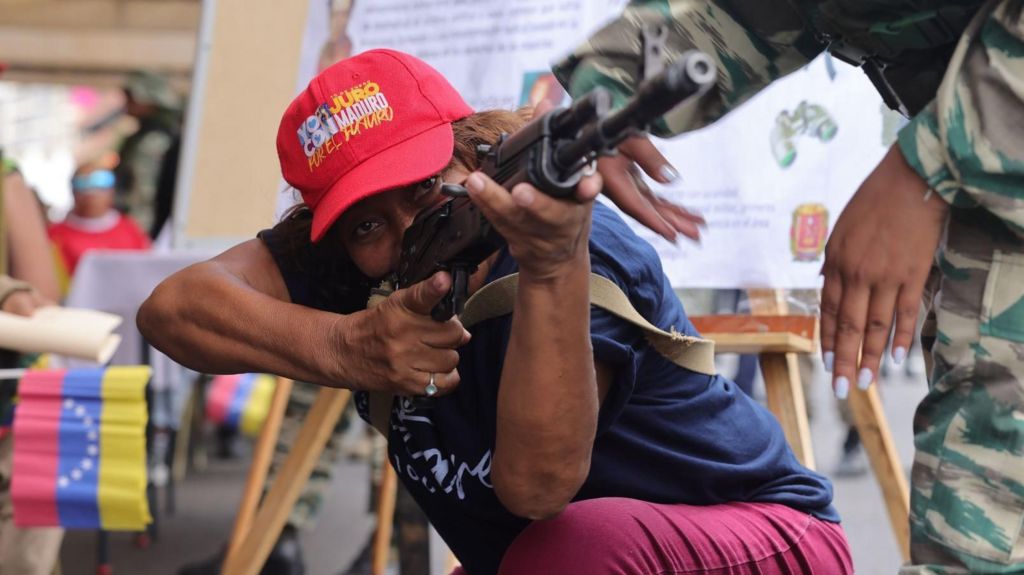
The US navy killed 17 in deadly strikes. Now Venezuela is giving civilians guns
In the face of escalating tensions with the United States, Venezuela’s National Bolivarian Militia, a civilian force established by the late President Hugo Chávez in 2009, is mobilizing to defend the nation. Edith Perales, a 68-year-old militia member, is among thousands preparing for a potential US attack, following the deployment of US Navy ships in the South Caribbean under the guise of counter-narcotics operations. The militia, largely composed of senior citizens and inexperienced volunteers, has been called to active duty by President Nicolás Maduro, who has framed the US actions as a ‘non-declared war.’
The US has recently destroyed at least three boats allegedly carrying drugs from Venezuela, resulting in 17 fatalities. This has further strained the already tense relationship between the two nations, exacerbated by Donald Trump’s return to office and his administration’s accusations of Maduro’s ties to drug cartels. The US has also doubled the reward for information leading to Maduro’s capture to $50 million, while labeling the Venezuelan criminal gang Tren de Aragua as a terrorist group.
Maduro, in response, has ordered the National Bolivarian Armed Forces (FANB) to train local militias, including those in Caracas’ 23 de Enero neighborhood, a traditional stronghold of Chavismo. Despite the militia’s lack of experience, its members, like Francisco Ojeda and Glady Rodríguez, express unwavering enthusiasm to defend their homeland. However, political analyst Benigno Alarcón suggests that Maduro’s strategy is less about combat readiness and more about creating a ‘human shield’ to deter US military action.
While Maduro claims over 8.2 million civilians are enlisted in the militia, this figure remains disputed. For Perales, who has served for decades, the militia represents a duty to protect his community. Despite his age and health, he remains prepared to defend Venezuela’s sovereignty, embodying the spirit of Chávez’s vision for a self-reliant nation.