分类: environment

  • China’s wetland conservation drive pays off

    China’s wetland conservation drive pays off

    China has demonstrated remarkable success in wetland preservation, adding and rejuvenating more than 1 million hectares through extensive conservation initiatives since 2012. The National Forestry and Grassland Administration revealed this achievement on World Wetlands Day, marking China’s position as Asia’s largest wetland territory holder and the world’s fourth largest.

    The comprehensive restoration was accomplished through approximately 3,800 specialized projects nationwide, establishing a new framework that integrates prioritized ecological restoration with categorized protection systems. This systematic approach has positioned China at the forefront of global wetland conservation efforts.

    Legal protections have been significantly strengthened with the implementation of a dedicated national wetland conservation law in 2022, complemented by regulatory updates in 21 provincial-level regions. The country has established a sophisticated tiered management system encompassing 82 internationally significant wetlands, 80 nationally important sites, and 1,208 provincially recognized areas.

    Public engagement remains a cornerstone of China’s strategy, with 903 national wetland parks welcoming approximately 320 million annual visitors, about 90% of which offer free public access. These parks serve as both conservation zones and educational centers highlighting wetland ecosystems’ irreplaceable ecological, social, economic, and cultural values.

    Mangrove conservation has received particular emphasis, with 9,200 hectares planted since 2012. The International Mangrove Center, launched in late 2024, has expanded its global consortium to 20 member nations while fostering cooperation with Southeast Asian and African partners through specialized workshops offering policy and technical training.

    At the Zhalong National Nature Reserve in Heilongjiang province, advanced monitoring technology exemplifies China’s innovative approach. An integrated system employing space remote sensing, tower surveillance, drone patrols, and ground operations has significantly enhanced conservation efficiency. Rangers utilize BeiDou navigation devices and drone technology to monitor the 210,000-hectare reserve, resulting in the rescue of 28 rare birds from 15 species in 2025 alone.

    The reserve has become the world’s largest breeding ground for red-crowned cranes, with populations stabilizing around 300 individuals. These achievements underscore the effectiveness of China’s wetland conservation framework during the 14th Five-Year Plan period, with plans to further enhance legal frameworks and monitoring systems through the 15th Five-Year Plan (2026-30).

  • China boosts wetland conservation, adds over 1 million hectares since 2012

    China boosts wetland conservation, adds over 1 million hectares since 2012

    China has demonstrated extraordinary progress in ecological preservation, having successfully rehabilitated and expanded its wetland territories by more than one million hectares since 2012. This monumental achievement reinforces the nation’s status as Asia’s largest wetland ecosystem and the world’s fourth most significant wetland reservoir.

    The National Forestry and Grassland Administration unveiled these accomplishments during the 30th World Wetlands Day celebrations, highlighting how this environmental milestone was realized through the implementation of over 3,800 specialized conservation projects. This year’s observance carried the theme ‘Wetlands and Traditional Knowledge: Celebrating Cultural Heritage,’ emphasizing the cultural dimensions of ecological stewardship.

    China has pioneered a novel conservation framework that integrates prioritized restoration with categorized protection systems. The administration emphasized wetlands’ indispensable ecological, social, economic, and cultural values, noting strengthened legal protections including the 2022 national wetland conservation law and updated regulations across 21 provincial regions.

    The country has established a comprehensive tiered management system featuring 82 internationally significant wetlands, 80 nationally designated sites, and 1,208 provincial-level protected areas. Additionally, 903 national wetland parks now operate with approximately 90% offering free public access, collectively attracting about 320 million annual visitors.

    Mangrove conservation efforts have seen particular success with 9,200 hectares planted since 2012. The International Mangrove Center, launched in late 2024, has expanded its consortium to 20 member nations, demonstrating China’s growing leadership in global wetland preservation.

    The administration outlined ambitious plans for the 15th Five-Year Plan period (2026-30), including legal framework enhancements, total wetland area control systems, and improved monitoring and early warning mechanisms.

    At Zhalong National Nature Reserve in Heilongjiang province, technological innovation transforms conservation practices. Staff employ integrated monitoring networks combining remote sensing, video surveillance, drone technology, and ground patrols. ‘This comprehensive biodiversity monitoring system significantly enhances our conservation efficiency and effectiveness,’ stated Zhang Jianfei, director of the reserve’s protection center.

    Field rangers like 47-year-old Li Chuanling utilize Beidou navigation devices and drone technology to monitor the reserve’s 210,000-hectare expanse. These technological advancements have enabled more successful rescues of rare bird species, with 28 birds from 15 protected species saved in 2025 alone.

    Conservation efforts have yielded particularly impressive results for red-crowned cranes, with the reserve maintaining a stable population of approximately 300 birds—the world’s largest breeding ground for this first-class protected species.

  • China’s wetland area ranks first in Asia, 4th globally

    China’s wetland area ranks first in Asia, 4th globally

    China has achieved a landmark position in global wetland conservation, now boasting the largest wetland area in Asia and ranking fourth worldwide according to the National Forestry and Grassland Administration. The announcement, made on World Wetlands Day (February 2, 2026), highlights China’s decades-long commitment to ecological restoration and environmental governance.

    The country’s comprehensive approach to wetland preservation includes robust legal frameworks, with 21 provincial-level regions having established specific wetland protection regulations. China’s tiered management system currently encompasses 82 internationally significant wetlands, 80 nationally important sites, and 1,208 provincially designated wetland areas.

    China’s conservation success is further demonstrated by its world-leading 22 accredited international wetland cities and the establishment of 903 national wetland parks. These protected areas welcome approximately 320 million visitors annually, with about 90% offering free public access, significantly enhancing environmental education and eco-tourism.

    Looking ahead, China’s 15th Five-Year Plan (2026-2030) outlines ambitious measures to strengthen wetland monitoring systems, enhance legal protections, and develop innovative mechanisms for valuing wetland ecological products. This strategic direction positions China as a key global player in sustainable ecosystem management and biodiversity conservation.

  • Fishing ban revives Yangtze finless porpoises

    Fishing ban revives Yangtze finless porpoises

    China’s landmark fishing moratorium on the Yangtze River has yielded remarkable ecological dividends, with the endangered finless porpoise population surging to 1,426 individuals according to the 2025 census data released by the Ministry of Agriculture and Rural Affairs. This represents a significant increase of 177 porpoises since the last survey in 2022, demonstrating the effectiveness of conservation measures implemented since the ten-year fishing ban commenced in 2021.

    The Yangtze finless porpoise, China’s only freshwater cetacean and a national first-class protected species, had experienced catastrophic decline from approximately 2,700 individuals in the early 1990s to a mere 1,012 by 2017 due to anthropogenic pressures. Vice-Minister Zhang Zhili characterized the species’ recovery as “reflecting the overall improvement of biodiversity in the river basin and the gradual restoration of ecological vitality in our mother river.”

    Complementing wild population recovery, China has established a comprehensive conservation network comprising five protected zones housing over 150 relocated porpoises, with more than 10 calves born annually. Scientific breakthroughs include the establishment of a freshwater cetatean sperm bank by researchers from the Chinese Academy of Sciences’ Institute of Hydrobiology, providing crucial technical support for breeding programs.

    Despite progress, the species remains critically endangered at roughly half its 1990s population level. An enhanced action plan aims to boost wild populations to approximately 1,700 by 2030 and 2,000 by 2035.

    The porpoise’s recovery signals broader ecological rehabilitation. Monitoring data reveals 351 fish species identified throughout the Yangtze basin from 2021-2025—43 more than pre-ban levels. The aquatic biological integrity index has shown substantial improvement, while unit fish biomass reached 2.4 kilograms in the main stream during 2025, doubling density compared to 2020 baseline measurements.

    Notably, the Chinese high fin banded shark, a nationally protected Class II species, has resumed natural reproduction after two decades of absence, recorded in both 2024 and 2025. Academician Gui Jianfang, head of the fishing ban’s midterm assessment expert group, projected continued aquatic recovery over the next five years while acknowledging that comprehensive ecological restoration will require sustained effort, particularly in stretches with severely fragmented habitats.

  • Yangtze finless porpoise population increases in China

    Yangtze finless porpoise population increases in China

    China’s landmark conservation efforts have yielded unprecedented success with the Yangtze finless porpoise population reaching 1,426 individuals according to the latest survey data released at a Friday press conference. This represents a significant increase of 177 porpoises since the previous census in 2022, marking a dramatic reversal for the critically endangered species.

    The population recovery is directly attributed to the comprehensive 10-year fishing ban implemented across the Yangtze River basin effective January 1, 2021. This ambitious ecological restoration initiative has created optimal conditions for the species’ natural habitat regeneration and prey population recovery.

    As a national first-class protected wild animal and the only freshwater subspecies within the finless porpoise family, this ancient species has inhabited the middle and lower reaches of the Yangtze River for approximately 25 million years. Conservation biologists consider the porpoise’s population status the most accurate barometer for assessing the overall health of the Yangtze River ecosystem.

    The latest population figures demonstrate the effectiveness of China’s coordinated environmental protection policies and provide encouraging evidence that targeted conservation measures can successfully reverse species decline. Wildlife experts emphasize that continued habitat protection and monitoring will be essential to sustain this positive trajectory for the iconic freshwater cetacean.

  • Restored wetlands welcome new flocks of migratory birds

    Restored wetlands welcome new flocks of migratory birds

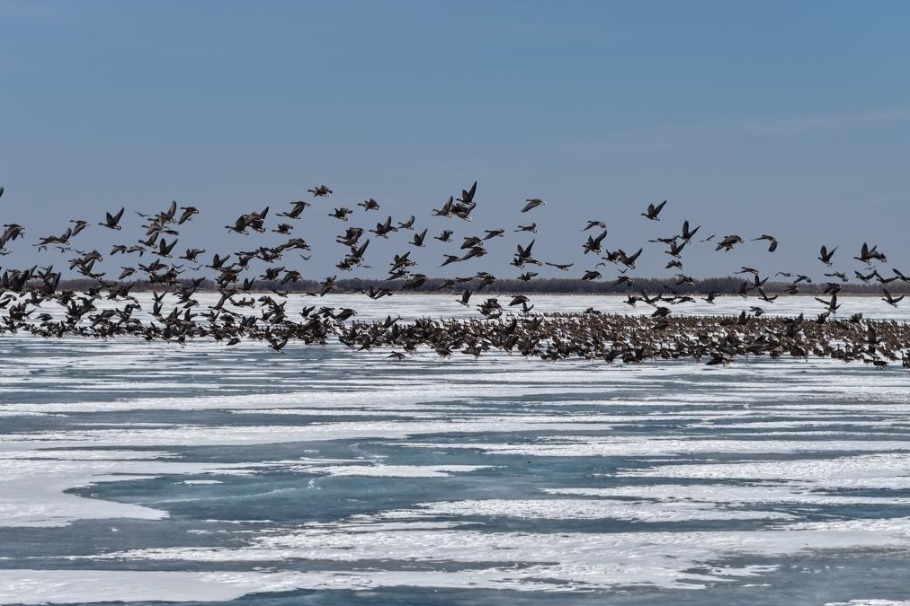
    China’s comprehensive wetland restoration initiative is demonstrating remarkable success as critical habitats along the East Asian-Australasian Flyway witness unprecedented surges in migratory bird populations. At Poyang Lake, China’s largest freshwater lake and a crucial wintering terminus, systematic ecological management has transformed the region into a biodiversity hotspot supporting nearly 400 bird species and approximately 700,000 birds during wintering seasons.

    The transformation stems from a multi-faceted approach combining advanced technology with traditional conservation methods. The Jiangxi Poyang Lake National Nature Reserve has implemented an intelligent management platform featuring high-definition cameras and sensors that operate continuously, utilizing artificial intelligence to identify and document bird species, population numbers, and distribution patterns. This technological integration complements drone patrols on preset flight routes and ground-based monitoring, creating a comprehensive ecological oversight system.

    Beyond technological innovation, regulatory measures have played a pivotal role. Since January 2020, a comprehensive fishing ban has been enforced throughout the Jiangxi section of the Yangtze River and Poyang Lake basin. Additionally, Jiangxi implemented China’s first provincial regulation specifically targeting phosphorus pollution in lake basins in January 2024, significantly improving water quality and ecosystem health.

    The conservation success extends beyond Poyang Lake. In Heilongjiang province’s Sanjiang Plain, large-scale wetland restoration has revitalized the northern starting point of the migration corridor. Over 3,000 hectares of wetlands have been restored following the implementation of the Heilongjiang Wetland Protection Regulation a decade ago, with the province now recording 390 bird species, including 297 migratory and summer-resident species.

    Critical stopover sites like Tianjin’s Qilihai Wetland have implemented sophisticated management strategies, including scientific water level adjustments during migration seasons to facilitate feeding for species such as oriental storks. These measures have yielded significant breakthroughs, including the first confirmed nesting of spoonbills in the western wetland area.

    International collaboration has further strengthened these efforts. The Food and Agriculture Organization and Global Environment Facility’s provincial-level wetland protection project has trained over 3,000 government officials and technicians through more than 60 capacity-building programs, fostering expertise in wetland management, biodiversity monitoring, and sustainable development.

    The appearance of rare species like the great white pelican—typically found in Africa, eastern Europe, and parts of South and Central Asia—at Poyang Lake signals the exceptional improvement in ecosystem conditions. Conservation experts note that healthy wetland environments, abundant food resources, and enhanced safety measures are attracting these unusual visitors, demonstrating that years of dedicated protection along the entire flyway are converging to create optimal conditions at migration destinations.

  • NEV surge contributes to record air quality improvement in Beijing

    NEV surge contributes to record air quality improvement in Beijing

    Beijing has reached an unprecedented environmental milestone, recording its cleanest air quality since monitoring began, according to the city’s annual government work report released Sunday. The remarkable achievement stems primarily from the massive adoption of new energy vehicles and comprehensive clean energy initiatives throughout the Chinese capital.

    Mayor Yin Yong, presenting the report during the Beijing Municipal People’s Congress annual session, revealed that the city’s transformation toward ecological improvement reached new heights in 2025. The breakthrough came as Beijing’s fleet of new energy vehicles surpassed 1.3 million units, while renewable energy sources constituted 36% of the city’s power supply. For the first time in history, the city enjoyed good air quality on over 80% of days throughout the year.

    The most significant indicator of this environmental progress emerged in the dramatic reduction of PM2.5 pollutants—dangerous fine particulate matter that poses serious health risks. Monitoring data showed the average annual concentration dropped to 27 micrograms per cubic meter in 2025, representing an 11.5% improvement over the previous year and the lowest level ever recorded.

    Beijing’s manufacturing capacity for electric vehicles now stands at 700,000 units annually, creating a robust foundation for continued green transportation expansion. The city government announced ambitious infrastructure plans for 2026, including the installation of 30,000 new public charging stations to support the growing EV ecosystem and further accelerate the transition from fossil fuel vehicles.

  • Egyptian Nightjar returns to UAE’s Wadi Wurayah Reserve, 5 years after 2021 sighting

    Egyptian Nightjar returns to UAE’s Wadi Wurayah Reserve, 5 years after 2021 sighting

    In a significant ecological development, the Egyptian Nightjar (Caprimulgus aegyptius) has been successfully documented returning to Fujairah’s Wadi Wurayah Biosphere Reserve after completing a five-year migration cycle. The remarkable rediscovery occurred in January 2026 during routine environmental surveillance operations conducted by conservation specialists.

    The individual specimen was originally captured and ringed with identification markers in 2021 as part of an extensive avian research initiative. During the initial documentation, researchers recorded comprehensive biological metrics including wing morphology, body mass, and physiological characteristics before releasing the bird to monitor its migratory behavior.

    The Fujairah Environment Authority’s long-term monitoring program proved instrumental in verifying the bird’s identity upon its return. This recapture event demonstrates the effectiveness of sustained ringing programs in tracking avian movement patterns across extended temporal scales. The discovery provides invaluable insights into species fidelity to specific habitats and migration chronology.

    Nestled within the Hajar Mountain range, the UNESCO-recognized biosphere reserve serves as a critical sanctuary for nocturnal and migratory bird species. The protected area’s unique ecosystem—characterized by permanent freshwater pools, undisturbed gravel plains, and secluded wadi formations—provides essential resources for species navigating arid regional migration corridors.

    The Egyptian Nightjar, a crepuscular and ground-nesting species, exhibits particular sensitivity to anthropogenic disturbances. Its consistent return to Wadi Wurayah underscores the reserve’s conservation significance and the species’ preference for pristine habitats within the eastern Arabian Peninsula. Wildlife authorities continue to monitor multiple species dependent on the reserve’s permanent water sources and protected ecosystems.

  • In Scotland, fishing trawlers scrape the seabed despite protection promises

    In Scotland, fishing trawlers scrape the seabed despite protection promises

    OFF THE COAST OF KYLEAKIN, Scotland — Beneath the surface of Scotland’s protected waters, a silent ecological crisis unfolds as industrial fishing methods continue to operate with minimal restrictions. Veteran fisherman Bally Philp, with over thirty years of experience, witnesses this degradation firsthand from his creel boat in Loch Alsh—one of the few remaining sanctuaries along Scotland’s coastline.

    Despite 37% of Scottish waters carrying marine protected area (MPA) designations, environmental organizations reveal that less than 5% have implemented management measures to enforce these protections. Consequently, destructive practices including bottom trawling and scallop dredging—methods that rake and devastate seabed ecosystems—are permitted across approximately 95% of Scotland’s coastal waters, including within designated conservation zones.

    The ecological cost of these practices is staggering. Bottom trawling vessels consume nearly triple the fuel of conventional fishing methods while crushing marine habitats and releasing stored carbon from disturbed seabed sediments. The method results in substantial bycatch discard with minimal survival rates for unintended marine life.

    Philp’s personal journey mirrors the industry’s transformation. Having worked on trawlers in the late 1980s, he witnessed the devastating practice of discarding dead bycatch—”a heartbreaking stream of dead fish flowing off the back of the boat.” This experience prompted his shift to sustainable creel fishing, which minimizes habitat damage and allows most unintended catch to survive release.

    The problem extends beyond Scotland. A 2024 report by the Marine Conservation Society and Oceana documented 4.4 million hours of bottom trawling within protected marine sites across seven European nations between 2015-2023. The repeal of Scotland’s historic 3-mile coastal trawling ban in 1984 precipitated catastrophic declines, with areas like the Clyde experiencing commercial fishery collapse.

    The economic implications are equally significant. A 2023 analysis projected that banning bottom trawling in UK offshore protected areas could yield net benefits reaching £3.5 billion ($4.7 billion) over two decades through enhanced carbon storage, pollution removal, and ecosystem services.

    Marine biologist Caitlin Turner explains the cascading ecological effects: “Degraded habitats provide fewer spawning grounds for juvenile fish, ultimately reducing abundance throughout the food chain—affecting larger predators that depend on these prey species.”

    The Scottish government has delayed crucial fisheries management consultations until at least mid-2026, citing parliamentary elections and contractor delays. While officials note that 13% of inshore protected areas currently restrict certain destructive practices, conservationists advocate for reinstating coastal protections covering至少 30% of Scotland’s inshore seas—aligning with international 2030 conservation targets.

    For Philp, who represents the third generation of fishers in his family, the timeline for action feels desperately slow. He has discouraged his own sons from continuing the family tradition, stating: “We’re at the arse end of something that was once really good. Unless we can turn that around, why would anyone want their kids to do this?”

  • Plastics everywhere, and the myth that made it possible

    Plastics everywhere, and the myth that made it possible

    In her groundbreaking work ‘The Problem with Plastics,’ former Obama-era environmental official Judith Enck delivers a powerful exposé on the plastic pollution crisis that has come to define modern existence. From microplastics found in newborn stool to airborne particles infiltrating our atmosphere, plastic contamination has reached unprecedented levels, with half of all plastic ever manufactured produced since the 2007 iPhone debut.

    Enck systematically dismantles what she identifies as the plastic industry’s most damaging fabrication: the myth of effective recycling. Contrary to popular belief, only 5-6% of plastics in the United States actually undergo recycling processes. This abysmal rate stems from fundamental technical challenges—consumer plastics comprise thousands of distinct polymer types, rendering large-scale recycling economically unfeasible compared to materials like glass or metal.

    The environmental advocate reveals how industry campaigns have strategically shifted responsibility onto consumers through terminology like ‘litterbug’ while promoting chemically dubious ‘solutions.’ Recent analysis from Enck’s Beyond Plastics organization demonstrates that chemical recycling facilities handle merely 1% of U.S. plastic waste, with several operations already shuttered.

    This plastic proliferation carries devastating ecological consequences. Approximately 33 billion pounds of plastic enter oceans annually—equivalent to two garbage trucks dumping payloads every minute. Marine ecosystems suffer catastrophic damage from microplastics and nanoplastics, which subsequently infiltrate human food chains. Emerging medical research indicates alarming health correlations, including a 2024 study linking arterial microplastics to elevated risks of heart attacks, strokes, and premature mortality.

    Environmental justice emerges as a critical theme, with petrochemical expansion disproportionately affecting marginalized communities. Louisiana’s ‘Cancer Alley’ exemplifies this disparity, where residents experience cancer rates seven times the national average. ‘Our zip code dictates our health,’ Enck emphasizes, highlighting how plastic production becomes an environmental justice issue affecting predominantly low-income and minority populations.

    The recent plastic production surge connects directly to hydraulic fracturing developments since the mid-2000s, creating a gas glut that industry seeks to monetize through plastic manufacturing—simultaneously exacerbating climate change.

    Despite these challenges, Enck maintains cautious optimism. She points to grassroots momentum exemplified by legislation like New Jersey’s ‘Skip the Stuff’ law, requiring restaurants to provide single-use cutlery only upon request. Her approach combines personal responsibility with systemic change, advocating for legislative action rather than consumer shaming. ‘We need new laws that require less plastic,’ she asserts, providing practical guidance for community organizing and policy advancement in her comprehensive publication.