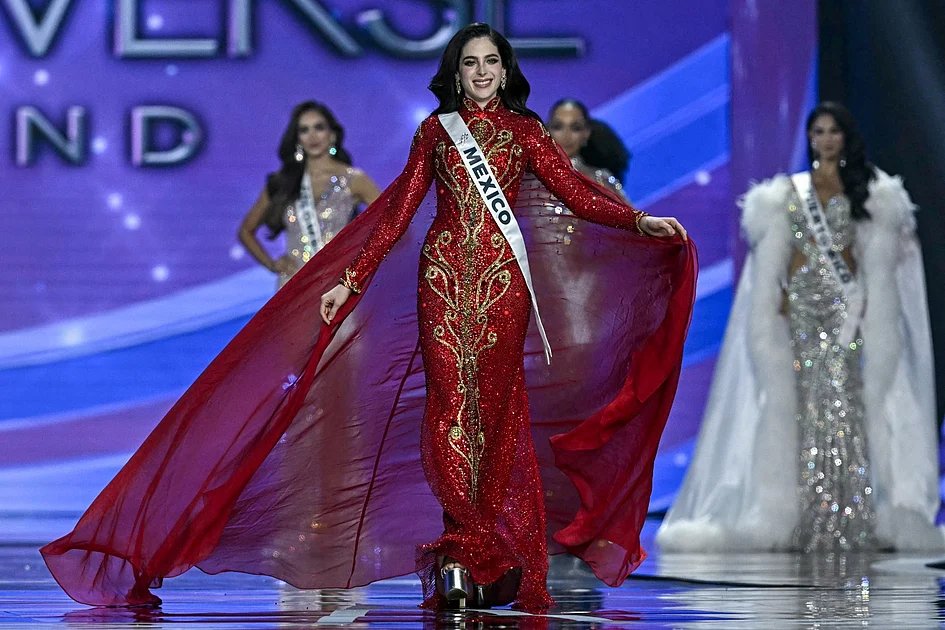
In a dramatic and emotionally charged finale, Mexico’s Fátima Bosch was crowned Miss Universe 2025, marking a historic moment in the pageant’s storied history. The event, held on November 21, 2025, was not without its share of controversy, adding an unexpected layer of intrigue to the competition. The final question posed to the top five contestants—representing Thailand, Philippines, Venezuela, Mexico, and Cote d’Ivoire—was: ‘If you win the title of Miss Universe tonight, how would you use this platform to empower young girls?’ Bosch’s heartfelt response resonated deeply with the audience and judges alike. She declared, ‘As Miss Universe, I will say to them: Believe in the power of your authenticity. Believe in yourself. Your dreams matter, your heart matters, and never let anyone make you doubt your worth, because you are worth everything. Your voice needs to be heard.’ Her victory comes as a surprise twist, especially after a highly publicized incident two weeks prior, where pageant host Nawat Itsaragrisil allegedly called her a ‘dumbhead’ during a dispute over her social media obligations. Bosch’s journey to the crown has been marked by resilience and determination. Diagnosed with ADHD and dyslexia at a young age, she channeled her challenges into community service, creating art from discarded materials and donating the proceeds to marginalized groups, including migrant communities and children with cancer. Her win not only celebrates her personal triumph but also highlights her commitment to empowering others through her platform.
分类: entertainment
-
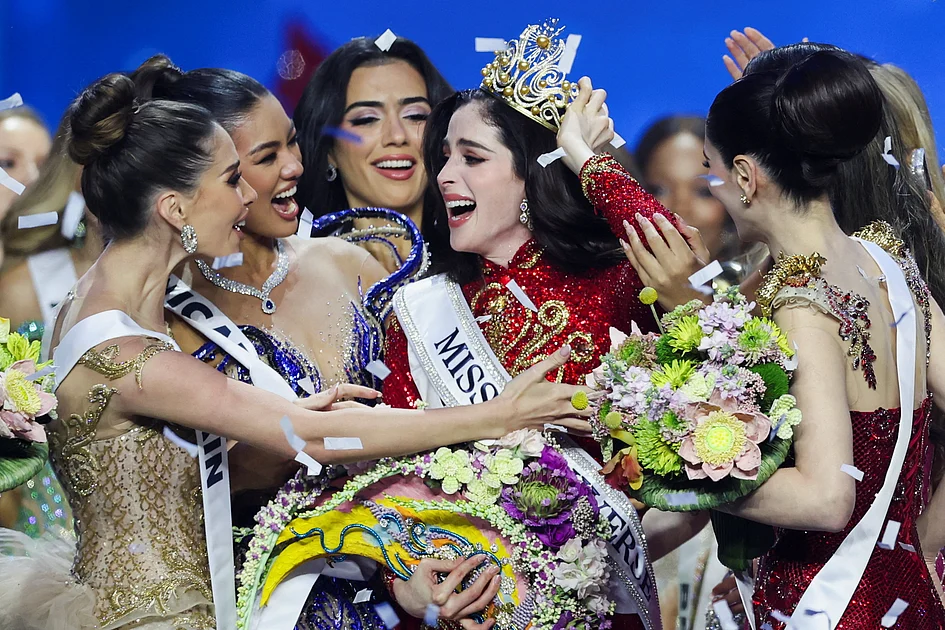
From walkout to winner: Who is Miss Universe 2025 Fátima Bosch?
In a dramatic turn of events, Fátima Bosch of Mexico was crowned Miss Universe 2025, marking a triumphant end to a controversy-filled pageant. The 25-year-old beauty queen, who has long been a champion for migrants and vulnerable communities, emerged victorious after a tumultuous journey that included a high-profile walkout during the competition. Bosch’s win not only solidified her place in pageant history but also highlighted her resilience and advocacy for empowerment. The event, held in Thailand, was marred by a heated exchange between Bosch and the host, Nawat Itsaragrisil, who allegedly insulted her during a dispute over social media promotions. Bosch’s bold decision to leave the stage in protest, supported by fellow contestants, sparked a global conversation about respect and the role of women in leadership. Her actions earned widespread praise, including recognition from Mexican President Claudia Sheinbaum, who commended her for speaking out. Bosch’s journey to the crown is a testament to her determination. Diagnosed with dyslexia and ADHD at a young age, she transformed her challenges into a passion for service. A multifaceted talent, Bosch is also a designer, poet, photographer, and painter, using her skills to support causes like sustainable fashion and migrant rights. Her victory serves as an inspiring reminder of the power of perseverance and the importance of standing up for one’s values.
-

Eurovision plans changes to voting, security after allegations of Israeli government ‘interference’
The Eurovision Song Contest, one of the world’s most celebrated musical events, is undergoing significant changes to its voting system following allegations of interference by the Israeli government. The European Broadcasting Union (EBU), the Geneva-based organization overseeing the contest, announced on Friday that the reforms aim to bolster trust, transparency, and audience engagement. These measures come amid growing calls to exclude Israel from the competition due to its government’s actions during the Hamas-Israel war in Gaza. Israel, a long-standing participant with four victories, has faced criticism for allegedly using the contest as a political tool. In September, Dutch public broadcaster AVROTROS cited human suffering in Gaza as a reason to oppose Israel’s participation, a stance echoed by several other countries. The EBU’s new voting rules include halving the number of votes per payment method to 10 and reintroducing professional juries in the semifinals for the first time since 2022. Additionally, enhanced safeguards will be implemented to detect and prevent suspicious voting patterns. Contest director Martin Green emphasized the importance of maintaining the event’s neutrality and integrity, stating that it must remain a non-political space. The EBU’s general assembly, meeting on December 4-5, will decide whether Israel can participate in the 2024 contest, scheduled for May in Vienna. A vote on Israel’s participation will only occur if member broadcasters deem the new measures insufficient.
-
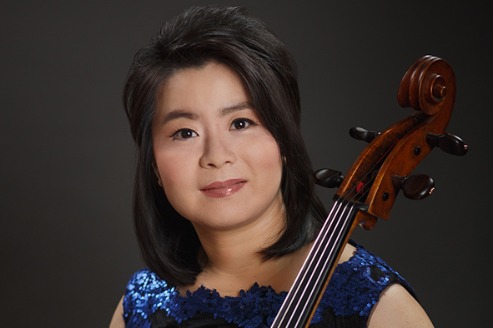
Hai-Ye Ni charts incredible musical journey
Hai-Ye Ni, the principal cellist of the Philadelphia Orchestra, has carved an extraordinary path in the world of classical music. Born in Shanghai, Ni began her musical journey at the tender age of six, guided by her mother. Initially experimenting with various instruments, she found her true calling in the cello, captivated by its warm, human-like tones. Her early exposure to legendary cellists like Pablo Casals through recordings deeply influenced her passion for the instrument. At just nine years old, Ni was accepted into the prestigious Shanghai Conservatory of Music, where her structured training laid the foundation for her future success. At 13, she moved to the United States to join her father, a scientist at the University of California, Berkeley. Ni’s international education included studying under renowned mentors such as Irene Sharp, Joel Krosnick, and William Pleeth. Her career skyrocketed after winning first prize at the Naumburg International Cello Competition in 1990, followed by a celebrated debut at Alice Tully Hall in 1991. In 2006, she became the principal cellist of the Philadelphia Orchestra, an institution with a storied history of fostering US-China cultural ties. Ni’s illustrious career includes collaborations with luminaries like Yo-Yo Ma, Lang Lang, and Joshua Bell, as well as performances at iconic venues such as the Lincoln Center and the Kennedy Center. Despite her global acclaim, Ni remains deeply grateful for her roots, crediting her family, teachers, and mentors for her success. On November 23, she will perform at Carnegie Hall alongside pianist Li Jian and violinist Siqing Lu in a concert titled ‘An Afternoon of Cultural Splendor.’ Reflecting on her journey, Ni humbly acknowledges the support that has shaped her career, stating, ‘I had a lot of help to have a career like what I have now.’
-

Eurovision changes rules after Israel voting controversy
The Eurovision Song Contest is implementing significant changes to its voting and promotional rules following widespread controversy surrounding Israel’s performance in the 2025 competition. Israel’s Yuval Raphael secured the highest public vote but ultimately finished second overall after jury votes were factored in. This outcome sparked concerns among participating countries, leading to a comprehensive review of the contest’s regulations. Starting next year, fans will be limited to casting 10 votes each, down from 20, and juries will be reintroduced for the semi-finals to ensure musical quality and diversity. Additionally, contestants and broadcasters will be prohibited from engaging in promotional campaigns supported by third parties, including governments, amid allegations that an Israeli government agency funded ads and used state social media accounts to influence voting. Eurovision director Martin Green emphasized the need to maintain the contest’s impartiality and neutrality, stating that the changes aim to address disproportionate promotional activities that undermine the event’s spirit. The presence of Israel at Eurovision has also faced opposition due to the ongoing conflict in Gaza, with countries like Spain, Ireland, and the Netherlands considering a boycott if Israel participates in 2026. Green expressed hope that the new measures would reassure broadcasters and preserve Eurovision as a celebration of music and unity. The final of the 70th Eurovision Song Contest will be held on May 16, 2026, in Vienna, Austria, marking the city’s third time hosting the event.
-
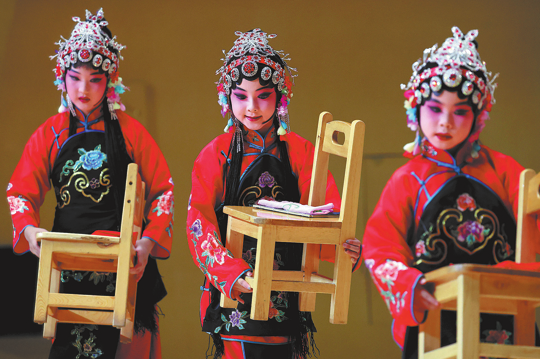
Child’s play
The Shanxi Grand Theater in Taiyuan recently hosted a vibrant open day event designed to introduce children to the captivating world of Chinese opera. Titled ‘Passing on Loyalty and Righteousness: Various Ways to Explore Guan Gong,’ the event seamlessly blended traditional opera performances with interactive modern elements, creating an engaging experience for young audiences. Guan Yu, or Guan Gong, a legendary figure from the late Eastern Han Dynasty, served as the central theme of the event. Known for his tales of loyalty and bravery, Guan Gong is a beloved character in Chinese opera and a household name across the country. The event featured children dressed in elaborate opera costumes, complete with makeup, performing alongside professional artists. This initiative aimed to foster an appreciation for traditional Chinese culture among the younger generation, ensuring that the rich heritage of Chinese opera continues to thrive. The Shanxi Grand Theater’s innovative approach to cultural education highlights the enduring relevance of traditional arts in contemporary society.
-

BBC faces new woes over discredited Diana interview
The BBC is once again embroiled in controversy following the release of a new book that delves into the discredited 1995 interview with Princess Diana. Titled ‘Dianarama: The Betrayal of Princess Diana,’ the book by former BBC journalist Andy Webb exposes the deceptive tactics employed by reporter Martin Bashir to secure the landmark interview. Bashir allegedly fabricated bank statements to convince Diana’s brother, Charles Spencer, that the princess was under surveillance, further asserting that her life was in danger. This manipulation led Diana to distance herself from trusted allies, including her private secretary Patrick Jephson. The interview, which drew a record 22.8 million viewers, saw Diana candidly admitting to adultery and famously stating there were ‘three people’ in her marriage to Prince Charles. While initially hailed as a journalistic triumph, the interview’s credibility unraveled when Bashir’s unethical methods came to light. The BBC has since apologized and paid damages to those affected, including Jephson and a whistleblower. The book’s release coincides with the resignation of the BBC’s director-general amid unrelated controversies, further tarnishing the broadcaster’s reputation. Webb’s work also draws a chilling connection between the interview and Diana’s tragic death in 1997, suggesting the fallout from the interview had ‘lethal’ consequences.
-
Tears, walkouts and drama: New Miss Universe to be crowned as chaotic season ends
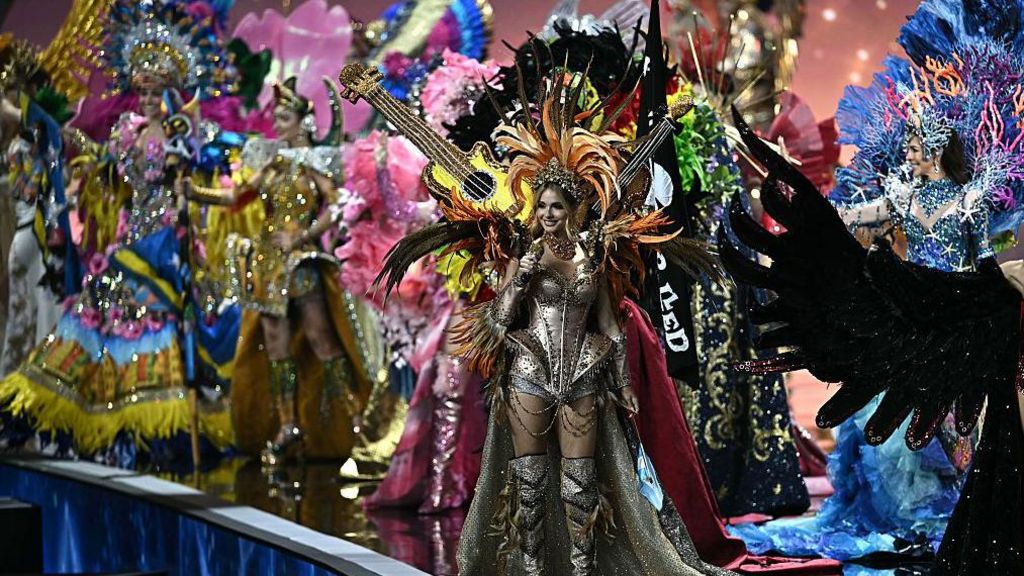
The 74th edition of Miss Universe, held in Bangkok, Thailand, concluded amidst a whirlwind of controversies and organizational turmoil. The event, which has been a global staple since its inception in 1952, faced unprecedented challenges this year, including contestant walkouts, judge resignations, and allegations of rigging. These issues have highlighted the cultural and strategic differences between the pageant’s Thai and Mexican owners, raising questions about its future direction. The pageant, traditionally a platform for women to advocate for global causes like HIV/AIDS awareness and children’s education, has also been a launchpad for international celebrity status. This year, Thailand’s Praveenar Singh emerged as a fan favorite, with hopes of becoming the country’s third Miss Universe. However, the event was overshadowed by a series of incidents that began with Thai media mogul Nawat Itsaragrasil’s public reprimand of Miss Mexico, Fatima Bosch, leading to a walkout by several contestants. The Miss Universe Organisation condemned Nawat’s actions as ‘malicious,’ and international executives were brought in to oversee the competition. Further complicating matters, two judges resigned, with one accusing organizers of pre-selecting finalists. Despite these challenges, the pageant continues to evolve, transitioning from a once-a-year television spectacle to a media brand embracing social media platforms like TikTok. The leadership transition has been rocky, with former CEO Anne Jakrajutatip’s resignation and the subsequent appointment of Guatemalan diplomat Mario Bucaro. Jakrajutatip, who acquired the pageant in 2022, had made significant strides towards inclusivity, allowing transgender women, married women, and women with children to participate. However, her entertainment company JKN filed for bankruptcy in 2023, adding to the pageant’s financial woes. As the Miss Universe brand navigates these turbulent waters, former queens like Catriona Gray continue to use their platforms to promote charitable causes, underscoring the pageant’s potential for positive impact. Despite the controversies, the event remains a significant cultural phenomenon, though its future will depend on its ability to reconcile its diverse leadership and maintain its core values of empowering women.
-
Watch: Chadwick Boseman posthumously honoured with Hollywood star
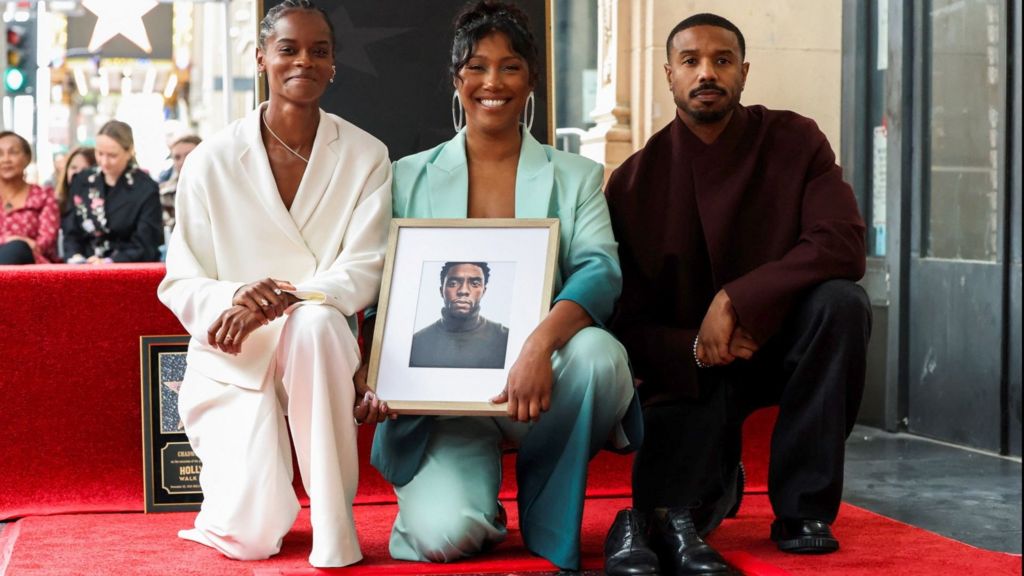
In a poignant ceremony, the late Chadwick Boseman, renowned for his iconic portrayal of Marvel’s Black Panther, was posthumously awarded a star on the Hollywood Walk of Fame. Boseman, who tragically succumbed to cancer in 2020 after a private struggle, was celebrated for his profound impact on the film industry and his enduring legacy as a cultural icon. The event, attended by family, friends, and colleagues, highlighted his contributions to cinema and his role in breaking barriers for Black representation in Hollywood. Speakers at the ceremony praised Boseman’s dedication, humility, and the inspiration he continues to provide to audiences worldwide. His star, now a permanent fixture on Hollywood Boulevard, serves as a testament to his remarkable career and the indelible mark he left on the entertainment world.
-
Why Booker winner Banu Mushtaq refuses to ‘internationalise’ her language
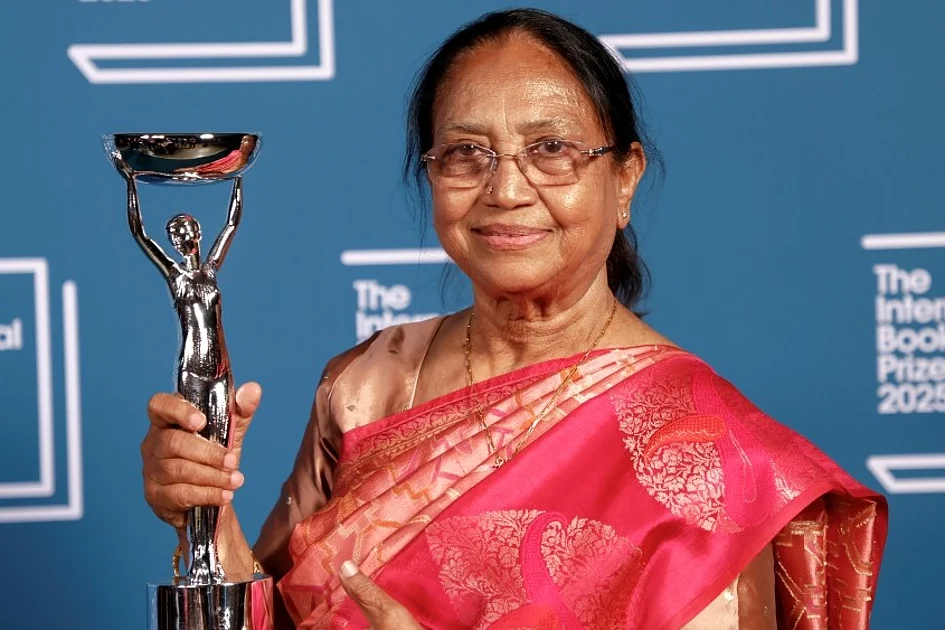
Banu Mushtaq, a celebrated writer, activist, and lawyer, has carved a unique space in the literary world with her unwavering commitment to truth and resistance. As the winner of the 2025 International Booker Prize for her work ‘Heart Lamp,’ Mushtaq’s journey from Karnataka’s Bandaya Sahitya movement to global recognition is a testament to her profound empathy for the marginalized. Emerging from a radical wave of writers in the 1970s and ’80s, she has consistently challenged caste, class, and gender hierarchies through her evocative storytelling. Her years as a journalist with Lankesh Patrike further honed her political consciousness and her ability to capture the essence of ordinary lives. Mushtaq’s writing, deeply rooted in regional idioms and everyday experiences, resonates with a global audience, offering a powerful lens into the struggles and resilience of the marginalized. In an exclusive interview, she reflects on her evolution as a writer, her politics of empathy, and the transformative power of language. Mushtaq’s work, spanning six short story collections, a novel, essays, and poetry, has earned her numerous accolades, including the Karnataka Sahitya Academy and Daana Chintamani Attimabbe awards. ‘Heart Lamp,’ her first full-length English translation, has brought her poignant narratives to a wider readership, with one story even featured in The Paris Review. Mushtaq’s journey underscores the importance of authenticity in literature, as she continues to write with a fierce love for the marginalized, refusing to ‘internationalize’ her language. Her stories, drawn from the lives of farmers, Dalits, migrants, and women, illuminate the extraordinary within the ordinary, reminding us of our shared humanity. Mushtaq’s voice, both rebellious and contemplative, remains a beacon of hope and resistance in a fractured world.