分类: entertainment

  • National Drum King Convention draws 14 top troupes to Hebei

    National Drum King Convention draws 14 top troupes to Hebei

    Zhengding county in Shijiazhuang, Hebei province, transformed into a vibrant cultural epicenter on March 15, 2026, as it hosted the prestigious National Drum King Competition. The event brought together fourteen nationally acclaimed drum troupes representing diverse regional traditions from across China.

    The competition served as both a artistic showcase and seasonal celebration, with performers delivering dynamic routines that blended time-honored Chinese drumming techniques with contemporary international influences. The rhythmic performances created an immersive cultural experience for both local residents and visiting tourists, filling the streets with powerful percussion and theatrical energy.

    Following the formal competitive presentations, the participating troupes embarked on a vibrant procession through Zhengding’s thoroughfares. This ceremonial parade allowed for intimate engagement with audiences, demonstrating the enduring appeal and accessibility of traditional folk drum art in modern cultural expression.

    The event highlighted Hebei province’s ongoing commitment to preserving and promoting intangible cultural heritage while fostering interregional artistic exchange. The convergence of these elite performing groups underscored the continuing vitality of drumming traditions within China’s diverse cultural landscape.

  • Documentary series Qiao! Beijing launches tomorrow!

    Documentary series Qiao! Beijing launches tomorrow!

    A groundbreaking documentary series offering an unprecedented journey through Beijing’s urban landscape is set to premiere across digital platforms tomorrow. ‘Qiao! Beijing’ (which translates to ‘Bridge! Beijing’) invites global audiences to explore the Chinese capital through the architectural and cultural significance of its bridges, serving as both physical structures and metaphorical connectors between communities.

    The series embarks on its narrative voyage from Xizhimen to Tongzhou, tracing the picturesque Liangma River to the historic Shichahai district. Viewers will be transported from the technological hub of Zhongguancun to the traditional alleyways of Beijing’s ancient hutongs, discovering how these bridges serve as silent witnesses to the city’s evolution.

    Through intimate encounters with local residents, historians, and urban planners, the documentary reveals how these structures have shaped social interactions, economic development, and cultural preservation. Each episode focuses on a different bridge, using it as a narrative device to explore broader themes of urbanization, tradition, and modernity in one of the world’s most dynamic cities.

    The production represents a significant investment in cultural documentation, employing cutting-edge cinematography techniques including aerial drone footage, underwater photography, and time-lapse sequences to capture the bridges in various conditions and seasons.

    Launching simultaneously across multiple streaming platforms on March 17, the series aims to provide both domestic and international audiences with a fresh perspective on Beijing’s urban identity, moving beyond typical tourist destinations to uncover the hidden stories that connect the city’s past with its rapidly evolving future.

  • Creed to Sinners: Michael B Jordan’s road to Oscars recognition

    Creed to Sinners: Michael B Jordan’s road to Oscars recognition

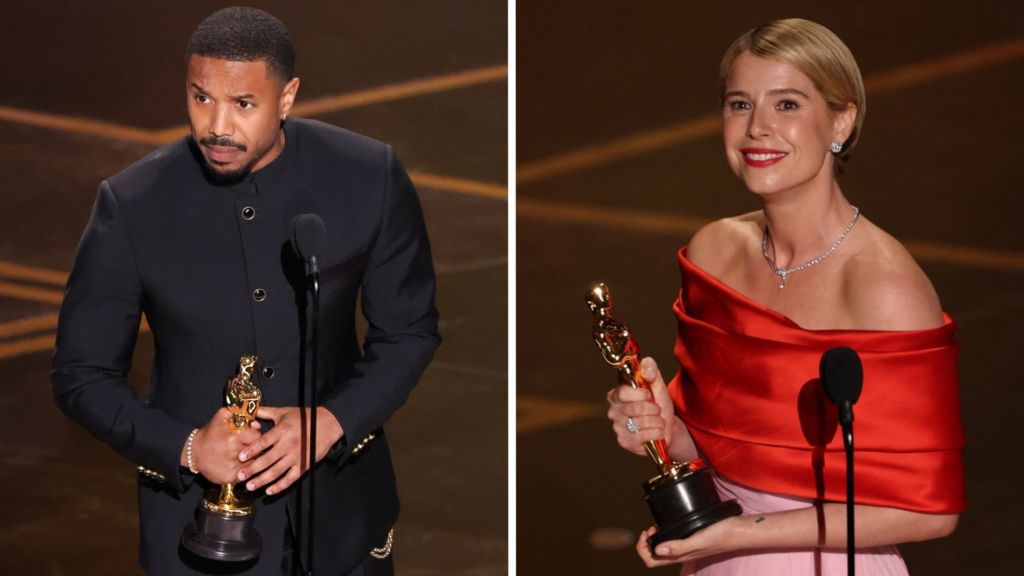
    In a historic moment at the Academy Awards, Michael B. Jordan claimed the Best Actor Oscar for his transformative dual performance in the supernatural horror film ‘Sinners,’ cementing his status as one of Hollywood’s most formidable talents. The 39-year-old actor surpassed competitors including Timothée Chalamet and Leonardo DiCaprio, becoming just the seventh Black performer to win in the leading role category.

    Jordan’s victory marks the culmination of a remarkable creative partnership with director Ryan Coogler that has spanned over a decade and produced critically acclaimed works including ‘Fruitvale Station,’ the ‘Creed’ franchise, and ‘Black Panther.’ Their latest collaboration, ‘Sinners,’ achieved record-breaking success with 16 Oscar nominations, surpassing previous record-holders ‘All About Eve,’ ‘Titanic,’ and ‘La La Land.’

    In the film, Jordan portrays twin brothers Smoke and Stack—former associates of Al Capone who return to Mississippi with ambitions of opening a juke joint, only to confront supernatural forces. The actor revealed the role presented unprecedented challenges, requiring extensive research with real identical twins to develop subtle behavioral distinctions between the characters.

    Jordan’s acceptance speech paid tribute to pioneering Black performers who paved the way for his achievement, specifically naming Sidney Poitier, Denzel Washington, and Halle Berry. His win is particularly significant for the horror genre, which has historically been overlooked in major Oscar categories since ‘The Silence of the Lambs’ won Best Picture in 1992.

    The film’s success extended beyond Jordan’s performance, with nominations for British-Nigerian actress Wunmi Mosaku and co-star Delroy Lindo, as well as a Best Director nomination for Coogler and a Best Picture shortlisting.

    Beyond acting, Jordan continues to expand his influence in the entertainment industry through his production company Outlier Society. He recently acquired adaptation rights to Rebecca Yarros’ bestselling fantasy series ‘Fourth Wing’ in partnership with Amazon, while also expressing his growing interest in directing projects where he wouldn’t appear on screen.

    The Oscar win represents a career milestone for Jordan, who began acting at age 15 with a role in ‘The Wire’ and achieved breakthrough recognition with 2013’s ‘Fruitvale Station.’ His journey reflects both artistic evolution and the changing landscape of representation in Hollywood.

  • Oscars 2026: Here are all the moments you didn’t see on TV

    Oscars 2026: Here are all the moments you didn’t see on TV

    The 98th Academy Awards ceremony unfolded as a spectacle of cinematic celebration, marked by unprecedented security measures and historic achievements that extended far beyond the television broadcast. Held at Hollywood’s Dolby Theatre, the event showcased both the glamour visible to viewers and numerous behind-the-scenes moments that revealed the true essence of Hollywood’s biggest night.

    Enhanced Security and Ceremonial Transformation
    Los Angeles authorities implemented exceptionally robust security protocols in response to geopolitical tensions stemming from the US-Israel conflict with Iran. The Hollywood area featured layered security perimeters, strategic traffic management, and a conspicuous police presence throughout the venue. SWAT vehicles and protective fencing lined the streets surrounding the typically vibrant Dolby Theatre, creating a fortress-like atmosphere. Media personnel underwent rigorous screening processes, including dual metal detector checks and canine inspections, before accessing the interview rooms where winners would later celebrate.

    The entire Ovation Hollywood shopping center underwent a magical transformation, with large curtains concealing ordinary storefronts to accommodate the extensive red carpet. The pathway to the Dolby Theatre featured towering poles displaying names of previous Best Picture winners, creating a tangible connection to Oscar history.

    Historic Tie and Fact-Checking Tradition
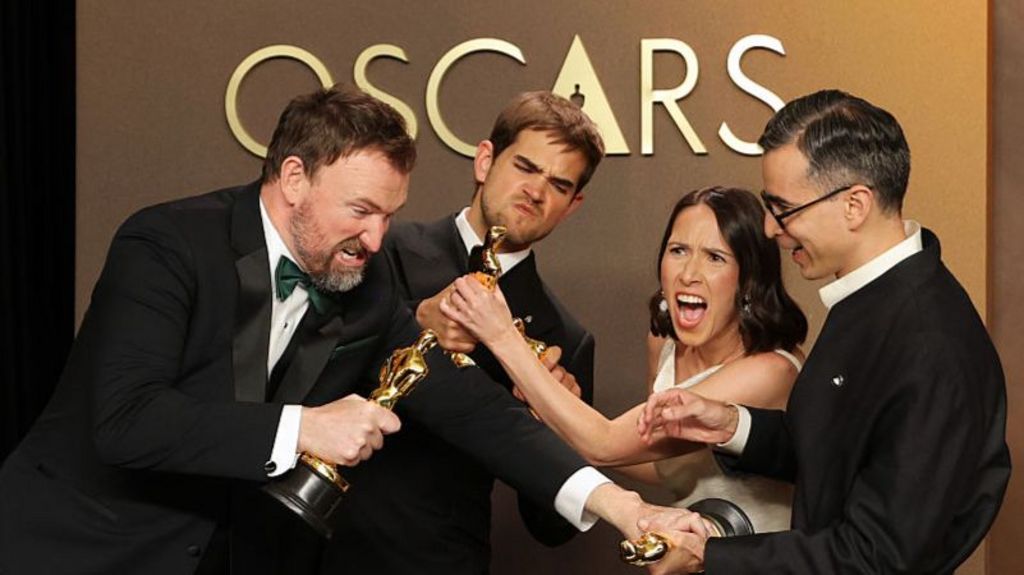
    In a rare occurrence that highlighted the competitive nature of the awards, the Best Short Action Film category resulted in a historic tie—only the sixth in Academy Awards history. Both “The Singers” and “Two People Exchanging Saliva” received the honor, prompting immediate fact-checking by Academy librarians who confirmed the last tie occurred in 2013 for Best Sound Editing (“Skyfall” and “Zero Dark Thirty”).

    Host’s Personal Touch and Speech Moments
    Comedian Conan O’Brien, hosting for the second consecutive year, personalized the experience by placing handwritten notes and snack packages beneath every seat in the Dolby Theatre. His message welcomed nominees and guests with characteristic humor: “These snacks may not look like much but in any movie theater they would run you $85. Good luck tonight, have fun, and remember that loud, enthusiastic laughter is good for your health and my ego.”

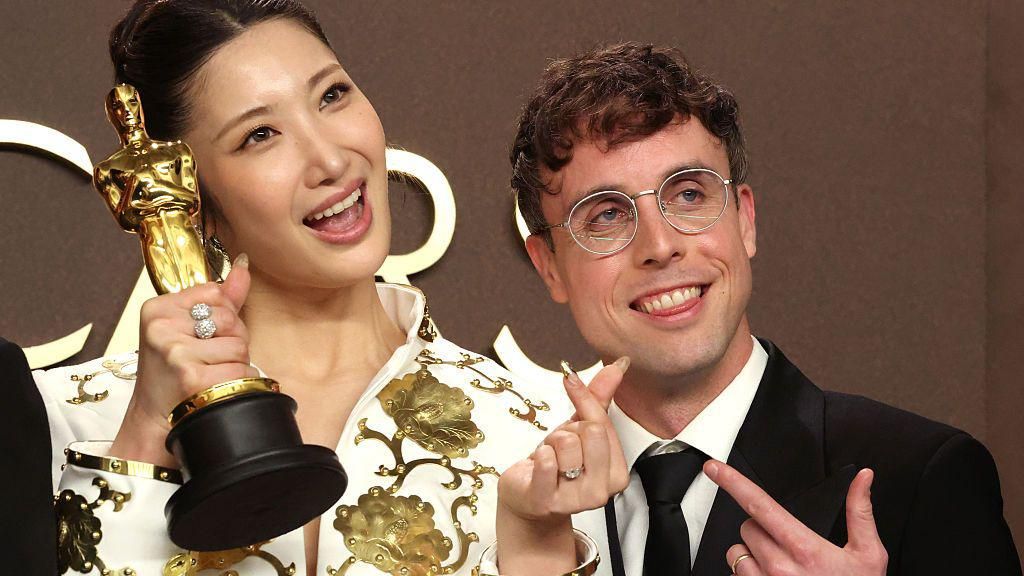
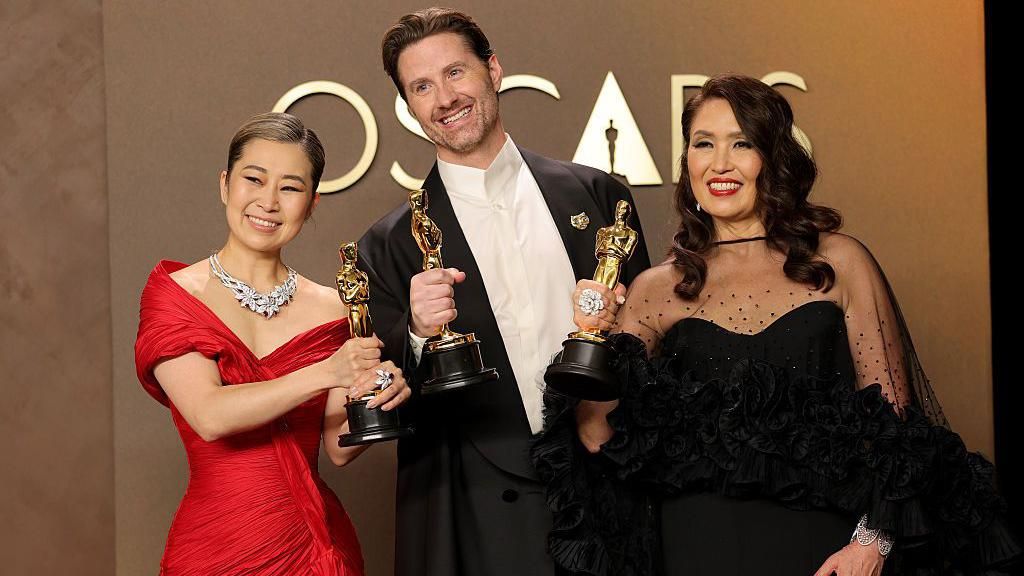
    The ceremony maintained its tradition of limiting acceptance speech durations, particularly affecting the creators of “Golden” from the animated film “KPop Demon Hunters.” Despite making history as the first K-pop song to win Best Original Song, the team had to complete their thank-yous backstage, where they expressed gratitude to collaborators including singers Audry Nuna and Rei Ami, IDO members, and producer Teddy Park.

    Groundbreaking Achievements and Representation
    Several winners used their platform to highlight significant milestones in representation and inclusion. Autumn Durald Arkapaw, becoming the first woman to win for Best Cinematography, emphasized the importance of her achievement: “A lot of little girls that look like me will sleep really well tonight because they want to become cinematographers. I know that just being on stage, getting this award, that will change so many girls’ lives because they’ll be inspired when they weren’t before.”

    Meanwhile, Best Supporting Actress winner Amy Madigan (“Weapons”) discussed potential prequel developments for her character Aunt Gladys, noting that while writer-director Zach Cregger had expressed interest, “nothing’s real till it is” in the entertainment industry.

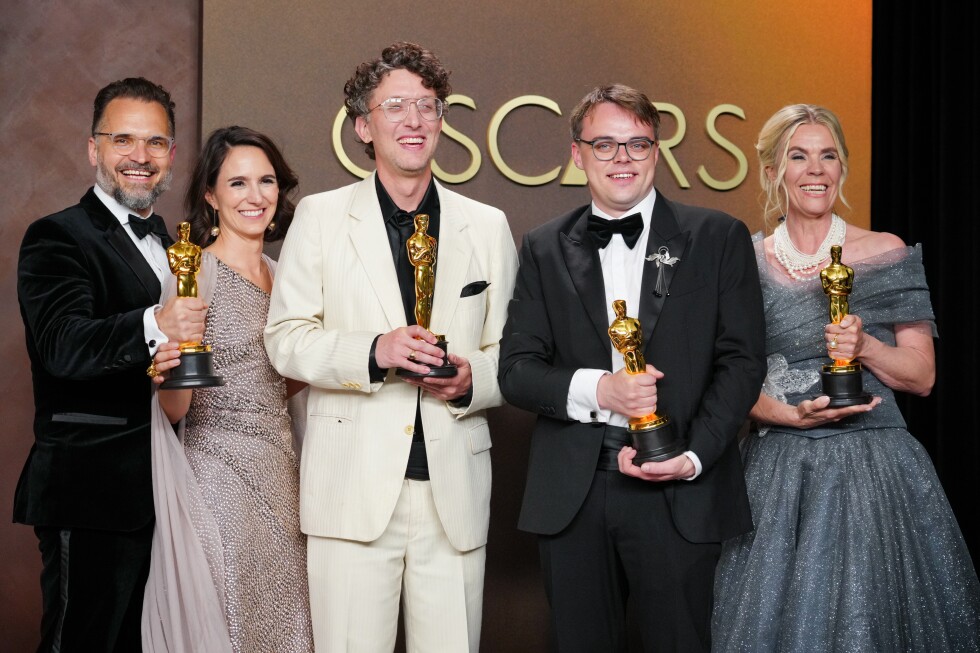
    The backstage atmosphere captured the authentic emotions of winners, from “Frankenstein” production designers celebrating with Oscar statuettes in hand to “Mr Nobody Against Putin” filmmaker Pasha Talankin reliving his documentary feature win by repeatedly reading the announcement envelope. These untelevised moments collectively revealed the human dimension behind the cinematic achievements celebrated throughout the evening.


  • Jessie Buckley, Michael B Jordan and One Battle After Another reign at Oscars

    Jessie Buckley, Michael B Jordan and One Battle After Another reign at Oscars

    The 98th Academy Awards ceremony witnessed a historic triumph for Paul Thomas Anderson’s political thriller ‘One Battle After Another,’ which secured six Oscars including the coveted Best Picture award. Anderson, a revered filmmaker previously overlooked by the Academy, achieved a personal milestone by winning Best Director, Best Original Screenplay, and Best Picture as a producer. In his heartfelt acceptance speech, he humorously remarked on the long-awaited recognition, describing the filmmaking process as a ‘wonderful, wonderful journey.’

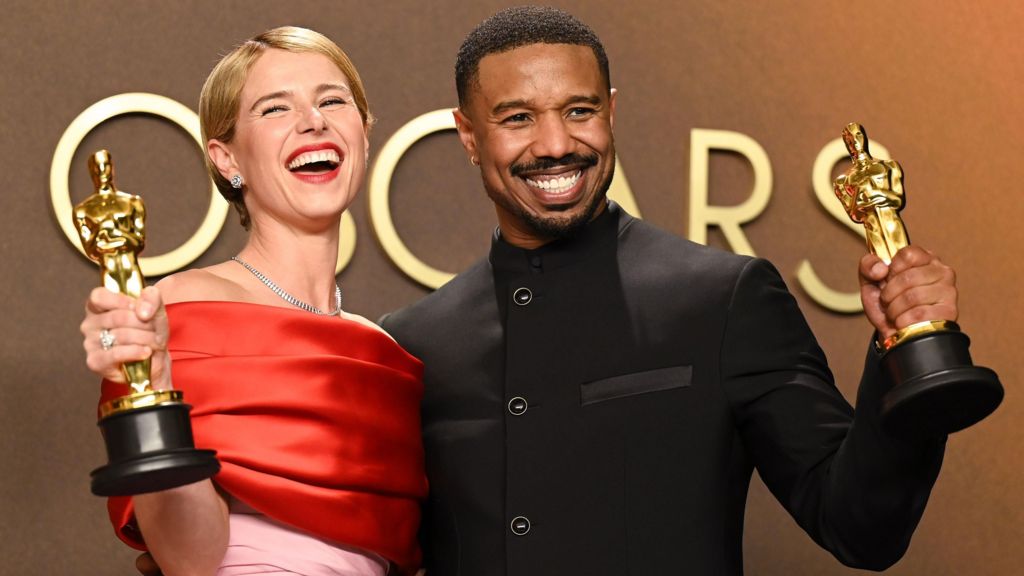
    The acting categories celebrated both breakthrough and established talents. Michael B. Jordan claimed his first Best Actor Oscar for his dual role in ‘Sinners,’ outperforming competitor Timothée Chalamet. Jordan emotionally acknowledged the legacy of Black performers who paved his way, specifically naming Sidney Poitier, Denzel Washington, and Halle Berry among others. Meanwhile, Irish actress Jessie Buckley earned Best Actress for her portrayal of Anne Hathaway in ‘Hamnet,’ dedicating her win to mothers everywhere on UK Mother’s Day and celebrating ‘the beautiful chaos of a mother’s heart.’

    Significant milestones marked the technical categories. Autumn Durald Arkapaw made history as the first woman to win Best Cinematography for her work on ‘Sinners.’ The newly introduced Best Casting award went to Cassandra Kulukundis for ‘One Battle After Another,’ recognizing the behind-the-scenes artistry of assembling perfect ensembles. Amy Madigan broke horror genre barriers by winning Best Supporting Actress for ‘Weapons,’ becoming the first since 1969 to do so in this category from a horror film.

    The ceremony featured memorable moments beyond the competitive awards. Javier Bardem offered a brief political statement advocating ‘No to war, and free Palestine’ while presenting. The animated feature winner ‘KPop Demon Hunters’ celebrated cultural representation, with producer Maggie Kang emphasizing its significance for Korean audiences worldwide. Though largely apolitical, the evening included touching tributes during the In Memoriam segment, with Barbra Streisand honoring her late co-star Robert Redford as an ‘intellectual cowboy’ who blazed his own trail.

  • Historic firsts, emotional speeches, and a tie: Watch the top Oscars moments

    Historic firsts, emotional speeches, and a tie: Watch the top Oscars moments

    The 96th Academy Awards ceremony unfolded as a spectacle of cinematic celebration, marked by groundbreaking achievements and profound emotional resonance. The evening’s trajectory was defined by unexpected developments and heartfelt acknowledgments that captivated a global audience.

    Emerging as the unequivocal champion of the night, the cinematic masterpiece ‘One Battle After Another’ secured an impressive collection of six golden statuettes, solidifying its position as a tour de force in this year’s competition. The production’s sweeping victory across multiple categories demonstrated exceptional artistry and technical proficiency that resonated profoundly with Academy voters.

    While ‘One Battle After Another’ dominated the awards landscape, formidable contenders ‘Sinners’ and ‘Frankenstein’ maintained strong showings throughout the ceremony, each garnering significant recognition for their artistic contributions to this year’s film landscape. The competitive atmosphere produced several nail-biting moments as these exceptional works vied for top honors.

    The evening’s proceedings were punctuated by an extraordinary occurrence—a rare tie in one of the major categories, creating an unforgettable Oscar moment that highlighted the exceptional quality of this year’s nominations. This unusual development underscored the exceptional caliber of artistic achievement recognized by the Academy.

    Beyond the competitive elements, the ceremony served as a platform for powerful human stories, with award recipients delivering moving acceptance speeches that touched upon themes of artistic dedication, social significance, and personal journey. These poignant addresses provided depth and substance to the glamorous proceedings, reminding viewers of the transformative power of storytelling through cinema.

    The 2024 Oscars will be remembered not merely for which films prevailed, but for how the ceremony celebrated artistic excellence while acknowledging the diverse voices and technical innovations driving the film industry forward.

  • ‘It’s a tie, I’m not joking’ – unusual Oscars moment sees two films share award

    ‘It’s a tie, I’m not joking’ – unusual Oscars moment sees two films share award

    In an extraordinary turn of events at the 2026 Academy Awards ceremony, the category for Best Live Action Short Film resulted in a rare tie between two contrasting productions: the musical comedy ‘The Singers’ and the dystopian French-language film ‘Two People Exchanging Saliva.’ This marks only the seventh occurrence of such a deadlock in the Oscars’ nearly century-long history.

    Comedian Kumail Nanjiani, presenting the award, handled the unexpected situation with characteristic humor. ‘It’s a tie, I’m not joking, it’s actually a tie,’ he announced to an astonished audience. ‘Everyone calm down, we’re going to get through this, focus up,’ he quipped, later joking about the irony that ‘the short film Oscar’s going to take twice as long.’

    ‘The Singers,’ an 18-minute exploration of music’s unifying power, was announced first. Director Sam A. Davis expressed surprise, noting, ‘A tie, wow we didn’t know that could happen.’ He described the film as ‘a simple story about the power of music and art to bring us together in a moment when we live in an increasingly isolated world.’

    The second winning film, ‘Two People Exchanging Saliva,’ saw co-directors Natalie Musteata and Alexandre Singh take the stage for their 36-minute dystopian narrative. Singh delivered a passionate acceptance speech even as technical cues attempted to conclude it, asserting that ‘art can change people’s souls… we can change society through art and creativity.’ The speech included a pointed remark addressing recent comments by actor Timothée Chalamet, eliciting mixed reactions from the audience.

    The ceremony’s historical context highlighted that the first Oscar tie occurred in 1932 for Best Actor between Fredric March and Wallace Beery, though under different voting rules. The most notable previous tie remains the 1969 Best Actress award shared by Katharine Hepburn and Barbra Streisand, the latter having received special admission to the Academy despite typically requiring two film credits for membership.

  • Kpop Demon Hunters wins Oscar for best animated film

    Kpop Demon Hunters wins Oscar for best animated film

    In a historic moment for both animation and Korean cultural representation, the supernatural musical film ‘Kpop Demon Hunters’ claimed the Academy Award for Best Animated Feature at Sunday’s Oscar ceremony. The Netflix-produced phenomenon, which has captivated global audiences since its summer release, triumphed over formidable competition to secure Hollywood’s highest animation honor.

    Directors Maggie Kang and Chris Appelhans, alongside producer Michelle LM Wong, accepted the award to enthusiastic applause. Kang, receiving her first Oscar nomination and win, delivered an emotionally charged acceptance speech dedicating the victory to Korea and Koreans worldwide. ‘For those of you who look like me, I’m so sorry that it took us so long to see us in a movie like this. But it is here, and that means the next generations don’t have to go longing,’ she stated, highlighting the film’s significance for Asian representation in mainstream cinema.

    The innovative film blends K-pop spectacle with supernatural adventure, following a girl group that weaponizes their vocal talents against demonic forces, including a soul-capturing boy band from the underworld. Its cultural impact extends beyond animation, with the soundtrack dominating global music charts and becoming a commercial staple in retail spaces worldwide.

    Lead vocalists Ejae, Rei Ami, and Audrey Nuna attended the ceremony in golden gowns—a deliberate homage to ‘Golden,’ the film’s breakout ballad that earned an Oscar nomination for Best Original Song. This follows the film’s previous awards sweep, having already secured Golden Globes for both Best Animated Feature and Best Original Song, while ‘Golden’ recently made history as the first K-pop track to win a Grammy Award.

  • ‘Mr. Nobody Against Putin’ wins best documentary feature Oscar for teacher who opposed Ukraine war

    ‘Mr. Nobody Against Putin’ wins best documentary feature Oscar for teacher who opposed Ukraine war

    LOS ANGELES — In a striking moment of cinematic triumph and political statement, “Mr. Nobody Against Putin” claimed the Academy Award for Best Documentary Feature at Sunday’s Oscars ceremony. The film offers a courageous examination of how Russia’s youth are being indoctrinated with pro-war propaganda following the invasion of Ukraine.

    Accepting the award through a translator, the film’s protagonist and co-director Pavel Talankin delivered an impassioned plea in Russian: “In the name of our future, in the name of all of our children, stop all of these wars now.” Talankin, a former teacher and activities director from a small Russian town, secretly documented his students’ lessons, chants, and songs promoting the Ukraine conflict. He risked his safety by smuggling hard drives out of the country to collaborate with American director David Borenstein, who is based in Copenhagen.

    The acceptance speeches provided some of the evening’s most overtly political moments. Backstage, Talankin revealed his students had helped craft his speech. Borenstein addressed the broader theme of nations descending into totalitarianism, drawing clear parallels between his own country and Talankin’s.

    “‘Mr. Nobody Against Putin’ is about how you lose your country,” Borenstein stated. “You lose it through countless small little acts of complicity.” The director received growing applause as he elaborated that countries are lost when citizens remain silent as governments kill people in the streets and oligarchs consolidate media control.

    Kremlin spokesman Dmitry Peskov declined to comment on the award, stating he had not seen the documentary.

    Distributed by Apple TV, the film premiered at last year’s Sundance Film Festival. Its tone blends light, almost mischievous comedy with serious political commentary, with Talankin occasionally channeling the style of fellow documentary Oscar winner Michael Moore. The victory marked an upset over frontrunner “The Perfect Neighbor,” a Netflix production constructed primarily from police body camera footage.

    The Ukraine conflict has consistently featured prominently in recent Oscar documentary categories. This follows last year’s win by The Associated Press’ “20 Days in Mariupol” and the nomination this year of “Armed Only With a Camera: The Life and Death of Brent Renaud,” about an American journalist killed in the war.

    In the documentary short category, “All the Empty Rooms” prevailed, chronicling efforts to memorialize the bedrooms of children killed in mass shootings. The filmmakers yielded their acceptance time to Gloria Cazares, mother of 9-year-old Jackie who died in the Uvalde shooting, who made an emotional appeal for gun reform.

  • ‘I cry every time’: How Kpop Demon Hunters went viral

    ‘I cry every time’: How Kpop Demon Hunters went viral

    The unprecedented triumph of ‘Kpop Demon Hunters’ at the 2026 Academy Awards, where it secured the Oscar for Best Animated Feature, represents a cultural watershed moment in global entertainment. This groundbreaking film has captivated audiences worldwide since its Netflix debut last summer, achieving what few animated features have accomplished: genuine cross-generational appeal.

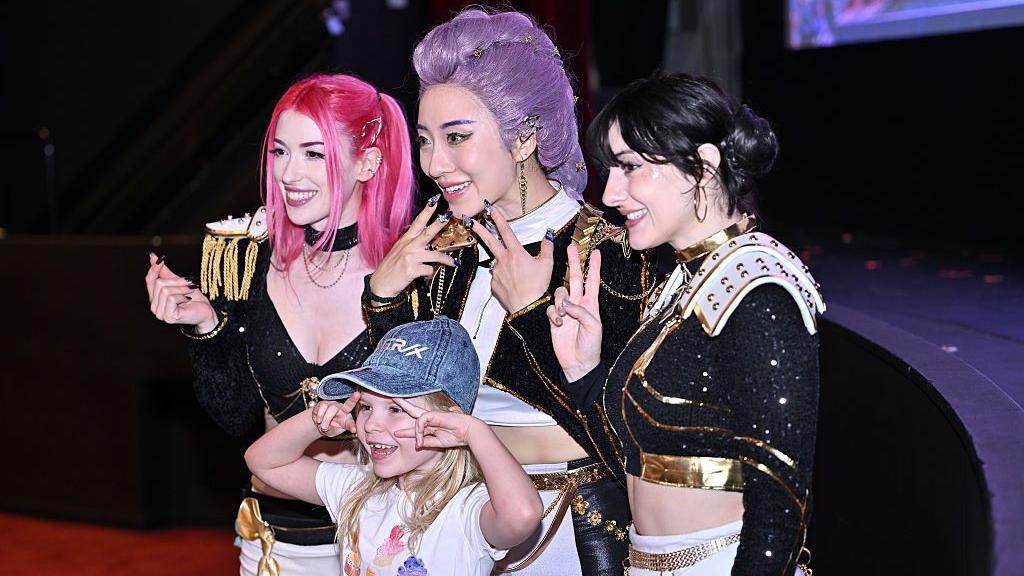
    At San Francisco’s elementary schools, children like eight-year-old Oona Herman trade character stickers as prized commodities while attending themed birthday parties featuring movie merchandise and life-sized character cutouts. Yet the phenomenon extends far beyond childhood fascination. Parents like Christine Kao find themselves unexpectedly moved by the film’s emotional depth, frequently moved to tears by its narrative beauty despite initial expectations of mere children’s entertainment.

    The film’s genius lies in its multi-layered construction. On its surface, it presents as a vibrant musical adventure where a K-pop girl group battles demons through the power of their golden voices. Yet beneath this colorful exterior lies a profound exploration of identity through protagonist Rumi’s struggle with her dual heritage as both demon hunter and half-demon. This tension resonates particularly with Asian American audiences who recognize the cultural nuances of family expectations and personal identity.

    Musically, the film represents an evolutionary leap in cultural fusion. The soundtrack—crafted by an international team of K-pop and Hollywood producers—creates what musicologist Ray Seol of Berklee College describes as ‘a clever intersection between K-pop and Western pop music.’ The producers engineered a ‘global sound’ that maintains K-pop’s essential character while incorporating familiar Western pop elements, making it accessible to international audiences while preserving its authentic Korean roots.

    Lyrically, the songs transcend typical animated film music, serving as narrative vehicles that explore themes of self-discovery and identity. Tracks like ‘What It Sounds Like’ function on multiple levels, simultaneously referencing physical markings that reveal Rumi’s heritage while metaphorically addressing emotional scars and personal growth.

    The film arrives at a pivotal moment in Korean cultural expansion, building upon the foundation laid by Gangnam Style’s global breakthrough in 2012. Where BTS and Blackpink paved the way for K-pop’s Western acceptance, ‘Kpop Demon Hunters’ represents the maturation of this cultural movement into a comprehensive ‘K-everything’ phenomenon that encompasses animation, storytelling, and cultural diplomacy. South Korean President Lee Jae Myung has explicitly embraced this cultural output as soft power instrument for diplomatic and economic advancement.

    From merchandise shortages that surprised Netflix to academic analysis at institutions like Yale University, where sociology professor Dr. Grace Kao studies its cultural impact, the film has demonstrated an extraordinary capacity to bridge demographic and cultural divides while advancing the ongoing global influence of Korean creative industries.