分类: education

  • BITS Pilani Dubai Campus concludes 2025 Young Entrepreneurs’ Bootcamp for school students

    BITS Pilani Dubai Campus concludes 2025 Young Entrepreneurs’ Bootcamp for school students

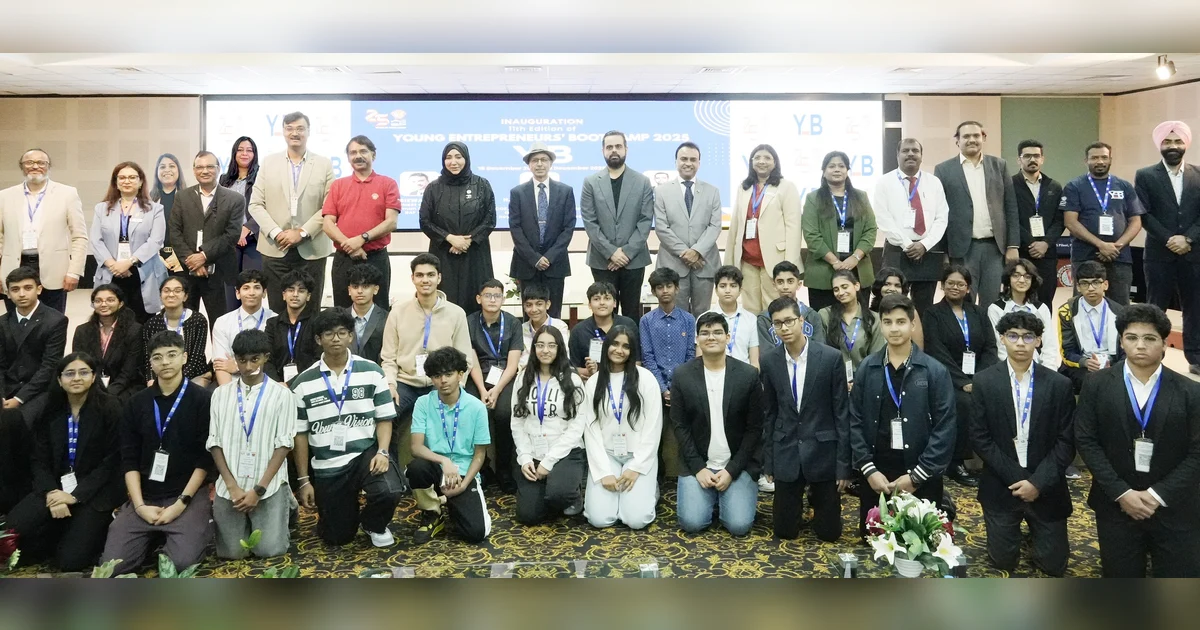
    BITS Pilani Dubai Campus has successfully concluded its 11th Young Entrepreneurs’ Bootcamp (YEB 2025), marking a significant milestone in entrepreneurial education for secondary students. The five-day intensive program, designed for Grades 9-12 participants, transcended conventional learning by implementing a comprehensive framework-based methodology that guided young minds through the complete venture creation lifecycle.

    The bootcamp’s academic rigor was evident from its inaugural address by Prof. Souri Banerjee, Director of BITS Pilani Dubai Campus, who emphasized that entrepreneurial education extends beyond business creation to developing resilience, structured reasoning, and solution-oriented thinking. The program featured notable industry voices including Laila El Atfani, who highlighted youth innovation’s role in building inclusive economies, and seasoned entrepreneurs Rizwan Adatia and Prateek Suri who shared practical insights on scaling enterprises through disciplined leadership.

    Academic sessions led by faculty members from the UAE, United States, and India covered the entire entrepreneurial spectrum—from ideation and business model design to financial literacy, revenue strategies, and investor pitching. The curriculum incorporated cutting-edge technical workshops on 3D printing, space technology applications, and sustainable materials, creating crucial connections between engineering innovation and commercial ventures.

    The program emphasized applied learning through startup founder interactions and an industry visit that provided operational exposure to manufacturing processes and innovation workflows. This practical approach culminated in a competitive pitching event where student teams presented original business concepts addressing global challenges in sustainability, renewable energy, food safety, worker welfare, and inclusive commerce.

    Team TAERS claimed top honors with their innovative concept for harvesting renewable energy from high-speed trains, while Team FreshGuard secured second position with a smart food shelf-life monitoring solution. Team SwapSole earned third place with their modular footwear innovation. The valedictory ceremony featured Mahesh Advani, CEO of MyGovindas UAE, and Hitesh Bhayani, who encouraged students to pursue purpose-driven ventures focused on long-term value creation.

    According to Prof. Trupti Gokhale, the bootcamp successfully translated ideas into actionable plans, equipping participants with unprecedented confidence, clarity, and leadership capabilities. The institution reaffirmed its commitment to developing future-ready innovators through academic excellence, ethical grounding, and strong industry alignment.

  • UAE announces new law on higher education, tightens licensing for institutions

    UAE announces new law on higher education, tightens licensing for institutions

    The United Arab Emirates has ushered in a transformative era for its academic sector with the implementation of a comprehensive federal law governing Higher Education and Scientific Research. Enacted on December 30, 2025, this landmark legislation establishes a robust regulatory framework designed to bridge the gap between academic preparation and workforce requirements while championing lifelong learning initiatives.

    The new mandate introduces stringent licensing protocols that prohibit the establishment or operation of any higher education institution without formal ministerial approval. The law extends its jurisdiction to encompass technical and vocational training centers, free zone institutions, and digital learning platforms, creating unprecedented national standardization across all educational delivery methods.

    Critical components of the legislation include mandatory accreditation for all academic programs, institutional classification systems with public transparency mechanisms, and specific quality standards for e-learning and blended education formats. The law explicitly requires educational providers to implement innovative teaching methodologies, ensure data protection protocols, and foster interactive learning environments regardless of delivery format.

    For free zone institutions, the legislation mandates coordination between federal ministries and local authorities, requiring both local permits and federal accreditation. The integrated approach aims to enhance educational quality, strengthen institutional governance, and boost global competitiveness while ensuring academic offerings directly correspond to evolving economic needs.

    This higher education reform follows closely after the UAE’s recent decree establishing a National Educational Curriculum framework for primary and secondary schools, demonstrating the nation’s systematic approach to educational modernization across all academic levels.

  • Sustainovation Challenge wins Gold at International Sustainability Awards

    Sustainovation Challenge wins Gold at International Sustainability Awards

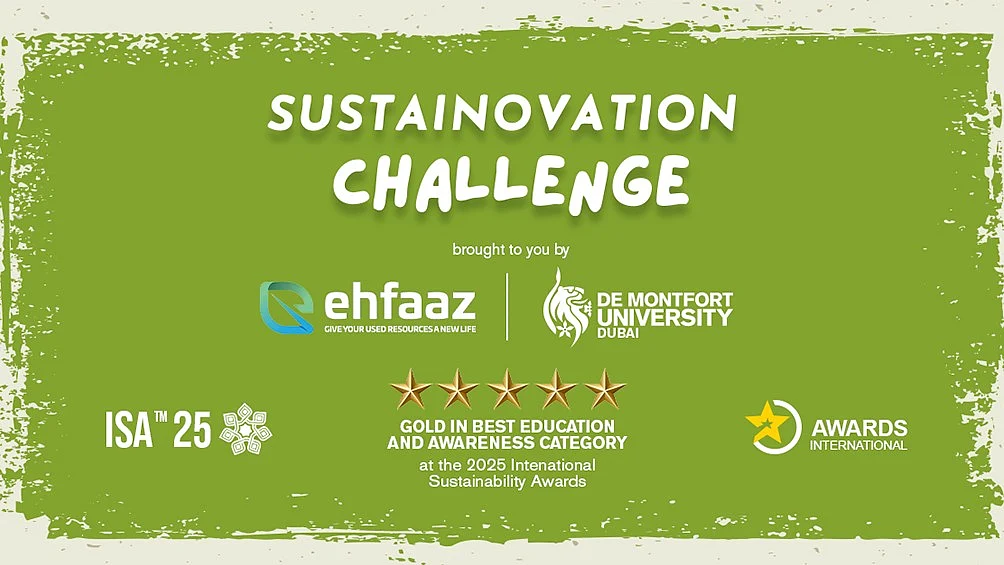
    De Montfort University Dubai (DMU Dubai) and its strategic partner Ehfaaz have achieved top honors at the prestigious International Sustainability Awards, capturing the Gold award in the “Best Education and Awareness” category. The recognition was bestowed upon their collaborative Sustainovation Challenge initiative during the inaugural awards ceremony that celebrated exceptional sustainability advancements across the globe.

    The International Sustainability Awards brought together pioneering concepts and transformative projects that demonstrate substantial impact in sustainability practices worldwide. Ehfaaz’s Gold award specifically acknowledges the remarkable success of the Sustainovation Challenge, highlighting the powerful synergy between academic institutions and innovative startups in addressing environmental concerns.

    Aliyu Mohammed Ali, co-founder and CEO of Ehfaaz, emphasized the action-oriented nature of the initiative: “The Sustainovation Challenge transcended conventional awareness campaigns by creating tangible platforms for climate innovators. Rather than conducting traditional workshops, we established a dynamic launchpad that enabled participants to develop, pitch, and prototype practical solutions. This prestigious award validates our vision and recognizes the contributions of all innovators working toward a more circular economy in the UAE.”

    Dr. Adham Fayad, lead organizer and driving force behind the Sustainovation Challenge, expressed profound satisfaction with the international recognition: “Witnessing the evolution of this initiative from conceptual framework to award-winning reality represents a milestone in educational innovation. This achievement celebrates the collective dedication and shared vision of all contributors who believed in transforming sustainability education into actionable solutions.”

    The Sustainovation Challenge emerged from a strategic alliance between DMU Dubai and Ehfaaz, combining academic expertise with entrepreneurial innovation. Their collaborative approach from conceptualization through execution established a new benchmark for academia-startup partnerships in sustainability education. The award underscores the effectiveness of their combined efforts in promoting environmental consciousness through hands-on, practical engagement methodologies that inspire real-world change.

  • China ascends global higher education ranking

    China ascends global higher education ranking

    A groundbreaking global study quality index reveals China’s accelerated advancement in higher education, significantly narrowing the longstanding gap with the United States. The comprehensive evaluation, published by Renmin University of China on December 26, 2025, employs a sophisticated three-tier analytical framework assessing disciplines, institutions, and study destinations worldwide.

    The index evaluates 42 academic disciplines—13 in humanities and social sciences and 29 in STEM fields—using a grading system from A+ to C based on percentile rankings. The methodology emphasizes academic innovation (50%), talent cultivation (30%), and international reputation (20%), providing a multidimensional assessment beyond traditional research-focused rankings.

    While the United States maintains its dominant position with 35% representation in the top 100 institutions, China demonstrates remarkable progress with increasing representation across broader ranking tiers. Chinese institutions comprise 14% of the top 100 (11 from mainland China), expanding to 15% of the top 300 and 17% of the top 500—indicating substantial quality breadth beyond elite universities.

    Discipline-specific analysis reveals China’s particular strength in STEM fields, exhibiting “broad quality but fewer pinnacles” with world-class competitiveness in materials science, electronic engineering, chemistry, and computer science. The humanities and social sciences show continued performance gaps with Western counterparts, attributed partially to structural factors including global discourse patterns and English-language academic publishing dominance.

    The index generates a recommended study destination list, ranking the top 10 countries as: United States, China, United Kingdom, Australia, Germany, Canada, Italy, Netherlands, Japan, and Spain. Notably, researchers deliberately avoided publishing a numerical 1-500 ranking to emphasize that all listed institutions represent quality choices, moving beyond what Executive Director Zhou Guangli described as “a simplistic and often stressful ranking mentality.”

    Experts highlighted the index’s significance for China, the world’s largest source of international students. Qu Zhenyuan, former president of the China Association of Higher Education, emphasized the methodological importance of discipline-oriented comparisons, noting that different universities possess distinct academic strengths. Researchers proposed additional evaluation dimensions including international education environment factors and context-specific considerations such as geopolitical relations and industrial migration patterns affecting student choices.

    The study coincides with a five-year trend of declining Chinese student numbers in Western developed nations and growing popularity of Belt and Road Initiative partner countries, reflecting evolving global education dynamics that the index aims to capture.

  • China unveils new mechanism to align higher education with national priorities

    China unveils new mechanism to align higher education with national priorities

    China has initiated a groundbreaking reform of its higher education system by establishing a rapid-response mechanism for creating doctoral and master’s degree programs in strategic fields critical to national development. The Ministry of Education announced this transformative approach on Thursday, marking a significant shift in how academic programs are designed and implemented.

    The newly established ‘ultra-fast layout’ approval process, overseen by the State Council’s academic degrees committee, enables real-time responsiveness to the country’s escalating demand for elite professionals in science, technology, and emerging industrial sectors. This reform directly addresses the intensified global technological revolution and industrial transformation currently underway.

    Under this innovative framework, degree-granting programs can be immediately initiated and fast-tracked through approval processes specifically tailored to address urgent national needs. A pilot program launched in June demonstrated this approach’s effectiveness when authorities rapidly authorized 24 universities with independent degree-audit qualifications to establish programs supporting the development of China’s low-altitude economy.

    The comprehensive framework features robust inter-departmental coordination targeting strategic emerging industries, future industries, and modern services. To further enhance alignment between talent supply and demand, expert panels will propose new discipline names and application criteria outside standard graduate education catalogs.

    Concurrently, the government continues expanding the roster of universities granted ‘autonomous review’ status, a policy initiated in 2017 to increase institutional independence. Currently, 38 universities hold this privileged status, which has already resulted in 441 new doctoral programs and 454 master’s programs, particularly in pioneering fields including integrated circuits, artificial intelligence, biopharmaceuticals, digital economy, and low-altitude technology.

    The future expansion will implement a classified, tiered approach designed to encourage universities to develop distinctive strengths while optimizing discipline structures, thereby preventing homogenization and maintaining educational quality across China’s higher education landscape.

  • Offering flexible pathways to both undergraduate students and professionals

    Offering flexible pathways to both undergraduate students and professionals

    Heriot-Watt University Dubai, celebrating two decades of operations in the UAE, has unveiled comprehensive academic pathway options for its January and September 2026 intakes. The institution, which pioneered as the first British university campus in Dubai, continues to enhance its educational offerings with industry-aligned programmes designed for both traditional undergraduates and working professionals.

    The university provides accelerated undergraduate pathways enabling direct entry into Year 2 studies by September 2026, alongside specialized Foundation programmes preparing students for degrees in Design, Business, Engineering and Computing disciplines. Working professionals benefit from evening classes and part-time study options at the Dubai Knowledge Park campus, allowing career advancement without interrupting employment commitments.

    Postgraduate offerings span multiple high-demand sectors including Business, Finance, Marketing, Human Resource Management, Engineering, Data Analytics, Artificial Intelligence, Logistics, Construction, Energy and Design. These programmes are delivered by internationally recognized faculty with strong industry connections and professional accreditation.

    Notable programme introductions include a new Doctor of Business Administration (DBA) for senior executives seeking to enhance strategic leadership capabilities, and an MA (Hons) in Professional Accountancy launching in September 2026, providing specialized pathways into accounting professions with global recognition.

    The institution distinguishes itself through several unique attributes: over 72 CAA-accredited programmes delivering UK degrees recognized internationally; exclusive inter-campus study opportunities at UK and Malaysia campuses through the Go Global Programme; exceptionally diverse student body representing 120+ nationalities; and future-focused curriculum covering emerging fields including Renewable Energy, Robotics, Autonomous Vehicles, Data Science, AI, Sustainable Fashion & Textiles, and Smart Construction.

    Heriot-Watt demonstrates strong employment outcomes with a Five-Star Employability Rating from KHDA and 95% of graduates securing employment or further study within six months of completion. The university supports students through substantial scholarship opportunities ranging from 10% to 100% coverage, plus fee reductions up to Dh5,000 for the 2026 intakes.

    According to university representatives, the educational philosophy emphasizes practical, cross-disciplinary learning through industry-sourced challenges, balanced individual and group projects, and dedicated career development services. This approach cultivates not only technical expertise but also essential soft skills including collaboration, conflict resolution, and cultural intelligence.

    Prospective students can contact the admissions office via DubaiEnquiries@hw.ac.uk or +971 4 571 7000 to schedule individual consultations with academic advisors.

  • Thumbay College of Management and AI in Healthcare: Developing leaders with a doctor’s heart and an engineer’s brain

    Thumbay College of Management and AI in Healthcare: Developing leaders with a doctor’s heart and an engineer’s brain

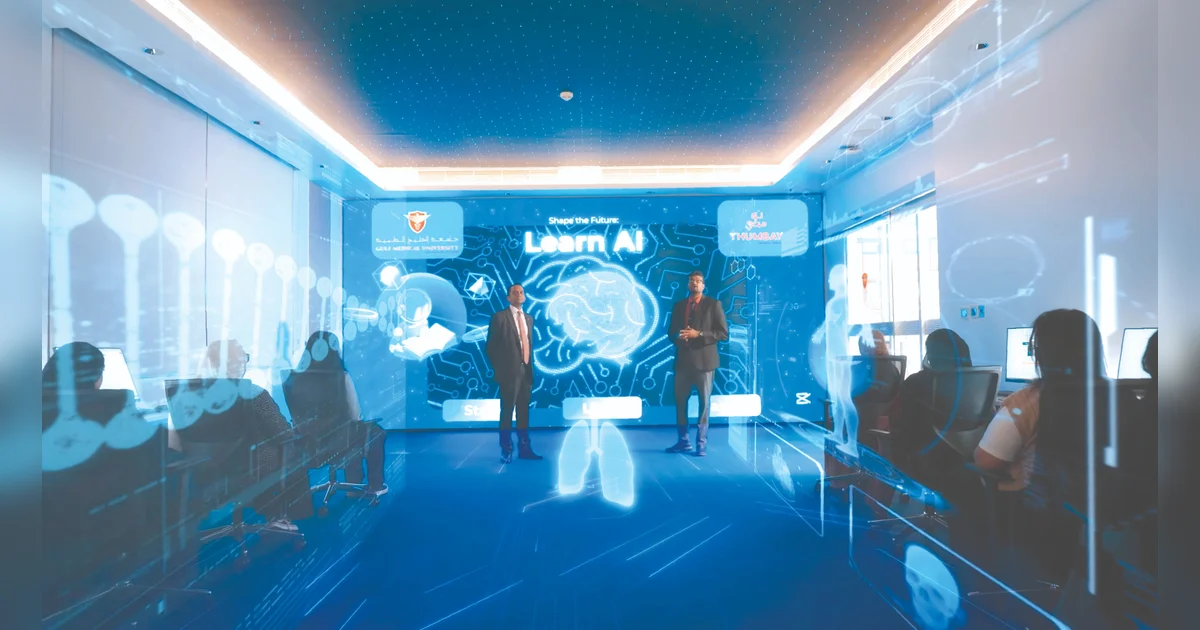
    Thumbay College of Management and AI in Healthcare (TCMAIH) is revolutionizing medical education by developing a new generation of healthcare leaders who combine clinical empathy with technological expertise. The institution’s innovative approach merges artificial intelligence, management excellence, and real-world clinical experience to create professionals capable of navigating modern healthcare’s complex demands.

    The college offers four specialized programs: Bachelor of Science in Applied AI in Healthcare, Bachelor of Science in Healthcare Management and Economics, Master in AI and Health Informatics, and Master in Healthcare Management and Economics. Each program integrates AI pedagogy with strategic planning, data analytics, and clinical leadership, preparing students for leadership roles in digital health and hospital administration.

    Accredited by the UAE’s Commission for Academic Accreditation and internationally recognized by the UK Quality Assurance Agency, TCMAIH leverages its affiliation with Gulf Medical University to provide students with authentic clinical immersion and research opportunities. The curriculum addresses the growing $187.7 billion AI healthcare market projected by 2030, focusing on predictive analytics, digital platforms, and AI-driven insights while maintaining human ethics at the core.

    According to Professor Amir Zeid, Dean of TCMAIH, modern healthcare leadership requires analytical thinking, responsible AI application, and economic understanding. The college’s unique approach combines the ‘heart of a doctor’ with the ‘brain of an engineer’ to create empathy-driven leaders who can optimize care delivery and resource management in increasingly technology-dependent healthcare systems.

  • Canadian University Dubai concludes Entrepreneur Mentorship Series with high-impact pitch showcases

    Canadian University Dubai concludes Entrepreneur Mentorship Series with high-impact pitch showcases

    Canadian University Dubai has successfully concluded its groundbreaking Entrepreneur Mentorship Series, marking a significant milestone in bridging academic theory with practical entrepreneurial execution. This cross-campus initiative, designed to foster purpose-driven ventures with tangible real-world impact, aligns with the UAE’s national ambition to maintain its top global ranking as an entrepreneurship and innovation hub.

    Under the leadership of President and Vice Chancellor Professor Karim Chelli, the program embodied CUD’s position as a downtown university integrated within Dubai’s innovation ecosystem. The series supported ongoing efforts by the UAE’s Ministry of Economy and Ministry of Investment to advance entrepreneurship through strategic national partnerships and innovation frameworks.

    The comprehensive program featured four intensive sessions where students engaged with distinguished industry leaders. The inaugural session welcomed Mohamed Jassim Al Rais, Executive Director of Al Rais Group, and Rayan Chelli, former CSO of Zip Trust FZCO and McGill University PhD candidate, who shared invaluable perspectives on innovation and business success.

    Subsequent sessions addressed critical entrepreneurial fundamentals: legal foundations for UAE startup establishment with experts from Dubai Economic Department and Habib Al Mulla & Partners; customer behavior and brand storytelling insights from Moaza Buti Alyouha, VP of Brand and Event Marketing Operations at Dubai Economic Department & Tourism, and Mahmoud Bartawi, founder of Under500; and financial strategy guidance from Amer Al Ahbabi, Group Chairman of Vertix Holdings, and business strategist Jad Jubaili.

    The series culminated in two prestigious pitch competitions. At the Brand Me Summit, students presented their concepts before an elite jury including Dr. Mohammed Naji (MonaJi Group founder), Matthias Mende (Bonuz Market founder), Jeremy Schneider (musician and creative entrepreneur), and Ghazy Al Yaman (Brand Me Summit CEO). Team EVENTA secured the AED 3,000 CUD Prize for their outstanding concept and presentation.

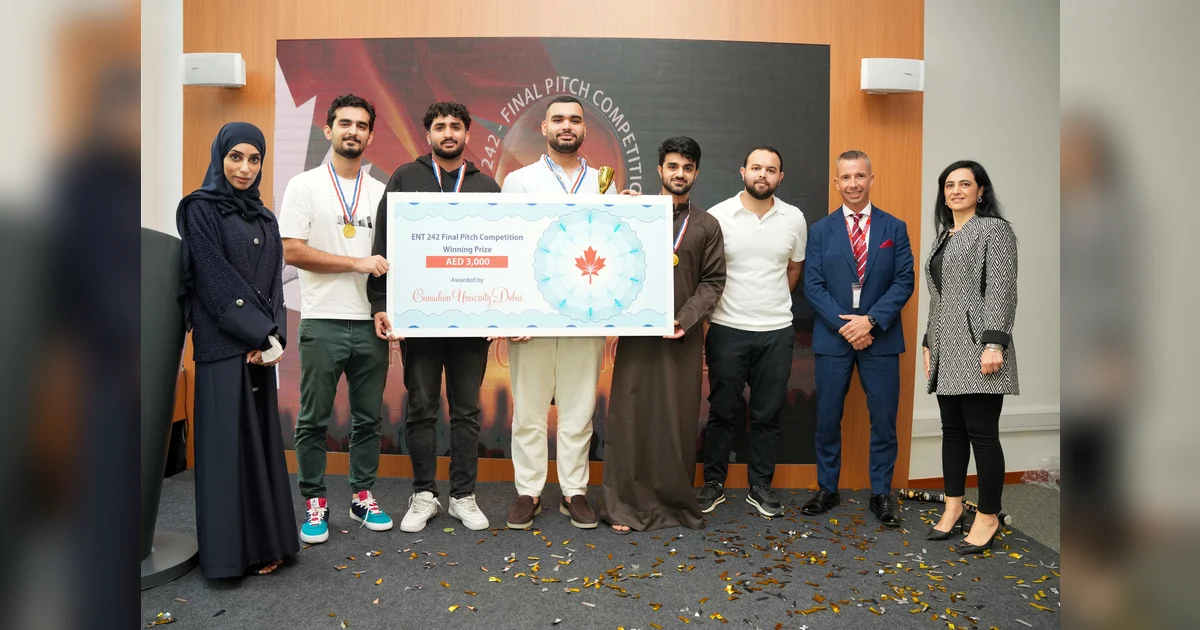
    A separate ENT 242 Final Pitch Competition saw shortlisted teams demonstrating innovative ideas developed through weeks of applied learning, with AR Robot claiming an additional AED 3,000 prize for their creative and feasible entrepreneurial solution.

    Chancellor Buti Saeed Al Ghandi emphasized: “Dubai moves at the speed of the future, and so do we. Our downtown incubator prepares students to think boldly, act entrepreneurially, and lead with the same unstoppable energy that defines Dubai’s success.”

    Professor Chelli highlighted the university’s role in cultivating founders: “By bringing industry directly into the classroom, we’ve helped students build the aptitude, mindset, and networks to transform ideas into ventures with real-world impact.”

    Dr. Khulood Shebib Khansaheb, Assistant Professor and Incubator Manager, noted the program’s alignment with UAE’s vision to establish the Emirates as the region’s entrepreneurship capital, providing students direct engagement with founders and industry leaders throughout the entire startup journey.

  • UAE school age cut-off rule: Children won’t lose a year, say relieved parents

    UAE school age cut-off rule: Children won’t lose a year, say relieved parents

    The United Arab Emirates has enacted a significant reform to its educational admission framework, announcing a pivotal shift in the age eligibility criteria for school entrants. Effective from the 2026-2027 academic year, the deadline for children commencing KG1 in institutions with a September intake will be extended from August 31 to December 31.

    This policy revision, ratified by the Education, Human Development, and Community Development Council, directly addresses a longstanding predicament faced by families. The previous August cutoff frequently placed children born in the subsequent months in an educational limbo—deemed too advanced for nursery programs yet ineligible for formal schooling, consequently forcing them to forfeit an entire academic year.

    The announcement has been met with profound relief and widespread approval from the parent community across the Emirates. Mousa Abdelkarim, a Jordanian expatriate, revealed he was contemplating relocating his family abroad to prevent his son from falling behind academically. He expressed immense gratitude, stating the change resolves a severe family dilemma and prevents an unnecessary separation.

    Echoing this sentiment, Mariam, a mother from Sharjah, celebrated the decision despite wishing for its earlier implementation. Another parent, Khawla from Ajman, hailed it as the ‘best decision,’ empathizing with the struggles of numerous mothers whose children had previously lost a year.

    The educational sector has strongly endorsed the move. Fatima Al Ram, a kindergarten teacher in Dubai, affirmed the decision is unequivocally in the best interest of a child’s holistic development. She emphasized that access to kindergarten is crucial for nurturing social, mental, and physical skills from an early age.

    The reform is the culmination of extensive public discourse and official deliberation, including a proposal from the Federal National Council (FNC). FNC member Saeed AlAaabdli had previously highlighted the challenges for parents of children born in the year’s final quarter. The new policy is viewed as a responsive and community-centric measure, designed to standardize admissions, ensure fairness across various curricula, and facilitate smoother student transitions between schools, without impacting current enrollees.

  • UAE school admissions explained: What the new age cut-off means for parents, students

    UAE school admissions explained: What the new age cut-off means for parents, students

    In a transformative educational policy shift, the United Arab Emirates has fundamentally restructured its school admission framework by implementing a calendar-year-based eligibility system. Effective from the 2026-27 academic year, children will now qualify for Pre-Kindergarten enrollment upon reaching three years of age at any point during the admission year, extending the previous August 31 deadline to December 31.

    This groundbreaking reform, formally endorsed by the Education, Human Development and Community Development Council, represents a significant departure from the previous month-specific cutoff approach. The revised policy establishes uniform eligibility standards across all educational stages: Pre-KG at age 3, KG1 at age 4, KG2 at age 5, and Grade 1 at age 6, with all age requirements determined by December 31 of the admission year.

    The policy alteration delivers particular advantages to children born during the September-December period, who previously faced mandatory enrollment deferrals. Extensive research involving analysis of over 39,000 student records demonstrated that early enrollment does not correlate with academic disadvantages, with some younger entrants actually exhibiting enhanced educational outcomes.

    Crucially, the reform maintains parental autonomy, allowing rather than mandating earlier enrollment. The updated regulations apply exclusively to new admissions commencing in 2026-27, preserving existing students’ original placement arrangements. While the policy standardizes admissions across August/September-starting institutions regardless of curriculum—including British (FS1/FS2/Year 1/Year 2) and French (Petite/Moyenne/Grande Section/CP) systems—schools with April academic years continue operating under the established March 31 cutoff.

    The comprehensive policy framework ensures educational continuity for transfer students and international arrivals through standardized grade equivalency protocols, prioritizing consistent academic progression above all other considerations.