分类: education

  • Sesame Street Private Nursery strengthens early learning foundations in Abu Dhabi

    Sesame Street Private Nursery strengthens early learning foundations in Abu Dhabi

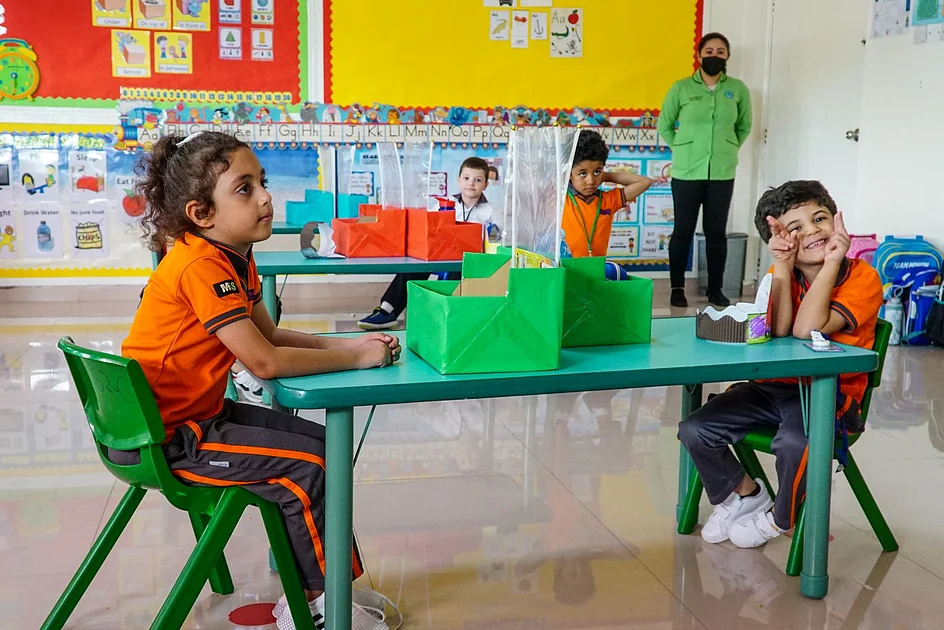
    In the heart of Abu Dhabi’s Al Nahyan district, Sesame Street Private Nursery has emerged as a premier institution shaping the future of early childhood education. The nursery has developed an exemplary educational model that seamlessly blends structured learning with imaginative play, creating an environment where children aged 1-4 years flourish academically and socially.

    Under the expert guidance of Aous Shleweet, Head of Nursery, the institution operates on the fundamental principle that early childhood represents the most critical period for cognitive and emotional development. The nursery’s unique curriculum synthesizes the American Core Knowledge framework with the British Early Years Foundation Stage (EYFS), creating a comprehensive educational approach that addresses all aspects of child development.

    “We are committed to cultivating confident, curious learners from the earliest stages,” Shleweet emphasized. “Our philosophy centers on creating secure, valued, and motivated explorers who develop at their own individual pace through strong home-nursery partnerships.”

    The learning environment has been meticulously designed to stimulate curiosity and foster independence. Daily programming alternates between structured educational sessions and guided play experiences, incorporating diverse activities including musical movement, interactive storytelling, sensory exploration, and creative arts. These hands-on experiences specifically target the development of communication skills, collaborative abilities, and foundational problem-solving capabilities.

    Both indoor and outdoor spaces have been purpose-engineered to maximize exploratory learning while maintaining the highest safety standards. The nursery receives consistent praise from parents for its attentive educators, transparent communication practices, and genuine commitment to each child’s wellbeing. This strong educator-family alliance ensures continuity between home and school environments, providing crucial support during these formative developmental years.

    As Abu Dhabi families increasingly seek educational institutions that transcend conventional childcare, Sesame Street Private Nursery continues to distinguish itself through its purposeful integration of care, enjoyment, and substantive learning. The institution maintains rolling admissions throughout the year, inviting families to personally experience their innovative educational approach.

  • Arbor School Dubai: How performing arts builds belonging

    Arbor School Dubai: How performing arts builds belonging

    At Arbor School Dubai, performing arts transcends conventional enrichment activities to become a foundational pillar of student development. Unlike traditional educational approaches that relegate artistic expression to peripheral status, this institution integrates performance disciplines directly into its core educational philosophy, fostering profound personal growth from primary through secondary education levels.

    The school’s comprehensive program features annual concerts, assemblies, and large-scale theatrical productions that provide both onstage and backstage participation opportunities. These experiences strategically develop teamwork capabilities, personal responsibility, and creative self-expression—transferable skills that extend far beyond the performance venue.

    A recent sold-out production of ‘Beauty and the Beast’ demonstrated this educational approach in practice. Involving approximately 30 students from Years 7 through 13, with additional participants managing props, set design, costumes, and technical elements, the production represented a nine-month collaborative effort beginning with weekly rehearsals in September.

    While audiences appreciated the professional-quality choreography and visual elements, the most remarkable aspect proved to be the visible confidence and pride exhibited by participating students. Educators observe transformative effects: previously reserved students now demonstrate leadership capabilities and represent the school with newfound assurance. Notably, several Year 7 students assumed leading roles during their first term of secondary education, developing competence through progressive rehearsal processes.

    Principal Gemma Thornley articulates the program’s philosophical foundation: ‘Performing arts provides young people with both voice and venue—cultivating belonging while building the confidence to step forward in theatrical and life contexts alike.’

    The production’s timing coincided strategically with Children’s Mental Health Week 2026, themed ‘This Is My Place.’ The school complemented performances with specialized lessons and activities reinforcing interpersonal connection, emotional wellbeing, and community belonging—values intrinsically embedded within Arbor’s performing arts curriculum.

  • Al Yasat Private School sets the standard for university readiness in Abu Dhabi

    Al Yasat Private School sets the standard for university readiness in Abu Dhabi

    In Abu Dhabi’s competitive educational environment, Al Yasat Private School has established itself as a benchmark for comprehensive university preparation through its distinctive approach to student development. Under the leadership of Head of School Scott Carnochan, the institution has demonstrated that academic excellence stems from confidence-building and strategic support systems rather than excessive pressure.

    The school’s Class of 2025 achieved remarkable outcomes, with every graduate securing university acceptance and an impressive 90% receiving full scholarships—many from prestigious international institutions. These results reflect years of meticulous planning and early intervention rather than last-minute preparation.

    University readiness initiatives commence as early as Grade 8, with students receiving guidance to explore pathways aligned with their unique strengths and interests. The school recently hosted its 6th Edition University Fair, facilitating direct engagement between students, parents, and representatives from over 23 higher education institutions worldwide. This event provided invaluable insights into admission requirements, academic programs, and career trajectories.

    Beyond traditional academics, Al Yasat incorporates advanced STEM curricula, aviation studies, esports programs, sustainability initiatives, and global exposure opportunities. These diverse offerings cultivate adaptability, problem-solving capabilities, and awareness of emerging industries.

    The school maintains strong collaborative relationships with families, emphasizing consistent communication and shared objectives to ensure students progress with clarity and purpose. This partnership model, combined with the institution’s award-winning programs in sustainability and innovation, continues to attract families seeking demonstrable educational outcomes and global opportunities for their children.

  • The Future Leaders Challenge 2026 concludes in Dubai

    The Future Leaders Challenge 2026 concludes in Dubai

    Dubai has successfully concluded the Future Leaders Challenge (FLC) 2026 finals, marking a significant milestone in global hospitality education collaboration. The four-day international gathering, held from February 9-12 aboard the iconic Queen Elizabeth 2 vessel, brought together students, educators, industry pioneers, and public-sector representatives to address future workforce development in the hospitality and tourism sectors.

    Under the patronage of His Excellency Issam Kazim, CEO of Dubai Corporation for Tourism and Commerce Marketing (DCTCM), the event demonstrated Dubai’s strategic commitment to bridging educational institutions with industry requirements. Kazim emphasized that cultivating skilled, future-ready talent represents a fundamental component of Dubai’s long-term vision and the Dubai Economic Agenda, D33, which aims to consolidate the emirate’s status as a premier global destination for both business and leisure.

    The competition culminated with Team Co:Creators, comprising Sofia Perotti (Glion University), El Hassane Ibnou El Kadi (Mohammed VI Polytechnic University), Ghita Bahbouhi (ISIIT Morocco), and Phindile Mthiyane (University of Pretoria), claiming the top honors. Their proposed solution was recognized for its exceptional relevance, practical feasibility, and significant potential impact on the industry.

    The celebration also honored individual excellence through special awards. Bianca Frost from the University of Pretoria received the Teacher of the Year Award for her outstanding dedication to education and leadership in student development. Juliet Finn Alexander from Stenden South Africa was presented with the J.J. Sleiffer Award for exemplifying the core human values essential to hospitality.

    Hubert Ummels, founder of the Future Leaders Challenge, highlighted the critical timing of this initiative: “There is currently a distinct opportunity to strengthen the connection between education, industry, and institutions. The Dubai finals showcased the remarkable ambition and capability of emerging leaders, creating momentum for sustained collaboration and shared responsibility in talent development.”

    Beyond the student competition, the event facilitated crucial dialogue among education leaders from across the Middle East and Africa regarding curriculum relevance, leadership development, and workforce alignment strategies. The Future Leaders Platform is supported by an international Advisory Board featuring senior executives from prominent organizations including NEOM, Radisson Hotel Group, Hilton, Dubai World Trade Centre, and Accor, among others.

    Following the successful Dubai edition, the Future Leaders Challenge is set to expand its global footprint with upcoming events scheduled in the United Kingdom, Morocco, East Africa, and South Africa.

  • UAE parents now choosing school with future jobs in mind, says UK expert

    UAE parents now choosing school with future jobs in mind, says UK expert

    A significant transformation is underway in the United Arab Emirates’ education sector as families increasingly prioritize long-term career preparedness over traditional academic metrics when selecting schools. According to Charles Bonas, founder of UK-based education consultancy Bonas MacFarlane, Emirati parents are now looking beyond immediate educational concerns to consider where their children will stand in the job market a decade from now.

    In exclusive remarks to Khaleej Times, Bonas revealed that expatriate families in Dubai and across the UAE are demonstrating heightened awareness of employability challenges, even for top graduates. This shift represents a fundamental change from just a few years ago when educational decisions primarily focused on transitional phases at ages 11 or 13.

    The education expert cautioned against overemphasizing school branding, a common tendency in Dubai’s rapidly expanding education market. Bonas emphasized that superior facilities and prominent brands cannot compensate for inadequate teaching quality, noting that many established UAE schools consistently achieve better university placement results than newer, high-profile institutions.

    Community trust and personal recommendations continue to play crucial roles in school selection, with proximity to home remaining a significant factor. However, parents are now adopting a more comprehensive approach that considers the uncertain future job landscape, particularly with the emergence of artificial intelligence and the potential disappearance of traditional mid-level professional roles.

    Bonas highlighted the unique advantages of international education in the UAE, describing how exposure to diverse cultural environments helps shape students into ‘citizens of the world’ equipped with adaptability, confidence, and global perspective. He characterized education as a shared responsibility between institutions and families, with many parents supplementing formal schooling with tutoring and enrichment activities.

    The consultant concluded by encouraging families to consider international educational experiences, noting that even brief exposure to global learning environments can provide substantial long-term benefits for personal and professional development.

  • UAE council flags mass student absences before public holidays; new policies tackle issue

    UAE council flags mass student absences before public holidays; new policies tackle issue

    The United Arab Emirates has launched a comprehensive crackdown on student absenteeism, particularly targeting the widespread practice of skipping school on Fridays and days preceding public holidays. The issue gained national attention during a Federal National Council session where Dr. Moza Al Shehhi raised concerns about the detrimental impact of these ‘mass absences’ on educational standards and social values.

    Education Minister Sarah Al Amiri presented compelling data demonstrating significant improvements since implementing new measures. Overall attendance during the first term reached 94.7%, with 86% of students achieving perfect attendance—a remarkable increase from the previous 3.8% rate.

    The ministry’s multi-faceted approach includes Ministerial Resolution No.79 of 2025, which standardizes attendance tracking and strengthens disciplinary procedures. A key deterrent involves counting absences on Fridays and pre-holiday periods as double infractions. The policy establishes a 15-day annual limit for unjustified absences, with consequences including withheld report cards and mandatory parental written commitments.

    Enhanced technological solutions feature prominently in the new system, with electronic monitoring and instant parent notifications ensuring real-time accountability. Chronic absence cases now receive individualized assessment and may be referred to child protection authorities when necessary.

    FNC Speaker Saqr Ghobash emphasized shared responsibility, stating that while ministerial efforts are commendable, parental involvement remains crucial. He invoked traditional practices where students required parental accompaniment to return after absences, highlighting the cultural dimension of attendance accountability.

    The comprehensive reforms represent part of broader initiatives to elevate educational quality and institutional responsibility throughout the UAE’s school system, with continued field monitoring and policy refinement planned to sustain progress.

  • Ramadan 2026: How UAE schools adjust timetables to support fasting students

    Ramadan 2026: How UAE schools adjust timetables to support fasting students

    Educational institutions across the United Arab Emirates are implementing comprehensive adjustments to academic schedules and activities in preparation for Ramadan 2026, anticipated to commence around February 19 subject to moon sighting confirmation. These strategic modifications prioritize the physical and emotional wellbeing of fasting students while maintaining educational continuity.

    In Dubai, numerous schools have established a framework limiting instructional hours to approximately five per day. Credence High School CEO-Principal Deepika Thapar Singh emphasized the institution’s adherence to KHDA guidelines, noting that while academic lessons continue through engaging classroom activities, fasting students receive exemptions from physical education. These students instead participate in supervised alternatives including library sessions, reflective activities, and light academic support.

    Abu Dhabi institutions are adopting similarly flexible approaches. GEMS World Academy – Abu Dhabi offers families multiple timetable options to accommodate individual health requirements, sleep patterns, and family circumstances. Principal Shahina Ahmad OBE clarified that while daily duration is reduced, the exact cap remains fluid and aligned with official guidance. Notably, the school maintains physical education participation through adapted programming focusing on theoretical components and non-strenuous activities rather than complete exemption.

    Dewvale School has implemented a condensed schedule from 7:30 AM to 12:30 PM, with Principal Seema Umar emphasizing the balance between academic rigor and student welfare. The institution will maintain in-person learning on Fridays throughout Ramadan, with Abu Dhabi schools potentially reducing Friday schedules to approximately four hours to accommodate family routines and declining energy levels late in the week.

    Beyond schedule adjustments, schools are creating dedicated quiet spaces for rest and reflection, while enhancing communication with families through workshops, newsletters, and circulars. These resources provide practical guidance for supporting first-time fasters, including nutritional advice, sleep management strategies, and emotional reassurance techniques. Institutions like Diyafah International School offer exempt students alternative activities including quiet reading, academic assignments, and supervised study sessions in designated calm environments.

    The comprehensive approach demonstrates the UAE education sector’s commitment to cultural sensitivity, student welfare, and academic continuity during the holy month, fostering environments of empathy and inclusivity for all students regardless of their fasting status.

  • Hebei academy integrates skiing with conventional study

    Hebei academy integrates skiing with conventional study

    While most university students embrace winter break as a period of relaxation, a pioneering cohort at Hebei’s Tianshu Academy embarked on an entirely different journey—mastering Olympic-grade ski slopes while advancing their academic pursuits. This innovative educational model represents a significant milestone in China’s educational development strategy.

    Located in Huailai county, Tianshu Academy operates as a specialized branch campus of Beijing Information Science and Technology University (BISTU), established under the Beijing-Tianjin-Hebei coordinated development initiative. The academy welcomed its inaugural class of 500 students in September 2025 following comprehensive cooperation agreements finalized in 2024.

    The institution’s creation embodies what faculty and local residents describe as the “Winter Olympic spirit,” with its state-of-the-art facilities constructed within an impressive two-year timeframe. Currently spanning 10.9 hectares, the campus is already scheduled for substantial expansion that will more than double its construction area to accommodate increasing demand.

    Beyond its headline-grabbing skiing curriculum that allows training during weekends and holidays, Tianshu Academy’s core mission addresses deeper academic and economic objectives. BISTU has established three specialized research institutes on-site—focused on advanced manufacturing, new energy, and the data economy—specifically tailored to Zhangjiakou’s regional development needs.

    According to Xie Jiangling, Party Chief of BISTU, the Zhangjiakou branch campus demonstrates the university’s commitment to supporting national strategies for regional coordinated development. “The university’s development needs are closely aligned with national and regional strategies,” Xie emphasized, noting that BISTU leverages its strengths in intelligent equipment, robotics, and big data to meet local industrial upgrading demands while enhancing its academic standards and influence.

    The initiative addresses a crucial national priority: strengthening higher education in Hebei province, where educational resources have historically trailed behind those of Beijing and Tianjin. This development aligns with China’s broader 2035 blueprint for establishing educational leadership.

    Students like Guo Jiahao, a financial management major, benefit from the academy’s flexible credit system that enables exploration beyond their primary disciplines, including science and engineering courses. Meanwhile, local officials recognize the university’s potential to accelerate technological conversion. Zhang Qi, Party Secretary of Huailai county, noted that the institution’s research capacity and talent pool align perfectly with regional industrial goals, providing the necessary “brainpower” to transform scientific innovations into practical applications, positioning Huailai as an innovation hub.

  • UNESCO selects Sharjah as first Arab city to pilot early childhood development tool

    UNESCO selects Sharjah as first Arab city to pilot early childhood development tool

    The United Nations Educational, Scientific and Cultural Organization (UNESCO) has designated Sharjah as the inaugural Arab city to pilot its groundbreaking Early Childhood Care and Education – Progress Assessment and Transformation Tool (ECCE-PATT). This landmark selection recognizes the Emirate’s comprehensive, policy-driven approach to early childhood development, characterized by exceptional educational standards and inter-institutional collaboration.

    The pilot initiative will establish a detailed self-assessment profile of Sharjah’s early childhood sector, systematically documenting major accomplishments and innovative practices while consolidating supporting evidence. The project will simultaneously identify systemic gaps and position Sharjah’s experience as a regional benchmark for early childhood care and education excellence.

    Dr. Muhadditha Al Hashimi, Chairperson of the Sharjah Private Education Authority and President of Sharjah Education Academy, emphasized the transformative potential of this collaboration: “The assessment outcomes will enable us to develop precisely targeted improvement strategies that elevate care and education quality to meet supreme international standards through our continued partnership with UNESCO.”

    Echoing this sentiment, Dr. Borhene Chakroun, Director of UNESCO’s Division for Policies and Lifelong Learning Systems, noted: “Lifelong learning foundations are established in the earliest years. Through piloting ECCE-PATT, Sharjah is generating crucial evidence to drive systemic reforms that enhance school readiness, foundational learning, and lifelong opportunities.”

    In a complementary development, the Sharjah Private Education Authority and Sharjah Education Academy will co-host an exclusive policy dialogue with UNESCO during the Pre-Conference Day of the Sharjah International Summit on Improvement in Education (February 14-15). This gathering will convene policymakers, education specialists, and educators from across the UAE, Gulf region, and Arab world, alongside international organizations focused on early childhood development.

    Participants will examine preliminary findings from Sharjah’s ECCE-PATT implementation and formulate practical, evidence-based recommendations to strengthen early childhood education systems throughout the region.

  • UAE private schools to teach math, science subjects in English: Emarat Al Youm

    UAE private schools to teach math, science subjects in English: Emarat Al Youm

    In a significant educational reform, the United Arab Emirates has announced that private schools following the Ministry of Education’s curriculum will transition to teaching mathematics and science subjects exclusively in English. The policy change, reported by Emarat Al Youm, will commence in the 2026-2027 academic year and be implemented through a carefully structured four-phase rollout scheduled for completion by the 2029-2030 academic year.

    The initiative begins with Grade 9 Advanced Track students, who will receive instruction in mathematics, physics, chemistry, and biology in English during the inaugural year. Subsequent phases will expand English-medium instruction to Grade 10 (2027-2028), Grade 11 (2028-2029), and finally Grade 12 (2029-2030), ensuring a systematic and balanced transition across all secondary levels.

    According to an official circular distributed to private school administrations, the Ministry of Education emphasized that this strategic shift aims to create educational equity by standardizing the language of instruction between public and private institutions. The reform specifically targets enhanced student preparedness for higher education pathways, where these subjects are predominantly taught in English. Additionally, the policy seeks to boost academic competitiveness, facilitate smoother transitions between educational sectors, and better align graduate competencies with both labor market demands and national strategic objectives.

    School administrators have responded positively to the announcement, acknowledging that the previous discrepancy between secondary and university language mediums created significant challenges for students. Many institutions have already begun preparatory measures, including teacher training and curriculum development, to ensure a seamless implementation that maintains academic stability throughout the transition period.

    The Ministry has committed to providing all necessary educational resources and support to guarantee full operational readiness across the private school network, marking a transformative step in the UAE’s ongoing educational modernization efforts.