分类: education

  • Training program for Kenyans teaching or studying Chinese concludes at Confucius Institute

    Training program for Kenyans teaching or studying Chinese concludes at Confucius Institute

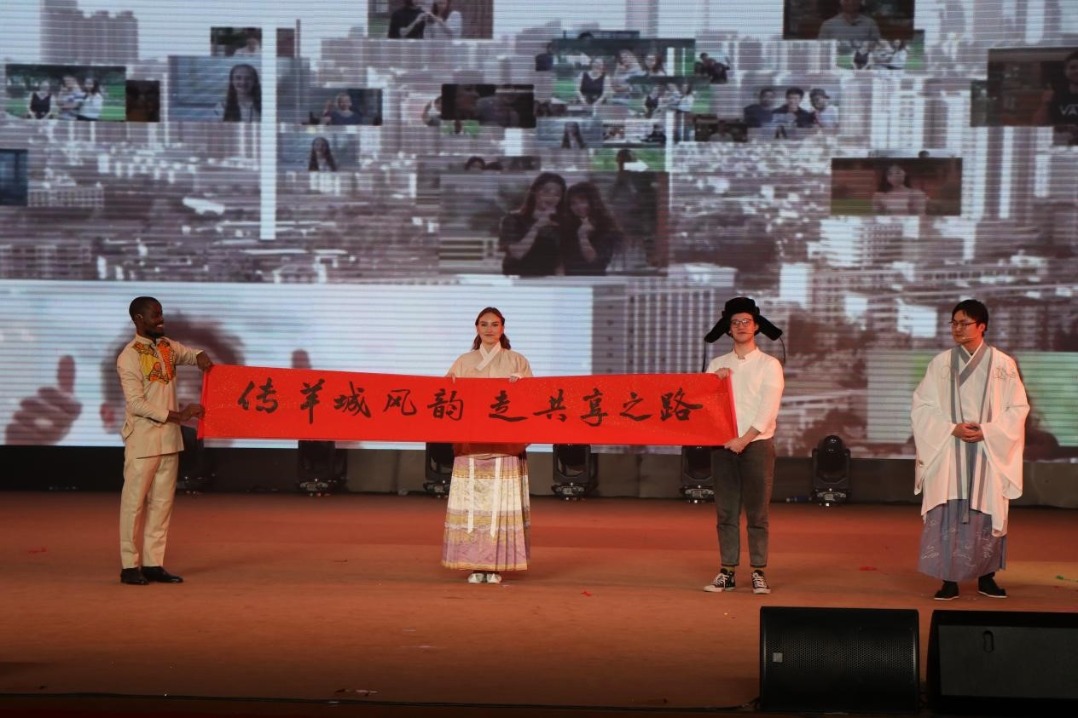
    Nairobi’s Kenyatta University hosted the conclusion of an intensive three-week Mandarin instruction program on Saturday, marking another milestone in China-Kenya educational cooperation. The specialized training initiative, administered through the university’s Confucius Institute, brought together 68 Kenyan educators and advanced students pursuing Chinese language studies.

    The comprehensive program, which commenced on November 17, featured a structured curriculum designed to accommodate varying proficiency levels. Participants received instruction in fundamental Mandarin communication skills, specialized terminology for professional contexts, and immersive cultural education. The virtual format enabled widespread participation from multiple educational institutions across Kenya.

    Beyond linguistic training, the institute facilitated practical cultural workshops showcasing traditional Chinese arts. Participants engaged in hands-on experiences with tea ceremony preparation, ink painting techniques, and intricate paper-cutting crafts. These sessions provided tangible connections to Chinese cultural heritage beyond textbook learning.

    Program coordinator Susan Wachira, who also serves as a lecturer at the institute, noted that such training initiatives have been part of their educational offerings since 2014. ‘These programs consistently demonstrate growing interest in Chinese language acquisition among Kenyan educators,’ Wachira observed. ‘They represent significant steps in building professional capacity for Mandarin instruction within Kenya’s educational system.’

    The Confucius Institute at Kenyatta University continues to serve as a pivotal hub for Sino-Kenyan educational exchange, with this latest program reinforcing its role in fostering cross-cultural understanding and professional development opportunities for Kenyan language educators.

  • New university in Dongguan to provide talent support for GBA

    New university in Dongguan to provide talent support for GBA

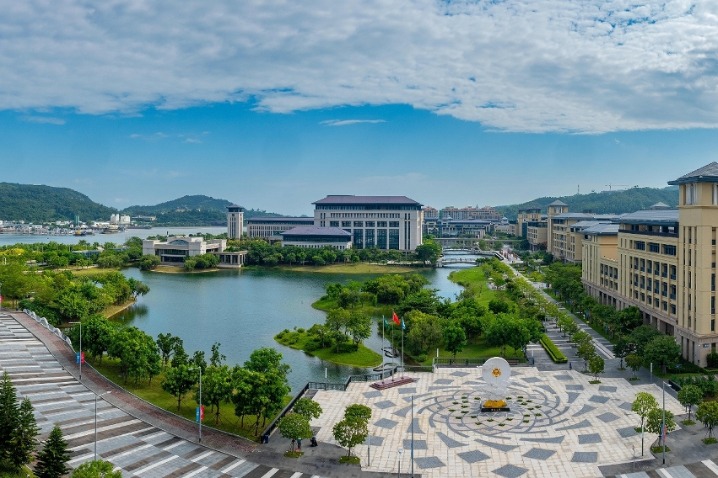
    Dongguan has officially inaugurated Great Bay University, a pioneering higher education institution designed to serve as an intellectual engine for the Guangdong-Hong Kong-Macao Greater Bay Area (GBA). The university celebrated its formal opening on Saturday with an inauguration ceremony attended by founding President Tian Gang, an esteemed academician of the Chinese Academy of Sciences.

    Strategically positioned within the pilot zone of the Comprehensive National Science Center near Songshan Lake, the university benefits from proximity to world-class research infrastructures including the China Spallation Neutron Source and the Songshan Lake Materials Laboratory. This location also places it adjacent to leading technology enterprises like Huawei, creating a vibrant ecosystem for innovation.

    President Tian articulated the institution’s distinctive educational philosophy, describing it as “a science and engineering-based, small yet elite, high-level research-focused institution.” The curriculum is specifically designed to address the GBA’s development needs through six focused disciplines: materials science, advanced engineering, life sciences, information science and technology, fundamental science, and financial management.

    The university has adopted an innovative pedagogical approach where first-year students delay declaring specific majors to focus on self-exploration before selecting their specialized fields in the second year, with opportunities for cross-disciplinary minor programs.

    Currently operating with its inaugural cohort of 80 students selected from 53 middle schools across 16 cities in Guangdong province, the institution has assembled a distinguished research faculty of over 300 members, all holding doctoral degrees with more than 70% possessing international study or work experience. The Ministry of Education formally approved the university’s establishment on June 19, with operations commencing in August.

  • UAE: RAK private schools see major upgrades with improved curriculum, higher ratings

    UAE: RAK private schools see major upgrades with improved curriculum, higher ratings

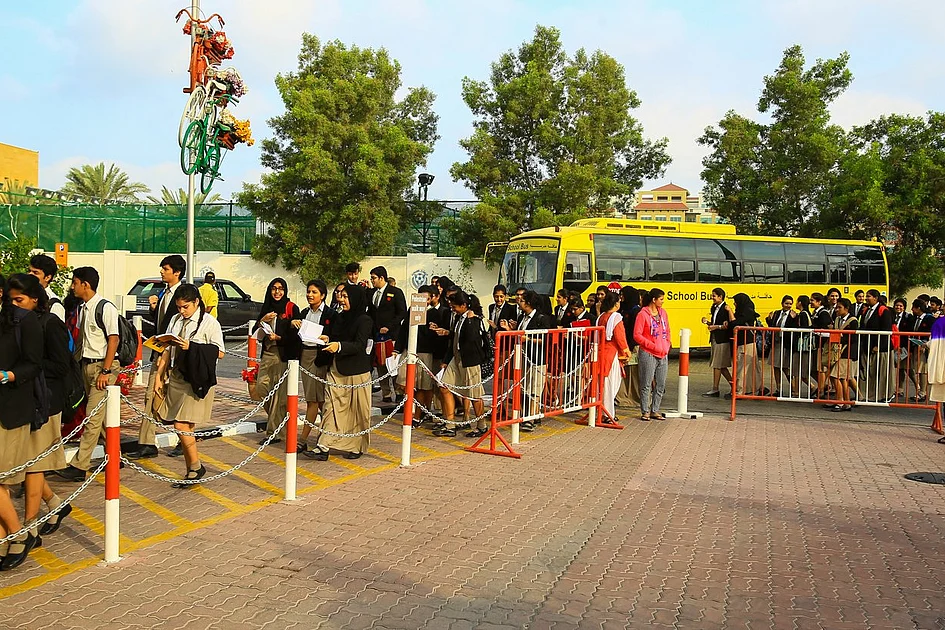
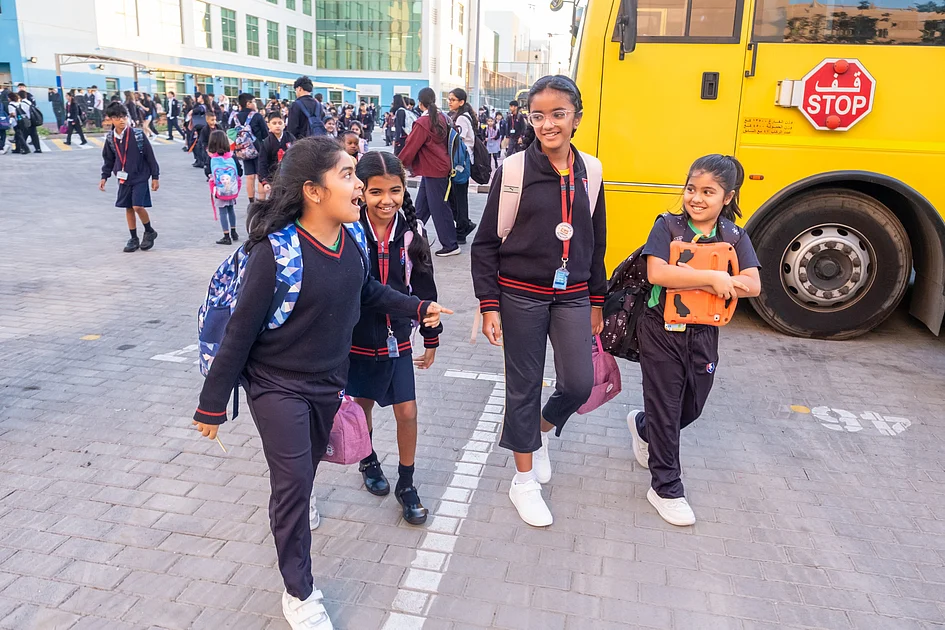
    Ras Al Khaimah’s private education sector is undergoing a remarkable transformation, establishing the emirate as a leading destination for future-focused learning. Under the guidance of the Ras Al Khaimah Department of Knowledge (RAK DOK), the educational landscape has seen substantial enhancements across curriculum development, teacher training, and institutional ratings.

    The expansion has attracted significant interest from educational operators, with several groups currently exploring market opportunities. This growth is exemplified by the recent opening of a new Filipino school, catering to the emirate’s diverse community needs. Dr. Abdulrahman Al Naqbi, RAK DOK board member, emphasized that this educational diversity enables both Emirati and expatriate families to access culturally and academically tailored schooling options.

    Beyond academic excellence, schools now demonstrate comprehensive support for student well-being through enhanced parental involvement, sports programs, and extracurricular activities. The educational philosophy emphasizes character development and community engagement alongside traditional learning. Curriculum development has become a collaborative process involving subject specialists, school leaders, and teachers, with educator feedback directly integrated into improvement initiatives.

    The strategic approach has yielded measurable results, with several institutions previously rated ‘Acceptable’ advancing to higher performance categories through targeted development plans and close supervision. When teaching standards required improvement, staff reassignments were implemented to prioritize student learning outcomes.

    Inclusion remains a cornerstone of RAK’s educational strategy, with significant investments in specialized resources, tools, and trained staff to support students with special needs. The emirate has also developed extensive talent discovery programs featuring weekend competitions in computing, sports, literature, poetry, and arts. These initiatives help students uncover individual strengths and gain confidence to excel at regional and international levels.

    All 34 private schools in Ras Al Khaimah now operate under RAK DOK supervision, which oversees inspection standards, development plans, and quality assurance across the sector. The ultimate objective is to create a modern, skills-based educational ecosystem that empowers students academically, personally, and prepares them for future challenges.

  • UAE schools warn long winter break could lead to ‘learning regression’

    UAE schools warn long winter break could lead to ‘learning regression’

    Educational leaders across the United Arab Emirates are raising concerns about potential academic setbacks during the country’s extended winter vacation period. With students embarking on a four-week break from December 8, 2025, to January 4, 2026, school administrators emphasize the delicate balance between necessary rest and maintaining educational momentum.

    Principals from multiple institutions have expressed that while downtime is crucial for student wellbeing, complete academic disengagement can result in significant learning regression. Research indicates that prolonged breaks may cause students to lose approximately 20-30% of their term gains in fundamental subjects like mathematics and literacy.

    Natalia Klykova, Principal of Woodlem British School in Ajman, explained their balanced approach: “We deliberately avoid traditional homework assignments, instead providing optional, curiosity-driven activities. These include brief daily reading sessions, practical kitchen measurements, nature observation journals, and pattern recognition exercises.”

    At Gems Founders School in Dubai, Executive Principal Matthew Burfield referenced OECD findings documenting measurable declines in academic achievement following extended holidays. “While we make digital learning platforms available,” Burfield noted, “we respect family diversity and avoid imposing rigid frameworks during vacation time.”

    Curriculum specialists advocate for “low-pressure academic continuity” through simple daily routines. Shanthi Subramanian, Head of Curriculum at The Oxford School Dubai, recommends integrating education into everyday activities: “Reading for pleasure for 10-15 minutes daily, involving children in budgeting and measurement tasks, and engaging educational board games can maintain cognitive engagement without pressure.”

    Schools are preparing for a supportive return in January 2026, implementing soft-start days, structured revision sessions, and wellbeing check-ins to help students readjust over an anticipated three-to-five day transition period.

  • Students forgo vacations to prep for overseas universities

    Students forgo vacations to prep for overseas universities

    A significant shift in educational priorities is emerging among Chinese middle-income families, who are increasingly redirecting vacation budgets toward short-term overseas study programs designed to prepare students for foreign universities. This trend represents a strategic investment in children’s future academic prospects, with families routinely allocating tens of thousands of yuan for these international educational experiences.

    Recent data from the New Oriental Education and Technology Group’s 2025 China Overseas Study Development Report reveals a substantial increase in students choosing to study abroad after participating in overseas programs. The figures show a remarkable jump from 27% in 2015 to 43% in 2025, indicating a growing preference for experiential learning before making long-term educational commitments.

    This educational approach has gained consistent momentum over four consecutive years, establishing the ‘experience first, decide later’ model as a mainstream pathway for Chinese students considering international education. The trend reflects evolving parental perspectives on vacation time, which increasingly view breaks as educational extensions rather than mere periods of relaxation or travel.

    Zhu Lulu, Vice-Principal of the high school division at Wuxi Dipont School of Arts and Science, notes that education companies have responded to this demand by expanding their offerings of short-term international programs. ‘Contemporary parents demonstrate more progressive attitudes toward education, recognizing the dual benefits of exploration and academic development during vacation periods,’ Zhu explained.

    These programs serve multiple purposes, from helping students assess campus environments and living conditions to providing rigorous academic preparation through credit-bearing university courses and selective research programs. Prestigious opportunities such as the Ross Mathematics Program and Yale Young Global Scholars not only enhance academic readiness but also strengthen college applications, offering tangible advantages in the competitive admissions landscape.

  • Future-ready school set to solve real-world challenges

    Future-ready school set to solve real-world challenges

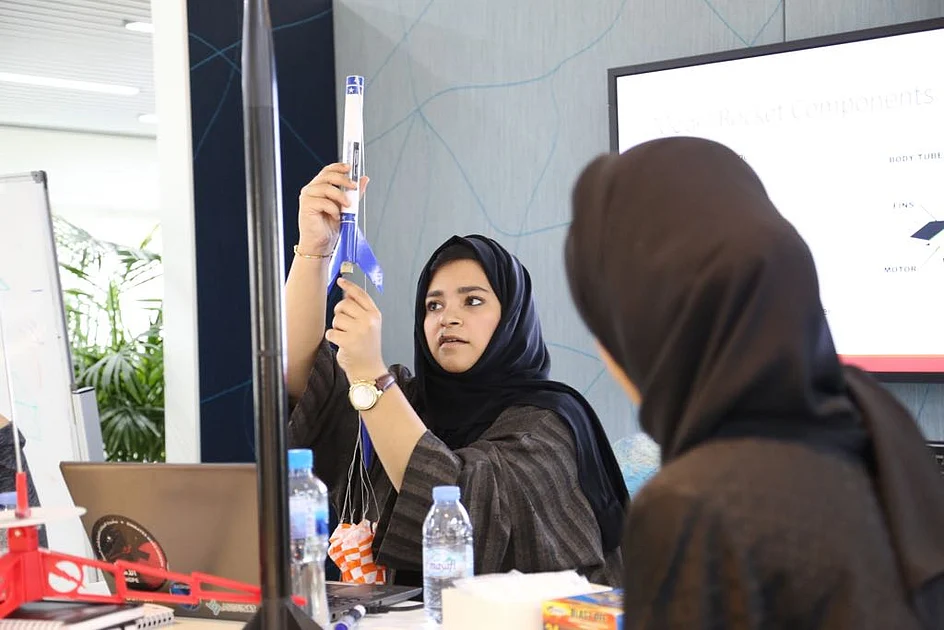
    Dubai has entered a new chapter in educational excellence with the groundbreaking establishment of the School of Research and Innovation (SRI), redefining conventional learning paradigms through its integrated approach to future-focused education. As the region’s first institution specifically designed to prepare students for rapidly evolving global challenges, SRI converges technology, industry partnerships, and innovation under a single comprehensive ecosystem.

    Under the enhanced British curriculum framework, SRI introduces the distinctive ‘Trailblazer’ program, enabling students to explore diverse passions spanning sports, technology, performing arts, and academic disciplines. This initiative provides dedicated time for hands-on, career-oriented projects that facilitate self-discovery and strength identification. According to Dino Varkey, Group CEO at GEMS Education, the program fundamentally connects theoretical learning to practical real-world applications while simultaneously developing essential communication skills through public speaking and debating platforms.

    The school’s creation responds directly to the UAE’s transformation into a global innovation hub, marking a strategic shift from importing human capital to cultivating homegrown talent. SRI’s philosophy centers on empowering young minds to think boldly, experiment fearlessly, and engage meaningfully with global challenges through university-grade laboratories, innovation studios, and cutting-edge facilities rarely seen in K-12 education.

    Despite being categorized among Dubai’s premium educational institutions, SRI’s value proposition extends beyond conventional metrics. The investment translates into unparalleled opportunities: students build functional mini-Teslas, program self-driving vehicles, train with cognitive tools utilized by Manchester United, and receive instruction from robotics specialists at Boston Dynamics and Kawasaki.

    The institution embeds research and innovation principles throughout daily learning experiences, prioritizing future-essential skills including creativity, problem-solving, adaptability, and technological fluency. By exposing students to diverse professional fields early in their academic journey, SRI ensures graduates enter university or workplace environments with clarified direction, confidence, and practical capabilities that transcend traditional academic preparation.

  • RIT Dubai hosts UAE’s youngest university student

    RIT Dubai hosts UAE’s youngest university student

    Rochester Institute of Technology Dubai has made educational history by admitting 12-year-old Leonardo Mariotti as the youngest university student ever enrolled in the United Arab Emirates. This groundbreaking initiative, developed in collaboration with Dubai’s Knowledge and Human Development Authority (KHDA), represents a pioneering approach to nurturing exceptional young talent through customized educational pathways.

    The young scholar’s journey to university began with early demonstrations of extraordinary spatial reasoning and innovative conceptualization abilities. Despite diagnosed neurological differences including Asperger’s, Dyslexia, Tourette’s, and ADHD, Leonardo has transformed these characteristics into assets that fuel his creative and technical capabilities. His mother, Yolanda Pohl-Mariotti, poetically describes her son as ‘carrying an entire orchestra within him,’ where each neurological trait contributes to a ‘breathtaking symphony of uniqueness.’

    Critical to his development was the supportive environment at Lycée Français International de l’AFLEC, where educators, specialists, and therapists collaboratively cultivated his potential through personalized learning strategies. This foundation of inclusive education enabled his transition to higher education at an unprecedented age.

    RIT Dubai has designed a bespoke curriculum aligned with Leonardo’s exceptional talents, incorporating advanced studies in Robotics, 3D Modeling and Printing, Engineering, Computer Coding, Artificial Intelligence, and New Media Design. Under the leadership of Dr. Yousef Al Assaf, the institution demonstrates its commitment to creating educational opportunities for students who transcend conventional academic pathways.

    This milestone reflects both RIT’s global legacy in technological education and the UAE’s national commitment to educational innovation and neurodiversity inclusion. Through coordinated efforts between the Ministry of Education and KHDA, the country continues to develop frameworks that recognize cognitive differences as strengths rather than limitations.

    Now completing his second month of university studies, Leonardo Mariotti stands as an inspiration to educational systems worldwide, challenging preconceived notions of age-appropriate learning and demonstrating that intellectual brilliance manifests in diverse forms.

  • Groundbreaking ceremony for Buckinghamshire New University’s campus at UAQ Free Trade Zone

    Groundbreaking ceremony for Buckinghamshire New University’s campus at UAQ Free Trade Zone

    UMM AL QUWAIN – In a significant development for higher education in the region, Cromwell UK University College has officially commenced construction of Buckinghamshire New University’s (BNU) campus within the Umm Al Quwain Free Trade Zone (UAQFTZ). The groundbreaking ceremony, held on December 3, 2025, represents a pivotal moment in bringing British higher education directly to the Northern Emirates.

    The ceremony was presided over by key figures including Professor Sarah Williams, Pro Vice-Chancellor of Buckinghamshire New University, and Nisar Muhammed, CEO of Cromwell UK University College, which serves as the academic infrastructure provider for BNU. Senior management from UAQ Free Trade Zone, including General Manager Johnson George, attended the event, underscoring the strategic importance of this partnership.

    Professor Williams emphasized the longstanding academic relationship between the institutions, characterizing the UAE campus development as “an exciting and accelerated phase of our academic partnership.” She noted that Cromwell has consistently proven to be “a long-standing and reputable partner of BNU” in previous collaborations.

    The new campus will function as an extension of the UK-based university, with Cromwell ensuring identical academic standards, curriculum structure, and quality benchmarks are maintained. This academic alignment guarantees that UAE students will receive education equivalent to that offered at BNU’s UK campuses.

    Johnson George articulated UAQFTZ’s strategic vision, stating: “This partnership exemplifies our commitment to developing a dynamic ecosystem that offers world-class opportunities for the community. It reflects our competitive strength: the ability to facilitate all requirements with unmatched speed and seamless efficiency, turning business vision into reality.”

    Nisar Muhammed described the project as transcending physical infrastructure, calling it “the beginning of a shared vision to build a better future through quality education.” He emphasized the critical role of structured guidance and mentorship in ensuring student success within the new academic environment.

    Upon completion, the campus will provide students across the Northern Emirates access to internationally recognized UK degrees without requiring overseas travel, significantly expanding local access to globally benchmarked higher education and supporting the region’s development as an education hub.

  • Chinese universities set to launch embodied intelligence majors to fill talent gap

    Chinese universities set to launch embodied intelligence majors to fill talent gap

    In a strategic response to mounting industry demands, China’s leading academic institutions are pioneering undergraduate programs in embodied intelligence—a cutting-edge field centered on intelligent systems with physical presence, exemplified by humanoid robotics.

    Prestigious universities including Shanghai Jiao Tong University, Beihang University, and Zhejiang University are establishing dedicated curricula to cultivate expertise in this emerging discipline. The Shanghai Jiao Tong University initiative, spearheaded by Professor Lu Cewu—co-founder of embodied intelligence firm Noematrix—exemplifies the industry-academia integration central to these programs. The university aims to create collaborative platforms with leading companies and develop industry-linked practicum centers.

    Employment prospects form a cornerstone of these programs. Beijing Institute of Technology’s embodied intelligence major plans to enroll 120 undergraduates, with approximately 58% expected to pursue advanced education and 42% transitioning directly to employment sectors including state-owned aerospace corporations, automotive manufacturers, and tech giants Huawei and Tencent.

    This educational shift responds to substantial market growth projections. According to the Development Research Center of the State Council, China’s embodied intelligence industry is forecast to reach 400 billion yuan ($56.5 billion) by 2030, exceeding 1 trillion yuan by 2035. Current industry compensation reflects this demand, with embodied intelligence professionals commanding average annual salaries of 333,400 yuan—surpassing other AI sectors by approximately 14%.

    The talent deficit is particularly acute, with Beijing Institute of Technology estimating a industry shortfall of approximately one million qualified professionals. Current educational offerings remain fragmented across traditional disciplines, with insufficient practical engineering training and outdated laboratory facilities.

    Government prioritization has accelerated program development, with embodied intelligence designated a key future industry in China’s recent policy directives. The field joins quantum technology, biomanufacturing, and 6G communications as identified economic growth engines for the coming five-year period.

    Global investment trends underscore the field’s prominence: humanoid robotics attracted over 32.8 billion yuan in financing through September 2025, with Chinese markets accounting for more than 80% of worldwide funding activities.

  • Inside Dubai nurseries where kids are turning into confident, curious learners

    Inside Dubai nurseries where kids are turning into confident, curious learners

    Dubai’s nurseries are undergoing a transformative educational shift through the implementation of a groundbreaking Quality Framework for Early Childhood Care and Education. Spearheaded by the Knowledge and Human Development Authority (KHDA), this initiative centers on developing the “Dubai Child” concept—a vision for young learners who embody capability, curiosity, and strong cultural connections.

    The comprehensive framework establishes five foundational pillars: learning and curriculum development; family and community partnerships; optimized learning environments; health, safeguarding and wellbeing prioritization; and enhanced system leadership. This structured approach provides educators with clear guidelines while offering parents greater confidence in their children’s early development.

    Leading nursery operators have embraced the framework with innovative adaptations. Lama Bechara-Jakins, CEO Middle East at Babilou Family, explains their implementation of the Sustainable Education Approach across all teaching and care practices. “Our six pillars—Emotional and Physical Security, Natural Curiosity, Nature-based Learning, Child Rhythms, Inclusion, and Partnering with Families—form the foundation of daily routines,” she notes.

    Classroom environments have been deliberately designed using a ‘less is more’ philosophy, creating calm, uncluttered spaces that reduce overstimulation and enhance focus. Natural elements and sensory-rich outdoor experiences help children feel grounded and connected to their environment.

    IdeaCrate Edutainment CEO Shifa Yusuff Ali emphasizes the framework’s alignment with child-centered learning principles. “We’ve strengthened staff upskilling in Montessori-inspired practices, child wellbeing, and safeguarding protocols,” she states. Their classrooms and outdoor areas are intentionally designed to feel calm and warm while providing rich sensory opportunities.

    The British Orchard Nursery and Teacher Training Centre has responded with enhanced planning and observation systems. Dr. Vandana Gandhi, CEO and Founder, describes their project-based, child-led learning approach where educators build on children’s interests to create purposeful experiences. “We’re expanding Arabic exposure through natural, joyful activities like stories and songs,” she adds.

    Inclusion practices receive particular emphasis across all institutions, with specialized initiatives like BONSAI (British Orchard Nursery’s Speciality for Accessibility and Inclusion) ensuring every child receives appropriate support. The framework promotes early identification systems and close family communication to create truly welcoming environments for all learners.

    This educational transformation represents Dubai’s commitment to developing future generations who are not only academically prepared but emotionally resilient, culturally connected, and naturally curious about the world around them.