分类: business

  • Argentina sees boom in e-commerce

    Argentina sees boom in e-commerce

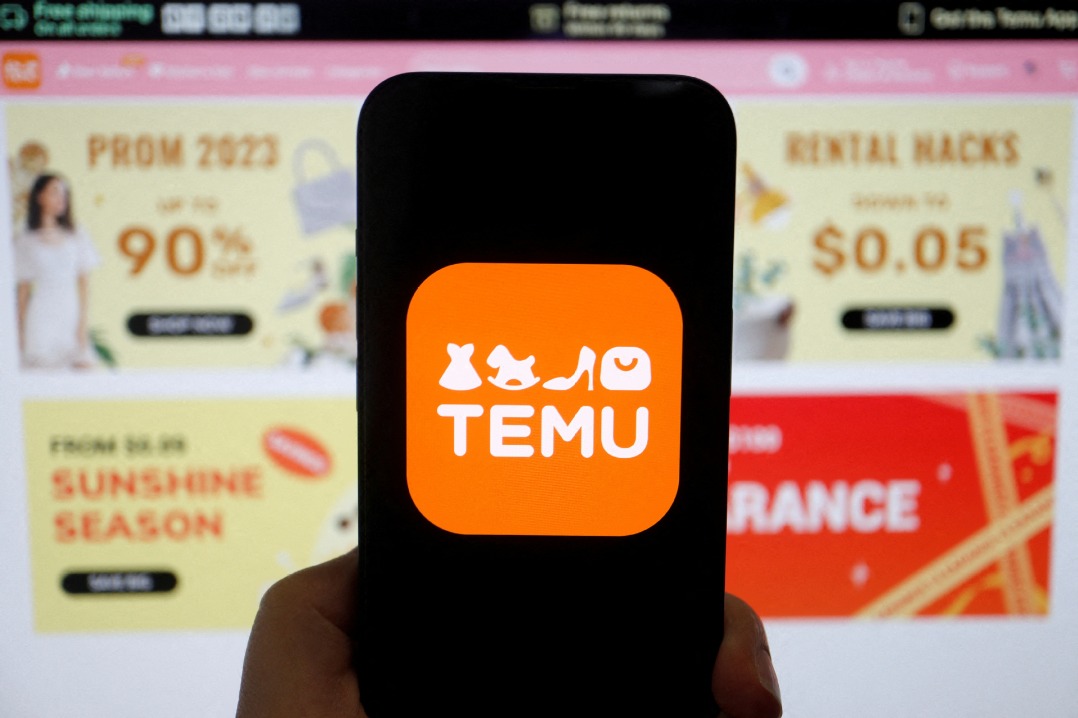
    Argentina is experiencing a seismic shift in consumer behavior as Chinese digital marketplaces transform the retail landscape. Amid persistent economic challenges including soaring inflation rates, Argentine consumers are increasingly turning to international e-commerce platforms for affordable alternatives to domestic products.

    Recent data from Argentina’s National Institute of Statistics and Censuses reveals extraordinary growth patterns in foreign purchases. October 2025 witnessed a remarkable 237% year-on-year surge in shipments from courier and online platforms, with total foreign purchases reaching $1.19 billion—a 48.8% increase from the previous year. Chinese platforms including Shein, Temu, and AliExpress have emerged as dominant players in this expanding market.

    The driving forces behind this e-commerce explosion are multifaceted. Argentine families now routinely source diverse products ranging from clothing and housewares to children’s supplies through these platforms, primarily motivated by significant price advantages. Vanina Anca, a 35-year-old mother from Buenos Aires, exemplifies this trend: “With what I spent in total on Shein, I could purchase half the items—or less—from local Argentine retailers.”

    Beyond affordability, Chinese platforms offer unique product availability that domestic markets cannot match. Retiree Marcelo Leonardi, 63, utilizes Temu to acquire specialized components for his 3D-printed remote-controlled car hobby. “I purchased motors, wheels, and other accessories that are difficult to find locally,” he noted, highlighting the convenience of integrated payment systems like Argentina’s Mercado Pago without additional costs.

    Government policy changes have significantly accelerated this e-commerce transformation. November’s elimination of import duties on small purchases under $400, coupled with reduced tariffs on clothing, footwear, fabrics, and yarn, has made cross-border shopping more accessible. Simplified customs procedures and the removal of the prior import licensing system in 2025 have further reduced bureaucratic barriers, contributing to total imports reaching $64.6 billion in the first ten months of the year.

    The competitive disparity is starkly evident in cost structures. Industry analysis by Pro Tejer indicates that taxes constitute approximately half of the final price of locally sold garments, with rent and banking fees accounting for another 25%. Chinese platforms benefit from tax exemptions on smaller orders, absence of physical store overhead, and subsidized shipping arrangements.

    While consumers celebrate these developments, local retailers face unprecedented challenges. Jorge Pignataro, a store owner in Buenos Aires’ Caballito neighborhood, reported noticeable declines in foot traffic: “Imported goods have become substantially cheaper than domestic products. I observe clothing stores struggling with reduced sales, and many new establishments closing within their first year.”

    This retail transformation reflects broader economic ties between China and Argentina. Bilateral trade reached $16.3 billion in 2024, with Argentine exports to China—primarily soybeans, beef, and barley—growing eightfold over two decades. The relationship has expanded beyond trade to include financial cooperation, evidenced by Argentina’s 2022 accession to the Belt and Road Initiative and the 2023 renewal of a currency swap agreement between the People’s Bank of China and Argentina’s Central Bank, which helps conserve dollar reserves and maintain trade fluidity.

  • Volkswagen’s $3.5B gamble: Can it win back share in the competitive Chinese market

    Volkswagen’s $3.5B gamble: Can it win back share in the competitive Chinese market

    In a strategic pivot signaling the end of an era for foreign automakers in China, Volkswagen AG has deployed €3 billion ($3.5 billion) to establish its largest overseas research and development hub in Hefei, China. This monumental investment represents a fundamental departure from decades of conventional practice where international manufacturers imported overseas-developed vehicles and shared technology with local partners.

    The German automaker, which once commanded over 50% of the Chinese automotive market, now confronts fierce competition from domestic manufacturers like BYD and Geely that have dramatically eroded foreign brands’ market share. Volkswagen’s new strategy centers on developing vehicles specifically engineered for Chinese consumers—models that may never appear on European roads but could potentially expand to Middle Eastern and Southeast Asian markets.

    This paradigm shift, initiated in 2022, responds to China’s dramatic transformation into the world’s most competitive auto market, where electric vehicles constitute approximately half of new car sales. Chinese consumers now expect cutting-edge digital features, from expansive touchscreen interfaces to advanced autonomous driving capabilities—expectations that rendered Volkswagen’s traditional offerings increasingly obsolete in a market representing nearly one-third of its global sales.

    The critical question remains whether this massive investment can generate profitability in a hypercompetitive environment that has driven prices to near-bankruptcy levels. According to industry analysts, Volkswagen’s strategy may merely stabilize current market share rather than recapture lost dominance. The company’s Audi division has already pioneered this approach with its new AUDI brand, while Volkswagen prepares to launch China-developed models by 2026.

    China’s accelerated development cycle—12-18 months for new vehicles compared to the traditional 3-5 years for global automakers—has compelled Volkswagen to decentralize decision-making power to its Chinese operations. This move toward localized autonomy mirrors similar strategies adopted by competitors like Toyota, as foreign manufacturers increasingly recognize China not merely as a manufacturing base but as a source of innovation and technological advancement.

    Volkswagen’s collaboration with electric vehicle maker Xpeng exemplifies this new approach, focusing on rapid market entry and developing sophisticated electronic architecture systems. A recent German Chamber of Commerce survey in North China revealed that approximately half of responding companies anticipate Chinese competitors becoming innovation leaders within five years, with 9% believing they already hold that position.

  • Asian shares slip after Wall Street logs its worst day in 3 weeks

    Asian shares slip after Wall Street logs its worst day in 3 weeks

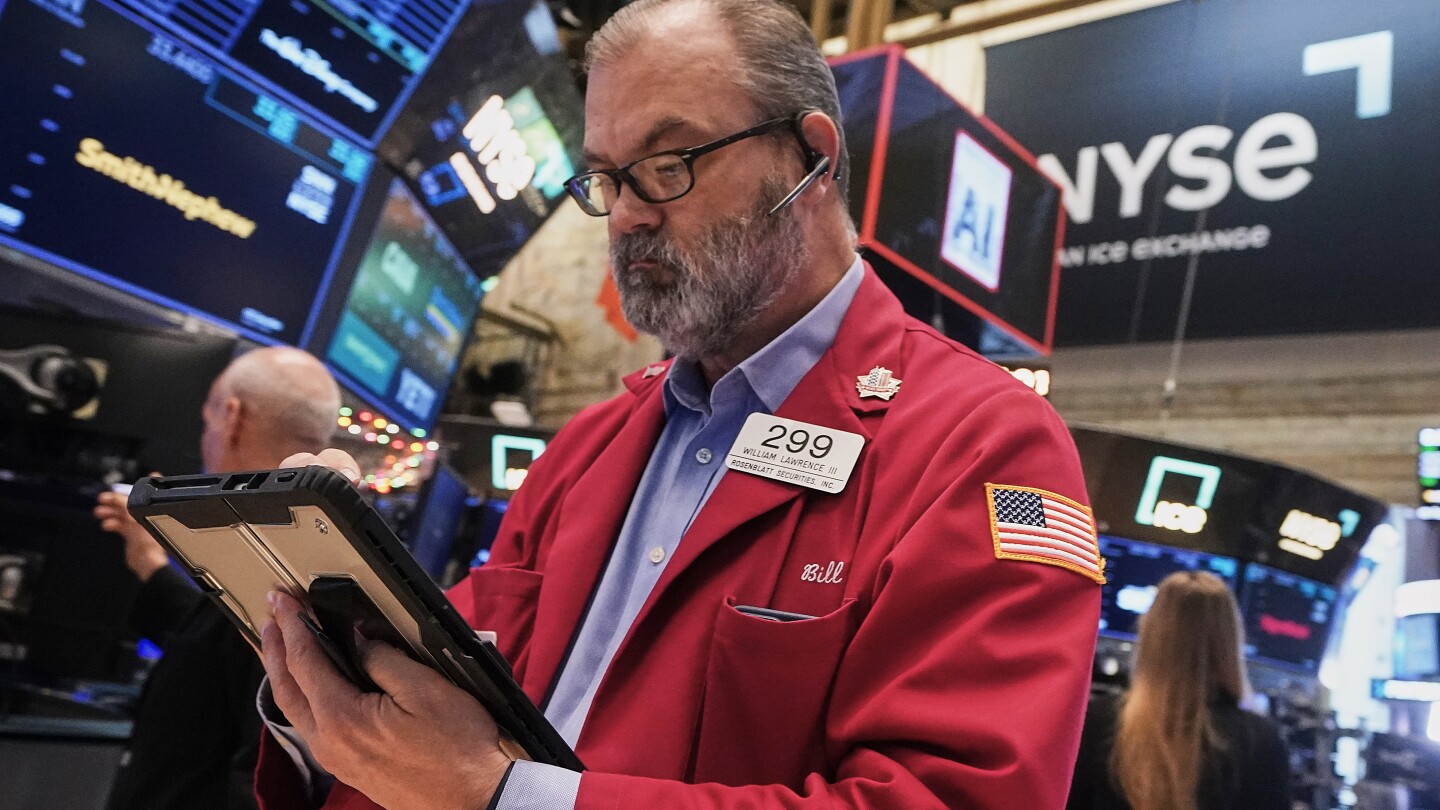
    Asian financial markets opened the week with significant declines as fresh economic indicators from China revealed persistent weakness in the world’s second-largest economy. The regional downturn extended last week’s disappointing performance on Wall Street, where artificial intelligence stocks experienced substantial corrections.

    Japan’s Nikkei 225 index led the regional retreat, dropping 1.5% to 50,092.10 points. Market participants remained cautious ahead of the Bank of Japan’s anticipated interest rate decision this week. Despite the market decline, the BOJ’s latest Tankan survey revealed a modest improvement in sentiment among major manufacturers, with the optimism index climbing to 15 from 14 in the previous quarter—marking the highest level in four years.

    The positive survey results contrasted with Japan’s recent economic contraction, which saw the economy shrink at a 2.3% annual pace in the July-September period—the first decline in six quarters. However, trade stability has been bolstered by the recent U.S.-Japan agreement that limits baseline import duties to 15%, providing relief for major automakers and electronics manufacturers.

    South Korea’s Kospi fell 1.2% to 4,117.68, while Hong Kong’s Hang Seng declined 0.7% to 25,786.45. China’s Shanghai Composite index managed a slight gain of 0.1% to 3,892.45, despite concerning economic data showing fixed-asset investment dropped 2.6% in November year-on-year. Cumulative data revealed an 11.1% decline in such investments through the first eleven months of 2023.

    Additional economic indicators showed retail sales growing 4% year-on-year in January-November, while factory output increased 4.8%. These figures followed China’s recent high-level policy meeting that produced no major economic shifts, maintaining the existing approach to stimulating consumer spending and domestic investment.

    Capital Economics analyst Zichun Huang commented, ‘Policy support should help drive a partial recovery in the coming months, but this probably won’t prevent China’s growth from remaining weak across 2026 as a whole.’

    The broader Asian region mirrored the downward trend, with Australia’s S&P/ASX 200 slipping 0.7% and Taiwan’s benchmark losing 1.1%. Meanwhile, U.S. futures indicated a potential rebound, with S&P 500 and Dow Jones Industrial Average futures both up 0.3%.

    The market weakness followed Friday’s significant tech selloff on Wall Street, where the S&P 500 fell 1.1% from its record high to 6,827.41—marking its worst performance in three weeks. The Nasdaq composite dropped 1.7% to 23,195.17, dragged down by AI-related stocks including Broadcom’s 11.4% plunge despite reporting stronger-than-expected quarterly profits.

    In commodity markets, U.S. benchmark crude oil gained 30 cents to $57.74 per barrel, while Brent crude rose 29 cents to $61.41. Currency markets saw the U.S. dollar slip slightly against the yen to 155.37, while the euro held steady at $1.1739.

  • Wall St Week Ahead: Investors eager for delayed data to shed light on US economy

    Wall St Week Ahead: Investors eager for delayed data to shed light on US economy

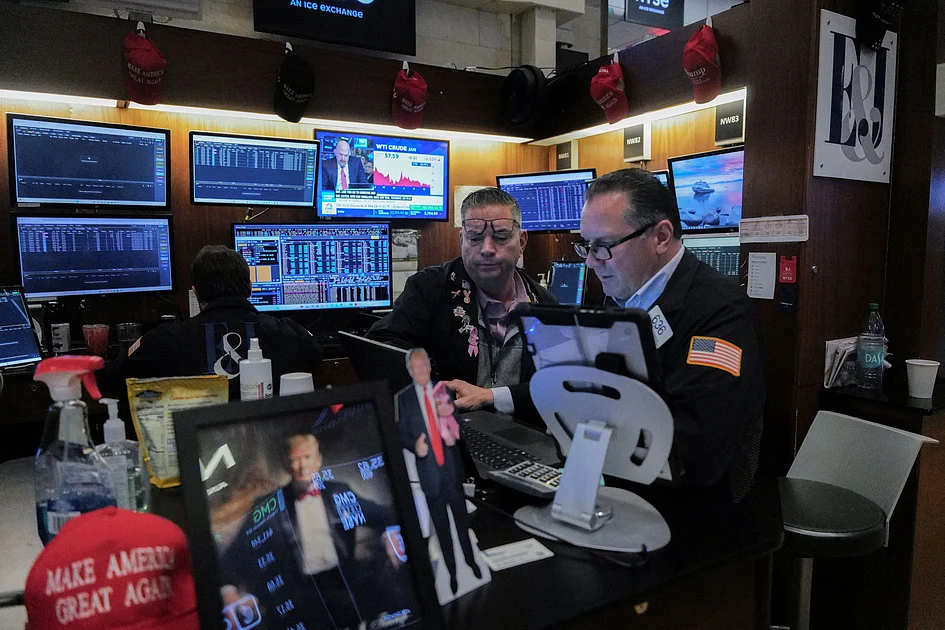
    Financial markets are poised for a pivotal week as long-delayed economic indicators finally emerge, offering crucial insights into the health of the U.S. economy. This data release comes after a 43-day federal government shutdown created an unprecedented information vacuum, forcing investors and policymakers to navigate without key metrics.

    The upcoming week features the highly anticipated November jobs report on Tuesday, followed by the critical consumer price index (CPI) reading on Thursday. These releases represent the first comprehensive economic snapshot in months and could significantly influence market direction through year-end. The data arrives amid a delicate balance for the Federal Reserve, which recently implemented its third consecutive quarter-point rate cut while signaling potential pause in further easing.

    Market participants face conflicting signals. While the S&P 500 has achieved record highs and maintains a 16% year-to-date gain, recent volatility in technology stocks—particularly AI-focused companies like Oracle and Broadcom—has introduced uncertainty. The technology sector’s weakness following disappointing quarterly reports has tempered the AI-driven rally that previously propelled markets.

    According to Jim Baird, Chief Investment Officer at Plante Moran Financial Advisors, ‘Strong corporate earnings certainly supported markets, and anticipated Fed rate cuts provided a boost. Now attention returns to the underlying economy’s trajectory.’

    The employment data carries particular significance. Fed Chair Jerome Powell has questioned the accuracy of recent payroll numbers, suggesting actual job growth might be substantially weaker than reported. David Seif, Nomura’s chief economist for developed markets, notes the unusual circumstance: ‘We have essentially three months of both labor and inflation data coming out between the December and January Fed meetings.’

    Inflation trends remain equally crucial. With CPI running persistently above the Fed’s target, further monetary easing might encounter complications. Three Fed policymakers recently dissented from the latest rate cut decision, reflecting internal divisions about appropriate policy direction.

    Morgan Stanley economists observed, ‘We continue to expect further cuts in January and April, but if the labor market stabilizes, future cuts may not come until inflation decelerates.’

    Additional factors could influence trading dynamics. Investors may seek to lock in year-to-date profits as the holiday season approaches, potentially creating selling pressure. Reduced trading volumes during the holiday period could also amplify price movements across asset classes.

    Marvin Loh, Senior Global Macro Strategist at State Street, cautions, ‘If you get some shaky numbers or don’t get a resounding reason to add risk, it could increase market volatility due to thinner trading conditions.’

  • Spain’s commitment to renewable energy may be in doubt

    Spain’s commitment to renewable energy may be in doubt

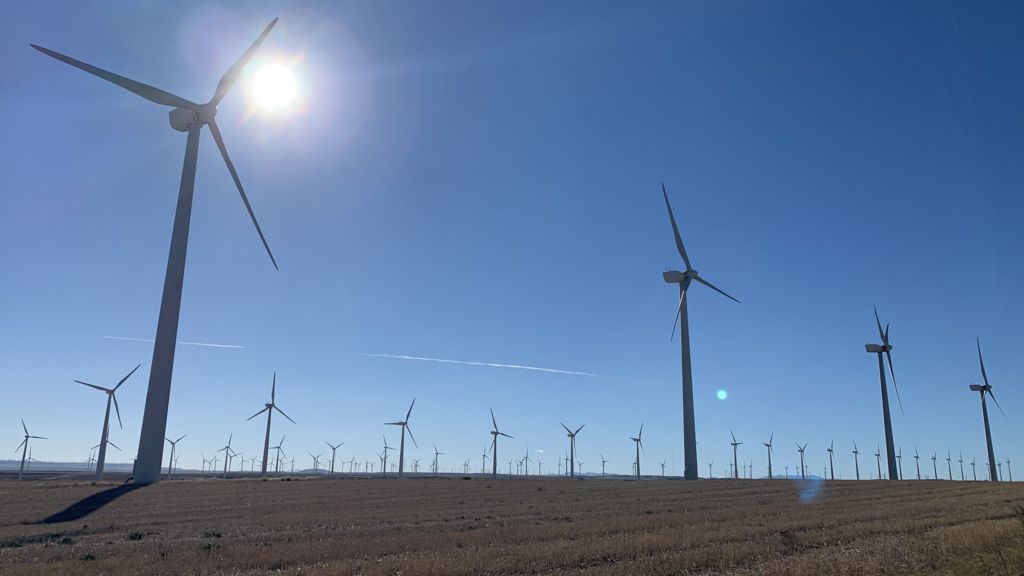
    In the windswept plains of Aragón, northeastern Spain, the sleepy town of Figueruelas has emerged as an emblematic symbol of the nation’s ambitious renewable energy transition. Towering wind turbines cast their shadows over the landscape, representing Spain’s remarkable achievement: over 57% of electricity now generated from wind and solar sources, nearly doubling the 2017 figure of just one-third.

    The region’s renewable abundance has attracted massive international investment, most notably a joint €4 billion venture between Chinese battery giant CATL and Dutch automaker Stellantis to construct a major electric vehicle battery manufacturing facility. Chinese Ambassador Yao Jing characterized this project as “one of the biggest Chinese investments Europe has ever seen.”

    Figueruelas Mayor Luis Bertol Moreno explains the strategic logic: “We’re in Aragón, where there’s wind all year round, there are lots of hours of sunshine, and we are surrounded by wind turbines and solar panels. Those energy sources will be crucial in generating electricity for the new factory.”

    However, Spain’s renewable energy model faces intense scrutiny following a significant blackout on April 28th that left millions without power across Spain and Portugal for several hours. The incident ignited fierce political debate, with conservative opposition leader Alberto Núñez Feijóo accusing the government of “fanaticism” in pursuing its green agenda and suggesting over-reliance on renewables might have caused the outage.

    National grid operator Red Eléctrica vehemently denies this connection. Concha Sánchez, head of operations, stated: “We have operated the system with higher renewable rates previously with no effect on the security of the system. Definitely it’s not a question of the rate of renewables at that moment.” She attributed the blackout to a combination of factors, including anomalous voltage oscillations from an “unknown event” in the system moments before the collapse.

    The incident has intensified discussion about Spain’s planned nuclear plant closures between 2027 and 2035, which would make the country an outlier in Europe where nuclear energy is experiencing a renaissance. Ignacio Araluce, president of industry association Foro Nuclear, argues that “It’s prudent to have a mix of renewables and nuclear energy” to ensure stability when weather conditions don’t favor solar or wind generation.

    Spain’s political landscape adds further uncertainty to its energy future. The Socialist-led coalition, which championed the aggressive renewable transition, has seen its parliamentary majority collapse amid corruption scandals, raising possibility of snap elections. Polls suggest a right-wing government would likely place less emphasis on renewables and advocate returning to more traditional energy sources.

    Despite these challenges, Spain continues its green transition with a target of 81% renewable electricity by 2030. For communities like Figueruelas, this means not just clean energy but economic revitalization—the town of 1,000 expects an influx of 2,000 Chinese workers for the battery factory construction and up to 35,000 indirect jobs once operational.

    As local resident Manuel Martín observes: “These kinds of investments revitalize the area, they revitalize the construction sector, hostelry. And the energy is free—it just depends on the sun and the wind.”

  • UAE banks power ahead in Q3, outpacing regional peers

    UAE banks power ahead in Q3, outpacing regional peers

    The United Arab Emirates banking industry has demonstrated exceptional financial performance during the third quarter of 2025, significantly outpacing regional competitors through a combination of strategic initiatives and favorable economic conditions. According to the latest UAE Banking Pulse report from global consulting firm Alvarez & Marsal, the sector’s remarkable growth trajectory has been fueled by expanding loan portfolios, resilient profit margins, and substantial digital transformation investments.

    Macroeconomic foundations have strengthened considerably, with the International Monetary Fund revising upward the UAE’s real GDP growth forecast to 4.8% for fiscal year 2025. This optimistic economic backdrop has facilitated substantial banking sector expansion, evidenced by a 6.5% quarter-on-quarter increase in aggregate net loans and advances alongside a 4.3% growth in deposits. The loan-to-deposit ratio climbed to 77.8%, indicating vigorous credit demand relative to funding growth.

    Despite two interest rate reductions implemented by the US Federal Reserve and the Central Bank of the UAE, financial institutions successfully maintained margin stability through disciplined asset repricing strategies. Net interest margin improved marginally to 2.45% from 2.43% in the previous quarter, while net interest income surged 5% quarter-on-quarter to AED 26.5 billion. Fee and commission income accelerated by 7.3%, highlighting effective revenue diversification across the sector.

    Operational income reached AED 41.9 billion, representing a 3% quarterly increase, though moderating from the 5% growth recorded in Q2. Net income demonstrated robust health with a 4.3% quarterly improvement to AED 23.6 billion, supported by reduced impairment charges and tax expenses. Emirates NBD emerged as a particularly strong performer, delivering 7% growth in net interest income and 6.9% expansion in fee income.

    Performance metrics showed notable improvement with return on equity climbing 25 basis points to 19.6% while return on assets remained stable at 2.1%. Capital adequacy ratios strengthened to 16.6%, providing enhanced buffers against potential market volatility.

    Credit expansion displayed broad-based strength across segments. Corporate and wholesale lending, representing 57.5% of total portfolios, expanded 7.5% quarter-on-quarter. Retail loans grew 4.4%, while government lending rebounded dramatically with 8.1% growth. Emirates NBD led sector lending with a 10.7% increase in net loans, driven by exceptional corporate banking performance.

    Funding dynamics shifted toward time deposits, which surged 9.6% quarter-on-quarter as depositors sought to lock in higher rates, even as current and savings account balances experienced slight contraction. RAKBANK achieved the highest deposit growth at 7.4%, with Dubai Islamic Bank contributing significantly through a 6.4% increase.

    Asset quality metrics showed substantial improvement as the non-performing loan ratio declined to 2.6% from 2.9% in Q2. Coverage improved to 115.2% while the cost of risk eased to 0.45%, supported by a 6.9% reduction in impairment charges. Stage 3 loans decreased 5.9% quarter-on-quarter, reflecting disciplined credit underwriting and enhanced risk management practices.

    Strategic digital initiatives accelerated across the sector. Abu Dhabi Commercial Bank announced over 150 artificial intelligence use cases targeting AED 4 billion in value creation. Dubai Islamic Bank established a partnership with HCLTech to develop Shariah-compliant technological innovations. Abu Dhabi Islamic Bank launched industry-first real-time cross-border transfers to 11 billion global endpoints, while Emirates NBD expanded its near real-time payment network to 40 countries and acquired a 60% stake in India’s RBL Bank for $3 billion.

    Regulatory developments included new financial legislation extending oversight to fintech and digital assets, reinforcing governance and compliance standards across the banking ecosystem.

    Investor sentiment reflected operational strength as UAE banking stocks gained approximately 30% over the past year, positioning the sector among global top performers. Attractive valuations persisted with banks trading at an average price-to-earnings ratio of 8.5x and price-to-book of 1.67x, supported by high-teens returns and robust capital positions.

    The outlook for 2026 remains broadly positive, with analysts anticipating continued balance sheet expansion driven by strong non-hydrocarbon growth and sustained credit demand. While margin pressure may persist amid potential further rate cuts, banks are positioned to offset compression through fee income growth, digital innovation, and cost efficiencies from AI implementation. Asset quality is expected to remain stable supported by prudent risk management and substantial provisioning. With capital buffers at healthy levels and investor confidence sustained by attractive valuations, the sector is poised to maintain its regional outperformer status, though global liquidity trends and geopolitical risks warrant ongoing monitoring.

  • Ruijie Reyee concludes strategic MEA partner connect 2025 in Dubai

    Ruijie Reyee concludes strategic MEA partner connect 2025 in Dubai

    Dubai served as the strategic hub for Ruijie Networks’ MEA Partner Connect 2025, where the global networking solutions pioneer convened 150 key stakeholders from across the Middle East and Africa region. The December 11 gathering brought together value-added distributors, authorized deployment partners, and tiered channel allies to explore emerging opportunities within the Ruijie Reyee ecosystem.

    Amid accelerating digital transformation initiatives throughout MEA, the event spotlighted escalating demand for reliable and simplified networking infrastructure. Ruijie Reyee demonstrated its enhanced partner ecosystem capabilities, showcasing specialized solutions tailored to diverse market requirements. The company unveiled its newly launched cloud platforms—Cloud Pro for enterprise networks and Cloud ISP for small-to-medium service providers—providing partners with hands-on experience and technical insights.

    Ryan Liu, General Manager for Ruijie’s MEA region, emphasized the brand’s regional penetration: ‘Our presence across 50 MEA countries stands as testament to our partners’ dedication. This forum enabled us to share industry trends, demonstrate our latest cloud, SD-WAN, and intelligent networking solutions, while recognizing our partners’ achievements.’

    The strategic conclave offered exclusive access to Ruijie’s regional leadership and technical experts, reinforcing collaborative pathways to capitalize on the region’s expanding market. Designed to fortify strategic alliances, the event underscored Ruijie Reyee’s leadership in innovative networking solutions while delivering actionable business expansion insights.

    Backed by 23 years of industry expertise and eight R&D innovation centers, Ruijie Networks operates through 20,000+ channel partners across 100+ countries. The Reyee sub-brand focuses exclusively on SMB and SME markets, delivering comprehensive networking solutions including wireless access points, switches, security appliances, and Gartner-recognized AI cloud management platforms.

  • Hashgraph Ventures completes first close, cementing Abu Dhabi’s position as a global Web3 hub

    Hashgraph Ventures completes first close, cementing Abu Dhabi’s position as a global Web3 hub

    Abu Dhabi has solidified its standing as a premier global center for Web3 innovation following Hashgraph Ventures’ announcement of successfully completing the first close of its early-stage venture capital fund. The Abu Dhabi Global Market (ADGM)-regulated fund, which specializes in Web3 and artificial intelligence investments, has reached a significant milestone enabling immediate capital deployment to visionary entrepreneurs reshaping the digital economy landscape.

    Having secured its fund management license from ADGM’s Financial Services Regulatory Authority (FSRA) in 2024, Hashgraph Ventures launched a $100 million global venture capital initiative (Hashgraph Venture Fund-I) that exceeded subscription expectations by 20%. The fund’s strategic focus targets blockchain and deep technology enterprises at Seed, Series A, and Series B development stages, positioning itself at the forefront of digital transformation financing.

    In a parallel development demonstrating active deployment, Hashgraph Ventures confirmed its seed investment in Bloxtel—an innovative telecommunications infrastructure company pioneering tokenized eSIM (dSIM) technology and blockchain-powered 5G access points. Bloxtel’s leadership team includes the founders of Simless, the original creators of eSIM technology currently integrated into modern smartphones. This investment represents a strategic move toward decentralizing and simplifying private network deployment through cutting-edge blockchain applications.

    Kamal Youssefi, Co-Founder and Executive Chairman of Hashgraph Ventures, emphasized the significance of this achievement: “This marks a defining moment for Hashgraph Ventures and for the region’s investment and innovation landscape. Abu Dhabi has become a global hub for visionary founders, investors, and policymakers—and we are proud to contribute to its rise as the world’s leading hub for Web3, AI, and decentralized networks.”

    Dara Campbell, Senior Executive Officer of Hashgraph Ventures, added context to the announcement: “To complete our first close and announce a sector-defining investment during Abu Dhabi Finance Week—one of the most influential global finance gatherings—sends a clear message about our intent and ambition. Hashgraph Ventures is building a world-class investment platform from Abu Dhabi, for the world.”

    The successful fund closure and strategic investment underscore the United Arab Emirates’ growing influence in the global digital infrastructure sector, positioning Abu Dhabi as a magnet for technological innovation and substantial venture capital investment in emerging technologies.

  • Liveability now key in Dubai’s luxury real estate market

    Liveability now key in Dubai’s luxury real estate market

    A fundamental transformation is reshaping Dubai’s high-end property sector, where the traditional allure of prestigious brands is being eclipsed by a new premium on holistic wellness and sustainable living. This paradigm shift, driven by an influx of global ultra-high-net-worth (UHNW) individuals, is redefining luxury not as mere opulence but as an ecosystem that enhances physical and mental wellbeing.

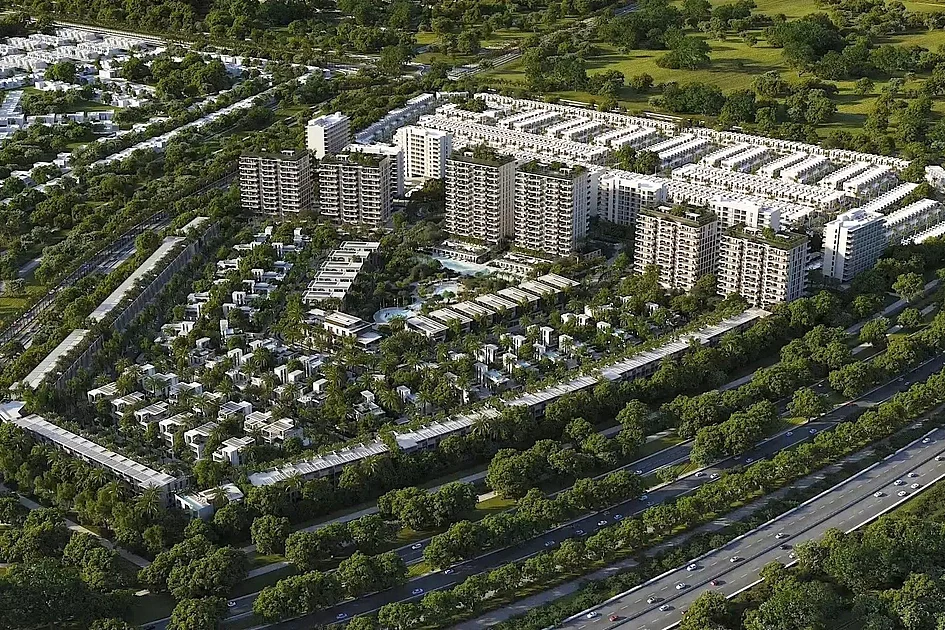
    At the forefront of this movement is MAG Lifestyle Development with its Dh3 billion Keturah Reserve project in Meydan. Conceived as a pioneering ‘bio-living’ community, the development is strategically located a short, low-congestion drive from Downtown Dubai. CEO Talal M. Al Gaddah identifies liveability as the paramount concern for today’s affluent buyers, stating that properties which genuinely elevate resident wellness create a natural, sustainable demand. This, he argues, forms the foundation of a superior investment proposition: “where people insist on living, capital inevitably follows.”

    The design philosophy transcends conventional landscaping. Thousands of Ficus and ‘Rain’ trees from Thailand, alongside sculptural dry gardens, are integral functional infrastructure designed to foster a profound connection to nature. The community will comprise 533 low-rise apartments, 93 sold-out townhouses, and 90 villas, all meticulously crafted to maximize natural light, airflow, and harmony with the environment.

    Enhancements to the original blueprint include expanded residential blocks, upgraded wellness amenities, and improved communal spaces. Apartments, ranging from 1,106 to 4,883 sq ft, are notably larger than market averages. Further elevating the resident experience is a premium concierge service, featuring on-demand Rolls-Royce chauffeur bookings accessible via a dedicated community application.

    In a significant move towards market transparency and integrity, fäm Properties has been appointed as the exclusive Master Agency for the project’s final sales phase. New investors are offered milestone-based payment plans coupled with contractual delivery guarantees. Main contractor CITIC Middle East Contracting LLC is committed to a phased handover schedule, with townhouses completed by Q2 2027, apartments by Q3/Q4 2027, and villas by Q1 2028. This approach is hailed as aligning with the Dubai Land Department’s objectives for robust investor protection and is seen as empowering brokers who prioritize client financial safety.

  • Flydubai launches direct flights between UAE to Riga in Latvia

    Flydubai launches direct flights between UAE to Riga in Latvia

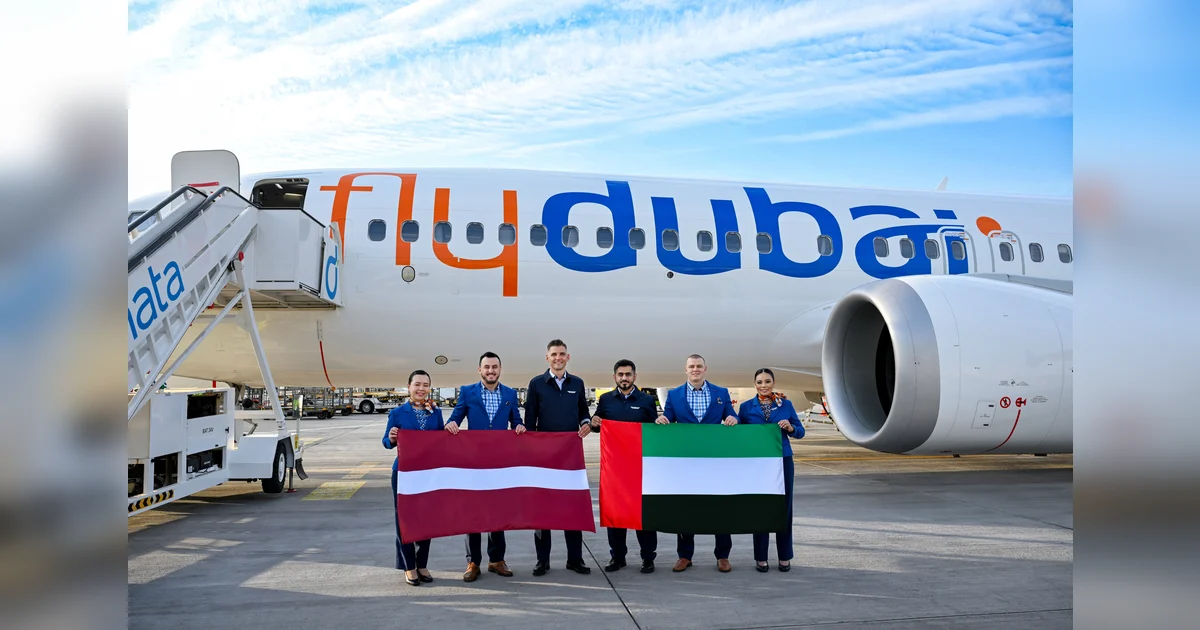
    Dubai-based carrier flydubai has officially launched direct flight services to Riga, Latvia, establishing a new aerial bridge between the United Arab Emirates and the Baltic region. The inaugural flight from Dubai International Airport (DXB) touched down at Riga Airport (RIX) amid ceremonial welcomes from airport authorities, signaling the commencement of scheduled three-weekly operations on this route.

    This strategic expansion represents flydubai’s continued European market penetration, complementing recent service initiations to Chișinău (Moldova), Iași (Romania), and Vilnius (Lithuania). The airline’s European network now encompasses 35 destinations across 20 countries, demonstrating its commitment to connecting underserved markets with Dubai’s global aviation hub.

    UAE Ambassador to Latvia Noora Juma emphasized the diplomatic significance of this aviation milestone, stating: “This launch inaugurates a new chapter in UAE-Latvia relations. The direct air connection will catalyze multidimensional exchange opportunities spanning tourism, commerce, and cultural spheres.”

    Aviation executives highlighted the route’s economic implications. Jeyhun Efendi, flydubai’s Divisional Senior Vice President of Commercial Operations, noted: “Our Riga service reinforces flydubai’s European presence while aligning with our strategic vision of expanding connectivity to dynamic emerging markets. We’re providing passengers with a premium, convenient travel experience supported by ongoing investments in fleet and service enhancements.”

    Riga Airport authorities welcomed the development as a significant enhancement to Baltic connectivity. Laila Odiņa, Chairperson of RIX Riga Airport’s Board, commented: “This connection benefits travelers seeking to explore Dubai’s metropolitan offerings and UAE’s tourism attractions while simultaneously strengthening bilateral economic relations. Conversely, UAE residents gain direct access to the cultural and natural treasures of Baltic and Scandinavian regions.”

    The new route is projected to stimulate bidirectional tourism flows and bolster growing economic ties between the nations, providing Latvian travelers enhanced access to flydubai’s extensive network of onward connections through Dubai’s international aviation hub.