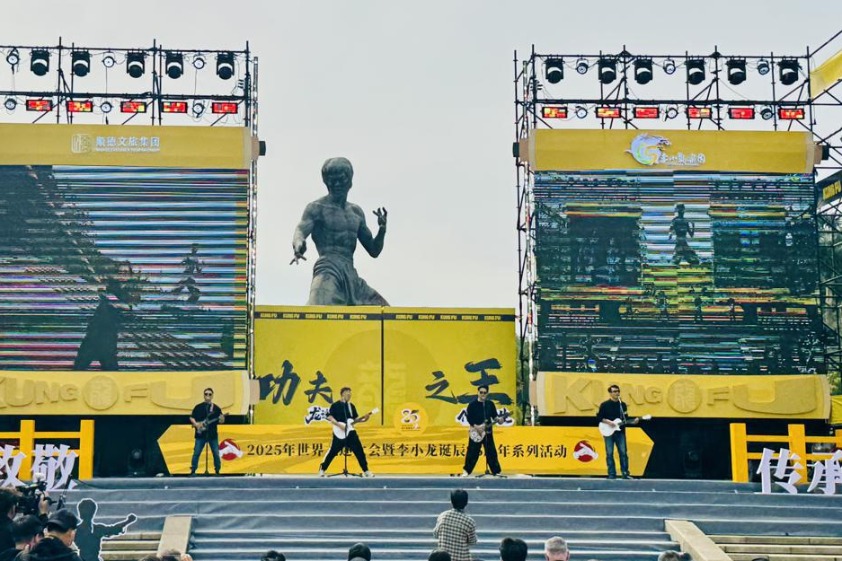
Foshan’s Shunde district has launched an ambitious cultural tourism initiative centered on the enduring legacy of martial arts legend Bruce Lee. The 2025 International Bruce Lee Fans Convention, held from November 27-29 at Bruce Lee Paradise in Jun’an township, marked both the convention’s opening and commemorative events for what would have been Lee’s 85th birthday.
Local officials emphasized Lee’s profound cultural impact, noting how he not only introduced the term ‘kung fu’ to the English language but elevated Chinese martial arts to global cultural significance. Wang Jinghua, senior official from Shunde’s district committee, highlighted Lee’s role in making Chinese kung fu a recognized element of humanity’s cultural heritage.
The convention unveiled several significant developments, including the official designation of November 27 as ‘Shunde Kung Fu Day’ to promote Chinese culture and martial arts worldwide. The event attracted international fans and martial arts figures, showcasing Foshan’s strategy to transform cultural assets into economic opportunities.
Lao Lujun of Shunde Culture and Tourism Group revealed plans to cultivate cultural tourism as both a pillar industry and community benefit by leveraging Lee’s global recognition. The initiative incorporates a innovative ‘kung fu + cuisine + tourism’ model, featuring for the first time a workshop combining Shunde’s martial arts traditions with its renowned culinary heritage.
Complementing the convention, the Mars Martial Championship—a premier combat sports tournament—commenced alongside academic forums, musical performances, and specialized kung fu tours. Project leader Zeng Futian explained these efforts represent broader district plans to integrate cultural development with urban construction and economic growth.
Bruce Lee, born in San Francisco in 1940 and passing in 1973, revolutionized martial arts cinema and philosophy through his Jeet Kune Do system and iconic weaponry mastery, particularly with nunchaku. His ancestral connection to Shunde continues to inspire cultural and economic development in the region decades after his death.