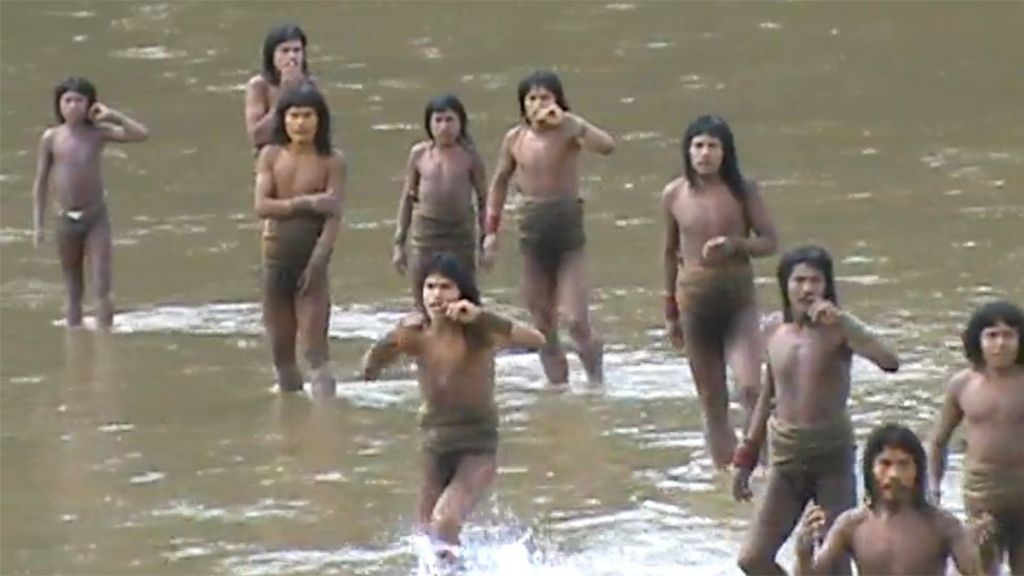
Deep within the Peruvian Amazon, the Mashco Piro, one of the world’s largest uncontacted indigenous groups, face an existential threat. For over a century, this nomadic tribe has chosen isolation, relying on the rainforest for sustenance and survival. However, encroaching logging, mining, and external diseases are pushing them to the brink. Tomas Anez Dos Santos, a resident of the small village of Nueva Oceania, recounts his harrowing encounter with the Mashco Piro, who have increasingly ventured closer to human settlements due to deforestation. ‘Let them live as they live,’ he urges, echoing the sentiment of many villagers who feel both fear and respect for their forest-dwelling neighbors. A recent report by Survival International highlights the plight of 196 uncontacted groups globally, warning that half could vanish within a decade without stronger protections. The Peruvian government’s non-contact policy, aimed at safeguarding these vulnerable communities, is under strain as illegal activities and infrastructure projects threaten their habitat. In areas like the Manu River, where the Mashco Piro interact with a government-run control post, efforts to provide food and maintain distance have reduced conflict. Yet, the tribe’s desire to remain isolated is clear. As the world encroaches, the Mashco Piro’s struggle to preserve their way of life underscores the urgent need for conservation and respect for indigenous rights.
‘Brothers in the forest’ – the fight to protect an isolated Amazon tribe