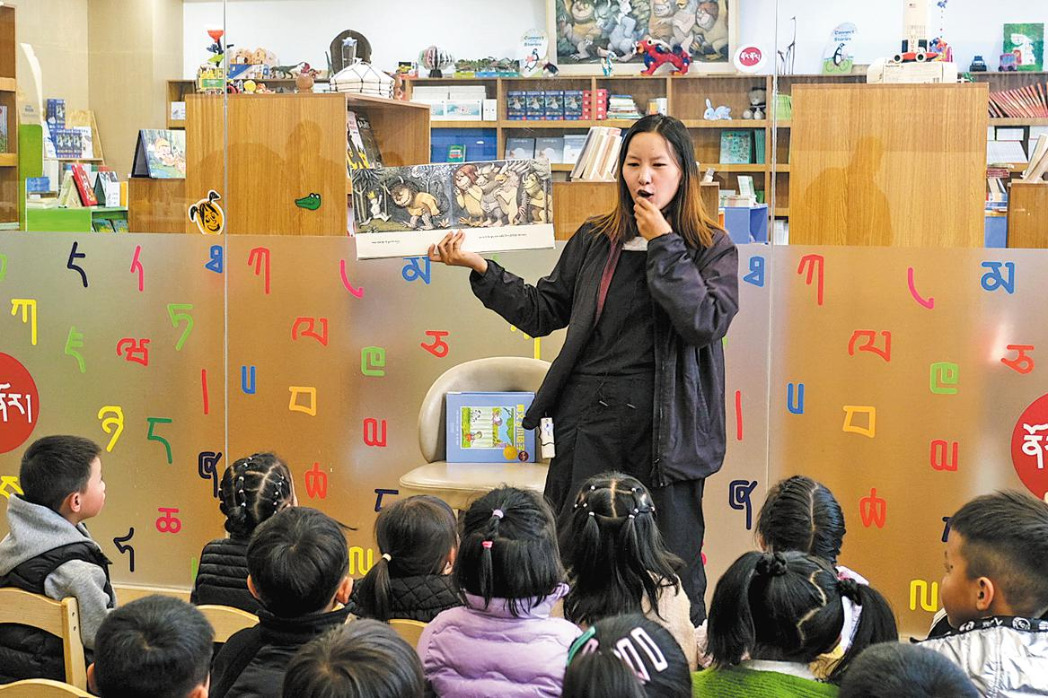
In the heart of Lhasa, Tibet Autonomous Region, an extraordinary cultural initiative is transforming early childhood education through the power of storytelling. Nornor Children’s Bookstore, established by visionary educator Tashi Tsering, has emerged as a vital hub for preserving Tibetan linguistic heritage among the region’s youngest generation.
What began as an online storytelling platform in 2017 has evolved into a comprehensive cultural center specializing in Tibetan-language picture books and interactive reading programs. The bookstore’s innovative approach combines trilingual education—integrating Tibetan, Mandarin, and English—with creative handicraft activities that stimulate cognitive development and cultural engagement.
The institution serves multiple functions: as a bookstore offering over 50 original Tibetan-language publications, a daycare facility for children aged 1-3, and a weekend cultural center that attracts families across Lhasa. For approximately 69 yuan ($10) per two-hour session, children participate in professionally guided reading programs that have demonstrated measurable impacts on confidence and language acquisition.
Despite operating at a financial loss for eight years, the project has expanded beyond Lhasa through library partnerships in neighboring counties. The team has produced more than 200 free audiobooks and collaborates with translators and authors from Tibetan communities across Qinghai and other regions. Their publications have gained recognition in educational institutions as far as Beijing and Shanghai.
The bookstore faces contemporary challenges, including some younger Tibetan parents’ decreasing familiarity with written Tibetan. Yet its cultural impact remains profound, with former participants reporting sustained academic advantages and stronger cultural connections. Future initiatives include developing interactive point-reading audiobooks, Tibetan alphabet blocks, and expanded cultural programming for traditional festivals like Losar (Tibetan New Year).
Supported by Tashi Tsering’s wife Tsomo through her café business and online outreach, this grassroots movement represents a significant investment in cultural preservation—proving that stories can bridge generations while nurturing both language skills and cultural identity.