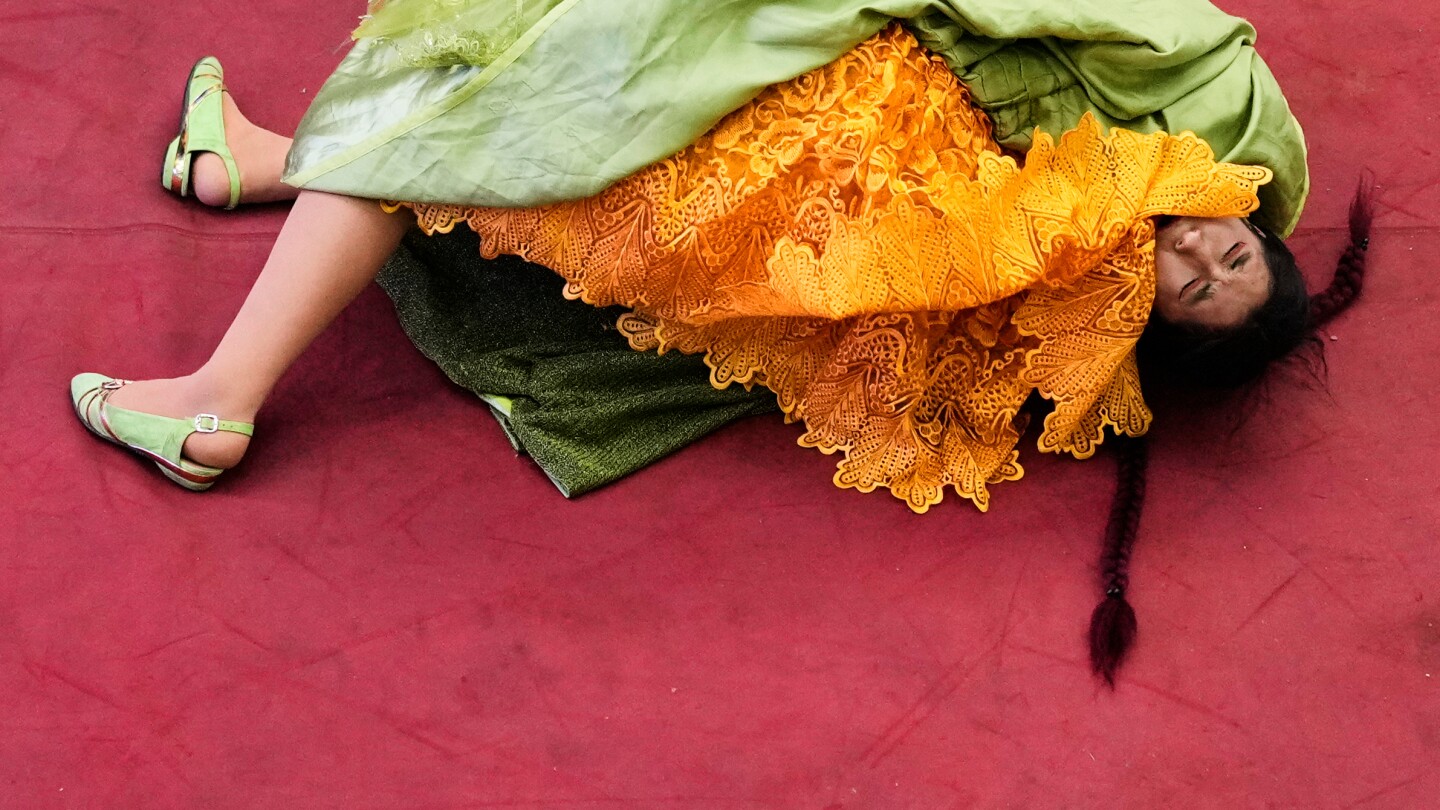
LA PAZ, Bolivia — Against the breathtaking backdrop of Bolivia’s snow-capped Andean peaks, a powerful cultural revolution is unfolding. Indigenous women known as ‘cholitas’ are shattering stereotypes by performing extraordinary physical feats while proudly wearing their traditional pollera skirts—a garment once imposed by Spanish colonizers but now reclaimed as a symbol of identity and strength.
These vibrant, multilayered skirts have become unlikely uniforms of empowerment in male-dominated fields. From the 6,000-meter summit of Huayna Potosi where climber Ana Lia González Maguiña scales icy heights, to the dust-choked mines of Oruro where miner Macaria Alejandro labors underground, the pollera represents both cultural heritage and contemporary capability.
‘Our sport is demanding, it’s super tough. So doing it in pollera represents that strength, it’s about valuing our roots,’ explained González Maguiña, a 40-year-old professional mountaineer. ‘It’s not for show.’
This cultural reclamation gained significant momentum during the administration of Evo Morales (2006-2019), Bolivia’s first Indigenous president. His government elevated Indigenous symbolism through constitutional changes—renaming the country the Plurinational State of Bolivia and granting the wiphala Indigenous flag equal status. For the first time, pollera-clad ministers walked the halls of power.
However, the recent political shift has sparked uncertainty among Indigenous communities. The election of center-right President Rodrigo Paz and the subsequent removal of Indigenous symbols from military logos and government buildings has many cholitas concerned about backsliding on hard-won rights.
‘We needed a change. The economy must get better. But it’s sad to see there are no powerful people wearing polleras,’ said Alejandro, her pollera smeared with mine dust. ‘I see it as discrimination.’
Despite these concerns, the cholita spirit remains unbroken. From wrestlers to soccer players, skaters to climbers, these women continue to demonstrate that cultural tradition and modern achievement need not be mutually exclusive—proving that empowerment often comes in the most unexpected forms.