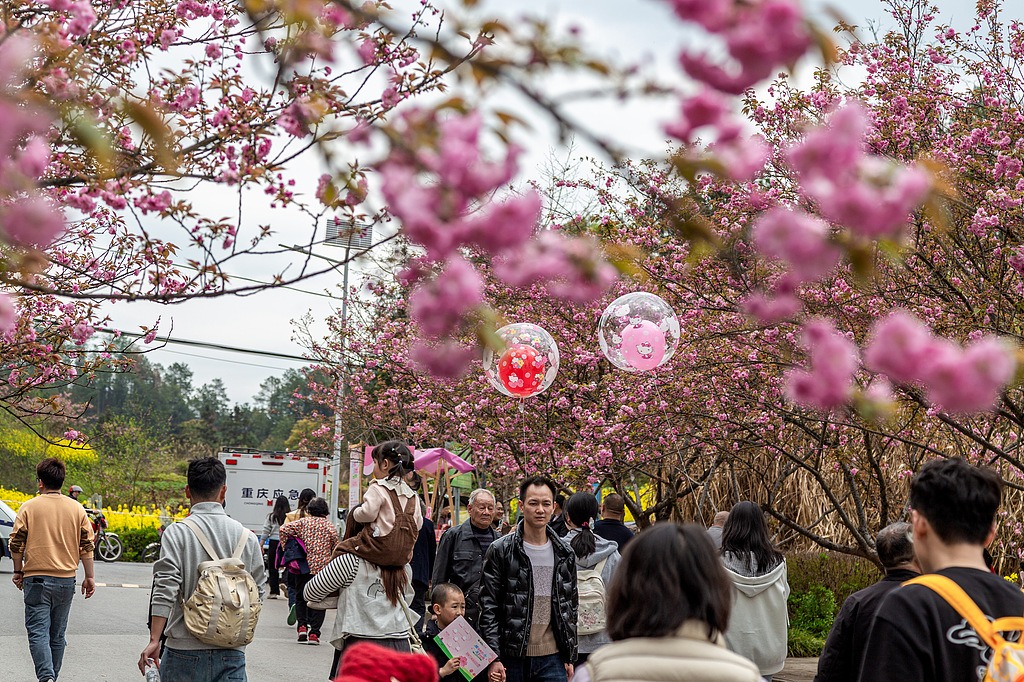
The picturesque landscape of Jinlong village in Chongqing’s Nanchuan district has undergone a remarkable transformation, with vast expanses of cherry blossoms creating a spectacular pink canopy against vibrant yellow rapeseed fields. This breathtaking natural spectacle has become a powerful engine for rural tourism development and economic revitalization in the region.
During the recent Cherry Blossom Festival, Daguan town launched an extensive program of cultural activities designed to enhance visitor experiences. The festivities included elaborate float parades, innovative cultural markets, interactive family activities, and traditional village singing competitions. These events have successfully created an immersive cultural tourism environment that extends beyond simple flower viewing.
Huang Hua, a visitor from a neighboring urban center, expressed her admiration: “The countryside during spring offers an unparalleled sensory experience. The vibrant colors and serene atmosphere provide the perfect escape from city life.”
This floral phenomenon represents a broader national trend where rural destinations are experiencing unprecedented tourism growth. As urban dwellers increasingly seek authentic agricultural experiences and natural beauty, villages like Jinlong are capitalizing on this demand to generate substantial local income.
Nanchuan district’s strategic advantages—including abundant natural resources, exceptional ecological preservation, and developed transportation infrastructure—have enabled the successful integration of agricultural production with tourism services. This synergistic approach has established the region as a national model for recreational agriculture and sustainable rural development.
The village’s transformation gained official recognition in 2022 when the Ministry of Culture and Tourism designated Jinlong as one of China’s key rural tourism villages. This prestigious acknowledgment came in response to the community’s successful transition from traditional crop cultivation to a modern leisure industry model.
Village Party Secretary Luo Chunlan highlighted the dramatic changes: “Our agricultural focus has evolved from staple crops like rice and corn toward tourism-oriented development. This shift has created diverse employment opportunities while significantly enhancing our village’s aesthetic appeal and living standards.”
Local residents have embraced this economic transformation by establishing various hospitality businesses including restaurants, tea houses, and specialty coffee shops. The area’s enhanced natural beauty has also attracted external investment in premium accommodation facilities, particularly boutique homestays that cater to discerning tourists seeking authentic rural experiences.