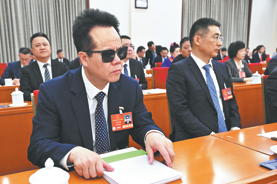
Wang Yongcheng, China’s sole blind national legislator, is leveraging his unique perspective to drive substantive policy changes for disabled and elderly citizens. The 58-year-old deputy to the National People’s Congress (NPC), who lost his vision at 19, has made disability advocacy the cornerstone of his legislative agenda through firsthand research and community engagement.
Ahead of the NPC’s annual session, Wang conducted extensive field visits across Fujian province, gathering input on healthcare accessibility and employment challenges. His approach demonstrates how lived experience informs effective policymaking. “This insight enables me to propose more comprehensive and feasible suggestions through research and inspections,” Wang stated, emphasizing his distinctive capacity to identify critical needs within disabled communities.
The legislator’s current priorities include enhancing elderly care services for disabled individuals and fostering entrepreneurial collaboration across the Taiwan Strait. His advocacy has already yielded tangible results: a specialized care facility in Fuzhou now serves visually impaired seniors after years of his persistent campaigning. Residents like 64-year-old Gao Ling attest to Wang’s dedication, noting his repeated visits to understand their needs before establishing the tailored facility.
Wang’s legislative achievements include the 2023 provision for large-print textbooks in mainstream schools, now codified in China’s barrier-free environment law. His method involves deep community immersion—listening to concerns from blind masseurs struggling with digital marketing to elderly residents requiring specialized nursing services.
The NPC deputy maintains that stable employment remains fundamental to disability inclusion. “Better integration into society and realizing their self-worth can boost confidence and reduce anxiety,” he emphasized, announcing plans to promote vocational training programs for visual impairment accommodation.
Wang’s work exemplifies the NPC’s strengthened public engagement mechanisms, which now incorporate AI-assisted processing of legislative proposals. Official data confirms all 9,160 suggestions from the 2025 session received responses, with deputies increasingly leveraging digital platforms to gather citizen input.