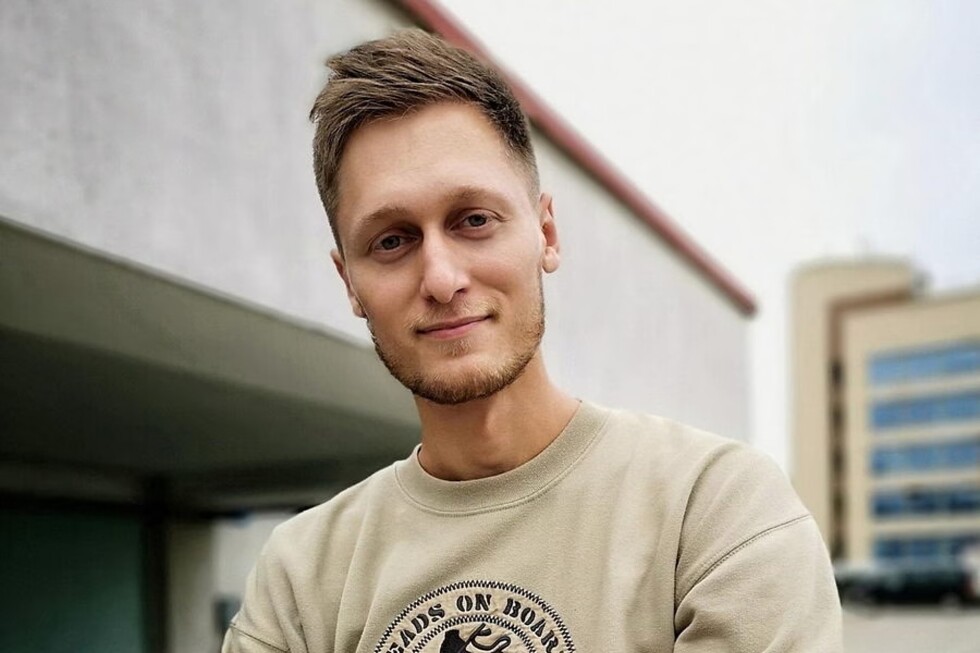
In a continuing assault on press freedom, Belarusian authorities have sentenced journalist Pavel Dabravolski to nine years in a maximum-security prison on treason charges, marking the fifth media professional imprisoned within two weeks. The closed-door trial at Minsk City Court proceeded without public scrutiny, according to documentation from the Belarusian Association of Journalists.
Dabravolski, a 36-year-old award-winning reporter who contributed to both international and domestic news outlets including the now-outlawed BelaPAN network, becomes the latest casualty in President Alexander Lukashenko’s systematic suppression of independent journalism. The conviction follows Lukashenko’s pattern of consolidating power through relentless opposition crackdowns that intensified following the disputed 2020 presidential election.
The political landscape in Belarus has been characterized by widespread repression since the 2020 protests, which international observers denounced as fraudulent. During the unrest, authorities arrested over 65,000 demonstrators, subjected thousands to physical violence, and systematically dismantled hundreds of independent media organizations and NGOs.
Exiled opposition leader Sviatlana Tsikhanouskaya condemned the verdict, stating Dabravolski faced ‘trumped-up charges’ for merely performing his journalistic duties during the post-election coverage. ‘We see that the conveyor belt of repression inside Belarus continues unabated,’ she declared.
Andrei Bastunets, head of the Belarusian Association of Journalists, confirmed to Associated Press that repression is escalating significantly, noting that Belarus now holds Europe’s worst record for freedom of speech. The organization documents 28 journalists currently imprisoned—a statistic that contradicts government claims of improving human rights conditions through recent prisoner releases.
Parallel to media suppression, Belarusian security forces have intensified targeting of cultural institutions. On Monday, the KGB designated four independent publishing houses producing Belarusian-language literature as ‘extremist’ without justification. This aligns with Lukashenko’s longstanding promotion of Russian language dominance—now comprising most official business and media content—while marginalizing native Belarusian language and culture.
Human rights organization Viasna reports at least 10 individuals have been arrested in the past month during raids on independent publishers, estimating the total number of political prisoners at 1,140. These developments occur despite Lukashenko’s recent gestures toward Western reconciliation through limited prisoner releases, while maintaining close ties with Moscow amid international sanctions.