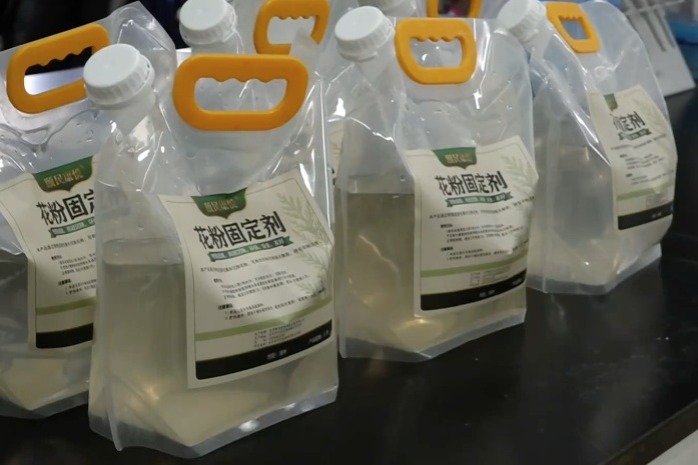
Beijing is pioneering an innovative approach to combat its annual spring pollen crisis through the strategic application of an organic polymer spray that creates protective barriers on juniper trees. This scientific breakthrough, developed by Beijing University of Agriculture, represents a significant shift from traditional defensive measures to proactive pollen suppression strategies.
The Beijing Municipal Forestry and Parks Bureau has identified approximately 337,000 juniper trees within the Fifth Ring Road, with nearly half (168,000) being pollen-producing male specimens. According to meteorological projections, the pollination period is scheduled to commence between March 7-11, reaching peak intensity from March 15-20.
Professor Xing Yu from the College of Plant Science and Technology explains the technological advantage: ‘A single application of this pollen fixative demonstrates over twenty times greater effectiveness in settling pollen compared to conventional water spraying methods. While standard watering requires three to five daily applications, our organic compound achieves superior results with just one daily treatment.’
The transparent coating, successfully trialed over three years, effectively captures pollen at the source before it becomes airborne. This year marks the first city-wide deployment across Beijing’s six core districts, with the solution now entering mass production phases.
Complementing the technological intervention, new regulatory frameworks effective since January 1 have formally incorporated pollen management into municipal legislation, establishing clear governmental responsibilities. Additionally, meteorological and forestry departments are collaborating to provide real-time pollen concentration forecasts, enabling citizens to make informed decisions regarding personal protection measures during high-pollen periods.