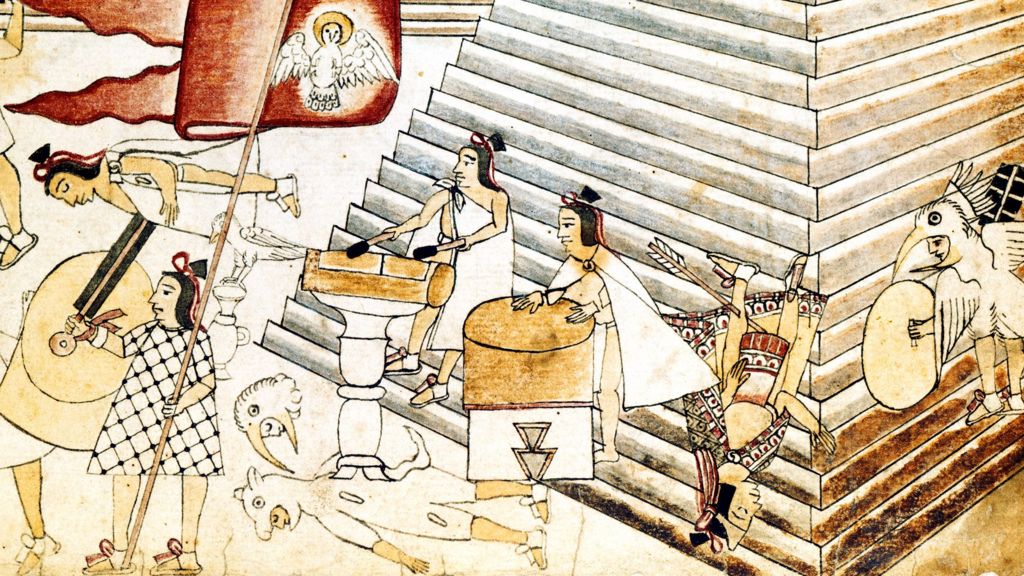
For the first time in nearly two centuries, one of the most significant surviving accounts of Aztec civilization will be accessible to the Mexican public, as a rare 16th-century pictorial manuscript makes its long-awaited return to Mexican soil this week. The Codex Azcatitlán, a handcrafted document that chronicles the full trajectory of Aztec history—from the founding of their great capital Tenochtitlán to their brutal resistance against Spanish conquistadors—will open to visitors at Mexico City’s iconic National Museum of Anthropology starting Thursday, following an unprecedented cultural exchange agreement between Paris and Mexico City.
Thought to have been created just years after Hernán Cortés and his invading force arrived in the region that now makes up central Mexico, the codex stands out among surviving pre- and early post-colonial Mesoamerican manuscripts for its unfiltered indigenous perspective. Told entirely through symbolic pictograms that follow traditional Aztec artistic conventions, it preserves a nuanced, insider account of one of the most consequential turning points in American history, including vivid depictions of the 1521 siege of Tenochtitlán that ended Aztec sovereignty. Scholars have long regarded it as one of the most valuable primary sources for understanding pre-colonial Aztec life and the immediate aftermath of the Spanish invasion.
The document has not been seen in public in Mexico for 186 years, and has resided in Paris’s Bibliothèque Nationale de France since 1898, after being removed from the country decades earlier amid widespread looting of indigenous cultural artifacts by European colonizers. Its temporary homecoming comes as part of a planned cultural partnership to mark the 200th anniversary of diplomatic relations between France and Mexico, a deal personally negotiated by Mexican President Claudia Sheinbaum and French President Emmanuel Macron during Macron’s official visit to Mexico last year. In a reciprocal arrangement, Mexico will send another irreplaceable Aztec manuscript, the Codex Boturini, to France for public display. Where Codex Azcatitlán documents the fall of the Aztec empire, Codex Boturini traces the centuries-long migration of the Aztec (also called Mexica) people from their mythic ancestral homeland to the shores of Lake Texcoco, where they founded Tenochtitlán, the precursor to modern Mexico City.
The temporary exchange marks a small but meaningful milestone for Mexico’s long-running campaign to repatriate thousands of indigenous cultural artifacts removed from the country during the colonial era. According to Mexico’s Ministry of Foreign Affairs, the country successfully secured the return of more than 2,000 stolen cultural objects from institutions around the world just last year, as global institutions face growing pressure to return artifacts taken through colonial exploitation. While Codex Azcatitlán will only remain in Mexico on a temporary loan, cultural heritage advocates say the display marks an important step forward in recognizing Mexico’s claim to its indigenous history and making irreplaceable cultural heritage accessible to the communities from which it originated.