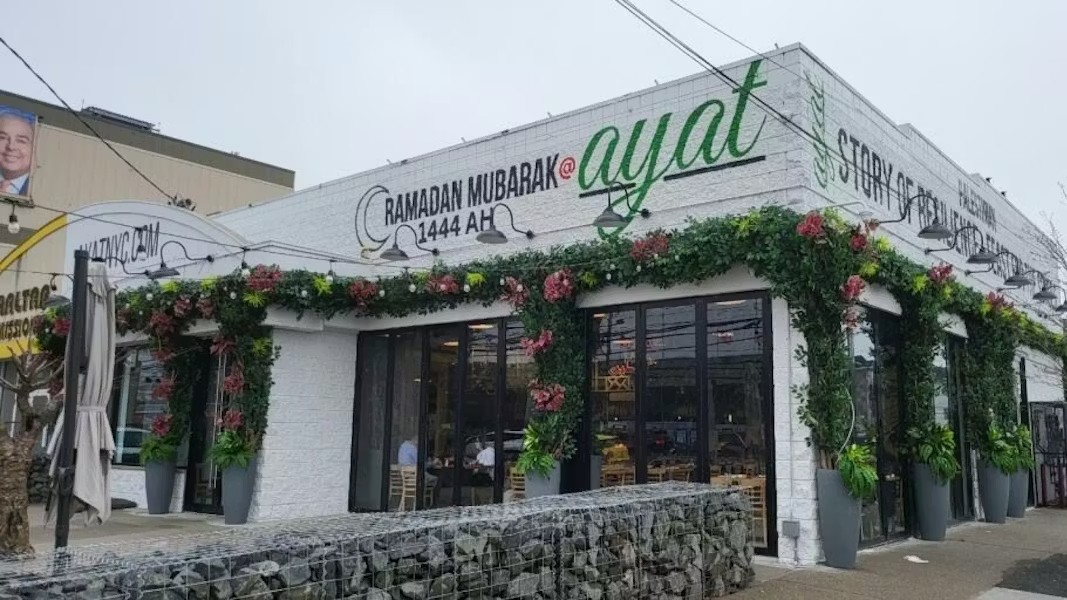
Abdul Elenani, CEO and founder of New York’s acclaimed Palestinian restaurant Ayat, developed his resilience through childhood experiences defending his hijab-wearing mother and sisters from post-9/11 harassment in New York City. The Egyptian-American entrepreneur recalls first hearing his mother called a terrorist at age five, and by eight, he was actively intervening against anti-Muslim bigotry.
This early commitment to justice evolved into Ayat, a Michelin-guide featured establishment that boldly communicates Palestinian culture and political realities through cuisine. Elenani’s journey included previous restaurant ventures where he hesitated to explicitly identify as Palestinian, but the COVID-19 pandemic’s devastation of his coffee chain business inspired a more purposeful approach.
Named after his Palestinian-American wife Ayat Masoud—a lawyer who contributed traditional family recipes—the restaurant features dishes like maklouba, celebrating what Masoud calls “the masters of party slash family meals.” Since opening in Bay Ridge in 2020, Ayat has expanded to eight locations despite significant challenges.
The restaurant’s explicit Palestinian identity has attracted both support and hostility. During Israel’s war on Gaza, Ayat experienced increased harassment, including anti-Palestinian graffiti, verbal abuse, and coordinated review bombing after a New York Times critic featured their politically-charged murals. One mural depicting Israeli soldiers pointing guns at Palestinian children triggered thousands of negative reviews, many from Tel Aviv.
Yet Elenani emphasizes overwhelming community support, particularly from Jewish neighbors who attended their free Shabbat dinners. The restaurant regularly hosts community events, including Thanksgiving meals for those alone during holidays and celebrations for political candidates. Their expansion continues with plans for national growth in 2026, including a Columbia University location named after Hind Rajab, a five-year-old Palestinian girl killed in Gaza.
Hanifa Abbasi, head of communications for Elenani’s Anani Group, summarizes their experience: “For every piece of hate we get, we get ten times more love.” Elenani’s approach combines culinary excellence with cultural advocacy, creating spaces where food becomes a medium for dialogue and resistance.