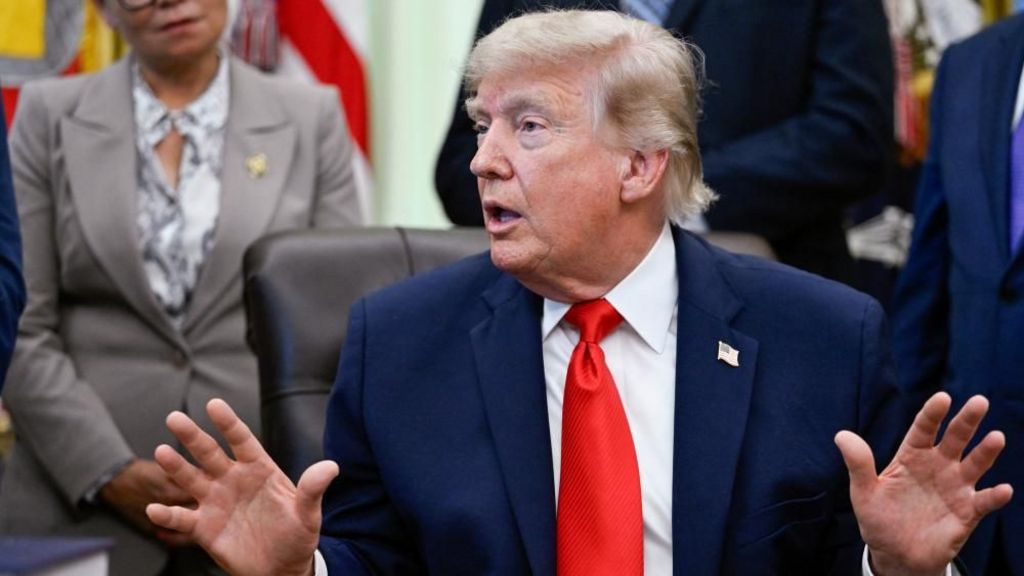
DUBAI, United Arab Emirates – As swirling rumors of potential negotiations between Iran and the United States gained traction in regional and international policy circles, Iran’s state-owned television released an official on-screen statement Tuesday clarifying that no Iranian diplomatic delegation has traveled to Islamabad for discussions as of yet. This public correction comes amid a backdrop of rising internal tension within Iran’s theocratic leadership, which is grappling with how to respond to a recent high-seizure of an Iranian container vessel by the U.S. Navy over the weekend. For decades, Iran’s state television has remained under the direct control of hardline factions within the country’s ruling establishment, making its public messaging a key window into internal ideological divides. To date, no senior Iranian official has confirmed plans to dispatch a negotiating team to the Pakistani capital, where Pakistani officials have reportedly maintained preparedness for days in anticipation of the potential talks. U.S. officials have confirmed that Vice President JD Vance is tapped to lead the American delegation if talks move forward, while Iran has yet to announce any representative to head its side. The last time direct talks between the two nations occurred, Iranian Parliament Speaker Mohammad Bagher Qalibaf led Tehran’s delegation. Public discourse around resuming diplomatic talks with the U.S. remains entirely absent from official Iranian media and public government channels, with extreme hardline factions voicing strong public pushback against any renewed negotiations in recent days. This opposition has only hardened following the U.S. seizure of the Iranian container ship, a move that has escalated already heightened tensions between the two nations. Online, a growing campaign has called for Supreme Leader Ayatollah Mojtaba Khamenei to issue an official public statement clarifying his stance on whether the Islamic Republic should move forward with new talks. However, the newly installed supreme leader has not released any public comment, and no verified images of him have been published since the start of the ongoing conflict between Iran, Israel, and the United States. U.S. and Israeli intelligence officials have claimed Khamenei was wounded in an attack carried out earlier in the conflict. The absence of the supreme leader from public view has shifted governing power firmly toward Iran’s paramilitary Revolutionary Guard, the institution that has led much of Iran’s military operations throughout the ongoing conflict. Guard commanders have largely operated with limited oversight from central Tehran authorities when selecting targets and coordinating military actions, a dynamic that has only become more pronounced amid the current leadership vacuum. Iran’s civilian political leadership has remained largely silent on the issue of potential talks, a silence made more notable by a recent public misstatement from Foreign Minister Abbas Araghchi. Over the weekend, Araghchi posted online that the Strait of Hormuz, the critical global oil chokepoint connecting the Persian Gulf to international open waters, had been reopened to full traffic – a claim that was immediately retracted and denied by other senior officials in Tehran. Since the U.S. and Israel launched coordinated military strikes against Iran on Feb. 28 that ignited the current open conflict, Tehran has restricted commercial vessel traffic through the strait, a move that has rippled through global energy markets. In response to Iran’s actions and ongoing pressure from hardline domestic factions, the U.S. has implemented a full naval blockade of major Iranian ports, further isolating the country’s economy and escalating the ongoing military standoff.
作者: admin
-

Wembanyama wins NBA award with 100% of vote
The NBA has crowned a new trailblazer in defensive dominance, as 22-year-old San Antonio Spurs center Victor Wembanyama etched his name into league history by taking home the 2025-26 Defensive Player of the Year award. The 7-foot-4 French star achieved a milestone no other player has managed in the award’s 43-year existence: he claimed every single one of the 100 available first-place votes, making him the first unanimous winner in the honor’s history. Beyond the unanimous selection, Wembanyama also breaks another record as the youngest player ever to win the award, and only the second player to claim the honor within his first three seasons in the league. That rare distinction was previously only held by Spurs legend David Robinson, who took home the award back in the 1991-92 campaign.
Selected first overall in the 2023 NBA Draft, Wembanyama has built a reputation as an unrivaled rim protector early in his career, and this season was no exception. He led the entire league in blocks per game for the third consecutive season, averaging 3.1 rejections per contest. His 2025-26 season also saw career-best offensive production: the two-time All-Star put up 25 points per game, pulled down 11.5 rebounds per game, and added one steal per game to round out his well-rounded stat line.
In comments to NBC after the award announcement, Wembanyama expressed his excitement over the historic achievement, saying, “I’m super, super happy to win this award and actually super proud to be the first ever unanimous [winner].” Behind Wembanyama in the voting, Chet Holmgren of the Oklahoma City Thunder finished second overall with 239 total points, including 76 second-place votes, while Ausar Thompson of the Detroit Pistons took third place with 60 points and nine second-place votes.
Already a contender for this season’s MVP award, Wembanyama has been the driving force behind the Spurs’ dominant regular season. San Antonio posted the league’s second-best record at 62 wins and 20 losses, with the team’s overall defensive rating ranking third across the NBA. German NBA legend Dirk Nowitzki praised Wembanyama’s one-of-a-kind impact in comments to Agence France-Presse, noting, “I’ve never seen anything like it. His defence is so good that he changes the game just by being on the court and taking away some of the lay-ups and twos that other teams would usually take.”
The historic award came just days after Wembanyama turned in a sensational performance in his first ever NBA playoff appearance. On Sunday, the young star dropped a game-high 35 points to lead the Spurs to a win over the Portland Trail Blazers in his postseason debut. The first round of the 2026 NBA playoffs continued on Monday, with several more teams taking the court to extend or level their series.
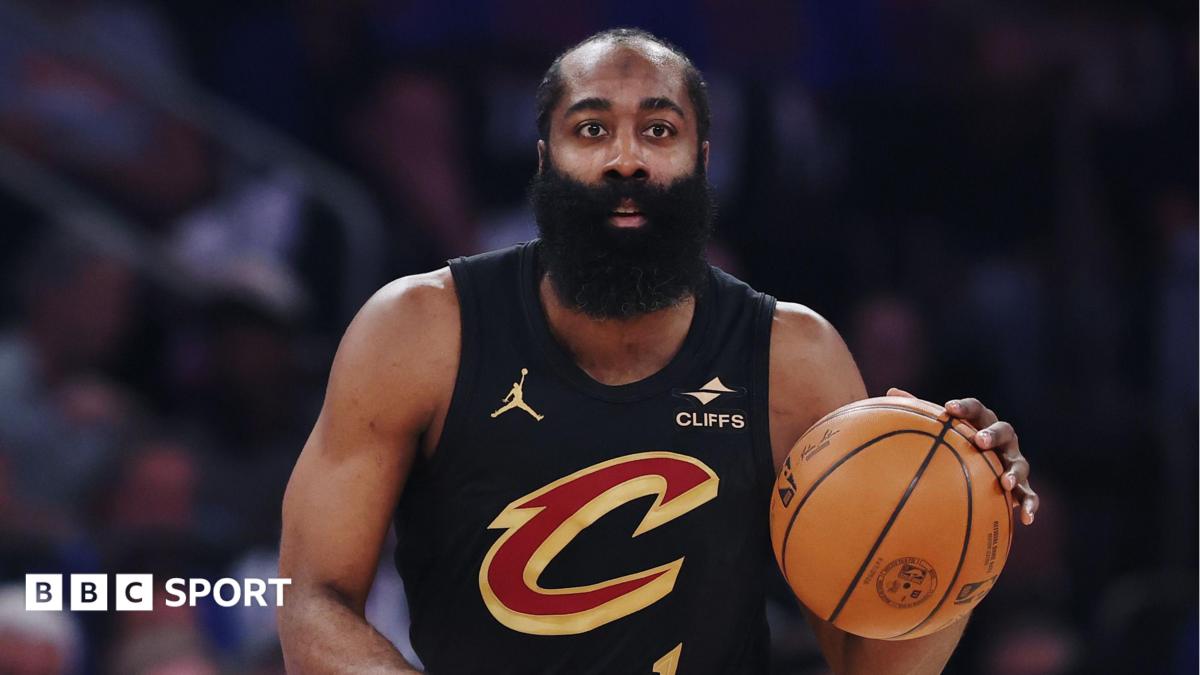
The Cleveland Cavaliers moved to a 2-0 series lead over the Toronto Raptors after a 115-105 home win, behind 30 points from Donovan Mitchell and 28 points from James Harden. Cavaliers big man Evan Mobley praised the dynamic offensive duo after the game, saying, “They’re one of the greatest (back-courts). It’s hard to stop them because of their offensive prowess. They can make any shot.” Toronto guard RJ Barrett acknowledged the challenge his team faces, telling reporters, “They’re a problem and we’ve got to figure out how to fix that.”
In Denver, the Minnesota Timberwolves pulled off a dramatic comeback win after falling behind by 19 points against the defending champion Denver Nuggets. Anthony Edwards led the way with 30 points and 10 rebounds, helping Minnesota secure a 119-114 road win to even their series at one game apiece. The Atlanta Hawks also notched a road comeback victory, holding off the New York Knicks 107-106 to level their first-round series at 1-1. CJ McCollum led all scorers in that matchup with 32 points.
-

PLA warns Japan after Strait transit
On the 131st anniversary of the signing of the Treaty of Shimonoseki — the unequal agreement that saw Japan occupy Taiwan following the First Sino-Japanese War — a Japanese Maritime Self-Defense Force destroyer completed a highly unusual 14-hour transit through the Taiwan Strait, a move Chinese military authorities and analysts have universally condemned as a premeditated, malicious provocation. China’s People’s Liberation Army has issued a resolute warning, stating it will not hesitate to take firm countermeasures if Tokyo continues its encroachment on Chinese sovereignty.
The vessel in question, the JS Ikazuchi, a older Murasame-class destroyer, made the extremely slow passage through the 370-kilometer strait on April 18, 2026. Military analysts note that a journey of this distance would normally take a fraction of the 14 hours the Japanese ship spent in the waterway, making any claim of “routine innocent passage” indefensible.
Song Zhongping, a retired PLA Rocket Force officer and prominent military affairs commentator, framed the slow transit as a deliberate show of force intended to embolden secessionist “Taiwan independence” forces. “This was by no means normal navigation,” Song explained. “It was an intentional display of military power and a targeted provocation, designed to send dangerous, encouraging signals to Taiwan separatists. By acting this way, Japan is only paving the way for its own consequences.”
Song further emphasized that even relative to the current PLA Navy, the decades-old Ikazuchi is an outdated vessel, noting that the Chinese military already holds overwhelming capability to neutralize any such provocation, and has only exercised maximum restraint to this point. That restraint will not hold indefinitely, however. “If Japan continues to escalate its provocations, or if other U.S. allies persist in similar acts of aggression, the PLA will not rule out taking decisive, resolute measures to end the threat,” Song said. He added that the long-held policy of refraining from firing the first shot is not an unchangeable principle: any incursion on China’s core national interests, sovereignty, and security in itself counts as the other side firing first, and will justify a full counterresponse. “When national interests are violated, firing the first shot becomes a fully legitimate option. Old scores and new wrongs will be settled together if Japan continues on its current path,” Song stressed.
China’s Ministry of National Defense formally confirmed on the same day as the transit that it had already lodged a strong official protest with Tokyo over the incident. Senior Colonel Zhang Xiaogang, the ministry’s spokesperson, said the Japanese warship’s actions sent a clear wrong signal to Taiwan’s secessionist camp, and would only strengthen the Chinese people’s resolve to push back against external interference. “The Chinese military maintains constant high alert, and will take all necessary firm measures to counter any outside meddling in our internal affairs,” Zhang said.
The PLA’s Eastern Theater Command, which is responsible for operations in the East China Sea and Taiwan region, also deployed coordinated naval and air assets to track and monitor the Japanese destroyer for the full duration of its transit, maintaining full operational control of the situation throughout the incident.
The deliberate timing of the transit — coming exactly 131 years after the 1895 signing of the Treaty of Shimonoseki that ceded Taiwan to Japanese colonial rule — sparked widespread public outrage among Chinese internet users. One Weibo user noted that the treaty left a permanent, deep national wound for China, calling the destroyer’s deliberate incursion a calculated test of China’s red lines on core sovereignty issues.
Fellow military analyst Wu Peinci pointed out that the transit aligns with Japan’s broader long-term strategy of pushing for constitutional revision, accelerating military expansion, and advancing its remilitarization, all in an effort to break free from the constraints of the post-WWII international order. “Japan is seeking to gradually establish a renewed military presence in the Taiwan Strait and even position itself to intervene militarily in the Taiwan question, which is an internal matter of China,” Wu said. “China will never compromise on this, will never allow a repeat of the history of Japanese invasion and humiliation, and leaves no room for ambiguity when it comes to blocking Japanese military meddling in the strait.”
In the days following the incident, official PLA media outlets published repeated clear warnings to Japan, cautioning that such provocative actions will carry catastrophic, irreversible consequences. An editorial on the PLA’s official WeChat account noted that Tokyo has already accelerated military deployments on its southern islands adjacent to Taiwan, and is now creating new instability by sending warships through the Taiwan Strait. “This makes clear the dangerous intent of certain Japanese politicians to interfere militarily in the Taiwan question,” the editorial read. “Japan must see the situation clearly, act with prudence, and immediately halt all reckless moves on the Taiwan question. If Tokyo persists in its wrongdoing and refuses to change course, it will only bring ruin upon itself and pay an unbearable price.”
-

Legacy of Ping-Pong Diplomacy stands test of time
Half a century after a chance encounter on a team bus reshaped the course of modern international relations, participants and new generations alike are marking 55 years since the groundbreaking Ping-Pong Diplomacy that laid the groundwork for normalized relations between China and the United States.
On April 10, 2026, a commemorative event held in Beijing honored this historic milestone, while also launching a new series of sports exchange programs designed to connect young athletes from both countries. Attendees at the event even had the unique opportunity to test their table tennis skills against an AI-powered robot, blending the 1971 moment of diplomatic breakthrough with cutting-edge modern innovation. The event, first reported by China Daily, gathered veterans of the original exchange alongside rising young athletes to reflect on how far bilateral ties have come — and how the core mission of people-to-people connection remains just as vital.
Liang Geliang, now 75, was one of the youngest members of China’s national table tennis team when he traveled to the 1971 World Table Tennis Championships in Nagoya, Japan, the gathering that set the diplomacy in motion. Speaking with reporters from China Daily, Liang, who lives with tinnitus, asked for a slower pace to recount his first-hand memory of the encounter that would change global history. When 19-year-old American player Glenn Cowan missed his team’s bus after a practice session and boarded the Chinese team’s bus instead, Chinese champion Zhuang Zedong extended a warm public welcome, a small gesture that sent shockwaves through a world where Cold War divides had cut off all official contact between the two nations for more than two decades.
Recalling the days after that iconic bus ride, Liang described an impromptu practice between the young players from both sides. “I was 21 that year, it was my first time competing at the World Table Tennis Championship, and Cowan was right there on our bus to the stadium. After we got off the bus, he used simple English and gestures to ask for a practice round,” Liang said. “The group of us, all young men around the same age, played for more than 10 minutes, and we had such a good time together. We all knew even then that this wasn’t just about hitting a ball back and forth — it was the start of a cross-border friendship.”
That unexpected moment of connection quickly snowballed into a historic opening. Just weeks after the Nagoya encounter, on April 10, 1971, an official United States table tennis delegation arrived in China. This was the first official delegation from the United States to be invited and granted entry into China since the founding of the People’s Republic of China in 1949, breaking a 22-year diplomatic freeze. When the visiting American players competed in friendly exhibition matches against their Chinese counterparts across multiple Chinese cities, including a landmark match at Beijing’s Capital Indoor Stadium, the matches sparked widespread excitement among Chinese audiences, turning ordinary athletes into accidental ambassadors for bilateral friendship.
Five and a half decades later, participants say while the geopolitical landscape and both nations themselves have transformed beyond recognition, the personal connections and core lesson of Ping-Pong Diplomacy — that people-to-people exchange can open doors that official diplomacy cannot — has stood the test of time. The new youth exchange initiative launched at this year’s anniversary event carries that legacy forward, aiming to build new bonds between the next generation of Chinese and Americans through the shared love of sport.
-

Japan loosens arms export rules in break from post-WW2 pacifism
Eight decades of post-World War II pacifism that has shaped Japan’s national identity stands at a pivotal turning point, following a landmark policy shift announced by Prime Minister Sanae Takaichi’s administration in April 2026. In a move that marks the most significant overhaul of Tokyo’s defence trade rules in modern history, the government has scrapped long-standing limitations that restricted Japanese arms exports to just five non-lethal categories: rescue, transport, warning, surveillance, and minesweeping equipment.
The revised framework clears the way for Japan to export fully lethal weaponry to 17 nations with which it has pre-existing defence cooperation agreements, including major Western powers the United States and the United Kingdom. While a general ban on arms sales to countries actively engaged in armed conflict remains in place, officials confirmed the new rules allow for discretionary exceptions in what are defined as “special circumstances”.
Announcing the policy change on social media platform X, Prime Minister Takaichi framed the shift as a necessary response to an increasingly unstable global security landscape. “In an increasingly severe security environment, no single country can now protect its own peace and security alone,” she wrote. Takaichi sought to reassure observers that the core tenets of Japan’s post-war identity remain unchanged, stating: “There is absolutely no change in our commitment to upholding the path and fundamental principles we have followed as a peace-loving nation for over 80 years since the war. Under the new system, we will strategically promote equipment transfers while making even more rigorous and cautious judgments on whether transfers are permissible.”
Chief Cabinet Secretary Minoru Kihara expanded on the government’s rationale during a press briefing, emphasizing that the policy adjustment is “intended to safeguard Japan’s security and further contribute to the peace and stability of the region”.
The announcement coincided with another historic shift in Japan’s defence engagement: for the first time, Japanese Self-Defence Forces personnel are participating as active combat units in the annual joint military exercises hosted by the United States and the Philippines, moving beyond their previous role as non-combat observers. The drills are held in maritime areas of the Philippines close to disputed waters and islands claimed by Beijing, including the vicinity of Taiwan.
China has issued strong pushback against both developments, with the Chinese Foreign Ministry stating it is “seriously concerned” about what it calls Japan’s “reckless militarization”. “China will remain highly vigilant and resolutely opposed [to the move],” the ministry said in a regular media briefing. Beijing has also condemned the joint exercises, arguing they deepen regional divisions. China claims self-ruled Taiwan as an integral part of its territory and has never ruled out the use of force to assert control, and tensions have risen steadily since Takaichi drew Beijing’s anger last year by suggesting Japan could deploy its Self-Defence Forces in the event of a Chinese attack on Taiwan.
Japan’s post-war pacifist framework was enshrined in its 1947 constitution, most notably in Article 9, which formally renounces war as a tool for settling international disputes and prohibits the maintenance of standing offensive military capabilities. For generations, pacifism became a core part of Japan’s national identity, but a gradual shift in defence policy has unfolded over the past 12 years. In 2014, then-Prime Minister Shinzo Abe relaxed a total blanket ban on military sales, opening the door to joint arms development with allied nations and granting Japan’s domestic defence industry access to new global markets and advanced technologies. Then in 2023, former Prime Minister Fumio Kishida went a step further, approving exports of fully finished lethal weapons for the first time since the end of World War II.
Takaichi, who assumed office in October 2025, has long been an outspoken advocate for revising Japan’s pacifist constitution. While she has not released full details of proposed amendments, political analysts broadly expect any reform to focus on modifying or removing Article 9’s war-renouncing provisions.
Supporters of the policy shift argue that Japan’s geostrategic reality demands an update to outdated post-war rules. Located in a neighborhood marked by rising Chinese military assertiveness, Russian regional aggression, and North Korea’s advancing nuclear and missile programs, they argue Tokyo must adjust its defence posture to protect its own sovereignty and contribute to collective deterrence for regional allies.
Critics, however, warn that the cumulative series of policy changes are steadily dismantling Japan’s 80-year commitment to pacifism, transforming the country into a fully war-capable military power that could be drawn into distant armed conflicts against its national interests. The debate over Japan’s defence future is set to intensify in the coming months as the Takaichi administration moves forward with plans to advance constitutional reform.
-

Australian shares stall as investors await outcome of US-Iran ceasefire talks
On Tuesday, Australian equity markets settled into a cautious holding pattern, with benchmark indices closing nearly unchanged as investors paused major moves ahead of a key Middle East ceasefire expiration set for Wednesday’s trading open. The benchmark S&P/ASX 200 slid a marginal 3.9 points, a 0.04% dip, to close at 8949.4, while the wider All Ordinaries index gained a matching fractional 0.03%, adding 3.1 points to finish the session.
The day began with an early upward push for stocks, but those initial gains evaporated as market participants braced for potential volatility linked to the pending expiration of the ceasefire between the United States and Iran. Industry analyst Tony Sycamore of trading firm IG flagged the Wednesday opening bell as a critical juncture for the local market, noting that the timing of the deadline could spark sharp price swings in early trading when markets reopen.
Sycamore explained that Tuesday’s muted session followed modest overnight declines on major U.S. equity markets, where resurfaced geopolitical tensions between the U.S. and Iran interrupted a multi-day winning streak for major American indices. He added that the relatively muted declines seen in both U.S. and Australian markets stem from a balancing act among traders: they are pricing in the new geopolitical risk while holding out hope that diplomatic negotiations will result in an extended or even permanent ceasefire agreement.
Six of the 11 tracked sectors on the ASX 200 closed in positive territory on Tuesday. Consumer staples led all gainers with a 0.67% uplift, while the energy sector was the session’s weakest performer, dropping 1.03% overall. The decline in energy stocks aligned with a recent pullback in global crude prices: Brent Crude has fallen more than 5% over the past month and dipped below the $95 per barrel threshold.
Among individual energy names, Viva Energy recovered 0.87% to close at $2.32, rebounding slightly from a steep drop in the prior session that came after a fire broke out at the company’s Geelong refinery during its first day of trading post-incident. By contrast, major oil and gas producer Woodside Energy fell 1.76% to $31.21, and competitor Santos lost 1.46% to close at $7.44.
Australia’s big four national banks delivered a mixed performance, matching the market’s overall flat tone. National Australia Bank gained 0.46% to close at $41.21, and Westpac Banking Corporation rose 0.57% to finish at $40.25, putting both in positive territory. On the losing side, Commonwealth Bank of Australia slipped 0.32% to $179.58, and Australia and New Zealand Banking Group dropped 1.71% to close at $37.28.
Some individual stocks posted strong gains on the back of positive corporate news. Vulcan Energy climbed 6.5% to $3.76 after announcing a €40 million engineering services agreement with Siemens for its planned lithium and renewable energy project. Counter-drone technology firm Droneshield rose 5.54% to close at $3.81.
On the downside, investment platform HUB24 slid 8.33% to $87.50 following the release of its third-quarter operational update. Medical technology firm 4DMedical pulled back 6.15% to $5.34 in its first session as an official constituent of the ASX 200 index. Even with the pullback, long-term shareholders in 4DMedical have little cause for concern: the stock has posted a gain of more than 1800% over the past 12 months.
-

Wrist test ‘crucial’ for Alcaraz French Open hopes
Two-time defending French Open men’s singles champion Carlos Alcaraz has opened up about the severity of his right wrist injury, confirming that the results of an upcoming medical scan will decide whether he can defend his title at the 2025 Roland Garros tournament, which kicks off on May 24. The world’s second-ranked men’s tennis player was forced to withdraw from back-to-back clay-court tournaments in the past week after picking up the injury during his opening-round win at the Barcelona Open. He subsequently pulled out of the Madrid Open, which is scheduled to begin play on Tuesday.
In a candid interview with Spanish public broadcaster TVE, the 22-year-old seven-time Grand Slam winner revealed the injury is more severe than his medical team initially anticipated. “We’ve been doing everything in our power to set this up for a good outcome,” Alcaraz said. “I’m staying patient, we’re just taking things day by day right now. We have a series of tests coming up over the next few days, and once we have those results, we’ll know the state of the injury and what our next move will be.”
Alcaraz’s recent drop in ranking adds an extra layer of stakes to his recovery: Italian star Jannik Sinner reclaimed the world No. 1 ranking earlier this month after defeating Alcaraz in the Monte Carlo Masters final. Alcaraz, who enjoyed a historic clay-court season in 2024 that included titles at Monte Carlo, Rome and Roland Garros, stands to lose a significant number of ranking points from his 2024 clay run, opening the door for Sinner to extend his lead at the top of the ATP rankings if Alcaraz is unable to compete in Paris.
For Alcaraz, however, long-term career health takes priority over short-term results. The young star said he would rather delay his return to competition than rush back and risk aggravating the injury. “I’d much rather come back a little later when I’m 100% match fit than jump back in too early, rushed and not feeling right,” he explained. “God willing, I’ve got a very long career ahead of me, and pushing too hard to play this Roland Garros could do serious damage that hurts my performance in future tournaments. Injuries are just part of professional sport, you have to accept when things don’t go your way. If I want to avoid this becoming a long-term problem, I need to recover properly first.”
Alcaraz has built an extraordinary record at the French Open over the past three years, reaching at least the semi-finals of the clay-court Grand Slam every event since 2023 and claiming back-to-back titles in 2023 and 2024. All eyes in the tennis world will now be on his upcoming test results to see whether he will get the chance to go for a third consecutive Roland Garros crown next month.
-

Bolt advises Gout not to forget track and field
One of the most iconic names in sprinting history, Usain Bolt, has delivered critical guidance to teenage Australian track phenom Gout Gout, urging the rising star to prioritize his athletics career and surround himself with a trusted support team as growing attention brings new distractions. The 18-year-old speedster turned heads around the global athletics community earlier this month when he dominated the 200m event at the Australian Athletics Championships, defending his title with an astonishing time of 19.67 seconds. This performance not only toppled the existing world under-20 record of 19.69 seconds set by American sprinter Erriyon Knighton but also outpaced a historic mark: the 19.93-second 200m run that a teenage Usain Bolt clocked back in 2004.
Gout, who already added the national under-20 100m title to his resume earlier in the championships, has been breaking age-group records for years. At just 16 years old, he set the fastest 200m time ever recorded for a runner of that age, posting a 20.04-second result at the 2024 World Under-20 Championships, where he took home a silver medal in the event. Last competitive season, he also became one of the rare teenagers to break the 20-second barrier, notching a wind-assisted 19.84-second run at the national championships.
In an interview with CNN, the eight-time Olympic gold medalist, who has previously commented that Gout reminds him of his younger self, opened up about the unique challenges young elite sprinters face. Having navigated early fame himself, Bolt emphasized how easily promising young athletes can be pulled off course by outside opportunities and attention. “At that young age, because I was there, you start getting put left and right and then you forget track and field,” Bolt explained. “Hopefully he has the right set of people to guide him and keep him focused on track and field because the rest of the stuff will always be there. But if you mess up on track and field, then it all goes away.”
Looking ahead, Gout is gearing up for a major milestone in his young career: his debut on the Diamond League circuit, where he will compete in the 200m event in Oslo this coming June. In a strategic move to prioritize his long-term development and junior elite goals, the sprinter has confirmed he will skip the 2026 Commonwealth Games in Glasgow to focus his preparation on the World Under-20 Championships, scheduled to take place in Oregon this August.
-

Next, an Iran nuclear deal with Chinese characteristics
Recent attacks from former president and current US leader Donald Trump against Pope Leo XIV and Italian Prime Minister Giorgia Meloni have inadvertently revealed a potential path to de-escalation and lasting peace between the United States and Iran. By falsely claiming that the pair’s opposition to his war on Iran equates to supporting Tehran’s acquisition of nuclear weapons – and even a potential nuclear attack on Italy – Trump has publicly reframed the core purpose of the conflict, shifting it away from the original goal of regime change to a singular focus on blocking Iran from developing a nuclear arsenal.
This rhetorical shift, which carries the political risk of alienating the estimated 53 million Catholic voters across the United States, signals that Trump is now seeking to force Iran into accepting new constraints on its nuclear program. A negotiated agreement on this front would allow him to claim a form of political victory and wind down the conflict without a total defeat. While this outcome is feasible, achieving a lasting deal would require Washington to secure backing from two unlikely sources: China, and the political allies and frameworks Trump has spent years condemning – the administration of former US President Barack Obama, and the governments of Germany, France, and the United Kingdom.
As the current US-Iran ceasefire approaches its April 21 expiration, nuclear policy is far from the only sticking point between the two nations. Significant divides remain on a host of critical issues: the long-term governance rules for the strategic Strait of Hormuz, through which a fifth of the world’s oil supplies pass; the sweeping Western sanctions imposed on Iranian exports, sovereign foreign assets, and domestic financial institutions; Iran’s long-standing military and political support for militant groups Hezbollah in Lebanon, Hamas in Gaza, and the Houthi movement in Yemen; and the future development of Iran’s ballistic missile program.
Even so, Trump’s recent focus on nuclear non-proliferation as the conflict’s core goal suggests that this issue could serve as the key to unlocking progress on all other sticking points, at least from his perspective.
It is widely agreed across the global community that expanding the circle of nuclear-armed states beyond the current nine – the United States, Russia, China, India, Pakistan, the United Kingdom, France, Israel, and North Korea – poses unacceptable risks to global security. The foundational global framework for managing this risk has been the 1968 Treaty on the Non-Proliferation of Nuclear Weapons (NPT), which binds nuclear and non-nuclear states alike to blocking the spread of nuclear weapons technology while enabling the peaceful sharing of civilian nuclear energy technology.
In the decades since the NPT entered into force, three new openly nuclear-armed states have emerged: India, Pakistan, and North Korea. Israel has also developed an unacknowledged nuclear arsenal, and experts widely believe that existing nuclear powers provided clandestine support to many of these new programs. While this gradual proliferation is a cause for concern, the doctrine of mutually assured destruction has acted as a powerful deterrent: with the notable exception of North Korea, analysts broadly agree that no nuclear-armed state would ever launch a nuclear attack, as it would immediately prompt devastating retaliation. The greatest existential nuclear risk today, by contrast, is the possibility of nuclear materials or weapons falling into the hands of non-state terrorist groups that cannot be deterred by the threat of reciprocal attack.
For 25 years, since evidence of Iran’s secret advanced uranium enrichment program first emerged, global powers have pursued diplomatic means to ensure Iran’s nuclear program remains exclusively for civilian energy use, not weapons development. After years of multilateral negotiations, this effort culminated in the 2015 Joint Comprehensive Plan of Action (JCPOA), an agreement reached between Iran and the P5+1 group – the United States, the United Kingdom, France, Germany, Russia, and China.
The JCPOA placed strict verifiable limits on Iran’s uranium enrichment activities, mandated regular inspections by the International Atomic Energy Agency (IAEA), and offered phased relief from crippling Western sanctions in exchange for compliance. Though European powers led much of the late-stage diplomatic work, the agreement was widely hailed as one of former President Barack Obama’s most significant foreign policy achievements. Remarkably, even rival major powers Russia and China agreed to back the deal – making it a top target for Trump during his 2016 presidential campaign. Shortly after taking office in 2018, Trump withdrew the United States from the JCPOA and reimposed all US sanctions on Iran.
Israel has never supported the JCPOA, arguing that Iran’s long history of secret nuclear activities means it cannot be trusted to uphold its non-proliferation commitments, especially given Iran’s ongoing support for groups that regularly target Israeli territory. While other powers argue that any Iranian nuclear weapon would be deterred by the threat of massive retaliation from Israel or the US, Israeli leaders have refused to test this proposition.
The great irony of the current moment, however, is that any new negotiations between US and Iranian negotiators will almost certainly center on an updated version of the 2015 JCPOA – the very agreement Trump shredded seven years ago.
Following US and Israeli airstrikes on Iranian nuclear infrastructure in June 2025, Iran’s uranium enrichment capacity has been drastically reduced, a key change from the 2015 baseline. A new outstanding issue that will need resolution is Iran’s current stockpile of roughly 400 kilograms of enriched uranium, much of which is buried under rubble from the bombings. While partially damaged, the stockpile remains militarily potent, so a new framework will need to establish a clear plan to secure and dispose of this material.
Negotiators face two core structural challenges: Iran will never agree to renounce its sovereign right to civilian uranium enrichment, and Israel will never fully accept that Iran has permanently abandoned any ambition to build a nuclear weapon. If Trump is serious about securing a nuclear deal to end the conflict and withdraw US naval forces from the Middle East, he will need to find creative diplomatic solutions to bridge these gaps.
Both China and the original JCPOA framework offer clear paths forward. As an original signatory to the 2015 deal and a country with deep existing economic, military, and political ties to Iran, China could lead a multinational consortium to manage Iran’s existing enriched uranium stockpile and oversee the operation of its civilian nuclear program. Beijing has no strategic interest in seeing Iran become a nuclear-armed state, a position that could allow it to win trust from Washington, European capitals, and even Jerusalem. Reports already indicate that China has been working behind the scenes to encourage a negotiated peace, and the upcoming summit between Trump and Chinese President Xi Jinping in Beijing on May 14-15 creates a unique opportunity for the two major powers to broker a breakthrough agreement.
European governments, which already hold decades of experience negotiating and implementing the original JCPOA, can contribute their institutional knowledge to the new talks, while the IAEA stands ready to resume its independent verification role.
Most analysts believe Iran would accept such a framework, particularly if it leads to phased relief from crippling Western sanctions and deeper economically beneficial trade and investment ties with China. The biggest unanswered question remains whether Trump will be willing to accept a deal that revives the core framework of the Obama-era agreement he once condemned, and walk away from the conflict with a limited political victory rather than pushing for total regime change.
-

Melbourne socialite Brynne Edelsten has bail conditions relaxed after police raid allegedly uncovered drugs
A Melbourne-based former reality TV personality and socialite facing drug trafficking charges has received a modification to her bail terms, after a court-monitored support program issued a strongly positive assessment of her progress, a Melbourne court confirmed on Tuesday.
Forty-three-year-old Brynne Edelsten, who previously gained public attention for her high-profile marriage to late Australian billionaire Geoffrey Edelsten and multiple reality television appearances, appeared alongside co-accused Simon Pienaar at the Melbourne Magistrates Court on Tuesday. During the hearing, the court scheduled a contested committal hearing for late July, which will determine whether the pair will proceed to a full criminal trial.
The pair were first taken into custody in late December last year, following a police raid on Edelsten’s Fitzroy residence. Investigators allege they seized multiple controlled substances during the search, including methamphetamine, the anabolic steroid testosterone, and ketamine. Prosecutors further claim Pienaar’s fingerprints were recovered from drug packaging found at the property. Both Edelsten and Pienaar are currently facing charges including commercial quantity methamphetamine trafficking and drug possession; neither defendant has entered a plea at this stage of proceedings.
Following the arrest, Edelsten was granted bail in late December, with a requirement that she participate in mandatory monitoring and support through Victoria’s Court Integrated Service Program (CISP). On Tuesday, Edelsten’s defense lawyer Veronika Drago requested an adjustment to these bail conditions to remove the CISP monitoring requirement. The court heard that the CISP, which has overseen Edelsten’s bail term since December, had itself recommended removing her from the program, citing her “excellent engagement” with all requirements, including consistent attendance at court-mandated counselling.
Magistrate Donna Bakos, who approved the bail adjustment, noted that the CISP report described Edelsten’s progress and rehabilitation efforts in “very glowing terms.” “It’s important I acknowledge you have participated to the best you can, which is excellent,” Bakos told the defendant. “I strongly encourage you to continue on that path.” Edelsten thanked the magistrate following the ruling, and declined to comment on the case to reporters as she left the court building.
Edelsten first became a household name in Australia following her 2009 marriage to Geoffrey Edelsten, a flamboyant billionaire medical entrepreneur and former owner of the Sydney Swans Australian Football League club. The pair had a 46-year age gap and held an extravagant, widely publicized wedding before separating in 2014. In the years following her divorce, Edelsten built a public profile as a media personality, appearing on high-rating reality series including *Dancing with the Stars*, *SAS Australia*, and her own reality docuseries *Brynne: My Bedazzled Life*.
Both Edelsten and Pienaar are scheduled to return to the Melbourne Magistrates Court on July 27 for the upcoming committal hearing.