作者: admin

  • McIlroy sets the early pace after a closely contested opening round at Dubai Invitational

    McIlroy sets the early pace after a closely contested opening round at Dubai Invitational

    DUBAI – Rory McIlroy of Northern Ireland demonstrated commanding form to secure the first-round lead at the Dubai Invitational, launching his 2026 DP World Tour season with a polished five-under-par 66 at the Dubai Creek Resort on Thursday.

    The world number two electrified the course with a spectacular front-nine performance, registering six birdies in his initial nine holes to card a 31 at the turn. Maintaining momentum, he added another birdie at his tenth hole (the first) before encountering a minor setback with a bogey at the third. McIlroy closed with six consecutive pars to complete a level-par inward nine.

    Reflecting on his round, McIlroy noted: “I got off to a great start, playing a very good first nine. As the wind intensified, the second nine presented tougher challenges. Despite a unnecessary bogey on 3 and missed opportunities on the par-5, I’m pleased with this solid beginning to the year.”

    The tournament features an innovative format with 60 professionals competing alongside 60 amateurs. A simultaneous 54-hole Betterball Pro-Am competition runs parallel to the main event throughout the first three days. Team JJ Dudam currently leads the Pro-Am division, with England’s Matt Wallace firing an impressive 10-under-par 61 to establish a two-stroke advantage.

    McIlroy also revealed significant equipment changes, including new TaylorMade irons and the 2026 model golf ball. “After testing in Australia’s firm conditions, these irons demonstrated superior turf interaction compared to blades,” he explained. “Today’s performance validated my equipment decisions.”

    Scotland’s Connor Syme and Spain’s David Puig trail closely with matching 67s, while defending champion Tommy Fleetwood carded a two-under 69 despite challenging afternoon winds that tested later starters. Twenty-five players total finished under par in the opening round.

    Friday’s second round tee times run from 8:30 AM to 11:09 AM local time.
  • Rare protest held at Manchester City over UAE owner’s link to Sudan war

    Rare protest held at Manchester City over UAE owner’s link to Sudan war

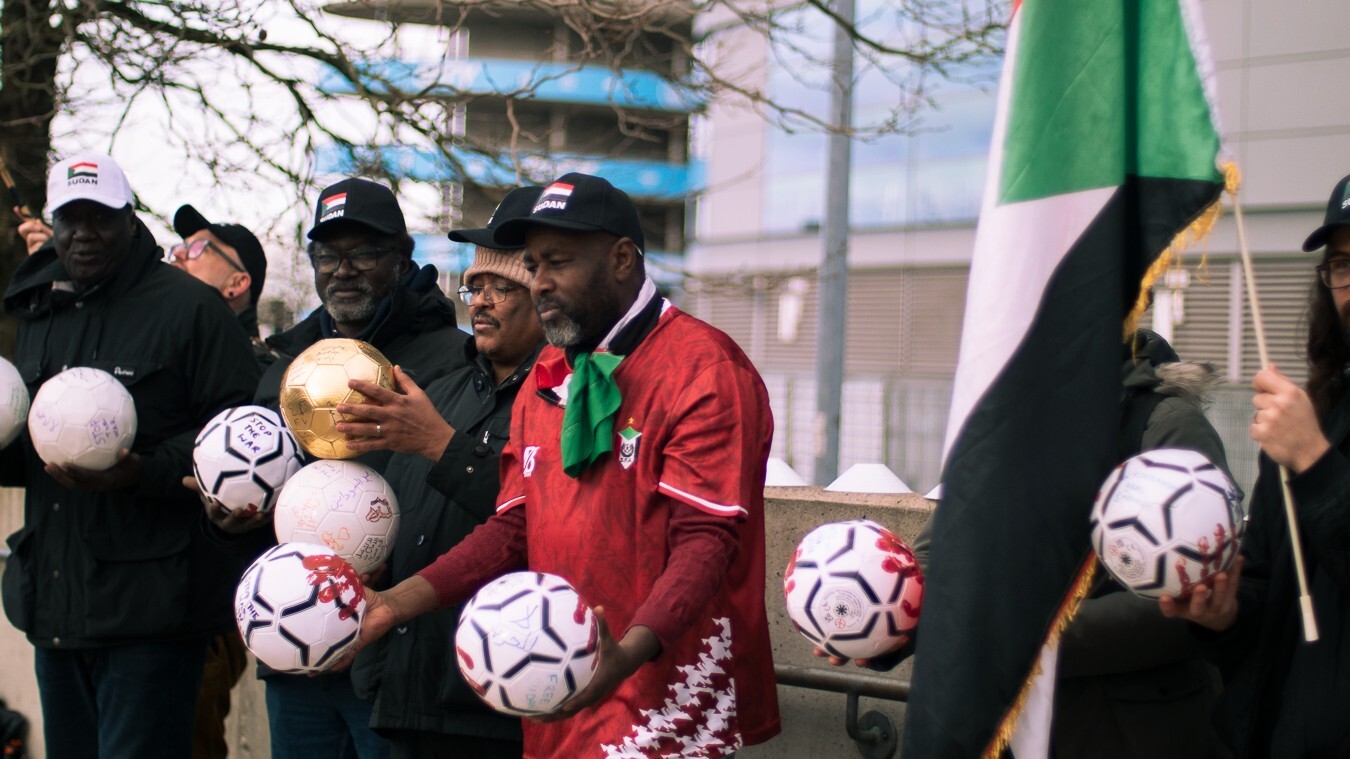
    On a frigid Wednesday morning in Manchester, a small but determined group of Sudanese exiles gathered outside Etihad Stadium, home to Manchester City Football Club. Their protest targeted not the team’s performance on the pitch, but its owner’s alleged involvement in the devastating conflict they had fled.

    Farid Kelana, who sought refuge in the UK two years ago after escaping Sudan’s violence, expressed his outrage to Middle East Eye: “I feel totally angry about the idea that football is linked to war crimes, linked to killing people.” Kelana had settled in Manchester months after conflict erupted in Sudan in April 2023, never anticipating his new city would connect to the war he thought he had left behind.

    The demonstration highlighted the controversial ownership of Manchester City by Sheikh Mansour bin Zayed Al Nahyan, vice president of the United Arab Emirates and brother to the nation’s ruler. Extensive investigations have revealed the UAE serves as a primary supporter of Sudan’s Rapid Support Forces (RSF) paramilitary group, supplying weapons through complex networks across multiple African nations. The UAE consistently denies these allegations.

    According to intercepted communications reviewed by US officials, RSF commander Mohammed Hamdan Dagalo (known as Hemedti) maintains direct contact with Sheikh Mansour. American intelligence concludes the Manchester City owner has played a central role in arming the paramilitary group responsible for widespread atrocities.

    Kiri Kankhwende of Christian Solidarity Worldwide stated: “Man City has a proud heritage, but the money funding these victories is financing the killing of children, women, and innocent civilians. This is too high a price to pay for victory.”

    Despite the modest turnout of approximately twenty protesters, participants demonstrated remarkable resolve. Mohaned Elnour, a Sudanese consultant residing in the UK for seven years, acknowledged the physical discomfort: “You can see my hands are freezing, but I’m doing something to support my people in Sudan.”

    The protest featured footballs inscribed with anti-war messages by Sudanese refugees living in Ugandan camps, symbolizing the connection between the beautiful game and distant suffering. While Manchester City officials briefly inquired about the nature of the demonstration, passing drivers occasionally honked in support upon recognizing Sudanese flags.

    Activists pointed to the Premier League’s updated Owners and Directors Test, approved unanimously by all 20 clubs three years ago, which includes human rights abuses as grounds for disqualification. Scot Bower, head of Christian Solidarity Worldwide, emphasized: “The evidence indicates Sheikh Mansour should not own a football club. Those are the rules of the Premier League.”

    Protesters highlighted the precedent set when Chelsea FC was seized from Roman Abramovich following Russia’s invasion of Ukraine, questioning why similar standards aren’t applied to the UAE’s involvement in Sudan. Activists suggest the UK’s substantial economic ties with the UAE have created a double standard in addressing human rights concerns.

    Despite these challenges, organizers believe football fans possess unique power to effect change. As Mohannad Taha of Manchester4Sudan noted: “The football community taking action on Sudan can directly impact the war’s cessation. We’re talking about substantial resources, cultural capital, and emotional investment.”

  • Gulf leaders convinced Trump to go easy on Iran, say officials

    Gulf leaders convinced Trump to go easy on Iran, say officials

    A coalition of Gulf nations successfully persuaded U.S. President Donald Trump to abandon a planned military strike against Iran, according to senior Saudi diplomatic sources. The diplomatic intervention, led by Saudi Arabia, Qatar, and Oman, culminated in intense last-minute negotiations that ultimately changed the administration’s course of action.

    The breakthrough followed days of escalating tensions and mounting expectations of American military retaliation against Iran’s suppression of nationwide protests. President Trump confirmed from the Oval Office that he had received assurances from highly placed sources within Tehran that planned executions of demonstrators would not proceed.

    In statements indicating a deliberate de-escalation of hostilities, Trump emphasized that the United States would adopt a watchful stance. “They’ve stated the killings have ceased and executions will not occur. We intend to verify these developments,” the president remarked, adding that military options remained under consideration pending Iran’s compliance.

    Subsequent to these diplomatic exchanges, Iranian Foreign Minister Abbas Araghchi denied existence of execution plans for protesters. Iranian state media corroborated this position by reporting that Erfan Soltani, a 26-year-old detainee from Karaj protests, would not face capital punishment.

    The reduced tensions prompted tactical reassessments at strategic regional installations. Personnel previously relocated from Qatar’s Al-Udeid Airbase began returning to their positions as threat levels diminished, according to diplomatic sources familiar with the situation.

    Human rights organizations monitoring the unrest provided staggering casualty estimates, with figures ranging from 2,600 to 3,428 fatalities resulting from protest-related violence and government crackdowns. The Gulf-mediated diplomatic resolution potentially prevented further escalation in a region already experiencing significant instability.

  • At Saudi’s Six Flags, world’s tallest roller coaster travels length of 5 Burj Khalifas

    At Saudi’s Six Flags, world’s tallest roller coaster travels length of 5 Burj Khalifas

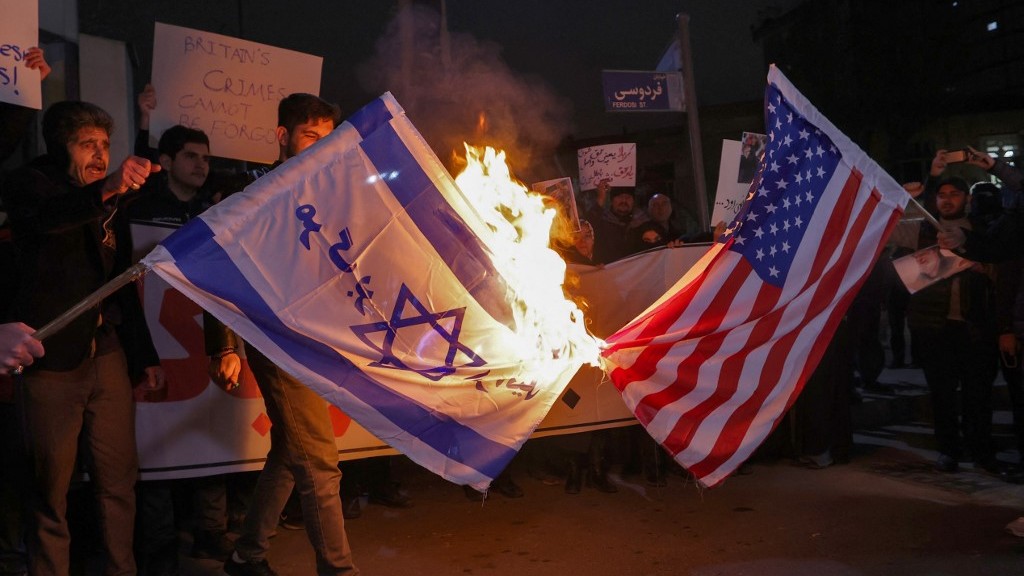
    The United States and Israel have initiated significant military and economic actions targeting Iranian interests and its regional proxies. In a decisive move, the U.S. Treasury Department has imposed comprehensive sanctions on a cohort of senior Iranian leaders directly implicated in the violent suppression of domestic protests. This sanctions package targets key figures within Iran’s security apparatus and morality police, freezing U.S.-based assets and prohibiting American entities from engaging in any transactions with them.

    Concurrently, the Israeli Defense Forces (IDF) launched precision airstrikes against multiple Hezbollah operational sites across southern Lebanon. Military officials confirmed the strikes targeted weapons depots, observation posts, and command centers belonging to the Iran-backed militant group. This military action is described as a direct response to recent cross-border provocations and attempted infiltrations, underscoring the escalating tensions along the Israel-Lebanon frontier.

    The dual developments highlight a concerted effort to challenge Iranian influence on multiple fronts. The U.S. sanctions aim to impose tangible costs on Tehran for its human rights abuses, while Israel’s military strikes seek to degrade the capabilities of Hezbollah, Iran’s primary proxy force in the region. These actions occur amidst stalled negotiations to revive the 2015 nuclear agreement, signaling a potential shift towards a more confrontational approach by the Western and Israeli alliance.

  • South Korea’s impeached leader faces first of several verdicts. Here’s what you need to know

    South Korea’s impeached leader faces first of several verdicts. Here’s what you need to know

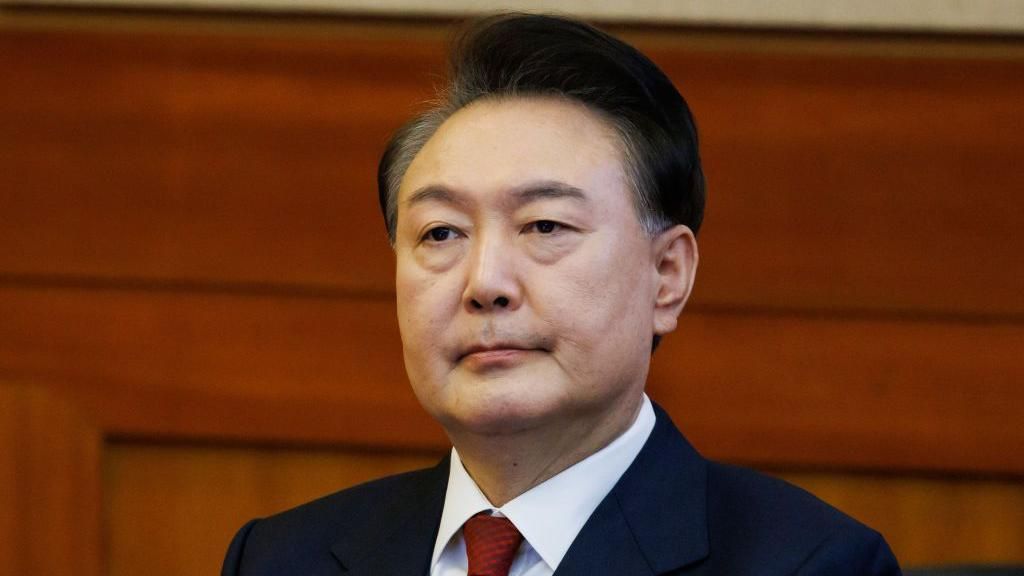
    South Korea’s former President Yoon Suk Yeol awaits a landmark judicial ruling on Friday regarding his controversial 2024 martial law declaration that plunged the nation into political crisis. The embattled ex-leader faces eight distinct charges including insurrection, abuse of power, and campaign law violations in what legal experts describe as one of the most consequential trials in modern Korean history.

    Prosecutors have presented a case alleging Yoon systematically attempted to subvert constitutional order by declaring martial law without legitimate justification. Central to the allegations is his mobilization of military and police forces to blockade the National Assembly compound, preventing lawmakers from challenging his decree, and his authorization of arrests targeting political opponents including the Assembly speaker and party leaders.

    While Yoon initially justified his actions as necessary to counter pro-North Korean elements, evidence suggests the move was primarily motivated by mounting political vulnerabilities. The prosecution has sought capital punishment, characterizing Yoon as remorseless and noting the severity of his actions exceeded even the 1979 military coup led by former dictators Chun Doo-hwan and Roh Tae-woo.

    Legal analysts anticipate a life imprisonment sentence rather than execution, considering both the political implications of martyrdom and South Korea’s 27-year moratorium on capital punishments. Additional charges include obstruction of justice for evading arrest with unprecedented security barricades, abuse of power for bypassing cabinet procedures, and document falsification.

    A separate trial examines allegations that Yoon attempted to provoke military conflict with North Korea through unauthorized drone incursions, potentially to justify his martial law declaration. Former intelligence chief Yeo In-hyung and ex-defense minister Kim Yong-hyun face related indictments.

    Despite the gravity of charges, some experts predict eventual presidential pardon based on Korea’s political traditions, though any sentence would serve as symbolic condemnation of constitutional violations. The proceedings have exposed deep societal divisions, with both supporters and opponents regularly demonstrating outside courtrooms.

  • Israeli military strikes Hezbollah targets in several areas in Lebanon

    Israeli military strikes Hezbollah targets in several areas in Lebanon

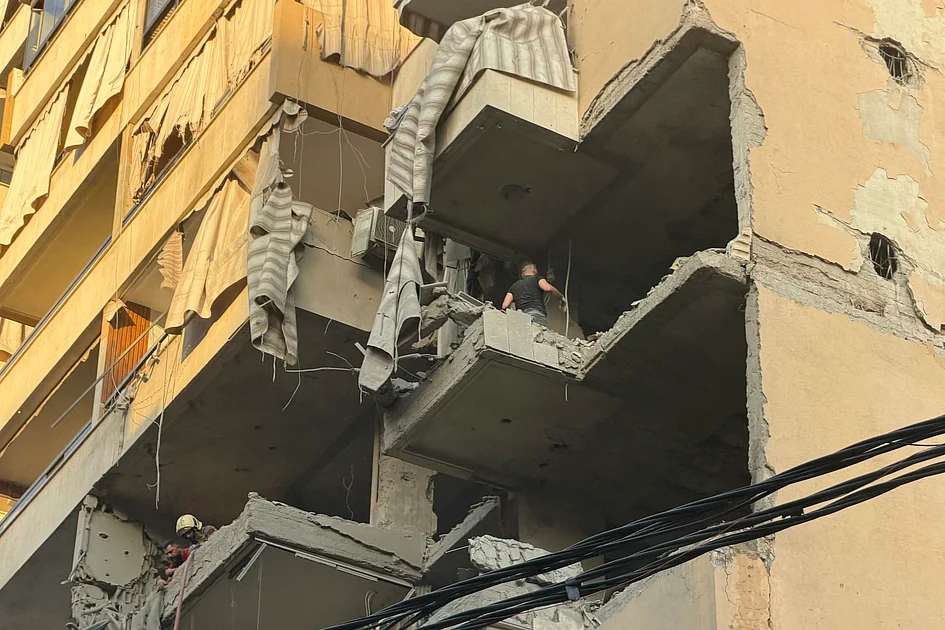
    The Israeli Defense Forces launched targeted operations against Hezbollah positions across multiple locations in southern Lebanon on Thursday, January 15, 2026, marking a significant escalation in regional tensions despite an existing ceasefire arrangement. The military actions were preceded by formal evacuation warnings issued to residents of Sohmor village through official channels, including social media announcements from Colonel Avichay Adraee, the military’s Arabic-language spokesperson.

    The strategic strikes targeted what Israeli authorities described as ‘terrorist military infrastructure’ allegedly being reconstructed by Hezbollah in violation of the November 2024 ceasefire terms. This development comes precisely one week after Lebanese military forces reported completing the initial phase of disarming Hezbollah operations south of the Litani River, a claim that Israeli officials have publicly dismissed as inadequate.

    Prime Minister Benjamin Netanyahu’s administration reiterated its firm position that the ceasefire agreement explicitly requires complete disarmament of Hezbollah forces. The ongoing military operations demonstrate Israel’s continued commitment to unilateral action when deemed necessary for national security purposes, regardless of diplomatic arrangements.

    According to Lebanon’s National News Agency, the region has experienced intensified violence in recent days, with reports of ‘violent Israeli strikes’ affecting multiple southern towns including Jezzine, Mahmudiyeh, Al-Dimasqiyeh, and Al-Bureij, where over ten separate strikes were recorded just days prior to Thursday’s operations. The persistent hostilities suggest a deteriorating security situation along the Lebanon-Israel border despite theoretical peace agreements.

  • Public pay their respects to Cubans killed in Venezuela during US raid

    Public pay their respects to Cubans killed in Venezuela during US raid

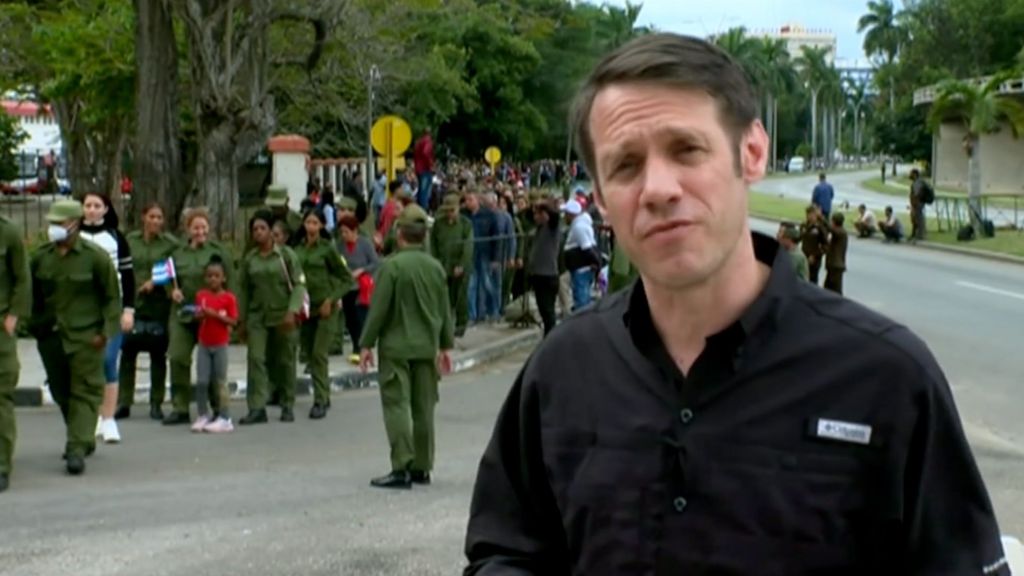
    The streets of Havana witnessed a profound display of collective mourning as citizens gathered to honor the memory of their compatriots killed during a recent cross-border security operation in Venezuela. The incident, which involved a US-led raid, has sparked significant emotional outpouring and diplomatic tensions. In the Cuban capital, residents formed solemn processions, demonstrating a powerful sense of national solidarity. The fatalities, reported to be Cuban nationals, occurred during a contentious military action on Venezuelan soil, further complicating the already strained relations between Havana and Washington. This public demonstration serves not only as a memorial but also as a silent protest against foreign intervention, highlighting the deep-seated grievances and the human cost of international geopolitical conflicts. Local authorities observed the gatherings, which remained peaceful yet charged with emotion, reflecting the community’s call for justice and sovereignty.

  • Dubai: Persian restaurant Anar reopens with a fresh take at Souk Madinat

    Dubai: Persian restaurant Anar reopens with a fresh take at Souk Madinat

    Dubai’s culinary landscape welcomes the revitalized return of Anar, a distinguished Persian dining establishment that has unveiled its reimagined presence at Souk Madinat Jumeirah. This reopening marks a significant evolution for one of the city’s most cherished culinary destinations, blending traditional Persian heritage with modern aesthetic sensibilities.

    The restaurant’s transformation extends beyond mere renovation, presenting a thoughtfully curated atmosphere that harmonizes traditional elements with contemporary design. Architectural features include clay-washed walls, artisanal hand-textured plaster finishes, distressed dark wood accents, and glazed tiles inspired by classical Persian courtyard designs. This carefully crafted environment creates an intimate, timeless ambiance suitable for extended dining experiences from afternoon through evening.

    Culinary philosophy centers on the ‘Neo Persian Soul’ concept, which reinterprets centuries-old Persian gastronomic traditions through a refined, modern lens. The menu presents an array of authentic dishes including soulful stews, saffron-infused creations, and charcoal-grilled specialties. Signature offerings feature Kebab Kubideh, Ghormeh Sabzi, Joojeh Masti, slow-braised Gardan, and the refreshing Faloodeh dessert—all maintaining traditional flavors while embracing contemporary presentation techniques.

    Notable additions include an entirely new courtyard bar concept, designed as an alfresco space for sunset beverages and evening social gatherings beneath the open sky. The restaurant further enhances its cultural offering through the Anar Bazaar, featuring curated artisanal pieces crafted by Persian artisans, allowing guests to acquire tangible memories of their dining experience.

    Strategically positioned along Souk Madinat’s tranquil waterways, the establishment offers uninterrupted views of the iconic Burj Al Arab, complementing its sophisticated culinary journey with one of Dubai’s most picturesque settings.

  • Social media sites block 4.7 million underage accounts in Australia

    Social media sites block 4.7 million underage accounts in Australia

    In a groundbreaking enforcement of digital age restrictions, Australian regulatory authorities have revealed that technology giants have disabled approximately 4.7 million accounts belonging to underage users. This massive account removal initiative comes as a direct result of Australia’s pioneering legislation mandating social media platforms to prevent users under 16 from maintaining accounts, which took effect on December 10 last year.

    The country’s online safety watchdog, led by eSafety Commissioner Julie Inman Grant, reported that initial compliance data demonstrates substantial action from major platforms including Meta, TikTok, and YouTube. “Our regulatory guidance and ongoing engagement with platforms are already yielding significant outcomes,” Commissioner Inman Grant stated, highlighting the proactive measures taken by these companies.

    Meta, the parent company of Facebook, Instagram, and Threads, disclosed specific figures showing the removal of 331,000 underage accounts from Instagram, 173,000 from Facebook, and 40,000 from Threads during the critical implementation week ending December 11. Despite this compliance, Meta has reiterated its position that app stores should bear responsibility for age verification and obtaining parental consent before minors can download applications, arguing this approach would prevent a perpetual “whack-a-mole” scenario where teenagers migrate to alternative platforms to circumvent restrictions.

    The regulatory framework imposes severe financial penalties for non-compliance, with companies facing fines of up to AU$49.5 million (approximately US$33 million) if they fail to implement “reasonable steps” to adhere to the age restrictions. The eSafety Commission acknowledges that accurate age verification presents technical challenges but maintains expectations for continuous improvement in platform performance.

    Commissioner Inman Grant emphasized that while complete compliance assessment remains premature, early indicators are encouraging. She noted that some determined minors might find creative ways to maintain social media presence, but compared the situation to other safety regulations where success is measured through harm reduction and cultural norm transformation rather than perfect enforcement.

    The implementation has triggered interesting market dynamics, with lesser-known platforms like BlueSky and Lemon8 experiencing download surges ahead of the ban’s effective date. However, these platforms have recognized their obligation under the legislation and are cooperating with Australian regulators. The eSafety Commission acknowledges the practical challenges of regulating an evolving digital landscape with countless services but confirms its compliance focus will prioritize platforms with the highest Australian user concentrations.

  • Aid workers cleared of human trafficking charges in Greece

    Aid workers cleared of human trafficking charges in Greece

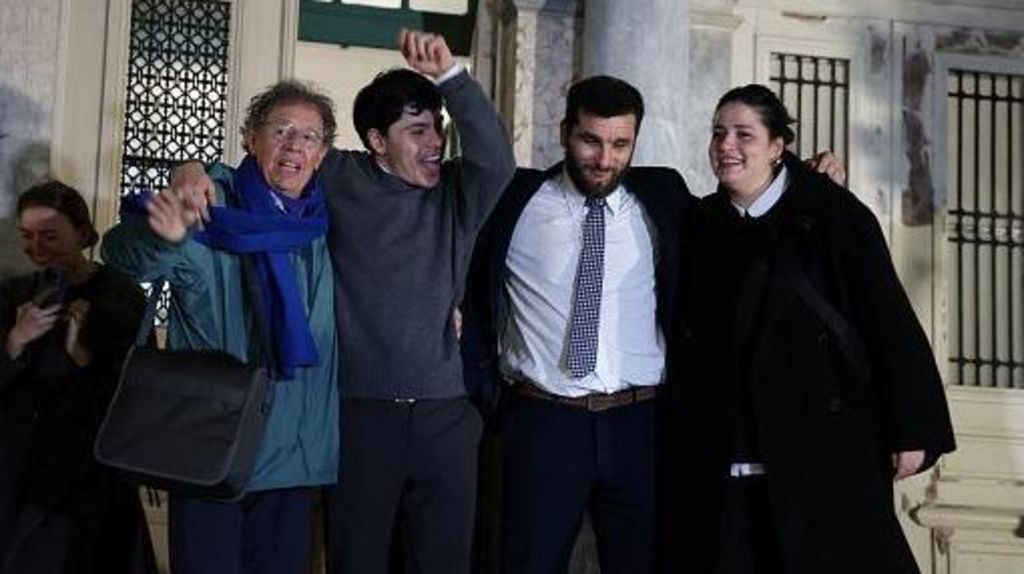
    In a landmark ruling with profound implications for humanitarian work across Europe, a Greek court has fully exonerated 24 volunteer aid workers who faced severe criminal charges for rescuing migrants at sea. The defendants, including prominent figures Sarah Mardini and Sean Binder, were cleared of all remaining accusations after a protracted legal battle spanning nearly seven years.

    The case originated in 2018 when Greek authorities arrested volunteers from Emergency Response Centre International (ERCI), a non-governmental organization operating on Lesbos during the peak of Europe’s migration crisis. Between 2015-2018, ERCI volunteers conducted search and rescue operations for asylum seekers crossing the treacherous waters between Turkey and Greece, saving countless lives during a period when hundreds of thousands attempted the dangerous passage.

    The defendants faced an array of serious charges including human trafficking, facilitating illegal entry, money laundering, and membership in a criminal organization—offenses carrying potential prison sentences of up to 20 years. While espionage charges were dismissed in 2023, the remaining accusations proceeded to trial last month, drawing international condemnation from human rights organizations.

    Presiding Judge Vassilis Papathanassiou delivered the decisive verdict on Thursday, stating that all defendants were acquitted because their actions were clearly intended ‘not to commit criminal acts but to provide humanitarian aid.’ The judgment emphasized that ‘waiting to rescue a human life cannot be considered facilitation of illegal entry,’ and that an online communication group cannot be classified as a criminal organization.

    The prosecution itself had recommended acquittal, with prosecutor Dimitris Smyrnis acknowledging that ‘no independent basis establishing the criminal liability of the defendants has been demonstrated.’ Testimony during the trial revealed that while volunteers used encrypted messaging services to coordinate rescues, they also maintained cooperation with Greek coast guard authorities.

    Defense lawyer Zacharias Kesses expressed frustration that ‘it took 2,889 days for the prosecutor to realise that the accusation made no sense whatsoever.’ Sean Binder, who endured three months of pre-trial detention, described mixed emotions of ‘relief and anger cocktail, equally balanced,’ noting how the seven-year legal limbo had derailed his career and personal life.

    Human rights advocates hailed the decision as a critical victory. Eve Geddie of Amnesty International stated: ‘We hope today’s decision sends a strong signal to Greece and other European countries that solidarity, compassion and defending human rights should be protected and celebrated, not punished.’

    The case has been widely viewed as a test of Europe’s approach to humanitarian assistance amid ongoing migration challenges, with implications for volunteer rescuers across the continent.