作者: admin

  • Mainland college students present Kunqu classic ‘The Peony Pavilion’ in Taipei

    Mainland college students present Kunqu classic ‘The Peony Pavilion’ in Taipei

    In a significant cultural exchange event, university students from mainland China presented a special campus youth edition of the classical Kunqu Opera “The Peony Pavilion” in Taipei on January 15, 2026. This performance marked the first time a production entirely performed by mainland college students was staged in Taiwan, occurring exactly twenty years after the original youth version premiered in the same city.

    The production originates from an innovative cultural preservation project initiated in 2024, designed to engage young generations in safeguarding Kunqu Opera—a 600-year-old performing art form recognized by UNESCO as an Intangible Cultural Heritage. The current campus version represents an abridged adaptation of the complete nine-hour performance, which typically unfolds across three consecutive evenings.

    Fifty selected students from twenty-nine different universities across mainland China participated in this ambitious undertaking. Despite minimal prior professional training in the ancient art form, these dedicated performers underwent nearly nine months of intensive instruction before debuting their production in Suzhou, Jiangsu Province—the historical birthplace of Kunqu Opera—in April 2025.

    The production maintains the exquisite costumes and sophisticated stage design of the original youth version created by renowned Taiwan-based novelist Pai Hsien-yung. Now 88 years old, Pai has dedicated years to promoting Kunqu Opera among younger audiences. In a pre-performance statement, he emphasized that the primary objective remains helping college students appreciate Kunqu’s aesthetic beauty and develop closer connections to traditional Chinese culture.

    Professor Zhao Tianwei, chief planner of the production and art professor at Southeast University, described the campus version as representing a contemporary model for transmitting China’s fine traditional culture through young practitioners. He expressed hope that Taiwanese youth audiences would gain deeper appreciation and understanding of Kunqu by witnessing their mainland peers performing this classical art form on stage.

    Since its initial 2004 premiere, the youth version of “The Peony Pavilion” has been presented at over a dozen universities, consistently maintaining young audiences as its primary focus. The current cross-strait cultural presentation continues this tradition while fostering meaningful artistic dialogue between mainland Chinese and Taiwanese communities.
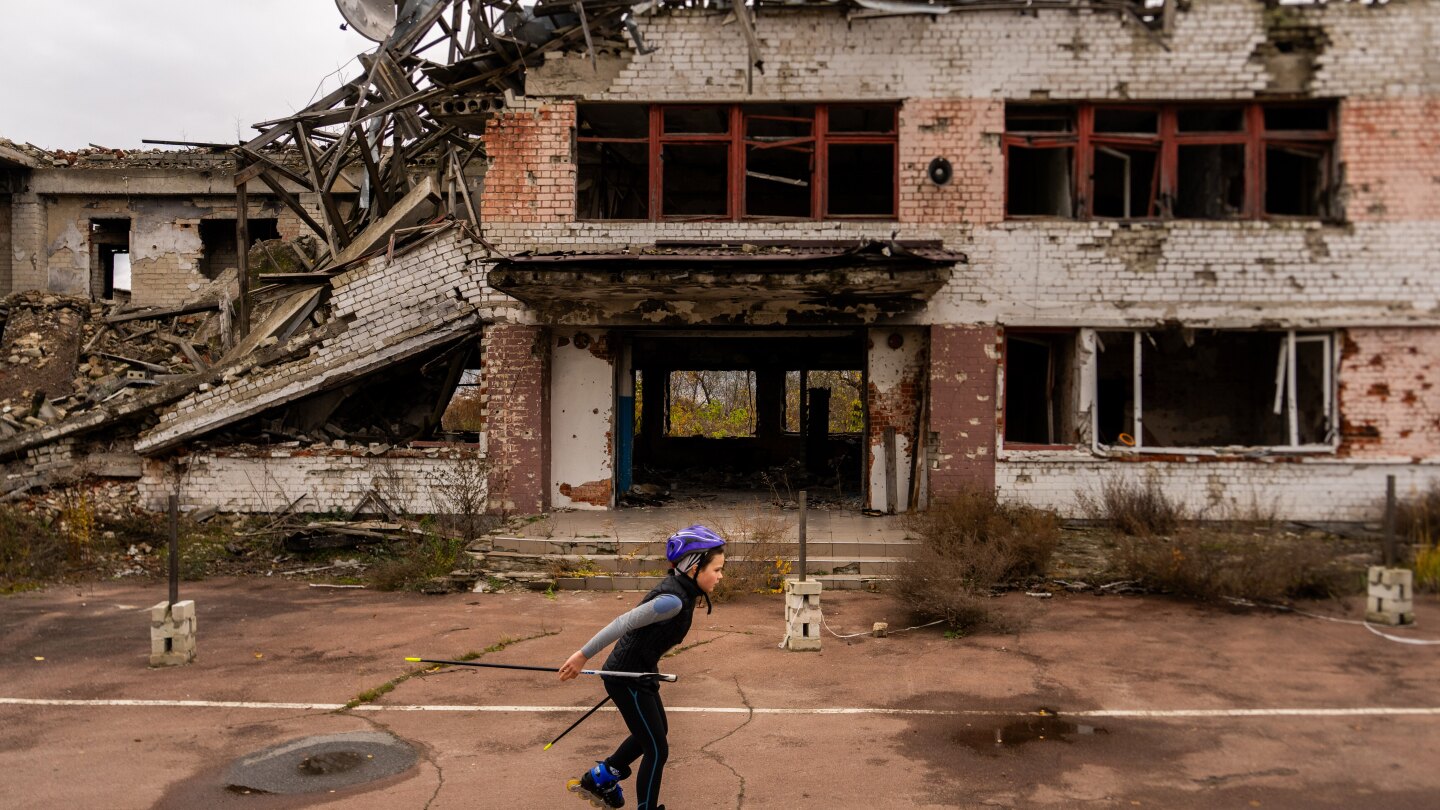

  • Ukraine’s young skiers practice in a bombed-out Olympic training base

    Ukraine’s young skiers practice in a bombed-out Olympic training base

    CHERNIHIV, Ukraine — In the war-scarred landscapes of northern Ukraine, a remarkable story of resilience unfolds daily at the Sports Ski Base of the Olympic Reserve. Approximately 350 young cross-country skiers and biathletes continue their training regimen amidst the persistent threats of aerial attacks, transforming their athletic pursuits into acts of national defiance.

    The sprawling complex, which produced Ukraine’s first Olympic medalist, now operates with bombed-out dormitories and restricted training areas due to unexploded ordnance. Training sessions proceed with surreal normalcy until air raid sirens pierce the silence, triggering swift but practiced evacuations to underground shelters.

    Mykola Vorchak, a 67-year-old coach, observes profound psychological adaptation among his athletes. “We have adapted so well—even the children—that sometimes we don’t even react,” he noted in an October interview. “Although it goes against safety rules, the children have been hardened by the war.”

    The facility lies on the outskirts of Chernihiv, a city two hours north of Kyiv that remains a regular target for attacks on energy infrastructure. Athletes train on blast-marked asphalt tracks using roller skis during non-winter months and practice shooting with laser rifles at electronic targets. The sporadic buzz of drones and subsequent explosions form an ever-present backdrop to their athletic development.

    The complex’s historical significance adds poignancy to its current state. Valentyna Tserbe-Nesina, who won bronze at the 1994 Lillehammer Games—Ukraine’s first Olympic medal as an independent nation—described her shock upon visiting the damaged facility. “I went inside, up to my old room on the second floor. It was gone—no windows, nothing,” she recalled, noting how fire had consumed the trophies they had left behind.

    Among those training at the damaged facility is Khrystyna Dmytrenko, 26, who will represent Ukraine at the upcoming Milan Cortina Winter Olympics. Having completed a tour in Ukraine’s territorial defense forces in 2022, she now sees sports as a demonstration of national strength. “We represent Ukraine on the international stage,” Dmytrenko stated, “letting other countries see our unity, strength and determination.”

    The upcoming Games carry additional significance as Russian athletes may compete in certain events after International Olympic Committee vetting, though without national symbols. This context makes the training efforts in Chernihiv particularly symbolic, with former Olympic biathlete Nina Lemesh noting that some young athletes who began training during wartime have already become international champions in their age groups.

    Standing beside the destroyed dormitories, Lemesh expressed confidence in Ukraine’s athletic future: “Fortunately, Ukrainians remain here. They always will. This is the next generation of Olympians.”

  • Big cargo drone aces elevated test flight

    Big cargo drone aces elevated test flight

    China’s aerospace sector has achieved a significant technological breakthrough with the successful completion of an ambitious high-altitude flight test by the FP-985 Taurus, a large fixed-wing cargo drone. The unmanned aircraft demonstrated exceptional performance during a transprovincial journey across some of China’s most challenging plateau terrain.

    The prototype embarked on its landmark mission from Mainling Airport in Nyingchi, located within the Xizang Autonomous Region. This airport presents exceptional operational difficulties due to its elevation of approximately 2,900 meters and its precarious positioning within narrow, cloud-enshrouded river valleys. The drone, laden with regional specialties including traditional butter tea and yak dairy products, navigated the complex western foothills of the Himalayan mountains during its carefully planned route.

    Following three hours and forty-four minutes of flight, covering approximately 800 kilometers and reaching altitudes of 7,500 meters, the aircraft executed a precision landing at Kangding Airport in Sichuan’s Garze Tibetan Autonomous Prefecture. Situated at over 4,200 meters above sea level, Kangding ranks among the world’s highest-altitude airports. The demonstration continued as the drone departed Kangding, ultimately concluding its 1,200-kilometer journey at Beichuan Yongchang Airport in Mianyang.

    Developed by Aerospace Times Feipeng, a subsidiary of China Aerospace Science and Technology Corporation, the FP-985 Taurus represents a specialized solution for operations in geographically complex regions including plateaus and remote islands. The aircraft boasts impressive technical specifications: maximum takeoff weight of 5.7 metric tons, payload capacity exceeding 2 tons, and an operational range beyond 2,000 kilometers.

    Engineered for versatility, the drone features short takeoff and landing capabilities adaptable to both standard and poorly-equipped airfields. Advanced systems include comprehensive anti-icing and de-icing mechanisms, lightning protection, and enhanced wind resistance.

    The manufacturer emphasizes the drone’s potential to transform logistics in remote high-altitude regions, addressing persistent challenges of extended transit times, elevated risks, and limited transportation alternatives. The company projects that unmanned low-altitude transportation will significantly improve the delivery efficiency of agricultural products and time-sensitive supplies across western China, while simultaneously supporting regional economic development, major infrastructure projects, and enhanced emergency response capabilities.

  • Famed safari park shuts as deadly floods strike South Africa

    Famed safari park shuts as deadly floods strike South Africa

    South Africa’s northern regions are grappling with catastrophic flooding that has claimed at least 19 lives and triggered large-scale emergency operations. The disaster has particularly devastated Limpopo and Mpumalanga provinces, where relentless torrential rains have caused severe flooding, prompting President Cyril Ramaphosa to personally visit affected communities.

    The humanitarian tragedy includes the death of a five-year-old boy in Giyani, Limpopo, whose family received presidential condolences during Ramaphosa’s damage assessment tour. The South African Weather Service has escalated warnings to red level 10—the highest alert—predicting additional rainfall and urging extreme caution in flood-prone areas.

    Emergency protocols have been activated nationwide, with military units and helicopter teams deployed to execute rescue missions in the most severely impacted zones. Authorities have issued critical safety guidelines advising residents to remain indoors, avoid flooded roads, relocate valuables and livestock to elevated areas, and disconnect electrical sources.

    One of South Africa’s premier tourist destinations, Kruger National Park, has suspended all visitor activities and initiated aerial evacuations of guests and staff members. Climate scientists attribute the increasing frequency and intensity of southeastern Africa’s flooding to climate change, which has amplified storm systems in the Indian Ocean region.

    The government continues to coordinate disaster response efforts while meteorological services monitor ongoing weather patterns that threaten to exacerbate the already dire situation across multiple provinces.

  • Concerns raised over US stance on Iran

    Concerns raised over US stance on Iran

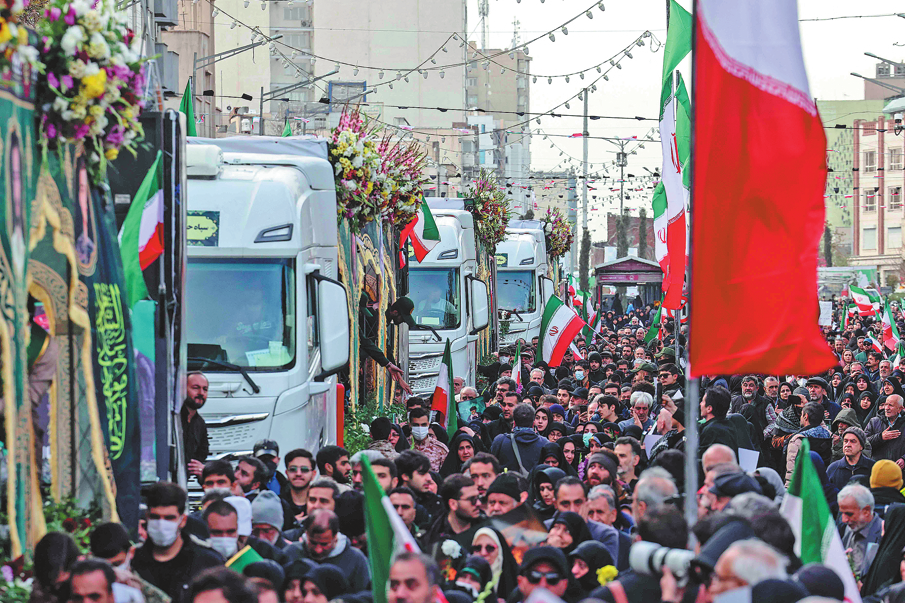
    International observers are closely monitoring escalating tensions in the Middle East as conflicting signals from the Trump administration regarding potential military action against Iran create widespread diplomatic uncertainty. The situation remains fluid with recent developments suggesting both escalation and de-escalation simultaneously.

    Earlier this week, Washington initiated precautionary measures including ordering personnel evacuations from Al Udeid Air Base in Qatar—the largest U.S. military installation in the region. The Pentagon additionally deployed the USS Abraham Lincoln Carrier Strike Group toward the Middle East, a transit expected to require nearly one week for completion.

    President Trump introduced considerable ambiguity into the crisis when he repeatedly stated that he ‘understands the killing of protesters has stopped’ in Iran based on received intelligence. When questioned whether this development would prevent previously threatened military intervention, Trump maintained an opaque position, responding that Washington would ‘watch and see’.

    Tehran has responded with defensive preparations, briefly closing its airspace and announcing that Iranian forces have reached ‘peak defensive readiness’ to counter potential aggression. Iranian Foreign Minister Abbas Araghchi simultaneously advocated for diplomatic solutions, telling Fox News that ‘between war and diplomacy, diplomacy is a better way’ despite acknowledging limited positive experiences with U.S. negotiations.

    Analysts interpret Trump’s comments as potentially providing ‘a face-saving way’ to avoid military engagement while preserving strategic options, according to Sina Toossi, senior nonresident fellow at the Center for International Policy. Former State Department official Mark Kimmitt noted the administration appears intentionally ‘remaining ambiguous’ about military possibilities after demonstrating greater willingness for intervention than previous administrations.

    The geopolitical uncertainty immediately impacted global markets, with crude oil prices dropping approximately 3% following Trump’s tempered rhetoric—reversing previous gains driven by escalation fears that had raised concerns about potential disruptions to worldwide energy supplies.

    The United Nations Security Council scheduled emergency consultations regarding the Iranian situation as regional powers including Qatar implemented responsive measures to heightened tensions. A Western military official summarized the administration’s approach to Reuters: ‘All signals indicate an imminent U.S. attack, but unpredictability constitutes part of their strategy.’

  • Gaza truce plan ‘enters 2nd phase’

    Gaza truce plan ‘enters 2nd phase’

    The fragile Gaza ceasefire agreement has transitioned into its second implementation phase, marking a critical juncture in the conflict resolution process despite persistent violations and unresolved humanitarian challenges. This development follows US Presidential Special Envoy Steve Witkoff’s announcement that the truce is progressing from initial ceasefire measures toward demilitarization, technocratic governance, and reconstruction efforts under President Donald Trump’s 20-point peace framework.

    Regional mediators Egypt, Turkey, and Qatar have welcomed the establishment of a Palestinian technocratic committee, led by former deputy planning minister Ali Abdel Hamid Shaath, to administer Gaza’s governance. The tripartite mediation body characterized this development as instrumental in stabilizing the region and improving dire humanitarian conditions that have plagued the coastal territory.

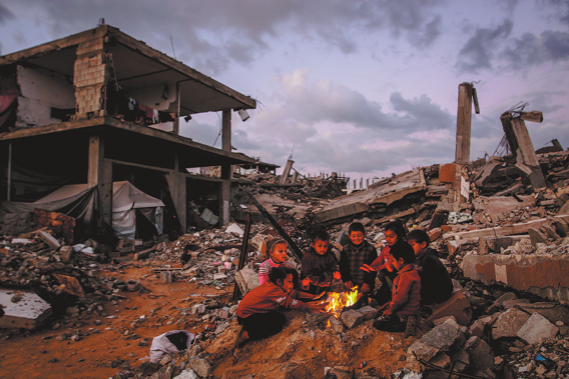
    However, stark contrasts emerge between diplomatic declarations and ground realities. UN agencies report escalating military activities, while displaced Palestinians continue enduring severe winter conditions in makeshift shelters amid widespread destruction. The unresolved status of Ran Gvili, the last remaining Israeli hostage whose body remains unrecovered, represents a significant point of contention, with Israeli Prime Minister Benjamin Netanyahu demanding full compliance from Hamas regarding hostage returns.

    Analyst Nagapushpa Devendra from Germany’s University of Erfurt warns of the agreement’s fragility, noting that the transition from rule-based mediation to power-based coercion fundamentally undermines the ceasefire’s credibility. This shift primarily serves Israeli strategic interests while leaving Palestinians subject to conditional and potentially reversible arrangements, despite the Palestinian Presidency’s emphasis on unifying West Bank and Gaza governance structures.

  • UN names Hangzhou leader in ‘zero waste’

    UN names Hangzhou leader in ‘zero waste’

    Hangzhou has achieved international acclaim as the United Nations designated the Chinese metropolis among the world’s top 20 Zero Waste Cities. This prestigious recognition from the UN Secretary-General’s Advisory Board on Zero Waste highlights Hangzhou’s successful integration of technological innovation with environmental sustainability in waste management.

    The city’s transformation stems from its pioneering ‘digital intelligence’ approach that has revolutionized waste processing for its 12.6 million residents. Between 2021 and 2024, Hangzhou achieved a remarkable reduction in daily waste generation per capita from 1.06 kilograms to 0.99 kg. The municipality maintains an exceptional 98% utilization rate for general industrial solid waste while keeping hazardous waste landfill rates below 3.5%. Since late 2020, the city has accomplished ‘zero landfill’ status for municipal solid waste.

    Central to this success is Hangzhou’s smart waste governance platform, functioning as a digital brain that coordinates citywide operations. The system integrates 7,361 waste collection points, 1,780 clearance vehicles, nine incineration plants, and 11 kitchen waste treatment facilities into a unified network. Real-time data monitoring ensures complete transparency, enabling regulators to track waste movement and optimize resource allocation with unprecedented precision.

    For citizens, this technological advancement translates into practical benefits through platforms like Huge Recycle, which serves 559,000 households across Yuhang and Linping districts. Residents can schedule door-to-door pickups via mobile app and convert recyclables into ‘eco-credits’ redeemable for shopping benefits or cash rewards. The system employs an ‘exclusionary classification’ method that simplifies participation—residents need only separate kitchen and bathroom waste while placing all other recyclables in a single bag.

    Beyond citywide systems, Hangzhou has developed specialized solutions including 3,200 ‘zero-waste cells’ established across schools, communities, and shopping malls. Innovative approaches range from Jingling Recycling Buses collecting low-value recyclables in Xihu district to biological decomposition using black soldier fly larvae in Fuyang district.

    The UN will feature Hangzhou’s case study in a high-profile global release on March 30, coinciding with the UN International Day of Zero Waste. According to Gao Yiliang, director of the Hangzhou Ecology and Environment Bureau’s Soil and Solid Waste Chemicals Division, this recognition represents ‘a high affirmation of our exploration in deeply integrating digitalization with the circular economy.’ The city has codified its successful practices into official guidelines, demonstrated during recent events like the Yuhang district marathon where single-use materials were eliminated and paper guides replaced with electronic alternatives.

  • The president and the public give the US economy different grades

    The president and the public give the US economy different grades

    A stark divergence has emerged between America’s robust economic performance and the public’s increasingly gloomy perception of economic conditions. While President Trump continues to award the economy his highest marks, consumer sentiment surveys reveal a dramatically different assessment from the American public.

    The Conference Board’s Consumer Confidence Index concluded 2025 significantly below its January peak, while the University of Michigan’s index, despite modest recent gains, remains nearly 25% lower than year-ago levels. This pessimism translates directly into political approval ratings, with only 36% endorsing the president’s economic management in recent NPR/Marist polling—the lowest reading in six years. Remarkably, over half of respondents believed the economy had already entered recessionary territory.

    This public sentiment contrasts sharply with conventional economic indicators. Equity markets delivered impressive returns throughout 2025, with the Dow Jones gaining 13%, the S&P 500 advancing 16%, and the NASDAQ surging 20%. Corporate profits followed suit, with S&P 500 companies recording 13% growth and analysts projecting additional 15-16% gains for 2026. The artificial intelligence revolution continues to drive substantial investment in data infrastructure and technological capabilities.

    Gross domestic product figures further contradict the pessimistic narrative. After adjusting for inflation and seasonal variations, third-quarter GDP expanded at a robust 4.3% annual rate, significantly exceeding historical averages, while the second quarter posted a solid 3.8% growth rate.

    The explanation for this perception gap lies in the uneven distribution of economic benefits. Despite strong aggregate numbers, job creation has stagnated, and although unemployment remains relatively low at 4.6%, anxieties about artificial intelligence displacing workers persist across even high-performing sectors. The Federal Reserve Bank of New York’s December survey revealed that expectations of finding new employment after job loss plummeted to a record low of 43.1%.

    Inflation concerns continue to weigh heavily on consumer psychology. With rates persistently hovering around 3%—nearly a full percentage point above the Federal Reserve’s target—Americans remain frustrated by elevated price levels rather than merely the pace of increases. Supply chain disruptions during the pandemic drove prices to unusually high levels in 2022, and consumers have grown impatient waiting for normalization.

    Additional structural challenges include housing affordability constraints, with 30-year mortgage rates remaining at approximately 6.2%, and the inflationary impact of presidential tariffs. The administration’s recent consideration of quick fixes, such as proposed credit-card interest rate caps, reflects growing recognition that macroeconomic statistics alone cannot overcome the public’s lived economic experience.

  • Uganda’s president leads in tense election marred by internet shutdown and voting interference

    Uganda’s president leads in tense election marred by internet shutdown and voting interference

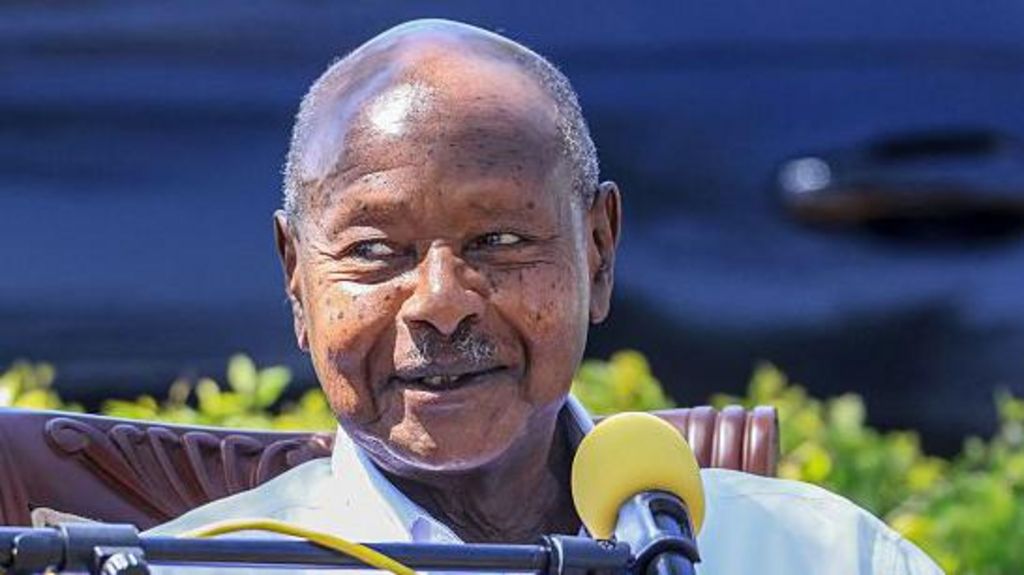
    KAMPALA, Uganda — Preliminary results from Uganda’s contentious presidential election indicate President Yoweri Museveni maintains a substantial lead as he seeks to extend his four-decade rule. With approximately half of polling stations reporting, the 81-year-old incumbent has secured over 70% of votes, while his primary challenger, opposition leader Robert Kyagulanyi (known as Bobi Wine), trails with approximately 19%.

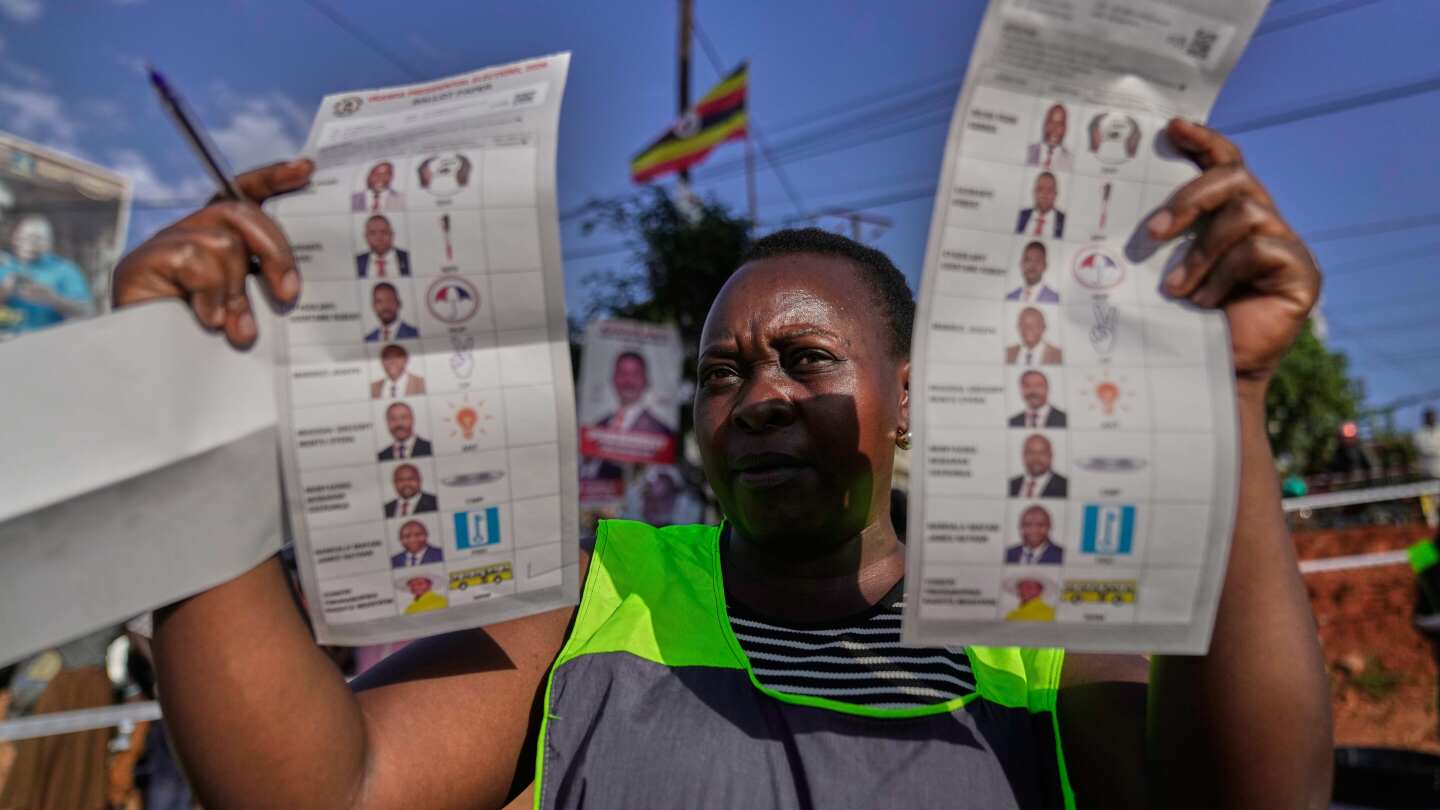
    The electoral process has been shrouded in controversy, featuring nationwide internet blackouts, significant voting delays, and widespread allegations of systematic electoral manipulation. Opposition figures have reported massive ballot stuffing incidents and the detention of polling agents by security forces, particularly in rural strongholds of the ruling party.

    Bobi Wine, the musician-turned-politician advocating for political transformation, reported being confined to his residence during voting and stated that his electoral monitors in western regions were abducted prior to ballot counting. The opposition leader campaigned under extraordinary security measures, frequently wearing protective gear due to persistent safety concerns.

    The military presence throughout the election has been notably pervasive, with armed forces deployed extensively across the capital and surrounding areas. Security personnel maintained a constant vigil outside Wine’s residence near Kampala, which authorities justified as necessary protective measures for a ‘person of interest.’

    Museveni, Africa’s third-longest serving leader, has increasingly relied on military support to maintain authority, with the armed forces currently commanded by his son, Muhoozi Kainerugaba. The president defended the electoral process after casting his ballot, asserting that biometric verification systems had secured the election’s integrity against opposition infiltration attempts.

    This electoral contest marks the second presidential challenge between Museveni and Wine, who previously contested the 2021 election. Official results from that race awarded Museveni 58% against Wine’s 35%, results the opposition leader denounced as systematically rigged. Uganda has not experienced a peaceful presidential transition since gaining independence from British colonial administration in 1962.

  • Museveni takes strong lead in early results of Uganda presidential race

    Museveni takes strong lead in early results of Uganda presidential race

    Ugandan President Yoweri Museveni has established a formidable advantage according to provisional election results released by the nation’s electoral commission. The 81-year-old leader, who has governed Uganda since 1986, secured approximately 76% of tallied votes based on returns from nearly half of polling stations nationwide.

    His primary challenger, opposition figure and former musical artist Bobi Wine, trailed significantly with roughly 20% of counted votes. The election occurred under tense conditions following a campaign period marked by violence and culminating in a government-imposed internet blackout during voting.

    Wine’s National Unity Platform party has leveled serious allegations of electoral manipulation, claiming widespread fraud occurred during Thursday’s polling. The opposition leader provided no immediate documentary evidence to support these claims, and Ugandan authorities have yet to formally respond to the accusations.

    In a concerning development, Wine’s party reported through social media channels that security forces had encircled the opposition leader’s Kampala residence late Thursday, effectively placing him and his wife under house arrest without legal justification. According to party statements, military and police personnel breached the property’s perimeter to establish a presence within the compound.

    The electoral process itself faced substantial operational challenges, with numerous polling stations experiencing delays of up to four hours due to logistical failures. Many locations reported malfunctioning biometric verification systems and delayed delivery of essential voting materials, complications that some observers connected to the nationwide internet suspension.

    This security response mirrors events following the 2021 election, when Wine was similarly confined to his home for several days after challenging Museveni’s victory.