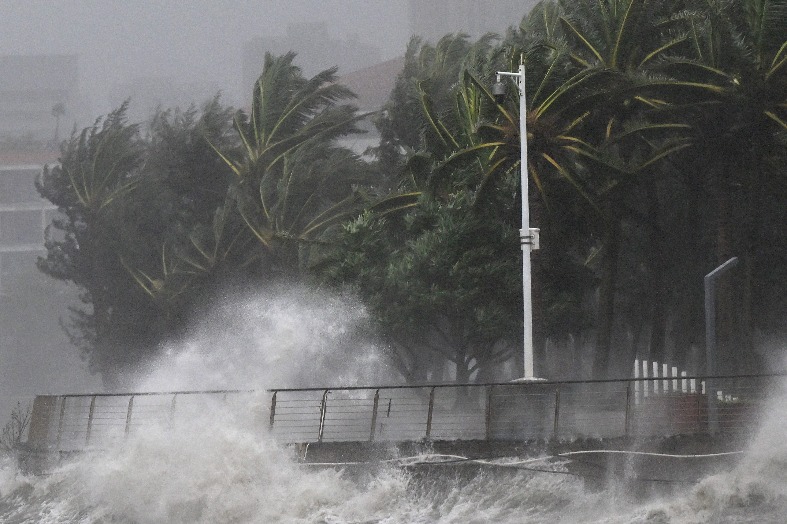
China’s National Meteorological Center has raised a blue alert for Typhoon Fengshen, the 24th typhoon of the year, as it gains strength over the South China Sea. As of 5 am on Monday, the storm’s center was positioned approximately 520 kilometers east of Sansha city in Hainan province. Currently classified as a tropical storm, Fengshen boasts maximum sustained winds of 23 meters per second, with its wind field extending 220 to 280 kilometers from the center. The typhoon is projected to move northwest at a speed of 20 to 25 kilometers per hour, potentially escalating into a severe tropical storm or even a full-fledged typhoon, with wind speeds reaching 30 to 35 meters per second. By Tuesday, a cold front is expected to redirect Fengshen southwestward toward the central coast of Vietnam, where it will likely weaken. Over the next three days, the storm is set to unleash heavy rainfall and strong winds across eastern and northern Taiwan, the coastal regions of Fujian and Guangdong provinces, Hainan Island, and the northern South China Sea. From 8 am Monday to 8 am Tuesday, northern Taiwan is forecast to experience torrential rains, with some areas receiving 100 to 200 millimeters of precipitation. Concurrently, a cold front will sweep across central and eastern China, causing temperatures to plummet by 4 to 6 degrees Celsius, with some regions experiencing drops of up to 8 degrees Celsius. The combined influence of the cold front and Typhoon Fengshen will also result in powerful winds across the southern East China Sea, Taiwan Strait, and northern and central South China Sea, with gusts reaching up to 36.9 meters per second, prompting the issuance of a yellow alert for strong winds.
作者: admin
-
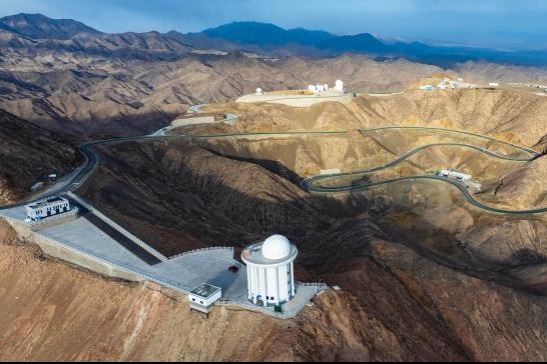
China’s AIMS telescope in mid-infrared band operational
China has officially commissioned the world’s first mid-infrared solar magnetic-field telescope, marking a significant leap in astronomical research. The Accurate Infrared Magnetic Field Measurements of the Sun (AIMS), developed by the National Astronomical Observatories of the Chinese Academy of Sciences (NAOC), has successfully passed its final acceptance review. Located in Lenghu township, Qinghai province, at an altitude of 4,000 meters, the telescope benefits from optimal viewing conditions despite the harsh environment. AIMS addresses a critical gap in mid-infrared solar magnetic-field observations, transitioning from indirect inference to direct detection, thereby enhancing measurement precision. The telescope’s domestically designed components, including the infrared spectrograph and imaging camera, have improved the accuracy of direct solar magnetic-field measurements to over 10 gauss. During its trial phase, AIMS captured mid-infrared flare data across multiple bands, offering new insights into solar eruptions and magnetic energy dynamics. Now operational, AIMS is poised to support advanced solar-physics research in China, bolstering the nation’s capabilities in solar-activity monitoring and space-weather forecasting.
-

Merz rejects calls to relax refusal to deal with German far-right party
German Chancellor Friedrich Merz has firmly dismissed appeals from within his Christian Democratic Union (CDU) to reconsider its stance against collaborating with the far-right Alternative for Germany (AfD). Speaking on Monday, Merz emphasized that the AfD, which has seen rising support in recent polls, shares no common ground with his conservative party. The AfD, known for its anti-migration policies, secured second place in Germany’s February national election and continues to gain traction, particularly in the eastern states where regional elections are slated for next year. Despite pressure from some CDU members, including former General Secretary Peter Tauber and ex-Defense Minister Karl-Theodor zu Guttenberg, Merz reiterated the party’s 2018 resolution to avoid coalitions or cooperation with the AfD. He described the far-right party as fundamentally opposed to decades of policies that have shaped modern Germany’s success. Merz also acknowledged internal challenges within his coalition government with the Social Democrats, citing public disagreements that have frustrated voters. However, he defended the coalition’s progress on key issues like economic revitalization and migration control. The AfD, classified as a right-wing extremist organization by Germany’s domestic intelligence agency, continues to challenge this designation in court while pushing for the CDU to dismantle its so-called ‘firewall’ against far-right collaboration. Merz dismissed these overtures, stating that the AfD’s ‘outstretched hand is, in reality, a hand that wants to destroy us.’
-

Global mayors visit China Ceramics Museum in Jingdezhen
Jingdezhen, renowned as the ‘Porcelain Capital’ of China, recently welcomed a distinguished group of global mayors who visited the China Ceramics Museum as part of the 2025 Global Mayors Dialogue. The event, held from October 17 to 20, showcased the city’s rich cultural heritage and its pivotal role in the history of ceramics. The museum, a treasure trove of ancient and modern porcelain artifacts, provided the visiting delegates with a deep dive into the artistry and craftsmanship that has defined Jingdezhen for centuries. The mayors, representing cities from around the world, expressed admiration for the museum’s extensive collection and the city’s ongoing efforts to preserve and promote its porcelain legacy. This visit not only highlighted Jingdezhen’s cultural significance but also fostered international dialogue on heritage conservation and cultural exchange.
-
New road linking Baltic states to Poland opens at a time of tensions with Russia
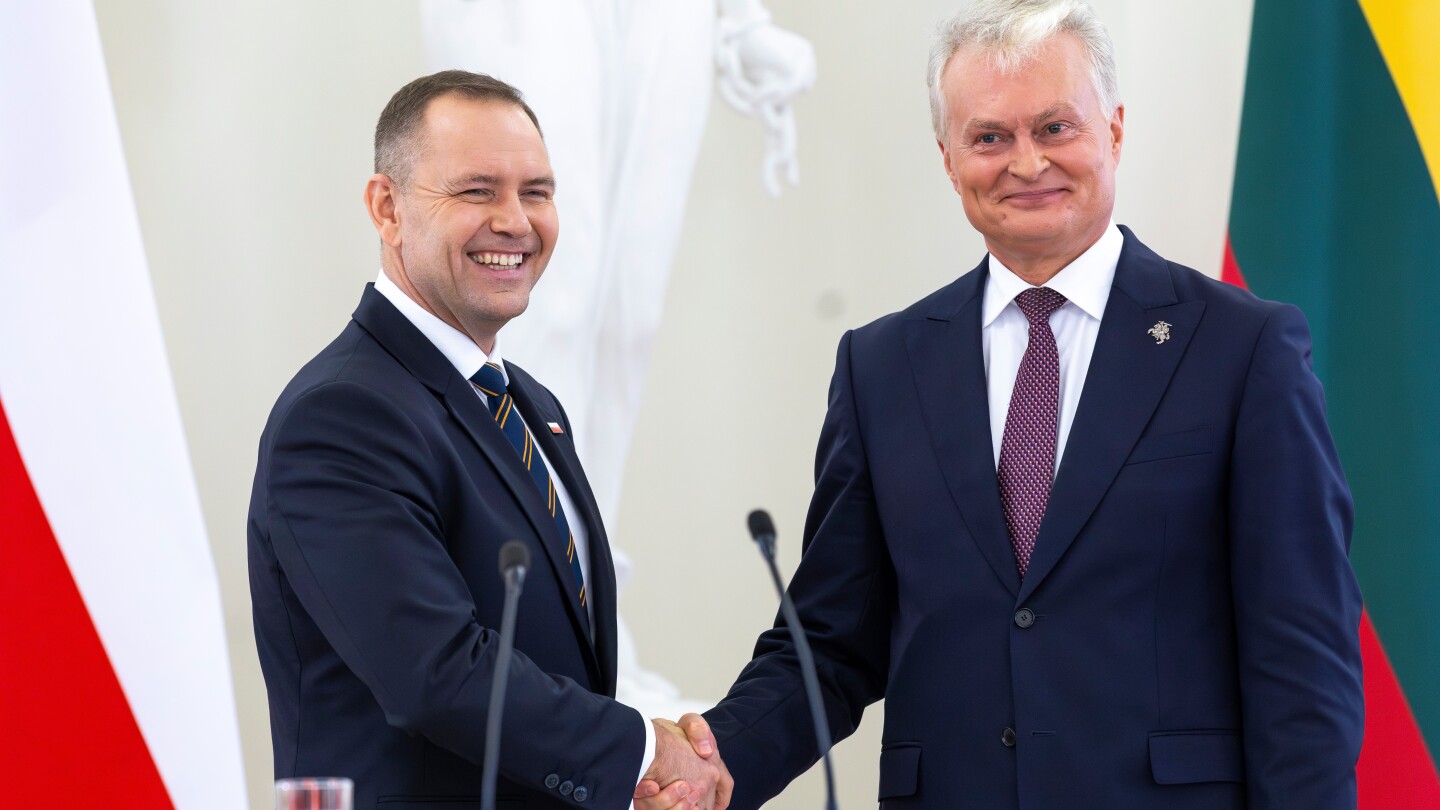
In a significant development for regional connectivity and security, the Via Baltica, a major road linking the Baltic states to Poland, was inaugurated on Monday. This opening comes at a time of heightened tensions between Europe and Russia, particularly following recent incursions of Russian drones into Polish territory and fighter jets into Estonian airspace in September. The 970-kilometer (600-mile) route, which forms part of the European E67 highway, stretches from Warsaw, Poland, through Lithuania, Latvia, and Estonia, culminating in Tallinn. The road traverses the strategically sensitive Suwalki Gap, a narrow strip of land between Belarus and Russia’s Kaliningrad exclave, often cited as a potential flashpoint in any conflict involving NATO and Russia. At the inauguration ceremony on the Polish-Lithuanian border, Polish President Karol Nawrocki and Lithuanian President Gitanas Nausėda emphasized the dual significance of Via Baltica, highlighting its role in bolstering both economic growth and regional defense. Nawrocki stated, ‘This road has a dual purpose – it will help our economy and strengthen the defense capabilities of our region.’ Nausėda echoed these sentiments, describing the road as a symbol of ‘freedom, prosperity, and security,’ while underscoring its economic and logistical importance in connecting Lithuania to the broader European market. The four-lane A5 highway, linking Kaunas, Lithuania’s second-largest city, to Suwalki in Poland, is a key component of Via Baltica. However, some northbound sections remain two lanes and are slated for future expansion, according to Lithuania’s Transportation Ministry. The road’s strategic value lies in its potential to facilitate faster NATO troop movements in the event of a crisis, reinforcing the Baltics’ defense posture amidst ongoing regional instability.
-
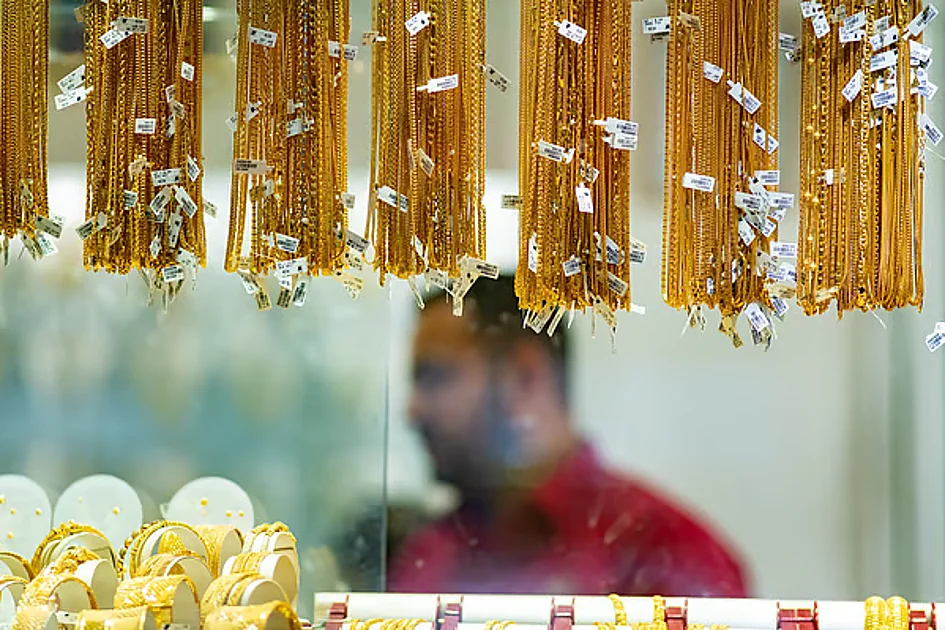
Dubai: Gold prices inch higher in early trade on first day of week
Gold prices in Dubai experienced a modest increase at the start of the trading week on Monday, aligning with global market trends. At 9:00 AM UAE time, 24K gold opened at Dh514 per gram, marking a rise of Dh1.75 from the previous week’s closing price. Other variants, including 22K, 21K, and 18K, also saw upward movements, opening at Dh476, Dh456.5, and Dh391.25 per gram, respectively. Spot gold remained steady at $4,248.93 per ounce by 9:25 AM UAE time, though it showed signs of easing after an initial uptick. Market dynamics continue to be shaped by ongoing US-China trade negotiations and the anticipation of interest rate cuts by the US Federal Reserve. Ipek Ozkardeskaya, a senior analyst at Swissquote, highlighted the resurgence of trade tensions between the US and China, particularly following China’s restrictions on rare earth metal exports and the US’s threat of imposing 100% tariffs. Federal Reserve Chair Jerome Powell recently hinted at a potential rate cut by the end of October, with market expectations now placing a near 100% probability on a 25 basis points reduction. Investors are also awaiting the release of September’s Consumer Price Index (CPI) data by the US Bureau of Labour Statistics on Friday, which could provide further insights ahead of the Fed’s decision later this month.
-

Nigeria police fire tear gas and arrest dozens as protesters demand release of separatist leader
In a tense escalation of tensions, protests demanding the release of Nnamdi Kanu, leader of the Indigenous People of Biafra (IPOB), turned violent in Nigeria’s capital, Abuja, on Monday. Security forces deployed tear gas, water cannons, and electric barriers to disperse demonstrators, leading to widespread clashes. Witnesses reported hearing gunshots as police arrested dozens of protesters, including a journalist from Agence France-Presse (AFP), who was later released but had his equipment destroyed. The unrest disrupted traffic across major roads, leaving commuters stranded. Kanu, a British citizen and prominent figure in the secessionist movement in southeastern Nigeria, has been in and out of detention since 2015 on charges of terrorism and treason. His case has become a focal point for grievances among the Igbo ethnic group, who allege marginalization by the Nigerian government. Aloy Ejimakor, one of Kanu’s lawyers, confirmed his arrest during the protests. The incident underscores the deepening divide between the government and separatist groups advocating for an independent Biafra.
-

Driver dies after Italian basketball fans’ bus attacked with stones
A tragic incident unfolded on a highway near Rieti, Italy, when a bus carrying supporters of the Pistoia Basket basketball team was attacked by rival fans, resulting in the death of a bus driver. The attack occurred as the fans were returning from a game between Pistoia Basket and SRS Sebastiani Rieti, two second-tier Italian basketball teams. According to local media reports, fans of SRS Sebastiani Rieti allegedly began hurling stones at the bus, one of which shattered the windscreen and struck 65-year-old Raffaele Marianella, a bus driver who was seated at the front but not driving at the time. Marianella succumbed to his injuries shortly after the attack. Italian Prime Minister Giorgia Meloni condemned the incident as ‘an unacceptable and insane act of violence,’ extending her condolences to the victim’s family and vowing to bring the perpetrators to justice. A police investigation is currently underway to identify and apprehend those responsible. Italy’s Sports Minister Andrea Abodi labeled the attack a ‘shocking assault,’ emphasizing that the perpetrators were ‘criminals who have turned into murderers and can never be called fans.’ Gianni Petrucci, president of the national basketball federation Federbasket, echoed these sentiments, stating, ‘This is not about basketball. These are criminals.’ He pledged to collaborate with legal authorities to address the incident. The attack has sparked widespread outrage and raised concerns about fan violence in sports.
-
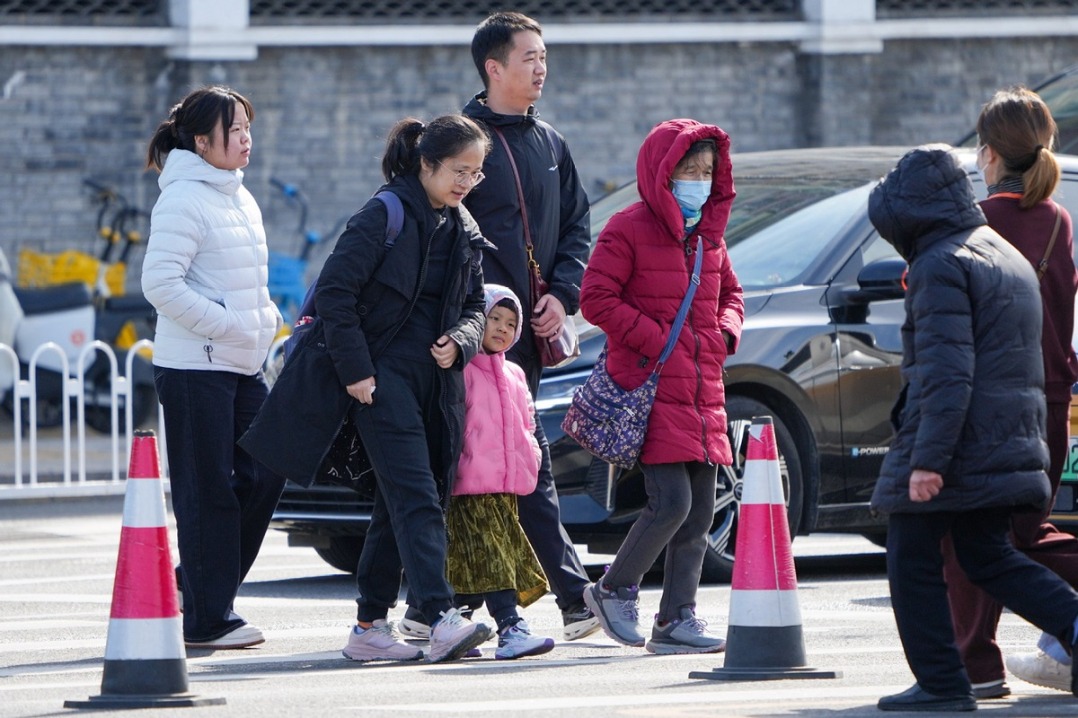
Winter could arrive early for Beijing as cold spell continues
Beijing is experiencing an unusually early onset of winter as temperatures plummeted below freezing on October 18, 2025, weeks ahead of the seasonal norm. The China Meteorological Administration reported that the southern rural areas of the capital recorded a low of -0.5°C, marking the first subzero temperature since autumn began. This cold spell, driven by a robust air mass over northern China, is expected to persist, with daily average temperatures in Beijing remaining below 10°C from October 18 to 24. In response, the Beijing Meteorological Observatory issued blue alerts for cold waves and strong winds on October 16, advising residents to prepare for the prolonged chill. Xin Xin, chief meteorologist at the China Weather Network, noted that while this year’s first subzero reading aligns with last year’s timing, it is significantly earlier than the long-term average of November 8, based on data from 1991 to 2020. She warned that if the current trend of low temperatures continues, winter could arrive notably earlier this year, disrupting seasonal patterns and daily life in the capital.
-
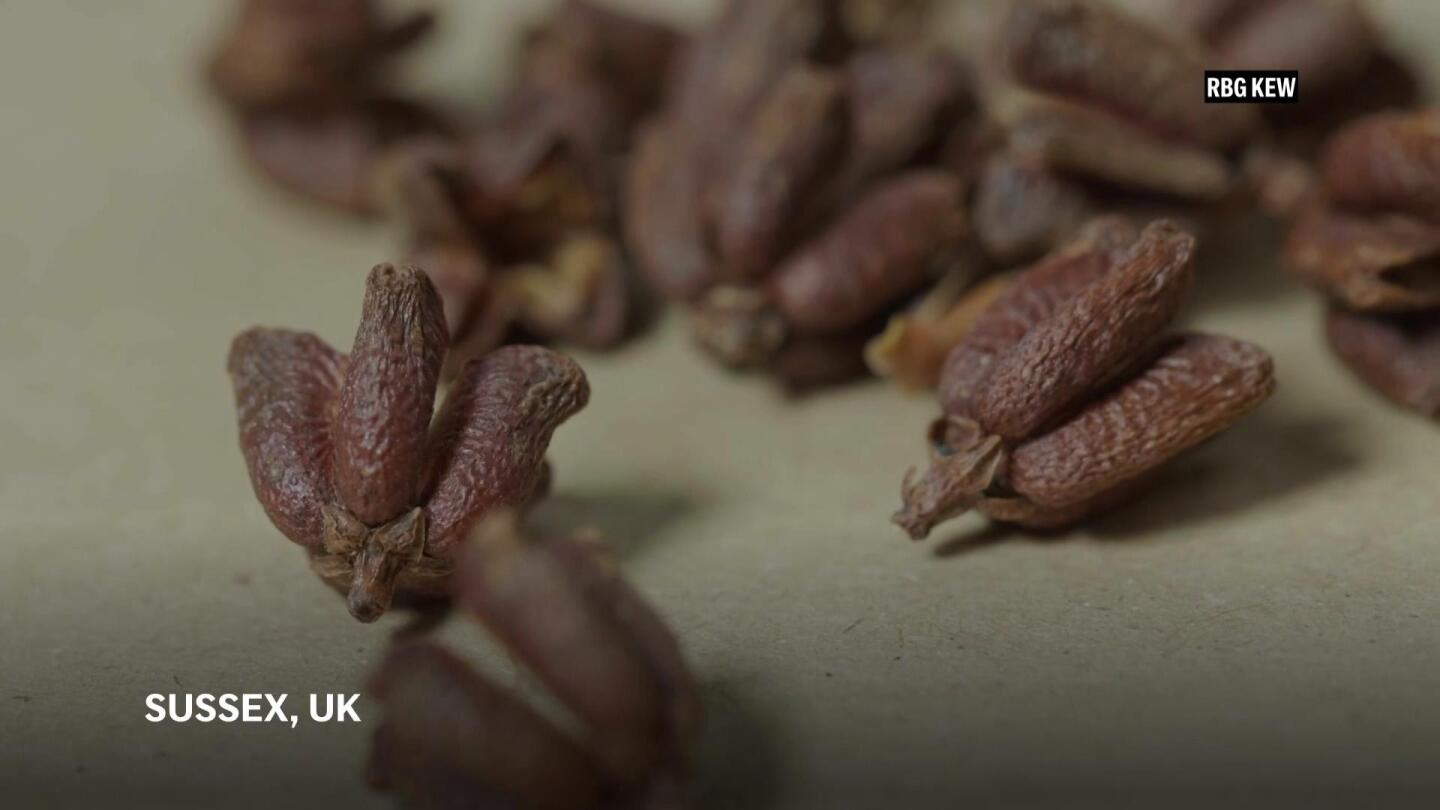
A seed bank in England marks 25 years of preserving the world’s plant diversity
Nestled deep beneath the Sussex countryside in southern England lies the Millennium Seed Bank, a state-of-the-art facility designed to withstand disasters and preserve the world’s plant diversity. Operated by the Royal Botanic Gardens Kew, this underground vault houses over 2.5 billion seeds from approximately 40,000 wild plant species. Stored in sealed glass jars and foil packets at a chilling minus 20 degrees Celsius, these seeds are safeguarded against extinction and climate change. Opened in 2000 by King Charles III, then the Prince of Wales, the facility recently celebrated its 25th anniversary, marking a quarter-century of global conservation efforts. The seed bank’s mission extends beyond preservation; it aims to restore ecosystems worldwide, combat biodiversity loss, and support agricultural resilience in the face of a growing global population. The process begins with field collectors gathering seeds from diverse regions, including Madagascar, Thailand, and Arctic Sweden. These seeds undergo meticulous drying, cleaning, and germination testing to ensure viability before being stored. Kew’s researchers are also pioneering cryopreservation techniques for tropical plants that cannot survive freezing. The Millennium Seed Bank has become a global hub, partnering with 279 organizations in over 100 countries and training more than 3,000 scientists. With nearly half of all flowering plants at risk of extinction, the seed bank serves as a vital insurance policy for global biodiversity, offering hope for a sustainable future.