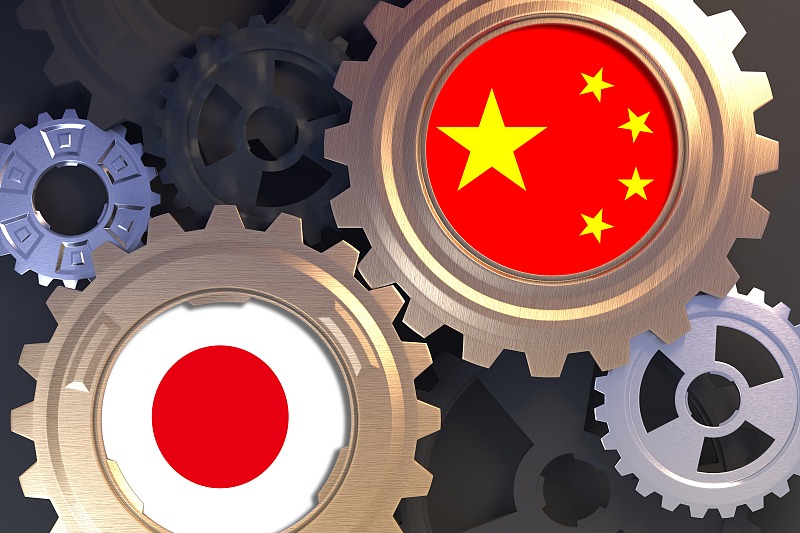
Despite the global rise in protectionism, supply chain realignments, and Japan’s political shift to the right, economic collaboration between China and Japan continues to be a cornerstone of their bilateral relationship. This was highlighted during the Beijing launch of the 2025 Blue Book of Japanese Economy, a report co-authored by the Institute of Japanese Studies at the Chinese Academy of Social Sciences and the Chinese Association for Japanese Economic Studies. The report emphasizes the enduring significance of the Chinese market for Japanese businesses, even as Japan’s foreign direct investment in China has seen a decline due to global supply chain shifts, the yen’s depreciation, and rising labor costs. According to Japan’s Finance Ministry, China ranked ninth among destinations for Japanese investment last year, with direct investment totaling 493.1 billion yen ($3.23 billion). Yang Bojiang, director of the Institute of Japanese Studies, noted that Japan’s net investment in China last year was nearly 60 percent below its 2017 peak, largely due to the relocation of manufacturing lines for U.S.-bound exports out of China to avoid tariff barriers and geopolitical risks. However, experts caution against interpreting this decline as the full picture. A survey by the Japanese Chamber of Commerce and Industry in China revealed that 56 percent of respondent companies plan to ‘increase or maintain’ investment in China this year, with 54 percent considering the Chinese market as ‘the most important’ or ‘one of the top three important markets.’ Chang Sichun, an associate researcher at the Institute of Japanese Studies, pointed out that China remains Japan’s fourth-largest destination for direct investment, following the U.S., the U.K., and the Netherlands. Japanese companies in China have consistently maintained high returns on investment, particularly in the services sector, where recent performance has been strong. The Japanese Chamber of Commerce and Industry in China reported that the return on direct investment for Japanese companies in China rose from 12.1 percent in 2015 to 18.4 percent in 2022, outperforming returns in the U.S. (8.8 percent) and the U.K. (14.7 percent). This strong performance has led to a rebound, with China’s Commerce Ministry reporting a 58.9 percent year-on-year increase in actual investment from Japan in the first eight months of this year. Yang also highlighted China’s modernization achievements as a key attraction for Japanese businesses, noting growing appreciation in Japan for China’s path to modernization, particularly in areas like poverty reduction and the digital economy. However, experts warned of potential uncertainties arising from Japan’s increasingly rightward political shift, which could suppress Japanese investment in China, particularly in high-tech sectors. Despite these challenges, the significant presence of Japanese companies in China and their substantial accumulated investment form an important channel for stabilizing bilateral relations. Strengthening bilateral exchanges and ensuring the healthy development of China-Japan relations not only serves the fundamental interests of both countries but also contributes to regional prosperity and global economic recovery.
作者: admin
-

Nation to update cyber law to strengthen AI oversight
China is set to amend its Cybersecurity Law to bolster oversight of artificial intelligence (AI) security risks, ensuring the technology evolves in a safe, fair, and beneficial manner. Wang Xiang, spokesperson for the Legislative Affairs Commission of the National People’s Congress (NPC) Standing Committee, announced the move on Thursday, emphasizing the need to balance AI development with robust cybersecurity measures. The Cybersecurity Law, enacted in June 2017, has been instrumental in advancing China’s cyber capabilities and fostering the integration of digital and real economies. Wang highlighted AI’s transformative role in driving technological innovation and industrial progress, while also acknowledging the challenges it poses, such as increased cybercrime. To address these issues, the draft amendment includes provisions to support foundational AI research, improve ethical standards, and enhance risk monitoring and regulation. Additionally, the amendment aligns with existing laws like the Civil Code and the Personal Information Protection Law. The NPC Standing Committee will review the draft during its upcoming session, alongside revisions to the Organic Laws of Villagers’ and Urban Residents’ Committees, which aim to strengthen community governance and care for vulnerable groups. The session will also discuss amendments to the Environmental Protection Tax Law and a draft law on procuratorial public-interest litigation.
-
Artificial island to begin tourism trial operation
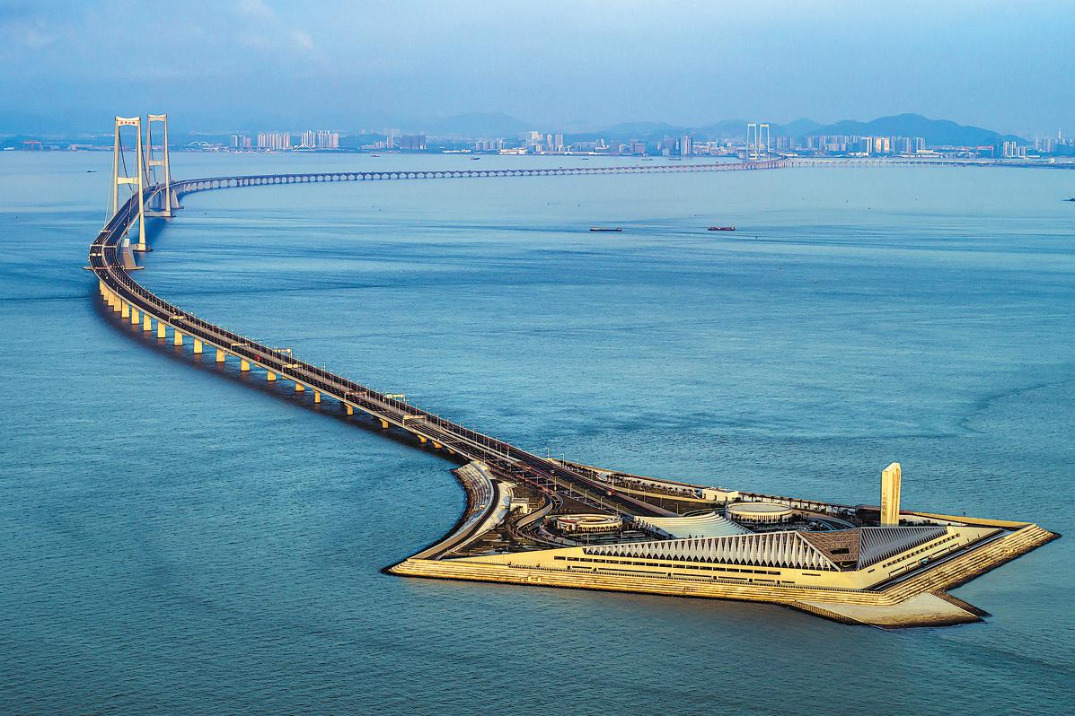
The western artificial island of the Shenzhen-Zhongshan Link, a monumental cross-sea project in the Guangdong-Hong Kong-Macao Greater Bay Area, is poised to commence a month-long trial operation as a cultural and tourism destination starting this Saturday. Managed by the Guangdong Transportation Group, this initiative marks a significant step in transforming the island into a multifaceted hub for education, leisure, and innovation. The formal opening is slated for December 2025. Spanning 24 kilometers, the Shenzhen-Zhongshan Link integrates bridges, islands, tunnels, and underwater interchanges, representing one of the most complex engineering feats in modern infrastructure. Completed in June 2024 after 14 years of planning and construction involving over 15,000 workers, the project has already facilitated increased traffic flow, with vehicles seamlessly transitioning between the bridge and tunnel via the western island. Covering 137,000 square meters, the island serves as a critical hub for traffic management, emergency rescue, and science education. The cultural and tourism development will unfold in phases, with the initial focus on study tours and sightseeing centered around a science and education base. During the trial period, reservations will be available for enterprises and study groups on weekdays, with public access on weekends. Visitors will provide feedback on tour routes, VR/AR interactive equipment, and supporting services. Once fully operational, ticket prices will range from 128 to 188 yuan, inclusive of transportation and a three-hour tour. Dining and other facilities are expected to launch by December. The island’s observation deck offers views of iconic landmarks like Shenzhen Bao’an International Airport and the Shenzhen-Zhongshan Bridge, while the science education base showcases the project’s development history and cutting-edge technologies like holographic projections. Outdoor exhibits include full-scale tunnel sections and engineering components, offering insights into the construction process. Long-term plans envision activities such as sea-based bridge viewing and low-altitude sightseeing flights, positioning the island as a premier technology, engineering, and cultural tourism destination in the Greater Bay Area.
-

From stink to sweet: How durian shaped ties
Once considered an acquired taste due to its pungent aroma, durian has emerged as a symbol of cultural and economic exchange between China and Thailand. Over the past decade, the spiky fruit has not only captivated Chinese consumers but also fostered deeper bilateral ties through trade and investment. Thailand, home to over 200 durian varieties, has become the primary supplier to China, accounting for 97.4% of its durian market. In 2024 alone, Thailand exported 833,000 metric tons of durian to China, valued at $3.7 billion. The fruit’s popularity has spurred online sales campaigns on platforms like Douyin and Taobao, while attracting Chinese investors to Thailand’s orchards and logistics sectors. However, the durian trade faced a significant setback earlier this year when Chinese customs detected Basic Yellow 2 (BY2), a harmful dye used to enhance the fruit’s appearance. This led to rejected shipments, investigations, and temporary export suspensions, causing financial losses for Thai farmers and raising concerns among Chinese consumers. The incident highlighted the need for stricter safety standards, traceability, and consumer education. Despite the challenges, the BY2 scandal prompted Thailand to upgrade its fruit industry, with increased government investment in testing and scientific farming. It also deepened Chinese consumers’ understanding of durian, paving the way for stronger partnerships. Beyond trade, durian has become a cultural bridge, reflecting shared values of respect for nature and traditional farming practices. As both nations continue to collaborate, the ‘king of fruits’ remains a testament to the evolving relationship between China and Thailand.
-

Annual Potala Palace makeover kicks off
In the heart of Lhasa, Xizang Autonomous Region, the annual restoration of the iconic Potala Palace has commenced, drawing hundreds of dedicated volunteers to its historic walls. This cherished tradition, which began on October 22, 2025, aligns with the start of the ninth month in the Tibetan calendar and serves as both a cultural celebration and a vital act of preservation. The week-long event, deeply rooted in generations of history, sees locals and experts alike come together to refresh the palace’s striking red, white, and yellow façade. Among the volunteers is Pema Wangyal, a Lhasa resident participating for the second time, who expressed the profound honor of contributing to the upkeep of this sacred site. The restoration process involves meticulously preparing natural pigments made from lime, milk, honey, sugar, saffron, and minerals, which are then applied to the palace’s massive walls using traditional methods. Volunteers, including skilled ‘spider-men’ who work on ropes to reach high areas, ensure every inch of the structure is revitalized. Ngakwang, a seasoned participant, highlighted the efficiency of modern equipment and teamwork, reducing the project’s duration from half a month to just a week. Organized by the Potala Palace Management Office, this initiative not only enhances the palace’s aesthetic but also protects its ancient walls from weathering and erosion. Built in the 7th century and reconstructed in the 17th century, the Potala Palace stands as Xizang’s largest and best-preserved palace complex, recognized as a UNESCO World Heritage site since 1994. For the community, this annual ritual is more than a physical restoration—it is a testament to their enduring connection to history and heritage.
-

Turkish court dismisses case challenging main opposition party’s congress
In a significant ruling on Friday, a Turkish court dismissed a lawsuit challenging the legitimacy of the Republican People’s Party’s (CHP) internal election held in November 2023. The case, which sought to annul the party’s 38th congress, alleged electoral fraud, including vote-buying and procedural violations. The court found no legal basis to overturn the election results, thereby affirming the leadership of current CHP chairperson Ozgur Ozel. The lawsuit had raised the possibility of reinstating former leader Kemal Kilicdaroglu or appointing a trustee chairman, a move that could have destabilized the party. The CHP has consistently denied the allegations, labeling the legal action as a politically motivated effort by President Recep Tayyip Erdogan’s government to weaken the opposition through judicial pressure. Critics argue that the case is part of a broader crackdown on the CHP, which has gained momentum in recent local elections. The party’s municipalities, including Istanbul under Mayor Ekrem Imamoglu, have faced waves of arrests this year. Imamoglu, a prominent Erdogan critic, remains in pre-trial custody on corruption charges, which he denies. His arrest in March sparked widespread protests, further intensifying political tensions in the country. Erdogan’s administration maintains that Turkey’s judiciary operates independently and that investigations are focused solely on combating corruption.
-

HK residents urged to cast ballots
Hong Kong’s leaders and government officials have launched a vigorous campaign urging residents to participate in the upcoming Legislative Council election, scheduled for December 7, 2025. At the kick-off ceremony for the 2025 Legislative Council General Election, Chief Executive John Lee Ka-chiu emphasized the critical importance of electing ‘capable, responsible, and passionate lawmakers’ to shape the city’s future. The event was held just before the candidate nomination period began, marking the start of a pivotal electoral process that will see 90 lawmakers elected across geographical, functional, and Election Committee constituencies. Lee highlighted that Hong Kong is transitioning from stability to prosperity, with the government actively pursuing reforms, economic development, and improved livelihoods. He stressed that many policies require legislative approval and funding, making the election a decisive moment for the city’s progress. Lee called on all sectors of society, including public and private organizations and patriotic groups, to encourage voter participation. He also assured that civil servants, as the city’s largest workforce, would be given the opportunity to vote, with adequate backup personnel in place to cover their duties. The Hong Kong SAR government has pledged to ensure the election is conducted fairly, justly, and securely. David Lok Kai-hong, Chairman of the Electoral Affairs Commission, underscored that voting is both a right and a social responsibility, enabling residents to directly influence policies in healthcare, labor, education, transport, and housing. Lok praised the improved electoral system for enhancing representativeness, inclusivity, and fair competition, laying a solid foundation for Hong Kong’s democratic development. Lee also highlighted the achievements of the seventh Legislative Council, which passed nearly 130 bills and approved over 260 projects worth HK$700 billion during its term. Other high-ranking officials, including Chief Secretary Eric Chan Kwok-ki and Security Secretary Chris Tang Ping-keung, echoed the call for public engagement, describing the election as a unifying force and a chance to propel Hong Kong forward. Deputy Chief Secretary Warner Cheuk Wing-hing added that participation in the election would enhance Hong Kong’s international prestige, competitiveness, and social stability.
-

Slow-motion footage reveals secrets of snake bites
In a groundbreaking study conducted at a venom research facility in Paris, scientists have utilized high-speed cameras to delve into the mechanics of snake strikes. The research aimed to determine which snake species exhibit the fastest predatory strikes. By analyzing slow-motion footage, the team was able to capture the intricate details of these rapid movements, providing new insights into the biomechanics of snake attacks. This study not only enhances our understanding of snake behavior but also contributes to the development of more effective anti-venom treatments and safety measures for regions where snake bites are prevalent. The findings are expected to have significant implications for both biological research and public health strategies.
-

Restoration anniversary observed
The 80th anniversary of Taiwan’s restoration to China was commemorated in Beijing through a forum organized by the Central Committee of the Taiwan Democratic Self-Government League. The event underscored the historical significance of Taiwan’s return to its motherland in 1945, marking the end of 50 years of Japanese colonial rule. Shaw Kai-ping, a 73-year-old attendee, shared his family’s poignant story of resistance against Japanese aggression. His father, Shaw Daoing, born in Japanese-colonized Taiwan in 1916, joined the mainland’s war effort in 1940 as a frontline medic, embodying the spirit of unity and sacrifice. Shaw emphasized the importance of educating Taiwan’s youth about their shared heritage and the necessity of reunification. He expressed concern over the current ‘de-Sinicization’ efforts by Taiwan’s Democratic Progressive Party, which he believes undermine Taiwan’s national will and dignity. Chi Hsing, president of The Observer magazine in Taiwan, highlighted the patriotic spirit of Taiwan’s forebears and called for Oct 25 to be designated as Taiwan Restoration Day on the mainland. Huang Ching-hsien, a professor at Nankai University, reiterated that Taiwan’s status as part of China is confirmed by international law and stressed the need for collective efforts to achieve true restoration and a bright future for Taiwan.
-

Zelenskyy to meet European leaders in London for talks on military aid for Ukraine
Ukrainian President Volodymyr Zelenskyy arrived in London on Friday for a high-stakes meeting with over two dozen European leaders, hosted by British Prime Minister Keir Starmer. The discussions centered on strengthening Ukraine’s defenses against ongoing Russian aggression, particularly as winter approaches and the conflict enters its fourth year. Key topics included safeguarding Ukraine’s power grid from relentless drone and missile attacks, enhancing air defense systems, and supplying Kyiv with long-range missiles capable of striking deep within Russian territory. The gathering also aimed to intensify pressure on Russian President Vladimir Putin, building on recent sanctions imposed by the U.S. and European nations targeting Russia’s oil and gas exports. Despite these measures, Putin has remained steadfast in his refusal to negotiate peace, maintaining that Russia’s invasion of Ukraine is justified. Western leaders, including Starmer, expressed frustration over Putin’s unyielding stance, emphasizing repeated offers to end the conflict. The meeting, attended by NATO Secretary-General Mark Rutte and other European leaders, also explored the formation of a future “reassurance force” to support Ukraine’s security. This force, likely comprising air and naval support rather than ground troops, would rotate its headquarters between Paris and London. Meanwhile, the war continues to exact a heavy toll, with both sides suffering significant casualties and civilian infrastructure sustaining widespread damage. Recent drone attacks in Moscow and artillery strikes in Kherson underscore the ongoing volatility of the conflict. As Ukraine’s Western allies grapple with funding and postwar security guarantees, the London talks represent a critical step in shaping the international response to Europe’s largest military confrontation since World War II.