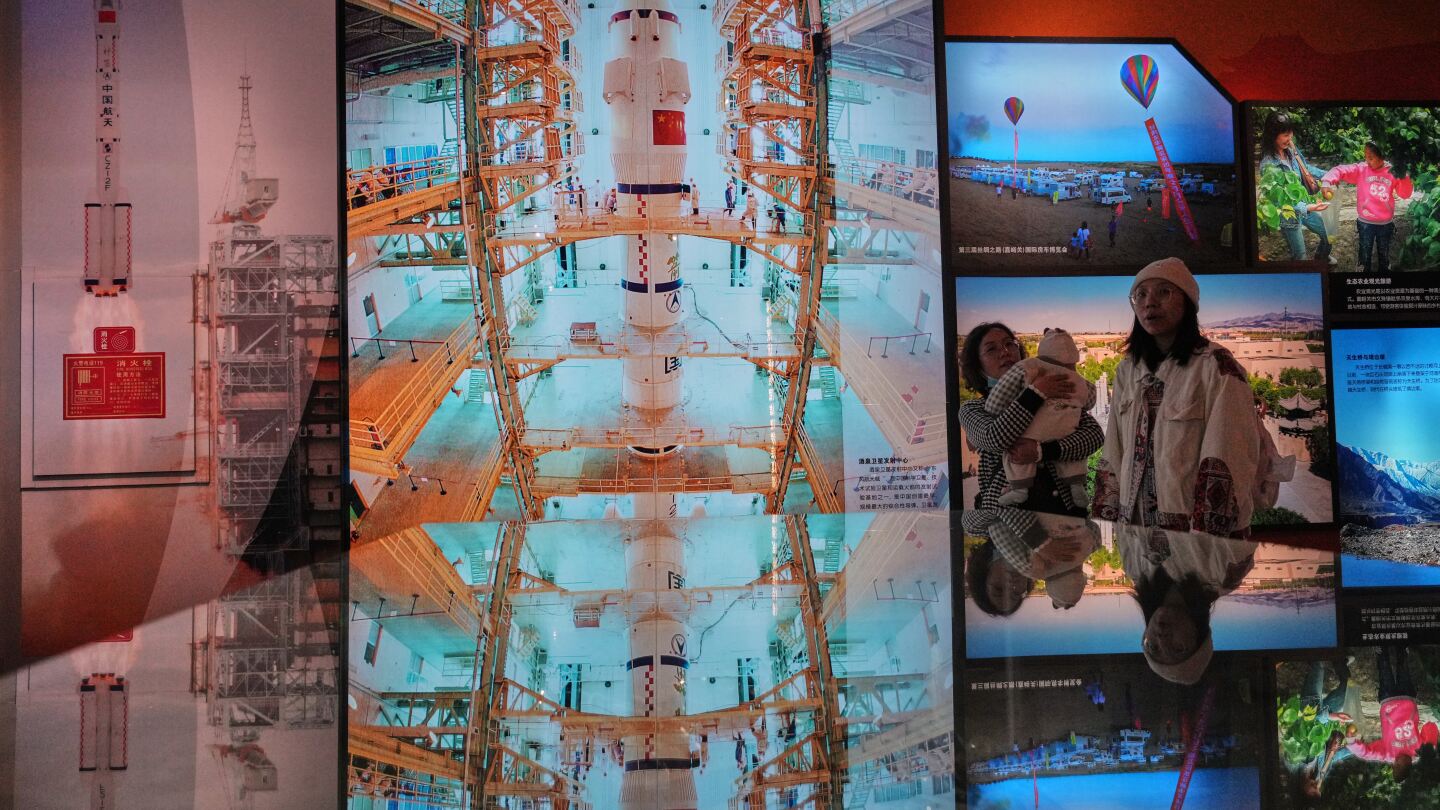
China has reaffirmed its commitment to landing astronauts on the moon by 2030, marking a significant milestone in its ambitious space exploration agenda. Zhang Jingbo, spokesperson for the China Manned Space Program, announced on Thursday that all preparatory efforts, including the development of the Long March 10 rocket, lunar landing suits, and exploration vehicles, are progressing smoothly. ‘Our goal of achieving a manned moon landing by 2030 remains steadfast,’ Zhang emphasized. This announcement underscores China’s determination to establish itself as a global leader in space exploration. In parallel, China is preparing to launch its latest crew to the Tiangong space station, a critical component of its broader space strategy. The new crew, consisting of Zhang Lu, Wu Fei, and Zhang Hongzhang, is scheduled to depart from the Jiuquan launch center on Friday at 11:44 p.m. local time. While Zhang Lu has prior experience from the Shenzhou 15 mission, Wu Fei and Zhang Hongzhang will be venturing into space for the first time. The astronauts will also conduct experiments on four mice—two male and two female—to study the effects of weightlessness and confinement. The Tiangong space station, meaning ‘Heavenly Palace,’ was developed after China was excluded from the International Space Station due to U.S. national security concerns, highlighting the country’s independent advancements in space technology.
作者: admin
-
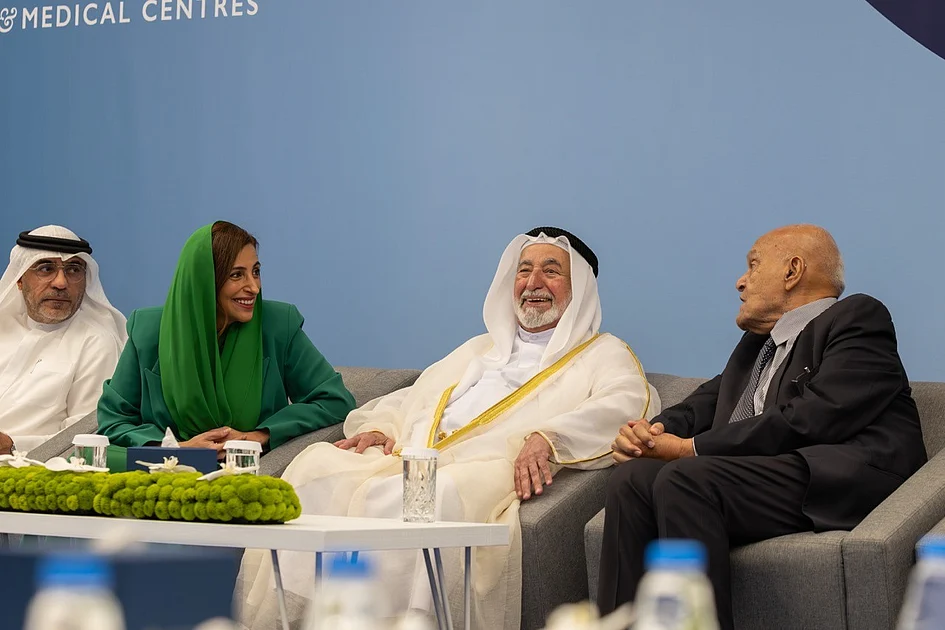
Sharjah Next launched: New event brings together experts to discuss healthcare innovation
Sharjah has taken a bold step forward in healthcare innovation with the launch of ‘Sharjah Next,’ a groundbreaking global series initiated by the Sharjah Research, Technology and Innovation Park (SPARK). The inaugural event, titled ‘Sharjah Next: Healthcare,’ kicked off on October 29, 2025, with a two-day program dedicated to exploring cutting-edge advancements in the medical field. The event was graced by the presence of Sheikh Dr Sultan bin Muhammad Al Qasimi, Ruler of Sharjah, and Sheikha Bodour bint Sultan Al Qasimi, Chairperson of SPARK’s Board of Directors.
-

Dozens dead in ‘total devastation’ left behind by Hurricane Melissa
Hurricane Melissa has unleashed catastrophic destruction across the Caribbean, claiming lives, obliterating infrastructure, and submerging entire communities. The Category 5 storm, one of the most powerful ever recorded in the region, struck Jamaica with full force, leaving at least five dead and widespread devastation. Prime Minister Andrew Holness described the scene as ‘total devastation,’ with 80-90% of roofs destroyed, alongside critical infrastructure like hospitals, libraries, and police stations. King Charles, Jamaica’s head of state, expressed deep concern and sadness, emphasizing the urgent need to address climate change and restore nature’s balance. The storm, now downgraded to Category 2, also wreaked havoc in Haiti, where at least 20 people perished in severe flooding. In Cuba, Melissa’s 115 mph winds and torrential rains battered the southeast, prompting President Miguel Díaz-Canel to urge vigilance. The storm is now heading toward the Bahamas and Bermuda, with a tropical storm warning in effect for the Turks and Caicos Islands. The U.S. has deployed a disaster response team to Jamaica, while Haiti and the Bahamas have formally requested aid. The hurricane’s aftermath has left thousands homeless, crops destroyed, and communities in disarray, with recovery efforts expected to take months.
-
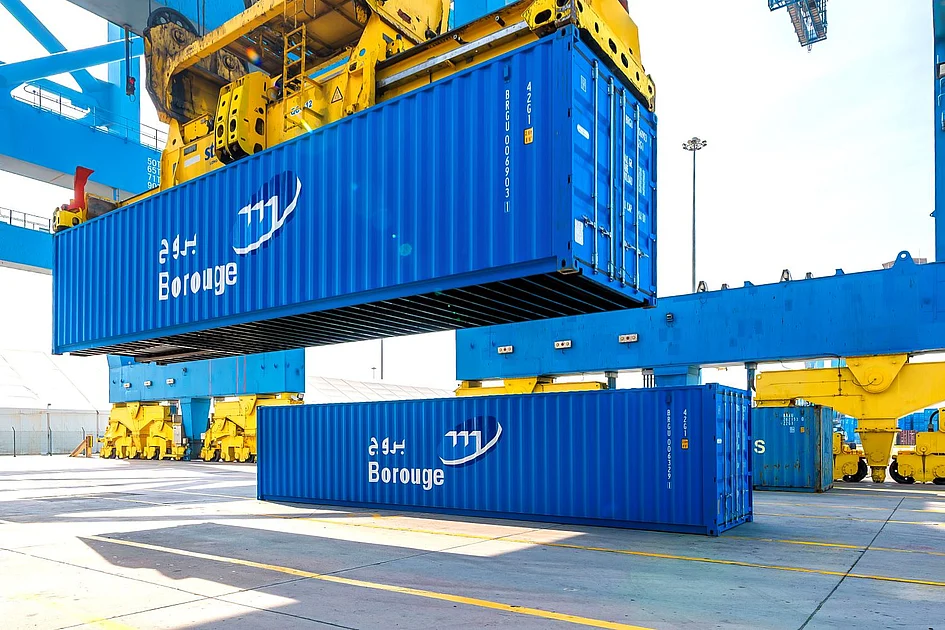
Borouge surges in Q3 with record production and 52% profit growth
Borouge Plc has reported an exceptional third quarter in 2025, achieving a remarkable 52% quarter-on-quarter increase in net profit, reaching $295 million. This stellar performance was driven by record production levels, robust sales, and stringent cost management, surpassing market expectations and solidifying the company’s leadership in the global polyolefins industry. The Abu Dhabi Securities Exchange-listed petrochemicals giant also posted an adjusted EBITDA of $565 million, reflecting a best-in-class margin of 39%, up from 34% in Q2. Despite a decline in benchmark prices, Borouge maintained premium pricing for its differentiated polyethylene (PE) and polypropylene (PP) products, averaging $233 and $142 per tonne, respectively, over the first nine months of 2025. CEO Hazeem Sultan Al Suwaidi credited the company’s resilient business model and operational excellence for the outstanding results. Following the successful and ahead-of-schedule turnaround of its Borouge 3 plant in Q2, the company increased utilization rates to 110% for PE and 112% for PP, resulting in a 19% rise in quarterly sales volumes to 1.4 million tonnes. The Asia Pacific region emerged as a key growth driver, accounting for 61% of total sales, up from 57% in the previous quarter. For the nine-month period ending September 2025, Borouge reported revenues of $4.17 billion, slightly lower than the $4.41 billion recorded in the same period last year due to reduced average selling prices. However, net profit rose to $769 million, supported by operational efficiency and cost control. The company reaffirmed its full-year dividend intention of 16.2 fils per share, with the second-half payout expected in April 2026. Additionally, Borouge continued its share buyback program, repurchasing over 157.5 million shares by the end of Q3, reflecting strong confidence in its long-term growth prospects. Looking ahead, Borouge is nearing completion of its Borouge 4 expansion project, which is over 90% complete. The first plant is expected to commence operations by year-end, adding 1.4 million tonnes of annual capacity and significantly boosting earnings potential. The project will become a core asset of the proposed Borouge Group International (BGI), set for launch in Q1 2026. Innovation remains central to Borouge’s strategy, with the reintroduction of its enhanced BorSafe PE100-RC pipe grade, which won ‘New Product of the Year’ at the Asian Oil and Gas awards. In advanced packaging, Borouge unveiled a new Borstar PP grade supporting up to 50% post-consumer recycled content, reinforcing its commitment to circular and sustainable solutions. The company’s AI, Digitalisation and Technology (AIDT) program has already delivered $477 million in value this year, with a target of $575 million for 2025. Borouge is also pioneering AI-powered autonomous control room operations at its Ruwais facility in collaboration with Yokogawa and Honeywell. With strong fundamentals, expanding capacity, and a focus on innovation, Borouge is well-positioned to capitalize on improving market dynamics and deliver sustained value to shareholders.
-

Overwhelming majority of Palestinians oppose Hamas disarmament, poll finds
A recent poll conducted by the Palestinian Centre for Policy and Survey Research (PCPSR) reveals that a significant majority of Palestinians are against the disarmament of Hamas and remain skeptical of U.S. President Donald Trump’s peace plan for Gaza. The survey, conducted between October 22 and 25, 2023, involved 1,200 respondents from the occupied West Bank and Gaza, with a margin of error of 3.5 percent. Approximately 70 percent of Palestinians oppose Hamas’s disarmament, even if it means a return to Israeli attacks. Opposition is particularly strong in the West Bank, where 80 percent of respondents support Hamas retaining its weapons, compared to 55 percent in Gaza. The poll also highlights widespread pessimism about Trump’s peace plan, with 62 percent of Palestinians doubting its ability to end the conflict permanently. This skepticism is more pronounced in the West Bank (67 percent) than in Gaza (54 percent). Despite the ongoing violence, 53 percent of Palestinians believe the October 7, 2023, Hamas-led attack on southern Israel was justified, with higher support in the West Bank (59 percent) than in Gaza (44 percent). Hamas continues to enjoy greater popularity than Fatah, with 35 percent of Palestinians supporting Hamas compared to 24 percent for Fatah. The poll also reveals dissatisfaction with Palestinian Authority President Mahmoud Abbas, with 85 percent of respondents calling for his resignation. Trump’s peace plan proposes a committee of Palestinian technocrats to govern Gaza, overseen by a U.S.-led ‘Board of Peace.’ While 45 percent of Palestinians support this idea, opposition remains strong in the West Bank. The plan also includes deploying Arab and Muslim peacekeepers to Gaza, which faces mixed reactions, with 78 percent opposition in the West Bank and 52 percent in Gaza. However, support increases when peacekeepers are tasked with securing Gaza’s borders without disarming Hamas. The ceasefire has been marred by Israeli violations, including a devastating attack on Gaza City and Khan Younis, resulting in over 100 Palestinian deaths, including 46 children.
-

K-pop group NewJeans loses legal battle against agency
In a significant legal development, K-pop sensation NewJeans has been unsuccessful in its bid to terminate its contract with record label Ador. A South Korean court ruled on Tuesday that the group’s agreement with the agency, which extends until 2029, remains legally binding. The five-member group, consisting of Hanni, Hyein, Haerin, Danielle, and Minji, had announced their unilateral departure from Ador last year, alleging mistreatment and manipulation by the label. Despite their claims, the court upheld the contract’s validity, prompting the group to plan an appeal, as reported by local media. This case has sent shockwaves through the Korean entertainment industry, marking a dramatic escalation in the year-long dispute between the chart-topping act and its agency. Earlier this year, the group rebranded as NJZ, released a new single, and performed in Hong Kong before their independent activities were halted by a court injunction. The ruling underscores the complexities of artist-label relationships in the highly competitive K-pop industry.
-

Egg freezing before cancer treatment gives young women hope for future motherhood
As October marks Breast Cancer Awareness Month, Orchid Fertility highlights a crucial yet often overlooked aspect of cancer care: fertility preservation. For many young women and men, a cancer diagnosis during their reproductive years can jeopardize their dreams of parenthood due to the damaging effects of treatments like chemotherapy and radiation. Fertility preservation, or cryopreservation, offers a lifeline by enabling patients to freeze eggs, sperm, or embryos before undergoing cancer therapy, safeguarding their ability to have biological children in the future. Despite growing awareness of early cancer detection and treatment, fertility preservation remains underdiscussed, a gap Orchid Fertility aims to bridge. Dr. Partha Sarathi Das, Medical Director at Orchid Fertility, emphasizes that decisions made before treatment can profoundly impact a patient’s future family-building options. Modern cryopreservation techniques provide tangible hope for young patients, allowing them to preserve their fertility potential before life-saving therapies. For women, egg freezing (oocyte cryopreservation) is particularly valuable, as it can be initiated quickly without delaying cancer treatment. Men can opt for sperm freezing, a straightforward procedure, while couples may choose embryo cryopreservation. Advanced methods like ovarian tissue cryopreservation are also emerging for patients who cannot delay treatment or are prepubescent. A 33-year-old woman diagnosed with diffuse large B cell lymphoma exemplifies the transformative impact of fertility preservation. After freezing her eggs before chemotherapy, she later returned to undergo further fertility treatment, resulting in healthy embryos stored for future use. Her story underscores how timely fertility preservation empowers cancer survivors to pursue parenthood on their terms. With breast cancer survival rates improving, the ability to start a family post-treatment is increasingly recognized as a vital component of comprehensive care. Dr. Das advocates for integrating fertility preservation into every cancer care plan for young patients, offering hope, choice, and a sense of normalcy during challenging times.
-

US Fed cuts interest rate by 25 basis points
In a significant monetary policy move, the US Federal Reserve announced on Wednesday, October 30, 2025, a reduction in the federal funds rate by 25 basis points, bringing the target range to 3.75 to 4 percent. This decision marks the second interest rate cut by the Fed this year, reflecting its ongoing efforts to navigate economic challenges and stimulate growth. The rate adjustment was made during the Federal Open Market Committee (FOMC) meeting, where policymakers assessed the current economic landscape and determined the necessity of easing monetary conditions. The move is expected to influence borrowing costs across the economy, impacting consumers, businesses, and financial markets. Analysts suggest that the rate cut could provide a boost to economic activity, particularly in sectors sensitive to interest rate changes, such as housing and automotive industries. However, concerns remain about the potential long-term effects on inflation and financial stability. The Fed’s decision underscores its commitment to balancing economic growth with price stability, as it continues to monitor global economic trends and domestic indicators.
-

Tokyo auto show highlights technology but Trump’s tariffs loom large
The Tokyo Mobility Show, currently underway at Tokyo Big Sight, is showcasing a dazzling array of futuristic transportation solutions, ranging from electric vehicles to cutting-edge personal mobility devices. Among the highlights is Honda Motor Co.’s Uni-One, a robotic chair designed for quick, quiet personal transport by 2035. Toyota Motor Corp. also unveiled a helicopter-like aircraft with six propellers, developed in collaboration with U.S. aviation firm Joby, though it remains in the experimental phase. The event, which opened to the public on November 9 after a media preview, emphasizes innovation in mobility while addressing broader industry challenges. A significant backdrop to the show is the looming impact of U.S. tariffs on Japanese automakers. President Donald Trump’s decision to raise auto tariffs from 2.5% to 15% is projected to slash over 2 trillion yen ($13 billion) from annual operating profits. Japanese automakers, including Mazda and Nissan, are responding with strategies to mitigate these effects. Mazda’s CEO, Masahiro Moro, highlighted efforts to develop emotionally intelligent vehicles and sustainable technologies. Nissan showcased its Sakura electric car prototype, featuring a solar-powered roof called the ‘Ao-Solar Extender,’ designed to generate electricity for household use and emergency power during disasters. Meanwhile, Toyota and Nissan are considering importing U.S.-made models back to Japan to address trade imbalances. The Japanese government has pledged to invest $550 billion in the U.S. and purchase Ford vehicles. Despite these challenges, Japanese automakers remain committed to innovation and market adaptation. Toyota’s CEO, Koji Sato, emphasized tailoring offerings to diverse customer preferences, while Nissan’s Ivan Espinosa underscored the importance of Japan as a core market. The show also featured Toyota’s Land Hopper, a collapsible electric bicycle designed to complement the upcoming Land Cruiser FJ. As automakers brace for the full impact of tariffs in 2024, analysts predict increased U.S. production and diversification into markets like Australia and Canada.
-
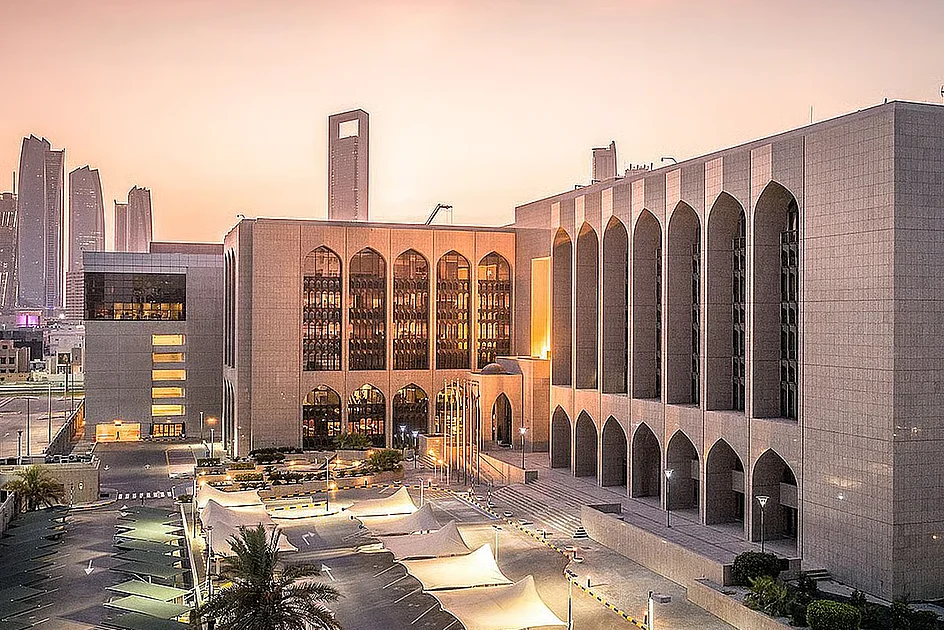
UAE Central Bank lowers key benchmark rate to 3.90%
In a significant monetary policy move, the UAE Central Bank announced a reduction in its key benchmark rate to 3.90%, effective October 30. This decision, which lowers the base rate on overnight deposit facilities by 25 basis points from 4.15%, comes in direct response to the US Federal Reserve’s decision to cut interest rates by 25 basis points earlier on Wednesday. This marks the second rate cut by the Fed this year. The UAE’s monetary policy is closely tied to the US due to the dirham’s peg to the US dollar, necessitating alignment with Federal Reserve actions. Additionally, the UAE Central Bank has opted to maintain the interest rate for short-term liquidity borrowing at 50 basis points above the base rate for all standing credit facilities. The base rate, which is anchored to the US Federal Reserve’s Interest Rate on Reserve Balances, serves as a critical indicator of the UAE’s monetary policy stance and sets a floor for overnight money market rates. The US rate cut aims to stimulate the economy amid ongoing challenges, including the lingering effects of former President Donald Trump’s tariffs and the prolonged government shutdown, which has disrupted the publication of official economic data. Fed officials have expressed concerns about a cooling labor market, prompting a focus on bolstering employment despite inflation remaining above target. While financial markets had anticipated the October and December rate cuts, Fed Chair Jerome Powell has indicated that the Federal Open Market Committee (FOMC) remains open to future decisions. Analysts, including EY chief economist Gregory Daco, suggest that Powell has not yet committed to a December rate cut, though two quarter-point reductions this year are widely expected. Amid these developments, Trump’s efforts to exert greater control over the Federal Reserve and plans to replace Powell add further complexity to the economic landscape.