
In a groundbreaking initiative, Great Western Railway (GWR) is set to revolutionize train Wi-Fi by implementing a hybrid system that combines signals from ground-based mobile phone masts and low earth orbit (LEO) satellites. This UK-first pilot scheme, developed by British tech company Motion Applied in collaboration with Peninsula Transport, aims to deliver faster and more reliable internet connectivity for passengers. The technology, originally designed for Formula 1 cars, will be tested for 60 days on GWR’s Intercity Express Train in the South West region, starting mid-November. The project is part of a broader effort to modernize transport infrastructure across Cornwall, Devon, Plymouth, Somerset, and Torbay. According to a recent study by Ookla, the UK ranks 16th out of 18 major European and Asian countries for train Wi-Fi speed, with average download speeds at just 1.09 megabits per second. Nick Fry, chairman of Motion Applied, highlighted the parallels between high-speed internet connectivity in trains and motorsport, emphasizing the potential of LEO satellites to ensure seamless connections. The Department of Transport has allocated £41 million in the 2025 spending review to introduce LEO satellite connectivity on all mainline trains by 2030. Councillor Dan Rogerson from Peninsula Transport described the pilot as a ‘major milestone’ in enhancing digital infrastructure, while Bruce Williamson of Railfuture welcomed the initiative as a positive step towards meeting the growing demand for reliable Wi-Fi among travelers.
作者: admin
-

Hackers steal maternity ward CCTV videos in India cybercrime racket
Indian authorities have uncovered a sprawling cybercrime operation involving the hacking and sale of sensitive CCTV footage from hospitals and other institutions across the country. The breach, which compromised over 50,000 surveillance systems, has raised significant concerns about privacy and cybersecurity in India, where CCTV cameras are ubiquitous. The investigation began after videos from a maternity hospital in Gujarat were discovered on YouTube and Telegram, showing intimate medical procedures involving pregnant women. These videos were linked to Telegram channels where longer clips were sold for 800–2,000 rupees ($9–22). The hospital director claimed the cameras were installed to protect doctors from false allegations, but they have since been removed from sensitive areas. Police have arrested eight individuals connected to the racket, charging them with violations of privacy, voyeurism, and cyber terrorism. Cybersecurity experts warn that poorly secured systems, often using default passwords, are vulnerable to hacking. They recommend robust passwords, regular audits, and manufacturer warnings to improve security. The case highlights the broader issue of inadequate cybersecurity measures in India, where surveillance systems are widely used but often lack proper safeguards.
-

Aditi Rao Hydari warns public of fake WhatsaApp account using her photo
Bollywood actress Aditi Rao Hydari has issued a public warning about a fraudulent WhatsApp account impersonating her. On Sunday, November 16, 2025, the ‘Heeramandi’ star took to Instagram to address the issue, revealing that an unknown individual has been using her photographs to contact photographers under the guise of organizing photoshoots. Hydari emphasized that she does not use personal numbers for professional communications and urged her followers to remain vigilant. She advised against engaging with the fake account and requested that any suspicious activity be reported to her team immediately. Hydari expressed gratitude to her fans for their support and vigilance in protecting her identity. The actress, last seen in the acclaimed series ‘Heeramandi: The Diamond Bazaar’, continues to be a prominent figure in the Indian entertainment industry. This incident highlights the growing issue of celebrity impersonation on social media platforms, raising concerns about online security and privacy.
-

Sharjah’s green realty boom accelerates as Beeah’s Khalid bin Sultan City Phase 1 sells out
Sharjah’s real estate market has reached a significant milestone with the complete sell-out of Phase 1 of Khalid Bin Sultan City, a flagship mixed-use development by Beeah. This project, designed by the globally acclaimed Zaha Hadid Architects, represents the UAE’s first fully master-planned residential initiative by the firm. The strong buyer response, including the immediate sale of an entire residential cluster during the launch event, underscores Sharjah’s growing reputation as a hub for sustainable, master-planned living.
-

Coach Gambhir questions ‘technique and temperament’ of Indian batters
Indian cricket coach Gautam Gambhir delivered a scathing critique of his team’s batting performance following their unexpected 30-run loss to South Africa in the first Test at Eden Gardens, Kolkata. Chasing a modest target of 124 on a challenging, turning pitch, India collapsed to 93 all out in the second session of day three. Gambhir emphasized that the pitch was not unplayable but exposed the batters’ lack of technique, mental toughness, and temperament. Only Washington Sundar showed resilience with a gritty 31, while South African off-spinner Simon Harmer dominated with figures of 4-21. Gambhir refused to blame the pitch, stating, ‘Irrespective of how the wicket was, 124 was chaseable.’ He also highlighted the absence of skipper Shubman Gill, who was hospitalized due to a neck injury, as a significant setback. South Africa’s captain Temba Bavuma, who scored a defiant 55 not out, acknowledged the pitch’s difficulty but praised his team’s application. The Proteas now aim to secure their first Test series win in India since 2000 as the second Test begins in Guwahati on Saturday.
-
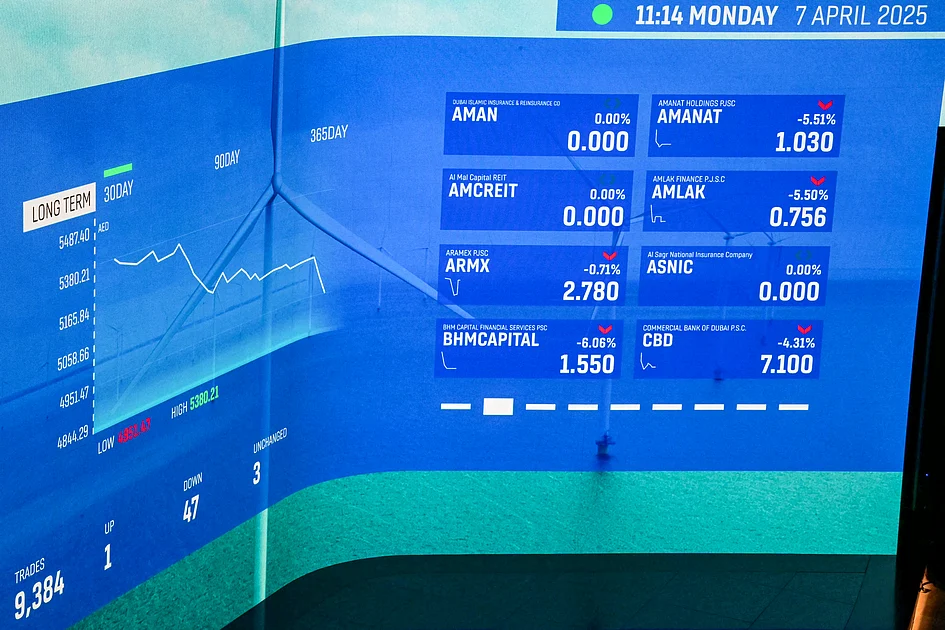
UAE markets face technical weakness amid global headwinds
The equity markets in Dubai and Abu Dhabi experienced a downturn last week, influenced by broader global economic challenges. The Dubai Financial Market (DFM) General Index fell by 1.25%, closing at 5,949, while the Abu Dhabi Securities Exchange (ADX) General Index dropped by 1.56% to 9,917.90, slipping below the significant 10,000 mark. This decline was primarily driven by significant losses in key sectors such as technology, financials, and healthcare, despite some gains in materials and real estate sectors. Analysts attribute this trend to the ongoing global risk-off sentiment, which has overshadowed the strong corporate earnings reported by major companies like Dewa and Salik. Vijay Valecha, Chief Investment Officer at Century Financial, highlighted the cautious outlook, suggesting that the markets may continue to face volatility and limited upside potential in the near term. The technical indicators also support this view, with both indices breaching their 50- and 100-day moving averages and the Relative Strength Index (RSI) indicating weakening momentum. Looking ahead, the market is expected to remain range-bound, with potential short-term rallies likely to encounter resistance unless there is a significant improvement in global risk appetite.
-

German auction of Nazi concentration camp items cancelled, Polish minister says
A controversial auction in Germany, which included artefacts from Nazi concentration camps such as Buchenwald and Auschwitz, has been cancelled following widespread public condemnation. The decision was announced by Poland’s Deputy Prime Minister, Radoslaw Sikorski, who expressed gratitude to his German counterpart, Johann Wadephul, for ensuring that ‘such a scandal must be prevented.’ The auction, organized by German auction house Felzmann in Neuss, was set to feature over 600 items, including a letter from an Auschwitz prisoner and medical records detailing the forced sterilisation of a Dachau prisoner. The sale faced immediate backlash from Holocaust survivors’ groups and politicians, who argued that such items should not be commodified. Sikorski emphasized on social media that ‘respect for victims requires the dignity of silence, not the din of commerce.’ By Sunday afternoon, the auction listing had been removed from Felzmann’s website. German State Minister for Culture Wolfram Weimer stated that documents and expert reports by Nazi perpetrators should not be part of private collections and called for measures to prevent similar auctions in the future. Christoph Heubner of the International Auschwitz Committee condemned the auction as ‘cynical and shameless,’ urging that these artefacts belong to the families of the victims and should be displayed in museums or memorial exhibitions. Poland’s Culture Minister, Marta Cienkowska, announced an investigation into the provenance of the artefacts to determine if any should be repatriated to Poland. Auschwitz, a central site in the Nazi campaign to exterminate Europe’s Jewish population, saw nearly one million Jewish deaths, alongside Poles, Roma, and Russian prisoners of war.
-
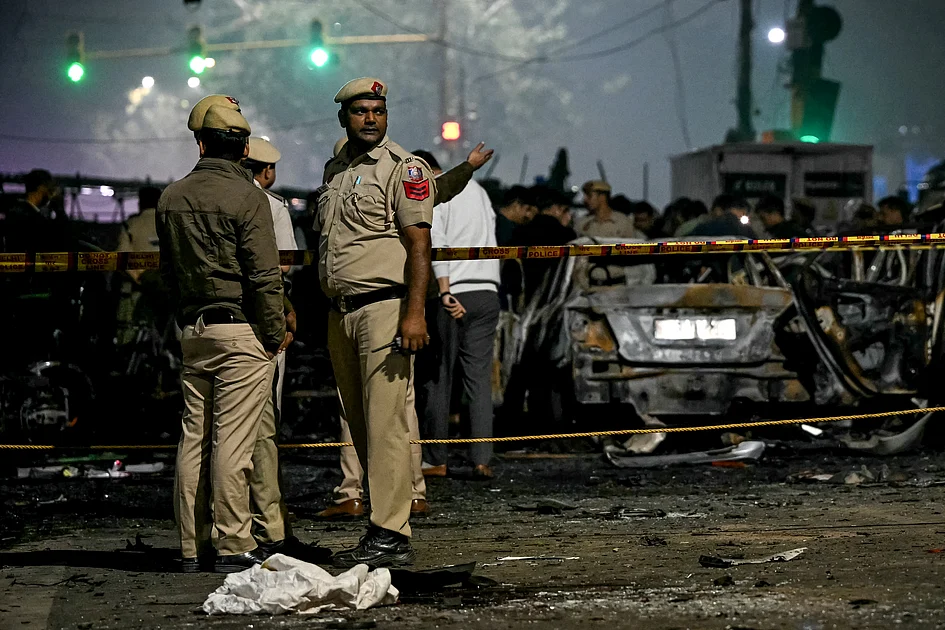
India: Accomplice of deadly Delhi car blast ‘suicide bomber’ arrested
Indian authorities have announced a significant breakthrough in the investigation of a deadly car explosion in New Delhi, labeling the incident as a ‘suicide bombing’ and arresting an accomplice linked to the attack. The National Investigation Agency (NIA), India’s premier counter-terrorism body, revealed that the suspect, Amir Rashid Ali, facilitated the purchase of the vehicle used in the blast. The driver, identified as Umar Un Nabi, an assistant professor from Kashmir, allegedly carried out the attack using a vehicle-borne Improvised Explosive Device (IED). The explosion occurred near a bustling metro station in Old Delhi, close to the historic Red Fort, claiming 10 lives and injuring 32 others. Prime Minister Narendra Modi condemned the attack as a ‘conspiracy’ and vowed to bring all perpetrators, collaborators, and sponsors to justice. This incident marks the most severe security breach since the April 22 attack in Pahalgam, Kashmir, which heightened tensions between India and Pakistan. The Kashmir region, divided between the two nations since 1947, remains a flashpoint in their ongoing conflict.
-

Fixed income gains ground among UAE investors amid market volatility
In the face of ongoing global market uncertainty and heightened geopolitical risks, fixed income investments are increasingly becoming a cornerstone in the portfolios of UAE investors. Kareena Moledina, Lead for Fixed Income Client Portfolio Management (EMEA) at Janus Henderson Investors, recently shared her insights with Khaleej Times on the growing relevance of bonds in the region’s investment strategy.
Moledina highlighted three primary benefits of fixed income investments: steady income, capital preservation, and diversification. With yields currently at attractive levels, investors can secure reliable, tax-free cash flows without assuming excessive risk. This is particularly advantageous in the UAE, where many investors depend on consistent income to meet their financial obligations.
Beyond income generation, bonds act as a defensive anchor in portfolios that are heavily weighted towards equities and real estate. ‘When markets become volatile, fixed income helps preserve capital,’ Moledina explained. ‘It serves as a stabilizing force, especially in economies like the UAE’s, where exposure to property and energy is significant.’
Moledina also emphasized how bonds complement traditional asset classes in the Gulf Cooperation Council (GCC), which are typically cyclical and sensitive to economic downturns. Unlike equities and real estate, which often decline together during slowdowns, bonds tend to rise when central banks cut interest rates. This inverse relationship helps smooth portfolio performance and reduce overall volatility.
Liquidity is another key advantage of fixed income investments. While real estate transactions can be slow and costly, and equities volatile, high-quality bonds offer quick access to cash. ‘Fixed income plays a key role in the liquidity waterfall of a portfolio,’ Moledina noted, referring to the hierarchy of assets investors can tap into when needed.
In a dollar-pegged economy like the UAE’s, the current ‘higher-for-longer’ interest rate environment presents both opportunities and challenges. On the upside, yields are significantly more attractive than during the ultra-low-rate era, allowing income-seeking investors to earn meaningful returns from high-quality bonds. However, Moledina cautioned that portfolio construction is now more critical than ever.
‘Investors should focus on shorter-duration, higher-quality assets to mitigate downside risks,’ she advised. Floating-rate securities, such as collateralised loan obligations (CLOs), are gaining popularity for their ability to adjust income streams in line with interest rate movements, offering a natural hedge against volatility.
Risk management remains central to fixed income investing. Moledina outlined key risks including interest rate fluctuations, inflation, credit stress, and geopolitical shocks. ‘Detailed bottom-up research is essential,’ she said, emphasizing the importance of analysing cash flows, leverage, and refinancing profiles to identify resilient issuers.
Diversification across issuers, sectors, and geographies also helps protect portfolios from systemic shocks. ‘Quality, liquidity, and diversification are the pillars of capital preservation,’ she added.
Securitised credit, once a niche segment, is now gaining traction among investors seeking stable income and attractive valuations. With spreads in traditional corporate bonds tightening, securitised assets offer a compelling alternative. ‘They provide a spread pick-up of 40 to 50 basis points over investment-grade corporates while maintaining higher credit quality,’ Moledina said.
Many of these instruments are floating-rate, making them well-suited to the current interest rate environment. Even if rates decline, securitised assets continue to deliver strong returns due to their underlying credit spreads.
Janus Henderson, a leading manager of securitised active ETFs, has played a pivotal role in enhancing liquidity and transparency in the fixed income space. ‘Our scale allows us to offer efficient execution and clear pricing visibility, especially in securitised credit,’ Moledina said.
As UAE investors seek to build resilient portfolios amid global uncertainty, fixed income is proving to be a powerful tool—offering stability, income, and flexibility in a rapidly changing financial landscape.
-
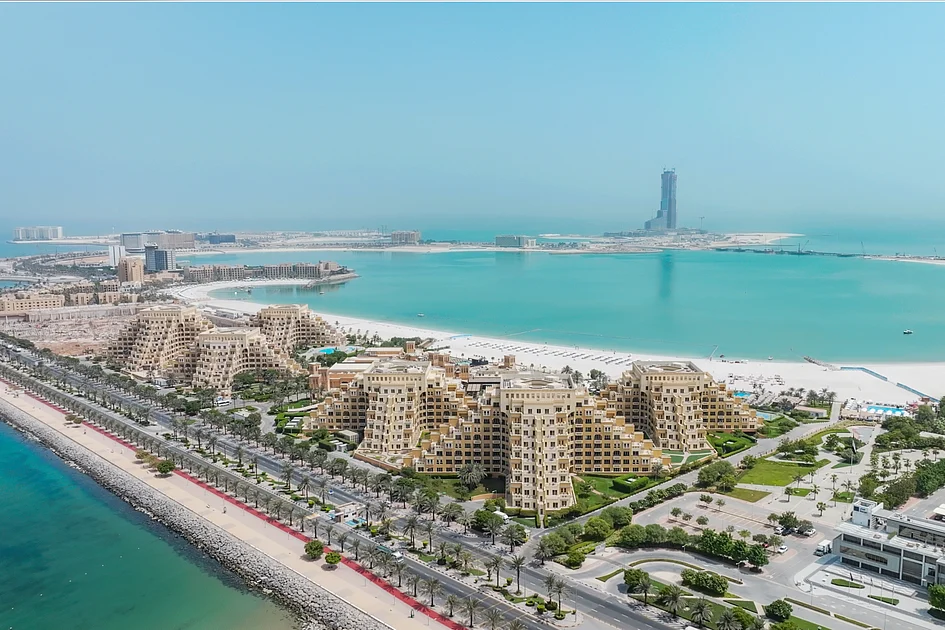
Al Marjan Island leads Ras Al Khaimah’s soaring apartment market in Q3 2025
Ras Al Khaimah’s real estate market witnessed significant growth in the third quarter of 2025, with Al Marjan Island emerging as the standout performer. According to the latest ValuStrat Price Index (VPI), apartment prices on the island surged by 16.8% year-on-year, the highest among all residential areas in the emirate. Additionally, Al Marjan Island recorded a robust 6.3% quarterly increase in capital values, solidifying its appeal among investors and homebuyers.