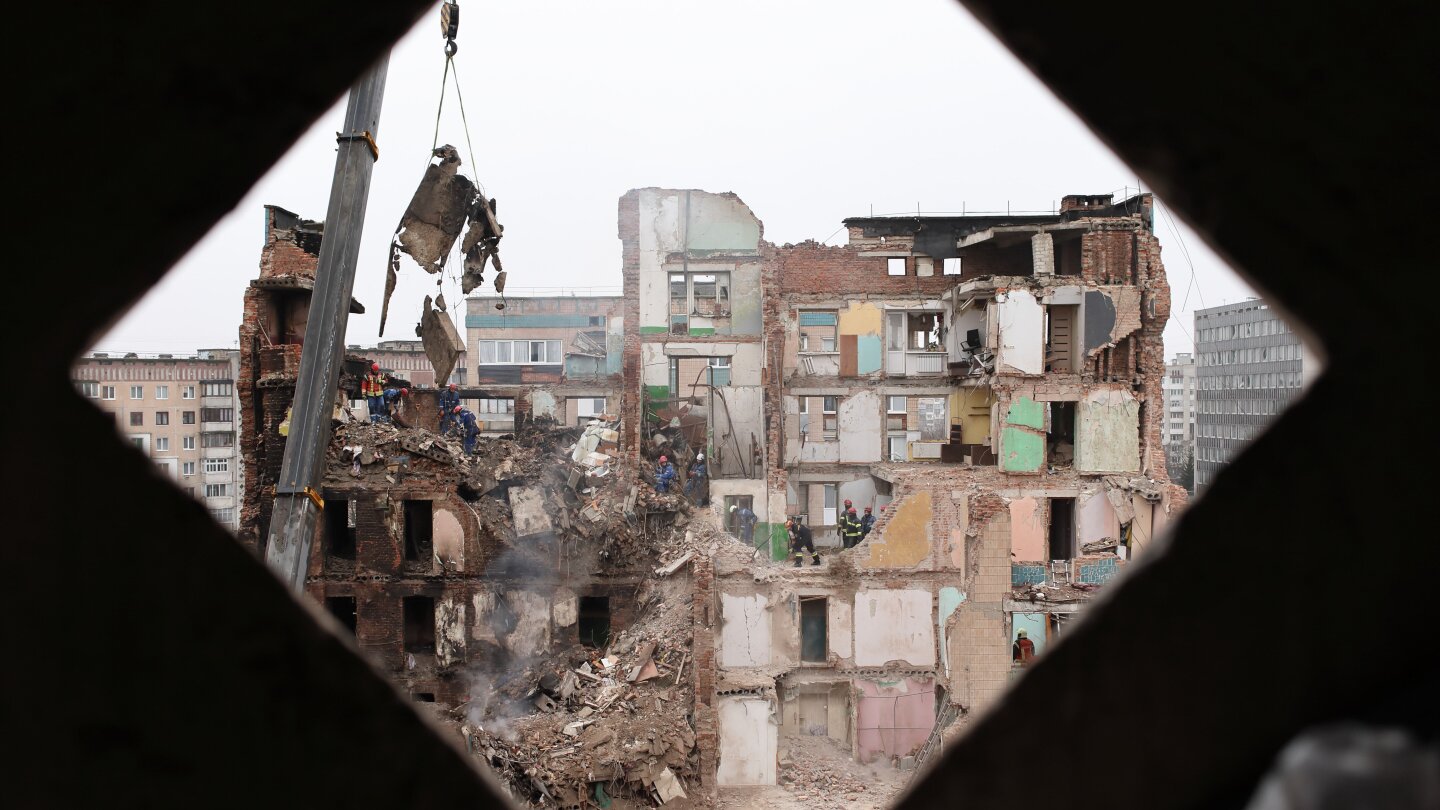
European leaders are scheduled to meet in South Africa on Saturday to discuss alternatives to a U.S.-proposed peace plan aimed at ending Russia’s war in Ukraine. The 28-point blueprint, perceived as favoring Moscow, has raised concerns in Kyiv and European capitals. Ukrainian President Volodymyr Zelenskyy expressed apprehension on Friday, stating that Ukraine faces a critical decision between defending its sovereignty and maintaining essential American support. European nations, viewing their own future as intertwined with Ukraine’s struggle against Russian aggression, have emphasized the importance of their involvement in any peace negotiations. The meeting, set to occur on the sidelines of the G20 summit in Johannesburg, was announced by top European Union officials, including EU Commission President Ursula von der Leyen and EU Council President António Costa, following a call with Zelenskyy. Von der Leyen reiterated the principle of ‘nothing about Ukraine without Ukraine,’ underscoring the need for Kyiv’s active participation in any resolution. The U.S. plan, which includes provisions for Ukraine to cede territory to Russia, reduce its military size, and abandon its NATO aspirations, aligns closely with Moscow’s demands while offering minimal security assurances to Kyiv. Meanwhile, a Ukrainian drone strike on a fuel refinery in Russia’s Samara region resulted in two fatalities and two injuries, marking another instance of Kyiv’s long-range attacks on Russian oil infrastructure. Russian air defenses reportedly intercepted 69 Ukrainian drones overnight, disrupting operations at several airports and causing power outages in Rylsk.
作者: admin
-
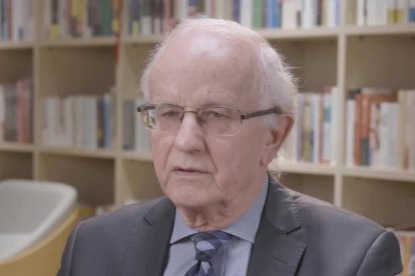
Former Polish deputy PM praises China’s economic rise, growing influence
In a recent exclusive interview with China Daily, Grzegorz W. Kolodko, former Deputy Prime Minister and Finance Minister of Poland, commended China’s remarkable economic progress over the past three to four decades. Kolodko highlighted that China’s burgeoning economic power is significantly enhancing its political influence on the global stage. He also noted a steady increase in international goodwill towards China, coupled with a favorable shift in the geopolitical landscape. Kolodko’s insights underscore the transformative impact of China’s economic strategies and their ripple effects on international relations and global power dynamics.
-

Number of children abducted in Nigerian school attack raised to more than 300
In a harrowing escalation of Nigeria’s security challenges, 303 schoolchildren and 12 teachers were abducted by armed assailants during a brazen attack on St. Mary’s School, a Catholic institution in Niger state. The Christian Association of Nigeria (CAN) confirmed the updated figures on Saturday, revising an earlier count of 215 students. The final tally was determined after a thorough verification process led by the Most Rev. Bulus Dauwa Yohanna, chairman of CAN’s Niger state chapter, who visited the school on Friday. Yohanna revealed that 88 additional students were captured while attempting to flee during the assault. The victims, aged between 10 and 18, included both boys and girls. This incident occurred just four days after 25 schoolchildren were similarly abducted in Kebbi state, located 170 kilometers away. No group has claimed responsibility for the kidnappings, but authorities have deployed tactical squads and local hunters to rescue the victims. Yohanna dismissed claims by the state government that the school had reopened, labeling them as false and urging families to remain calm. School kidnappings have become a grim hallmark of Nigeria’s insecurity, with armed gangs targeting educational institutions to maximize attention. UNICEF reported last year that only 37% of schools in conflict-affected states have early warning systems. The attacks coincide with U.S. President Donald Trump’s allegations of targeted violence against Christians in Nigeria, though such incidents affect both Christian and Muslim communities. The recent Kebbi state attack occurred in a predominantly Muslim area. Meanwhile, Nigeria’s National Security Adviser, Nuhu Ribadu, was in the U.S. meeting with Defense Secretary Pete Hegseth on Friday.
-
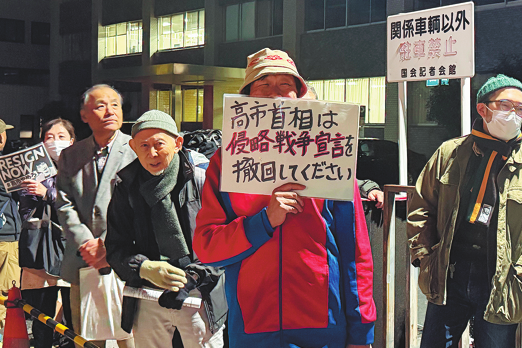
Japan urged to take practical steps to honor its commitments to China
China has urged Japan to take concrete actions to uphold its commitments to bilateral relations, emphasizing the importance of mutual trust and strategic cooperation. The call came after Japanese Prime Minister Sanae Takaichi reaffirmed her commitment to advancing China-Japan relations in a recent interview. However, her earlier remarks on Taiwan, which suggested potential intervention in the Taiwan Strait, sparked widespread condemnation in China. Foreign Ministry spokeswoman Mao Ning stressed that Japan must retract these erroneous statements and adhere to the spirit of the four political documents between the two nations to foster a stable and constructive relationship. Mao also criticized Japan’s recent moves to abandon its defense-oriented principles and accelerate rearmament, warning that a return to militarism would lead to failure. Reports indicate that Japan has eased restrictions on arms exports, including the first-ever export of domestically produced Patriot missile interceptors to the United States. Additionally, discussions within Japan’s Liberal Democratic Party about revising the country’s three non-nuclear principles and increasing defense spending have raised concerns. Mao questioned Japan’s intentions, particularly its contradictory stance on nuclear disarmament while pursuing extended deterrence and nuclear-sharing arrangements. She reiterated that any deviation from peaceful development and the postwar international order would be unacceptable to both the Chinese people and the global community.
-
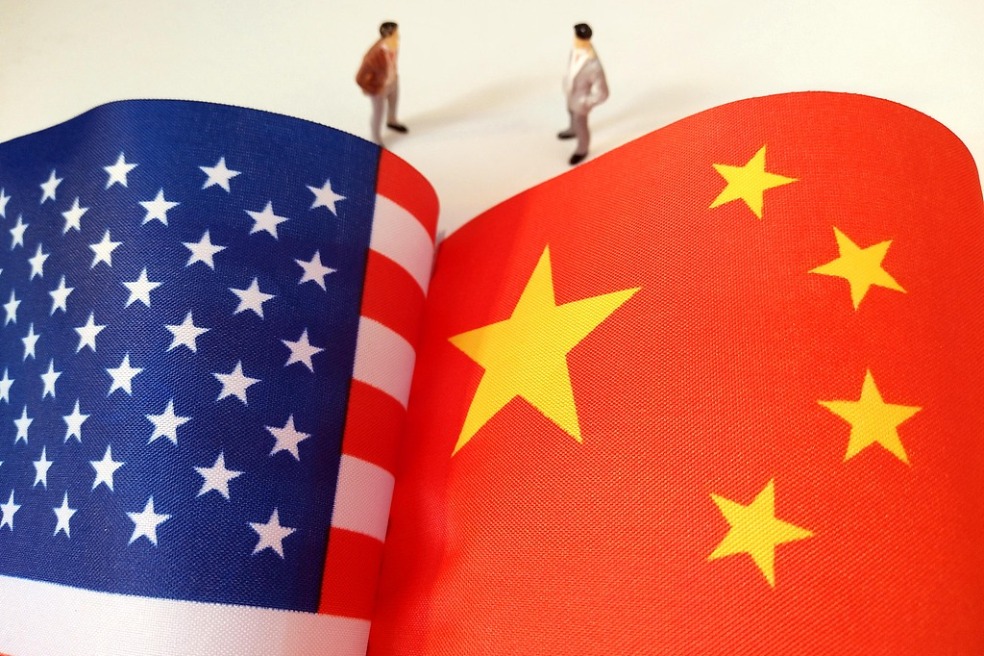
Direct dialogue on climate change stressed
Former US climate envoy John Kerry has emphasized the critical need for direct dialogue between the United States and China to address global climate change. Speaking at a Council on Foreign Relations event in New York City, Kerry highlighted the indispensable role China plays in achieving global climate goals. ‘You can’t really make anything happen if China isn’t on board,’ he stated. The discussion took place during the United Nations climate change conference in Belem, Brazil, where nearly 200 countries are working to enhance multilateral climate action, despite the US’s absence. Kerry pointed to past successes, such as the US-China joint announcement that led to the Paris Agreement in 2015, as evidence of the power of bilateral cooperation. He also noted that China’s emissions could decline sooner than expected, despite maintaining its 2030 carbon peak and 2060 carbon neutrality targets. Kerry acknowledged China’s recent coal construction but explained it as a safeguard against potential electricity shortages. Vijay Vaitheeswaran of The Economist praised China’s clean-energy expansion, calling it ‘a gift to the planet’ and highlighting the global impact of inexpensive Chinese solar, wind, and battery technologies.
-

HK powers the nation’s equestrian development
Hong Kong has emerged as a pivotal force in advancing China’s equestrian sector, showcasing its expertise and innovative contributions during the 15th National Games held in Shenzhen, Guangdong province. The Hong Kong Jockey Club (HKJC) played a central role, establishing the event’s first on-site equine hospital, equipped with state-of-the-art facilities including an operating theater and blood testing laboratory. This groundbreaking initiative, a collaboration between the HKJC and the games’ organizing committee, ensured top-tier veterinary care for horses and riders competing from November 10 to 19.
The HKJC’s involvement extended beyond medical support. The club provided over HK$500 million in funding and dispatched its largest-ever squad of 11 horse-and-rider pairs across all categories. Leveraging its extensive experience in equestrian sports, the HKJC also offered comprehensive support in areas such as horse welfare, venue design, anti-doping protocols, and stable management. This marked Hong Kong’s debut as a co-host of the National Games, alongside Guangdong and Macao, highlighting the city’s commitment to the event’s success.
Cross-border collaboration posed unique challenges, particularly in enabling Hong Kong veterinarians to work on the mainland. An innovative ad hoc mechanism was introduced, allowing vets to practice and prescribe medications at the equestrian center with special approvals. These efforts underscore Hong Kong’s role as a bridge between international best practices and mainland resources.
The HKJC’s contributions to equestrian development are not limited to the National Games. The club has been instrumental in major events such as the 2008 Beijing Olympics and the 2010 Guangzhou Asian Games, where it helped establish the mainland’s first internationally recognized equine disease-free zone. Looking ahead, the HKJC announced plans to host the inaugural regular race meeting at the Conghua Racecourse in 2026, aligning with China’s national equine industry plan. This milestone is expected to elevate the Greater Bay Area as a hub for world-class sporting events and further integrate Hong Kong’s international expertise with mainland resources.
Ronald Chan Ngok-pang, head of the HKJC’s mainland affairs, emphasized the club’s unique strengths in fostering national equestrian development. ‘Marrying Hong Kong’s international connectivity with the mainland’s resources and experience, we are opening doors to boundless opportunities,’ he said. With its unwavering commitment and pioneering initiatives, Hong Kong continues to power China’s equestrian ambitions on the global stage.
-
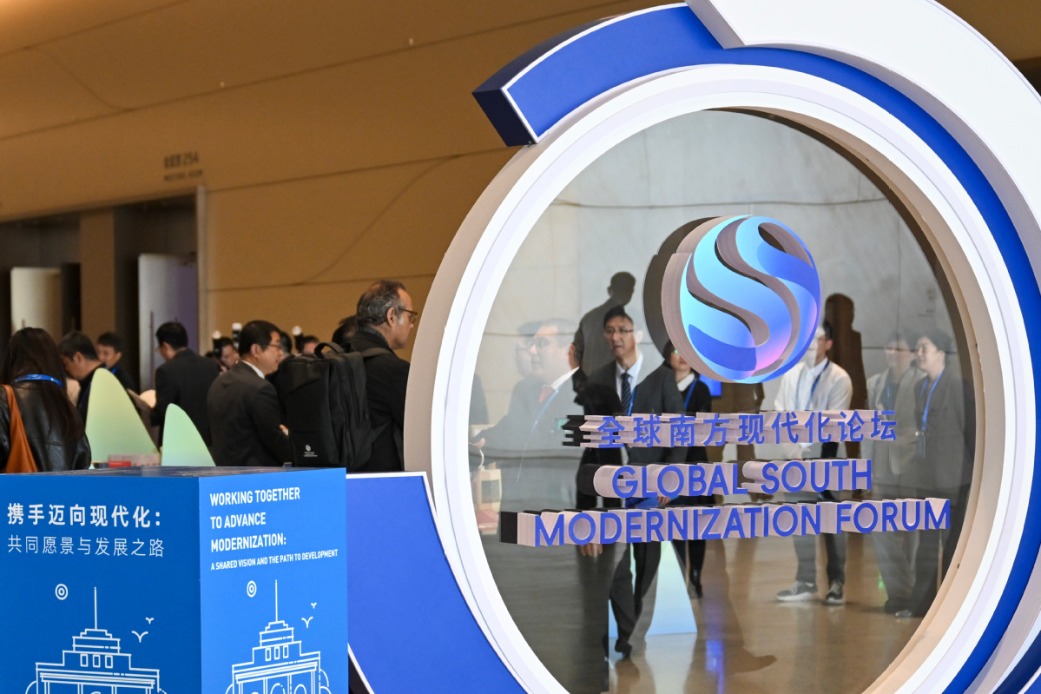
Forum hailed for promoting Global South modernization
The Global South Modernization Forum, held in Beijing on November 21, 2025, brought together international experts to discuss tailored development paths for Global South nations. The event, themed ‘Working Together to Advance Modernization: A Shared Vision and the Path to Development,’ emphasized unity, cooperation, and reforms in the global governance system. Li Shulei, a senior official of the Communist Party of China, highlighted the transformative role of Global South countries in reshaping the global economic landscape and fostering international stability. He underscored China’s commitment to the Global South, stating that China will always remain an integral part of this collective. The forum also saw the release of two significant reports by the Chinese Academy of Social Sciences (CASS): the World Modernization Development Report and the Chinese Modernization Development Report. CASS President Gao Xiang emphasized that Chinese modernization aligns with global human development interests and advocated for a cooperative approach to modernization that ensures shared prosperity. Pablo Vommaro of the Latin American Council of Social Sciences criticized the Western-dominated development model, calling for a new civilizational framework that empowers Global South nations. He praised China’s Belt and Road Initiative and Global Governance Initiative as models for sustainable and cooperative modernization. Andrei Chevelev, a former UNESCO official, stressed the need for reforms in international governance to amplify the voices of the Global South. He highlighted the role of initiatives like BRICS, the Shanghai Cooperation Organization, and the Belt and Road Initiative in promoting a more equitable international order. The forum concluded with a call for collective action to address global challenges and advance a shared future for humanity.
-
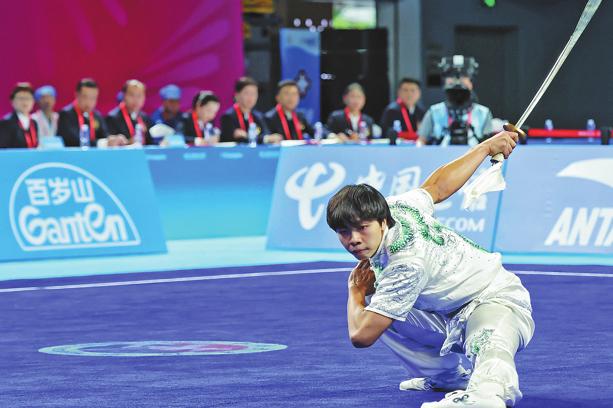
Wushu needs more events in GBA, coaches in Macao say
As wushu gains global recognition, marked by its inclusion in the 2026 Summer Youth Olympic Games and praise from International Olympic Committee officials during the 15th National Games, Macao’s wushu leaders are pushing for stronger, standardized collaboration within the Guangdong-Hong Kong-Macao Greater Bay Area (GBA). They believe shared training, unified coaching methods, and increased regional competitions are essential to elevate the sport and cultivate future champions. The recent three-day wushu set routine event at the 15th National Games, co-hosted by Hong Kong, Macao, and Guangdong, attracted notable figures like IOC Honorary President Thomas Bach and President Kirsty Coventry, who lauded China’s sports development and expressed enthusiasm for wushu’s Olympic debut. Macao’s gold medalist Li Yi, who triumphed in the women’s Changquan event at the 19th Asian Games, emphasized the importance of perseverance and character development in wushu. Now a coach, Li advocates for more cross-regional competitions and immersive experiences that integrate wushu with Macao’s tourism identity. Iao Chon-in, Macao’s wushu team head coach, highlights the need for long-term career planning, medical support, and dual-track pathways to balance athletics and academics. Both coaches stress the importance of fostering resilience and joy in young athletes to sustain Macao’s wushu legacy.
-
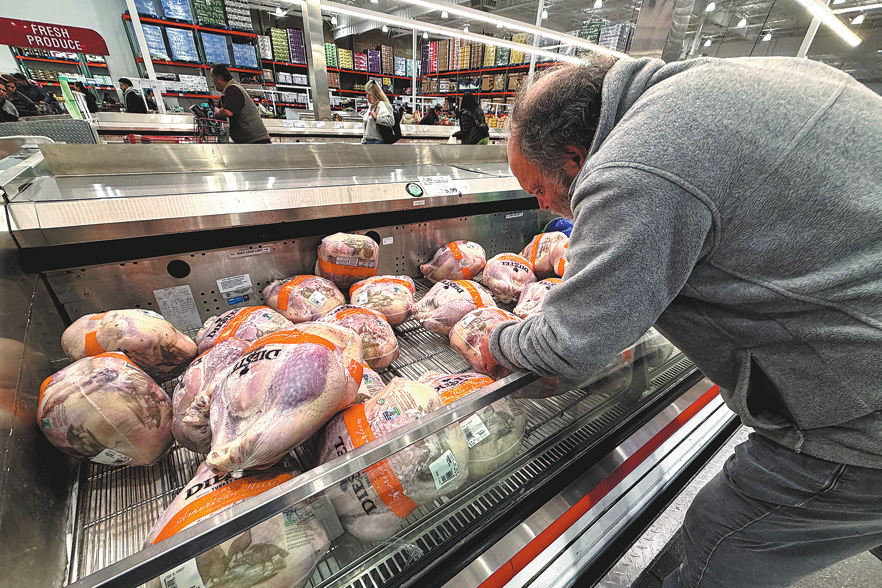
Thanksgiving meal costs more in US
As Thanksgiving approaches, New Yorkers are feeling the pinch of rising food costs, with the price of a traditional holiday meal significantly higher than the national average. According to the New York Farm Bureau, a Thanksgiving meal for 10 people in New York will cost an average of $66, or $6.60 per person, marking a 20 percent increase compared to the national average of $55.18. This contrasts with the national trend, which saw a 5 percent decrease from 2024. In New York City, shoppers have reported noticeable price hikes for holiday staples like turkeys, yams, and vegetables. Lisa Smith, a 77-year-old retiree from Brooklyn, shared that while she can manage her grocery expenses, the rising costs have impacted her other expenditures, such as travel and transportation. Major retailers like Walmart and Target are offering low-cost meal deals to alleviate the burden, with ShopRite providing free turkeys or hams to loyalty cardholders who spend $400 during a specified period. The American Farm Bureau Federation noted that the average cost of a 16-pound frozen turkey in New York is $28.27, compared to $21.50 nationwide. Amanda Powers, Director of Communications at the New York Farm Bureau, attributed the higher prices to labor shortages, rising farm wages, and increased production costs. Meanwhile, Angel Hernandez, a 53-year-old from Queens, expressed concern over the high cost of food, particularly turkeys, as he prepares to celebrate Thanksgiving with his 10-year-old son. Deloitte’s 2025 Thanksgiving Index indicates that food costs have risen at a more normal historical rate, with an estimated $76.50 for a meal serving eight people, up 0.6 percent from 2024. Despite the challenges, some New Yorkers, like Ella Sauter, find relief through their jobs, which provide food assistance, easing the financial strain of the holiday season.
-
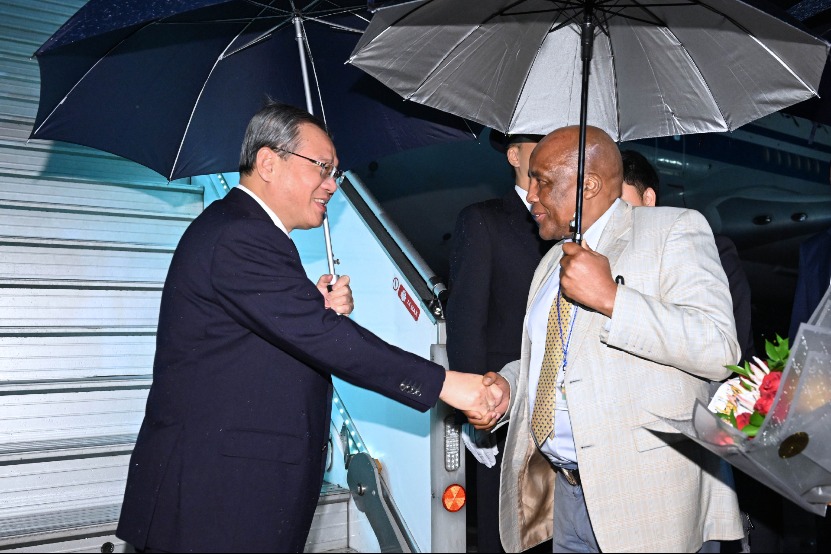
Premier in South Africa for G20 Summit
Premier Li Qiang of China arrived in Johannesburg, South Africa, on Thursday, November 21, 2025, to participate in the 20th G20 Summit. This marks a historic occasion as it is the first time the G20 Summit is being held on the African continent. The summit, scheduled for November 23-24, is themed ‘Solidarity, Equality, Sustainability,’ reflecting South Africa’s presidency focus on inclusive growth, reducing inequalities, and prioritizing African-driven agendas. Key topics on the agenda include climate financing, global economic recovery, food security, artificial intelligence governance, and bridging the digital divide, alongside advancing sustainable development goals. The summit convenes amidst a rapidly evolving international landscape, sluggish global economic growth, and widening development disparities. China, through its Foreign Ministry, has expressed its commitment to enhancing international solidarity and cooperation, advocating for multilateralism, and fostering an open world economy. Foreign Ministry spokesman Lin Jian emphasized China’s support for South Africa’s G20 presidency and its readiness to collaborate with other nations to build consensus on these critical issues. The G20, established in 1999, includes 19 countries and two regional bodies—the European Union and the African Union—representing approximately 85% of the global GDP, over 75% of global trade, and about two-thirds of the world’s population. Ma Hanzhi, an assistant research fellow at the China Institute of International Studies, highlighted that China aims to leverage the summit to promote the Global Governance Initiative, particularly advocating for increased representation and voice of the Global South in global financial and economic governance. This initiative seeks to foster an equal and orderly multipolar world and promote universally beneficial and inclusive economic globalization.