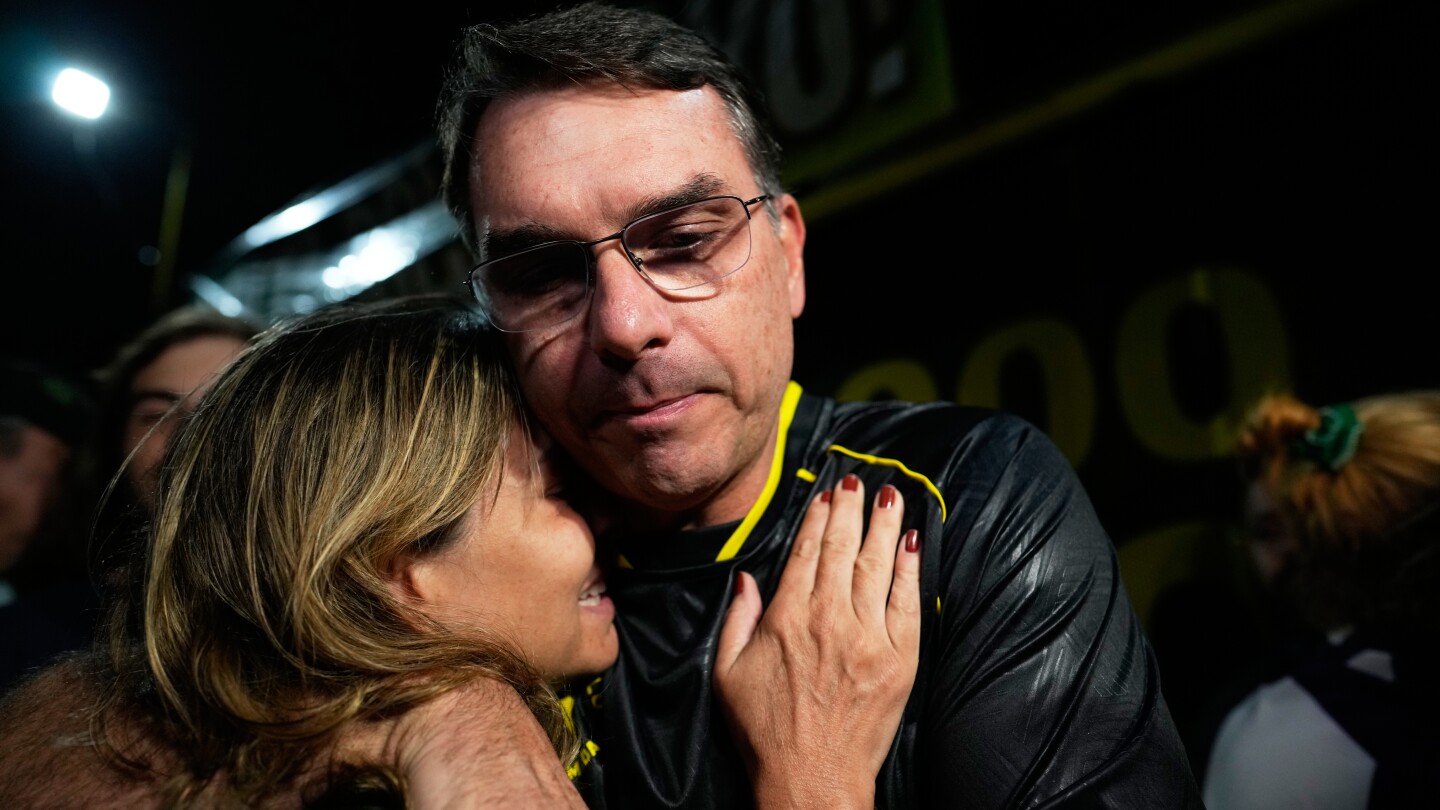
Former Brazilian President Jair Bolsonaro is set to meet with a judge on Sunday to deliberate the legality of his preemptive imprisonment at federal police headquarters in Brasilia. This meeting follows Supreme Court Justice Alexandre de Moraes’ order for Bolsonaro’s detention on Saturday, citing him as a flight risk after his ankle monitor was reportedly violated early that morning. Bolsonaro’s incarceration comes just before he is due to begin a 27-year prison sentence, following a September ruling by Brazil’s Supreme Court that he attempted to orchestrate a coup to retain the presidency after losing the 2022 election to Luiz Inácio Lula da Silva. The same judicial panel will review the preemptive arrest order on Monday. Despite procedural nature of Sunday’s meeting, Bolsonaro’s legal team plans to argue for house arrest based on his health concerns, a request previously denied by Justice de Moraes. Meanwhile, Bolsonaro has been permitted visits from his wife, former first lady Michelle Bolsonaro, who was absent during his arrest. President Lula commented on the situation at the G20 meeting in South Africa, affirming the court’s decision and Bolsonaro’s actions. Outside the police headquarters, reactions were mixed, with supporters demanding the removal of Lula and de Moraes, and opponents celebrating Bolsonaro’s detention.
作者: admin
-
Bucha’s sense of betrayal over peace plan’s amnesty clause reflects a dark mood across Ukraine
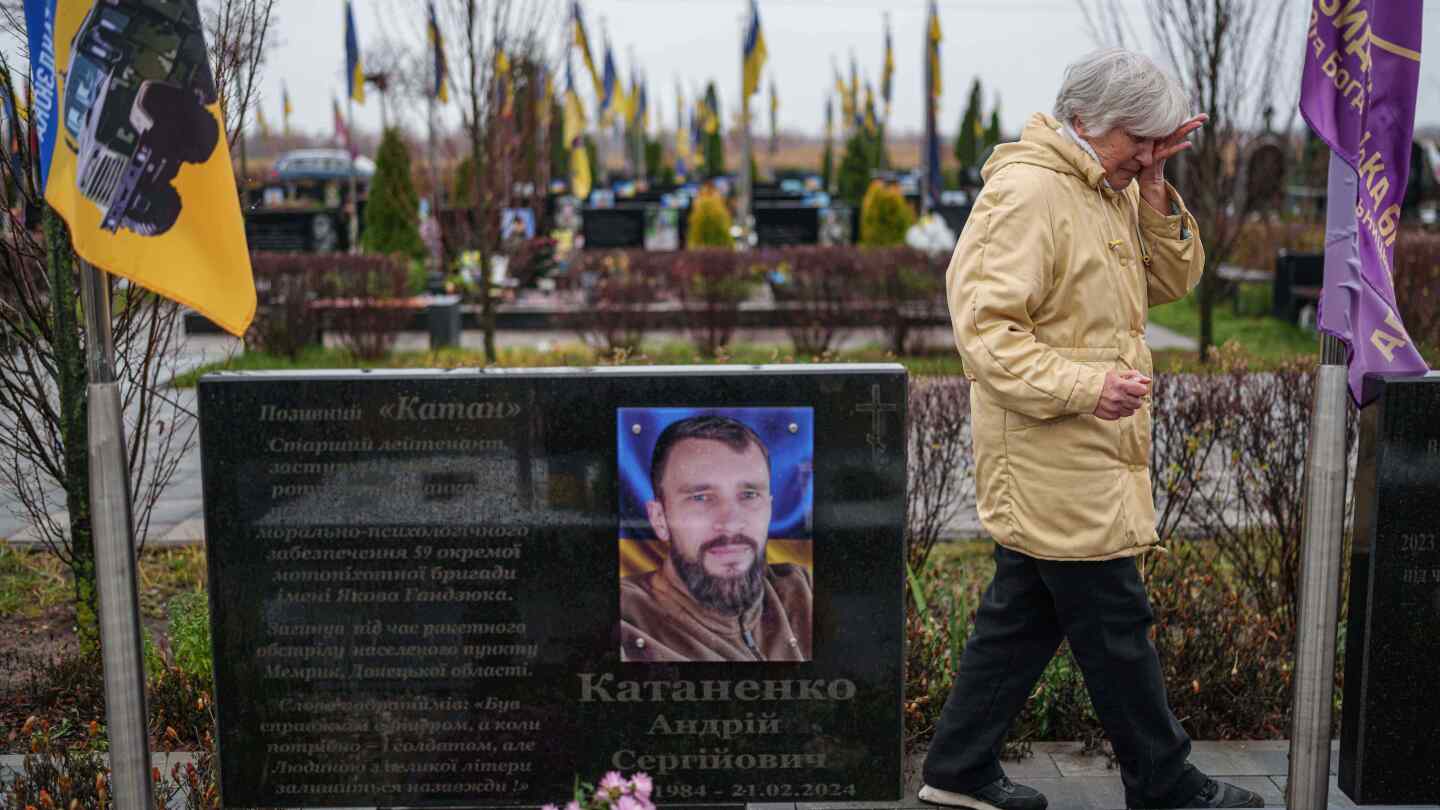
The Kyiv suburb of Bucha, scarred by mass graves and bullet-ridden churches, remains a haunting symbol of the brutality endured during Russia’s occupation. Now, its traumatized residents face a new source of anguish: a U.S.-led peace proposal that would grant blanket amnesty to the perpetrators of wartime atrocities. For the survivors of Bucha, where hundreds of Ukrainians were killed in 2022, the proposed amnesty is seen not as a path to reconciliation but as a betrayal of justice, fueling broader concerns in Ukraine about the implications of absolving Russian soldiers and officials of alleged crimes. The Church of Andrew the Apostle, still bearing the scars of war, stands beside a mass grave where civilians—some executed in the streets, others showing signs of torture—are buried. Father Andriy Halavin, the parish priest, warns that any amnesty would legitimize further violence as the conflict continues. “It’s a green light,” he said after a Sunday service. “It means you can keep bombing, keep executing soldiers, all with confidence that nothing will happen.” The mass killings in Bucha were uncovered after Russian forces withdrew following their failed attempt to seize Kyiv during the full-scale invasion in 2022. Father Andriy insists that justice is not about revenge but about proving accountability still matters, especially as Ukrainians grapple with painful trade-offs for peace. The proposed 28-point peace deal, reportedly the result of secret negotiations between Russian envoys and U.S. President Donald Trump’s administration, would require Ukraine to relinquish territory beyond what is currently controlled by Moscow, reduce its military, and abandon NATO membership. In return, Kyiv would receive international security guarantees and reconstruction assistance. At Bucha’s military cemetery, Vira Katanenko, 66, visited the grave of her son Andrii, who was killed in battle in the Donetsk region last year. For her, the peace plan and the proposed amnesty are unthinkable. “I can’t accept that,” she said. “They want forgiveness for all war crimes, including Bucha? That’s horrifying. Let them come here—let Trump himself come here. Let him and his family come, see our pain, and maybe then they’ll change their minds.” European leaders have emphasized that any peace talks must include Ukraine and protect its sovereignty. Ukrainian President Volodymyr Zelenskyy has described the plan as one of the war’s most challenging moments, pledging to work with Washington while seeking changes. Nearby, mourners gathered for the funeral of Ruslan Zhyhunov, a 41-year-old machine gunner killed in eastern Ukraine. The uncertainty surrounding the peace plan weighed heavily on relatives and neighbors as they watched the burial in the rain—a stark reminder of how fragile any promised future now feels. “How can you exchange the territory of your ancestors for something? For what?” asked Andrii Honcharuk, a 71-year-old retired territorial defense volunteer, who attended the service in uniform. “The war will not end soon. We will still be dying for a long time.”
-
90 dead, 12 missing in Vietnam floods due to heavy rain, landslides
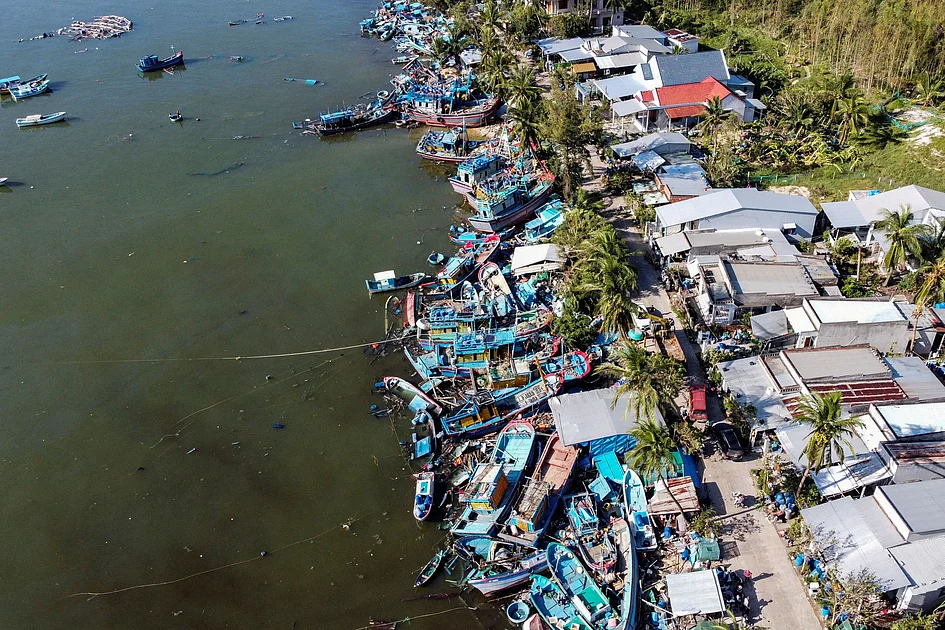
Vietnam is grappling with a catastrophic flood crisis as relentless rainfall since late October has triggered severe flooding and landslides across the south-central region. The death toll has climbed to 90, with 12 individuals still missing, according to the country’s environment ministry. Popular tourist destinations, including Nha Trang and Da Lat, have been particularly hard-hit, with entire neighborhoods submerged and critical infrastructure destroyed. In the mountainous province of Dak Lak, tens of thousands of homes were inundated, and over 60 fatalities were recorded since November 16. Farmer Mach Van Si, 61, recounted being stranded on his rooftop for two nights, describing the devastation as complete. ‘Our neighborhood was completely destroyed. Nothing was left. Everything was covered in mud,’ he told AFP. The floods have also caused extensive agricultural damage, with over 80,000 hectares of crops ruined and more than 3.2 million livestock or poultry lost. Economic losses are estimated at $343 million across five provinces. Authorities have mobilized helicopters to deliver aid to isolated communities, while tens of thousands of personnel are distributing essential supplies. Vietnam, already prone to natural disasters, has seen 279 deaths or disappearances and over $2 billion in damages this year alone. Scientists attribute the increasing frequency and intensity of such events to human-driven climate change.
-

Release of Mammootty’s latest, ‘Kalamkaval’, postponed
The much-anticipated release of Mammootty’s latest film, ‘Kalamkaval,’ has been delayed, leaving fans in suspense. Initially scheduled for a global theatrical release on November 27, 2025, the mystery thriller’s new premiere date remains undisclosed. Produced by Mammootty Kampany and directed by Jithin K Jose, the film features music by Mujeeb Majeed and stars Vinayakan alongside Mammootty. The trailer, recently unveiled, offers a tantalizing glimpse into the plot, centered around a communal riot in the village of Kottayikkonam, Thiruvananthapuram district. Vinayakan portrays an investigating officer unraveling buried secrets, while Mammootty’s character adds intrigue with a chilling closing line in the trailer. The delay follows Mammootty’s recent triumph at the Kerala State Film Awards 2025, where he clinched the Best Actor award for ‘Bramayugam.’
-
Ornella Vanoni, Italian singer made world-famous by ‘Ocean’s Twelve’, dies at 91
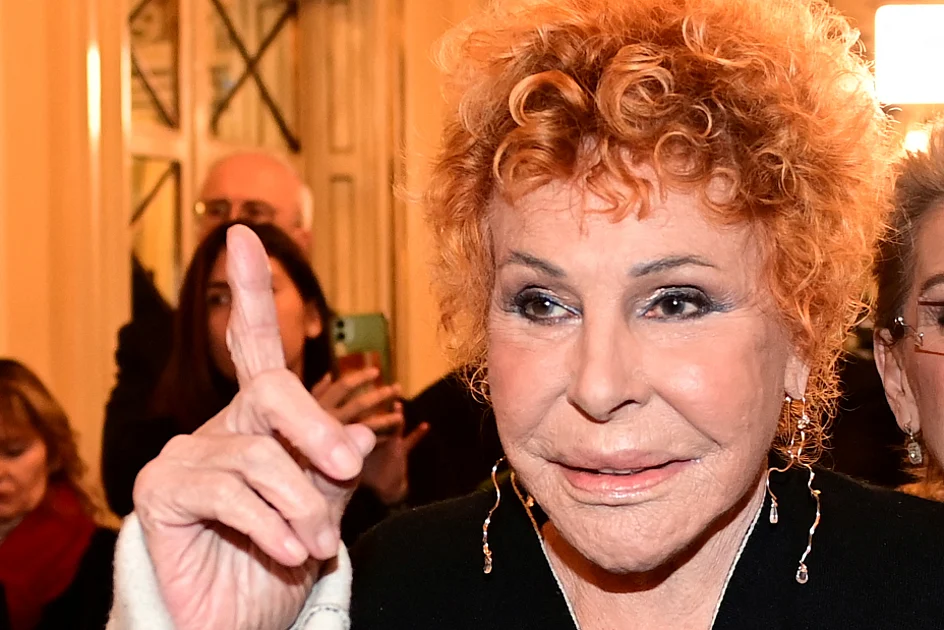
Ornella Vanoni, the celebrated Italian singer whose timeless voice captivated audiences worldwide, has died at the age of 91. Known for her emotional depth and versatility, Vanoni’s career spanned over seven decades, leaving an indelible mark on the music industry. Her passing was confirmed by Italian media outlets, including Corriere della Sera and AGI, citing cardiac arrest as the cause of death at her Milan home. Vanoni’s journey to stardom began in the 1950s when she overcame crippling stage fright to perform at Milan’s Piccolo Teatro, a moment she later described as her true ‘birth date.’ Her breakthrough came in the 1960s through televised song festivals, and she went on to sell over 55 million records and release approximately 40 studio albums. Among her most iconic works is ‘L’appuntamento’ (1970), which gained global recognition after featuring in the soundtrack of Steven Soderbergh’s 2004 film ‘Ocean’s Twelve.’ Vanoni’s music explored themes of love, loss, and social issues, earning her the nickname ‘Cantante della mala’ (underworld singer) for her early folk songs about Milan’s criminal underworld. Beyond music, she was a muse for fashion icons like Giorgio Armani and Valentino and maintained a vibrant public presence through talk shows and collaborations with younger artists. In her memoir, Vanoni reflected on her multifaceted personality, describing herself as ‘desperate and happy, alone and celebrated, furious and delicate.’ Her legacy as a trailblazer in Italian music and a symbol of emotional authenticity will endure for generations.
-
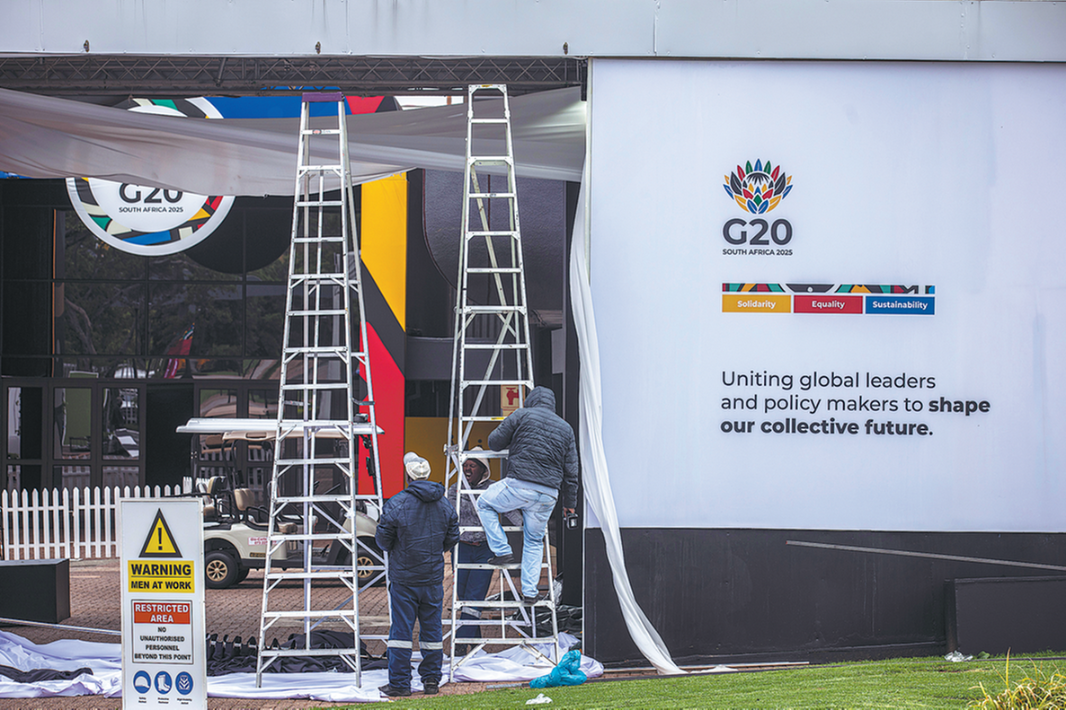
G20 members boost Africa’s energy transition with financial commitment
At the G20 Leaders’ Summit in Johannesburg, South Africa, global leaders made a significant commitment to bolster Africa’s energy transition. This initiative aims to address the continent’s longstanding energy disparities, where 600 million people lack electricity and a billion rely on harmful cooking methods. The leaders recognized energy security as a cornerstone of sovereignty, stability, and shared prosperity. They praised South Africa’s Voluntary Energy Security Toolkit, which focuses on strengthening infrastructure, modernizing grids, and developing a skilled workforce for the new energy era. The G20 pledged to triple renewable energy capacity and enhance energy efficiency by 2030. They emphasized the need to de-risk and diversify investments in energy transition technologies and infrastructure. The leaders also committed to facilitating low-cost financing for developing countries through concessional finance, blended finance mechanisms, and risk mitigation instruments. South Africa’s Minister of Energy and Electricity, Kgosientsho Ramokgopa, highlighted the urgency of affordable and accessible energy, noting that Africa requires $90 billion to $120 billion annually in transmission investments. He urged global investors to engage through partnerships rather than aid, emphasizing that the energy transition is a fight for dignity and development.
-
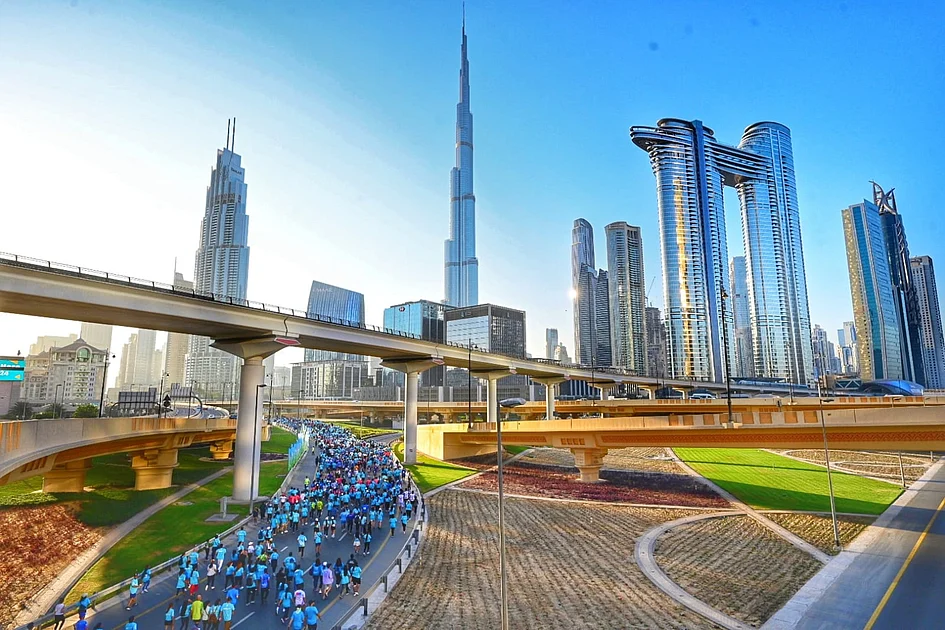
Dubai Run 2025: Thousands of runners take over Sheikh Zayed Road on Sunday morning
On the crisp morning of Sunday, November 23, 2025, Dubai witnessed a spectacular display of community spirit and athleticism as thousands of runners flooded Sheikh Zayed Road for the much-anticipated Dubai Run 2025. The event, which has become a hallmark of the city’s fitness culture, saw participants of all ages and backgrounds come together to celebrate health, wellness, and unity. Organized as part of Dubai’s ongoing initiatives to promote an active lifestyle, the run transformed one of the city’s busiest highways into a vibrant, car-free zone. Runners enjoyed breathtaking views of Dubai’s iconic skyline as they pounded the pavement, creating an unforgettable experience. The event not only highlighted the city’s commitment to fostering a culture of fitness but also showcased its ability to host large-scale, world-class events. With enthusiastic cheers, motivational music, and a palpable sense of camaraderie, Dubai Run 2025 proved to be a resounding success, leaving participants eagerly anticipating next year’s edition.
-

UAE economy to see ‘smaller’ impact from global slowdown
The United Arab Emirates (UAE) is poised to experience a ‘smaller’ impact from the global economic slowdown compared to other nations, according to a recent report by the World Bank. The UAE’s relatively limited exposure to major global markets such as the US, the European Union, and China has insulated its economy from the broader downturn affecting the Middle East, North Africa, Afghanistan, and Pakistan (Menaap) region. While countries like Tunisia and Morocco, which rely heavily on EU exports, face significant challenges, the UAE’s diversified trade relationships, particularly with Asia (excluding China), have mitigated adverse effects. The World Bank projects the UAE’s economy to grow by 4.8% in 2025, outpacing the 3.5% growth forecast for the GCC region. This growth is driven by robust contributions from financial services, construction, transport, and real estate sectors. In contrast, developing oil exporters like Algeria, Iran, Iraq, and Libya are expected to see a sharp slowdown, with growth forecasts dropping to just 0.5% in 2025. The International Monetary Fund (IMF) aligns with the World Bank’s optimistic outlook, projecting a 5% growth for the UAE in 2026. Despite global uncertainties, the UAE’s economic resilience underscores its strategic diversification and strong non-oil sector performance.
-
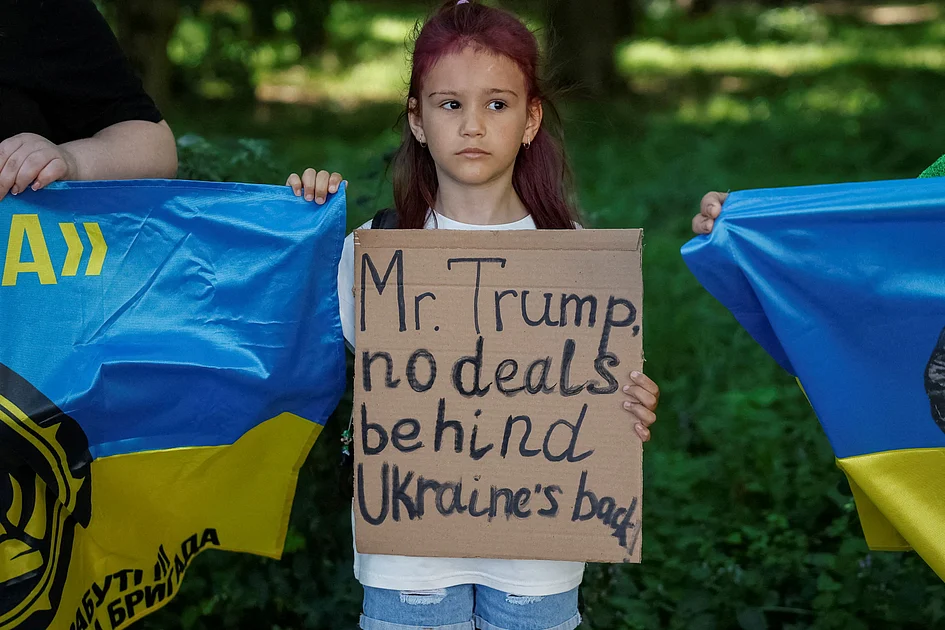
Trump officials’ meeting with Russian spurs questions about Ukraine proposal
A secretive meeting in late October between Trump administration officials and Kirill Dmitriev, a Russian envoy under U.S. sanctions, has sparked widespread concern among U.S. lawmakers and officials. The meeting, held in Miami, included special envoy Steve Witkoff and Jared Kushner, President Donald Trump’s son-in-law. Dmitriev, who heads the Russian Direct Investment Fund (RDIF), a major Russian sovereign wealth fund, is a close ally of President Vladimir Putin and has been central to U.S.-Russia discussions on the Ukraine conflict. The U.S. government granted Dmitriev a special waiver to attend the meeting, which resulted in a 28-point peace plan for Ukraine. The plan, leaked this week by Axios, has drawn criticism for appearing to favor Russian interests, with Ukrainian President Volodymyr Zelenskiy vowing not to compromise Ukraine’s sovereignty. The proposal calls for significant concessions from Ukraine, including territorial compromises and a pledge not to join NATO, which contradicts the Trump administration’s recent tough stance on Russia. The plan was presented to Ukraine via the Turkish government before being directly delivered to Kyiv. White House spokeswoman Karoline Leavitt defended the plan, stating it aimed for a ‘win-win scenario’ for both Ukraine and Russia. However, many U.S. officials, including those at the State Department and National Security Council, were reportedly unaware of the discussions, raising concerns about the bypassing of standard interagency processes. Senator Roger Wicker, chairman of the Senate Armed Services Committee, criticized the plan, calling it problematic and unlikely to achieve peace. The meeting has also reignited concerns about Dmitriev’s influence, given his history of leveraging RDIF to build ties with Western governments despite U.S. sanctions. The CIA declined to comment on intelligence community concerns regarding Dmitriev. The situation underscores the complex and contentious nature of U.S.-Russia relations amid ongoing efforts to resolve the Ukraine conflict.
-
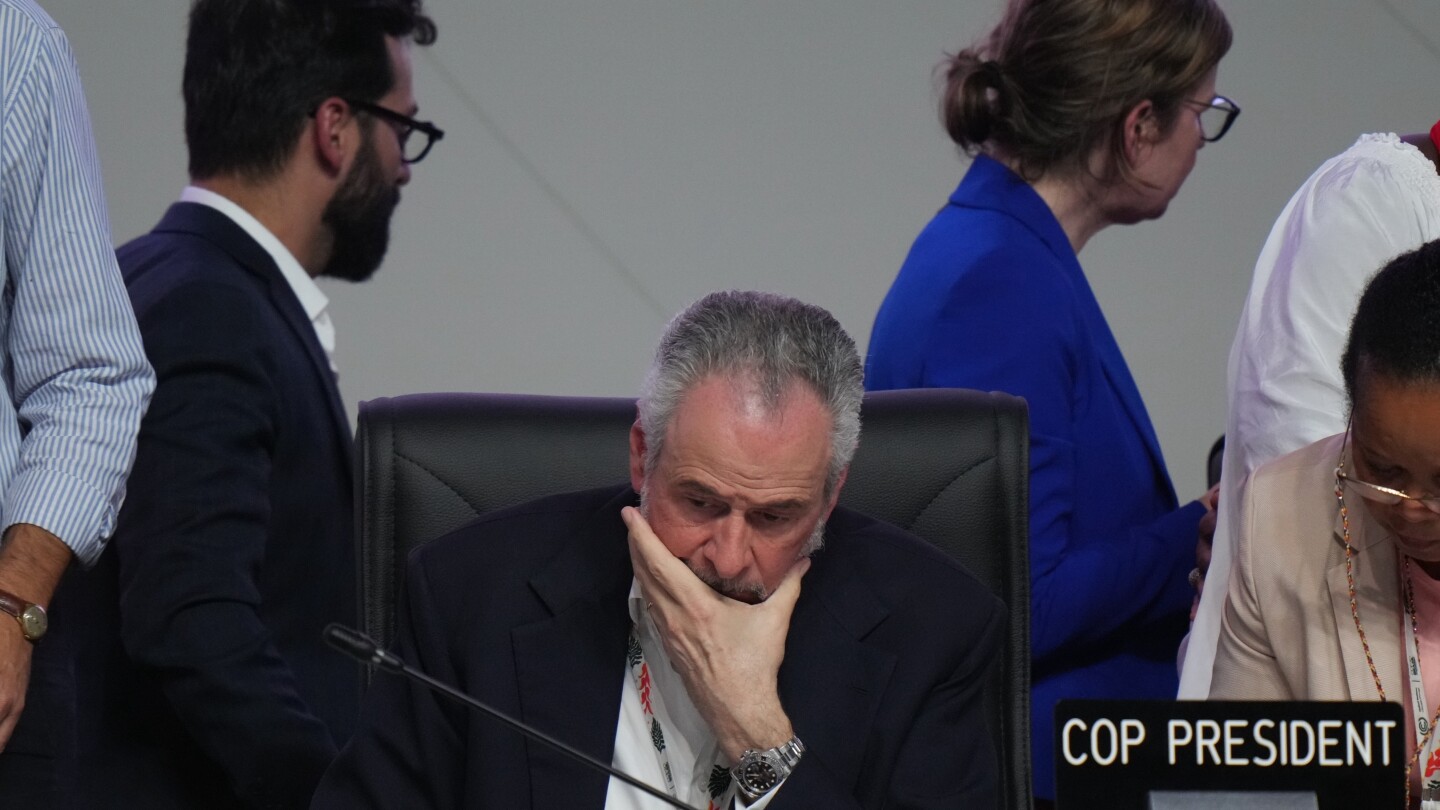
Many hoped UN climate talks in Brazil would be historic. They may be remembered as a flop
The 2025 United Nations Climate Change Conference (COP30), held in Belem, Brazil, concluded with a watered-down resolution that failed to meet the expectations of many delegates and environmental advocates. Hosted in the Amazon rainforest, a critical climate regulator and home to Indigenous communities, the summit initially raised hopes under the leadership of Brazilian President Luiz Inácio Lula da Silva. Lula’s impassioned speeches inspired over 80 nations to call for a detailed roadmap to drastically reduce the use of fossil fuels—oil, gas, and coal—the primary drivers of climate change. However, the final decision, announced on November 22, omitted any mention of fossil fuels or a timeline for their reduction, sparking widespread criticism. While the resolution included increased financial support for developing nations to adapt to climate change, it fell short of the ambitious goals many had anticipated. Critics, including Panama’s negotiator Juan Carlos Monterrey Gomez, labeled the outcome as “complicity” rather than neutrality, accusing the summit of sidelining scientific evidence to appease polluters. Environmental activists and delegates expressed frustration, with many already looking ahead to COP31 in Turkey. The conference, once dubbed a “COP of truth,” instead eroded confidence in multilateral climate negotiations, leaving many questioning the process’s ability to address the escalating climate crisis.