作者: admin

  • Israel returns Palestinian bodies showing signs of torture and execution

    Israel returns Palestinian bodies showing signs of torture and execution

    A disturbing pattern of abuse has emerged following the return of Palestinian bodies by Israeli authorities as part of the recent prisoner exchange agreement with Hamas. Medical personnel at Nasser Hospital in Khan Younis have documented extensive evidence of torture, execution-style killings, and mutilation among the approximately 45 remains received Tuesday via the International Committee of the Red Cross.

    The hospital source revealed that the condition of the deceased varied significantly, with some showing recent signs of death while others arrived in advanced states of decomposition or as partial remains. Particularly alarming findings included bodies bearing clear indications of severe physical abuse, including ligature marks consistent with strangulation, multiple bone fractures, and various forms of mutilation. Several victims were discovered with their extremities bound and eyes covered with blindfolds, while others presented with missing limbs.

    Medical authorities believe some of the remains belong to individuals killed during the October 7, 2023 attacks, apparently after being crushed by Israeli military tanks. An additional 45 bodies delivered Wednesday await comprehensive forensic examination according to the Palestinian Ministry of Health.

    This exchange forms part of the ceasefire arrangement established Friday that has already facilitated Hamas’ release of 20 living Israeli captives in return for approximately 2,000 Palestinian prisoners. The Palestinian movement has additionally released seven deceased Israeli captives from a total of 28, with remaining transfers pending location and recovery operations.

    Israel’s practice of retaining Palestinian bodies represents a longstanding policy dating to 1948, with dozens interred in anonymously marked ‘cemeteries of numbers.’ The National Campaign for the Retrieval of Palestinian and Arab War Victims’ Corpses estimates Israel currently holds at least 735 identified individuals, including 67 children and 10 women—among them a 13-year-old Palestinian killed by Israeli forces in 1968.

    Recent developments have exacerbated concerns, with Palestinian health officials reporting Israeli forces have exhumed and removed at least 2,450 Palestinian bodies from graves during the Gaza conflict. Media investigations further indicate approximately 1,500 remains remain held at the Sde Teiman military detention camp since October 2023, identified solely by numerical codes.

    Human rights organizations have consistently condemned Israel’s retention practices, demanding immediate release and repatriation of all remains to families. Although a 2018 amendment to Israel’s Counterterrorism Law—later validated by the Supreme Court—authorized withholding bodies of Palestinians alleged to have committed violent acts, this practice directly contravenes international humanitarian law. The Fourth Geneva Convention explicitly mandates dignified treatment of the deceased, requiring honorable burial according to religious customs and proper grave maintenance for future recognition.

  • US blasts China as ‘unreliable’ as trade tensions mount

    US blasts China as ‘unreliable’ as trade tensions mount

    The fragile trade truce between the United States and China appears to be unraveling as top US officials accuse Beijing of undermining agreements reached earlier this year. In a highly orchestrated press conference, US Trade Representative Jamieson Greer and Treasury Secretary Scott Bessent condemned China’s recent moves to tighten export controls on rare earths, lithium batteries, and graphite, labeling them as “economic coercion” and a “global supply chain power grab.” Bessent warned, “If China wants to be an unreliable partner to the world, then the world will have to decouple.” However, he left room for negotiation, expressing optimism that the situation could be de-escalated through dialogue. China, which processes approximately 90% of the world’s rare earths and magnets, announced last week that foreign companies would need government approval to export products containing even minimal amounts of these critical materials. The US responded with threats of imposing a 100% tariff on Chinese imports starting next month, alongside potential export controls on critical software. The escalating tensions have raised fears of a return to an all-out trade war, jeopardizing the fragile truce established in May. Both nations have also introduced new port fees on each other’s ships, further straining relations. Bessent emphasized the need for the US and its allies to collaborate, calling China’s actions “unacceptable” and “highly provocative.” He asserted, “This is China versus the world. We and our allies will neither be commanded nor controlled.” Despite the rhetoric, both sides seem open to discussions, offering a glimmer of hope for resolution.

  • Afghan Taliban and Pakistan agree short truce after deadly clashes

    Afghan Taliban and Pakistan agree short truce after deadly clashes

    In a tense turn of events, Pakistan and Afghanistan’s Taliban government have announced a temporary 48-hour ceasefire following a series of violent border clashes and reported Pakistani air strikes on Kabul and Kandahar. The ceasefire, which took effect at 13:00 GMT on Wednesday, was claimed by both sides as a mutual agreement to de-escalate hostilities. However, each accused the other of initiating the recent violence, with the Taliban reporting 12 civilian deaths and over 100 injuries due to Pakistani firing. Pakistan, in turn, claimed to have killed 15-20 Afghan Taliban fighters in the Spin Boldak border district. The clashes have shattered days of fragile peace, with both sides engaging in a war of narratives on social media to assert their dominance. Videos of the fighting and its aftermath have circulated online, though their authenticity remains unverified. The situation has drawn international concern, with calls for restraint from China, Russia, and the United Nations. UN Special Rapporteur Richard Bennett expressed deep concern over civilian casualties and displacement, urging all parties to adhere to international law. Pakistan has long accused the Afghan Taliban of harboring militants targeting its government, a claim the Taliban vehemently denies. The ceasefire offers a brief respite, but the underlying tensions remain unresolved, raising fears of further escalation.

  • US revokes visas over comments made about Charlie Kirk’s death

    US revokes visas over comments made about Charlie Kirk’s death

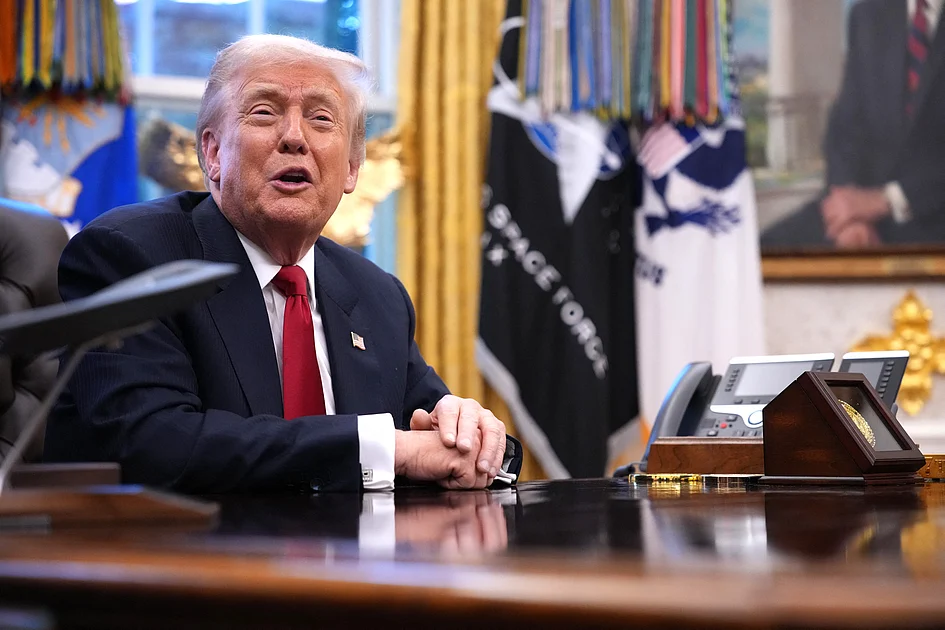
    The Trump administration has taken decisive action by revoking the visas of at least six individuals for their public remarks celebrating the death of right-wing influencer Charlie Kirk. The State Department announced the move on X, stating, ‘The United States has no obligation to host foreigners who wish death on Americans.’ The department shared screenshots of social media posts from visa holders who allegedly expressed approval of Kirk’s assassination in September, hinting at further visa cancellations. Kirk, a prominent ally of former President Donald Trump, was fatally shot on September 10 while speaking at a university event in Utah. Known as a champion of free speech and a mobilizer of young Republicans, Kirk’s death has sparked both mourning among conservatives and backlash from liberals who criticized his controversial statements on race and crime. The six individuals whose visas were revoked hail from Argentina, South Africa, Mexico, Brazil, Germany, and Paraguay. While their identities remain undisclosed, South African national Nhlamulo Baloyi confirmed to media outlets that his business visa was revoked last week. Baloyi admitted to writing one of the posts shared by the State Department, in which he described Kirk’s followers as ‘trailer trash’ and dismissed Kirk’s legacy. The visa cancellations coincided with President Trump posthumously awarding Kirk the Presidential Medal of Freedom, calling him a ‘martyr’ and blaming ‘far-left radicals’ for his death. The suspect in Kirk’s killing, 22-year-old Tyler Robinson, was arrested two days after the shooting and charged with aggravated murder. The Trump administration’s actions reflect a broader Republican effort to target Kirk’s critics, with Vice-President JD Vance urging people to report those who celebrated the killing. The administration has also intensified social media vetting during visa applications, revoking thousands of student visas this year, citing violations ranging from assault to ‘support for terrorism,’ though the latter remains undefined.

  • Brazilian club Botafogo in court for $21M transfer fee dispute with Atlanta United and FIFA

    Brazilian club Botafogo in court for $21M transfer fee dispute with Atlanta United and FIFA

    South American champions Botafogo, owned by American businessman John Textor, have escalated a financial dispute with Major League Soccer club Atlanta United to the Court of Arbitration for Sport (CAS). The Brazilian club is contesting FIFA’s order to pay a $21 million transfer fee for Argentina attacker Thiago Almada, a 2022 World Cup winner. The hearing took place on Wednesday, though no verdict deadline has been set. FIFA’s ruling revealed that Botafogo failed to make the first two installment payments of $3 million each in July and September 2023, leading to default notices from MLS. The Brazilian club had requested additional time to resolve the issue, but FIFA imposed a $150,000 fine and $25,000 in legal costs, citing Botafogo’s history of previous sanctions as an aggravating factor. FIFA also set a 45-day deadline for Botafogo to settle its debts or face a ban on registering new players. Almada, who played for Argentina in the 2022 World Cup and now represents Atletico Madrid, was transferred to Botafogo in June 2023 in a record-breaking MLS deal. After helping Botafogo win the Copa Libertadores, Almada was loaned to Lyon, another club owned by Textor, in January 2024. Lyon’s financial instability nearly led to their demotion from Ligue 1, but they secured a Europa League spot, indirectly affecting Crystal Palace’s UEFA competition status due to ownership integrity rules. Palace’s appeal to CAS to overturn their demotion to the Conference League was unsuccessful.

  • US campus activists relieved – and anxious – after Gaza ceasefire deal

    US campus activists relieved – and anxious – after Gaza ceasefire deal

    In 2023, pro-Palestinian protests erupted at Columbia University and rapidly spread across hundreds of US college campuses, as tens of thousands of students demanded an end to the Israel-Gaza war. The demonstrations, which peaked in spring 2024, included sit-ins, encampments, and, at times, violent clashes with law enforcement. Over 3,000 protesters were arrested during the unrest. The rallying cry, ‘Ceasefire now!’, echoed across campuses, culminating in a historic peace agreement brokered by US President Donald Trump in October 2025. While the deal brought relief to many, it also sparked mixed emotions among student activists. Khalid, a student at Earlham College, expressed relief for his family in Gaza but remained cautious about the future. Similarly, Ahmad from Georgetown University felt joy tempered by unease. Columbia University graduate student Thomas highlighted lingering tensions on campus, where discussions about Gaza remain fraught. Elisha Baker, a pro-Israel activist at Columbia, celebrated the return of hostages but lamented the release of Palestinian prisoners. Despite the ceasefire, concerns persist about the fragility of the peace plan. Israeli drone strikes in Gaza, which killed seven people shortly after the agreement, underscored these fears. Student activists like Jadd Hashem of the University of Texas emphasized the need for cross-cultural dialogue to prevent future conflicts. While the protests have waned, their impact endures, with students vowing to continue advocating for their respective causes.

  • War crimes alert as food runs out in besieged Sudan city

    War crimes alert as food runs out in besieged Sudan city

    The besieged city of el-Fasher in Sudan has become a grim testament to the escalating humanitarian crisis and alleged war crimes committed by the paramilitary Rapid Support Forces (RSF). Satellite imagery analyzed by Yale University’s Humanitarian Research Lab (HRL) reveals deliberate targeting of civilians, with over 60 new burial mounds appearing in just two weeks. Caitlin Howarth of HRL described the situation as ‘horrific,’ noting that munitions have been deployed to destroy shelters, mosques, hospitals, and markets, resulting in the deaths of at least 174 people and injuring 123 others. These actions, according to researchers, constitute prima facie war crimes and may rise to the level of crimes against humanity. The RSF, which originated from the notorious Janjaweed militia, has encircled the city with a 57-kilometer earthen wall, trapping an estimated 300,000 residents. Food supplies have completely run out, and even alternative sources like ‘ambaz,’ a peanut residue normally fed to animals, are unavailable. The resistance committee for el-Fasher has issued desperate pleas for international aid, but their calls seem to fall on deaf ears. With only four RSF-controlled exits remaining, civilians are forced into increasingly smaller zones of refuge, where they face repeated bombardments. The international community has yet to take significant action, leaving the city’s residents in a dire and life-threatening situation.

  • France is on the brink as Macron’s government faces no-confidence votes

    France is on the brink as Macron’s government faces no-confidence votes

    France is on the brink of a deepening political crisis as Prime Minister Sébastien Lecornu faces two no-confidence motions in the National Assembly on Thursday. These motions, filed by President Emmanuel Macron’s staunch opponents—the hard-left France Unbowed party and Marine Le Pen’s far-right National Rally—threaten to destabilize the fragile government. Should Lecornu’s administration fall, Macron may be compelled to dissolve the National Assembly and call for snap legislative elections, a move fraught with uncertainty.

  • UN warns Colombia over mercury contamination in Atrato River, calls crisis a human rights emergency

    UN warns Colombia over mercury contamination in Atrato River, calls crisis a human rights emergency

    The United Nations has issued a stark warning about the escalating human rights crisis in Colombia’s Atrato River basin, caused by mercury contamination from illegal gold mining. In a public letter released on Tuesday, three UN Human Rights Council special rapporteurs expressed deep concerns over the Colombian government’s inadequate compliance with a 2016 Constitutional Court ruling that recognized the Atrato River as a legal entity entitled to protection and restoration. Marcos Orellana, the UN special rapporteur on toxics and human rights, highlighted the persistent failure to enforce the court’s decision, attributing the problem to organized crime, corruption, and the smuggling of mercury and gold. The Atrato River, a vital waterway spanning nearly 500 miles through Colombia’s biodiverse Choco region, sustains Afro-Colombian and Indigenous communities reliant on fishing and farming. However, toxic pollution from illegal mining has severely threatened their health, livelihoods, and cultural practices. Orellana revealed that over a third of the population in the Atrato watershed has been exposed to mercury levels exceeding World Health Organization limits, posing risks of neurological damage, organ failure, and developmental disorders. The UN urged Colombia to take immediate action to curb illegal mining, clean up polluted areas, and provide medical care for affected communities. Despite the 2016 ruling being hailed as a landmark in environmental law, political turnover, funding shortages, and alleged corruption have hindered its enforcement. The UN also called for stronger international mercury controls under the Minamata Convention, emphasizing the need to address cross-border trade gaps. Orellana stressed that meaningful progress would require reducing the scale of illegal mining and ensuring communities have access to specialized healthcare and exposure reduction guidance. The Colombian government has yet to respond to the UN’s letter, which was sent over 60 days ago. The situation underscores the urgent need for sustained institutional commitment to protect human rights and the environment.

  • Country star Luke Combs to play two nights at Slane Castle

    Country star Luke Combs to play two nights at Slane Castle

    Country music sensation Luke Combs is set to make history by becoming the first artist to perform two consecutive nights at the iconic Slane Castle in the Republic of Ireland. The 35-year-old North Carolina native, known for his chart-topping hits, will grace the stage on July 18 and 19, 2026, as part of his My Kinda Saturday Night Tour. This unprecedented decision comes in response to overwhelming fan demand, solidifying Combs’ status as a powerhouse in the music industry. The concerts will feature stellar support acts, including Irish pop rock band The Script, American country singer Ty Myers, and the all-female trio The Castellows. Tickets for both nights will be available starting this Friday at 10:00 BST, with presale options already underway. Slane Castle, a venue with a rich history of hosting legendary acts like Queen, U2, and Madonna, boasts a capacity of 80,000 and has been a cornerstone of live music since 1981. Combs’ back-to-back performances mark a significant milestone, following in the footsteps of U2, who played twice in 2001 after their initial show sold out in record time.